
SEO Audit Services: Find What’s Limiting Your Rankings
Table of Contents
SEO audit services provide a comprehensive analysis of websites to identify technical issues, content gaps, and optimisation opportunities affecting search engine rankings. ProfileTree provides SEO audit services across Northern Ireland, Ireland, and the UK, helping businesses understand exactly why their websites aren’t ranking as well as they should—and what to do about it.
Every underperforming website has reasons for its poor visibility. Sometimes, technical issues prevent Google from properly crawling the site. Sometimes the content doesn’t match what searchers are looking for. Sometimes it’s competitors simply doing SEO better. An SEO audit uncovers these specific issues, transforming vague concerns about rankings into concrete, prioritised actions that drive real improvements.
What Is an SEO Audit?
An SEO audit is a systematic examination of all factors affecting a website’s search engine performance:
Audit Purpose
What an Audit Reveals:
| Finding Type | Examples |
| Technical barriers | Crawl errors, indexation issues, speed problems |
| Content gaps | Missing pages, thin content, poor optimisation |
| Authority weaknesses | Weak backlink profile, missing citations |
| Competitive shortfalls | Where competitors outperform you |
| Quick wins | Easy improvements with immediate impact |
| Strategic priorities | Major initiatives for long-term gains |
The Diagnostic Approach
An SEO audit functions like a medical examination for your website:
Symptoms → Diagnosis → Treatment Plan
Website symptom: Poor rankings for target keywords
↓
Audit diagnosis: Thin content, weak internal linking, slow page speed
↓
Treatment plan: Content expansion, linking restructure, speed optimisation
Audit vs Ongoing SEO
Key Distinction:
| SEO Audit | Ongoing SEO |
| Point-in-time analysis | Continuous optimisation |
| Identifies issues | Implements fixes |
| Provides roadmap | Executes roadmap |
| Typically one-off | Monthly retainer |
| Diagnostic | Therapeutic |
Audits often precede ongoing SEO, providing the blueprint that guides implementation.
Why Businesses Need SEO Audits
Multiple situations warrant comprehensive audits:
Diagnosing Ranking Problems
The Challenge: Rankings have dropped or never materialised. You know something’s wrong but not what.
Audit Value: Systematic analysis identifies specific causes. Instead of guessing, you know exactly what’s holding you back.
Before Website Redesign
The Opportunity: Redesigns risk losing existing rankings if SEO isn’t considered.
Audit Value: Document current SEO assets (rankings, links, content) to preserve during redesign. Identify improvements to incorporate into new site.
After Website Migration
The Risk: Migrations commonly cause ranking drops from redirect errors, lost content, or technical changes.
Audit Value: Identify migration-related issues quickly. Catch problems before they cause lasting damage.
Competitive Assessment
The Question: Why do competitors rank better than us?
Audit Value: Compare your site against competitors across all SEO factors. Identify specific gaps and opportunities.
New Website Launch
The Need: New sites need SEO foundations established correctly from the start.
Audit Value: Identify issues before they become entrenched. Establish proper practices early.
Periodic Health Checks
Best Practice: Regular audits catch issues before they significantly impact performance.
Audit Value: Proactive identification of emerging problems. Validation that SEO remains on track.
Before Engaging SEO Services
The Context: Evaluating SEO agencies or planning internal SEO initiatives.
Audit Value: Establish baseline understanding. Evaluate agency recommendations against objective analysis.
What a Comprehensive SEO Audit Covers
A thorough audit examines multiple dimensions:
Technical SEO Analysis
The foundation layer of SEO:
Crawlability Assessment:
| Element | What We Examine |
| Robots.txt | Proper configuration, no accidental blocks |
| XML sitemaps | Presence, accuracy, submission status |
| Crawl errors | 404s, 500s, soft errors |
| Crawl budget | Efficient use of crawler resources |
| JavaScript rendering | Content accessible to crawlers |
| Internal linking | Discoverable pages, orphan detection |
Indexation Review:
| Element | What We Examine |
| Index status | Pages indexed vs expected |
| Index bloat | Unwanted pages in index |
| Canonical tags | Proper implementation |
| Noindex directives | Correct application |
| Duplicate content | Identification and causes |
| Thin content | Low-value pages |
Site Architecture:
| Element | What We Examine |
| URL structure | Logical, keyword-friendly URLs |
| Navigation | Clear hierarchy |
| Click depth | Important content accessibility |
| Breadcrumbs | Implementation and schema |
| Internal linking | Authority distribution |
Performance Analysis:
| Element | What We Examine |
| Page speed | Load times across devices |
| Core Web Vitals | LCP, INP, CLS scores |
| Mobile performance | Mobile-specific issues |
| Server response | TTFB, hosting quality |
| Resource optimisation | Images, CSS, JavaScript |
Security and Technical Standards:
| Element | What We Examine |
| HTTPS | Proper implementation |
| Mixed content | HTTP resources on HTTPS pages |
| Security headers | Proper configuration |
| Structured data | Implementation and errors |
On-Page SEO Analysis
Page-level optimisation assessment:
Title Tags and Meta Descriptions:
- Presence on all pages
- Length optimisation
- Keyword inclusion
- Uniqueness across the site
- Click-through rate potential
Header Structure:
- H1 presence and uniqueness
- Logical H2-H6 hierarchy
- Keyword placement
- Content organisation
Content Quality:
- Word count and depth
- Keyword targeting
- Search intent alignment
- Readability
- Freshness and accuracy
Image Optimisation:
- Alt text presence and quality
- File size and compression
- Filename optimisation
- Responsive images
Internal Linking:
- Links to important pages
- Anchor text usage
- Link distribution
- Broken internal links
Content Analysis
Strategic content assessment:
Content Inventory:
- All pages catalogued
- Content type classification
- Performance data
- Gap identification
Keyword Mapping:
- Current keyword targeting
- Ranking positions
- Cannibalisation issues
- Opportunity gaps
Search Intent Alignment:
- Content matching searcher needs
- Format appropriateness
- Comprehensiveness
- User satisfaction signals
Content Quality Evaluation:
- Expertise demonstration
- Accuracy and trustworthiness
- Uniqueness
- Value compared to competitors
Off-Page SEO Analysis
External factors assessment:
Backlink Profile:
| Element | What We Examine |
| Total referring domains | Profile breadth |
| Link quality | Authority of linking sites |
| Anchor text distribution | Natural vs optimised |
| Link velocity | Acquisition patterns |
| Toxic links | Potentially harmful links |
| Link gaps | Competitor links you lack |
Local SEO Factors:
| Element | What We Examine |
| Google Business Profile | Completeness and optimisation |
| Local citations | Consistency and coverage |
| Reviews | Quantity, quality, response |
| Local content | Geographic targeting |
Brand Signals:
- Brand search volume
- Brand mentions
- Social presence
- Online reputation
Competitive Analysis
Understanding your competitive landscape:
Competitor Identification:
- Search competitors (who rank for your keywords)
- Business competitors (who compete for customers)
- Content competitors (who create similar content)
Competitive Gap Analysis:
| Dimension | Comparison |
| Domain authority | Your authority vs competitors |
| Content depth | Topic coverage comparison |
| Backlink profile | Link quality and quantity |
| Technical health | Site performance comparison |
| Keyword rankings | Position comparisons |
Opportunity Identification:
- Keywords competitors rank for what you don’t
- Content competitors have what you lack
- Links competitors have that you could acquire
User Experience Signals
Factors affecting user satisfaction:
Mobile Usability:
- Responsive design
- Tap target sizing
- Font readability
- Viewport configuration
Navigation and Usability:
- Clear navigation paths
- Search functionality
- User journey logic
- Conversion path clarity
Engagement Signals:
- Bounce rate patterns
- Time on page
- Pages per session
- Exit page analysis
The SEO Audit Process
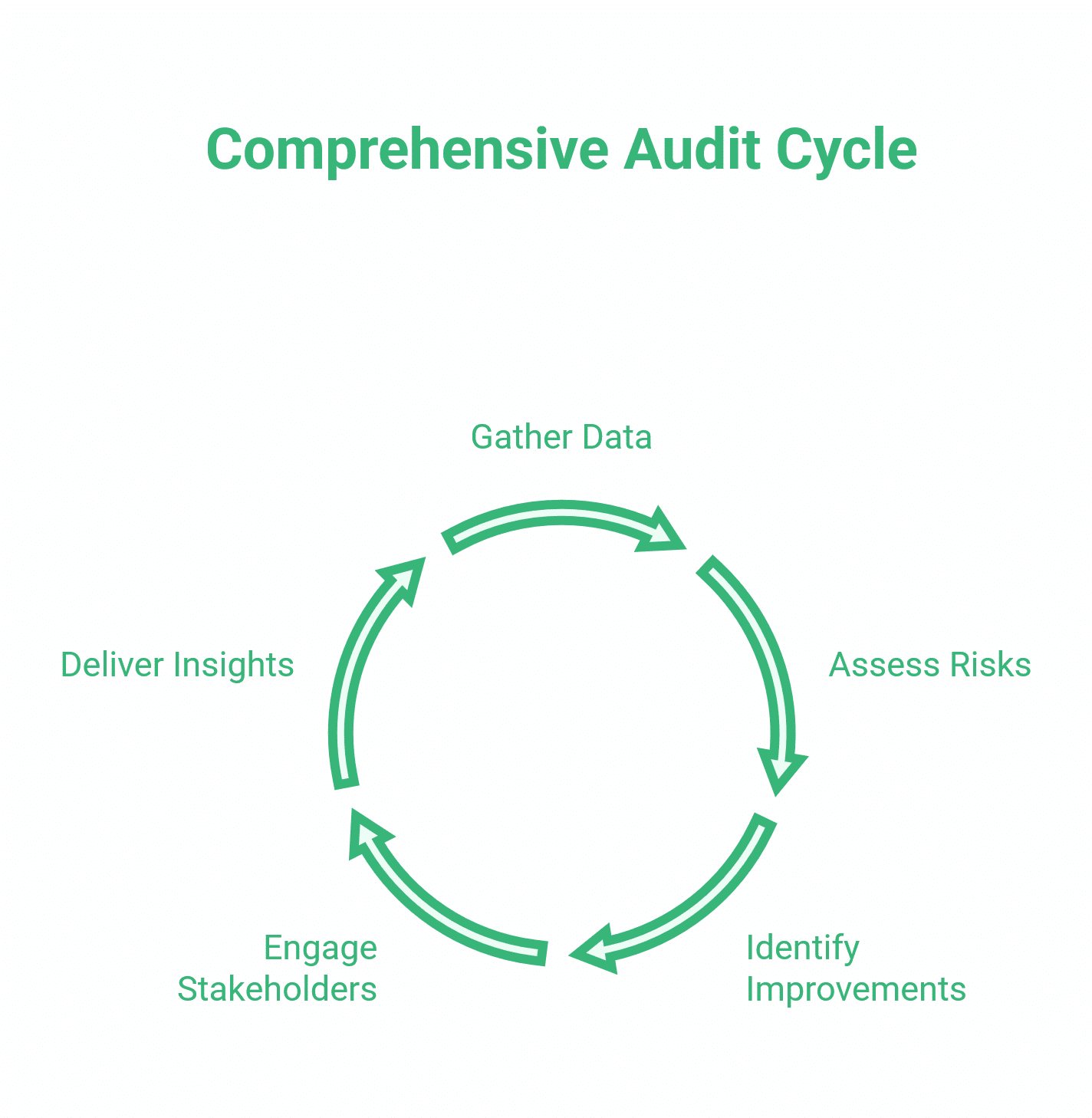
How we conduct comprehensive audits:
Phase 1: Information Gathering
Initial Data Collection:
Access Requirements:
- Google Search Console access
- Google Analytics access
- Website backend access (if needed)
- Previous SEO documentation
Discovery Questions:
- Business goals and priorities
- Target keywords and markets
- Known issues or concerns
- Competitive landscape
- Historical context
Phase 2: Technical Crawl and Analysis
Crawl Execution:
- Full site crawl using professional tools
- Comparison with Search Console data
- Log file analysis (for larger sites)
- Rendering analysis
Data Compilation:
- Issue categorisation
- Severity assessment
- Impact estimation
Phase 3: Manual Review
Human Analysis:
- Content quality assessment
- User experience evaluation
- Competitive comparison
- Strategic opportunities
Context Application:
- Business goal alignment
- Resource consideration
- Priority determination
Phase 4: Report Development
Report Components:
Executive Summary
- Key findings overview
- Critical issues
- Major opportunities
- Recommended priorities

Technical SEO Section
- Detailed findings
- Specific issues with examples
- Recommendations

On-Page SEO Section
- Page-level findings
- Optimisation opportunities
- Content recommendations

Off-Page SEO Section
- Backlink analysis
- Local SEO findings
- Authority building opportunities

Competitive Analysis
- Competitor comparison
- Gap analysis
- Competitive opportunities

Action Plan
- Prioritised recommendations
- Implementation guidance
- Timeline suggestions
- Resource estimates
Phase 5: Presentation and Discussion
Delivery:
- Written report document
- Presentation meeting
- Question and answer session
- Implementation discussion
Ongoing Support:
- Clarification as needed
- Implementation guidance
- Progress review options
Types of SEO Audits
Different audit scopes for different needs:
Comprehensive SEO Audit
Scope: Complete analysis across all SEO dimensions
Best For:
- Major SEO initiatives
- Before a significant investment
- Complete baseline establishment
- Annual strategic reviews
Typical Timeline: 2-4 weeks
Technical SEO Audit
Scope: Focused on technical factors only
Best For:
- Development team guidance
- Post-migration checks
- Performance troubleshooting
- Technical-first priorities
Typical Timeline: 1-2 weeks
Content Audit
Scope: Content inventory and quality assessment
Best For:
- Content strategy development
- Content consolidation projects
- Editorial planning
- Content quality improvement
Typical Timeline: 1-3 weeks (depending on site size)
Local SEO Audit
Scope: Local visibility factors
Best For:
- Local businesses
- Multi-location businesses
- Local ranking issues
- Google Business Profile optimisation
Typical Timeline: 1-2 weeks
Competitive Audit
Scope: Comparative analysis vs competitors
Best For:
- Market entry
- Competitive positioning
- Strategy development
- Investment in competitive markets
Typical Timeline: 2-3 weeks
Quick SEO Health Check
Scope: High-level overview of major issues
Best For:
- Initial assessment
- Budget constraints
- Quick win identification
- SEO awareness building
Typical Timeline: 3-5 days
What You Receive
Tangible deliverables from our audit services:
Comprehensive Report
Document Contents:
- Executive summary for leadership
- Detailed technical findings
- Screenshot evidence of issues
- Prioritised recommendations
- Implementation guidance
Report Characteristics:
- Clear, jargon-free explanations
- Actionable recommendations
- Priority rankings
- Realistic assessments
Prioritised Action Plan
Action Plan Structure:
| Priority | Criteria | Examples |
| Critical | Blocking rankings, quick to fix | Noindex on key pages, broken redirects |
| High | Significant impact, reasonable effort | Title tag optimisation, content gaps |
| Medium | Meaningful improvement, moderate effort | Speed optimisation, internal linking |
| Lower | Incremental gains, ongoing work | Schema expansion, content refreshes |
Supporting Data
Supplementary Materials:
- Crawl data exports
- Keyword research data
- Competitor analysis spreadsheets
- Technical issue lists
Presentation and Discussion
Meeting Coverage:
- Findings walkthrough
- Recommendation explanation
- Implementation discussion
- Question resolution
After the Audit
What happens with audit findings:
Implementation Options
Path 1: Internal Implementation
- Your team implements recommendations
- We provide clarification as needed
- Follow-up audit to verify fixes
Path 2: ProfileTree Implementation
- We implement recommendations through SEO services
- Seamless transition from audit to action
- Ongoing optimisation and monitoring
Path 3: Hybrid Approach
- Technical fixes by your developers
- Content and strategy by ProfileTree
- Collaborative implementation
Progress Tracking
Post-Audit Monitoring:
- Ranking tracking for target keywords
- Technical issue resolution verification
- Traffic and conversion monitoring
- Follow-up audit scheduling
Why Choose ProfileTree for SEO Audits
ProfileTree brings comprehensive expertise to audit services:
Technical Depth
Genuine technical understanding:
- Technical SEO expertise
- Development background for accurate issue assessment
- Platform-specific knowledge (WordPress, Shopify, WooCommerce)
- Complex site experience
Strategic Perspective
Audits connected to business goals:
- Not just issue lists—strategic recommendations
- Prioritisation based on business impact
- Realistic resource considerations
- ROI-focused approach
Implementation Capability
We can act on our findings:
- Web development for technical fixes
- Content marketing for content improvements
- SEO services for ongoing optimisation
Clear Communication
Audits you can understand and use:
- Jargon-free explanations
- Clear prioritisation
- Actionable recommendations
- Presentation and discussion included
UK and Irish Context
Local market understanding:
- UK search landscape
- Northern Ireland business context
- Irish market considerations
- Regional competitor awareness
Proven Track Record
Our 5-star rating from over 450 Google reviews reflects the quality and value of our audit services.
Conclusion: SEO Audit Services
SEO auditservices reveal exactly what’s preventing websites from achieving their ranking potential. Rather than guessing at problems or implementing generic best practices, audits provide specific, prioritised recommendations based on thorough analysis of your unique situation.
ProfileTree provides SEO audit services across Northern Ireland, Ireland, and the UK. Our combination of technical expertise, strategic perspective, and clear communication delivers audits that drive real improvements—not just reports that gather dust.
FAQs
How much does an SEO audit cost?
SEO audit costs vary based on scope and site size. Quick health checks typically range from £300-£600. Comprehensive audits for small to medium sites range from £800-£2,000. Large or complex sites requiring extensive analysis may range from £2,000-£5,000+. We provide specific quotes after understanding your site and requirements.
How long does an SEO audit take?
Quick health checks take 3-5 business days. Comprehensive audits typically take 2-4 weeks, depending on site size and complexity. Large enterprise sites or detailed competitive analyses may take longer. We provide timeline estimates upfront.
What access do you need for an audit?
Ideally: Google Search Console (viewer or full access), Google Analytics (viewer access), and website backend access for detailed technical review. We can conduct audits with limited access, but findings may be less comprehensive.
Will an audit fix my rankings?
An audit identifies issues and provides recommendations—it doesn’t implement fixes. Rankings improve when recommendations are implemented. Think of it like a medical diagnosis: the diagnosis tells you what’s wrong, but you still need treatment.
How often should we get SEO audits?
Annual comprehensive audits are good practice for most sites. Additional audits are warranted after major site changes (redesigns, migrations), significant ranking drops, or before major SEO investments. Ongoing SEO typically includes continuous monitoring that catches issues between formal audits.
What if we can’t implement all the recommendations?
Prioritisation helps you focus on the highest-impact items first. Not everything needs to happen immediately. We help you understand which recommendations are critical versus nice-to-have, so you can plan implementation based on available resources.
Ready to discover what’s holding your website back? Contact ProfileTree to discuss how an SEO audit can identify your path to better rankings.