
Safeguarding Consumer Data: Strategies for Powerful Marketing Trust
Table of Contents
Data protection and safeguarding consumer data isn’t just a legal requirement—it’s a business advantage. As marketing becomes increasingly data-driven, organisations face both opportunities and responsibilities when handling consumer information. From email addresses to browsing behaviour, this valuable data helps create personalised experiences that drive conversions, but requires careful management to maintain trust and compliance.
Recent research indicates that 78% of UK consumers consider data security when choosing brands to engage with. This sentiment is particularly strong among Northern Irish and Irish consumers, where local businesses are expected to maintain higher standards of data care than multinational corporations. For businesses seeking a competitive advantage, proper data stewardship has evolved from a regulatory checkbox to a fundamental business strategy.
Safeguarding Consumer Data
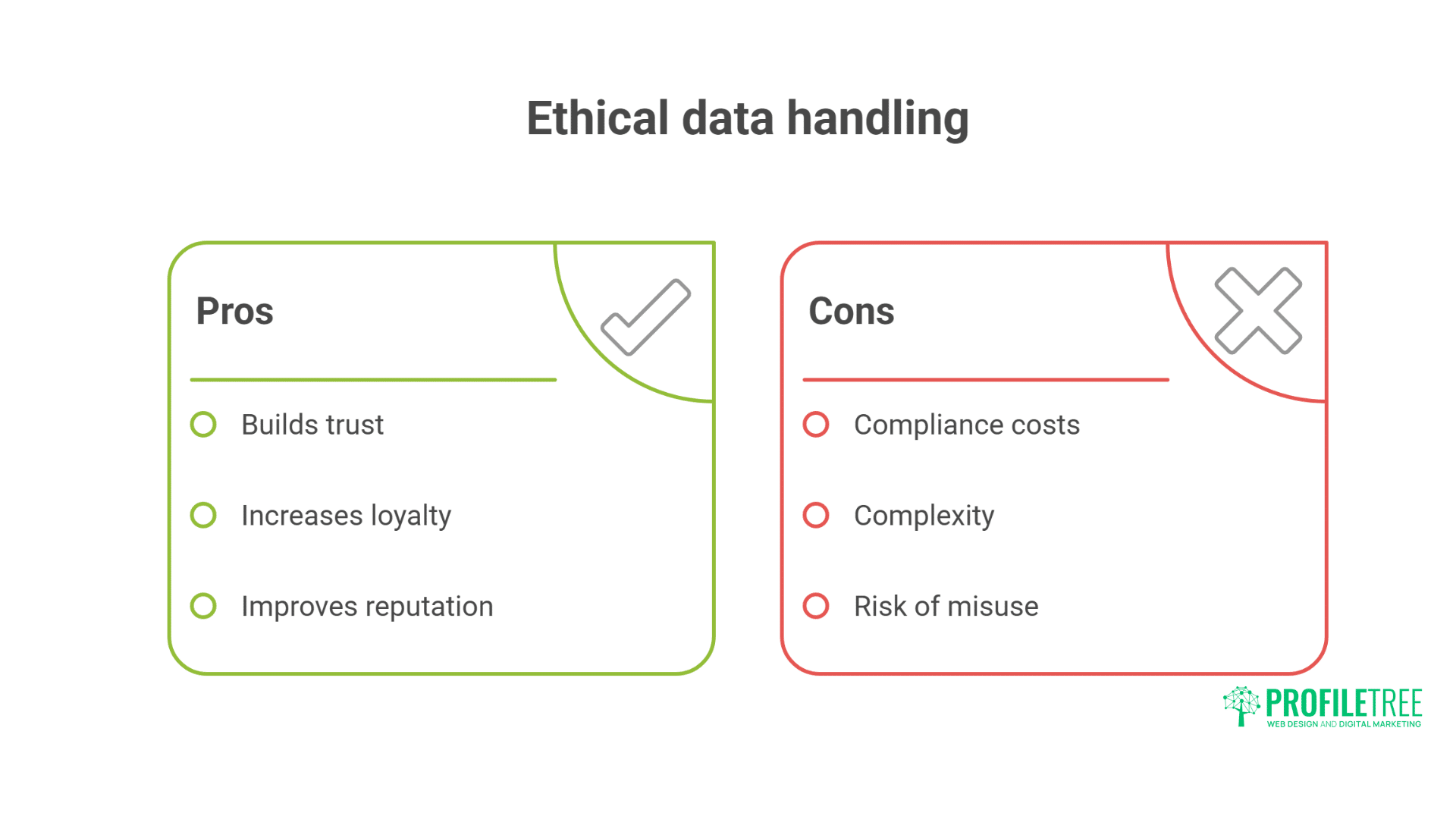
Marketing campaigns rely on consumer data more than ever before. With greater data collection comes increased responsibility to protect and use this information ethically.
When businesses demonstrate proper data handling practices, they don’t just comply with regulations—they build lasting trust with their customers. This trust translates directly to customer loyalty and improved brand reputation,” notes Ciaran Connolly, Director of ProfileTree.
Key Data Protection Regulations Affecting UK and Irish Businesses
Understanding the regulatory landscape is essential for any organisation collecting consumer data. The following frameworks establish the legal requirements that all businesses must adhere to when handling customer information in their marketing activities. Familiarity with these regulations helps marketing managers make informed decisions about data collection and usage.
UK GDPR and Data Protection Act 2018
Following Brexit, the UK maintains its own version of GDPR, which closely mirrors EU regulations. Key requirements include:
- Legal basis for processing data
- Purpose limitation (using data only for stated purposes)
- Data minimisation (collecting only what’s necessary)
- Transparency about data collection and usage
- Implementation of appropriate security measures
EU GDPR for Irish Businesses
Irish companies must comply with EU GDPR, which includes additional considerations around cross-border data transfers and representation requirements.
ePrivacy Regulations
These regulations specifically address electronic communications, including:
- Cookie consent requirements
- Marketing communication permissions
- Location data processing limitations
Non-compliance penalties can reach up to £17.5 million or 4% of annual global turnover, whichever is higher—a potentially devastating blow to businesses of any size.
Practical Steps to Safeguard Consumer Data
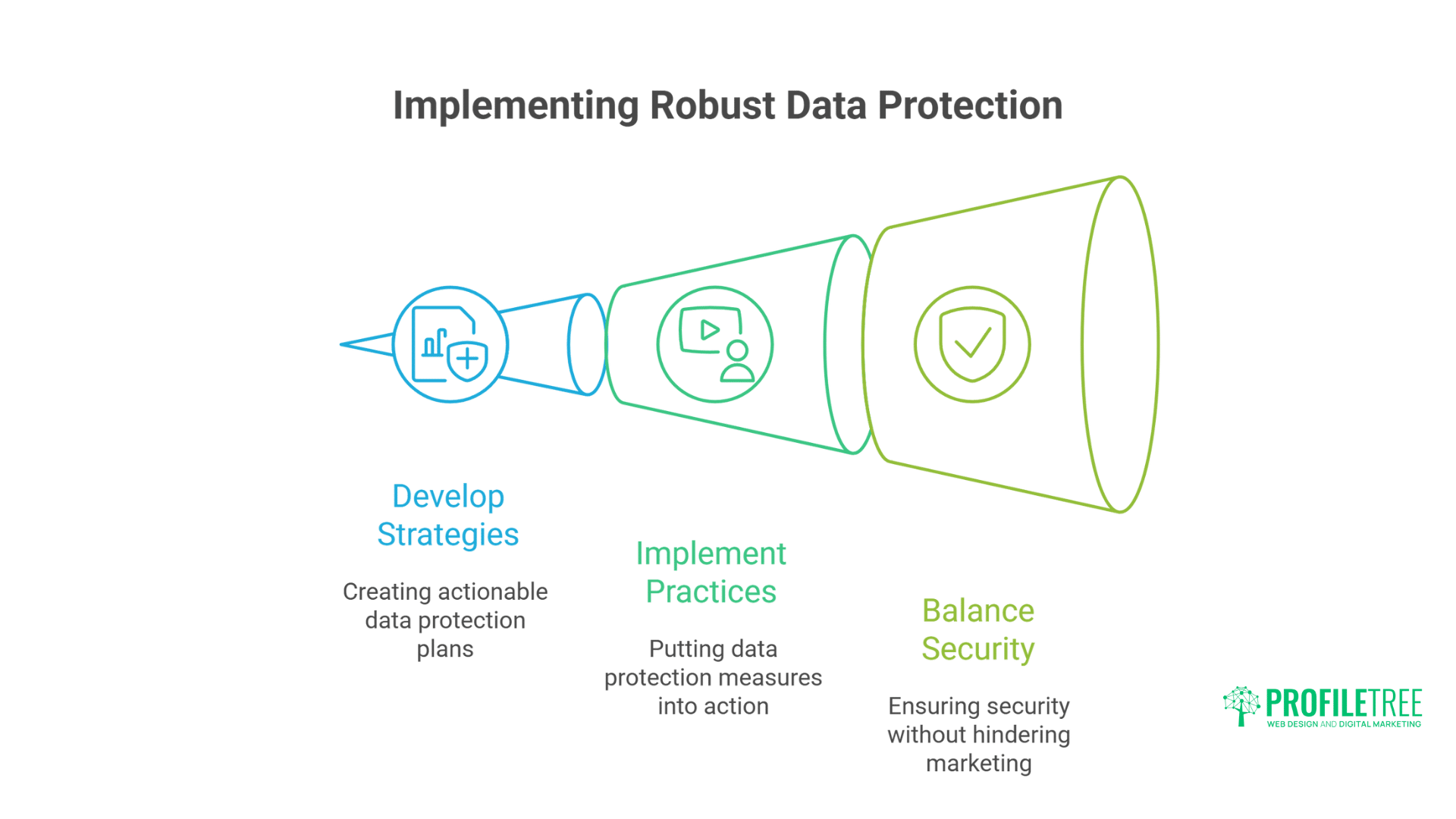
Moving beyond regulatory awareness to practical implementation, businesses need actionable strategies to protect consumer data. The following approaches provide a framework for marketing managers and business owners to establish robust data protection practices within their organisations. These methods balance security requirements with marketing effectiveness.
Conduct Regular Data Audits
Effective data protection begins with knowing exactly what information you collect and why.
Implementation Strategy:
- Document all data collection points across marketing channels
- Classify data according to sensitivity
- Evaluate whether each data point serves a legitimate business purpose
- Remove unnecessary data collection practices
Benefits: Reduces vulnerability surface area and demonstrates commitment to compliance.
Implement Privacy by Design
Rather than treating privacy as an afterthought, build it into your marketing systems from the ground up.
Implementation Strategy:
- Configure marketing platforms with privacy-preserving defaults
- Use pseudonymisation and anonymisation where possible
- Integrate data protection impact assessments before launching new campaigns
- Apply data minimisation principles throughout the marketing cycle
Benefits: Prevents privacy issues before they occur and reduces remediation costs.
Strengthen Access Controls
Not everyone in your organisation needs access to all consumer data.
Implementation Strategy:
- Apply role-based access controls to marketing systems
- Implement strong authentication requirements
- Maintain detailed access logs
- Regularly review and update access permissions
Benefits: Reduces insider threat risks and limits potential damage from compromised accounts.
Enhance Technical Security Measures
Your marketing technology stack requires robust security protections.
Implementation Strategy:
- Apply end-to-end encryption for data in transit and at rest
- Keep marketing platforms and plugins updated
- Conduct regular vulnerability scanning
- Implement web application firewalls for customer-facing marketing assets
Benefits: Protects against external threats and data breaches.
Develop Clear Data Handling Procedures
Well-documented procedures help ensure consistent data protection practices.
Implementation Strategy:
- Create written policies for data collection, storage, sharing, and deletion.
- Establish data retention schedules for different types of marketing information.
- Document incident response procedures
- Implement regular staff training programmes
Benefits: Ensures organisational alignment and facilitates regulatory compliance.
Building Consumer Trust Through Transparent Data Practices
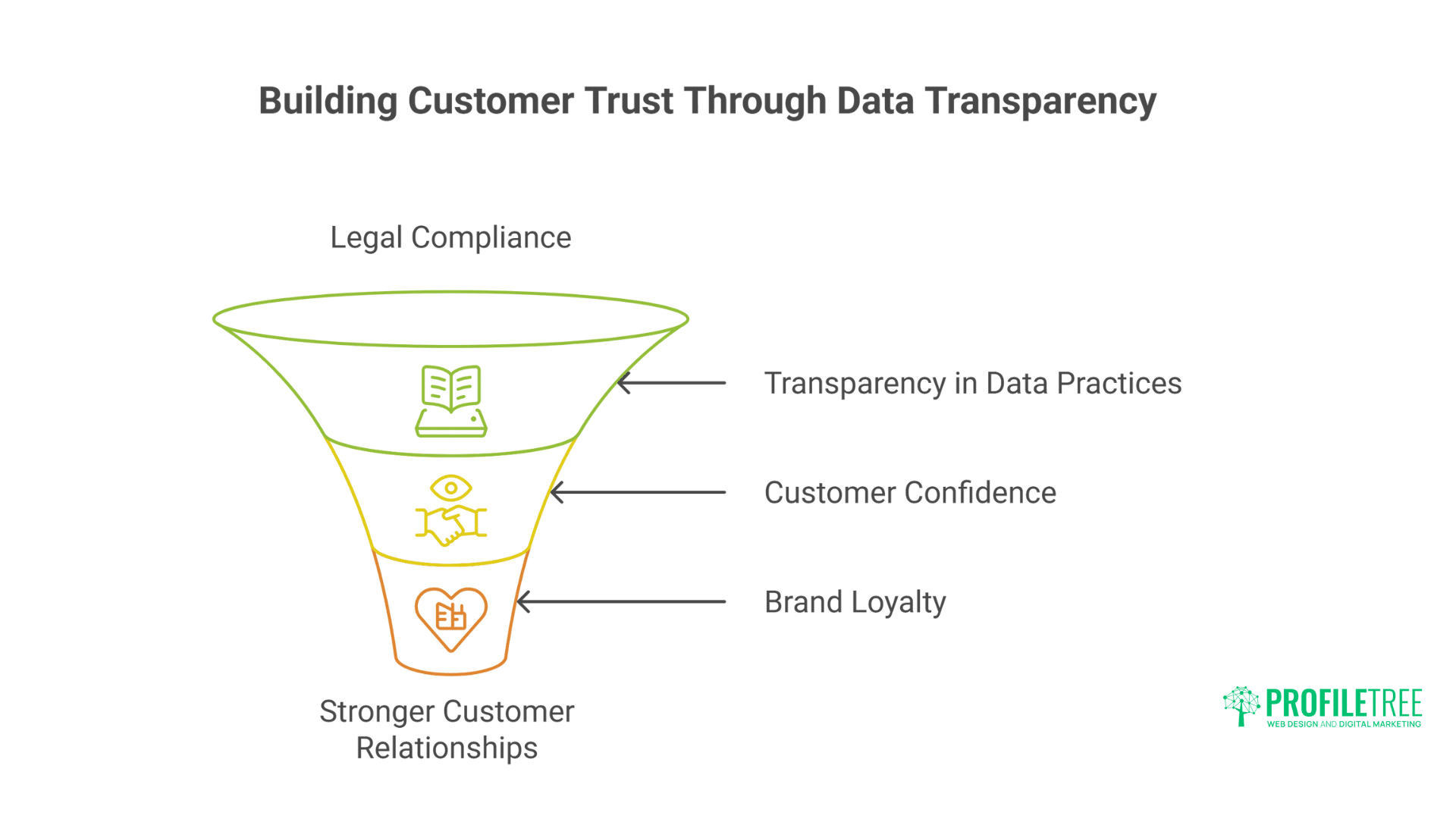
Beyond legal compliance, successful organisations recognise that transparency around data practices builds customer confidence and strengthens brand loyalty. The following strategies help businesses communicate their data protection commitments effectively to consumers, turning a potential concern into a relationship-building opportunity.
Transparent Privacy Notices
Privacy policies shouldn’t be impenetrable legal documents. Make yours clear, accessible, and user-friendly.
Implementation Strategy:
- Use plain language to explain data practices
- Segment information into digestible sections
- Include visual elements to improve understanding
- Provide examples of how data is used in marketing contexts
Benefits: Improves customer understanding and builds trust.
Meaningful Consent Mechanisms
Consent should be active, informed, and easily withdrawn.
Implementation Strategy:
- Implement granular consent options
- Avoid pre-ticked boxes and dark patterns
- Make consent withdrawal as simple as giving consent
- Document consent records securely
Benefits: Respects customer autonomy and builds positive brand perception.
Regular Communications About Data Practices
Keep customers informed about how you protect their information.
Implementation Strategy:
- Send periodic updates about security enhancements
- Notify users of privacy policy changes in advance
- Share data protection success stories
- Provide transparency reports when appropriate
Benefits: Demonstrates ongoing commitment to data protection.
Technology Solutions for Data Protection
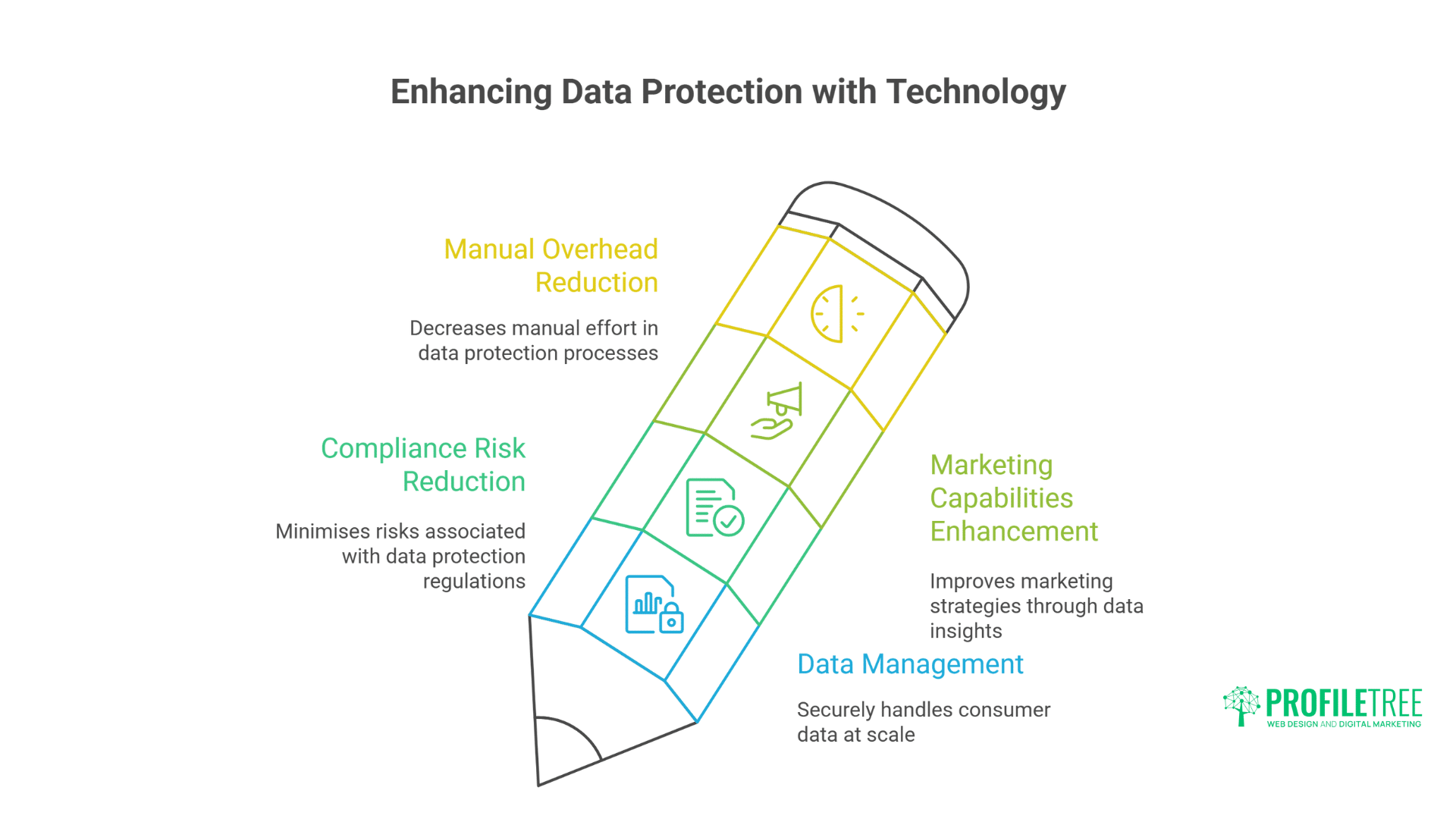
The right technology infrastructure can significantly simplify data protection efforts while enhancing marketing capabilities. These solutions help businesses manage consumer data securely at scale, reducing manual overhead and minimising compliance risks. For marketing managers looking to strengthen their data protection posture, these technologies offer substantial benefits.
Customer Data Platforms (CDPs)
CDPs can centralise data management while implementing strong protection measures.
Implementation Strategy:
- Select platforms with robust security features
- Configure data mapping and governance controls
- Implement automatic data retention policies
- Use built-in anonymisation features
Benefits: Streamlines compliance while enhancing marketing capabilities.
Consent Management Platforms
These specialised tools help manage the complex landscape of user permissions.
Implementation Strategy:
- Deploy across all digital properties
- Customise to reflect brand voice and style
- Integrate with analytics and marketing platforms
- Maintain comprehensive consent records
Benefits: Simplifies compliance documentation and improves user experience.
Security Information and Event Management (SIEM)
SIEM solutions provide visibility into potential security issues across marketing systems.
Implementation Strategy:
- Monitor marketing platform access attempts
- Set alerts for unusual data access patterns
- Track data flows between systems
- Generate compliance reports
Benefits: Provides early warning of potential breaches and simplifies audit processes.
Preparing for Data Breaches
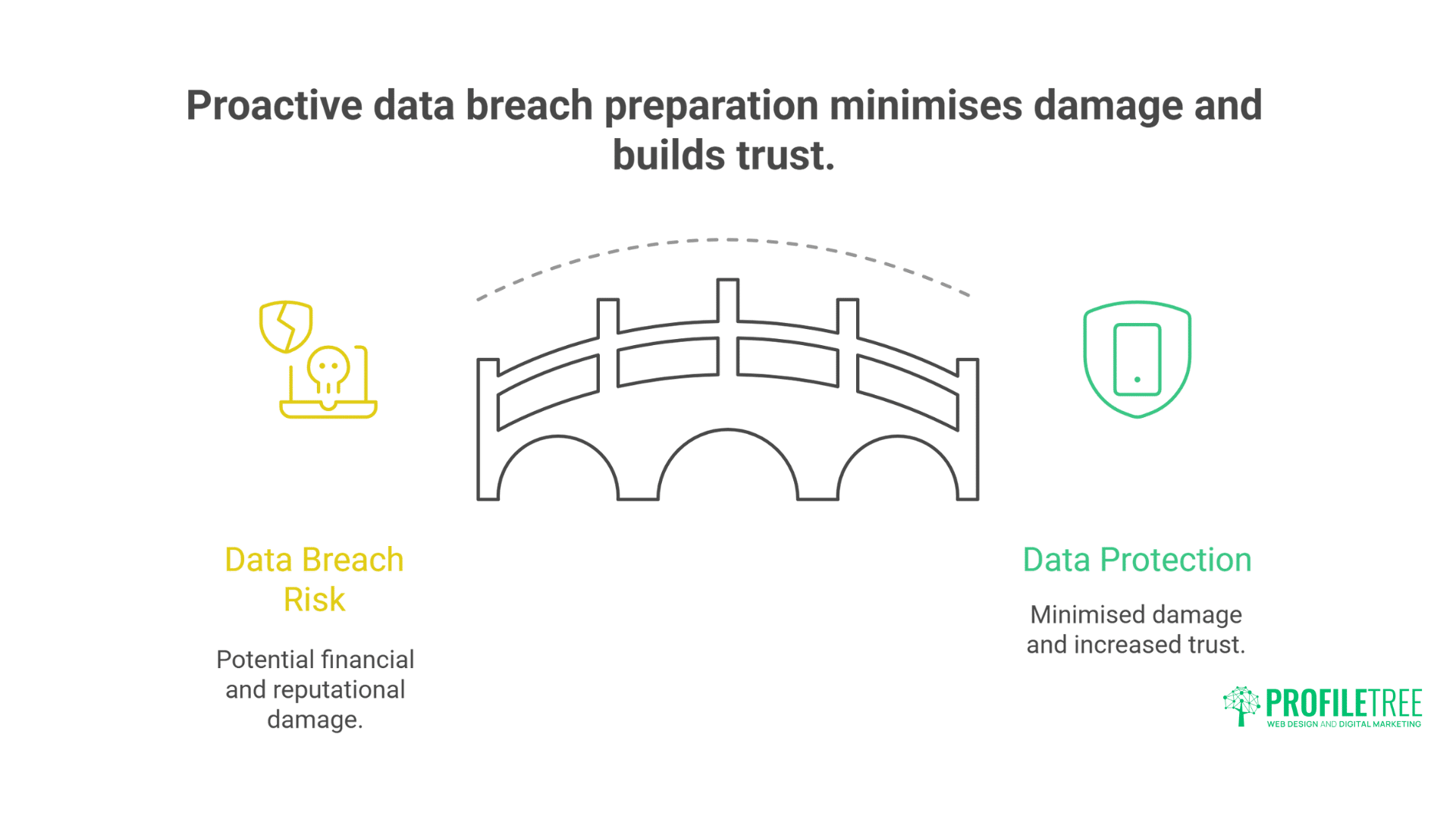
Even with strong preventive measures, data breaches remain a possibility that organisations must prepare for. A well-developed response plan can significantly reduce the financial and reputational damage associated with data incidents. Proactive preparation demonstrates to regulators and customers alike that your business takes its data protection responsibilities seriously.
Incident Response Planning
Implementation Strategy:
- Define roles and responsibilities
- Create communication templates
- Establish containment procedures
- Document regulatory notification requirements
Benefits: Reduces breach impact and demonstrates due diligence.
Regular Testing and Drills
Implementation Strategy:
- Conduct tabletop exercises for marketing teams
- Test recovery procedures
- Evaluate notification processes
- Review and update plans based on outcomes
Benefits: Identifies gaps before real incidents occur.
The Business Case for Strong Data Protection
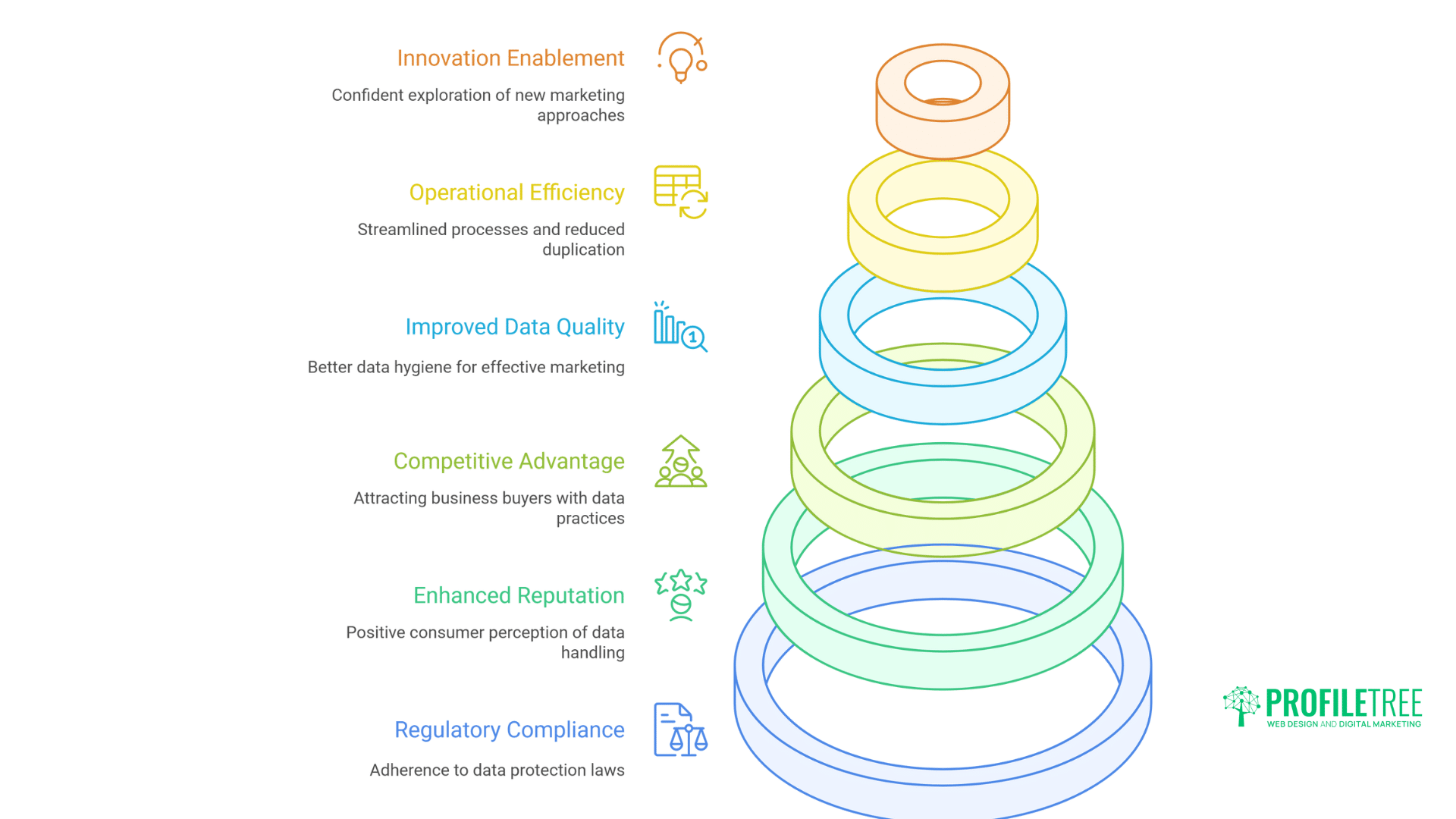
Beyond regulatory compliance, robust data protection practices deliver measurable business benefits that contribute directly to organisational success. Understanding these advantages helps business owners and marketing managers justify investment in data protection initiatives and recognise their strategic value beyond risk mitigation.
- Enhanced Brand Reputation: 67% of UK consumers say they view brands more positively when they handle data responsibly.
- Competitive Advantage: 53% of business buyers consider a company’s data practices when selecting vendors.
- Improved Data Quality: Protection measures often lead to better data hygiene, resulting in more effective marketing.
- Operational Efficiency: Well-structured data protection practices reduce duplicative efforts and streamline processes.
- Innovation Enablement: With proper safeguards in place, organisations can confidently explore new data-driven marketing approaches.
How ProfileTree Supports Data Protection Excellence
As a digital agency serving businesses across Northern Ireland, Ireland, and the UK, ProfileTree integrates data protection principles into all marketing services. Our comprehensive approach combines technical expertise with strategic marketing knowledge, helping clients develop practices that protect consumer data without compromising campaign effectiveness.
- Secure Website Development: Our web design process incorporates privacy by design principles from the start
- Compliant Content Marketing: Content strategies that respect data protection requirements while driving engagement
- Protected Analytics Implementation: Setting up measurement systems that balance insights with privacy
- AI-Powered Marketing:Implementing artificial intelligence solutions with built-in data safeguards
- Staff Training: Helping your team understand and implement best practices in data protection
Looking Ahead: The Future of Data Protection in Marketing
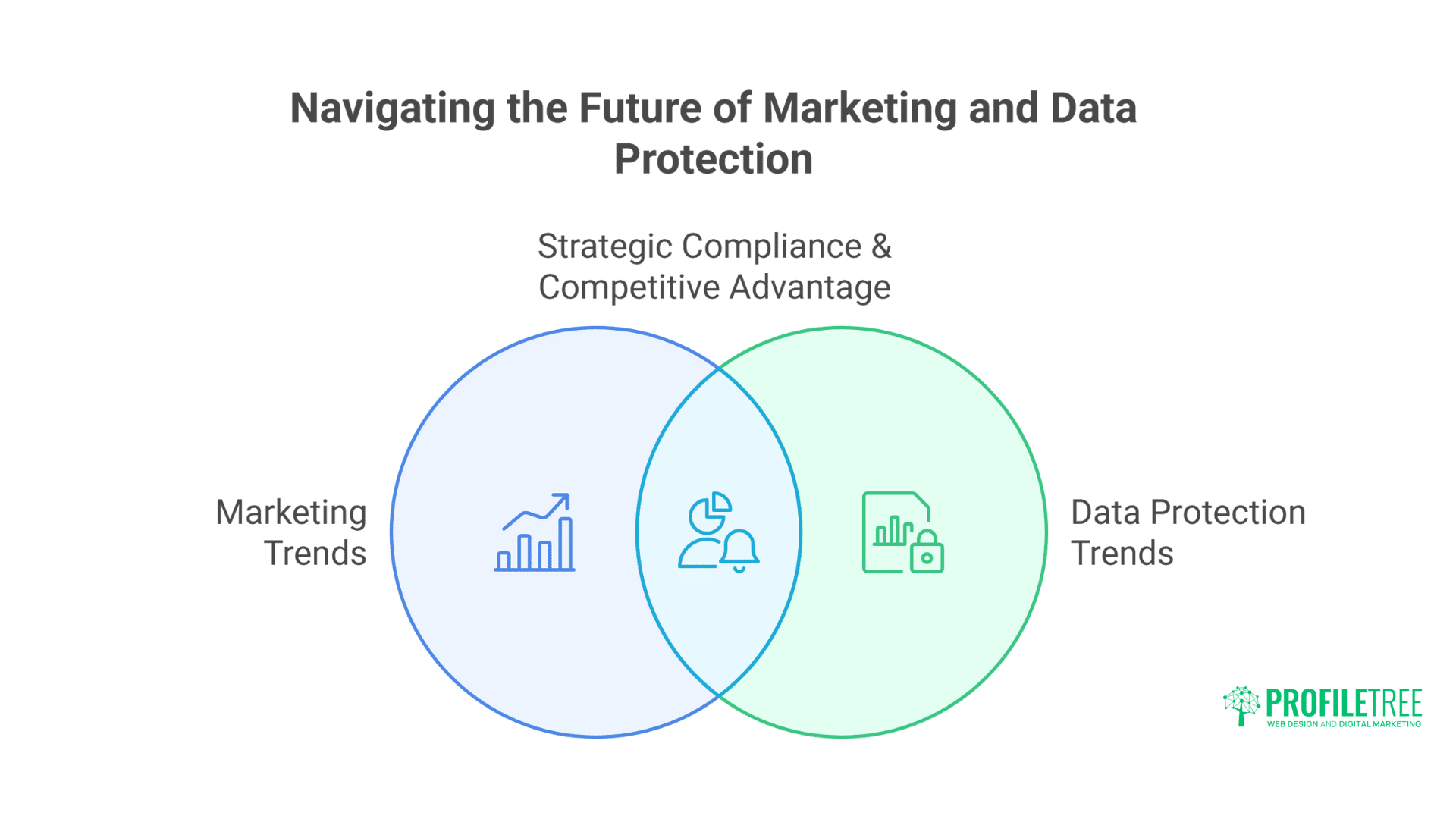
The intersection of marketing and data protection continues to evolve, with new technologies, consumer expectations, and regulatory requirements constantly emerging. Forward-thinking organisations must stay ahead of these trends to maintain compliance and competitive advantage. Understanding these future developments helps businesses prepare strategically rather than reacting to changes after they occur.
- Increased regulatory scrutiny of AI and automated decision-making in marketing
- Growing consumer expectations around data transparency
- Evolution of first-party data strategies as third-party cookies phase out
- Enhanced requirements for cross-border data transfers affecting international campaigns
By implementing robust data protection practices now, businesses position themselves for success regardless of how regulations develop.
Conclusion
Far from being merely a compliance burden, strong data protection offers organisations a chance to differentiate themselves, build customer trust, and create more effective marketing programmes. In an era where data breaches regularly make headlines, businesses that demonstrate exceptional care with customer information gain a powerful competitive edge. This trust translates directly into customer loyalty, positive word-of-mouth, and ultimately, increased revenue.
By implementing appropriate technical measures, transparent policies, and comprehensive training, businesses can transform data protection from a challenge into a strategic advantage. The organisations that view consumer privacy as a core value rather than a regulatory hurdle will be the ones that thrive in our increasingly data-conscious marketplace. Successful businesses recognise that data protection isn’t just about avoiding penalties—it’s about building sustainable relationships with customers who increasingly value their privacy and digital rights.
For businesses seeking to enhance their data protection practices within marketing campaigns, consulting with experts who understand both marketing effectiveness and compliance requirements provides the surest path to success. ProfileTree’s team combines deep technical knowledge of data protection with marketing expertise, helping organisations across Northern Ireland, Ireland, and the UK implement practices that safeguard consumer data without compromising campaign performance. This balanced approach ensures businesses can confidently pursue data-driven marketing strategies while maintaining the highest standards of consumer trust.