ProfileTree, a Belfast-based web design and digital marketing agency, delivers medical web design for private surgeons and specialist clinics across the UK. This case study covers a full website rebuild for Dr Seni, an NHS Consultant Oncoplastic Breast Surgeon based in the West Midlands, including a brand refresh, SEO content strategy, and a 90 on-page SEO score at launch.
The Challenge Private Medical Practitioners Face Online
Private surgeons operate in one of the most trust-dependent digital environments there is. A patient researching breast surgery or oncoplastic reconstruction is not browsing casually. They are making a significant decision, often in difficult circumstances, and they form their first impression of a surgeon through their website before any consultation takes place.
The medical websites ProfileTree encounters in this sector tend to share the same set of problems. Service information is scattered or poorly organised, making it hard for a prospective patient to understand what a surgeon actually does and whether they are the right fit. Mobile usability is frequently poor, which matters because a large proportion of initial searches happen on a phone. The CMS is often so difficult to use that the surgeon or their team cannot update content without outside help, which means clinical information, affiliations, and news go stale.
SEO performance is almost always weak. Private medical practitioners in England compete with NHS services, major hospital networks, and other private clinics for the same search terms. A site that is technically sound and well-structured gives a surgeon a realistic chance of appearing when patients search for the specific procedure they need. One that is not structured correctly will not appear at all, regardless of the surgeon’s reputation.
“The challenge for medical professionals building a private practice online is that their website has to do two jobs simultaneously,” says Ciaran Connolly, founder of ProfileTree. “It has to be found by the right patients, and it has to immediately establish the kind of trust that makes someone feel comfortable booking a consultation. Getting the structure and the content right from the start matters more here than in almost any other sector.”
About Dr Seni: The Project
Dr Seni is an NHS Consultant Oncoplastic Breast Surgeon based at the Royal Wolverhampton Hospitals NHS Trust. He holds specialist expertise across breast symptom assessment, benign breast conditions, breast cancer management, and reconstructive and cosmetic breast surgery. Alongside his NHS practice, Dr Seni offers private breast services across the West Midlands through a number of affiliated healthcare institutions, including Nuffield Health Wolverhampton, Spire Parkway Healthcare Solihull, MUMS Solihull, and Transpire Cosmetic Surgery Birmingham.
His previous website, trading under the name “My Breast Surgeon”, lacked the structure and credibility required for a specialist operating at his level. The brief ProfileTree received was clear: build a site that reflects his qualifications, makes his services easy to understand, and positions him effectively against other private breast surgery providers in England.
What We Did: The Medical Web Design Approach
Brand Identity and Visual Positioning
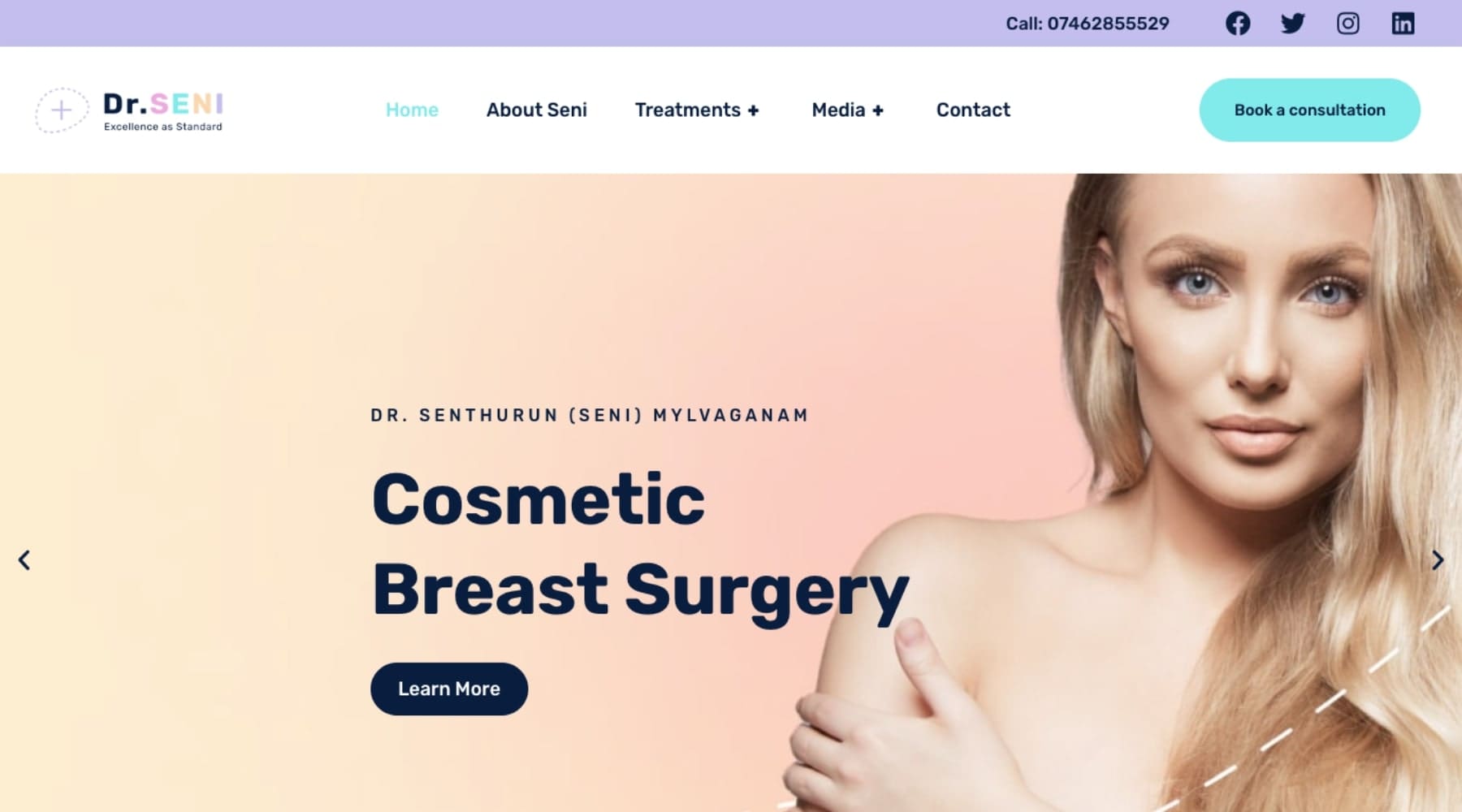
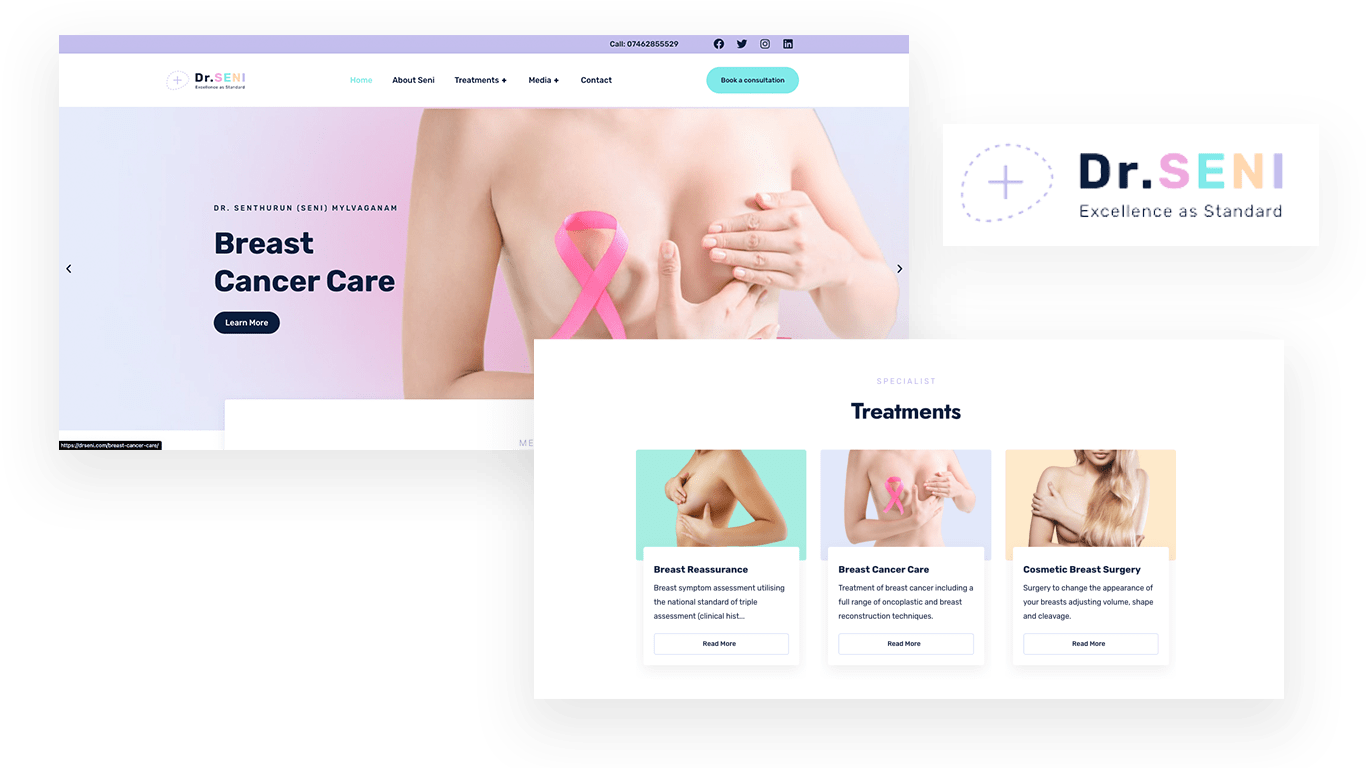
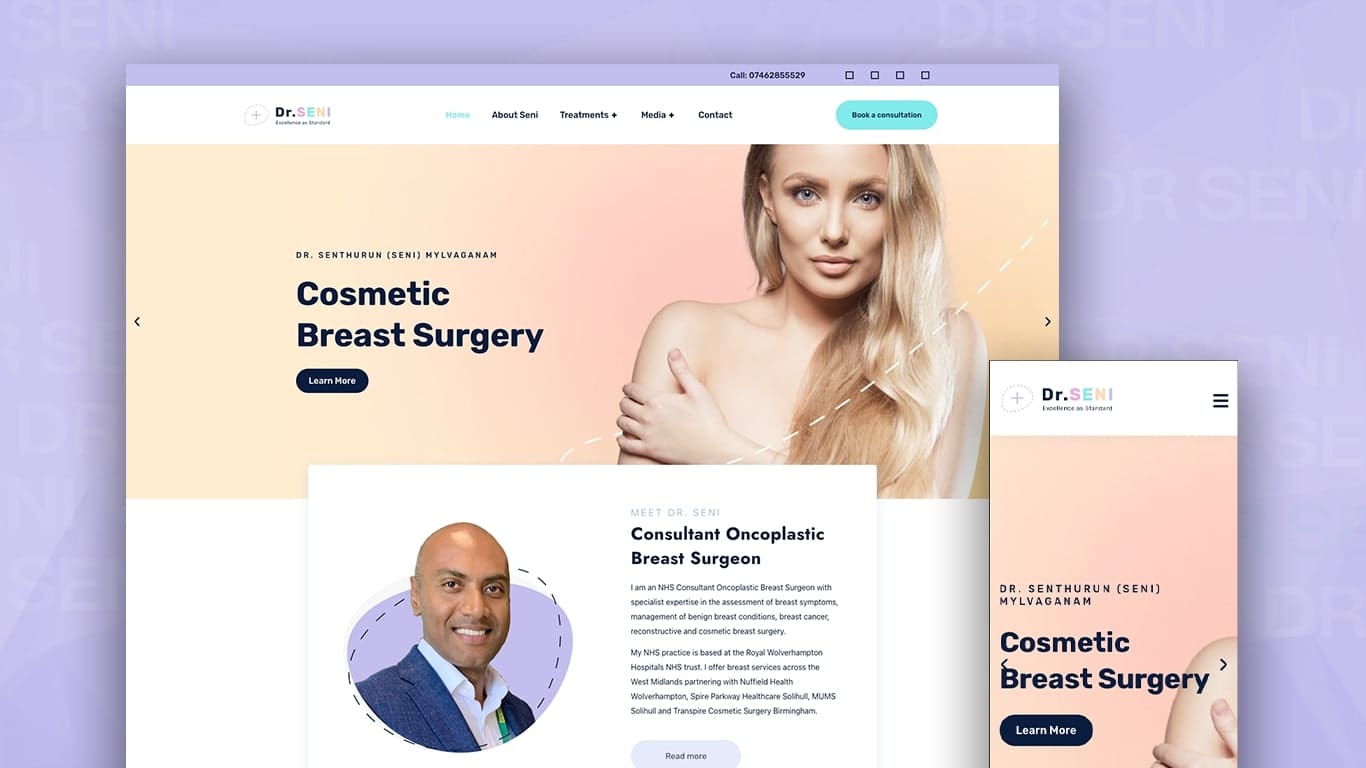
The project began with a brand refresh. The previous site used generic stock imagery and a colour palette that did not convey the level of specialism Dr Seni brings to his practice. ProfileTree developed a new visual identity with an updated logo and colour scheme, designed to communicate professionalism and approachability together. In medical web design, the visual layer is not decorative. It is the first signal a patient receives about whether they are in the right place.
WordPress Build and Site Architecture
The rebuild was built on WordPress, selected for its combination of editorial flexibility and CMS accessibility. A key requirement was that Dr Seni and his team could manage content updates independently after launch, including blog articles, news posts, and clinical information. The site architecture was structured around the patient decision journey: a visitor arriving from a search for breast reconstruction surgery, or from a referral looking for information on a specific procedure, should reach what they need in no more than two clicks.
SEO Content and On-Page Optimisation
ProfileTree developed the full content layer for the new site, with each page built around the search terms patients actually use when looking for private breast surgery in the UK. The homepage was structured to introduce Dr Seni’s credentials and service range immediately, supported by an informational video and a clear route to the booking enquiry form. A blog section was established at launch, with initial articles written to build topical authority in breast surgery and oncoplastic reconstruction. Dr Seni continues to add content to the site independently.
Gallery, Testimonials, and Trust Architecture
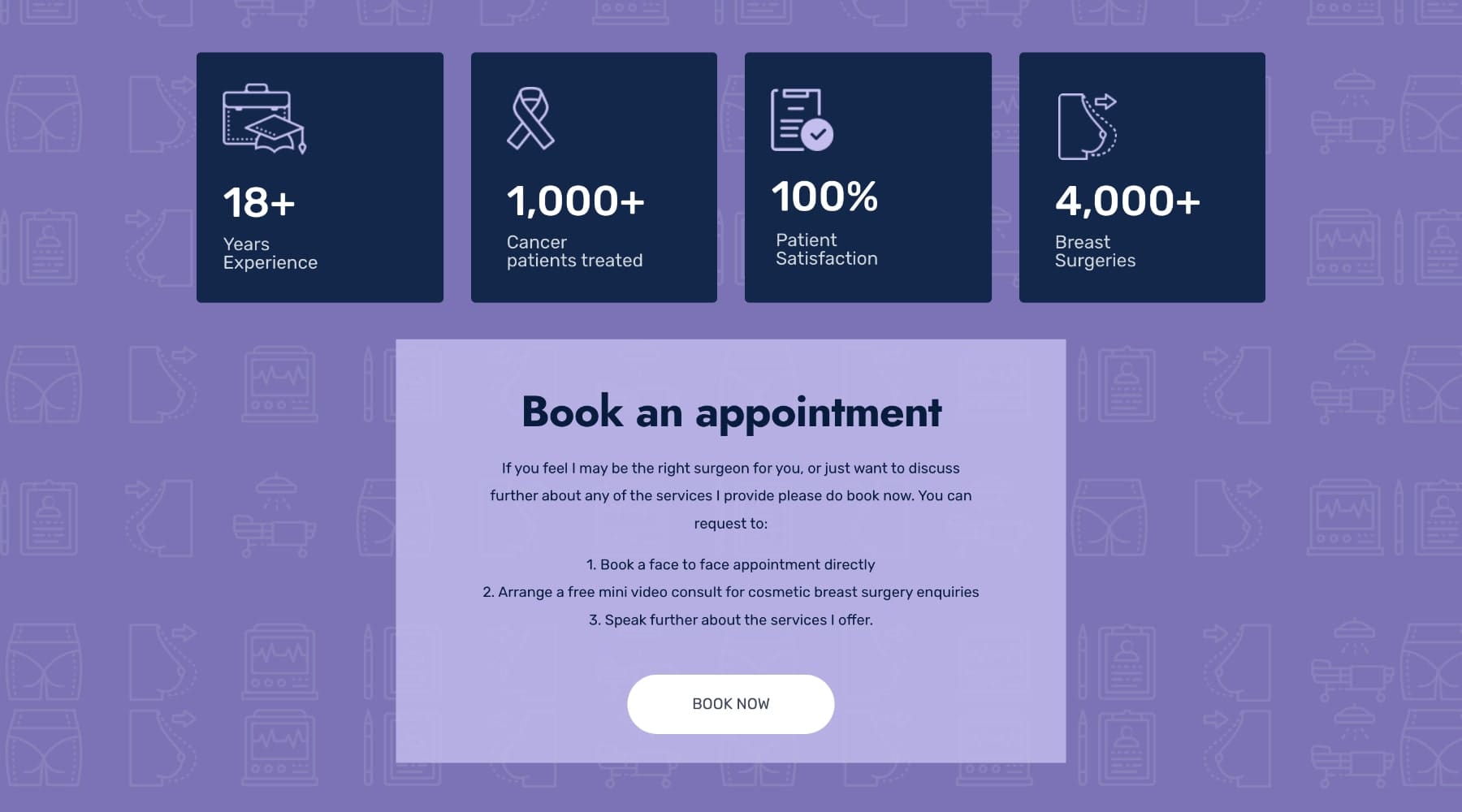
A gallery section was built to showcase results and set realistic expectations for prospective patients. Patient testimonials were placed on both the homepage and the About page, providing social proof at the points where a visitor is most likely to be deciding whether to make contact. Call-to-action elements were placed throughout the site with two routes to appointment booking: a direct booking link and a mini video consultation option for cosmetic surgery enquiries.
Results
The rebuilt Dr Seni website launched with a 90 on-page SEO score in Rank Math, reflecting correct heading structure, metadata, internal and external linking, image optimisation, schema markup, and mobile responsiveness across all pages. The site achieves full mobile usability compliance and loads within performance thresholds on both desktop and mobile devices.
The internal team can now manage all content updates without external support. New blog articles are published regularly, clinical information stays current, and the site continues to build topical authority in breast surgery search terms over time. Dr Seni reported satisfaction with the outcome, noting the improved ease of use on both the front end for patients and the back end for his team.
How ProfileTree Approaches Medical Web Design
Medical web design is not a standard commercial brief. The regulatory context is different, the audience is in a more sensitive decision-making state than a typical website visitor, and the trust signals that matter are more specific. A private surgeon’s website needs to surface qualifications and institutional affiliations clearly, use language that reflects clinical accuracy without being impenetrable to a general audience, and make it easy for a patient to take the next step without feeling pressured.
ProfileTree’s approach to healthcare website builds starts with the user journeys that actually drive decisions in this sector: a patient who has received a referral, a patient researching their options independently, and a medical professional looking for information about the surgeon’s clinical work. Each journey has different requirements, and the information architecture is built around all three before any design or development work begins.
The technical build combines WordPress as the CMS for long-term editorial control, SEO foundations built into the page structure from day one, accessibility compliance as standard, and a content strategy that gives the site a realistic chance of being found by the right patients in the right geographic market. For private practitioners operating across multiple sites, the digital footprint needs to reflect that geography accurately in both the content and the technical SEO configuration.
At minimum: a clear summary of the surgeon’s qualifications and clinical affiliations, a structured list of procedures with enough detail for a patient to understand what is involved, a route to appointment booking, patient testimonials, and a gallery of results where appropriate. A blog or news section is valuable for building topical authority and giving patients confidence in the surgeon’s current practice. The CMS should be manageable by the practice team without ongoing developer support.
How does medical web design differ from standard commercial web design?
The primary difference is the weight placed on trust signals. A patient choosing a surgeon is not making a casual purchase. The site architecture, content, and visual design all need to communicate clinical credibility, not just professional competence. Regulatory considerations are also different: claims about outcomes need to be framed carefully, and patient data handling needs to be clearly addressed. The content tone needs to balance clinical accuracy with accessibility for patients who may not have a medical background.
How does SEO work for a private medical practice?
SEO for a private medical practice focuses on the procedure-level and location-level searches patients use when looking for a specialist. A breast surgeon in the West Midlands needs to appear for searches like “private breast surgeon Wolverhampton” or “oncoplastic reconstruction West Midlands”, not just their name. This requires a structured content architecture, correctly configured metadata, and a local SEO setup that reflects all the locations where the surgeon operates.
What CMS is best for a medical website?
WordPress is the most practical choice for most private medical websites. It gives the practice team full editorial control without needing a developer for routine updates, it supports the full range of SEO tools, and it can accommodate the range of content types a medical site typically needs: procedure pages, a blog, a gallery, booking forms, and patient resources. The flexibility to add functionality as the practice grows is a practical advantage for a surgeon building a private practice over time.
How long does it take to build a medical website?
A project combining a new WordPress build, brand identity work, full SEO content, and a gallery typically runs eight to twelve weeks from brief to launch. The main variable is content sign-off, particularly for clinical information that needs to be reviewed by the surgeon before it goes live. The technical build rarely causes delays when the brief is clear and the content requirements are agreed at the outset.
How do you measure the success of a medical website project?
Technical metrics at launch (on-page SEO score, mobile usability, page speed) provide the baseline. The meaningful measures over time are organic search visibility for procedure and location-specific terms, appointment enquiry volume from the website, and whether the practice team can maintain the site independently. For a private surgeon growing a practice, the long-term measure is whether the website is working as a consistent source of qualified patient enquiries.
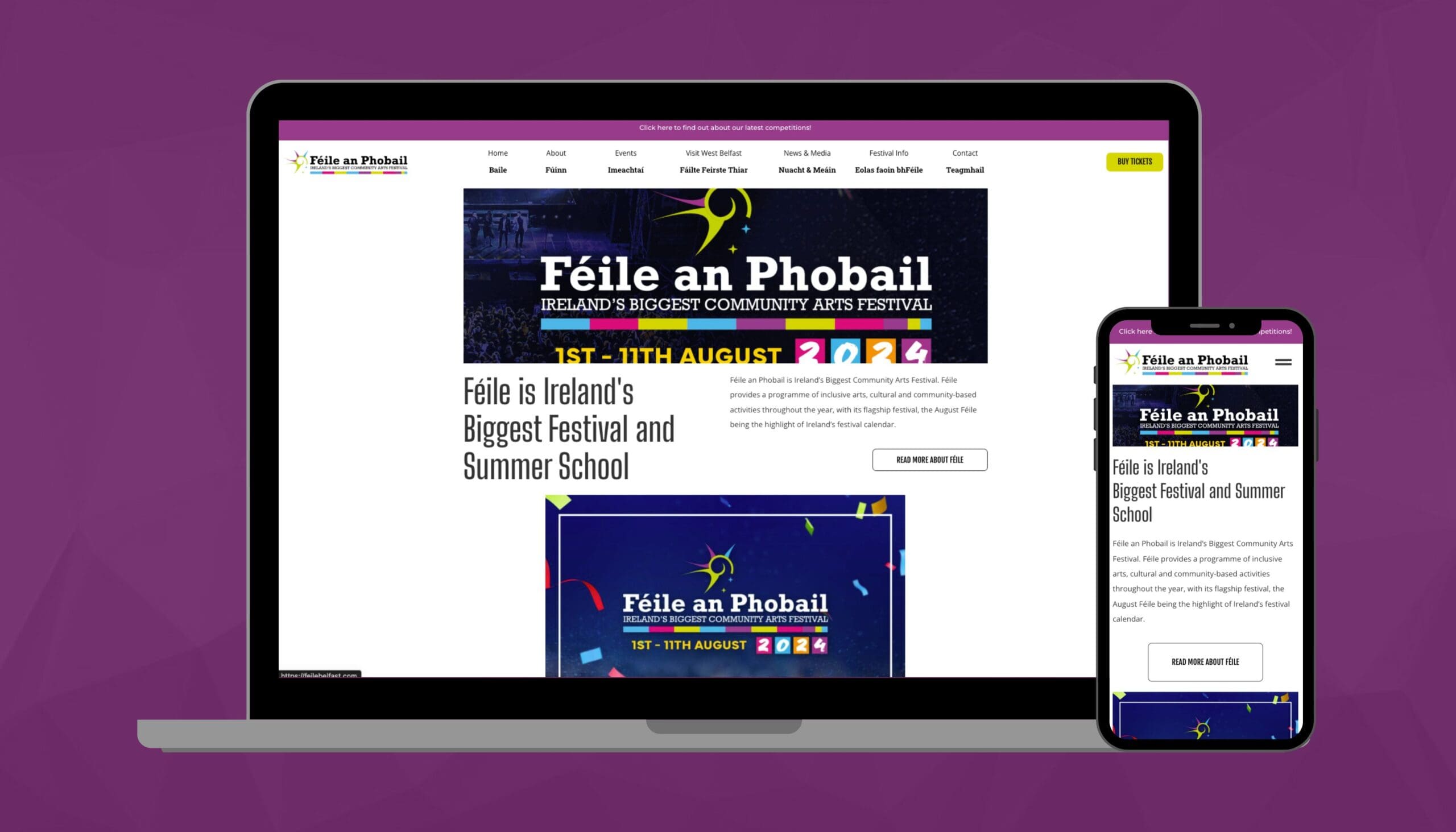
ProfileTree is a Belfast-based website design and digital marketing agency that has worked with arts and community organisations across Northern Ireland and Ireland. This case study covers a full custom WordPress build for Féile...
Belfast Artisan Still is a proud representation of a revitalised Belfast — an independent gin distillery built on friendship, community spirit and craftsmanship. Combining locally sourced ingredients with traditional botanicals, the distillery produces premium...