
Machine Learning in Healthcare: Applications and Implementation Guide
Table of Contents
What if your doctor could predict you’ll develop type 2 diabetes three years before symptoms appear—simply by analysing patterns in your routine blood tests that no human could spot? Or imagine a cancer patient receiving a treatment plan designed specifically for their tumour’s genetic profile, avoiding months of trial-and-error with ineffective chemotherapy. This isn’t science fiction. Machine learning in healthcare is making these scenarios routine across hospitals and clinics throughout the UK.
Machine learning algorithms analyse millions of patient records, medical images, and genetic sequences to identify patterns invisible to human observation. They’re detecting breast cancer in mammograms with accuracy exceeding expert radiologists, predicting sepsis hours before symptoms emerge, and designing new drugs in months rather than the traditional decade-long process. For healthcare organisations across Northern Ireland, Ireland, and the UK, these capabilities translate to earlier interventions, better patient outcomes, and more efficient operations—but only when implemented correctly.
Successful machine learning in healthcare requires more than purchasing algorithms. Healthcare providers require secure digital platforms that handle sensitive patient data, intuitive systems that enable clinical teams to act on AI insights quickly, effective content strategies that foster patient trust in AI-assisted care, and comprehensive training that prepares staff for technology-augmented workflows.
This guide explains practical applications, implementation requirements, and how ProfileTree supports healthcare organisations navigating the complexities of AI adoption—from web development to digital marketing.
Machine Learning Fundamentals for Healthcare Professionals
Machine learning in healthcare begins with understanding the core concepts that distinguish it from traditional software. Rather than following pre-programmed rules, machine learning systems identify patterns in data, learning to make predictions or decisions that improve with experience.
Types of Machine Learning Applied in Healthcare
Supervised Learning for Diagnostic Tasks
Supervised learning uses labelled datasets where algorithms learn to map inputs to known outputs. In healthcare, this means training systems on medical images marked as ‘cancerous’ or ‘non-cancerous’, teaching algorithms to recognise disease indicators.
Medical professionals provide the labels that guide learning. A radiologist reviews thousands of mammograms, marking regions of concern. The algorithm learns which visual patterns correlate with these expert identifications, eventually recognising similar patterns in new images without human guidance.
Unsupervised Learning for Pattern Discovery
Unsupervised learning finds hidden structures in unlabelled data. Healthcare applications include patient segmentation and identifying novel disease subtypes that traditional classification systems miss.
This approach proves valuable when relationships aren’t obvious. Algorithms might discover that patients responding well to a particular treatment share genetic markers, lifestyle factors, and biomarkers that weren’t previously connected, revealing new therapeutic targets.
Reinforcement Learning for Treatment Optimisation
Reinforcement learning involves systems learning through trial and error, receiving rewards for successful actions. While less common in direct clinical use currently, research explores applications in treatment planning and robotic surgery, where systems refine movements based on outcomes.
The potential lies in handling complex decision trees. Cancer treatment involves numerous choices: surgery timing, chemotherapy selection, and radiation protocols. Reinforcement learning could simulate thousands of treatment paths, learning which sequences produce the best outcomes for specific patient profiles.
The Critical Role of Data Quality
Machine learning in healthcare depends entirely on data quality. Algorithms learn from examples provided; if the training data contains biases, inaccuracies, or gaps, the resulting system inherits these flaws.
Consider a diagnostic algorithm trained primarily on data from one demographic group. It may perform poorly when analysing patients from different backgrounds, potentially missing diseases or flagging false positives. This represents not just a technical failure but an ethical one, potentially exacerbating healthcare disparities.
Healthcare organisations must establish robust data governance frameworks before implementing machine learning. This includes standardised data collection protocols, regular quality audits, and diverse datasets representing patient populations served.
Standard Algorithms in Medical Applications
Neural networks, particularly deep learning architectures, excel at analysing medical images. These systems process information through layers of interconnected nodes, each layer identifying increasingly complex features. Early layers might detect edges and shapes; deeper layers recognise organs or tumour characteristics.
Decision trees create flowchart-like structures, making them interpretable—crucial in healthcare, where understanding why a system reached a particular conclusion is just as important as the conclusion itself.
Support vector machines identify optimal boundaries between data classes, which is particularly useful for binary classification tasks, such as determining whether tissue samples are benign or malignant based on cellular characteristics.
Ethical Foundations for Healthcare AI
Machine learning in healthcare raises profound ethical questions that organisations must address proactively.
Data Privacy and Security
Patient information ranks among the most sensitive data categories. Healthcare AI systems require access to detailed medical records, genetic information, and lifestyle data. Robust security measures, encryption protocols, and access controls protect this information whilst enabling the analysis required for machine learning applications.
UK healthcare organisations must comply with GDPR and NHS data governance frameworks, balancing the societal benefits of AI research against individual privacy rights.
Algorithmic Transparency
When machine learning systems influence clinical decisions, healthcare professionals and patients need to understand how conclusions were reached. “Black box” algorithms that provide recommendations without explanation erode trust and hinder clinical adoption.
Explainable AI techniques address this challenge, providing insights into model decision-making. Rather than simply stating “high cancer risk,” systems can highlight which factors—specific image features, lab values, or patient characteristics—drove the assessment.
Bias Detection and Mitigation
Machine learning systems can perpetuate or amplify existing healthcare disparities if training data reflects historical biases. Algorithms might recommend less aggressive treatment for specific demographic groups if training data shows these groups historically received less intervention—regardless of whether this represented appropriate care or systemic bias.
Addressing bias requires diverse training datasets, regular algorithm audits, and involvement of ethicists and community representatives in AI development.
Diagnosis and Prediction: Early Detection with Machine Learning
Early disease detection dramatically improves treatment outcomes, and machine learning in healthcare excels at identifying subtle indicators that human observation might miss.
Medical Image Analysis for Cancer Detection
Medical imaging generates vast amounts of visual data, including X-rays, MRI scans, CT images, and histopathology slides. Machine learning systems, particularly convolutional neural networks, match or exceed human performance in specific image analysis tasks.
Breast Cancer Screening
Mammography screening aims to detect breast cancer early, but interpretation challenges include dense breast tissue obscuring tumours and distinguishing benign from malignant lesions. Machine learning algorithms analyse mammograms, flagging suspicious regions for radiologist review.
Studies show these systems reduce false negatives—cancers initially missed—and decrease false positives that lead to unnecessary biopsies. The technology doesn’t replace radiologists but augments their capabilities, providing a “second opinion” that catches cases human review might miss.
Lung Nodule Detection
CT scans of the chest can reveal small lung nodules, some representing early-stage cancer. However, nodules are common, most are benign, and differentiating requires expert analysis of size, shape, density, and growth patterns.
Machine learning systems assess nodules across multiple criteria simultaneously, comparing findings against vast databases of previous cases with known outcomes. This helps prioritise patients for follow-up imaging or biopsy, potentially detecting lung cancer when it remains highly treatable.
Diabetic Retinopathy Screening
Diabetes can damage retinal blood vessels, leading to vision loss if left untreated. Machine learning algorithms trained on retinal images identify signs of diabetic retinopathy, enabling screening in primary care settings. When concerning features appear, patients receive referral to specialists, expanding screening access, particularly in underserved areas.
Predictive Modelling for Chronic Disease
Beyond analysing images, machine learning in healthcare excels at risk prediction by processing diverse data types simultaneously.
Cardiovascular Disease Risk Assessment
Traditional cardiovascular risk calculators use limited variables: age, sex, blood pressure, cholesterol, and smoking status. Machine learning models incorporate additional data, including detailed lipid profiles, inflammatory markers, genetic variants, lifestyle patterns from wearable devices, and even socioeconomic factors that affect health.
Processing this multidimensional data, algorithms identify patients at elevated risk years before symptoms appear. These individuals benefit from preventive interventions—lifestyle modifications, medication—potentially avoiding heart attacks or strokes.
Type 2 Diabetes Prediction
Type 2 diabetes develops gradually, with pre-diabetic states offering intervention opportunities. Machine learning models analyse routine blood tests, BMI, family history, and other factors to identify individuals progressing toward diabetes.
Early identification enables targeted interventions—such as dietary counselling, exercise programmes, and medication when appropriate—that can prevent or delay the onset of diabetes.
Sepsis Detection in Hospital Settings
Sepsis, the body’s extreme response to infection, can rapidly progress to organ failure and death. Machine learning systems continuously monitor the vital signs, laboratory results, and clinical notes of hospitalised patients, identifying patterns that suggest sepsis development before it becomes clinically apparent. Alerts prompt a rapid response from the medical team, improving survival rates.
These systems demonstrate the value of machine learning for continuous monitoring tasks where human attention naturally wavers. Algorithms don’t fatigue and can simultaneously track dozens of variables across hundreds of patients.
Mental Health Risk Identification
Mental health conditions often go undiagnosed until crises occur. Machine learning offers new approaches to early identification and intervention.
Algorithms analyse language patterns in electronic health records, identifying terminology suggesting undiagnosed depression or anxiety. Some systems analyse social media content (with consent), detecting linguistic markers associated with depression—changes in posting frequency, word choice shifts, or mentions of hopelessness.
Machine learning models for suicide risk assessment process multiple factors—previous attempts, current medications, recent life stressors, substance use—identifying high-risk individuals who warrant close monitoring and intervention.
Communicating AI-Assisted Diagnosis to Patients
As machine learning in healthcare becomes more prevalent, healthcare organisations face communication challenges. Patients need to understand how AI influences their care, building trust whilst managing expectations.
Effective communication requires clear explanations of what AI does and doesn’t do. Algorithms assist doctors but don’t replace clinical judgment. Healthcare providers implementing AI diagnostic tools benefit from comprehensive content strategies explaining these technologies to patients—areas where ProfileTree’s content creation and digital strategy services support healthcare organisations’ communication needs.
Personalised Medicine: Tailoring Treatment with Machine Learning
The “one-size-fits-all” medical approach gives way to personalised medicine, where treatment plans consider individual patient characteristics. Machine learning in healthcare enables this personalisation at scale, processing vast amounts of patient-specific data to optimise treatment decisions.
Predicting Individual Treatment Response
Patients with the same diagnosis often respond differently to the same treatment. Genetic variations, co-existing conditions, age, lifestyle factors, and environmental exposures all influence therapeutic outcomes.
Machine learning systems analyse patterns across thousands of previous patients, identifying which characteristics correlate with treatment success or failure.
Oncology Applications
Cancer treatment exemplifies the potential of personalised medicine. Tumours with the exact organ origin can differ dramatically at the molecular level, with different genetic mutations driving growth. These molecular differences determine treatment effectiveness.
Machine learning algorithms analyse tumour genetic profiles alongside patient characteristics, predicting which chemotherapy regimens, targeted therapies, or immunotherapies are most likely to succeed. This moves beyond trial-and-error approaches, sparing patients the side effects and costs of ineffective treatments whilst accelerating access to beneficial therapies.
Medication Selection in Psychiatry
Mental health treatment often involves trying multiple medications before finding effective options. Antidepressants, mood stabilisers, and antipsychotics show high variability in individual response, and trial periods last weeks or months, prolonging patient suffering.
Pharmacogenomic testing examines genes affecting drug metabolism. Machine learning systems integrate this genetic information with patient history, symptoms, and previous medication responses, recommending treatments with the highest probability of success.
Optimising Drug Dosages
Beyond selecting appropriate medications, dosing optimisation represents another opportunity for personalisation. Standard dosing protocols provide starting points, but ideal dosages vary based on patient-specific factors.
Precision Dosing in Critical Care
Intensive care patients require careful medication management. Machine learning systems continuously analyse patient data—vital signs, lab results, drug levels—adjusting dosing recommendations in real-time. These algorithms account for factors such as kidney function affecting drug clearance, interactions between multiple medications, and changes in patient conditions.
Anticoagulation Management
Blood thinners prevent strokes and blood clots but require careful monitoring. Machine learning models trained on thousands of patients’ data predict optimal anticoagulant doses for individuals, suggesting adjustments based on test results and clinical changes. This reduces the time spent in unsafe ranges while minimising the testing burden.
Matching Patients to Clinical Trials
Clinical trials advance medical knowledge but struggle with patient recruitment. Machine learning algorithms screen electronic health records to identify patients who match trial criteria. This accelerates recruitment, helping trials complete faster and bringing new treatments to market sooner.
The Digital Infrastructure Behind Personalised Medicine
Implementing personalised medicine requires a robust digital infrastructure. Healthcare organisations require secure systems that integrate genomic data, electronic health records, and clinical decision support tools.
Web platforms must handle sensitive data whilst remaining accessible to clinical teams. User interfaces need an intuitive design, enabling busy healthcare professionals to access insights quickly.
Drug Discovery and Development: Accelerating the Process with Machine Learning
Traditional drug development spans 10-15 years and costs billions of pounds, with many candidate compounds failing during the testing phase. Machine learning in healthcare transforms this process, accelerating discovery whilst reducing costs and failure rates.
Identifying Promising Drug Candidates
Drug discovery begins by identifying molecules that potentially affect disease targets—proteins or genetic elements involved in the illness. Pharmaceutical researchers must search vast chemical spaces containing billions of possible compounds.
Virtual Screening
Rather than physically synthesising and testing countless molecules, machine learning enables virtual screening. Algorithms predict which chemical structures are likely to bind effectively to target proteins based on molecular shape, electronic properties, and historical data about similar compounds.
This computational approach narrows millions of possibilities to thousands of promising candidates worth laboratory testing. Pharmaceutical companies report that machine learning-guided screening identifies viable drug candidates substantially faster than traditional methods.
De Novo Drug Design
Beyond screening existing compounds, machine learning systems can design novel molecules optimised for specific properties. These generative models learn patterns from databases of known drugs and their characteristics, then propose new molecular structures that are predicted to have the desired effects.
Predicting Drug Efficacy and Safety
After identifying candidate compounds, researchers must determine if they work effectively and safely.
In Silico Toxicity Prediction
Machine learning models predict compound toxicity by analysing molecular structures and comparing them against databases of chemicals with known toxic effects. This identifies concerning compounds early, preventing resources from being spent on molecules likely to fail safety testing.
Predictions consider multiple toxicity types: liver damage, cardiac effects, and kidney problems. Whilst computational predictions don’t replace physical testing entirely, they prioritise the safest candidates for further development.
Bioactivity Prediction
Algorithms predict how compounds will interact with biological systems, estimating effectiveness against disease targets. These predictions incorporate data on drug absorption, distribution, metabolism, and excretion—factors that affect whether compounds reach disease sites at therapeutic concentrations.
Repurposing Existing Drugs
Approved drugs with established safety profiles are sometimes used to treat conditions for which they were not originally indicated. Machine learning identifies repurposing opportunities by analysing drug mechanisms, disease biology, and clinical data.
The COVID-19 pandemic highlighted the value of drug repurposing. Researchers used machine learning to screen thousands of approved drugs, identifying existing medications that might combat SARS-CoV-2. This approach accelerated treatment availability since repurposed drugs often move through regulatory approval faster than novel compounds.
Optimising Clinical Trials
Even promising drug candidates can fail during clinical trials due to poor trial design, inappropriate patient selection, or insufficient understanding of outcome measures.
Patient Stratification
Machine learning helps identify which patient subgroups are most likely to respond to investigational treatments. Analysing biomarkers, genetic profiles, and disease characteristics, algorithms predict responders versus non-responders.
Focusing trials on likely responders increases success rates whilst requiring smaller patient groups—reducing costs and accelerating timelines.
Adaptive Trial Designs
Traditional clinical trials follow fixed protocols throughout execution. Adaptive designs use interim data to modify trials whilst ongoing—adjusting dosing, changing patient selection criteria, or stopping early if apparent efficacy or futility emerges.
Machine learning facilitates adaptive approaches by continuously analysing accumulating data, identifying trends, and suggesting protocol modifications.
Predictive Endpoint Identification
Clinical trials measure specific endpoints—outcomes indicating treatment success. Machine learning helps identify surrogate endpoints that predict long-term benefits but can be measured sooner. Biomarkers detectable months after treatment might predict survival years later, allowing earlier trial conclusions.
Supporting Pharmaceutical Research Organisations
Pharmaceutical and biotechnology organisations implementing machine learning face challenges beyond algorithm development. Research teams require training in AI applications, IT infrastructure needs upgrades to handle computational demands, and regulatory submissions must clearly explain AI’s role in development processes.
Operational Efficiency: Streamlining Healthcare Processes with Machine Learning
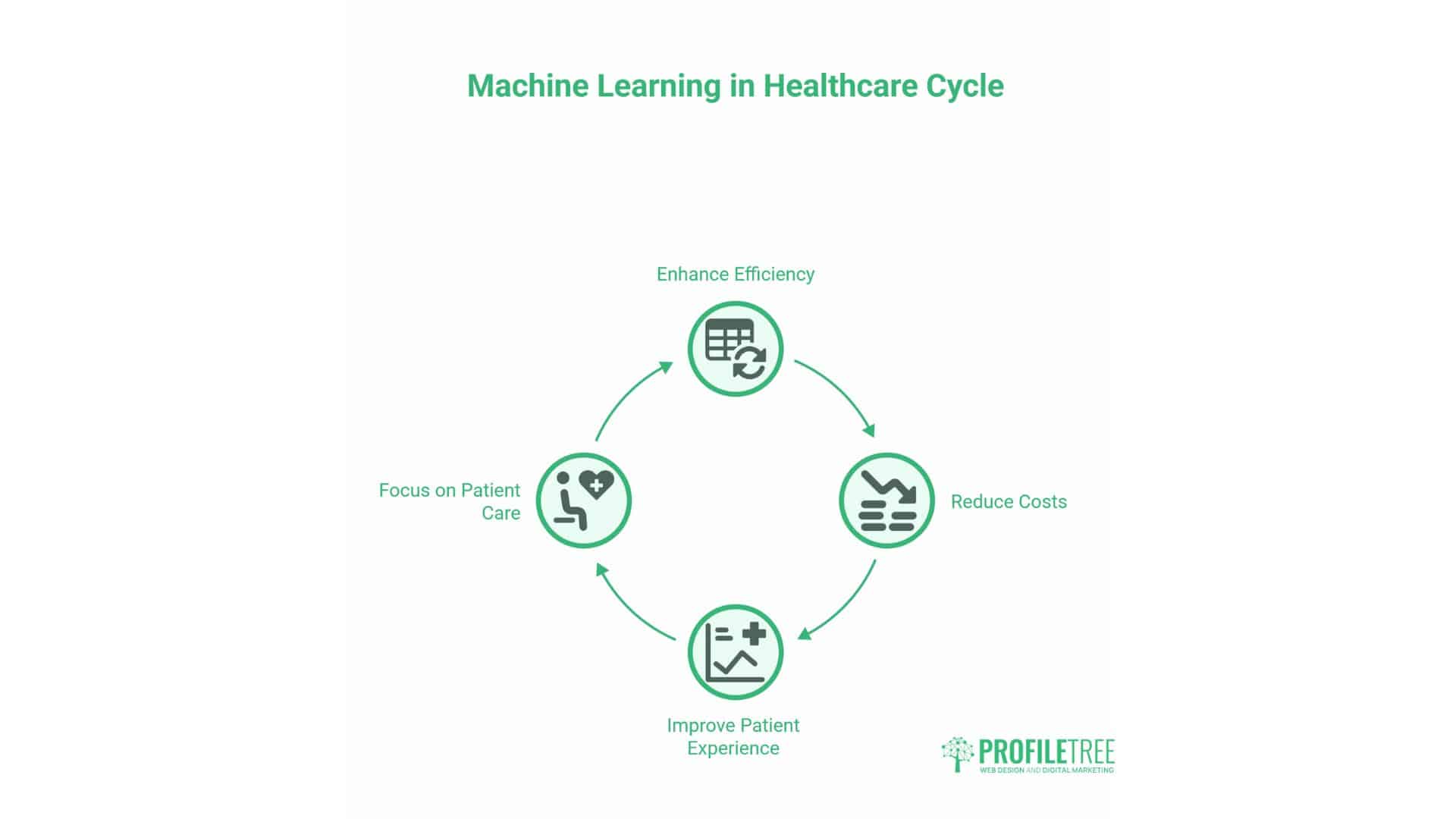
Machine learning in healthcare extends beyond clinical applications to transform operational aspects of healthcare delivery. Improved efficiency reduces costs, enhances patient experience, and enables clinical staff to focus on direct patient care rather than administrative tasks.
Automating Administrative Processes
Healthcare organisations dedicate substantial resources to administrative functions: scheduling, billing, insurance claims, and medical coding.
Intelligent Scheduling Systems
Appointment scheduling balances multiple factors: physician availability, patient preferences, appointment types requiring different time allocations, emergency slots, and minimising unused capacity. Machine learning optimises schedules by predicting appointment durations, no-show likelihood, and optimal patient flow patterns.
These systems reduce patient wait times, improve clinic utilisation, and decrease staff frustration with scheduling conflicts.
Medical Coding Automation
Every clinical encounter must be translated into standardised codes for billing and record-keeping. Natural language processing algorithms read clinical notes, extracting relevant information and suggesting appropriate codes. Human coders review AI suggestions, but automation dramatically reduces the time required while improving coding accuracy and specificity.
Better coding directly affects revenue—more precise codes often justify higher reimbursement rates for services provided.
Insurance Pre-Authorisation
Many procedures require insurance pre-authorisation before providers can proceed. Machine learning systems automate pre-authorisation requests by reviewing patient records, identifying required documentation, and submitting requests in formats insurers require. Algorithms predict which procedures are likely to need authorisation and initiate the process proactively, reducing treatment delays.
Optimising Hospital Resource Allocation
Hospitals manage complex logistics: bed capacity, staffing levels, equipment availability, and medication inventory.
Bed Management and Patient Flow
Emergency departments often struggle with overcrowding. Machine learning predicts admission volumes, enabling hospitals to prepare accordingly.
Algorithms analyse historical patterns, local events, seasonal trends, and even weather forecasts to predict patient volumes. Hospitals can adjust staffing levels, prepare discharge plans for stable inpatients, and coordinate with neighbouring facilities when capacity shortfalls are anticipated.
Staff Scheduling
Healthcare facilities require 24/7 staffing across multiple specialities. Machine learning systems generate optimised schedules considering all constraints simultaneously—patient care needs, labour regulations, staff preferences, and overtime costs.
Better schedules reduce staff burnout—a critical issue in healthcare where burnout contributes to errors, poor patient satisfaction, and staff turnover.
Supply Chain Optimisation
Hospitals stock thousands of supply items, from basic consumables to expensive surgical instruments. Machine learning predicts supply needs based on scheduled procedures, seasonal patterns, and historical usage. Automated reordering systems maintain optimal inventory levels, ensuring availability whilst minimising waste from expired items.
Predictive Maintenance for Medical Equipment
Medical equipment failures can disrupt patient care and necessitate costly emergency repairs. Predictive maintenance uses machine learning to analyse equipment sensor data, identifying patterns suggesting impending failures. Maintenance teams can address issues before equipment breaks down, during planned downtime, when the impact on patient care is minimised.
The Digital Transformation Required
Implementing operational AI requires a comprehensive digital transformation. Healthcare organisations need integrated systems connecting scheduling, electronic health records, inventory management, and financial systems.
Web platforms must enable staff to interact with AI systems efficiently. Dashboards visualising predicted demand, automated alerts about resource shortfalls, and interfaces for reviewing AI recommendations all require thoughtful design prioritising usability.
Challenges and Future Directions of Machine Learning in Healthcare
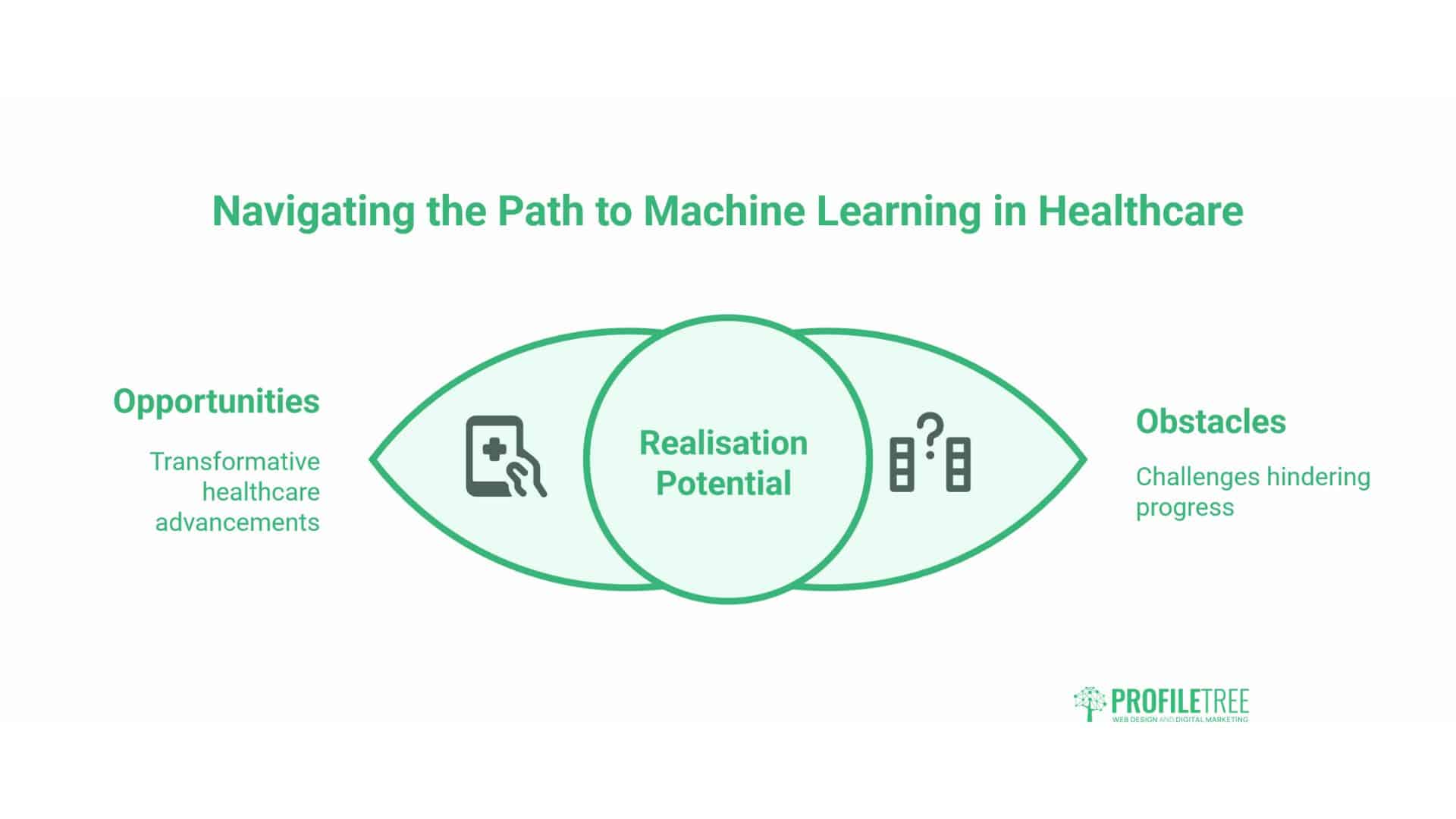
Machine learning in healthcare offers tremendous potential, but realising it requires addressing substantial challenges.
Data Privacy and Security Concerns
Regulatory Compliance
UK healthcare organisations must comply with GDPR and, for NHS entities, additional NHS data governance requirements. Machine learning projects must demonstrate that patient data is used lawfully, transparently, and securely.
This includes obtaining appropriate consent for data use, implementing technical safeguards to prevent unauthorised access, and establishing data retention policies that limit the duration for which information is stored.
Cybersecurity Threats
Healthcare organisations are increasingly facing cyberattacks that target patient data for ransom or theft. Machine learning systems, which require access to large datasets, create additional attack surfaces if not properly secured.
Robust cybersecurity measures include encrypting data at rest and in transit, implementing multi-factor authentication for system access, conducting regular security audits, and providing staff training on phishing and social engineering threats.
De-Identification Challenges
Removing personally identifiable information from medical records before using them for machine learning would protect privacy; however, complete de-identification proves to be a challenging task. Combinations of demographic information, dates of service, and medical details can potentially re-identify individuals.
Techniques like differential privacy add mathematical noise to datasets, preserving overall patterns whilst obscuring individual records.
The Explainability Problem
Many powerful machine learning models, intense neural networks, function as “black boxes”—they produce accurate predictions but don’t provide clear explanations of their reasoning.
Clinical Decision-Making Requirements
Healthcare professionals need to understand why systems make particular recommendations. If an algorithm suggests a specific diagnosis or treatment, clinicians want to know which factors drove that conclusion.
Medical liability concerns reinforce this need. If an AI system contributes to a medical decision resulting in harm, healthcare providers must explain their reasoning—difficult when relying on inexplicable AI recommendations.
Explainable AI Techniques
Researchers develop explainable AI methods providing insight into model decision-making. Techniques like LIME (Local Interpretable Model-agnostic Explanations) and SHAP (Shapley Additive exPlanations) highlight which input features most influenced particular predictions.
For image analysis, attention maps indicate which image regions algorithms focus on when making diagnoses, enabling clinicians to verify that relevant features drive their decisions.
Bias and Health Equity
Machine learning systems can perpetuate or amplify existing healthcare disparities if training data reflects historical biases.
Sources of Bias
Biases enter machine learning systems through multiple pathways. Training datasets may underrepresent certain demographic groups if historical healthcare access was unequal. Labels assigned to training data might reflect biased human decisions.
Medical devices generating training data may have been designed and tested primarily on specific populations, creating measurement biases. For example, pulse oximeters exhibit reduced accuracy for patients with darker skin tones—errors that can propagate to any machine learning system utilising pulse oximetry data.
Addressing Algorithmic Bias
Mitigating bias requires intentional effort throughout the machine learning development process. Training datasets should represent diverse populations in proportion to their prevalence, or, for historically underserved groups, overrepresent them to ensure adequate training of the algorithm.
Fairness metrics assess whether algorithms treat individuals equally across demographic groups. If performance differences emerge, developers must investigate causes and implement corrections.
Integration with Clinical Workflows
Even effective AI systems fail if they don’t integrate smoothly into clinical practice.
Usability Requirements
Healthcare professionals work in high-pressure environments with limited time. AI systems must provide value without imposing a significant burden on already busy workflows.
User interfaces require an intuitive design that enables quick understanding and action. Alerts must be actionable and timely—too many alerts or poorly targeted warnings lead to “alert fatigue” where clinicians ignore notifications.
Change Management
Implementing AI requires organisational change extending beyond technology installation. Clinical staff need training on the capabilities and limitations of AI. Workflows require redesign to incorporate AI recommendations effectively.
Workforce Implications
Augmentation vs Replacement
Machine learning primarily augments rather than replaces healthcare professionals. Radiologists use AI as a second opinion, not a replacement for their expertise. Nurses freed from administrative tasks by automation have more time for patient interaction.
Some roles may diminish; for instance, medical transcriptionists face reduced demand as speech recognition technology improves, and medical coding positions may decrease with the advent of automated coding systems. However, new roles emerge: AI specialists in healthcare organisations, data scientists, and positions focused on human oversight of AI systems.
Training and Education
Medical education must evolve to prepare healthcare professionals for AI-augmented practice. This includes understanding AI capabilities and limitations, critically interpreting AI outputs, and knowing when to override algorithmic recommendations.
Looking Ahead: Future Developments in Healthcare AI
Despite current challenges, the future of machine learning in healthcare is bright and dynamic.
Federated Learning for Privacy-Preserving Research
Federated learning enables machine learning across multiple institutions without sharing underlying patient data. Algorithms train on local data at each site, sharing only model updates rather than raw data. This approach preserves privacy whilst enabling large-scale research.
UK healthcare could particularly benefit from federated approaches, allowing NHS trusts to collaborate on AI development while maintaining data governance requirements.
Multimodal AI Systems
Future systems will integrate multiple data types—medical images, genetic sequences, text notes, sensor data from wearable devices—providing more complete patient pictures than single-modality systems.
AI-Enhanced Remote Monitoring
Wearable and home monitoring devices generate continuous health data. Machine learning analyses these streams, detecting concerning patterns warranting intervention. This enables chronic disease management outside hospital settings, improving patient quality of life while reducing the burden on the healthcare system.
Digital Twins for Treatment Simulation
Digital twins—virtual models of individual patients—powered by machine learning could enable the simulation of different treatment approaches before their actual implementation. These models might predict how specific individuals respond to various interventions, optimising treatment selection.
Global Health Applications
Machine learning applications extending healthcare access to underserved populations represent particularly impactful future directions. AI-enabled diagnostic tools usable by community health workers could extend specialist expertise to remote areas.
Mobile-based AI applications are particularly suited to regions with limited traditional healthcare infrastructure but widespread mobile phone access, potentially democratising healthcare access globally.
FAQs
How does machine learning improve diagnostic accuracy in healthcare?
Machine learning improves diagnostic accuracy by analysing vast datasets of medical images, patient records, and test results to identify patterns humans might miss. Algorithms trained on thousands of cases learn to recognise subtle disease indicators, providing diagnostic support that reduces missed diagnoses and false positives. These systems function as “second opinions,” flagging cases that require closer examination while complementing rather than replacing clinical judgment.
What is the difference between AI and machine learning in medical applications?
AI is a broader concept that encompasses machines performing tasks that typically require human intelligence. Machine learning is a specific AI approach where algorithms learn from data without explicit programming. In healthcare, AI encompasses rule-based systems that follow programmed guidelines, while machine learning systems continually improve their performance by learning from medical data. Most modern healthcare AI applications utilise machine learning techniques, which involve intensive learning for image analysis and predictive modelling.
Can machine learning accurately predict patient outcomes?
Machine learning predicts patient outcomes with varying accuracy depending on the specific condition, data quality, and model sophistication. For well-studied conditions with extensive historical data, predictions can be remarkably accurate—identifying sepsis risk, predicting hospital readmissions, or forecasting treatment responses. However, predictions are probabilistic, not certain, and should inform rather than dictate clinical decisions.
How do healthcare organisations protect patient data when implementing machine learning?
Healthcare organisations protect patient data through multiple measures, including encrypting data during storage and transmission, implementing strict access controls to limit who can view sensitive information, using de-identification techniques to remove personally identifiable details from research datasets, conducting regular security audits, and training staff on data protection requirements. UK healthcare providers must comply with GDPR and NHS data governance standards.
Will machine learning replace doctors and healthcare professionals?
Machine learning will not replace healthcare professionals but will change how they work. AI excels at data analysis, pattern recognition, and routine tasks, freeing clinicians to focus on complex decision-making, patient interaction, and empathetic care—uniquely human capacities. The most likely future scenario involves human-AI collaboration, where each entity contributes its strengths.
What training do healthcare professionals need to work with AI systems?
Healthcare professionals working with AI systems require training that covers several key areas: understanding AI capabilities and limitations to set appropriate expectations, interpreting AI outputs and recognising when recommendations may be incorrect, integrating AI insights into clinical decision-making while maintaining oversight, and understanding the ethical considerations surrounding AI use.
Building Your Healthcare Organisation’s AI Capability
Machine learning in healthcare presents both opportunities and challenges for healthcare organisations across the UK, Ireland, and Northern Ireland. The technology’s potential to improve diagnosis, personalise treatment, accelerate drug discovery, and streamline operations is matched by implementation complexities requiring technical expertise, organisational change, and substantial investment.
Healthcare providers, pharmaceutical companies, and medical device manufacturers exploring AI adoption benefit from strategic approaches that align technology implementation with organisational capabilities and objectives. This includes assessing current digital infrastructure, identifying high-value use cases, building or acquiring necessary technical capabilities, and preparing clinical and administrative teams for AI-augmented workflows.
The digital foundation supporting healthcare AI extends beyond algorithms to encompass secure web platforms, integrated data systems, intuitive user interfaces, and comprehensive content strategies communicating AI’s role to staff and patients.
ProfileTree supports healthcare organisations’ AI journeys through several service areas:
AI Strategy and Implementation: Our AI consulting services enable healthcare providers to evaluate use cases, select suitable technologies, and develop implementation roadmaps that align with clinical priorities and regulatory requirements.
Digital Infrastructure Development: We build secure, scalable web platforms supporting healthcare AI applications, with expertise in data security, system integration, and user experience design for clinical environments.
Staff Training and Change Management: Our digital training programmes prepare healthcare teams to work effectively with AI systems, covering technical skills, ethical considerations, and workflow integration.
Content Strategy for Healthcare Communication: We develop content strategies to help healthcare organisations communicate.
SEO and Digital Marketing for Healthcare: Our SEO services help healthcare providers reach the right audience. At the same time, our content marketing creates educational materials that establish thought leadership in healthcare.
For healthcare organisations embarking on their AI journey, ProfileTree provides the multidisciplinary expertise necessary for successful implementation—combining technical capabilities, in-depth understanding of the healthcare sector, and communication skills required to navigate this complex transformation.
Contact ProfileTree at the McSweeney Centre in Belfast to discuss how machine learning could transform your healthcare organisation, or to explore how our digital services support healthcare innovation across the UK and Ireland.
Taking the Next Step with Healthcare AI
Machine learning in healthcare moves from experimental to essential, with early adopters already demonstrating clinical and operational benefits. Healthcare organisations that delay AI exploration risk falling behind their competitors while missing opportunities to improve patient outcomes and efficiency.
The path forward requires striking a balance between ambition and pragmatism. Starting with well-defined pilot projects in areas with clear value propositions allows organisations to build expertise whilst demonstrating returns on investment.
Critical success factors include leadership commitment, investment in both technology and personnel, partnerships with AI vendors or academic institutions, and patient-centred approaches that ensure AI serves healthcare’s fundamental purpose: improving human health and well-being.
The UK’s healthcare ecosystem, which combines NHS institutions, private providers, pharmaceutical companies, academic medical centres, and health tech innovators, positions the region for leadership in healthcare AI. Realising this potential requires collaboration across organisations, sharing learnings and building on collective expertise.
ProfileTree stands ready to support healthcare organisations across Northern Ireland, Ireland, and the UK as they navigate the implementation of machine learning, bringing digital expertise, strategic thinking, and practical implementation capabilities to healthcare’s AI transformation.