
Graphic Design for SME Owners: DIY, AI Tools, or Hire a Designer?
Table of Contents
Most small business owners learn about graphic design the same way: by doing it badly first. A Canva logo here, a mismatched social media graphic there, a homepage that looks functional but somehow never quite feels right. It works well enough at the start, but at some point, the gap between what you can produce and what your business actually needs becomes a problem.
This guide is for non-designers running real businesses. It covers graphic design fundamentals, the honest case for DIY tools, when AI-assisted design starts to fall short, and how to decide when bringing in professional help is the better business decision. If you have been wondering whether your current approach is holding your brand back, this is the place to start.
Why Design is a Business Metric, Not Just a Visual Choice
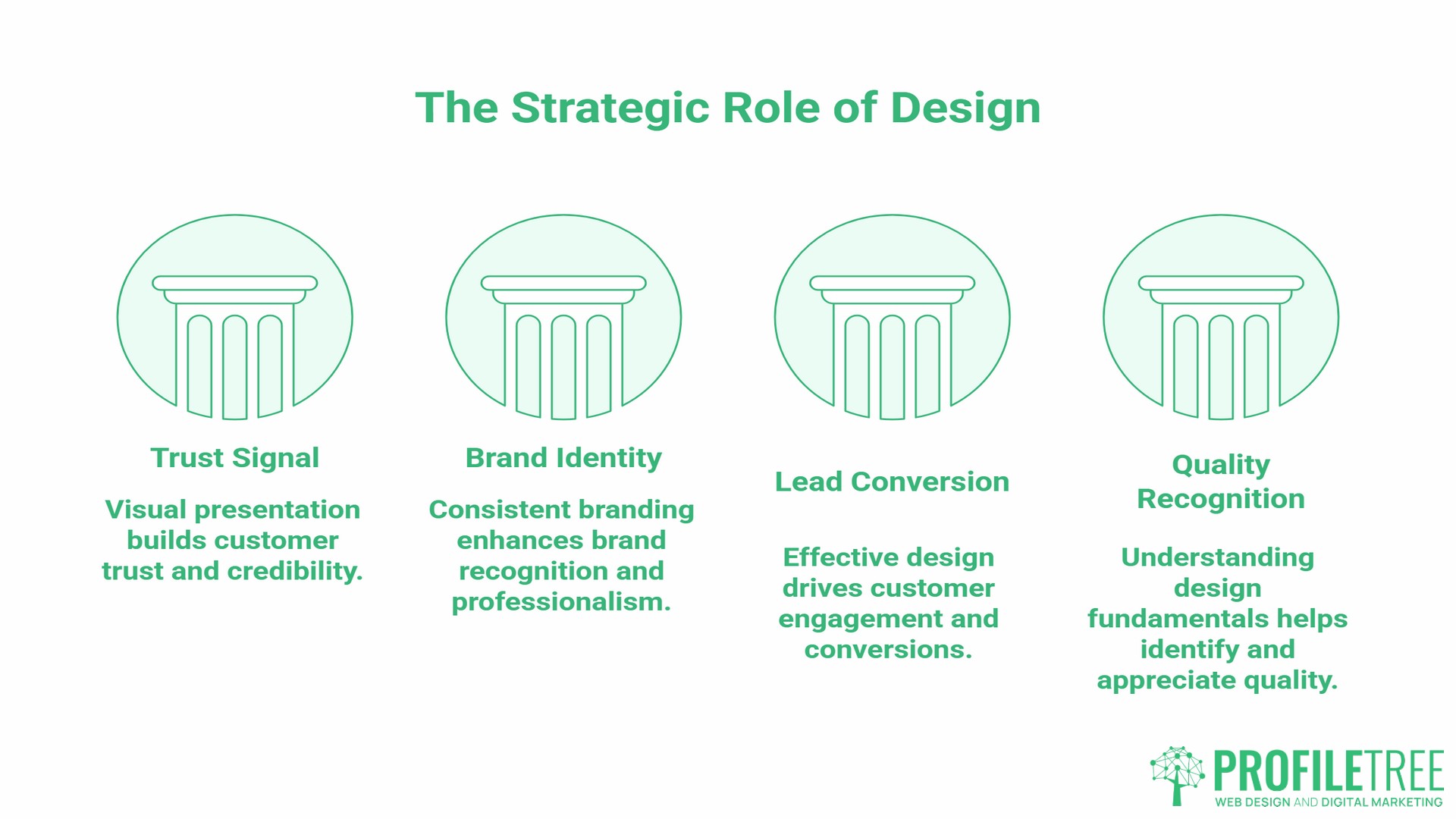
Graphic design for SME owners is not about making things look attractive. It is about whether a potential customer trusts you within the first few seconds before they decide to read further or click away. Visual presentation shapes perception of price, quality, and reliability before a single word of copy does its job.
A poorly designed website or inconsistent brand identity does not just look unprofessional. It actively costs money in leads that never convert and quotes that never get accepted. The question is not whether design matters to your business. The question is who does it, at what cost, and at what stage.
Ciaran Connolly, founder of ProfileTree, puts it plainly: “For SMEs, design is a trust signal. Before a prospect reads your proposition, they have already formed a view of whether you are credible based on how you look. That judgment happens faster than most business owners realise.”
Understanding graphic design fundamentals gives you something valuable even if you never open a design tool yourself: the ability to recognise quality, give a useful brief, and know when something is not working and why.
Graphic Design Fundamentals Every SME Owner Should Understand
You do not need to become a designer. You do need enough working knowledge to make good decisions about design, whether that means evaluating a freelancer’s work, getting more from Canva, or briefing an agency without wasting half the project in unclear revisions.
Colour
Colour does more practical work than most people realise. Beyond the psychological associations (blue for trust, red for urgency, green for sustainability), colour creates consistency and recognition. A business that uses the same two or three colours across its website, social media, printed materials, and email headers looks intentional. One that does not look assembled from parts.
For graphic design for SME owners, the starting point is a defined colour palette: a primary colour, one or two secondary colours, and clear rules about when to use each. This takes about an hour to set up in Canva or a brand guidelines document, and it is one of the highest-return investments you can make in the early stages of a brand.
Typography
Typography is the most underestimated element of graphic design for non-designers. Font choice communicates personality before any message lands. A serif font signals tradition and authority. A clean sans-serif signals modernity and accessibility. A script font signals creativity or informality.
The practical rule for SMEs is simple: use two fonts consistently, one for headings and one for body text, and do not deviate from them. Inconsistent typography across different materials is one of the most common signals that a brand does not have its visual identity under control.
Visual Hierarchy
Visual hierarchy is the order in which the eye moves through a design. On a web page, good hierarchy means a visitor reads your headline, understands your offer, and sees your call to action in sequence, without having to hunt. Poor hierarchy means they scan, find nothing clear, and leave.
Size, weight, contrast, and spacing all control hierarchy. The practical application for a business owner is to check any design you produce by asking: What is the first thing a new visitor sees? Is that the right thing?
Layout, Grids, and White Space
Layout is the arrangement of elements in relation to each other. Grid-based layouts create the sense of order and professionalism that distinguishes polished design from amateur work, even when the viewer cannot articulate why one feels better than the other.
White space (the empty area around and between elements) is not wasted space. It gives the eye somewhere to rest, makes content easier to process, and signals confidence. Cluttered designs tend to feel cheap. Generous spacing tends to feel premium. This applies directly to website design, social media graphics, and printed materials.
Contrast and Balance
Contrast makes elements distinguishable and supports readability. Low contrast between text and background is one of the most common DIY design mistakes, and it affects both accessibility and professionalism.
Balance is the distribution of visual weight across a design. Symmetrical balance feels formal and stable. Asymmetrical balance feels dynamic but requires more skill to execute well. For most SME design work, symmetrical layouts are safer until you have professional support.
The SME Design Roadmap: DIY, AI Tools, or Agency
Graphic design for SME owners sits at a different point on the sophistication scale depending on the business. The honest answer to “should I do this myself?” depends entirely on stage, asset type, and how visible the output will be.
Stage One: Launch and Bootstrap (DIY and Templates)
At the start, DIY design is rational. Budgets are tight, needs are basic, and the cost of professional design is hard to justify when you are still validating a product or service.
Canva is the right tool at this stage. It produces acceptable social media graphics, simple presentations, and basic documents without requiring design knowledge. ProfileTree’s guide to using Canva for marketing strategy covers how to get the most from it without producing generic output. A deeper look at Canva’s AI features is also worth reading before you rely on AI-generated elements for anything brand-facing.
What DIY cannot do well at any stage: logos intended for trademarking, website design beyond simple templates, printed materials that will be scrutinised up close, and anything requiring custom illustration or photography.
Stage Two: Growth and Hybrid (AI-Assisted Design)
As a business grows, the volume of design work increases and the stakes get higher. This is the stage where AI design tools become genuinely useful, but also where their limitations start to matter.
AI tools can generate image assets, suggest layouts, and produce variations at speed. The problem is consistency. The copyright status of AI-generated imagery is genuinely unsettled. In the UK, Section 9(3) of the Copyright, Designs and Patents Act 1988 provides some protection for computer-generated works, but the law is under active review and courts are still working through what it means in practice for AI outputs.
In Ireland and across most of the EU, copyright requires demonstrable human authorship, leaving purely AI-generated work in a grey area. For a social media graphic, this ambiguity matters little. For a logo you intend to trademark and build a brand identity around, it creates real risk. AI tools also tend to produce outputs that look plausible rather than distinctive, which is the opposite of what a growing brand needs.
The hybrid approach that works well at this stage: use AI and template tools for repeatable, lower-stakes assets (social posts, internal documents, presentation decks) and bring in professional design for anything that will define the brand at a formative stage (website design, logo, brand guidelines).
This is also the stage at which professional web design starts to pay for itself. A website built on a DIY template carries design constraints that limit SEO, conversion, and brand expression. For many SMEs, the commercial impact of a properly designed website, built with user journey and search visibility in mind, offsets the investment relatively quickly compared with the ongoing cost of lost leads from a site that fails to convert.
Stage Three: Scale (Professional Design and Agency)
At scale, design is a commercial asset, not an administrative task. Brand consistency across every touchpoint, from the website to proposals to video content, becomes directly connected to how the business is perceived by larger clients and partners.
This is when the opportunity cost of DIY becomes most visible. Every hour a founder or marketing manager spends in Canva is an hour not spent on the work only they can do. The real question is not what a designer costs, but what inconsistent or mediocre design is costing in lost contracts.
Graphic design at this stage connects directly to content marketing and digital presence. Well-designed content performs better, gets shared more, and reinforces the brand associations that take time to build and are expensive to undo.
| DIY / Templates | AI-Assisted | Professional Agency | |
|---|---|---|---|
| Cost | Low | Low to medium | Medium to high |
| Time investment | High | Medium | Low (once briefed) |
| Brand uniqueness | Low | Low to medium | High |
| Scalability | Poor | Moderate | Strong |
| Copyright protection | Yes | Uncertain | Yes |
| Best for | Launch stage | Repeatable assets | Brand-defining work |
Essential Design Assets Every UK SME Needs
Graphic design for SME owners becomes easier once you have a clear list of what actually needs to exist and in what order. These are the assets that matter most.
- Logo and brand mark. This is the one asset where professional design is worth the investment from the start, or as early as possible. A logo created in Canva using a template is not trademarkable and will almost certainly need to be replaced as the business grows. Getting it right early avoids rebranding costs later.
- Colour palette and typography standards. Even a one-page brand guidelines document, specifying your colours by hex code and your fonts by name, pays for itself in consistency. Send it to any freelancer or agency you work with, and use it yourself as the check on every piece of design you produce.
- Website design. The website is the highest-stakes design asset most SMEs own. It is where the first impression of the brand is formed at scale. Template builders handle the basics, but they do not handle the structural, SEO, and conversion elements that determine whether the site generates leads. ProfileTree’s web design services cover this in full, including how professional web design connects to search performance.
- Social media templates. A set of branded Canva templates for your most-used post formats saves time and enforces visual consistency without requiring a designer for every post.
- Document and presentation templates. Proposals, pitch decks, and client reports all benefit from a consistent branded template. This is an area where AI tools and Canva work well, provided the brand foundations (colours, fonts, logo) are already sorted.
- Video thumbnails and branded video assets. If you are producing video content for YouTube or social channels, thumbnail design and on-screen graphic consistency matter more than most business owners realise. Poorly designed thumbnails significantly reduce click-through rates regardless of content quality.
Budgeting for Design in the UK and Ireland
One of the most useful aspects of graphic design guidance for SME owners is indicative cost information. Rates vary by experience, location, and project scope, but the following gives a working frame of reference for the UK and Ireland market.
- Logo design (professional): Freelancer rates typically start around £300 to £800 for straightforward briefs; specialist agency work tends to run from £1,000 upwards and can reach £3,000 or more for a full identity project. Lower-cost options on contest platforms exist but carry risks around originality and copyright.
- Full brand identity package (logo, colour palette, typography, brand guidelines): Expect to invest somewhere in the range of £1,500 to £5,000, depending on scope and provider. This is the foundation that makes all subsequent design work cheaper and more consistent.
- Website design and development: Projects range widely, typically from £2,500 for simpler builds to £10,000 and beyond for sites requiring custom functionality, SEO structuring, and content strategy alongside design.
- Monthly retainer for ongoing design support: Arrangements vary, but £500 to £2,000 per month covers a reasonable range of social, content, and marketing assets from a freelancer or small agency. These are illustrative ranges based on common market positioning rather than fixed rates. Always request itemised quotes and clarify what is included before committing to a project.
- UK and Ireland funding options: In Ireland, the Grow Digital Voucher, available through Local Enterprise Offices, replaced the Trading Online Voucher at the end of 2024 and offers up to €5,000 in matched funding (50%) for digital tools, software, and related training. In Northern Ireland and across the UK, regional growth funds and enterprise support programmes periodically cover digital investment, including design and web development, though scheme availability changes frequently. Contact your local enterprise board directly for current options, as schemes open and close on a cycle and eligibility criteria vary by location and sector.
ProfileTree’s digital training services offer a middle path for SMEs that want to build in-house capability before committing to full agency support. Learning to use design tools well and to brief professional designers effectively reduces both cost and revision cycles significantly.
How to Brief a Designer and Avoid Costly Revisions
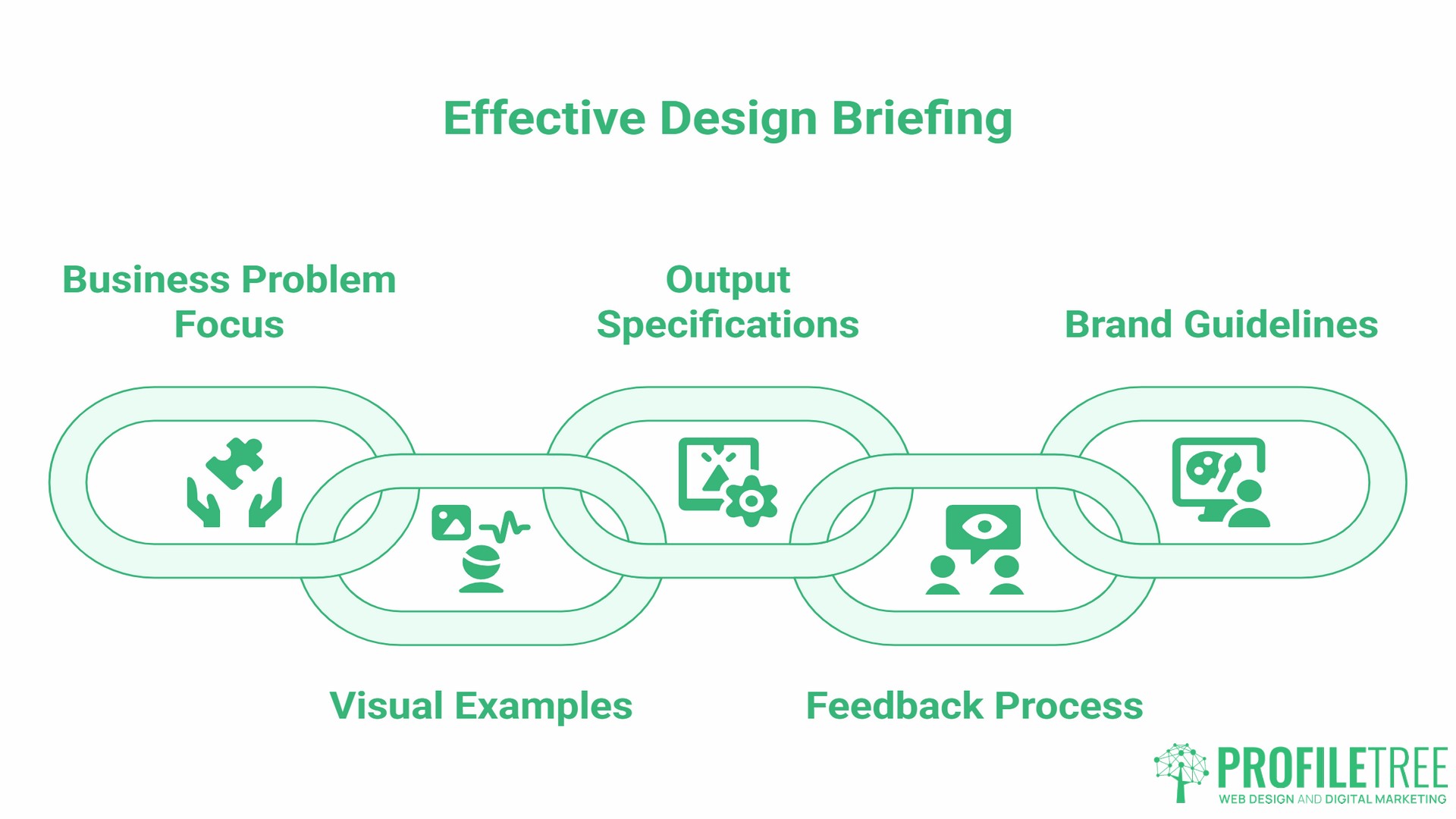
One of the most practical things graphic design guidance for SME owners can cover is how to brief a professional without wasting budget on rounds of revisions that could have been avoided with thirty minutes of preparation.
- Start with the business problem, not the aesthetic preference. A brief that says “we want something modern and clean” is hard to execute. A brief that says “our current website is losing prospects at the homepage because they cannot work out what we do or who we serve” gives a designer something to solve.
- Provide examples of what you like and do not like. This is the single most time-saving step in any design brief. Collect five to ten examples from other brands (not necessarily in your industry) that feel right, and five to ten that do not. This communicates aesthetic sensibility far more efficiently than words.
- Define the output specifications before work begins. File formats, dimensions, where the asset will be used, and whether print-ready files are needed: these details affect how a designer works and what they deliver. Finding out after the fact that you needed a vector file costs time and money.
- Set a clear feedback process. Agree on how many rounds of revisions are included, how feedback will be given (consolidated, not piecemeal), and who has sign-off authority. Most revision cycles that run long do so because feedback arrives in stages or from multiple sources with conflicting views.
- Share your brand guidelines from the start. If you have them, a brand guidelines document covering your colours, fonts, and logo usage rules should go into the brief before work begins. If you do not have them, this is the point at which investing in proper brand documentation pays for itself immediately.
Understanding these basics of graphic design for non-designers means you will get better work from any designer you hire, whether that is a freelancer for a one-off project or an agency for ongoing support.
Graphic design for SME owners is a question of resource allocation as much as aesthetics. DIY tools are a rational starting point. AI-assisted design handles repeatable tasks at volume. Professional design becomes the right call when brand-defining assets are at stake, when the opportunity cost of doing it yourself exceeds the cost of outsourcing, or when inconsistency is visibly holding the business back.
The graphic design fundamentals covered here, colour, typography, visual hierarchy, layout, and contrast, give you the language and judgment to make those calls well, whether you are working in Canva, briefing a freelancer, or commissioning a full rebrand. If you would like to discuss where professional design and digital strategy could support your business, get in touch with ProfileTree.
FAQs
Can I use AI to design my business logo?
AI tools can generate logo concepts quickly, but the copyright status of AI-generated imagery is contested and varies by jurisdiction. In the UK and Ireland, purely AI-generated work sits in a legal grey area that makes trademarking uncertain. For social media graphics, this rarely matters. For a logo you intend to build a brand identity around, a professionally designed logo produced by a human designer sits on much firmer legal ground.
What is the cheapest way to get professional design for a small business?
Freelancers sourced through platforms such as Contra or working directly through local networks typically offer the best value at the entry level. Contest platforms (where multiple designers submit concepts and you pay the winner) can produce good results but carry risks around originality. The hidden costs of cheap design, rework, inconsistency, and eventual rebranding are worth factoring in from the start.
Does graphic design affect my Google ranking?
Yes, indirectly but meaningfully. Page design affects how long visitors stay on a page, how they move through it, and whether they convert. These behavioural signals feed into search performance. Image file sizes affect page speed, which is a direct ranking factor. Alt text on images is indexed by Google and contributes to content relevance. A well-designed website with a clear structure supports the technical SEO work that determines visibility.
Are there grants for SME branding and design in Ireland or the UK?
Yes, though schemes change and eligibility varies. In Ireland, the Grow Digital Voucher, administered through Local Enterprise Offices, replaced the Trading Online Voucher at the end of 2024 and can cover up to €5,000 (50% matched funding) for digital tools and services, including web design and digital training. In Northern Ireland and across the UK, regional enterprise support programmes have covered digital investment, including design work, though specific schemes open and close on a cycle. Contact your local enterprise board or Invest NI directly for current options relevant to your business.
How do I know when I have outgrown Canva?
The clearest signal is when maintaining brand consistency across different materials becomes time-consuming or when inconsistent results appear. Other indicators: you need custom functionality that templates cannot provide, clients or prospects are commenting on design quality (positively or negatively in ways that affect outcomes), or the time you spend on design is measurably taking you away from revenue-generating work. At that point, the business case for professional design support usually becomes straightforward.