
Powerful Generative Engine Optimisation: Essential Guide to Success
Table of Contents
Generative Engine Optimisation (GEO) represents a significant evolution in digital marketing strategy, blending traditional search engine optimisation principles with emerging AI-powered content generation capabilities. For businesses across Northern Ireland, Ireland, and the UK, understanding and implementing Generative Engine Optimisation strategies has become increasingly important as search engines continue to adapt their algorithms to account for AI-generated content.
GEO goes beyond conventional SEO by focusing on optimising content specifically for generative AI systems, including search engines with integrated generative components. These systems not only index and rank content but can also generate summaries, answer questions directly, and create entirely new content based on what they’ve indexed.
As search behaviour shifts from simple queries to conversational requests and AI-driven discovery, businesses must adapt their digital strategy accordingly. This article examines the differences between GEO and traditional SEO, its significance for your business, and practical implementation strategies to stay ahead of competitors.
How Generative Engine Optimisation Differs from Traditional SEO

Traditional SEO has primarily focused on optimising websites to rank well in search engine results pages (SERPs) through keyword strategy, backlink building, technical optimisation, and content quality. While these elements remain essential, GEO introduces new considerations:
Content Structure and Contextual Depth
Where traditional SEO might emphasise keyword density and placement, GEO prioritises contextual understanding and comprehensive coverage of topics. Generative engines assess content based on:
- Topic comprehensiveness
- Natural semantic associations
- Logical structure and information hierarchy
- Content depth versus breadth
- Factual accuracy and citation quality
“The distinction between old-school SEO and modern Generative Engine Optimisation lies in intent and context rather than simple keyword matching,” explains Ciaran Connolly, Director of ProfileTree. “Businesses that understand this fundamental shift gain a significant competitive advantage in how they’re discovered and represented online.”
Intent Matching Over Keyword Density
GEO places greater emphasis on matching user intent rather than simply targeting specific keywords. This requires:
- Understanding the questions behind searches
- Providing direct, authoritative answers
- Addressing related questions users might have
- Creating content that satisfies information needs comprehensively
- Structuring information in ways that generative engines can easily parse
Structured Data and Entity Recognition
Generative engines rely heavily on structured data and entity recognition to understand the relationships between content. This includes:
- Implementing schema markup to identify entities clearly
- Creating content that establishes clear relationships between concepts
- Building topical authority through interconnected content
- Using consistent terminology for important entities
- Providing clear definitions for industry-specific terms
The Technical Foundation of Generative Engine Optimisation

Understanding the technical aspects of how generative engines work helps inform better optimisation strategies. These systems typically function through several interconnected processes:
Large Language Models and Knowledge Graphs
Modern search engines and AI platforms utilise large language models (LLMs) in conjunction with knowledge graphs to process, comprehend, and generate content. Optimisation requires:
- Creating content that connects to established entities in knowledge graphs
- Building comprehensive coverage around entities relevant to your business
- Using consistent terminology that aligns with established knowledge structures
- Providing clear explanations that help models understand newer concepts
- Including relevant facts and statistics that might be incorporated into knowledge bases
Retrieval-Augmented Generation (RAG)
Many generative engines utilise RAG systems, which combine information retrieval with generative capabilities. This means:
- Content that’s easily retrievable becomes source material for generated responses
- Clear, well-structured information has a higher chance of being referenced
- Authoritative content with proper citations has a greater influence
- Content format matters for efficient retrieval and summarisation
- Unique insights and data have higher value than generic information
Query Processing and Natural Language Understanding
Modern engines analyse queries using natural language understanding to identify:
- Search intent categories (informational, navigational, transactional, etc.)
- Entity relationships and attributes
- Implied questions behind explicit queries
- User context and previous search patterns
- Temporal and location-specific factors
Strategic Approach to Generative Engine Optimisation

Implementing Generative Engine Optimisation requires a strategic approach that addresses multiple dimensions of content creation and optimisation:
Content Strategy for GEO
An effective GEO content strategy goes beyond simply creating more content:
Topical Authority Building
Develop comprehensive coverage around core business topics:
- Create content clusters with clear pillar pages and supporting content
- Build depth in areas directly related to your products and services
- Address common questions at various stages of the customer journey
- Establish expert credibility through detailed, accurate content
- Connect related topics in logical, meaningful ways
For example, a Belfast-based retail business might build topic clusters around local shopping trends, specific product categories, sustainability practices in Northern Ireland’s retail sector, and comparison guides relevant to local consumers.
E-E-A-T Optimisation
Experience, Expertise, Authoritativeness, and Trustworthiness remain critical factors:
- Showcase business experience through case studies and specific examples
- Demonstrate sector expertise through detailed technical content
- Build authority through original research and data
- Enhance trust through transparent business information and policies
Question-Focused Content Development
Create content specifically designed to answer questions:
- Identify and address common questions in your industry
- Structure content with clear questions and direct answers
- Provide comprehensive explanations that go beyond surface-level responses
- Group related questions together in logical content sections
- Use formatting to make question-answer pairs easily identifiable
Technical Implementation for GEO
Beyond content creation, technical implementation plays a crucial role:
Structured Data Implementation
Properly implemented structured data helps generative engines understand your content:
- Use appropriate schema markup for your business type, products, and services
- Implement the FAQ schema for question-answer content
- Mark up events, locations, and other entities relevant to your business
- Create clear hierarchical relationships between entities
- Use consistent entity identifiers across your digital presence
Content Structure and Formatting
How you structure and format content impacts its utility for generative engines:
- Use clear hierarchical heading structures (H1, H2, H3, etc.)
- Implement descriptive subheadings that convey section content
- Break content into logical, digestible sections
- Use bullet points and numbered lists for process steps or collections of items
- Include tables for comparison data or feature lists
Natural Language Generation Considerations
Understanding how generative AI processes language helps optimise your content:
- Create clear, concise sentences that convey single ideas
- Avoid unnecessary jargon unless specifically targeting technical audiences
- Define technical terms when they must be used
- Use consistent terminology throughout your content
- Balance detail with readability
Measuring Success in Generative Engine Optimisation
Tracking Generative Engine Optimisation performance requires expanded metrics beyond traditional SEO:
Traditional Search Performance
Continue monitoring traditional search metrics while adding GEO considerations:
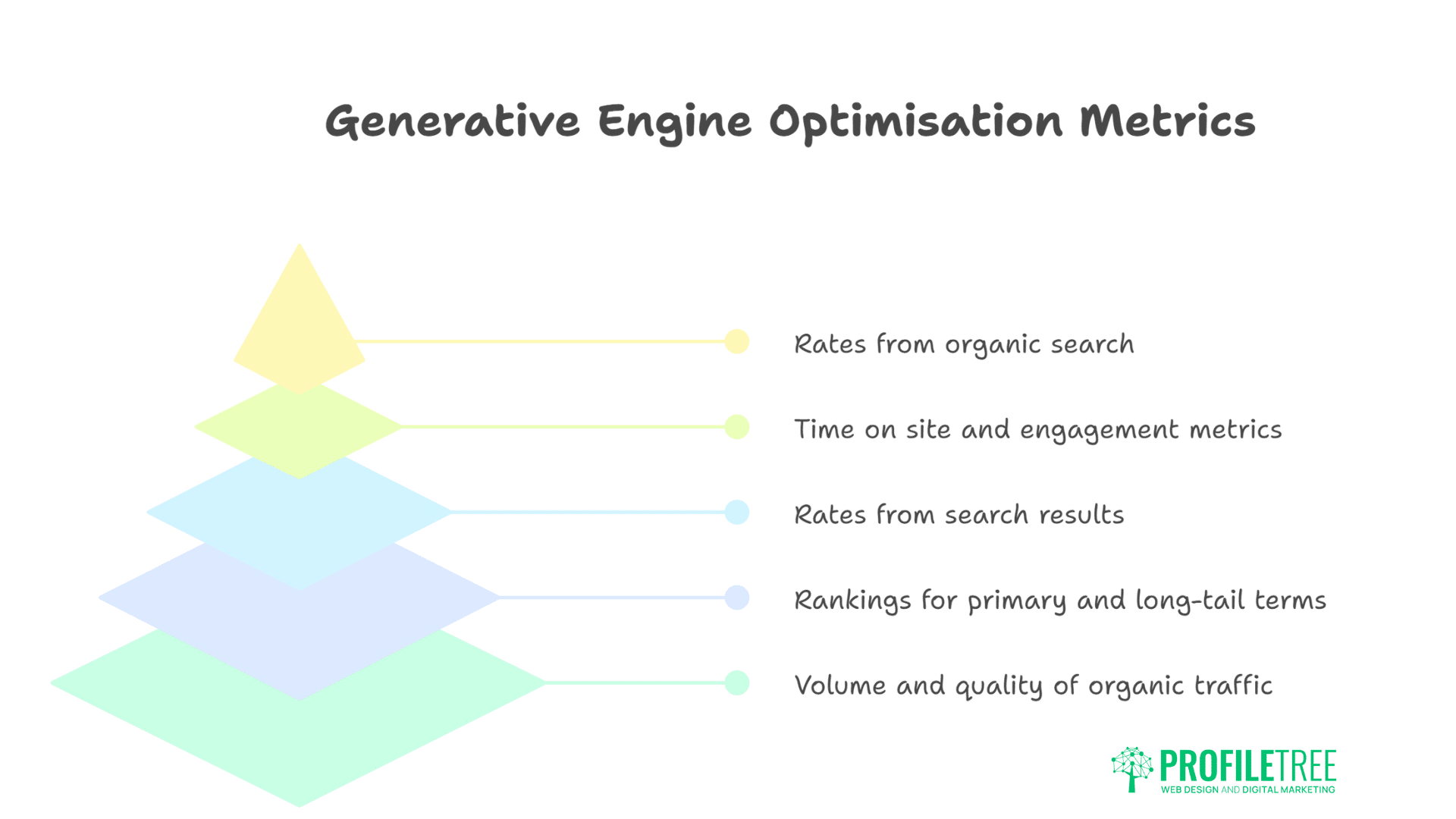
- Organic traffic volume and quality
- Keyword rankings for primary and long-tail terms
- Click-through rates from search results
- Time on site and engagement metrics
- Conversion rates from organic search
Featured Snippet and Knowledge Panel Visibility
Track how often your content appears in enhanced search features:
- Featured snippet appearance frequency
- Knowledge panel information sourced from your content
- People also ask (PAA) inclusion rates
- Direct answer attribution in search results
- Rich result appearance rates
AI Answer Attribution
Monitor when generative search features reference your content:
- Citation frequency in AI-generated responses
- Accuracy of information attributed to your business
- Completeness of information drawn from your content
- Prominence of attribution within generated responses
- Competitive comparison of attribution rates
“Tracking how generative AI systems reference and cite your business content provides valuable insight into your digital authority,” notes Ciaran Connolly. “For Northern Ireland businesses, being the source that AI platforms trust and reference represents a significant competitive advantage in Generative Engine Optimisation.”
Common Generative Engine Optimisation Implementation Challenges

Businesses implementing Generative Engine Optimisation strategies often encounter several challenges:
Content Quality vs. Quantity Balance
Finding the right balance between comprehensive coverage and focused quality:
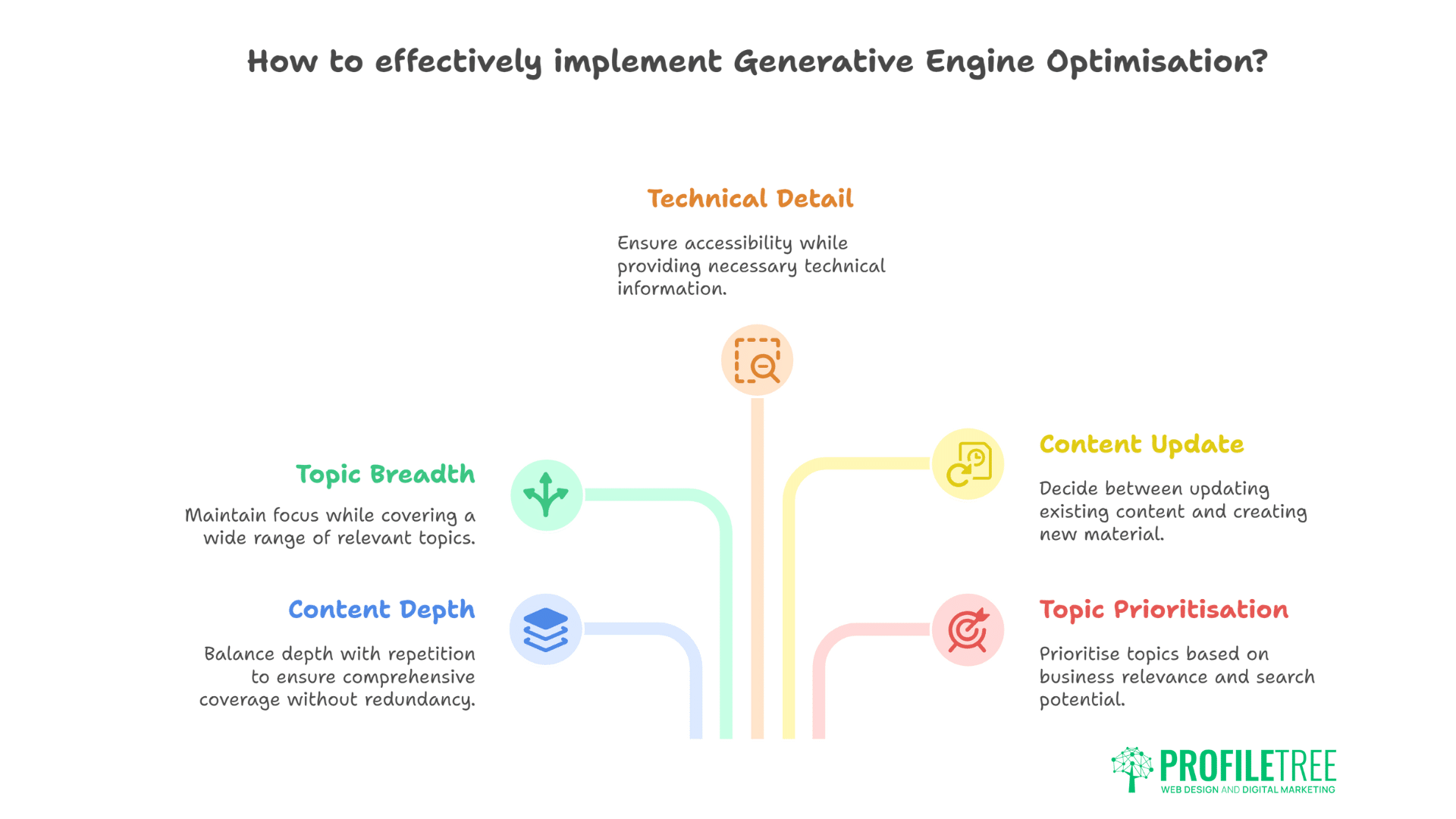
- Creating sufficient content depth without unnecessary repetition
- Covering topic breadth while maintaining relevant focus
- Balancing technical detail with accessibility
- Updating existing content versus creating new material
- Prioritising topics based on business relevance and search potential
Adapting to Rapid Algorithm Changes
Generative search features continue to evolve rapidly:
- Staying current with generative search developments
- Adapting to changing attribution mechanisms
- Understanding how model updates affect content requirements
- Balancing established SEO practices with emerging Generative Engine Optimisation techniques
- Testing and measuring the impact of different optimisation approaches
Technical Implementation Complexity
Implementing proper technical optimisations can be challenging:
- Correctly implementing various schema types
- Maintaining consistent entity identifiers across content
- Creating appropriate content structures for different topics
- Balancing technical optimisation with user experience
- Managing content updates across multiple platforms and channels
Generative Engine Optimisation for Different Business Types

Generative Engine Optimisation strategies vary based on business type and sector:
Local Business Generative Engine Optimisation Strategy
For Northern Ireland and Irish local businesses:
- Create location-specific content addressing local customer needs
- Build comprehensive business information with consistent NAP (Name, Address, Phone)
- Develop content around local events, news, and trends
- Address location-specific questions and concerns
- Create content that establishes local expertise and authority
E-commerce Generative Engine Optimisation Approach
Online retailers require specific Generative Engine Optimisation strategies:
- Develop comprehensive product information beyond basic specifications
- Create comparison content addressing common purchase considerations
- Build detailed category pages that establish topical authority
- Address common customer questions at each purchase stage
- Implement product schema with detailed attribute information
Service Business Optimisation
Professional service firms benefit from:
- Creating detailed service descriptions with clear process explanations
- Developing case studies demonstrating specific expertise
- Building educational content that showcases knowledge depth
- Addressing industry-specific concerns and questions
- Creating content that differentiates similar services
Future Trends in Generative Engine Optimisation
The field of Generative Engine Optimisation continues to evolve rapidly, with several emerging trends:
Multimodal Content Optimisation
As generative engines improve their ability to understand and generate multiple content formats:
- Optimising images and videos for generative understanding
- Creating content that combines text, images, and other media effectively
- Implementing appropriate markup for different content types
- Developing consistent entity references across content formats
- Building connections between related content in different formats
Conversational Search Optimisation
As search becomes increasingly conversational:
- Structuring content to address multi-turn query sequences
- Creating content that anticipates follow-up questions
- Developing narrative structures that match conversational patterns
- Implementing dialogue-friendly content formatting
- Building logical connections between related topics
Voice and Visual Search Integration
With the growth of voice and visual search:
- Optimising content for natural language patterns used in voice search
- Creating content that addresses how questions are verbally phrased
- Developing visual content that’s properly indexed and understood
- Implementing appropriate markup for visual content elements
- Building connections between visual and textual content
Implementing Generative Engine Optimisation in Your Business
Practical steps for implementing Generative Engine Optimisation in your organisation:
Assessment and Planning
Begin with a thorough assessment and strategic Generative Engine Optimisation planning:
- Audit existing content for Generative Engine Optimisation readiness
- Identify key topics and entities relevant to your business
- Analyse competitor performance in generative search features
- Develop a prioritised content plan addressing gaps and opportunities
- Create implementation timelines with clear milestones and metrics
Resource Allocation
Determine necessary resources for Generative Engine Optimisation implementation:
- Identify required technical expertise for schema implementation
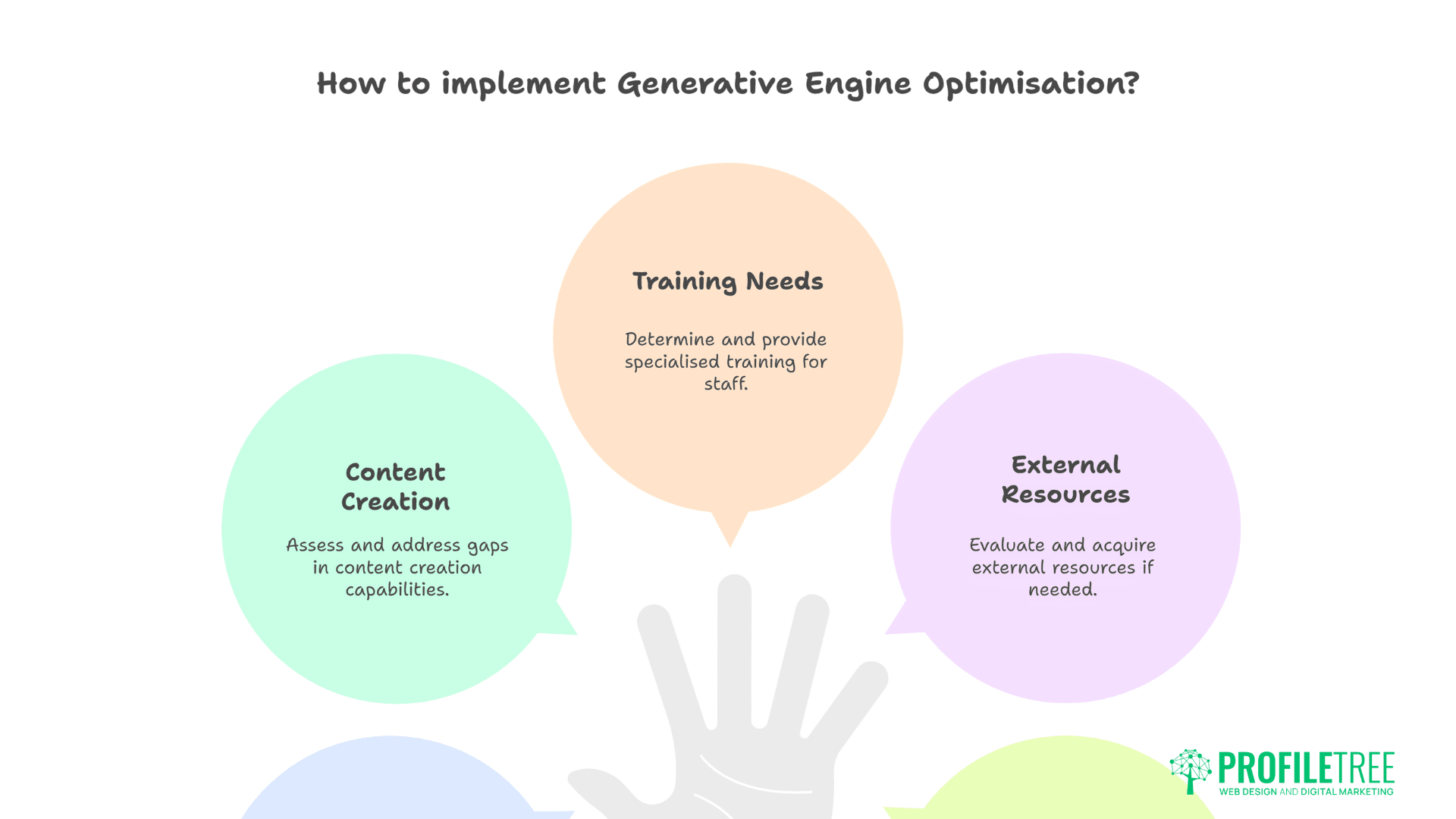
- Assess content creation capabilities and potential gaps
- Consider specialised training needs for existing staff
- Evaluate potential external resource requirements
- Develop realistic budgets for implementation phases
Implementation Process
Follow a structured implementation approach:
- Begin with technical foundations (structured data, content structure)
- Develop core pillar content, establishing topical authority
- Create supporting content addressing specific questions and subtopics
- Implement an internal linking structure connecting related content
- Establish measurement systems for Generative Engine Optimisation and feedback loops
Ongoing Optimisation
Maintain continuous improvement processes:
- Monitor performance against established metrics
- Track generative engine updates and adjust Generative Engine Optimisation strategies accordingly
- Test new approaches and measure impact
- Regularly update content to maintain freshness and accuracy
- Expand topic coverage based on performance data and business priorities
Conclusion
Generative Engine Optimisation represents a significant evolution in how businesses approach digital visibility. As search engines and AI platforms increasingly incorporate generative capabilities, optimising specifically for these systems provides substantial competitive advantages.
For businesses across Northern Ireland, Ireland, and the UK, implementing effective Generative Engine Optimisation strategies enables:
- Greater visibility in emerging search formats
- Higher quality representation in AI-generated responses
- Improved ability to address customer questions directly
- Stronger digital authority in specific business domains
- More effective content investment with broader impact
By understanding the technical foundations of generative systems and implementing strategic optimisation approaches, businesses can position themselves as authoritative sources that generative engines consistently reference and recommend.
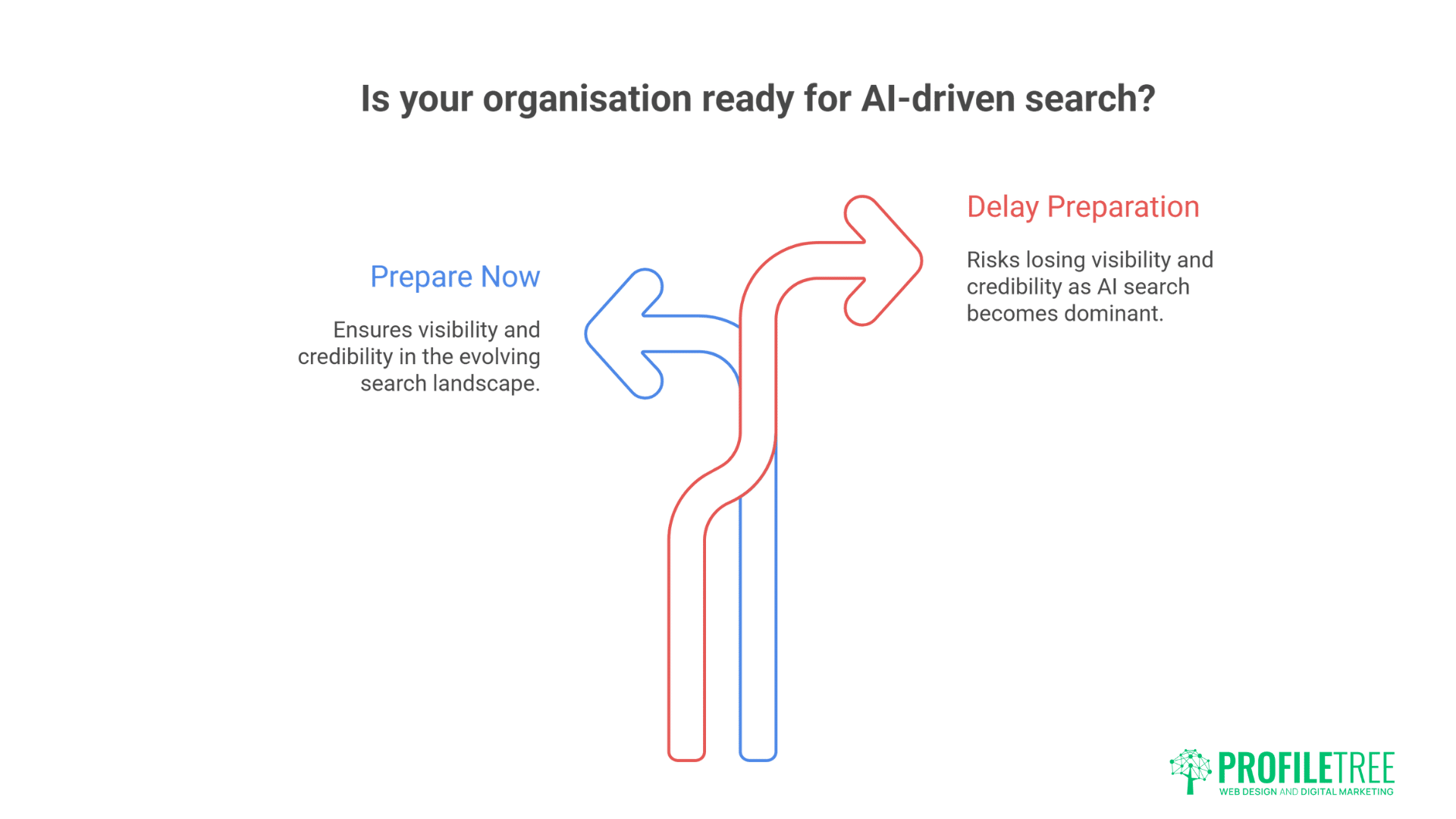
The businesses that adapt quickly to this evolving search landscape will gain significant advantages in digital visibility, customer acquisition, and market authority. Those who delay risk finding themselves increasingly invisible as user search behaviour continues to shift toward generative, conversational discovery models.
How ProfileTree Can Help With Generative Engine Optimisation
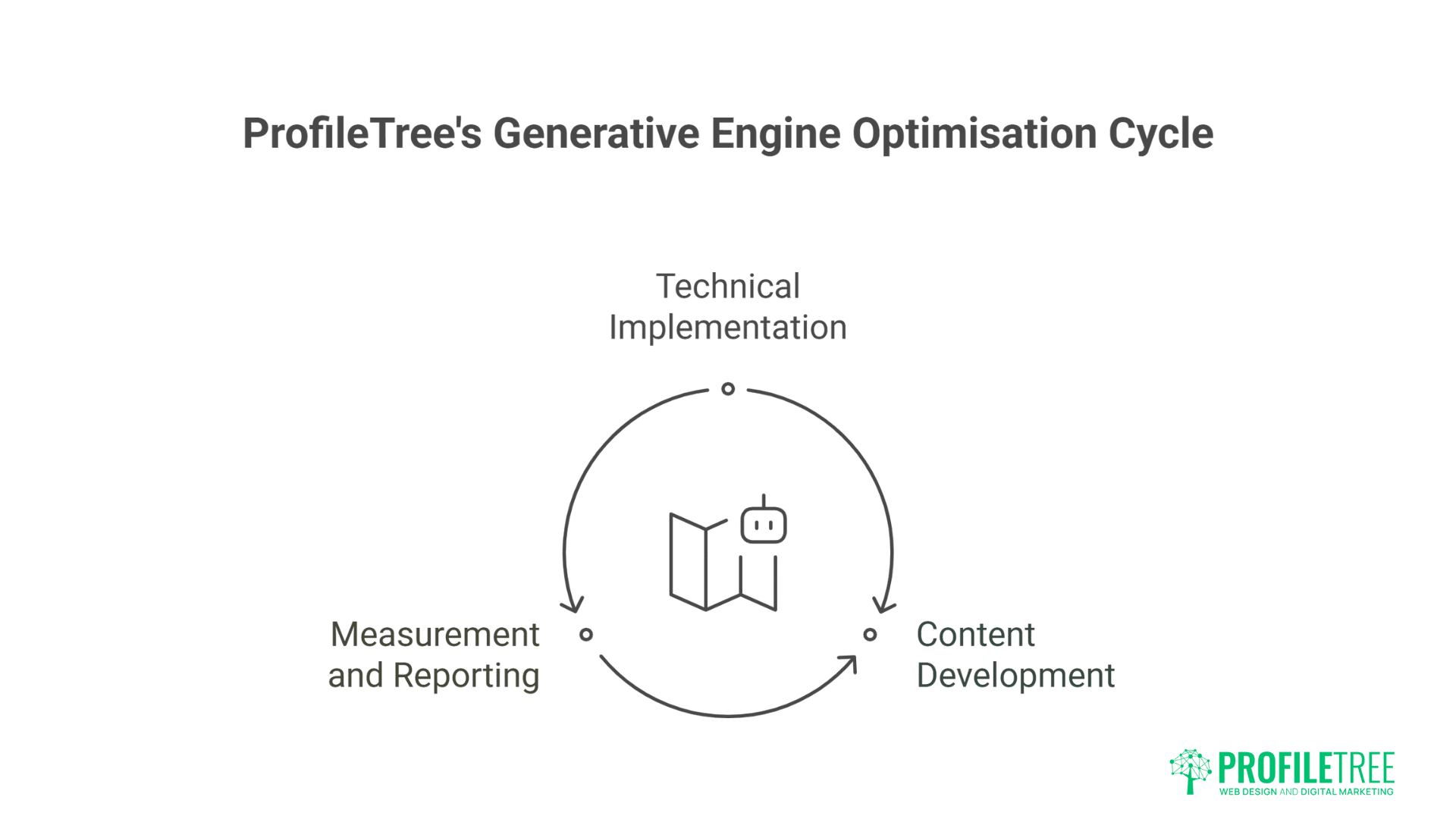
As Northern Ireland’s leading digital marketing agency, ProfileTree offers specialised Generative Engine Optimisation services designed specifically for businesses seeking to improve their visibility in the new AI-driven search landscape.
Our Generative Engine Optimisation Services Include:
We conduct thorough assessments of your existing digital content and develop customised Generative Engine Optimisation strategies aligned with your business goals. Our experts analyse your current search performance, identify opportunities for optimisation, and create detailed implementation roadmaps.
Technical Implementation
Our technical specialists handle all aspects of Generative Engine Optimisation implementation, including:
- Advanced schema markup deployment
- Content structure optimisation
- Entity relationship establishment
- Technical performance enhancements
- Integration with existing SEO frameworks
Content Development and Optimisation
ProfileTree’s content experts create and optimise content specifically designed for generative search systems:
- Comprehensive topic cluster development
- Question-focused content creation
- E-E-A-T enhancement strategies
- Local Northern Ireland and UK market contextualisation
- Industry-specific knowledge graph integration
Measurement and Reporting
We provide detailed performance tracking and reporting:
- Custom Generative Engine Optimisation performance dashboards
- Regular progress reports and insights
- Competitive positioning analysis
- Ongoing optimisation recommendations
- ROI measurement and business impact assessment
“Our approach to Generative Engine Optimisation combines technical expertise with creative content development,” explains Ciaran Connolly, Director at ProfileTree. “This balanced methodology ensures our clients not only achieve better visibility in generative search results but also establish genuine authority that drives sustainable business growth.”
Why Choose ProfileTree for Generative Engine Optimisation?
As a Belfast-based digital agency with deep expertise in both traditional SEO and emerging AI technologies, ProfileTree offers unique advantages:
- Local Market Understanding: Specific expertise in Northern Ireland, Ireland, and the UK business contexts
- Proven Track Record: Demonstrated success in improving client search visibility and lead generation
- Technical + Creative Balance: Combined expertise in technical implementation and compelling content creation
- Educational Approach: We help your team understand Generative Engine Optimisation principles for long-term success
- Results-Focused: Clear measurement frameworks tied to your specific business objectives
Take Action: Enhance Your Generative Engine Optimisation Strategy Today
The shift toward AI-powered search is accelerating. Is your business prepared to maintain visibility and authority in this new landscape?
Contact ProfileTree for a Free Generative Engine Optimisation Assessment
Take the first step toward optimising your digital presence for generative search engines. Our team will conduct an initial assessment of your current digital presence and identify key opportunities for improvement.
Call us today on: 028 9073 1190
Email: info@profiletree.com
Visit: McSweeney Centre, Belfast
Don’t let your competitors gain the advantage in generative search visibility. Contact ProfileTree today to discuss how our Generative Engine Optimisation services can help your business thrive in the evolving digital landscape.
UK English spelling verified | Website: profiletree.com | Location: McSweeney Centre, Belfast | Services: SEO, Web Design, Content Marketing, AI Implementation & Training