
Making the Leap: Roadmap for Employee to Entrepreneur Success
Table of Contents
The employee to entrepreneur transition represents one of the most significant professional shifts many business leaders undertake. This change requires careful planning, strategic thinking, and a robust support network to navigate successfully.
The path from employee to business owner involves more than simply declaring independence – it demands a structured approach to minimise risks while maximising opportunities. Through this comprehensive guide, we explore the essential steps, challenges, and strategies to help your employee transition to entrepreneurship smoothly and build a thriving business.
Understanding Your Motivation During the Employee to Entrepreneur Transition
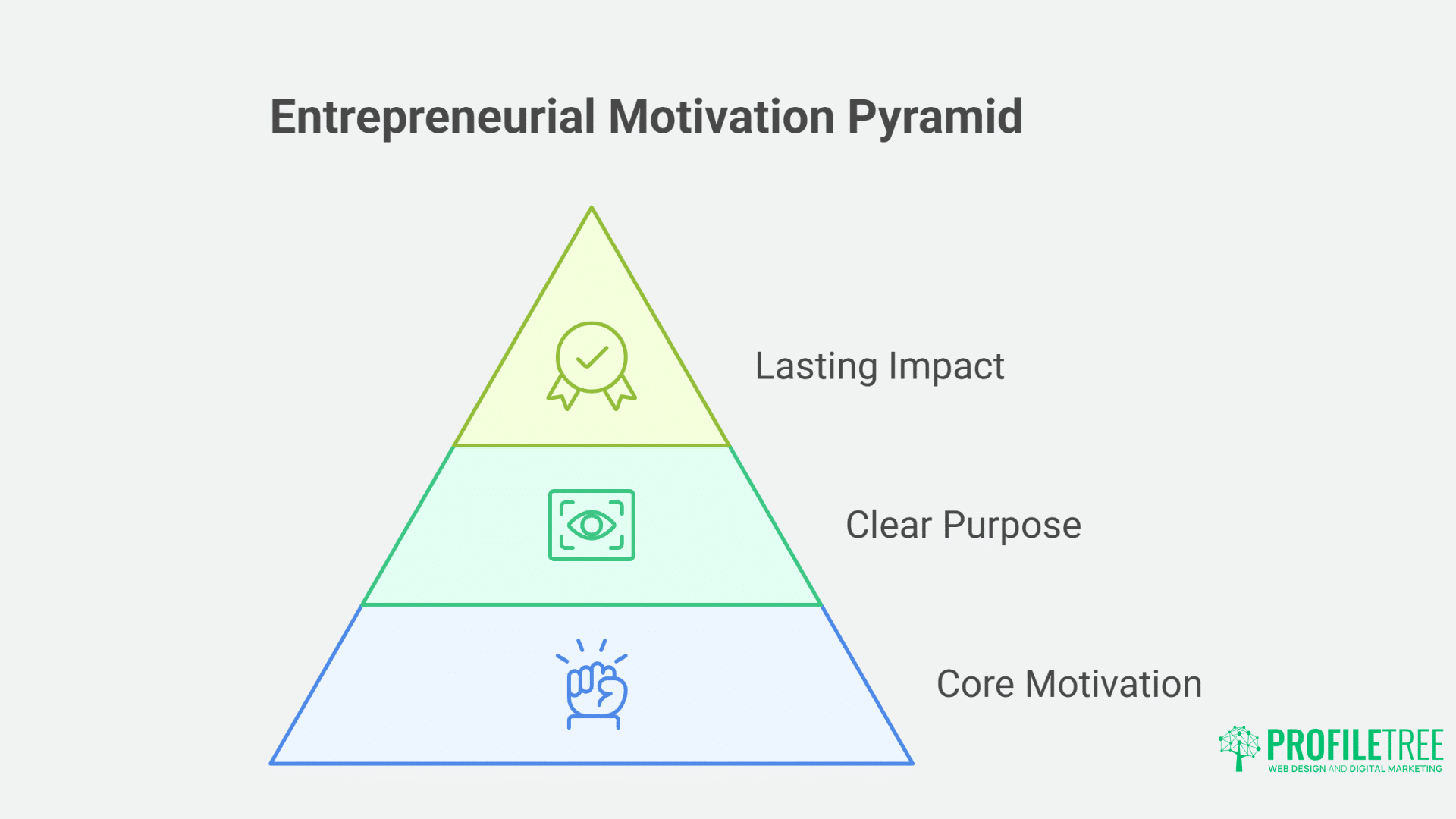
Before leaving the security of employment, clarity about your entrepreneurial motivation is vital. Research by the Federation of Small Businesses indicates that 67% of successful business owners identified a clear purpose before launching their ventures.
Are you pursuing greater autonomy, seeking to solve a market problem, or building something with lasting impact? Your core motivation will sustain you through the inevitable challenges of the employee to entrepreneur transition and guide your strategic decisions.
“Many professionals undergoing the employee to entrepreneur transition begin their journey with technical skills, but lasting success requires understanding why you’re building this business specifically,” notes Ciaran Connolly, Director of ProfileTree. “The ‘why’ becomes your compass when facing difficult choices and helps attract customers who connect with your purpose.”
Conducting Market Research and Validation During Your Transition
Thorough market research forms the foundation of viable business ventures. Unlike corporate environments where research teams might handle this function, those making the employee to entrepreneur transition must develop this competency themselves or partner with specialists.
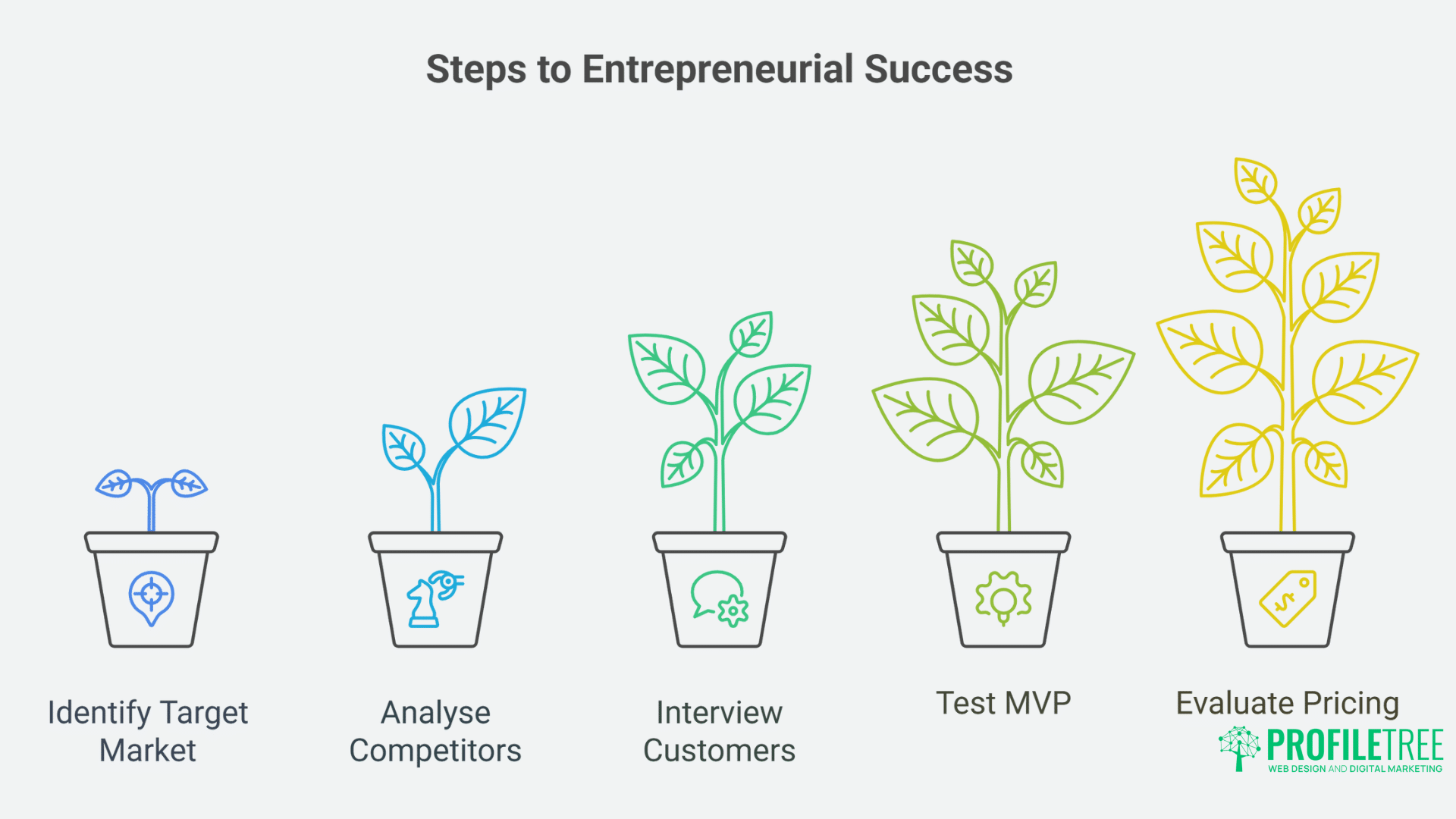
Consider these validation approaches for a successful employee to entrepreneur transition:
- Identify your target market segment with precision
- Analyse competitor offerings and positioning
- Interview potential customers about their needs
- Test minimal viable products or services to gauge interest
- Evaluate pricing sensitivity before full launch
According to data from UK Business Angels Association, ventures led by those who conduct comprehensive market validation during their employee to entrepreneur transition are 3.4 times more likely to secure early funding and twice as likely to achieve profitability within two years.
Building Your Business Structure and Brand After the Transition
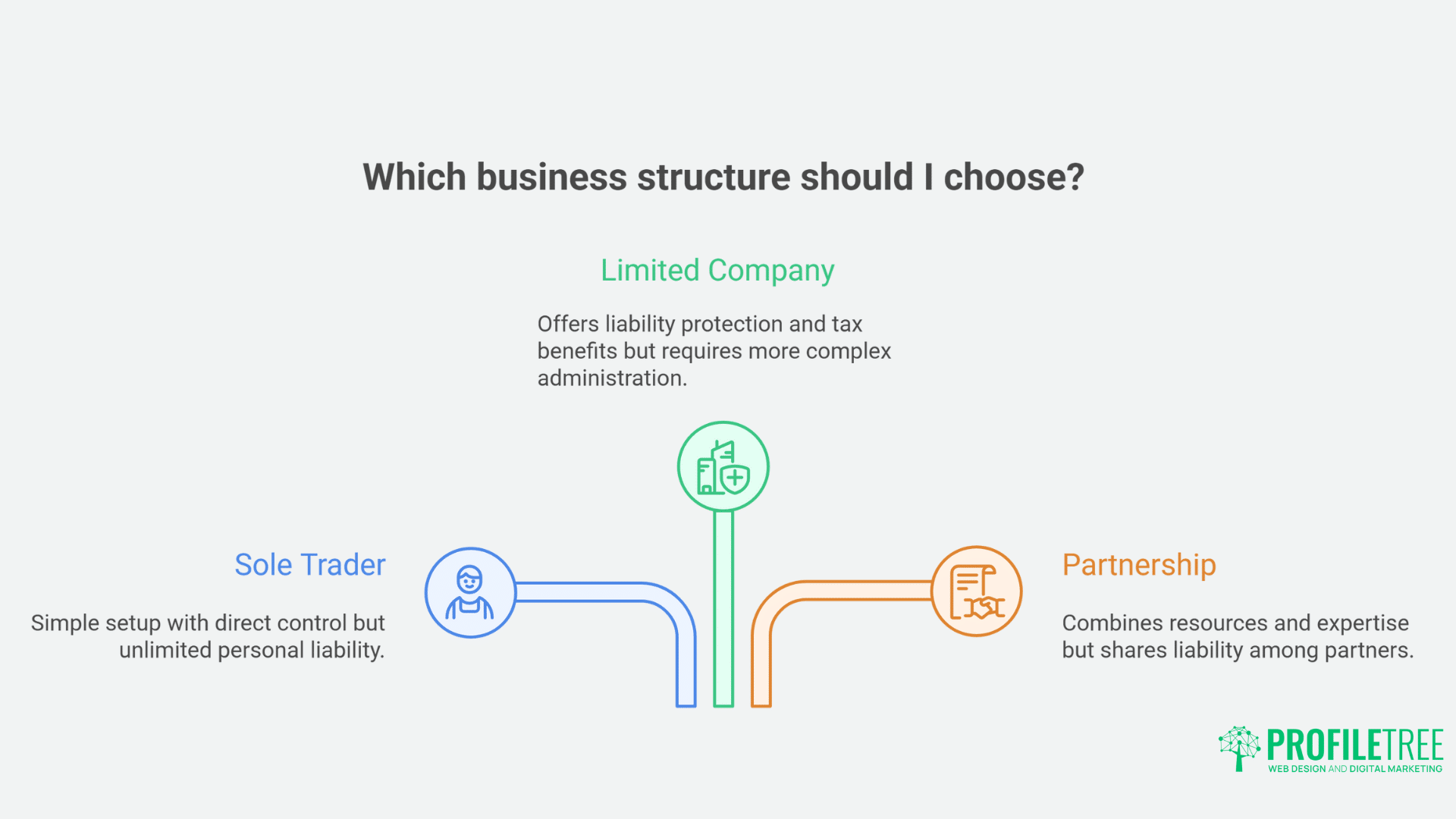
Selecting the right business structure impacts everything from taxation to personal liability. Options in the UK for those making the employee to entrepreneur transition include:
Sole Trader
- Simplest to establish during the employee to entrepreneur transition
- Personal and business finances legally linked
- Full liability for business debts
- Straightforward tax reporting
Limited Company
- Separate legal entity from founders
- Limited personal liability
- More complex accounting requirements
- Potential tax advantages for higher earners navigating the employee to entrepreneur transition
Partnership
- Shared responsibility and investment
- Clearly defined partnership agreements are essential
- Can pool complementary skills and resources
- Potential for disagreements without proper governance
Your business structure should align with your growth plans, risk tolerance, and funding requirements. This foundation supports your brand development, which communicates your values and differentiators to potential customers during the employee to entrepreneur transition.
Creating Your Digital Presence for a Successful Transition
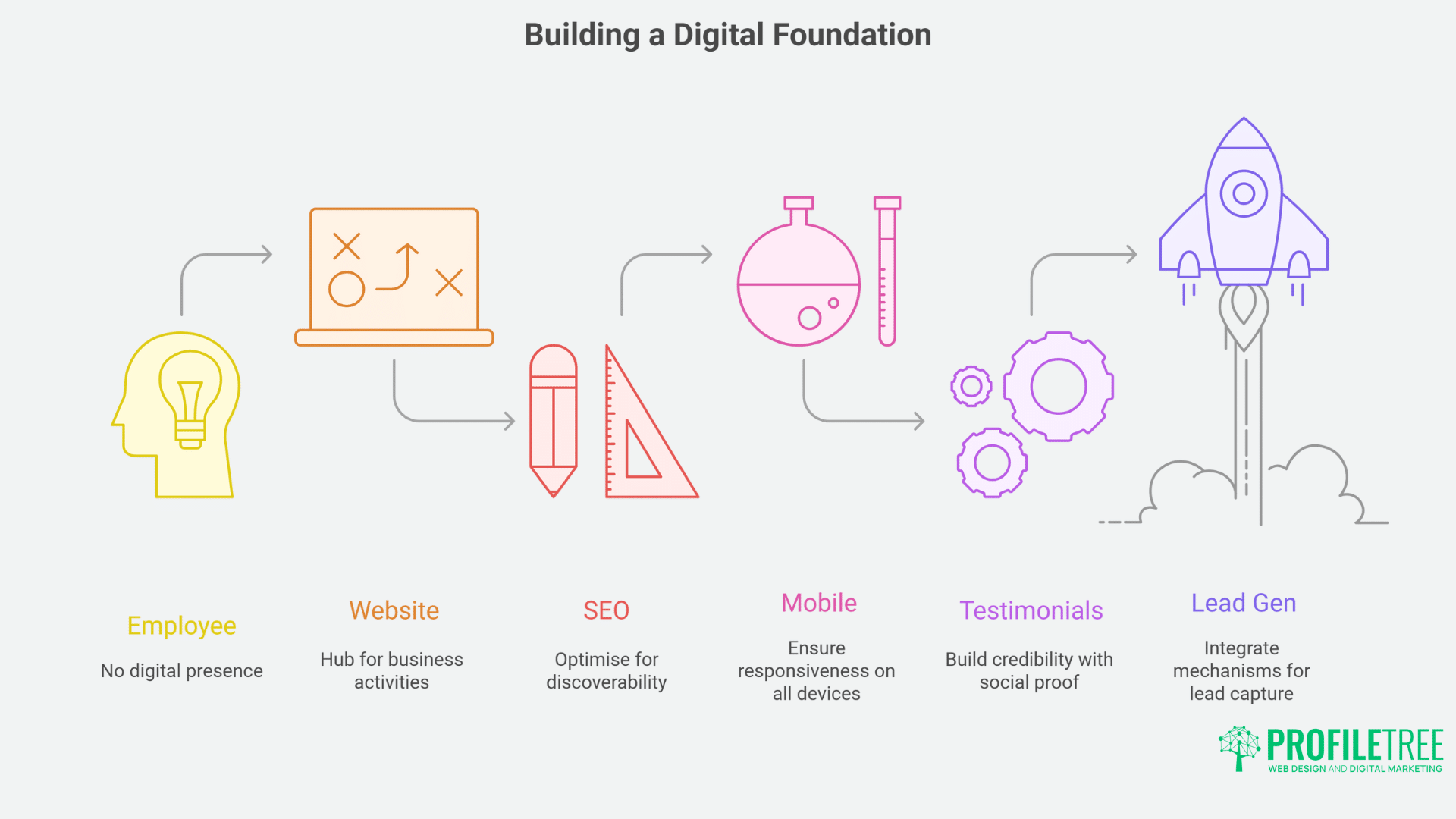
The modern employee-to-entrepreneur transition requires a strong digital footprint. Your website serves as the hub of your business activities, supporting marketing efforts and providing credibility to prospects.
Effective business websites for those completing the employee-to-entrepreneur transition incorporate:
- Clear service or product descriptions
- Strategic SEO optimisation for discoverability
- Mobile responsiveness for all devices
- Customer testimonials and case studies
- Integrated lead generation mechanisms
- Analytics tracking for performance measurement
Website functionality directly impacts customer perception and acquisition costs. Research from the UK Domain shows businesses with professionally designed, SEO-optimised websites spend 38% less on customer acquisition than those with basic or outdated digital presences during the employee-to-entrepreneur transition.
Financial Planning and Management for Your Transition
Transitioning from a stable paycheck to variable entrepreneurial income requires robust financial planning. Create comprehensive projections for your transition, including:
- Startup costs and capital requirements
- Expected revenue ramp-up timelines
- Monthly operating expenses
- Personal financial runway needed
- Cash flow projections for at least 18 months
- Tax provisions and accounting systems
Financial mismanagement ranks among the top reasons for business failure. A study by the British Business Bank found that 41% of failed startups cited cash flow problems as their primary challenge during the employee to entrepreneur transition, highlighting the importance of financial discipline.
Developing Business Systems and Processes for a Smooth Transition
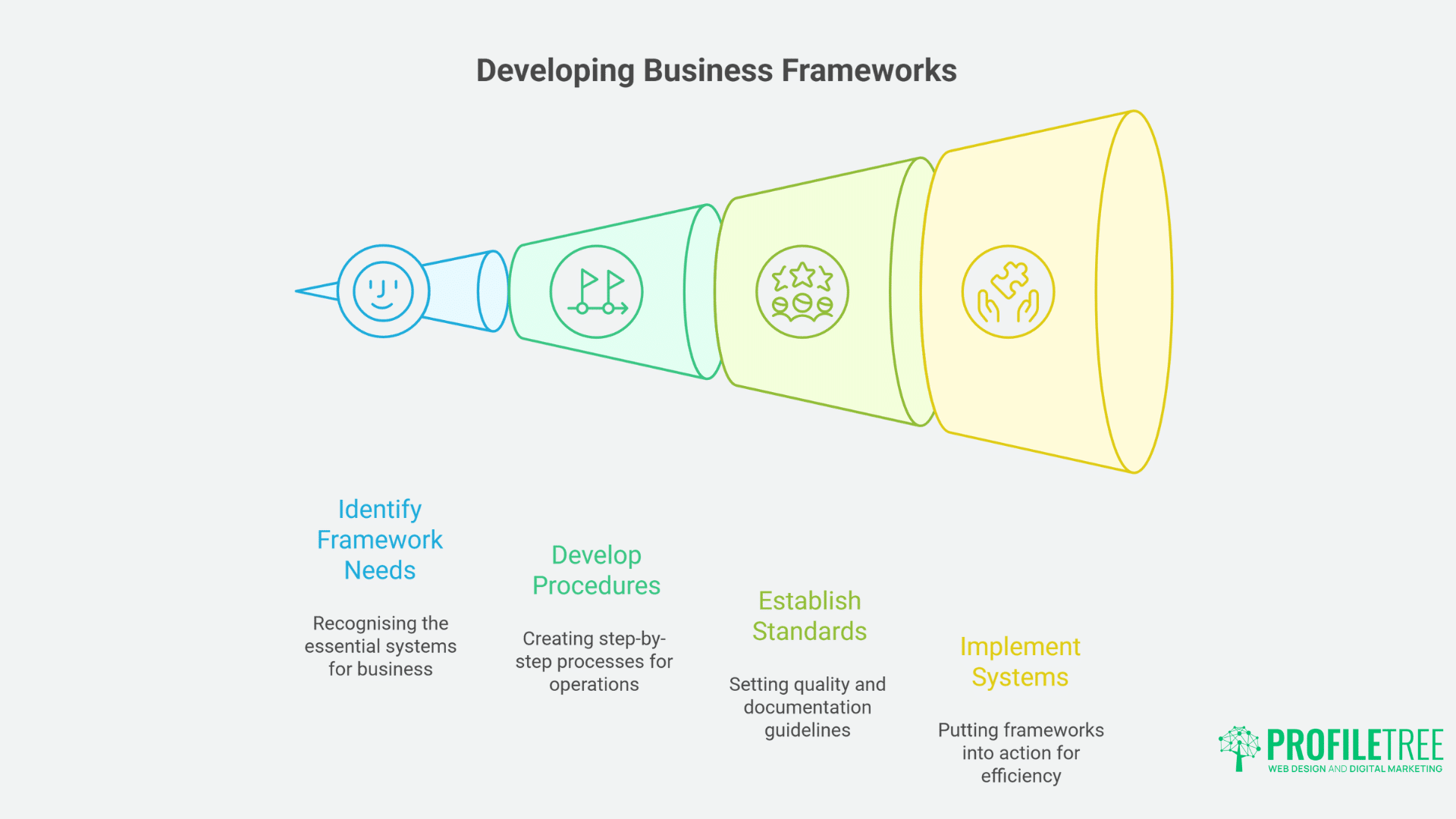
Corporate environments typically provide established workflows and systems. During your transition, you’ll need to create these structures yourself, including:
- Customer onboarding procedures
- Service delivery frameworks
- Quality assurance mechanisms
- Communication protocols
- Documentation standards
- Client management systems
Documented processes allow for delegation, consistent quality, and eventual business scaling. They transform personal expertise into organisational capability and add significant value to your business after the transition.
Building Your Network and Support System During the Transition
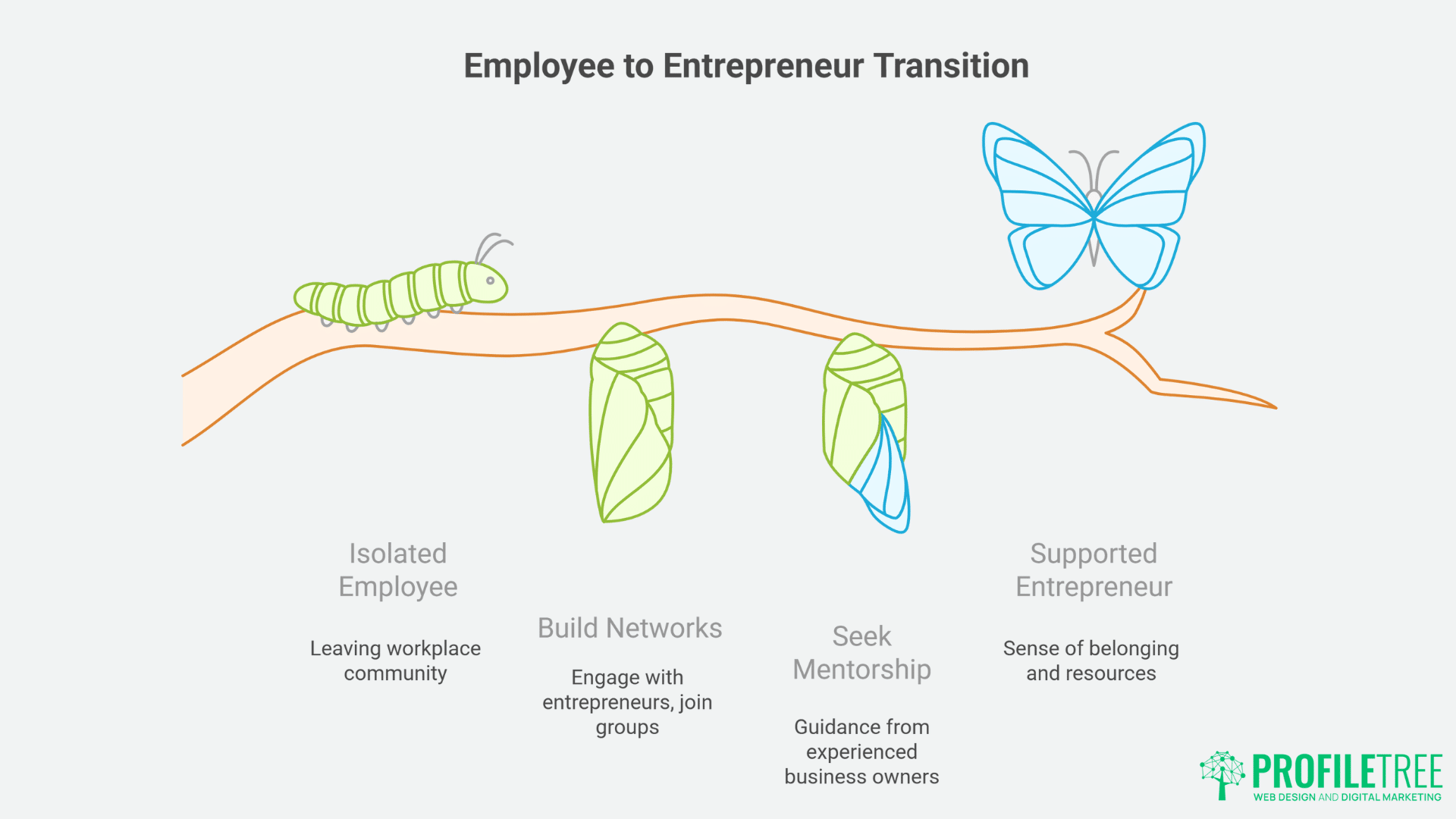
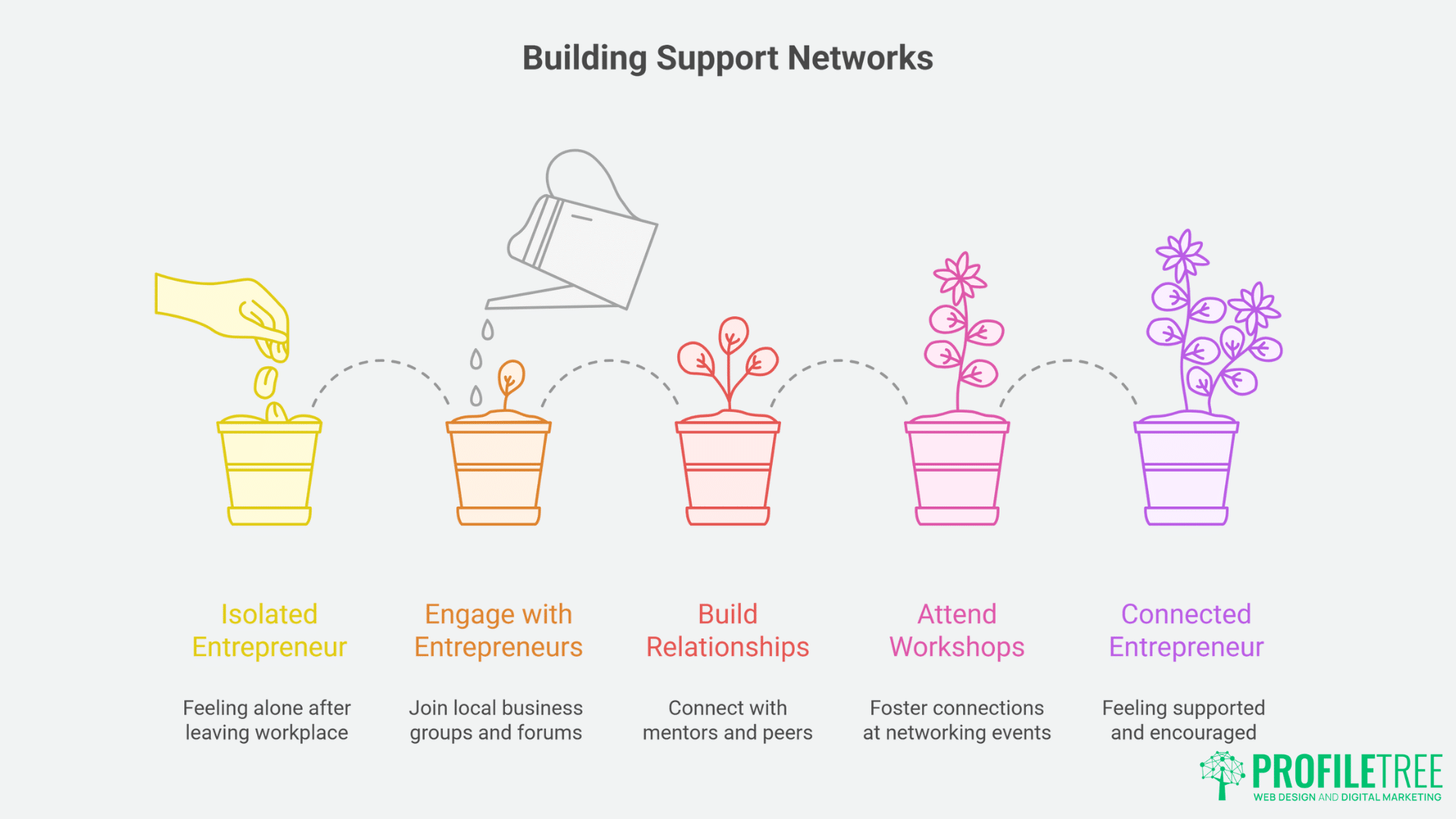
The employee to entrepreneur transition can feel isolating after leaving a workplace community. Proactively develop support networks through:
- Industry associations and chambers of commerce
- Entrepreneurial meetups and events
- Mastermind or peer advisory groups
- Professional service providers (accountants, solicitors)
- Online communities for your sector
- Former colleagues and mentors
The Federation of Small Businesses reports that entrepreneurs who build strong professional networks during their transition are 45% more likely to identify new opportunities and 37% more resilient during economic downturns.
Implementing Digital Marketing Strategies After Your Transition
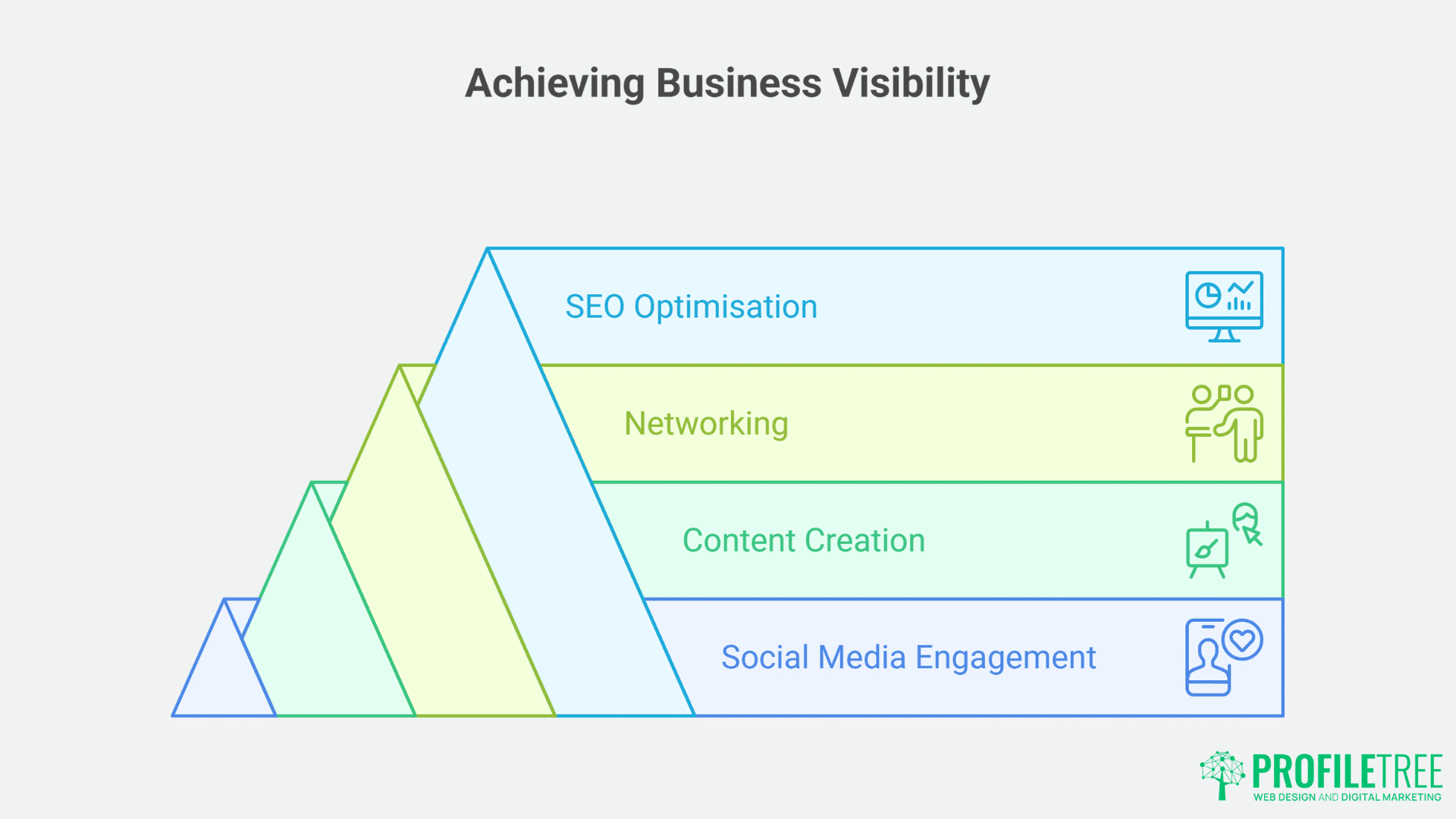
Visibility drives business growth, particularly for new ventures without an established reputation. Develop marketing approaches for your transition to entrepreneurship, including:
- Content marketing demonstrating expertise
- Local SEO for geographic targeting
- Social media engagement strategies
- Email marketing for lead nurturing
- Strategic partnerships for audience access
- Analytics-driven optimisation
Digital marketing effectiveness depends on consistency and measurement. By tracking key performance metrics, you can allocate resources to the channels generating the strongest returns for your specific business model after the employee-to-entrepreneur transition.
Managing Time and Productivity Through the Transition
The employee-to-entrepreneur transition requires mastering personal productivity without external structure. Successful business owners typically:
- Set clear quarterly and monthly objectives
- Break larger goals into actionable weekly tasks
- Distinguish between urgent and important activities
- Block focused time for high-impact work
- Establish regular review and planning sessions
- Implement systems to track progress
Research from the UK Productivity Institute indicates that entrepreneurs who maintain structured productivity systems during their employee to entrepreneur transition generate 27% higher revenue per work hour than those operating reactively.
Leveraging Technology and Automation in Your Transition
Modern entrepreneurs can access powerful tools previously available only to larger organisations. Evaluate technologies for your employee to entrepreneur transition:
- Customer relationship management
- Project management and team coordination
- Accounting and financial tracking
- Social media management and scheduling
- Email marketing and automation
- Document management and collaboration
Strategic technology implementation reduces administrative burden, improves customer experience, and creates competitive advantages through efficiency. Select tools that integrate well and solve specific business challenges rather than adopting technology indiscriminately during your employee to entrepreneur transition.
Scaling Your Business After the Transition
Once your business achieves consistent revenue and established processes following your employee to entrepreneur transition, consider growth strategies:
- Expanding service offerings to existing customers
- Targeting adjacent market segments
- Developing passive income streams
- Building teams for increased capacity
- Creating strategic partnerships
- Exploring geographic expansion
Growth requires intentional planning and often necessitates shifting from doing the work to directing others. This transition challenges many entrepreneurs but represents the path to building substantial business value after the employee to entrepreneur transition.
Learning from Setbacks During Your Transition
The employee to entrepreneur transition inevitably involves setbacks. Research from the UK Enterprise Research Centre shows successful business owners view challenges as learning opportunities rather than failures.
Develop resilience during your transition by:
- Separating business setbacks from personal identity
- Analysing problems for systemic improvements
- Seeking feedback from mentors and advisors
- Implementing structured problem-solving approaches
- Celebrating progress alongside acknowledging challenges
- Maintaining perspective on long-term objectives
Balancing Personal and Professional Life During the Transition
The employee to entrepreneur transition impacts all aspects of life. Sustainable success requires intentional balance:
- Set clear boundaries between work and personal time
- Communicate expectations with family and partners
- Schedule personal activities with the same priority as business
- Monitor health indicators, including sleep and stress
- Build recovery periods into your calendar
- Develop interests outside of business
How ProfileTree Can Support Your Employee to Entrepreneur Transition
New entrepreneurs face significant challenges in establishing their digital presence and marketing strategies. ProfileTree offers specialised services designed specifically for business owners making the employee to entrepreneur transition:
Strategic Digital Foundation
Our team develops comprehensive digital strategies tailored to your specific business model, target market, and growth objectives. We identify the most effective channels for your industry and create measurable implementation plans that align with your available resources during the employee to entrepreneur transition.
SEO-Optimised Website Development
As a new business, visibility is crucial. Our web development team builds WordPress websites specifically designed to rank for relevant search terms in your geographic market. Unlike standard web designers, we focus on creating sites that drive qualified traffic and convert visitors into leads – essential for a successful employee to entrepreneur transition.
Content Marketing for Authority Building
Establishing credibility quickly is essential for new entrepreneurs. Our content specialists develop strategic blog posts, case studies, and multimedia content that positions your business as a trusted authority in your field, accelerating the trust-building process with potential clients during your employee to entrepreneur transition.
Local SEO Implementation
For service businesses operating in Northern Ireland, Ireland or specific UK regions, our local SEO experts help you dominate geographic search results. This targeted approach maximises marketing efficiency by focusing on customers in your service area after your employee to entrepreneur transition.
AI Tools Integration
We help entrepreneurs identify and implement appropriate AI solutions that create competitive advantages through efficiency and customer experience. Our practical training ensures you can effectively use these tools rather than being overwhelmed by them during your employee to entrepreneur transition.
Digital Skills Training
Many new business owners need to rapidly develop digital marketing capabilities. Our workshops and training programmes accelerate this learning curve, empowering you to manage key digital activities confidently throughout your employee to entrepreneur transition.
Take the Next Step in Your Employee to Entrepreneur Transition
Ready to transform your business idea into reality? ProfileTree has supported hundreds of professionals through the employee to entrepreneur transition across Northern Ireland, Ireland, and the UK in establishing strong digital foundations for sustainable growth.
Book Your Digital Strategy Consultation
Our team at ProfileTree offers a comprehensive 60-minute digital strategy consultation. During this session, we’ll:
- Assess your current digital readiness
- Identify priority marketing channels for your specific business
- Recommend technology solutions aligned with your budget
- Outline a phased implementation approach
- Provide clarity on investment requirements and expected outcomes