
Email Marketing Personalisation Software Tools
Table of Contents
Email marketing remains one of the most effective digital channels for business owners, with return on investment figures consistently outperforming other marketing methods. But generic mass emails no longer cut through the noise. Modern consumers expect messages tailored to their interests, behaviour, and stage in the customer journey.
Email marketing personalisation has become essential for businesses looking to build meaningful connections with their audience and drive measurable results. The right software solution transforms your email campaigns from one-size-fits-all broadcasts into targeted, relevant communications that drive engagement and conversions. Whether you’re a Belfast-based retailer, a service provider in Dublin, or a growing SME anywhere in the UK, understanding your options for email personalisation technology is fundamental to your marketing success.
Why Email Marketing Personalisation Matters
Personalisation is not about inserting a first name into the subject line. It’s about delivering content that matches where each recipient is in their relationship with your business. Research from Statista shows that personalised emails generate transaction rates six times higher than non-personalised messages.
For businesses in Northern Ireland and across the UK, email personalisation helps you compete with larger companies by building stronger customer relationships. When a customer in Belfast receives an email about products they’ve browsed, or a service relevant to their previous purchases, they’re far more likely to engage than with generic promotional content.
The benefits extend beyond open rates. Personalised emails reduce unsubscribe rates, improve brand perception, and create data that helps you understand your audience better. Each campaign becomes smarter as your software learns what resonates with different segments.
Key Features to Look for in Email Marketing Personalisation Software
Not all email platforms offer the same email personalisation capabilities. When evaluating software for your business, focus on these core features that directly impact your ability to create relevant campaigns.
Segmentation Capabilities
Segmentation divides your email list into groups based on shared characteristics. Good software should let you segment by demographics, purchase history, website behaviour, email engagement, and custom fields you define. The more granular your segmentation options, the more precisely you can target your messages.
For example, a retailer in Northern Ireland might segment customers by location (Belfast vs. Derry vs. rural areas) to promote different store events, or by purchase frequency to identify loyal customers worth rewarding. Your software should make creating and managing these segments straightforward, not a technical challenge.
Dynamic Content
Dynamic content changes elements within a single email based on recipient data. Instead of creating separate emails for different segments, you build one template with sections that adapt automatically. This might mean showing different product recommendations, adjusting imagery for different age groups, or highlighting location-specific offers.
This feature saves significant time whilst maintaining relevance. A business serving both Northern Ireland and the Republic of Ireland could use dynamic content to show prices in pounds or euros, reference the correct VAT rates, or highlight region-specific delivery options.
Behavioural Triggers
Automated emails triggered by specific actions or inactions create timely, relevant touchpoints. Common triggers include welcome sequences for new subscribers, abandoned cart reminders, post-purchase follow-ups, and re-engagement campaigns for inactive customers.
The best platforms let you create sophisticated trigger sequences with multiple branches based on how recipients respond. If someone opens your abandoned cart email but doesn’t purchase, you might send a follow-up with a small discount. If they do purchase, they enter a different sequence focused on product usage and cross-selling.
A/B Testing
Testing different versions of your emails reveals what resonates with your audience. Look for software that makes A/B testing simple, allowing you to test subject lines, sender names, content variations, send times, and calls to action. The platform should automatically determine the winning version and send it to the remainder of your list.
Regular testing compounds your results over time. Small improvements in open rates and click-through rates add up to significantly better campaign performance across the year.
Leading Software Solutions for Email Personalisation
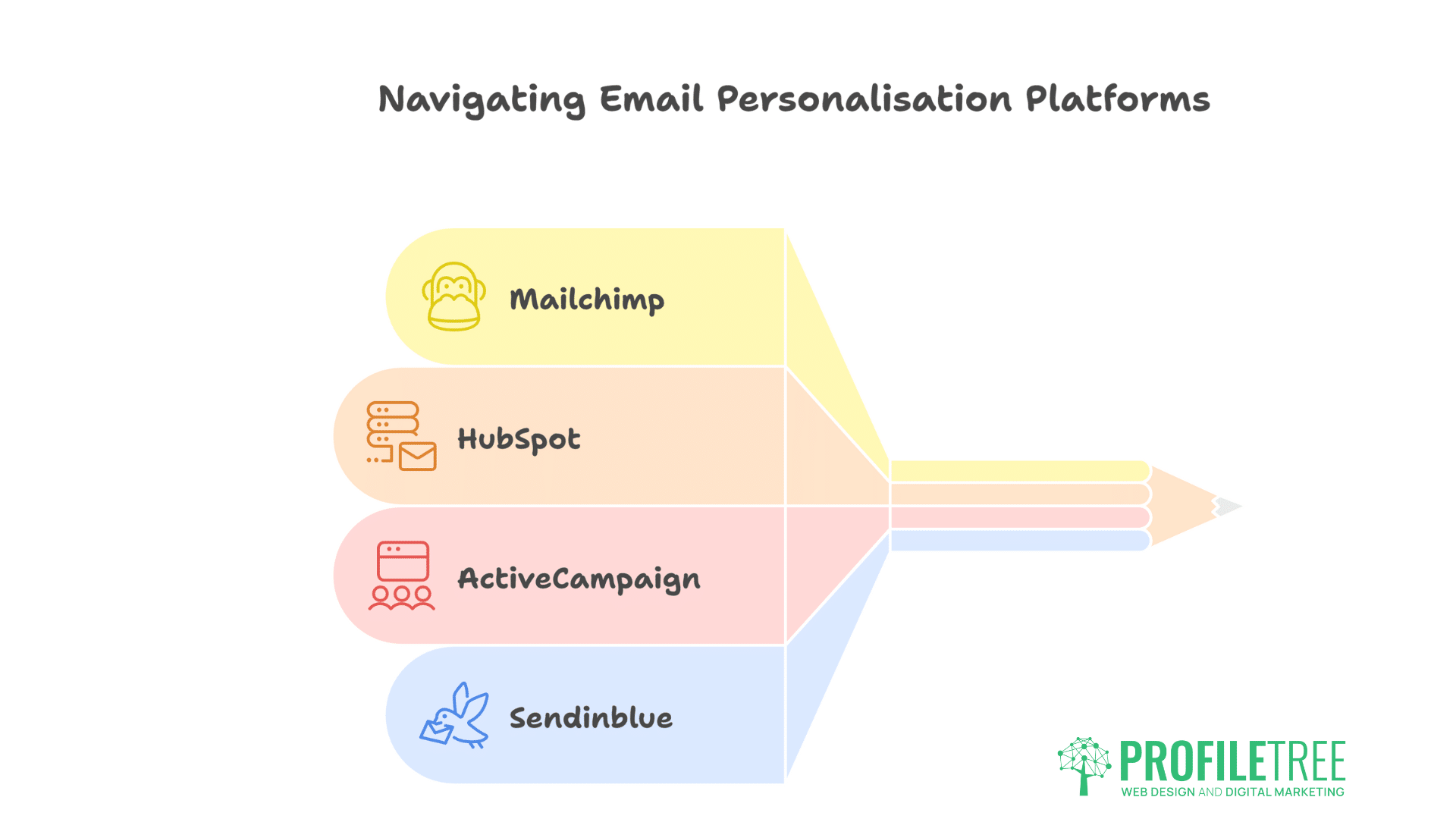
Several platforms dominate the email marketing space, each with different strengths. Understanding their capabilities helps you match software to your specific business needs.
Mailchimp
Mailchimp offers strong email personalisation features within an intuitive interface. The platform includes segmentation based on multiple criteria, behavioural targeting, and dynamic content blocks. Their visual automation builder lets you create complex email sequences without coding knowledge.
For UK businesses, Mailchimp provides GDPR compliance tools built into the platform. Pricing scales with list size, making it accessible for smaller businesses whilst offering features that grow with you. The free tier works for businesses just starting with email marketing, though personalisation features expand significantly on paid plans.
HubSpot
HubSpot integrates email marketing with CRM, making it powerful for businesses focused on relationship building. The platform tracks every interaction a contact has with your business, from website visits to email opens, creating a complete picture that informs your personalisation strategy.
Smart content adapts emails based on where contacts are in your sales funnel. You can show different messages to leads, customers, and advocates automatically. The platform also excels at list segmentation, with filters that combine demographic and behavioural data in sophisticated ways.
HubSpot’s pricing sits at the higher end, but businesses investing in comprehensive marketing automation find value in having email, CRM, and other marketing tools unified in one system.
ActiveCampaign
ActiveCampaign focuses specifically on automation and email personalisation. The platform’s standout feature is its visual automation builder, which handles complex, multi-path campaigns based on numerous triggers and conditions. You can create automation that responds to behaviour across your website, emails, and CRM interactions.
The software includes predictive sending, which uses machine learning to determine the optimal time to send emails to each subscriber. For businesses in different time zones across the UK and Ireland, this feature improves open rates without manual scheduling complexity.
Lead scoring helps prioritise which contacts deserve immediate attention from your sales team. The platform assigns points based on email engagement and website behaviour, surfacing hot leads automatically.
Klaviyo
Built specifically for e-commerce businesses, Klaviyo excels at product-based personalisation. The platform integrates deeply with Shopify, WooCommerce, and other e-commerce platforms to pull in product data, purchase history, and browsing behaviour.
Klaviyo’s dynamic product recommendations change based on what each customer has viewed or purchased. Abandoned cart emails can show the exact products left behind, whilst post-purchase campaigns can suggest complementary items based on what someone bought.
For retailers across Northern Ireland and the UK, Klaviyo offers sophisticated segmentation around customer lifetime value, predicted churn risk, and engagement patterns. The platform’s reporting shows revenue attributed to each campaign, making ROI tracking straightforward.
Brevo (formerly Sendinblue)
Brevo provides strong email personalisation features at competitive pricing. The platform includes marketing automation, SMS capabilities alongside email, and a built-in CRM for smaller businesses not yet using dedicated CRM software.
Transactional email capabilities make Brevo suitable for businesses needing both marketing communications and system-generated emails like order confirmations. The platform’s workflow editor lets you build automated sequences that combine email and SMS touchpoints.
UK businesses appreciate Brevo’s pay-as-you-go pricing option, which charges per email sent rather than list size. This works well if you have a large list but send infrequently, or if the list size fluctuates seasonally.
How to Choose the Right Platform for Your Business
Selecting email marketing software requires matching features to your specific situation. Start by auditing your current needs and growth plans.
Consider your list size and how quickly it’s growing. Some platforms become prohibitively expensive as lists expand, whilst others offer better value at scale. Factor in not just your current list but where you expect to be in 12-18 months.
Evaluate your technical capabilities. Some platforms require minimal technical knowledge, whilst others offer advanced features that need development resources or training. Be honest about whether you have team members who can manage complex automation, or if you need something more accessible.
Integration requirements matter significantly. The software should connect seamlessly with your existing technology stack – your website platform, e-commerce system, CRM, analytics tools, and any other systems that hold customer data. Poor integration leads to manual work and data gaps that undermine personalisation.
Test the platforms you’re considering. Most offer free trials. Set up a test campaign to evaluate the interface, check how intuitive the segmentation tools are, and verify that reporting gives you the insights you need. Pay attention to customer support quality during your trial, as you’ll likely need help getting started.
Ciaran Connolly, Director of ProfileTree, notes: “The software you choose matters less than how you use it. We see businesses get caught up in feature lists when they should focus on whether a platform helps them understand and serve their customers better. Start with what your audience needs to hear, then find software that makes delivering those messages practical.”
Implementing Personalisation Strategies
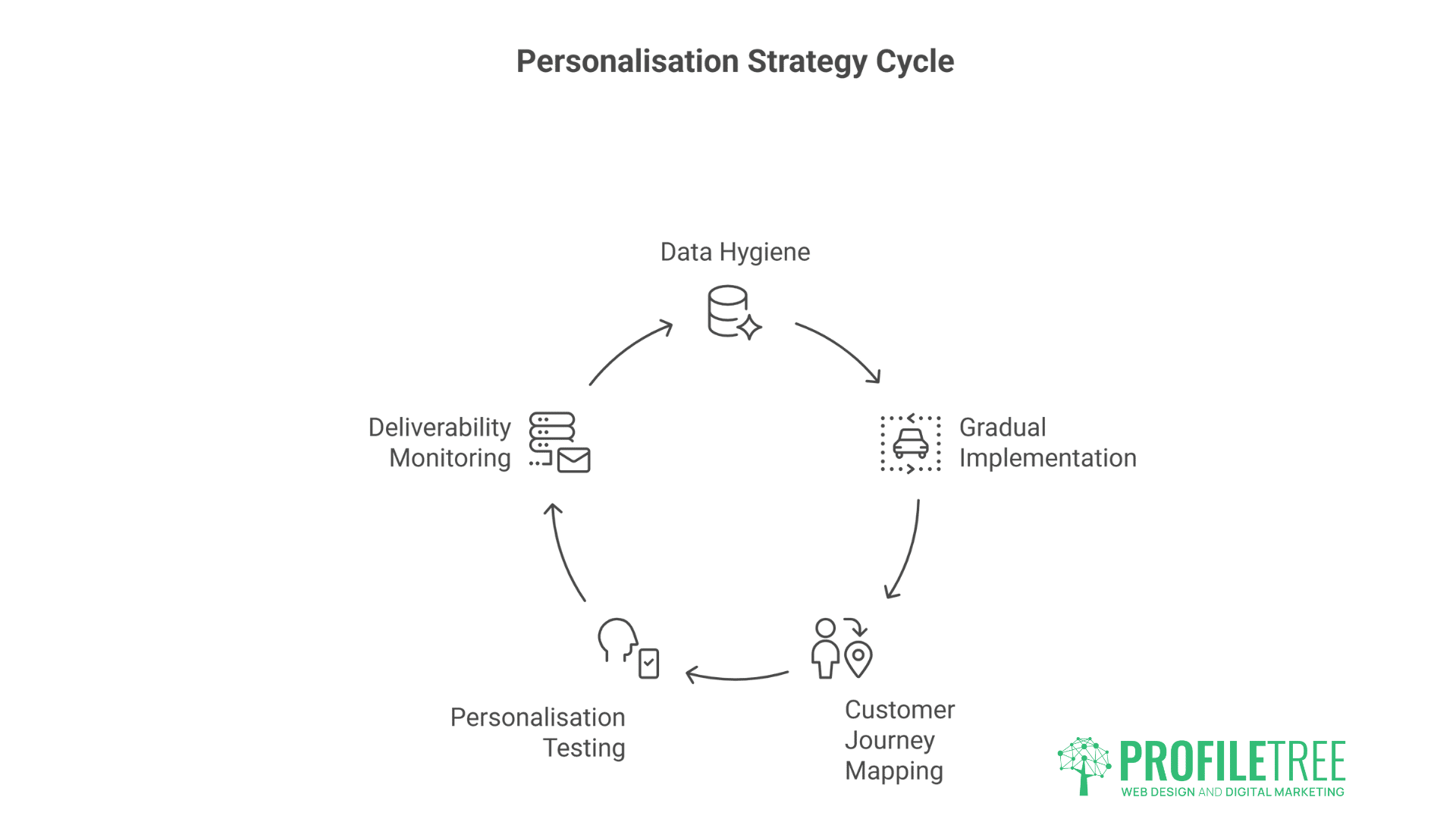
Having the right software is only half the solution. Effective personalisation requires strategic implementation and ongoing refinement.
Begin with data hygiene. Clean, accurate data underpins all personalisation efforts. Remove duplicates, standardise formatting, fill gaps where possible, and segment based on quality data you trust. Running campaigns on poor data wastes money and damages your sender reputation.
Start personalisation gradually. Don’t try to implement everything at once. Begin with basic segmentation, perhaps by customer type or purchase history. Test that, learn from results, then add layers like behavioural triggers or dynamic content. This iterative approach builds knowledge and confidence whilst avoiding overwhelm.
Map your customer journey to identify key touchpoints where automated, personalised emails add value. Welcome sequences for new subscribers, post-purchase follow-ups, and re-engagement campaigns for inactive customers represent quick wins that most businesses can implement successfully.
Personalisation extends beyond the email body to subject lines, preview text, and send times. Someone who consistently opens your emails in the evening might respond better to sends timed for after dinner. Test these elements systematically to find what works for different segments.
Monitor deliverability closely as you increase personalisation and automation. Sending more emails, even highly relevant ones, can trigger spam filters if you’re not careful. Maintain good list hygiene, respect unsubscribes promptly, and warm up new automation sequences gradually rather than turning on everything at once.
Measuring Success
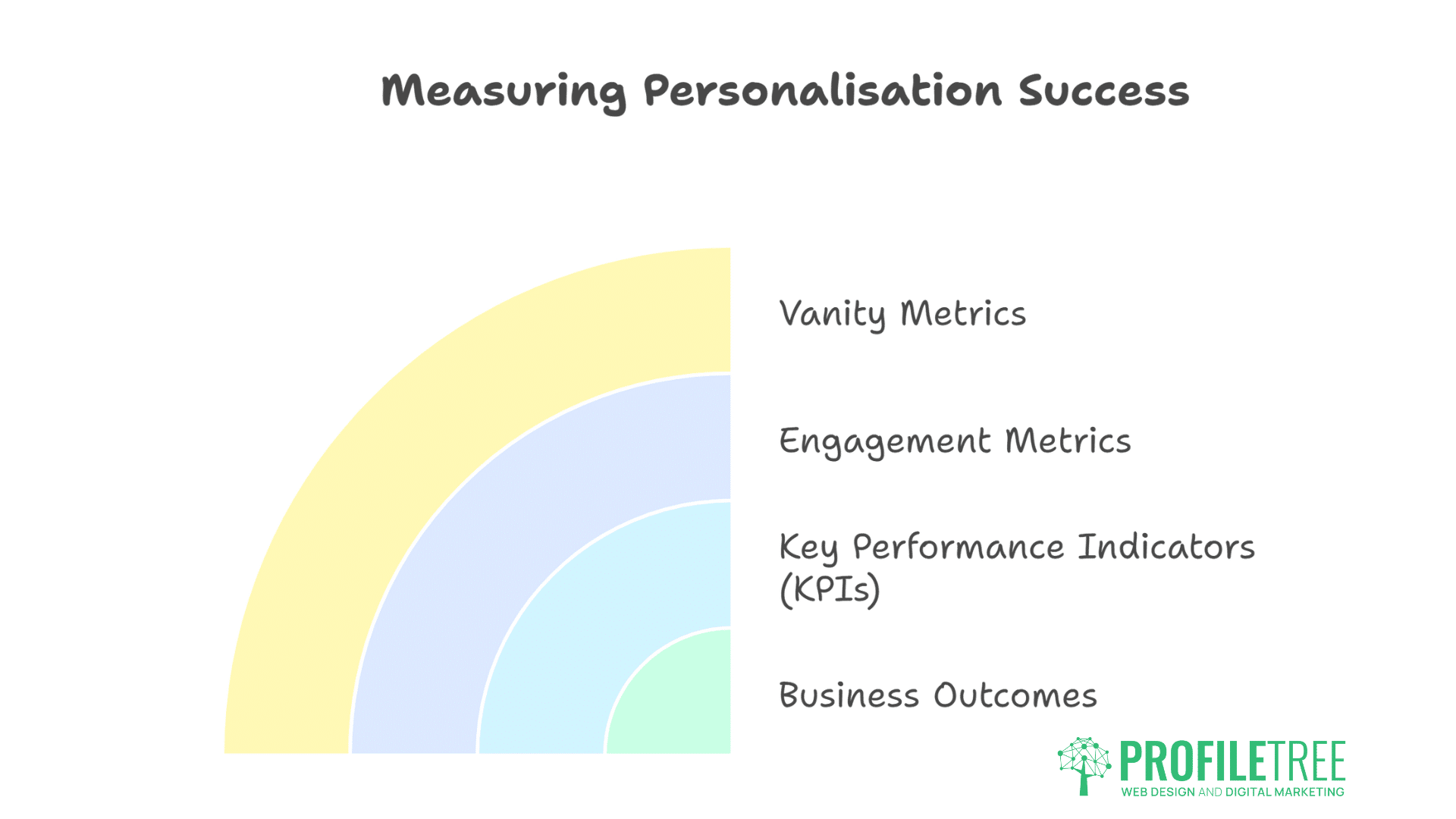
Tracking the right metrics tells you whether your personalisation efforts are working. Look beyond vanity metrics to numbers that connect to business outcomes.
Open rates and click-through rates provide surface-level engagement data. Whilst important, they don’t tell the full story. Track conversion rates for different segments to understand which groups respond to personalisation and which need different approaches.
Revenue per email measures the financial impact of campaigns. This metric varies significantly between promotional emails, transactional messages, and nurture campaigns, so compare like with like. Track how this figure changes as you implement more sophisticated personalisation.
List health metrics like unsubscribe rates and spam complaints signal whether your personalisation feels helpful or invasive. A spike in unsubscribes after launching new automation suggests you need to review frequency or relevance.
Customer lifetime value segments help you understand whether personalised campaigns are building long-term relationships or just driving one-off sales. The most valuable outcome from email personalisation is customers who buy more frequently over time, not just higher initial conversion rates.
Benchmark your performance against your own past results rather than industry averages. Your audience’s behaviour is unique to your business, market, and the relationship you’ve built. Consistent improvement month-over-month indicates your personalisation strategy is working, regardless of how you compare to published benchmarks.
Conclusion
Email personalisation software transforms generic campaigns into relevant, timely communications that customers actually want to receive. The platforms discussed here each offer different strengths, from Mailchimp’s accessibility to Klaviyo’s e-commerce focus to HubSpot’s integrated approach.
Your choice should align with your business model, technical capabilities, budget, and growth plans. More features don’t always mean better results – what matters is selecting software you’ll actually use effectively, then implementing personalisation strategies that serve your customers’ needs.
For businesses across Northern Ireland, Ireland, and the UK, email marketing remains a direct line to customers that builds relationships and drives revenue when done thoughtfully. The right software makes personalisation practical rather than overwhelming, helping you compete effectively regardless of company size.
Start with clear goals for what you want email marketing to achieve, choose software that supports those goals, implement personalisation gradually, and measure results honestly. This approach builds sustainable email marketing that contributes meaningfully to your business growth.
At ProfileTree, we work with businesses across Northern Ireland, Ireland, and the UK to implement email marketing strategies that deliver measurable results. Our team has experience across multiple platforms and can help you select software that matches your budget, technical capabilities, and growth objectives. We build your initial campaigns and automation and integrate your email marketing with your broader digital strategy. Whether you need support with content marketing, SEO, or digital training to build your team’s capabilities, we adapt our services to what you need.