
User-Generated Content: A Practical Guide for Brands That Want Trust, Traffic and Conversions
Table of Contents
The fastest way to lose a sale in 2026 is to sound like an advert. The fastest way to win one is to let your customers do the talking. User-Generated Content sits at the centre of that shift, turning honest reviews, photos, videos and testimonials into the most persuasive marketing asset most brands already own and rarely use well. This guide covers what User-Generated Content is, how to plan it, where it earns the strongest commercial return, and how a UK or Ireland based business can apply it across web design, SEO, video and paid social without falling foul of the rules.
ProfileTree, a Belfast based digital agency, has spent years helping clients across Northern Ireland, Ireland and the UK build websites, video libraries and content systems that surface real customer voices. Brands that treat User-Generated Content as a structural choice rather than a once a quarter campaign see better organic rankings, higher conversion rates and stronger AI search visibility. Brands that bolt it on never feel the lift.
What User-Generated Content Actually Is
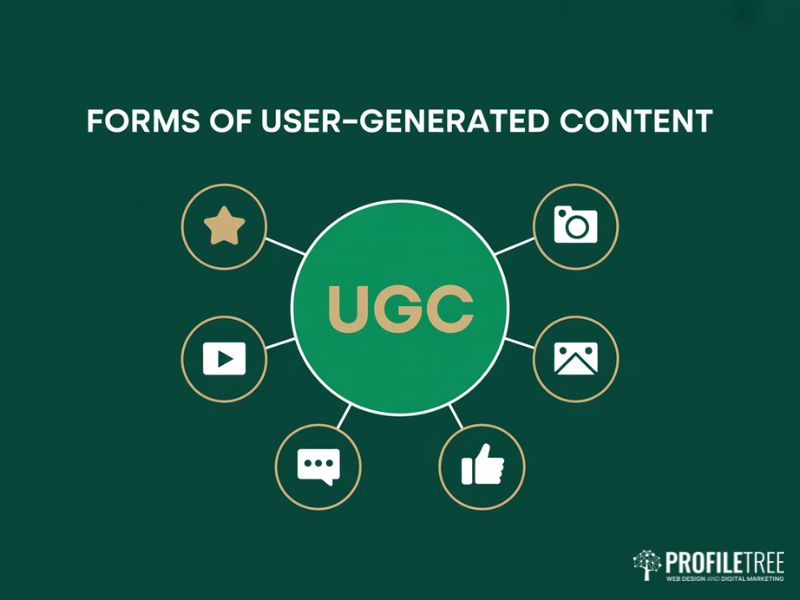
User-Generated Content is any original content created by a customer, employee, fan or independent creator rather than the brand itself, and used by the brand for marketing or communication. The format does not matter. The voice does.
That definition pulls in a wide range of assets. A five-star Google review. A short product video filmed on a phone. An installer photo of a finished kitchen. A LinkedIn post from a happy client. A long Trustpilot review with three paragraphs of genuine detail.
Organic UGC Versus Commissioned UGC
The category has split in two over the past three years, and the difference shapes how you brief, budget and use the content. Both have a role.
Organic User-Generated Content is unprompted. A customer posts a review or a photo because they want to. It is free, unpredictable and difficult to scale. The advantage is that it carries the highest level of authenticity. The cost is that you cannot rely on it for a deadline.
Commissioned UGC is content created by a paid creator who specialises in the look and feel of authentic, phone shot media. The brand briefs the creator, agrees a fee, and receives the raw footage to run as paid social or to feature on a landing page. Under UK Advertising Standards Authority rules, anything paid for must be disclosed if it is presented as editorial or peer recommendation.
Where UGC Lives
Most teams think of UGC as a social media format. That is the smallest part of the value. The bigger lift comes from owned placement.
Strong programmes feed five surfaces at once: product and service pages, case studies, the homepage, paid social ads, and email. The same review can carry a product page, populate a Google Business Profile post, sit inside a quarterly email and feed a 30 second TikTok edit.
Why UGC Works So Well in 2026
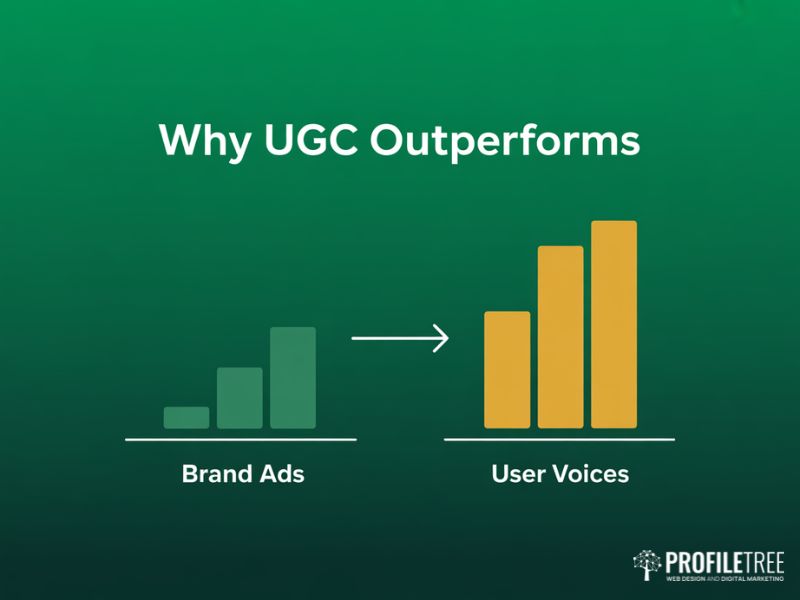
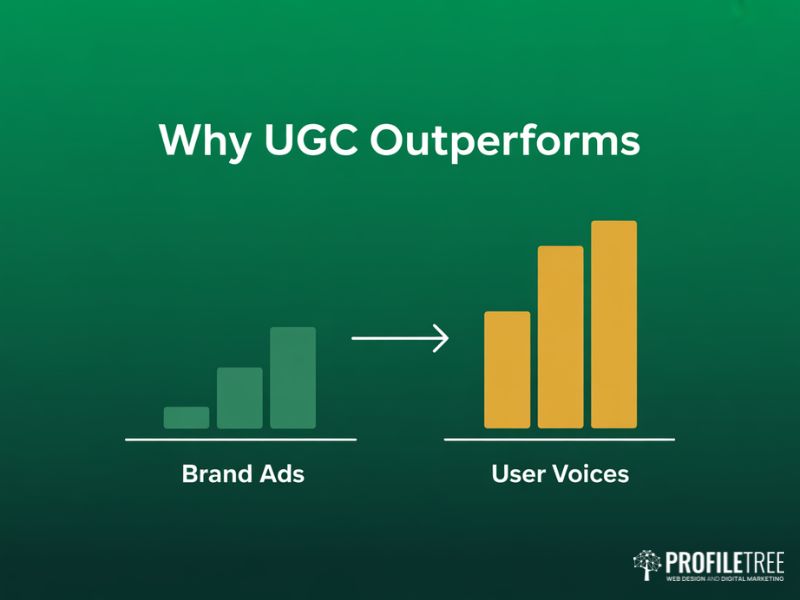
User-Generated Content works because it solves the trust problem that paid advertising created. Decades of polished campaigns have trained consumers to discount what brands say about themselves. A peer voice cuts through that scepticism.
Industry research from Stackla and EnTribe consistently shows that consumers find user content more authentic than brand produced content, and that authenticity influences purchase decisions across age groups.
The SEO and AI Search Lift
Search engines have caught up with what consumers already knew. User-Generated Content adds three things that algorithms now weight heavily: freshness, semantic depth and entity confirmation.
Reviews and customer comments naturally include the long tail phrases real buyers use, often phrased as questions. That language matches voice search and AI assisted search better than marketing copy. Pages with structured review data also qualify for star rating snippets in Google, which lifts click through rates without changing rank position. Building this into a site is exactly what ProfileTree’s SEO services are designed to deliver.
For AI Overviews and large language model citations, the picture is sharper. Generative engines preferentially cite content that demonstrates first hand experience and verifiable third party signals. A service page with named, dated customer testimonials is closer to a primary source than a page of generic claims.
The Conversion Lift
The commercial case is the simplest. User-Generated Content close to a buying decision lifts conversion. Studies from Bazaarvoice and PowerReviews put the uplift on product pages with reviews at between 35 percent and 270 percent depending on category and basket size.
The mechanism is straightforward. A buyer at the point of purchase needs reassurance. A specific, recent customer voice provides it. A 12 second video answers the silent question every page visitor asks: do people like me actually use this?
“We see the same pattern across every sector we work in. The websites that convert are the ones that put real customer voices next to the buy button, not on a separate testimonials page nobody visits. User-Generated Content has moved from a nice to have to a structural part of how a commercial site has to be designed.” – Ciaran Connolly, founder, ProfileTree
Building a UGC Strategy That Holds Up
The brands that get the most from User-Generated Content treat it as a system, not a campaign. The system has four parts: collection, rights, placement and measurement. Skipping any one of them costs you.
ProfileTree’s web design and content marketing teams build this in from the start of a project. A new website should ship with review collection points already wired in, a rights process documented, and at least three placements ready to display the content.
Step One: Set the Goal Before the Tactic
The first decision is what the UGC needs to do. Top of funnel awareness, mid funnel reassurance and bottom of funnel conversion all need different content shapes. A short edited video works for paid social. A detailed written review with a photograph works for a product page. A case study video works for a B2B service page.
Write the goal down first. Choose the placement next. Then commission or collect the content to fit.
Step Two: Build a Repeatable Collection System
Most brands sit on more User-Generated Content than they realise. The problem is that it is scattered across email replies, Google reviews, Instagram tags, sales calls and DMs nobody screenshots. A collection system fixes this.
A workable system has three pieces: a scheduled review request after every purchase or project completion, a tagged inbox for inbound mentions and photos, and a monthly review of what has been collected, what is usable, and what needs a rights request.
For local service businesses, Google Business Profile reviews are the easiest starting point with the strongest payback. ProfileTree’s own Google reviews have been a consistent source of credibility for over a decade, and the same approach scales for any service business with a local footprint.
Step Three: Get Rights in Writing
You cannot legally repurpose a customer’s photo, video or words in your advertising without permission. This is where most brands cut corners and where the regulator is paying attention.
The rights request itself is straightforward: a short, friendly direct message or email asking permission to use the content, naming where it will appear, and confirming the customer can withdraw consent. Keep a record of the reply. Anything paid for, gifted or incentivised needs a clear disclosure under ASA rules for social media marketing.
Step Four: Place It Where It Will Be Seen
Collection is wasted effort without placement. The five surfaces that justify the work are product and service pages, case studies, the homepage above the fold, paid social ads, and email.
A single five star review can become a quoted block on a service page, a 15 second video edit, a case study sidebar, an email subject line and a Google Business Profile post. Building this into a content marketing workflow turns User-Generated Content from a sporadic asset into a steady drip.
Step Five: Measure What Actually Moves
Not all User-Generated Content earns its place. Track which assets correlate with conversions, scroll depth and time on page. Tag review placements in your analytics. Compare service pages with and without UGC for conversion rate, bounce rate and assisted conversions over a 90 day window.
The patterns repeat across categories. Specific is better than general. Recent is better than old. Named with photograph is better than first name only.
Reviews and Testimonials: The Core of Most UGC Programmes

For most service and product businesses, reviews and testimonials are where User-Generated Content earns its keep. They are easier to collect than video, easier to display, and easier to keep updated.
Why Reviews Carry So Much Weight
Reviews carry weight because they are written by people with no commercial stake in your success. A buyer reading a review knows the writer was not paid to praise you. That single fact does more for building genuine trust signals than any amount of award badges or customer logos.
Search engines treat reviews as a quality signal too. Volume, recency and rating all feed into local search rankings, particularly through Google Business Profile. A steady stream of recent, specific reviews is one of the few local SEO levers that still moves the needle reliably.
What Makes a Review Useful
Not every review is worth featuring. The most useful ones share four traits. They name a specific outcome rather than a generic feeling. They include the customer’s full name, role and location where possible. They are recent, ideally within the last 12 months. They mention a product or service detail that matches the page they will sit on.
Displaying Testimonials That Convert
Testimonials work hardest when they sit next to the decision they support. On a service page, that means within the first scroll, not in a footer carousel. On a product page, that means above the buy button.
Three small choices lift performance further. Include a photograph of the person quoted. Add their company or location. Link to a longer client case study where one exists.
Handling Negative Reviews
Negative reviews are not a threat. They are an opportunity to prove the brand is real. A page with only five star reviews looks suspicious to modern buyers and to search algorithms.
The right response is public, professional and specific. Acknowledge the issue. Explain what happened. Offer a path forward. Most readers of a negative review are watching how you respond more than they are weighing the original complaint.
Visual UGC, Video and the YouTube Layer
Photographs and videos do work that text cannot. They show the product or service in real use, in real homes, on real construction sites, in real meetings. The best brands treat visual User-Generated Content as a separate workstream with its own standards and budget.
ProfileTree’s video marketing and production team has filmed hundreds of customer testimonials and case studies. The lessons are consistent. Short is stronger than long. Specific is stronger than general. Sound off captions are non-negotiable for social.
Customer Video on Product and Service Pages
A 60 to 90 second customer video on a service page is one of the highest performing additions a website can make. The video does not need broadcast production values. It needs clarity, honesty and a specific story.
The structure that works most reliably has three beats. Who the customer is and what they needed. What happened when they worked with you. What changed afterwards. Three short answers, three clean cuts, one piece of UGC that earns its place above the fold.
Building a YouTube Layer
For service businesses, a YouTube channel populated with customer interviews has a second order benefit. YouTube presence correlates strongly with citation in AI search, and a steady output of customer led video also feeds Google’s understanding of who you serve.
A monthly customer interview, lightly edited and captioned, is more useful for both ranking and conversion than a quarterly polished promotional film.
Legal and Ethical Use of UGC in the UK and Ireland

The legal layer is where careful agencies and careless ones part company. UK and Irish law sets clear expectations on consent, disclosure and data protection, and the regulators are active.
Consent and Rights
Reposting a customer’s photograph or quoting a review in advertising without permission is not a grey area. It is a copyright issue, and the customer owns the original work unless they explicitly transfer or license it.
A short written request, with a clear scope of where the content will be used and how long for, solves this. If you incentivise contributions with discounts or prize entries, that is fine, but keep the records and disclose where required.
ASA Guidance and Disclosure
The UK Advertising Standards Authority treats anything paid for or incentivised as marketing communication, even if it looks like a customer post. That triggers labelling requirements, typically the #ad tag or equivalent on social.
The simple test the ASA applies is whether a reasonable consumer would understand the content is advertising. If a piece of User-Generated Content has been paid for, briefed, or rewarded, the answer is yes, and it must be labelled.
UK GDPR and Personal Data
A testimonial that names a person, shows their face or identifies their employer is personal data under UK GDPR. The lawful basis for using it is usually consent, and that consent has to be informed, specific and revocable.
Practical steps cover most situations: keep a written record of consent naming the placements covered, provide a clear way for the contributor to withdraw consent in future, and have a process for taking down content quickly when asked.
How ProfileTree Builds UGC Into a Digital Strategy
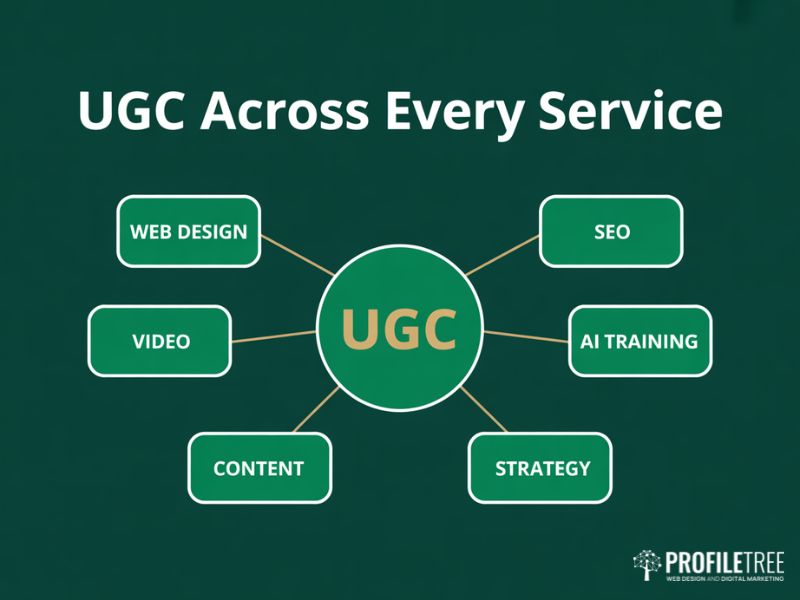
User-Generated Content does not live on its own. It works hardest when it is woven into the rest of a digital strategy, which is exactly how ProfileTree’s services are designed to fit together.
A typical engagement combines WordPress web design that ships with review schema and case study templates already built in, an SEO programme that targets the long tail phrases real customers use, video production that captures customer stories on a recurring schedule, and AI training and digital training programmes that help the in house team review, tag and reuse incoming UGC at speed. Content writing pulls it all together into service pages, blog posts and email copy that sound like the customer base rather than the marketing department.
FAQs
What counts as User-Generated Content?
Any text, photo, video, audio or review created by someone outside the brand and used by the brand for marketing.
Is User-Generated Content good for SEO?
Yes. It adds fresh, keyword rich content, qualifies pages for review snippets, and helps with AI Overview citations.
How do I get permission to use a customer’s content?
Send a short message asking explicit permission, name where it will be used, and save the reply. Disclose anything paid or incentivised.
Can small businesses use UGC effectively?
Yes, often more easily than large brands. A simple system to ask, save and reuse Google reviews and customer photos goes a long way.
How does UGC help with AI search visibility?
Generative AI tools favour first hand experience signals. Named, dated reviews and case studies raise the chance of being cited. Many brands also use AI marketing and automation tools to surface and tag content at scale.
What is the difference between a UGC creator and an influencer?
A UGC creator is paid to make content for the brand to use. An influencer is paid for distribution to their own audience.
How often should I refresh UGC on my website?
Quarterly at a minimum for service pages. Monthly for fast moving product categories.