
The Untold Story of Social Media Usage
Table of Contents
Nearly five billion people use social media today, and the average person spends close to two and a half hours a day scrolling, posting or messaging. That headline figure gets repeated everywhere. What usually gets left out is the untold story of social media usage: who moderates the content nobody wants to see, what powers the servers behind every feed, and why UK regulators have started forcing social media platforms to change how they operate and regulate using social media marketing for businesses.
This article covers the numbers that matter, the costs that rarely make the news, and what the shift means for businesses trying to reach customers where they actually spend their time.
The Real Story Behind the Numbers
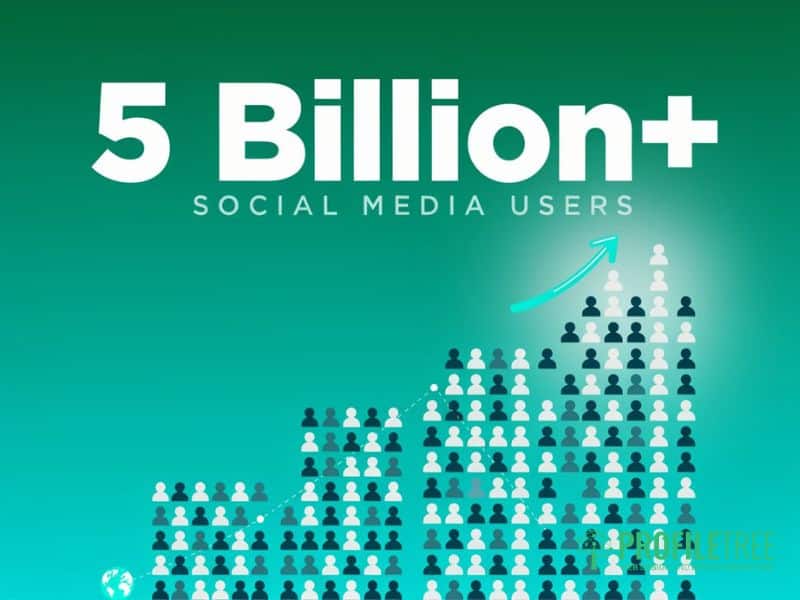
Before looking at what the usual coverage of social media usage leaves out, it’s worth establishing what the headline figures actually show. The scale is large, growth has slowed in mature markets, and the platform-by-platform picture varies more than a single global average suggests.
How Usage Has Shifted From Personal to Commercial
Social media started as a tool for personal connection, not commerce. Facebook launched in 2004 as a university network. Twitter followed in 2006. Neither platform was built with advertising revenue as the primary goal, though both found their way there quickly enough.
The shift happened in stages. First came personal communication. Then, professional networking, with LinkedIn as the clearest example. Then, full commercial activity: advertising, influencer marketing, social commerce, and customer service are conducted entirely through a comment box. The COVID-19 pandemic accelerated all of this. With physical retail restricted, both users and businesses increased their social media activity sharply in 2020, and usage has largely stayed high since.
Today, a business’s social media presence is often the first point of contact a potential customer has with a brand, ahead of the website and often ahead of a Google search. That change in the purchase journey has real implications for where marketing budgets should go.
A Platform-by-Platform Snapshot
Global figures matter less than the platform-specific detail underneath them. As of recent industry estimates, there are approximately 5.07 billion social media users worldwide, roughly 62% of the global population. The average user spends around 2 hours and 23 minutes per day across social media platforms globally, though UK users average closer to 1 hour and 49 minutes. That gap between global and UK behaviour matters when planning where to put content effort.
| Platform | Scale | Where It’s Strongest | Business Relevance |
|---|---|---|---|
| Largest by total users, over 3 billion monthly | Users over 35, ageing base | Strong paid advertising infrastructure, weaker organic reach | |
| Over 2 billion monthly | 18 to 34 age range | High-priority for visual products: food, interiors, fashion | |
| TikTok | Over 1 billion monthly | 18 to 34, broadening | Rewards consistency and native content over polish |
| Over 1 billion members, around 300 million monthly active | Professionals, decision-makers | Strongest B2B lead quality of any platform |
Organic reach has fallen sharply across almost every platform in this table. A Facebook brand post reached around 16% of its followers in 2012. By 2024, that figure had dropped below 2%. Paid social media has become the primary route to new audiences at scale, while organic content now does a different job: building credibility with people who already know the brand. This split between paid and organic is exactly why social media marketing strategy has become a distinct discipline from simply posting content.
Two smaller platforms sit outside that table, but still matter for specific audiences. Pinterest functions more as a visual search engine than a social network, with a dedicated user base actively searching for ideas in categories like home, food, and fashion; traffic from it tends to be high-intent. Snapchat retains a predominantly under-30 audience through ephemeral content and augmented reality features, though its commercial reach is smaller than the platforms above. Neither belongs in every strategy, but both can outperform larger platforms for the right audience.
The Hidden Costs Behind the Growth
The figures behind social media usage describe what social media users see. They say nothing about what it takes to keep the feed running, or who does the work of keeping it clean.
The People Moderating What Nobody Else Sees
Every major platform relies on a large, largely invisible workforce to review content before or after it reaches users: violence, self-harm material, exploitation, and everything else that automated filters miss or flag incorrectly. Much of this work is outsourced to third-party firms in countries including the Philippines, Kenya, and India, often at a fraction of the cost of employing moderators directly.
The working conditions behind this outsourcing have come under sustained legal and journalistic scrutiny. Between 2023 and 2024, a Kenyan court heard a case brought by former content moderators against Meta and its subcontractor, Sama. The Kenyan High Court ruled that it had jurisdiction over Meta despite the company having no direct legal presence in the country, a decision that undercut the usual defence that outsourcing shifts legal responsibility away from the platform itself. Moderators involved in the case described psychological trauma linked to constant exposure to disturbing material, alongside low pay and restricted rights to organise.
The Philippines has grown into one of the largest hubs for outsourced trust and safety work globally, valued by social media platforms for English proficiency and cultural familiarity with Western content. None of this appears in a usage statistic. It sits underneath every “billions of users” headline, doing work that makes the headline figure possible. The Kenyan court case is one of the few social media stories from behind the scenes of platform moderation to reach mainstream coverage at all; most never do.
The Infrastructure Nobody Talks About
Every post, video, and message travels through physical infrastructure: data centres, subsea cables, and increasingly, the computing power needed to run recommendation algorithms and AI-driven moderation tools. None of this is visible to a user scrolling a feed, but it carries a real energy cost that scales with usage. As platforms lean further into video and AI-assisted features, the computing demand grows, not shrinks. It’s a cost of the “free” platform model that rarely gets mentioned alongside user growth figures.
Video is the clearest driver of that growth in demand. Short-form video now generates higher engagement than static images or text across every major platform, which is exactly why TikTok’s rise forced Instagram, YouTube, Facebook, and even LinkedIn to build competing formats. Every one of those video views runs through the same energy-intensive infrastructure as everything else, at a larger scale than a static post ever required. For a business, this shows up less as an environmental question and more as a practical one: a social media strategy built primarily around static graphics is competing against a format the platforms themselves are built to favour.
The UK’s Regulatory Response: Inside the Online Safety Act
Usage figures and infrastructure costs sit alongside a third factor reshaping social media usage in the UK specifically: regulation.
What Platforms Must Do Right Now
The Online Safety Act already places legal duties on social media companies operating in the UK, with Ofcom as the enforcing regulator. Platforms must conduct risk assessments for illegal content, protect children from harmful material, and use effective age-assurance methods rather than a simple self-declared date of birth. The Act treats children’s social media use as a distinct category of risk requiring extra protection, not just an extension of adult rules. Non-compliance carries fines of up to £18 million or 10% of global annual turnover, whichever is greater.
Enforcement has moved quickly. By February 2026, Ofcom had opened investigations into more than 90 platforms and issued six fines, with its remit extending beyond the obvious names to Reddit, X, Discord, and Bluesky. For businesses running social media accounts or advertising on these platforms, regulatory pressure increasingly shapes what platforms allow, how quickly they act on reports, and how account verification works.
The Under-16 Ban and What Changes From 2027
On 15 June 2026, the UK government announced a ban on social media access for under-16s, introduced through the Children’s Wellbeing and Schools Act and built on the foundations the Online Safety Act laid. The consultation behind it drew more than 116,000 responses from parents, children, and experts, one of the largest public consultations the government has run.
The practical effect goes further than restricting younger users. Platforms including Facebook, Instagram, TikTok, X, YouTube, and Snapchat will be required to verify the age of all UK social media users, not just those who appear to be under 16. Verification methods under discussion include facial age estimation, ID document checks, and one-time photo matching. Messaging apps such as WhatsApp and Signal fall outside the ban’s scope. The first regulations are due before Parliament by the end of 2026, with full enforcement expected from spring 2027.
For any UK business that relies on social platforms to reach customers, this is worth watching closely. Account verification requirements, changes to how minors can be targeted, and stricter platform-level compliance checks will all affect how digital strategy is planned and how campaigns are executed over the next two years.
Social Media Usage and Mental Health: What the Evidence Shows
The relationship between social media usage and mental health is one of the most studied and most contested topics in this space. The evidence sits somewhere between the alarmist headlines and the platform-produced reassurances.
Passive consumption, scrolling without interacting, is consistently associated with lower well-being than active participation, such as posting, commenting, or messaging. The comparison effect is also well documented: exposure to curated, aspirational content on social media platforms correlates with increased feelings of inadequacy, particularly among adolescents and young adults. At the same time, social media provides genuine benefits: connection for isolated people, community for niche interests, access to support networks, and a platform for self-expression that didn’t exist before.
The net effect on any individual depends heavily on how they use the platform, who they follow, and what they compare themselves against. That distinction, between active and passive social media use, matters more for outcomes than total time spent, which is why blanket “time spent” statistics tell an incomplete story on their own.
This has practical implications for anyone running a brand’s social presence, not just for individual users. Advertising rules on body image, weight-loss claims, and cosmetic procedures have tightened in the UK in recent years, and influencer disclosure requirements have become stricter. Audiences are also more alert to performative or manufactured content than they were five years ago. Building a social presence on genuine value, real examples, and an honest tone, rather than manufactured aspiration, holds up better under scrutiny and tends to perform better commercially, too.
A short, practical check for any business reassessing its own usage of these platforms:
- Does content mostly invite active engagement (questions, replies, shares) rather than passive scrolling?
- Are posting frequency and format matched to what the audience actually responds to, rather than to what’s easiest to produce?
- Is paid spend concentrated on one or two platforms where the audience is, rather than spread thinly everywhere?
- Does the team know which platform policies or verification requirements currently affect their account type?
- Is there a plan for what happens if a platform changes its algorithm or reach model again, as every major platform has done repeatedly?
The Shift Toward Dark Social: Why Some Usage Is Going Quiet
Not all social media usage happens where it can be measured. A growing share of social media users have moved their sharing and conversation into private, encrypted spaces that don’t show up in any public usage statistic.
Messaging apps such as WhatsApp, Telegram, and Signal, along with private Discord servers and closed group chats, now carry a substantial volume of the content people actually discuss and share day to day. According to social intelligence platform Pulsar, around a third of creators now run dedicated private communities on platforms like Discord and Telegram rather than relying solely on public feeds. Some of this shift reflects genuine fatigue with mainstream social media platforms: public feeds increasingly mixed with AI-generated content and algorithm-optimised posts, which erodes the sense that a public post is a real conversation rather than a performance.
For businesses, this creates a measurement problem. A share in a WhatsApp group or a private Discord server carries real influence, often more trusted than a public post from a stranger, but it rarely shows up in standard analytics. Word-of-mouth recommendation has always mattered; it has simply moved somewhere harder to track. Some of the most useful social media stories a business could learn from, genuine complaints, honest recommendations, and real objections, now happen entirely out of sight.
What This Means for UK and Irish Businesses
None of this changes the basic fact that social media remains one of the most direct ways to reach customers. It does change how a sensible strategy around social media usage should be built, and how well a business actually understands its own social media users, rather than assuming they behave like everyone else’s.
Spreading effort thinly across every social media platform, chasing every new format, and hoping something sticks is a common mistake. A Belfast accountancy firm and a Dublin restaurant need entirely different social media approaches, both in platform choice and content style. The businesses getting genuine value from social media tend to pick two or three channels where their actual audience spends time, and commit to them properly rather than maintaining a token presence everywhere.
Ciaran Connolly, founder of ProfileTree, puts it this way: “The businesses struggling with social media right now aren’t necessarily posting less than everyone else. They’re often spreading the same effort across too many platforms and too many formats, without ever building enough depth on the one or two channels where their actual customers are paying attention.”
That focus matters more given the regulatory shift underway. Verification requirements, tighter age-assurance rules, and platform-level compliance changes all affect how campaigns are planned, who they can target, and how quickly content is removed if it’s flagged. Building a social media approach that accounts for this shifting environment, rather than treating platforms as static tools, is part of what separates businesses that adapt from those caught out by the next policy change.
In practice, that means treating platform selection as a decision worth revisiting every year, not a choice made once and left alone. It means building content around video and genuine engagement rather than static posts alone, given how clearly the data favours that format. And it means having someone on the team, whether in-house or at an agency, who actually tracks changes, like the Online Safety Act’s rollout, rather than finding out about them only after an account gets flagged.
ProfileTree’s social media marketing services help SMEs across Northern Ireland, Ireland, and the UK build platform strategies based on where their actual audience spends time, not where everyone assumes they should be. That work sits alongside broader digital strategy work, which increasingly needs to account for regulatory shifts like the Online Safety Act alongside the usual questions of audience and budget. For businesses producing regular social content, content marketing support that plans around platform algorithm changes, rather than reacting to them after a drop in reach, tends to hold up better over time.
FAQs
1. What is the untold story of social media usage?
Beyond the growth statistics, social media usage carries costs that rarely get reported: an outsourced content moderation workforce dealing with disturbing material daily, the energy demands of the data centres and cables running every feed, and a shift in UK regulation that’s forcing platforms to verify user age at scale. The headline numbers describe reach. They don’t describe what it costs to sustain it.
2. How many people use social media, and how has usage changed?
Recent industry estimates put global social media users at approximately 5.07 billion, around 62% of the world’s population. Growth has slowed in markets where penetration is already high, but usage patterns have shifted meaningfully: from personal connection toward commercial activity, and increasingly from public feeds toward private messaging and closed communities.
3. What is the human cost of content moderation on social media?
Much of the content moderation behind major platforms is outsourced to third-party firms, often in the Philippines, Kenya, and India. A landmark Kenyan court case against Meta and its subcontractor Sama, heard in 2023 and 2024, highlighted psychological trauma, low pay, and restricted rights among moderators reviewing disturbing material for a fraction of what an in-house role would cost.
4. How is the UK Online Safety Act changing social media use?
The Online Safety Act already requires platforms to run risk assessments and use effective age verification, enforced by Ofcom with fines of up to 10% of global turnover. From 15 June 2026, a further ban on social media access for under-16s was announced, with full enforcement expected from spring 2027 and age verification required for all UK users, not only apparent minors.
5. Is social media usage moving toward private “dark social” channels?
Yes, to a meaningful degree. Messaging apps and private group chats now carry a large volume of everyday sharing and discussion that never appears in public feeds or standard analytics. Businesses increasingly need to account for this hidden layer of word-of-mouth influence, even though it’s harder to measure than a public share or comment.