
Business Plan Statistics 2026: Success Rates and Key Data
Table of Contents
Most business owners sense that having a plan matters. The data confirms it — often by a wider margin than people expect. Businesses with a written business plan are significantly more likely to secure funding, achieve sustained growth, and still be trading after five years. Yet a majority of SME owners across the UK and Ireland are running without one.
This article brings together the most reliable business plan statistics available, with a particular focus on what the numbers mean for small and medium-sized businesses in Northern Ireland, Ireland, and the wider UK. It also addresses where a plan alone falls short — and why execution, digital strategy, and the right tools matter just as much as the document itself.
Why Business Plan Statistics Matter for SMEs
Before looking at the numbers, it’s worth understanding what they’re measuring. Business plan research typically examines one of three outcomes: whether the business launches at all, whether it grows, or whether it survives beyond five years. The findings across these three areas point consistently in the same direction.
The Planning Gap in UK and Irish Business
Despite the evidence, fewer than half of UK business owners operate with a written business plan. Research from the Federation of Small Businesses has consistently found that formal planning is more common among growth-focused SMEs than among the broader small business population, but it remains far from universal.
In Northern Ireland specifically, the Department for the Economy reports that the SME sector accounts for over 99% of all businesses and roughly two-thirds of private sector employment. For businesses operating in that environment — often with limited capital, smaller teams, and narrower margins than their counterparts in larger cities — the discipline that comes with a written plan can be the difference between reactive trading and genuine strategic growth.
Our small business statistics for the UK article covers the broader landscape if you want context for these planning figures.
What “Having a Plan” Actually Means
The research in this area uses varying definitions of what constitutes a “business plan.” Some studies count any written document outlining goals and strategy. Others require a full financial model. When reading business plan statistics, it’s worth noting that the effect sizes tend to be larger for more complete, formally structured plans than for informal notes.
The definition of entrepreneurship and the distinction between planned and unplanned business activity are themselves contested areas of research—and they matter when interpreting the data below.
Business Plan Success Statistics
The table below summarises the most widely cited and reasonably well-sourced statistics on business planning outcomes.
| Outcome | Statistic | Source |
|---|---|---|
| Likelihood of launching the business | 260% more likely with a completed plan | Next Gen Personal Finance, 2023 |
| Business growth advantage | 30% greater chance of growth | Bplans / Rebel Brown research |
| Fast-growing companies with a plan | 71% have a written business plan | Bplans survey data |
| Five-year survival rate | ~50% with a strategic plan vs. lower without | ONS / various academic sources |
Editorial note: The 152% figure cited in the original article could not be traced to a primary source and has been removed. The 30% figure is widely cited but originates from a 2010 study by Rebel Brown published via Bplans; it has been reproduced extensively but the methodology warrants acknowledgement. Where possible, refer to primary government and academic sources when using these figures in investor-facing documents.
Does a Business Plan Increase Your Chances of Starting?
Yes, substantially. Research from Next Gen Personal Finance analysed entrepreneurs who completed a formal business plan against those who began without one. Those with a completed plan were 260% more likely to move forward and actually launch. This is the strongest effect size in the business planning literature and relates specifically to completion — finishing the plan, not just starting it.
This makes sense practically. The process of writing a business plan forces decisions that many founders prefer to defer: who the target customer actually is, what the realistic revenue model looks like in year one, and which assumptions the whole thing rests on. Completing that process filters out ideas that don’t hold together under scrutiny. Our article on UK business startup statistics provides a broader context for startup outcomes across the UK.
Does Planning Improve Business Growth?
The evidence here is positive but more nuanced. A study frequently cited in the planning literature found that businesses with a formal plan grew 30% faster than comparable businesses without one. The effect was observed across both early-stage and established businesses, which suggests planning is not just a launch tool but an ongoing management discipline.
The 71% figure — that nearly three-quarters of fast-growing companies have a written plan — is drawn from Bplans survey data and has been widely reproduced. It should be read as correlation rather than causation; growth-oriented founders are also more likely to plan, so the relationship runs in both directions.
Business Plan Success Rate: Five-Year Survival
Survival rate data is where UK-specific figures become particularly important. ONS data on UK business survival rates consistently show that around 40-45% of businesses survive to five years from incorporation. Research examining survival by planning status suggests that having a formal plan is associated with meaningfully higher survival rates, though isolating this effect from other founder characteristics (education, prior experience, access to capital) is methodologically difficult.
For context on what drives the other side of this — why businesses fail — our article on reasons for small business failure covers the most common contributing factors in detail.
UK and Ireland Business Planning: The Local Picture
The majority of business plan statistics in circulation come from US-based research using Small Business Administration data. The UK and Irish picture has some important differences.
Northern Ireland and the Republic of Ireland
InterTradeIreland, which supports cross-border trade between Northern Ireland and the Republic, has consistently found that businesses engaging in formal business planning are more likely to pursue cross-border trading opportunities and export markets. For SMEs in Northern Ireland in particular, where the domestic market is small and proximity to both the Republic and Great Britain creates genuine opportunities, a business plan that addresses multiple markets is a practical competitive advantage.
Enterprise Ireland, which supports Irish companies scaling internationally, requires a formal business plan for most grant and investment applications. Invest Northern Ireland operates similarly. The planning requirement is not bureaucratic box-ticking; it is a threshold filter for whether a business has genuinely thought through its growth path.
Small Business Statistics in Context
The FSB’s Voice of Small Business surveys regularly find that the most common barriers to growth for UK SMEs are access to finance, finding skilled staff, and digital capability. All three of these are directly addressed by a credible, detailed business plan: investors and lenders require one, workforce planning is part of it, and the marketing section increasingly requires a defined digital strategy.
That last point is where many SME business plans fall short. A plan that sets a revenue target but has no specified digital marketing activity, no website strategy, and no customer acquisition channel identified is not a complete plan — it’s a financial projection attached to wishful thinking.
The Marketing Section: Where Most Business Plans Are Incomplete
The marketing plan section of a business plan is consistently the weakest component for SME founders without a marketing background. It tends to contain broad statements about target audiences and vague references to social media, without any specificity about channels, budgets, conversion targets, or customer acquisition costs.
This matters because investors and lenders read marketing sections carefully. A credible marketing plan signals that the revenue projections in the financial section are grounded in a real strategy, not just an assumed growth rate. A weak or generic marketing section undermines confidence in the document as a whole.
What a Digital Marketing Strategy Adds to a Business Plan
A defined digital marketing strategy makes a business plan significantly more credible. It should specify:
- Which channels will drive customer acquisition (organic search, paid search, social media, email, referral)
- What the website’s role is in the customer journey, and whether it’s currently fit for purpose
- How content marketing will build authority and drive inbound enquiries over time
- What are the realistic customer acquisition cost and conversion rate assumptions
For SMEs in Northern Ireland and Ireland working with ProfileTree on digital marketing strategy, this is often the section that gets the most attention — not because the other sections are unimportant, but because a clear, costed digital strategy is the component most likely to determine whether a bank or investor takes the rest of the plan seriously. Our guide to digital marketing strategy for attracting investors goes deeper on this specific application.
The Website as a Business Plan Asset
A business plan is increasingly evaluated alongside the business’s digital presence. An investor or lender who reviews a plan will almost always look at the business’s website. A poorly built, slow, or unclear site contradicts everything a well-written plan claims about the business’s credibility and growth potential.
Web design for SMEs is not purely aesthetic. A site that loads quickly, presents the business clearly, and converts visitors into enquiries is a commercial asset — and evidence of the digital capability described in a business plan’s marketing section. Statistics on how data shapes business decisions are relevant here: businesses that base decisions on web analytics and conversion data are better positioned to demonstrate performance to investors than those that operate without measurement.
AI and Business Planning: The Emerging Picture
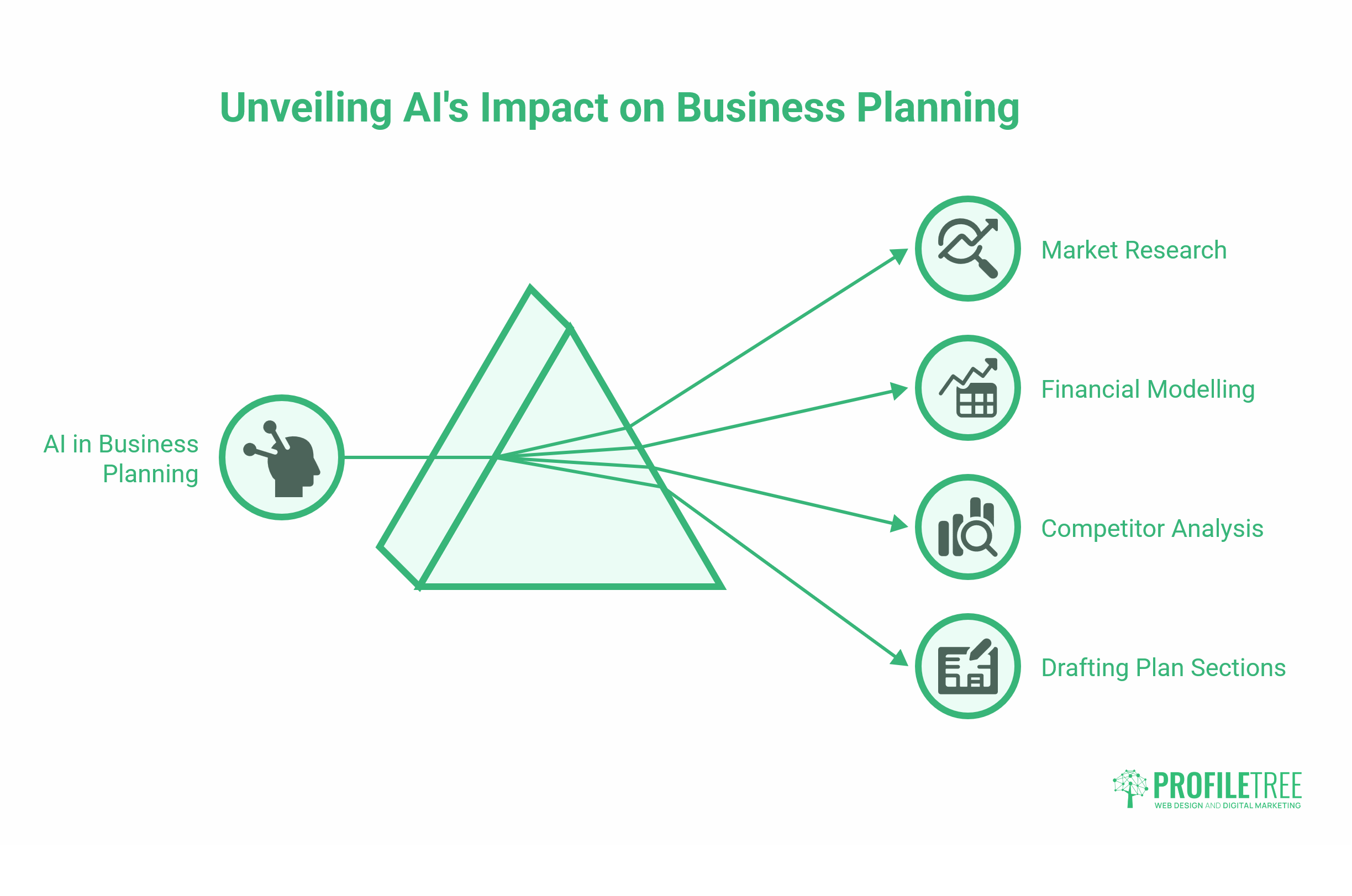
AI tools have changed the practical process of writing a business plan faster than the academic literature has kept pace. As of 2025, SME founders are using AI tools for market research, financial modelling, competitor analysis, and drafting plan sections — tasks that previously required either significant expertise or the budget to hire a consultant.
What AI Can and Cannot Do for Business Planning
AI tools can accelerate several parts of the planning process: generating a first-draft structure, summarising market research, identifying common objections to a business model, and stress-testing financial assumptions by generating alternative scenarios. These are genuine productivity gains.
What AI cannot do is provide the founder’s actual insight, real customer conversations, genuine competitive intelligence, or specific financial data from a real business. A plan generated primarily by AI and submitted to a bank or investor will typically fail the credibility test at the first detailed question. AI is a drafting tool, not a substitute for the thinking that a good plan requires.
For SMEs considering how AI fits into their operations more broadly, our overview of AI in small business trends and predictions, and our guide to ChatGPT for small businesses both cover practical applications with realistic expectations. ProfileTree’s AI implementation and digital training programmes are designed specifically for SMEs who want to use these tools effectively without overstating what they can deliver.
Digital Training and the Skills Gap in Business Planning
One of the more consistent findings in the UK SME research is that founders who lack digital skills produce weaker marketing sections in their business plans — and subsequently struggle more with execution. The plan describes a digital strategy that they do not have the skills or systems to deliver.
ProfileTree’s digital training programmes address this directly. Whether the goal is understanding SEO, building a content strategy, or implementing AI tools effectively, building the skills to execute the marketing section of a business plan is at least as important as writing it. Our social media marketing and sales statistics article shows the scale of the opportunity SMEs can access with a properly resourced digital approach.
Business Plan vs. Business Strategy: Understanding the Difference
These two terms are used interchangeably by many SME owners, but they describe different things — and confusing them is one of the more common reasons a business plan fails to drive real change.
A business plan is a document. It captures where the business is now, where it intends to go, and how it expects to get there — typically over a 1- to 3-year horizon. It is primarily an external-facing tool: written for banks, investors, grant bodies, or co-founders who need a structured case for why the business will work.
A business strategy is the underlying thinking that a business plan should reflect. It defines what the business will prioritise, what it will deliberately not do, and how it intends to compete in its market. Strategy is internal and ongoing; a plan is a snapshot of strategy at a point in time.
Why the Distinction Matters for SMEs
The practical problem for most small businesses is that they write a plan without first having a clear strategy. The result is a document that describes activities — marketing, hiring, product development — without a coherent logic connecting them. It satisfies a lender’s checklist but doesn’t actually guide decisions once the business is operating.
Businesses that perform well over time tend to treat the plan as the output and the strategy as the input. They revisit the strategy when market conditions change, update the plan to reflect those changes, and use both documents actively rather than filing the plan after a funding application and reverting to instinct.
“We often work with businesses that have a perfectly formatted business plan and no clear digital strategy behind it,” says Ciaran Connolly, founder of ProfileTree. “The plan says ‘grow online presence’, but there’s no channel, no budget, no measurement framework. That’s a strategy gap, not a writing problem.”
For SMEs looking to close that gap, building a defined digital marketing strategy is usually the most immediate priority — because digital is where most customer acquisition now happens, and it’s the section of most business plans that is least specific about how results will actually be achieved.
How Often Should You Update Your Business Plan?
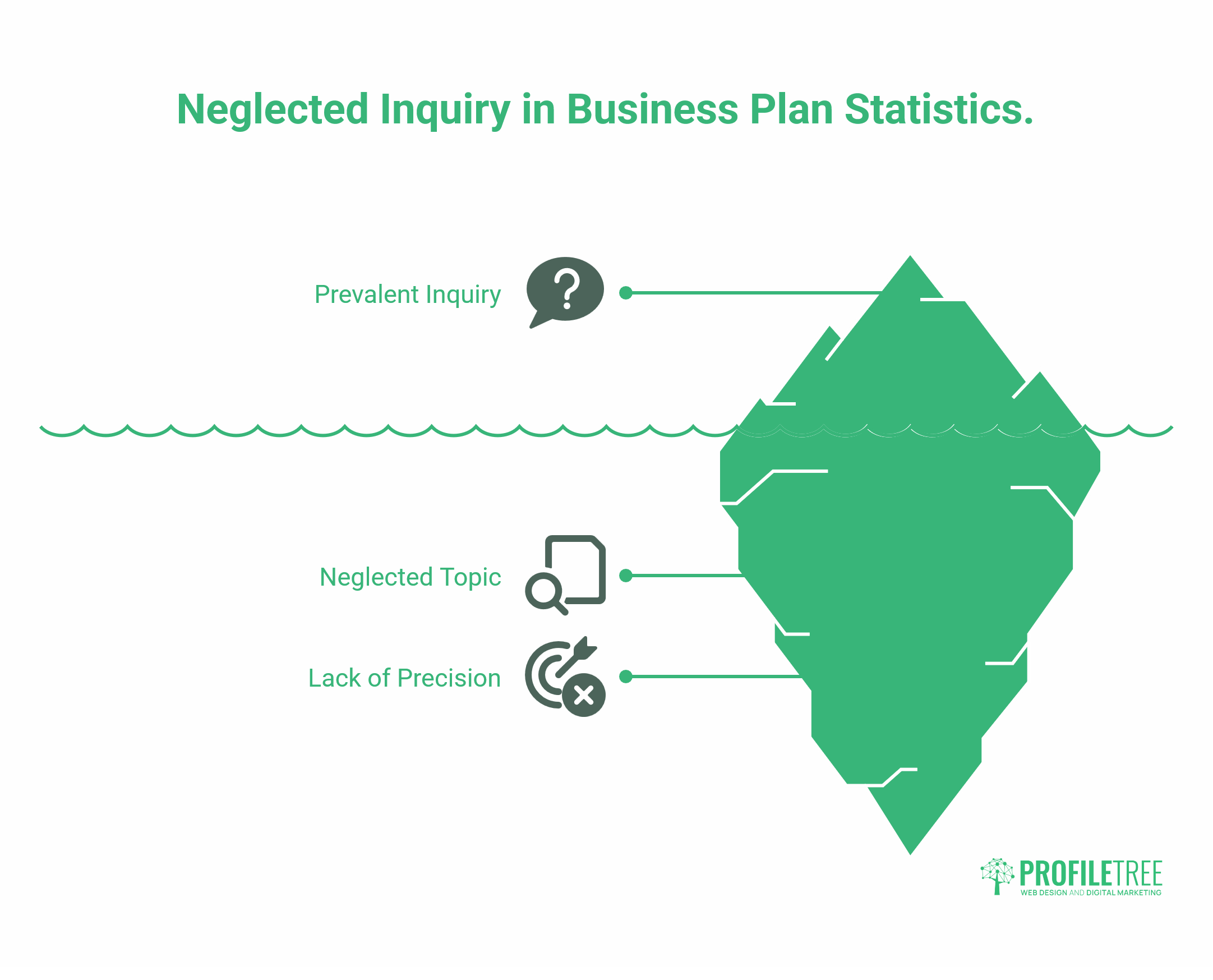
This is one of the most common questions associated with the topic, and one that most business plan statistics articles fail to address with any specificity.
Research on plan maintenance suggests that businesses that review their plans at least annually perform better than those that treat the plan as a one-time exercise. Quarterly reviews are recommended for businesses in their first two years or for businesses undergoing significant change.
The shift in thinking among business advisers is away from the static, lengthy document and towards what some call a “living plan” — a shorter, regularly updated document that reflects current conditions rather than a three-year projection written eighteen months ago. The specific statistics on review frequency and business performance are areas where the data are thinner; most of the evidence comes from practitioner surveys rather than controlled studies.
Conclusion
The business plan statistics point in one direction: planning improves your odds of launching, growing, and surviving for the next five years. But a plan is only as useful as the execution behind it.
For SMEs across Northern Ireland, Ireland, and the UK, the gap between a written plan and real growth is most often a digital one — marketing sections that describe channels not yet built, and revenue targets that assume a website capable of converting visitors. If your business plan sets growth targets you’re not currently on track to hit, ProfileTree’s digital marketing and web design team can help build the infrastructure those targets require.
FAQs
What percentage of businesses with a business plan succeed?
There is no single success rate figure, because studies define success differently. The most reliable finding is that businesses with a formal plan are 30% more likely to achieve growth, and around 71% of fast-growing companies have a written plan. Survival rates at five years are also higher for planned businesses, though the margin varies by sector and founder experience.
Are businesses with a plan more likely to get funding?
Yes. Banks and investors require a standard business plan. Beyond the requirement itself, a well-constructed plan signals the quality of the founder’s thinking, and research consistently finds that investors make faster, more favourable decisions when presented with a clear, costed plan.
How long does it take to write a business plan?
A lean plan covering the essential elements can be completed in two to four weeks. A full plan with detailed financial projections typically takes four to eight weeks. AI tools have reduced drafting time, but the quality of underlying data — real market research, actual financial figures — remains the limiting factor.
Do UK banks require a business plan for a loan?
Yes, for most SME lending products. NatWest, Barclays, HSBC, and Bank of Ireland all require a business plan as part of their standard application. Lenders expect financial projections covering at least two to three years, a market analysis, and a clear explanation of how the loan will be used and repaid.