
The Impact of Business Planning Statistics on Strategic Growth
Table of Contents
Most small business owners understand they should have a business plan. Far fewer have one. Only around 23% of UK businesses have a written plan in place — and that gap between knowing and doing is where most growth stalls.
The statistics on business planning are striking. Companies with written plans grow faster, survive longer, and attract funding more readily than those operating without a documented strategy. But the statistics only tell half the story. The other half is execution: how an SME turns a plan into measurable outcomes, week by week.
This guide covers what the research says about business planning and growth, outlines the objectives a solid business plan should serve, and explains how digital strategy fits into the execution layer that most plans leave underdeveloped.
What Business Planning Statistics Actually Tell Us
The most widely cited finding in business planning research is that companies with written plans grow approximately 30% faster than those without. This figure comes from an analysis of over 11,000 businesses and has been replicated across multiple studies examining SME performance.
A few other data points are worth understanding:
- Around 71% of fast-growing companies have a formal strategic or business plan in place
- Having a written plan roughly doubles the success ratio compared to operating without one
- Completing a business plan increases the likelihood of actually launching a business by 260%
- Approximately 70% of businesses with a strategic plan survive beyond their first five years
These are aggregate findings across large sample sets, not guarantees for any individual business. What they establish is a consistent pattern: structured thinking about goals, markets, finances, and operations correlates strongly with better outcomes.
The UK-specific picture adds context. With fewer than a quarter of British businesses operating with a written plan, there is both a challenge and an opportunity. Businesses that plan are not just better organised — they are operating in a different category from the majority of their competitors.
The Core Objectives of a Business Plan
Understanding the objectives of a business plan matters more than the document’s length or format. A plan that serves the wrong objectives — or that sits in a drawer after funding is secured — contributes nothing to growth.
Securing Funding and Investment
For SMEs seeking funding from banks, angel investors, or grant bodies such as Invest NI or Enterprise Ireland, a formal business plan is typically a prerequisite. Lenders and funders want evidence of market understanding, financial viability, and a credible path to revenue. A plan that includes cash flow projections, a realistic market analysis, and a documented marketing strategy signals that the business owner has tested their assumptions, not just their ambitions.
Providing a Roadmap for Decision-Making
A business plan converts broad goals into specific decisions. When an SME owner knows their target customer, revenue targets, and operational priorities for the next 12 months, daily decisions are easier to evaluate. Does this investment align with the plan? Does this partnership support the objectives we committed to?
Without that reference point, decisions tend to be reactive. With it, they become directional.
Clarifying the Marketing and Digital Strategy
This is the objective most plans underserve. Many business plans include a marketing section that amounts to “we will use social media and SEO” without specifying channels, budgets, targets, or measurement. That vagueness costs money. An SME that plans to grow through organic search needs to understand what that requires: a website built for SEO performance, consistent content production, and a realistic timeline for results.
A digital marketing strategy is not a footnote in a business plan. For most SMEs in Northern Ireland, Ireland, and the UK today, it is the primary growth engine.
Prioritising Objectives Across the Business
One of the practical benefits of business planning that receives less attention than funding or growth is its ability to force prioritisation. Objectives in a business plan include not only setting targets but also ranking them. Resources, time, and attention are finite. A plan that aims to pursue 10 priorities simultaneously is one without focus.
Strategic planning requires the business owner to choose. Which market comes first? Which product or service drives the most margin? Which operational problem, if solved, unlocks everything else?
Improving Team Accountability
Once a business scales beyond the founder, a plan becomes a communication tool. Team members with clear objectives are better placed to take ownership of their areas, make decisions without needing constant approval, and understand how their work connects to the company’s direction. Planning is also the foundation for meaningful performance reviews and delegation.
Why Business Planning Statistics Show Such Strong Survival Rates
The correlation between planning and survival is not accidental. It reflects what planning forces a business owner to confront before problems become crises.
Businesses that plan tend to hold more cash reserves because their financial projections revealed the need. They tend to know their customers better because their market analysis required them to define the audience before spending on acquisition. They tend to adapt faster because reviewing a plan against actual results makes deviations visible early.
The failure statistics for unplanned businesses are consistent across studies. Businesses without plans face significantly higher closure rates in their first two and five years. The causation runs both ways: businesses that plan are also, by definition, businesses whose owners are thinking carefully about what they are building. That mindset itself is a survival advantage.
“The businesses we see grow consistently aren’t always the ones with the best product or the biggest budget,” says Ciaran Connolly, founder of ProfileTree. “They’re the ones that know where they’re going and have systems in place to get there. A plan is the beginning of that — but only if it includes how the business will actually reach customers.”
The Execution Gap: Where Most Business Plans Fall Short
Research consistently finds that even among businesses with written plans, execution is the weak point. A plan that outlines ambitious growth targets but leaves the marketing section vague, or that identifies digital channels as a priority but allocates no budget or expertise to them, will not deliver the projected outcomes.
The execution gap in UK SME business planning is particularly visible in digital strategy. Many business plans acknowledge the need for a strong web presence and digital marketing, but treat these as background items rather than core operational priorities. The result is websites that do not convert, SEO that receives no consistent attention, and content marketing that starts and then stops when other pressures arise.
Closing this gap requires two things: a plan that specifies digital activities with sufficient detail to be actionable, and the capability to execute those activities consistently.
Building a Website That Supports the Plan
For most SMEs, the website is the primary point where the business plan meets the customer. A plan that sets revenue targets from online inquiries, e-commerce, or lead generation is only as credible as the website that delivers them.
A professionally developed site — built on a platform that supports SEO, fast load times, and clear calls to action — is a plan asset, not a branding expense. When ProfileTree works with SMEs on web design and development in Northern Ireland and across the UK, the brief almost always starts with business objectives: what the site needs to do for the plan to succeed.
Using SEO as a Planned Growth Activity
SEO is one of the few marketing channels that compound over time. An SME that commits to organic search as a growth channel within its business plan will see different results from one that treats SEO as an afterthought. That commitment means producing consistent, well-structured content, improving the site’s technical health, and tracking performance against targets.
The businesses that benefit most from SEO are those that plan for it: they understand the keyword landscape in their sector, they allocate resources to content production, and they measure results against the objectives set in the plan.
For a practical grounding in how statistics inform business decisions across all these activities, our guide to statistics in business decision-making covers the frameworks SMEs use to move from data to action.
Content Marketing and the 12-Month Plan
Content marketing works on a planning cycle. An SME that maps out 12 months of content — aligned to its audience’s questions, its SEO targets, and its sales priorities — will consistently outperform one that publishes whenever time allows.
Video content has become a significant part of this picture. For SMEs in Northern Ireland and Ireland, video marketing across YouTube and social channels can reach audiences at a scale previously available only to much larger businesses. Building video into the content plan, rather than treating it as a one-off project, changes what it delivers.
Business Planning for UK and Northern Ireland SMEs: What the Regional Context Changes
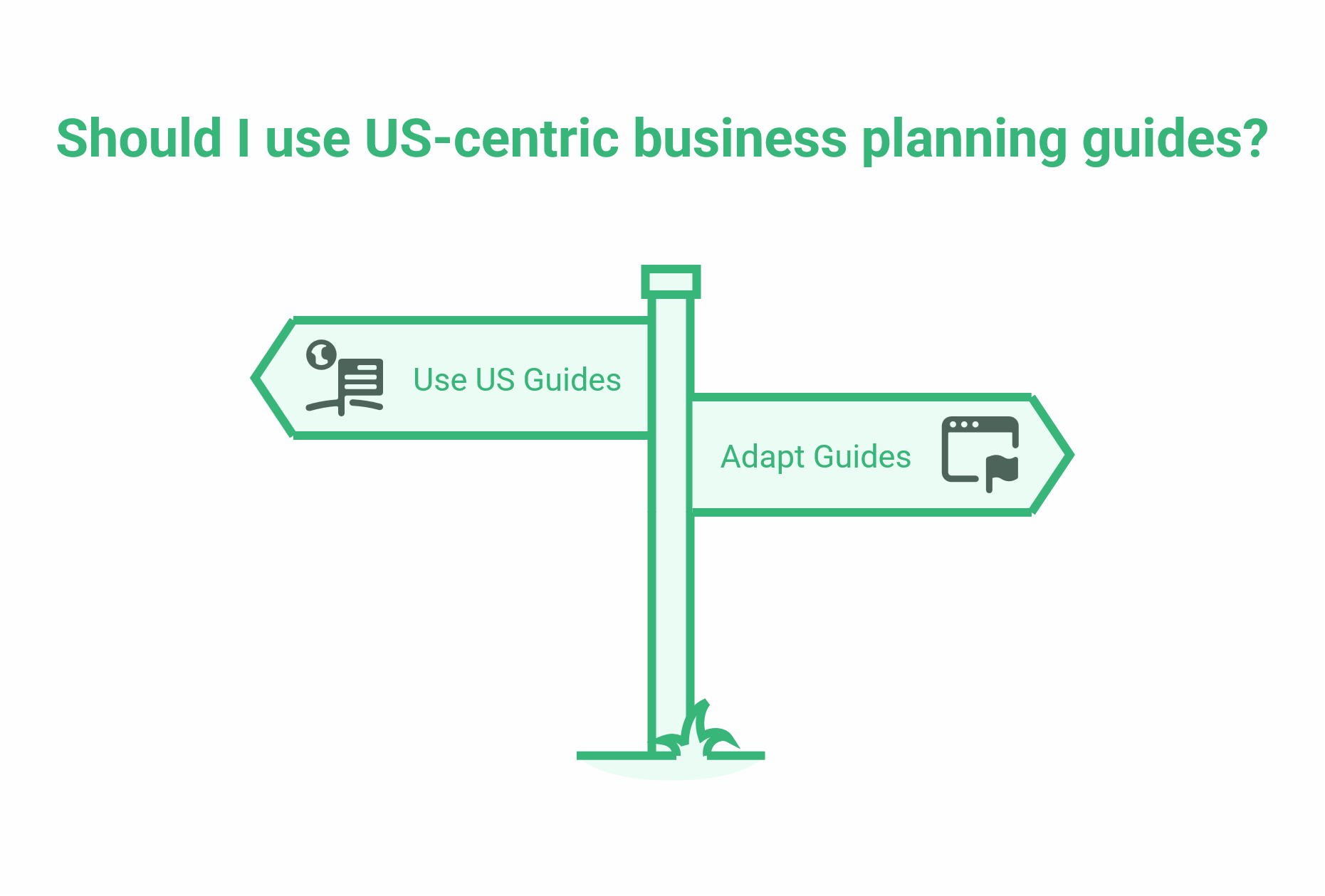
Most business planning guides are written for a US audience. They reference the SBA, US tax structures, and American regulatory frameworks. For SMEs operating in the UK and Ireland, several specifics change the picture.
Funding Landscape
UK-based SMEs have access to funding through the British Business Bank, Innovate UK, and regional bodies, including Invest NI for Northern Ireland-based businesses. Ireland-based SMEs can access support through Enterprise Ireland and Local Enterprise Offices (LEOs). A business plan for funding in either jurisdiction needs to be written with these bodies’ expectations in mind, not a generic template designed for US venture capital.
Regulatory Structure
UK businesses register through Companies House and operate under HMRC requirements, including VAT registration. Irish businesses register through the CRO and operate under Revenue. For businesses operating on both sides of the Irish border, the Northern Ireland Protocol creates additional planning considerations around trade and supply chains.
The Digital Skills Gap
Research from organisations including the Federation of Small Businesses has consistently identified digital skills as a significant constraint on SME growth in the UK. Many business plans acknowledge digital marketing as a priority but fail to address the capability question: who in the business has the skills to execute the digital strategy?
This is where digital training enters the business planning conversation. ProfileTree’s digital training programmes, delivered through Future Business Academy, are specifically designed for SME teams that need to build practical capability in areas including SEO, content marketing, and AI tools. For businesses whose plans rely on digital growth, investing in team capability is as important as investing in the tools themselves.
Our guide to business objectives explores how to set measurable goals that make both the plan and its execution more concrete.
Using AI Tools in the Business Planning Process
AI tools have changed how efficiently a business plan can be researched and drafted, and this is an area where the established guides have not kept pace with practice.
For market research, AI tools can accelerate competitor analysis, summarise industry reports, and help structure the market sizing section of a plan. For financial modelling, AI can assist with scenario planning and sensitivity analysis that would previously have required an accountant’s involvement at the drafting stage.
More practically, AI tools are now part of the operational toolkit for many SME marketing teams. A business plan that includes a digital marketing strategy should consider how AI implementation can improve content production, ad targeting, and customer communication. The businesses doing this well are not replacing their teams — they are multiplying what those teams can produce.
ProfileTree’s AI implementation and training work with SMEs across Northern Ireland and the UK focuses on practical applications: how to use AI tools to improve specific business processes, with outcomes measured against real results. This is different from generic AI awareness training. It connects directly to the business objectives already set in the plan.
The Living Business Plan: Reviewing and Updating
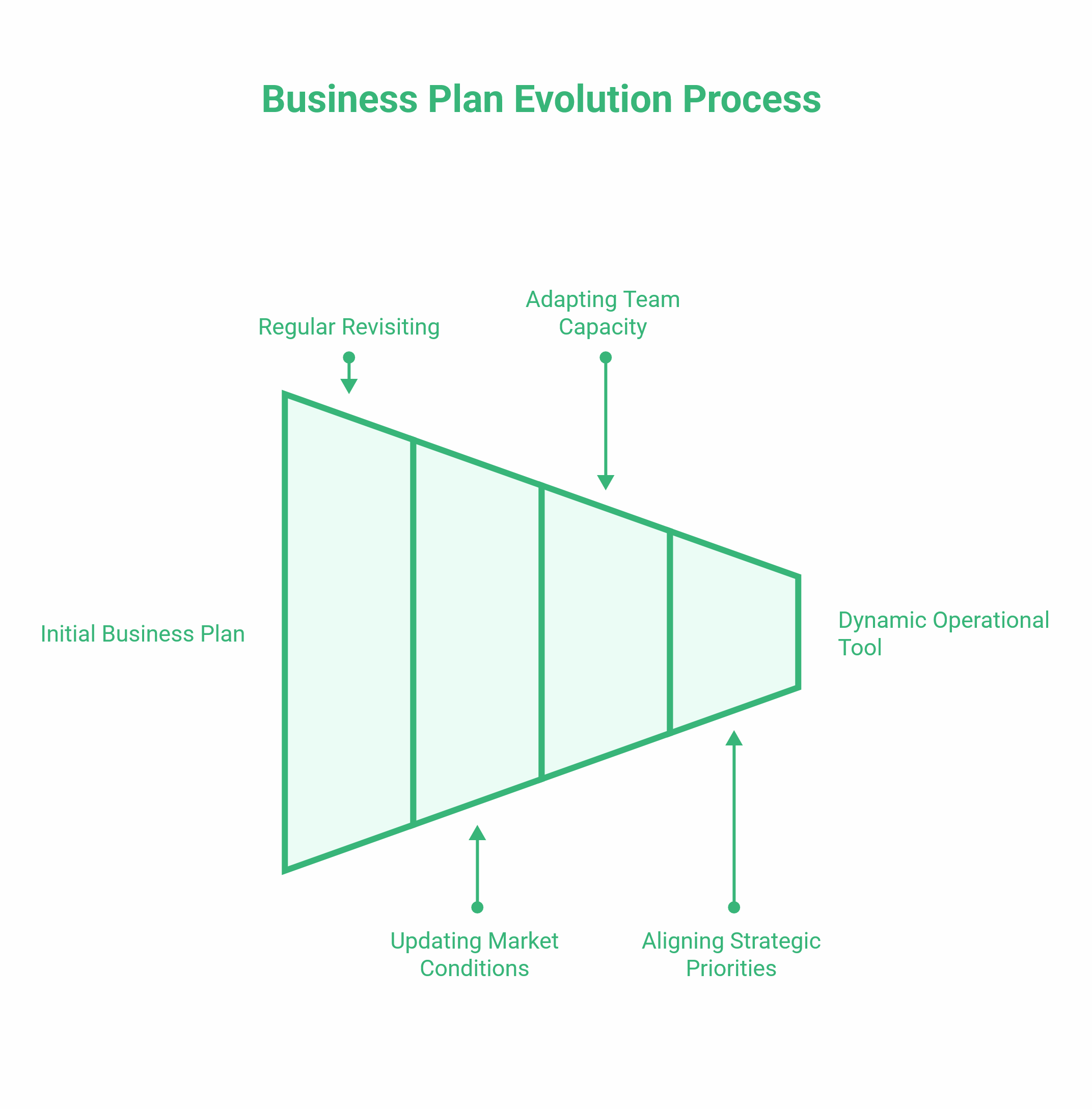
A business plan written once and never revisited quickly becomes a historical document rather than an operational tool. Fast-growing companies treat their plans as living documents, revisiting them regularly and updating them when market conditions, team capacity, or strategic priorities shift.
A practical review cadence for most SMEs is a light monthly check-in on key metrics and a more substantial quarterly review to assess whether the strategic priorities still reflect reality. At least once a year, the full plan should be updated with current financial projections, revised market analysis, and any changes to the product or service offer.
The metrics that matter most in these reviews will depend on the business, but for SMEs with a digital strategy component, they typically include organic search performance, website conversion rates, content publishing consistency, and revenue from digital channels.
For context on how businesses navigate growth and the decisions that determine long-term survival, our analysis of business closure statistics and our look at small and large businesses driving the UK economy both provide relevant grounding.
How to Write a Business Plan That Works: Practical Starting Points
The structure of a solid business plan is well-established. What matters most is that each section is completed with real analysis rather than aspirational statements.
Executive summary: A concise description of the business, what it does, who it serves, and what it needs. This section is read first and often read alone — it needs to stand independently.
Market analysis: Who are the target customers? What is the addressable market? What are the competitive dynamics? For UK SMEs, this section should include regional market data, where relevant, rather than just national or global figures.
Operational structure: How is the business organised? What are the key processes, suppliers, and dependencies? What does the team look like, and what gaps exist?
Marketing and digital strategy: Which channels will drive customer acquisition? What is the content plan? What does the website need to do, and is it currently equipped to do it? What is the budget, and what are the 90-day targets?
Financial projections: Revenue forecasts, cost structure, cash flow projections, and break-even analysis. For businesses seeking external funding, these figures need to be supported by documented assumptions.
Milestones and review schedule: What are the specific targets for the next 90 days, six months, and 12 months? When will the plan be reviewed?
Our related guide on examples of statistics in business is useful background reading for the market analysis and financial sections, where quantitative reasoning matters most.
Conclusion
Business planning statistics make a consistent case: companies that plan grow faster, survive longer, and access more opportunities than those that do not. For SMEs in Northern Ireland, Ireland, and across the UK, the challenge is not usually understanding why a plan matters — it is building a plan that is specific enough to drive real decisions and connected to the digital capabilities needed to execute it.
If your business plan includes a digital marketing or web strategy component and you want support turning it into a working system, get in touch with the ProfileTree team to discuss what that looks like in practice.
FAQs
What are the main objectives of a business plan?
The core objectives of a business plan are to set clear goals, provide a framework for decision-making, support funding applications, and align the team around shared priorities. A good plan also serves as a benchmark for measuring progress throughout the year.
How much faster do businesses with plans grow compared to those without?
Research based on analysis of over 11,000 companies found that businesses with written plans grow approximately 30% faster than those without. The effect is strongest in the early years, when a plan helps avoid the most common operational and financial mistakes.
What percentage of UK businesses have a written business plan?
Approximately 23% of UK businesses have a written business plan. This low figure represents a significant opportunity for businesses that do commit to planning, as they are operating with a structural advantage over the majority of competitors in their market.
How does digital strategy fit into a business plan?
Digital strategy should sit within the marketing and sales section of a business plan and be specific enough to be actionable. This means naming the channels (SEO, content marketing, paid search, video, social), allocating budget, setting targets, and identifying who is responsible for execution. A vague reference to “digital marketing” is not a strategy.