
SEO for Estate Agents: Building Visibility Beyond the Property Portals
Table of Contents
Estate agency has a visibility paradox at its heart. When someone searches for properties, “houses for sale Belfast” or “flats to rent Manchester”, they find Rightmove, Zoopla, and OnTheMarket dominating the results. These portals have invested hundreds of millions in marketing and technology to ensure they appear first. Individual estate agents, regardless of local expertise or service quality, struggle to compete for property searcher attention.
But here’s what many agents miss: the most valuable searches aren’t from property hunters. They’re from property owners.
When a homeowner considers selling, they search differently. “Estate agents near me,” “best estate agent [town],” “how much is my house worth,” “selling a house in [area].” When a landlord thinks about letting their property, they search “letting agents [location]” or “property management services.” These are the searches that lead to instructions, the lifeblood of any agency.
This guide explores how estate agents can build search visibility that attracts vendors and landlords rather than competing with portals for buyer attention. It’s a strategic reframe that recognises where SEO can genuinely impact agency growth.
SEO for Estate Agents: The Search Landscape for Estate Agents
Understanding who searches for what, and why, reveals where estate agents should focus their SEO efforts.
Property hunters searching for homes to buy or rent represent enormous search volume, but that volume flows overwhelmingly to portals. Rightmove alone receives over 150 million visits monthly. When someone searches “3 bedroom house [location],” they expect portal-style results showing multiple properties from multiple agents. An individual agency website rarely matches that expectation or need.
This doesn’t mean your property listings have no SEO value, they do, and we’ll address them. But recognising that portal dominance shifts strategic focus toward searches where you can genuinely compete.
Vendor searches, homeowners considering selling, represent your highest-value opportunity. Someone searching “estate agents [your town]” or “house valuation [your area]” is considering selling. Winning their attention leads to valuations, which lead to instructions, which lead to revenue. These searches have manageable competition and clear commercial intent.
Landlord searches follow similar patterns. “Letting agents [location],” “property management [area],” “tenant find service”, these indicate landlords seeking agents. For agencies with lettings operations, these searches are directly commercial.
Information searches happen throughout property journeys. Sellers research “how to sell a house,” “estate agent fees,” “what adds value to a house.” Buyers research “first-time buyer guide,” “mortgage process,” “house viewing checklist.” Landlords research “landlord responsibilities,” “tenant rights,” “rental yield calculation.” These informational searches don’t have immediate commercial intent, but they represent opportunities to build visibility and trust.
Local searches with property context capture people with location-specific interest. “Moving to [area],” “[town] property market,” “best areas to live in [region].” These indicate people considering moves to your area, potential future buyers or renters who might also become sellers.
Attracting Vendors: Your Highest-Value SEO Opportunity
Winning instructions is the fundamental challenge of estate agency. Vendors choose their agent; everything else follows from that choice. SEO that attracts potential vendors has direct revenue impact.
When homeowners consider selling, their search journey often begins with agent research. “Estate agents [location]” and close variants represent your primary target. These searches have clear intent, someone actively considering who might sell their property. Ranking well for these searches puts you in consideration sets.
The competition for these searches is local, other agents in your area, rather than national portals. While still competitive, this is competition you can win through sustained effort. The agent with strongest local search presence captures disproportionate attention from considering vendors.
Valuation searches indicate serious selling consideration. “House valuation [location],” “how much is my house worth,” “free property valuation”, these searches represent potential vendors actively researching. They’re often further along in their decision process than general agent searches.
Your Google Business Profile is crucial for vendor-focused searches. When someone searches “estate agents near me,” Google shows map results prominently. Your profile’s completeness, reviews, and prominence directly influence whether you appear and how appealing you look compared to competitors.
Valuation landing pages deserve particular attention. A dedicated page for your valuation service, optimised for “[location] house valuation” and similar terms, creates a direct path from search to valuation request. This page should communicate your valuation process, local expertise, and what vendors can expect, with a clear and simple valuation request mechanism.
Google Business Profile: Your Local Foundation
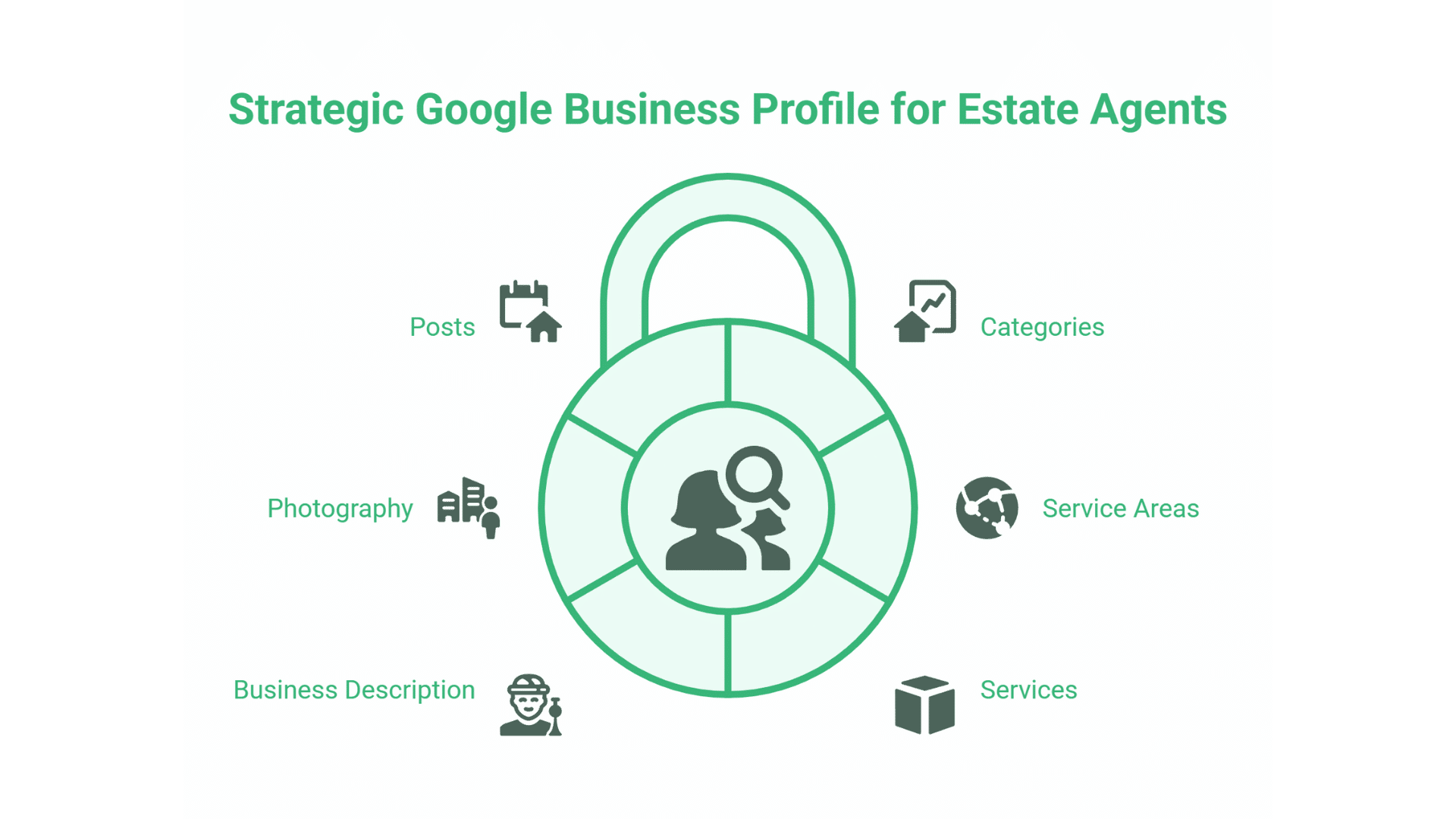
For estate agents, Google Business Profile is exceptionally important. Property transactions are inherently local; agents serve specific geographic areas. Local search visibility determines whether considering vendors and landlords find you.
Your primary category should typically be “Real Estate Agency” or “Estate Agent” depending on what Google offers in your region. If you have separate lettings operations, ensure those are represented in categories too. Additional categories like “Property Management Company” capture relevant searches.
Service areas deserve careful thought. Estate agents typically have core areas where they’re strongest and broader areas they’ll cover. Define your service areas accurately, claiming too wide an area dilutes relevance for your core territory.
Services listing should be comprehensive. Sales, lettings, property management, valuations, mortgage services if offered, list everything you provide. These services influence which searches trigger your listing.
Your business description should communicate local expertise specifically. Not generic estate agent language, but specific information about the areas you know best, the property types you specialise in, your track record. If your agency has served the area for decades, mention it. If you’ve won local awards, reference them. If you specialise in particular property types, period homes, new builds, rural properties, make that clear.
Photography matters even for estate agents. Show your office, it demonstrates local presence and permanence. Include team photos, people prefer dealing with people they’ve seen. Consider photos of properties you’ve sold, showcasing your experience with local property types.
Posts in your Google Business Profile keep your presence fresh. Share sold properties, market updates, new instructions, team news. Active profiles appear more vibrant than dormant ones.
Reviews: The Trust Factor That Wins Instructions
When vendors choose estate agents, trust matters enormously. They’re making a major financial decision, often the largest of their lives. They want confidence that their agent is competent, honest, and effective.
Reviews provide that confidence more persuasively than any marketing claim. When potential vendors see reviews from satisfied sellers describing smooth sales, good communication, and achieved prices, trust builds.
Google reviews are increasingly prominent in local search results. Strong reviews improve your visibility and, when potential vendors click through, provide immediate social proof. The quantity and quality of your Google reviews directly influence vendor consideration.
But Google isn’t the only platform that matters. Trustpilot, ALLAGENTS, and Google collectively create a review ecosystem that vendors check. Building reviews across platforms provides comprehensive social proof.
What makes estate agent reviews compelling? Specific details about the experience, how the agent handled challenges, their communication throughout, whether they achieved asking price, how smoothly completion went. Recommendations to others considering selling. Mentions of individual team members who provided excellent service.
Review collection requires systematic effort. After every completed sale, request reviews. Make it easy, send direct links to review platforms. Consider timing; shortly after completion when clients are relieved and satisfied is often ideal.
Respond to every review professionally. Thank positive reviewers specifically, referencing details from their transaction that show you remember them. Address negative reviews constructively, demonstrating how you handle concerns. Your responses show potential vendors how you treat clients.
Your Website: Beyond Property Listings
Most estate agent websites are essentially property databases with some agency information attached. Properties dominate because that’s what agencies think visitors want. But visitors searching for properties go to portals; visitors finding your website through search are often looking for something else.
This doesn’t mean abandoning property content, listings have SEO value and demonstrate current activity. But it means ensuring your website serves the visitors you’re actually trying to attract through search: considering vendors and landlords.
Create robust service pages for your core offerings. A comprehensive “Selling Your Property” page that explains your sales process, marketing approach, fee structure, and local expertise. A “Lettings Services” page for landlords covering tenant find, management options, and your approach. A “Valuations” page explaining what’s involved and inviting requests.
These pages should be substantial, not thin summaries, but thorough explanations that answer likely questions and demonstrate expertise. They should be optimised for relevant searches while genuinely serving visitor needs.
Location pages capture area-specific searches. If you serve multiple towns or neighbourhoods, pages dedicated to each create opportunities to rank for “[area] estate agent” and similar terms. These pages should demonstrate genuine local knowledge, what makes the area distinctive, property market characteristics, your track record there.
Vendor and landlord guides demonstrate expertise while capturing informational searches. “Guide to Selling Your Home,” “First-Time Seller Advice,” “Landlord’s Complete Guide”, this content helps people genuinely while positioning your agency as knowledgeable.
Market information establishes authority. Regular property market updates for your area, price trends, demand patterns, what’s selling, demonstrate active engagement with local market conditions. This content captures searches from people researching local markets and positions you as the local expert.
For website development guidance, our website development services cover creating sites that convert visitors to enquiries.
Content That Attracts Property Owners
Beyond your core website structure, content marketing helps you rank for searches where potential vendors and landlords are seeking information.
Selling guidance content captures research-phase vendor searches. “How to prepare your house for sale,” “mistakes to avoid when selling,” “understanding estate agent fees,” “what affects house value”, these searches indicate homeowners considering or preparing to sell. Being helpful at this stage builds awareness and trust.
Local market content establishes expertise and captures area-specific searches. “Property market update [your area],” “[location] house prices,” “is now a good time to sell in [area]”, these searches attract people with local property interest. Regular market commentary keeps content fresh and demonstrates ongoing engagement.
Area guides capture people researching locations. “Moving to [your town],” “living in [your area],” “best neighbourhoods in [location]”, these searches indicate people considering relocation. Comprehensive area guides that cover schools, amenities, transport, and local character serve genuine needs while demonstrating local knowledge.
Landlord content attracts potential lettings clients. “Landlord guide to [your area],” “buy to let [location],” “rental demand [your town]”, these capture landlords researching the local rental market. Rental yield analysis, tenant demand commentary, and landlord guidance build lettings visibility.
Property type content captures specific interests. If your area is known for particular property types, Victorian terraces, converted barns, coastal cottages, content about those types attracts specifically interested buyers and sellers. “Victorian houses in [area]” or “barn conversions [region]” capture niche searches.
For content strategy guidance, our content marketing services cover building visibility through valuable content.
Property Listings and SEO
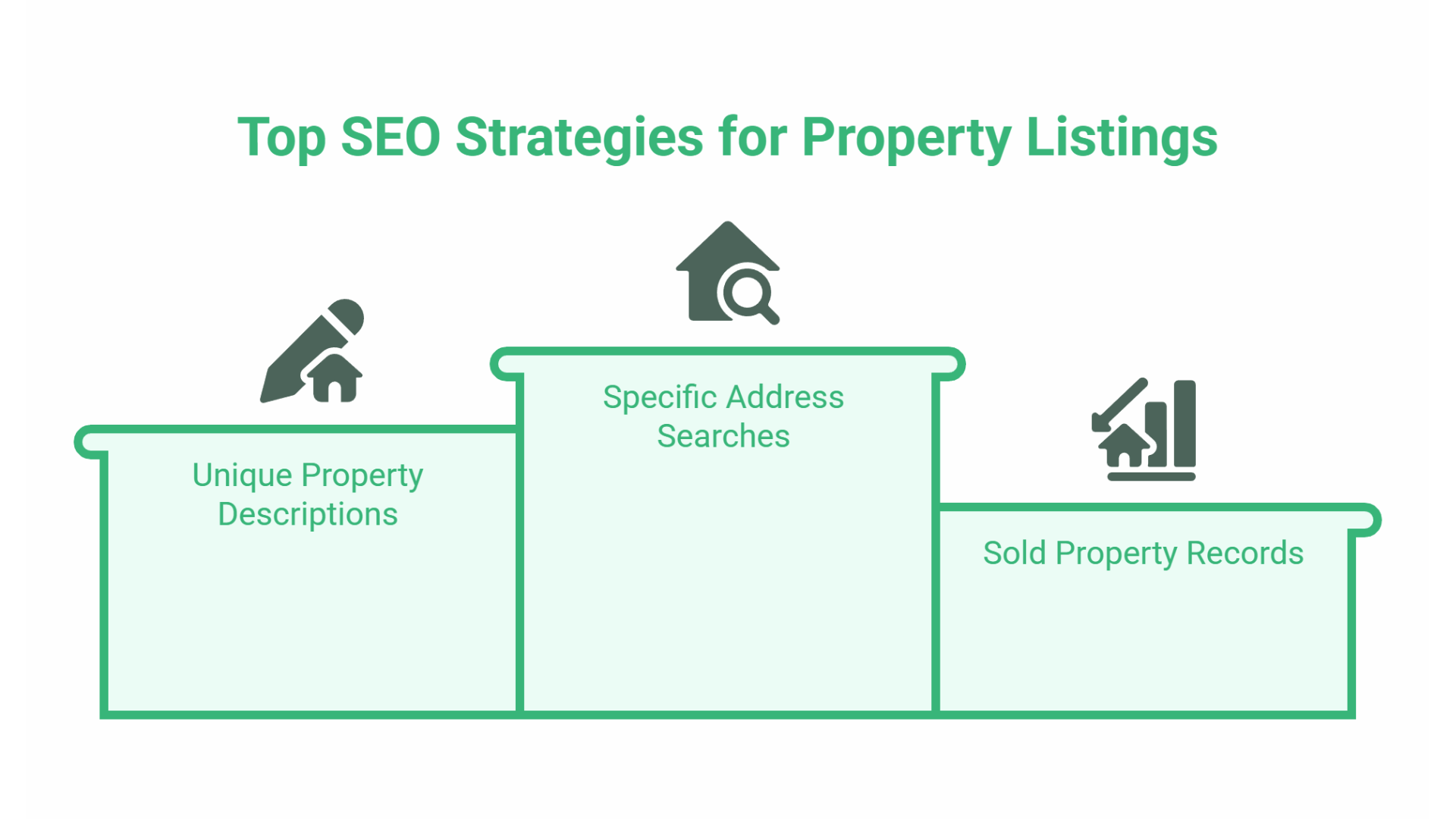
Your property listings do have SEO value, even if you can’t compete with portals for broad property searches. Individual property pages can rank for specific searches, particularly addresses, postcodes, and unique property descriptions.
When someone searches a specific address, your listing of that property should appear. This matters when potential buyers have seen a property’s address elsewhere and search to learn more. It matters when neighbours research what nearby properties are selling for. Ensure individual listings are indexable and include complete address information.
Unique property descriptions add value over portal listings. Portals often truncate or standardise descriptions; your website can include complete, compelling content about each property. This differentiation may attract visitors who’ve seen the property elsewhere and want more detail.
Sold properties retain value. “What did [address] sell for” is a search that happens. Maintaining sold property records, with prices if available, captures these searches and demonstrates your track record. Many agencies archive sold properties; consider keeping them accessible with appropriate “sold” labelling.
Internal linking from property listings to relevant area guides or market information keeps visitors engaged and distributes SEO value throughout your site.
Technical Considerations for Estate Agent Websites
Estate agent websites have specific technical characteristics that deserve attention.
Site structure should support both property browsing and service discovery. Many agency sites bury service information beneath property-dominant navigation. Ensure vendors and landlords can find information relevant to them without hunting.
Page speed matters, particularly for property listings with multiple images. Image compression, proper sizing, and lazy loading prevent slow page loads that frustrate visitors and hurt rankings. Mobile experience is critical, many property searches happen on phones during commutes or property viewings.
Schema markup helps search engines understand your content. Local business schema, real estate agent schema, and individual property schema (where available) enhance how your listings appear in results.
Location pages should have distinct, substantial content, not just the same agency information with different place names. Thin location pages that exist solely to capture searches may actually harm rankings.
For technical foundations, our SEO basics guide covers elements that support visibility.
The Portal Relationship
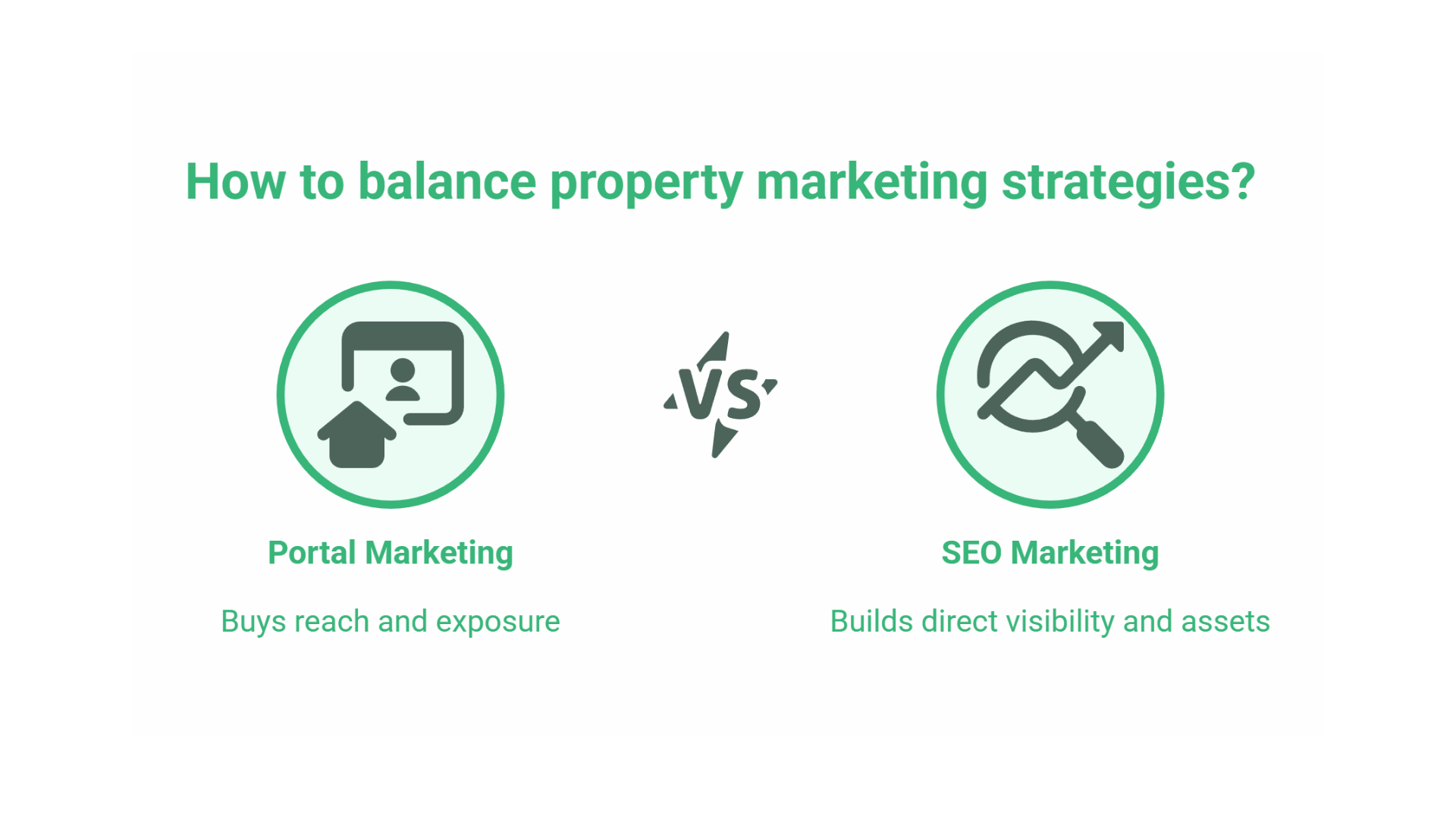
Property portals dominate buyer and renter searches, and for most agents, listing on portals remains essential for attracting viewers and achieving sales. But this dependency has costs, portal fees are significant and rising, and strategic risks if portals further monetise their position.
SEO can’t replace portal visibility for property marketing. What it can do is reduce dependency by attracting vendors and landlords directly, building your own audience, and establishing presence independent of platforms you don’t control.
Consider your portal and SEO investments as serving different purposes. Portal fees buy property marketing reach, exposing your listings to searching buyers and tenants. SEO investment builds your agency’s direct visibility, attracting vendors, landlords, and building long-term assets you own.
The strongest agencies maintain portal presence for property marketing while building direct visibility for instruction generation. As your SEO presence grows, the proportion of vendors who find you directly rather than through portal-generated enquiries can increase, reducing relative portal dependency even while maintaining listings.
Local Authority and Reputation
Estate agency is ultimately a local reputation business. The agents who thrive are those known and trusted in their communities. SEO amplifies and extends that reputation to people who might not otherwise encounter you.
Local content establishes area expertise digitally. Market commentary, neighbourhood guides, local property insights, this content demonstrates the local knowledge that vendors and landlords value.
Community involvement, when genuine, creates visibility. Sponsoring local events, supporting community organisations, participating in local business networks, these activities generate mentions and links while building genuine community presence.
Local press and media coverage, where achievable, builds authority. Being quoted as a local property expert, contributing market commentary, appearing in local business features, this coverage creates valuable backlinks and reinforces expertise positioning.
Professional recognition, awards, industry memberships, certifications, provides external validation. Display these credentials on your website and Google Business Profile.
Long-term local presence matters. If your agency has served the area for years or decades, that longevity demonstrates stability and commitment. Heritage is a differentiator worth communicating.
Measuring What Matters
Track metrics that connect to instruction generation, not just visibility.
Organic traffic to your website matters, but traffic to specific pages matters more. Are people finding your valuation page, your vendor information, your lettings services? These visits indicate potential clients.
Valuation requests from organic search represent direct business opportunity. Track how many valuation requests originate from people who found you through search versus other channels.
Landlord enquiries from search indicate lettings opportunity. Track the source of landlord leads to understand SEO’s contribution.
Instructions won from search-originated leads is your ultimate measure. Can you trace instructions back to how vendors originally found you? This connection reveals SEO’s actual business impact.
Google Business Profile insights show how potential clients interact with your profile, views, website clicks, direction requests, phone calls. These leading indicators suggest future enquiry potential.
Ranking positions for key terms, “estate agents [your town],” “[area] house valuations,” “letting agents [location]”, indicate visibility trend direction.
Getting Started
If you’re beginning to address search visibility seriously, here’s where to focus initial effort.
Claim and fully optimise your Google Business Profile. This single action improves local visibility for agent searches immediately. Complete every field, add quality photos, ensure your services are listed comprehensively.
Audit your website’s service content. Can potential vendors easily find information about your sales service, your process, your expertise? Can landlords understand your lettings offering? Strengthen these pages before worrying about broader content.
Implement systematic review collection. After every completed transaction, request reviews. Build this into your completion process so it happens consistently rather than occasionally.
Create or improve your valuation landing page. This high-intent page deserves particular attention, clear value proposition, simple request process, local expertise signals.
Begin creating local content. Start with a comprehensive area guide or market update for your core territory. This foundational content can be built upon over time.
These foundations, maintained consistently, build visibility that generates instructions.
The Vendors and Landlords Searching Right Now
Somewhere in your area, right now, a homeowner is considering selling. They’re searching for estate agents, reading reviews, researching what their property might be worth. A landlord is thinking about their next investment, wondering which letting agent to use, researching the local rental market.
The question is whether they’ll find you.
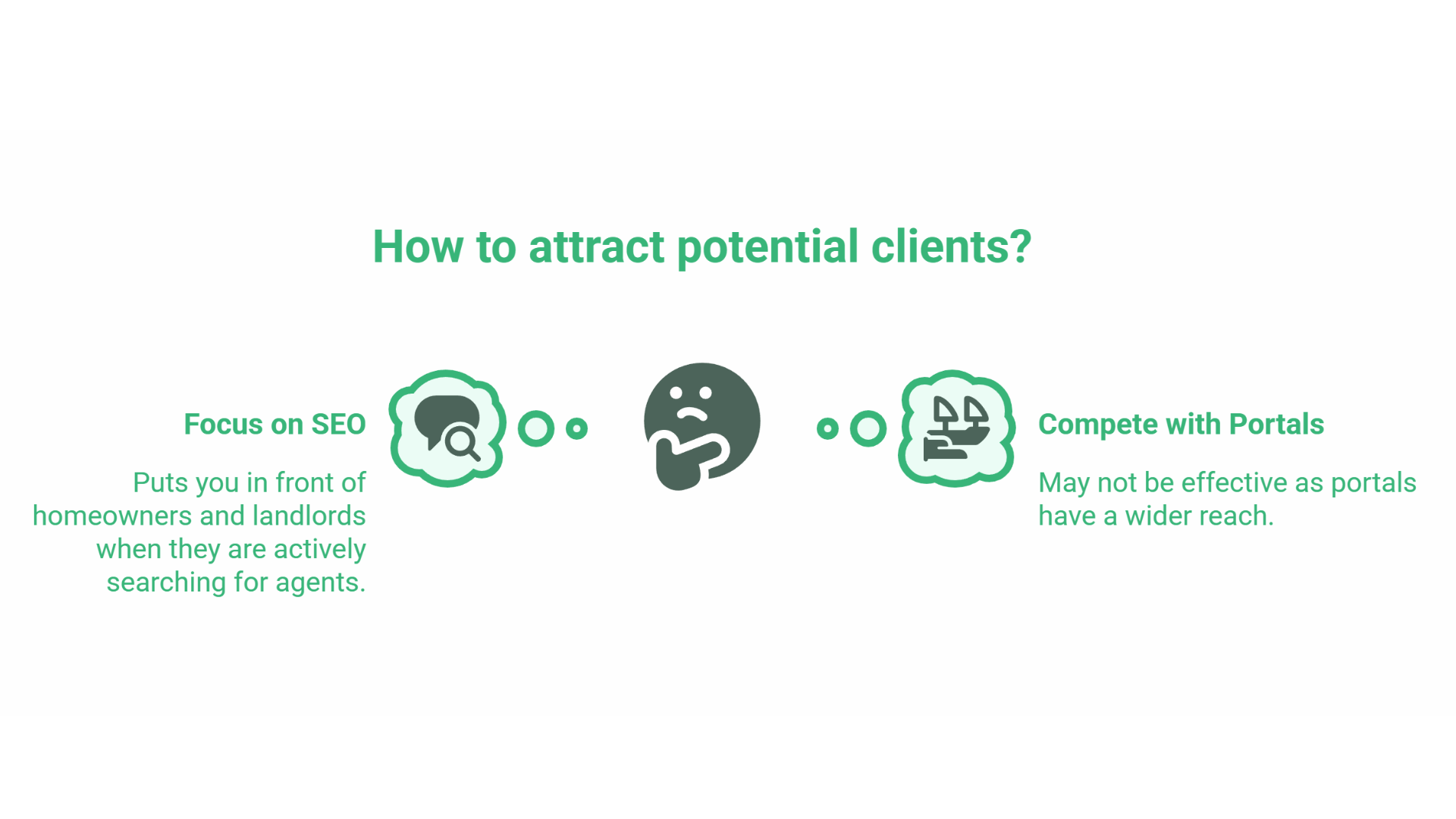
Estate agent SEO, properly focused, puts you in front of property owners when they’re actively considering agents. Not competing with portals for buyer attention, a battle you can’t win, but building direct visibility with the people who actually choose agents.
When potential vendors search for estate agents and find your agency, prominent, well-reviewed, demonstrably knowledgeable about the local market, you’re in the consideration set. That’s where instructions begin.
If you’re ready to improve your estate agency’s search visibility and attract more vendors and landlords, ProfileTree’s team works with professional service businesses across Northern Ireland, Ireland, and the UK. We understand both the technical requirements of effective SEO and the local, trust-based nature of estate agency. Get in touch to discuss how we can help you build visibility that wins instructions.