
SEO for Photographers: Get Found When Clients Search for Photography
Table of Contents
Photography presents a fascinating paradox when it comes to search visibility. Your work is entirely visual, stunning images that speak for themselves, yet the search engines that connect you with potential clients understand text far better than pictures. Bridging this gap is the central challenge of photography SEO.
When someone needs a photographer, for their wedding, family portraits, corporate headshots, or product images, they search online. “Wedding photographer Belfast,” “portrait photographer near me,” “commercial photographer”, these searches happen constantly. The photographers who appear get the enquiries. Those who don’t remain invisible to clients who might have loved their work.
This guide explores SEO for photographers and how they can build search visibility that attracts the right clients. Not just any enquiries, but people who appreciate quality photography and will value your creative vision.
The Visual-Text Paradox
Here’s the core challenge every photographer faces online: your portfolio is your primary sales tool, but search engines can’t appreciate a beautifully composed image the way a potential client can. Google’s algorithms are remarkably sophisticated, but they still rely heavily on text to understand what a page is about and whether it deserves to rank.
This doesn’t mean your images don’t matter for SEO, they absolutely do, in ways we’ll explore. But it does mean that a website consisting purely of gorgeous photos with minimal text will struggle to rank, regardless of how talented you are.
The photographers who succeed at SEO are those who learn to complement their visual work with strategic text. They tell the story behind the images. They describe what they do in ways that match how clients search. They create content that serves both the algorithms and the humans who eventually see it.
Think of it this way: your images convince clients to hire you, but text is what helps clients find you in the first place.
SEO for Photographers: How Clients Search for Photographers
Before diving into tactics, it’s worth understanding the different ways potential clients search, because these patterns should shape your entire approach.
The Wedding Photography Search
Wedding photography generates enormous search volume and represents high-value work for many photographers. The typical search journey for an engaged couple looks something like this:
Shortly after getting engaged, someone starts researching. They might begin broadly, “wedding photographers Northern Ireland” or “how much do wedding photographers cost.” As they develop clearer preferences, searches become more specific: “documentary wedding photographer Belfast,” “natural light wedding photography,” or searches for specific venue names combined with photography.
Throughout this journey, couples are building shortlists. The photographers who appear helpfully during research, who answer questions, show relevant work, and seem trustworthy, make those shortlists. This research phase can last months, which means your online presence needs to serve potential clients throughout an extended decision process.
Portrait and Family Photography
Portrait searches often relate to life events or seasonal moments. Parents search for newborn photographers, families look for Christmas card photos in autumn, teenagers need senior portraits. These searches tend to be more immediate, someone searching “family photographer near me” often wants to book relatively soon.
What distinguishes portrait searches is their personal nature. People aren’t just looking for technical competence; they’re looking for someone they’d feel comfortable with, someone who can put nervous children at ease or capture genuine expressions. Your online presence needs to convey personality alongside skill.
Commercial and Business Photography
Commercial photography searches come from businesses with specific needs: product photography for e-commerce, corporate headshots for websites, food photography for restaurants, architectural photography for developers. These searches tend to be more functional, the client knows what they need and is assessing capability and fit.
Commercial clients often search differently too. They might search for specific deliverables (“product photography white background”) or industry-specific terms (“Amazon product photography requirements”). They’re often comparing multiple photographers more systematically than wedding or portrait clients.
The Style-Specific Search
Some clients know exactly what aesthetic they want and search accordingly: “moody wedding photography,” “bright and airy portraits,” “editorial fashion photographer.” These style searches indicate clients with clear vision who are looking for photographers whose work matches their taste.
If you have a distinctive style, these searches represent excellent opportunities. Clients searching for your specific aesthetic are pre-qualified, they already like what you do.
Why Local Search Matters for Photographers
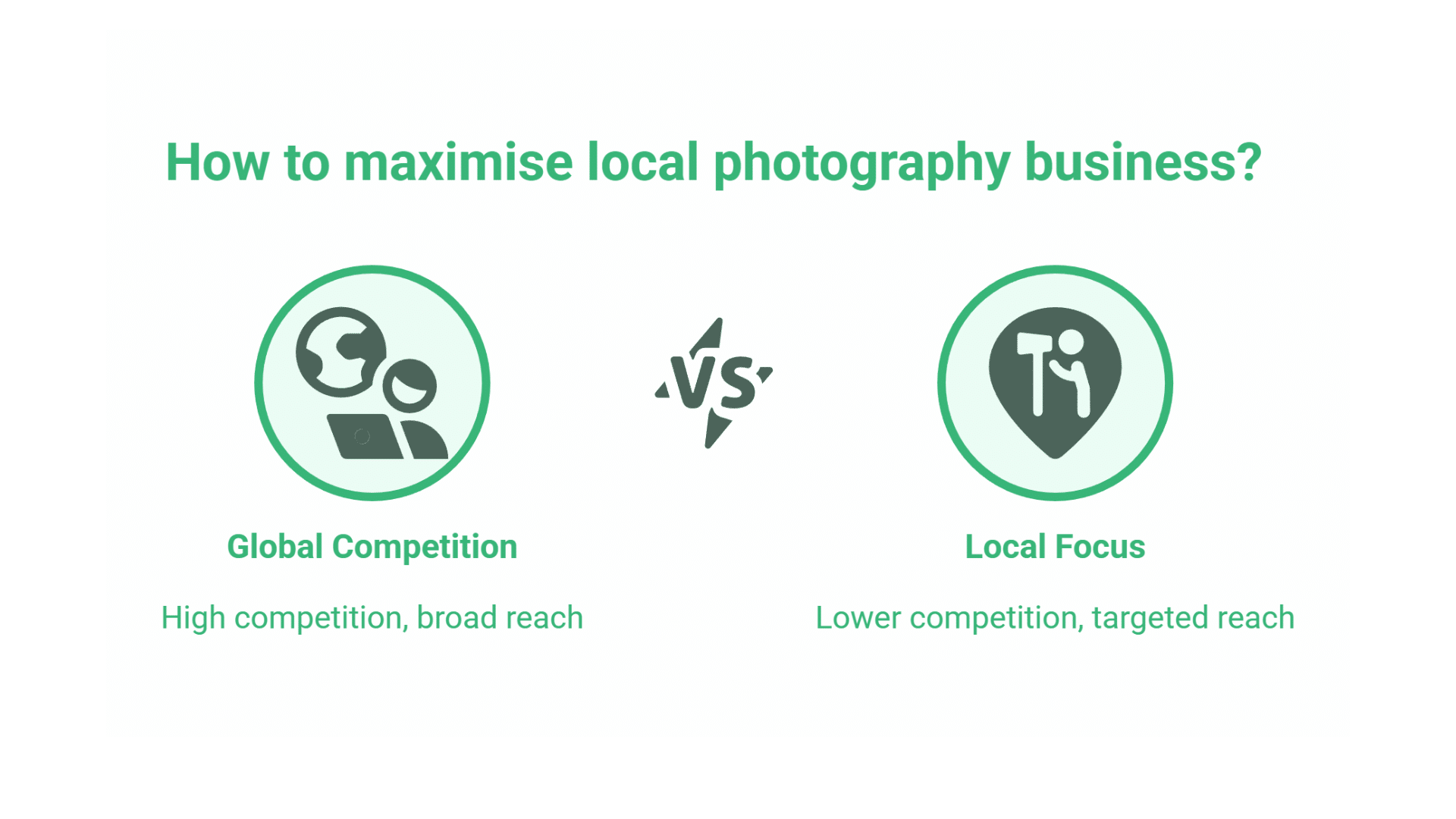
Photography is, for most genres, fundamentally local. Wedding clients want someone who knows local venues. Portrait clients want convenient sessions. Even commercial clients often prefer photographers who can attend meetings and shoots without significant travel costs.
This local nature creates real opportunity. You’re not competing with every photographer globally, you’re competing primarily with photographers serving your geographic area. A photographer who dominates local search for their region captures a substantial share of available work.
When someone searches “photographer near me” or “wedding photographer Belfast,” Google shows local results prominently. Your visibility in these local results depends largely on your Google Business Profile.
Making Your Google Business Profile Work
Your Google Business Profile is foundational for local visibility. When potential clients search for photographers, map results often appear before anything else, and your profile determines whether you appear and how appealing you look.
The basics matter: accurate contact information, correct location, current opening hours. But for photographers, certain elements deserve particular attention.
Categories should reflect your actual work. If wedding photography is your focus, that should be your primary category. But don’t neglect secondary categories for other work you take, portrait photography, commercial photography, event photography. These categories influence which searches trigger your listing.
Your business description should communicate what makes you distinctive. Not generic claims about “capturing memories” that every photographer makes, but specific information about your style, your approach, your specialisms. If you’re known for relaxed, documentary-style wedding coverage, say so. If you specialise in newborn photography, make that clear.
Photos in your Google Business Profile deserve serious attention. This is a visual portfolio in miniature, a chance to stop scrollers and make them click through to learn more. Include your strongest work across the genres you want to be hired for. Update these photos regularly; fresh images signal an active business.
The Review Factor
Reviews significantly influence photographer selection. Clients making emotional decisions, choosing who will capture their wedding, their newborn, their family, want reassurance from others who’ve made similar choices.
The challenge is that photography clients don’t always leave reviews spontaneously. Unlike restaurants or shops where reviews are habitual, photography clients may need encouragement. The best time to ask is when clients are delighted, when you deliver a wedding gallery that makes them cry, when they see their newborn photos for the first time, when a business client gets compliments on their new headshots.
What matters in photography reviews goes beyond generic praise. Mentions of the experience during the shoot, how comfortable the photographer made people feel, how they handled challenges, whether they delivered on time, these specifics help future clients imagine working with you.
Respond to every review thoughtfully. Your responses aren’t just for the reviewer; they’re for everyone reading reviews as part of their decision process.
Your Website: Portfolio and Discovery Combined
Your website needs to serve two masters: showcasing your work beautifully for humans, and being discoverable and understandable by search engines. These goals aren’t incompatible, but they require thoughtful balance.
The Image Optimisation Foundation
Every image on your website represents both an opportunity and a potential problem. Gorgeous, high-resolution images impress visitors but can crush page speed if not handled properly. And images without proper optimisation are missed SEO opportunities.
File names matter more than many photographers realise. “IMG_4532.jpg” tells search engines nothing useful. “belfast-city-hall-wedding-photography.jpg” communicates subject, location, and service, all relevant for someone searching those terms. Renaming images takes time, but it’s time that compounds into improved visibility.
Alt text serves multiple purposes. It helps visually impaired visitors understand your images, and it helps search engines understand what they’re looking at. Write alt text that naturally describes what’s in the image: “Bride and groom first dance at Titanic Hotel Belfast” rather than keyword-stuffed alternatives that read unnaturally.
Image compression is essential. Large, uncompressed images slow your site dramatically, hurting both user experience and search rankings. Modern formats like WebP offer excellent quality at smaller file sizes. Lazy loading ensures images only load as visitors scroll to them, improving initial page speed.
Beyond the Portfolio: The Text That Helps You Rank
Pure portfolio sites with minimal text struggle to rank. Search engines need content to understand what you do, where you do it, and who should find you.
This doesn’t mean cluttering your beautiful galleries with blocks of text. It means strategic content in the right places.
Service pages should thoroughly explain what you offer. A wedding photography page shouldn’t just show wedding photos, it should describe your approach, what’s included, how you work, what couples can expect. This content helps the page rank while helping potential clients understand what they’d be getting.
Blog posts around individual sessions create keyword-rich content naturally. “Sarah and James | Belfast City Hall Wedding” becomes a page that can rank for Belfast wedding photography, City Hall weddings, and other relevant terms, while also showcasing your work and demonstrating experience with specific venues.
Location pages capture geographic searches. If you photograph weddings across Northern Ireland, pages targeting “wedding photographer Belfast,” “wedding photographer Derry,” and other areas help you appear for location-specific searches.
About pages matter more than many photographers realise. Clients hiring photographers, especially for personal work like weddings and portraits, want to know who you are. A compelling about page builds connection while providing content that can rank for searches including your name.
Making Your Website Fast
Page speed affects both rankings and user experience. For photographers, this is particularly challenging because image-heavy sites are inherently heavier than text-based sites.
Quality hosting makes a genuine difference. Budget hosting struggles with image-heavy sites; investing in proper hosting pays dividends in speed and reliability.
Content delivery networks (CDNs) serve your images from servers geographically close to visitors, reducing load times regardless of where clients are browsing from.
Caching, compression, and modern image formats all contribute. If technical optimisation isn’t your strength, it’s worth investing in professional help, the impact on both rankings and client experience justifies the cost.
Our SEO basics guide covers technical foundations in more detail.
Content That Attracts Photography Clients
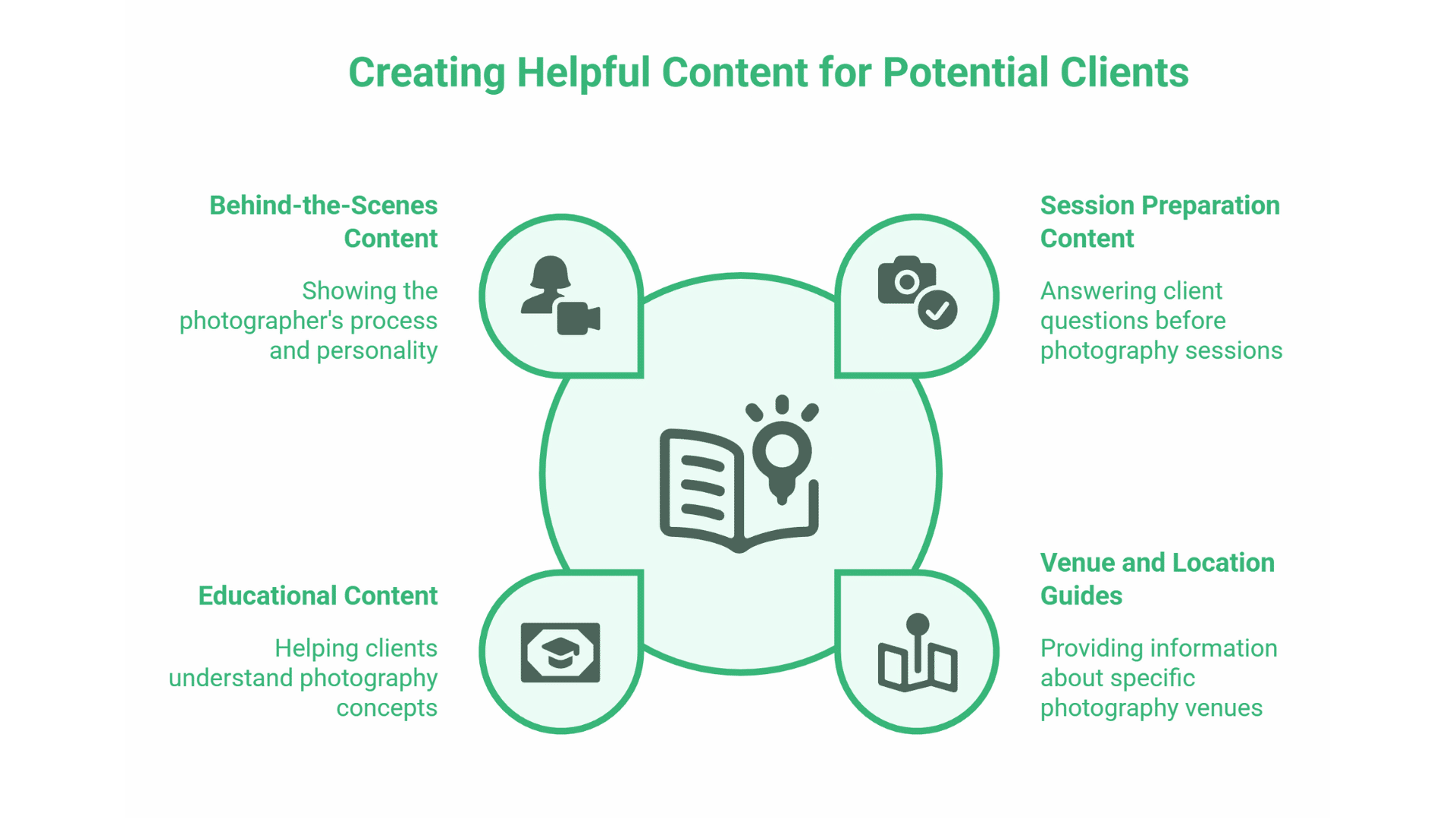
Beyond your core portfolio and service pages, creating helpful content attracts potential clients during their research phase and establishes your expertise.
Session Preparation Content
Clients preparing for photography sessions have questions. Answering these questions positions you as helpful and expert while creating content that ranks for those exact queries.
What should I wear for family portraits? How do I prepare for a newborn session? What’s the best time of day for outdoor photos? How should I prepare for corporate headshots? These are questions clients actually ask, and search for.
Content addressing these questions serves multiple purposes: it attracts people actively planning sessions (warm leads), it demonstrates your expertise and thoughtfulness, and it provides value even to clients who ultimately book someone else (building goodwill and reputation).
Venue and Location Guides
For wedding photographers especially, content around specific venues performs remarkably well. “Photography at Lough Erne Resort” or “Wedding Photos at Belfast City Hall” captures couples researching those specific venues, couples who are often far along in their planning process.
These guides can include tips for the best photo locations at each venue, ideal times of day, challenges to be aware of, and examples of your work there. They’re genuinely helpful to couples while demonstrating your experience with venues they’re considering.
Similar approaches work for portrait photographers: guides to the best outdoor portrait locations in your area, or content about what makes certain locations work well for different types of sessions.
Educational Content for Clients
Content that helps clients understand photography builds trust and authority. Understanding photography styles (documentary vs traditional vs fine art), guidance on choosing a photographer, what to expect from different types of sessions, this content captures research-phase searchers and positions you as knowledgeable and helpful.
The key is genuine helpfulness rather than thinly-veiled sales content. Clients can tell the difference, and search engines increasingly reward content that genuinely serves users.
Behind-the-Scenes Content
Showing your process builds trust and differentiates you from competitors. How you approach a wedding day, how you work with nervous portrait subjects, how you handle challenging lighting conditions, this behind-the-scenes content humanises your business and demonstrates professionalism.
Video works particularly well for behind-the-scenes content. A video of you working at a wedding, interacting with clients, problem-solving on location, this shows personality and capability in ways that still images alone cannot.
For video content strategy, our video storytelling guide provides detailed approaches.
Building Trust and Credibility Online
Photography requires trust. Clients invite you into important moments, weddings, newborns, significant business decisions. Your online presence must build confidence before clients will commit.
Professional Credentials
Display relevant credentials where appropriate. Professional body memberships (SWPP, MPA, BIPP), awards and competition results, publications featuring your work, relevant training or certifications. These provide external validation that complements your portfolio.
Don’t have formal credentials? That’s fine, many successful photographers don’t. But if you have them, display them. They provide reassurance, particularly for clients who don’t know how to assess photography quality themselves.
Testimonials That Build Confidence
Written testimonials are valuable, but consider how much more powerful video testimonials can be for photographers. A couple speaking about their wedding photography experience while you show the resulting images creates compelling content that text alone can’t match.
Gather testimonials systematically. The best time is when clients are most delighted, gallery delivery for weddings, the initial viewing for portraits. Make it easy with specific questions: What was working with me like? Would you recommend me to others? What exceeded your expectations?
Showing Your Process
Clients often don’t know what to expect from a professional photography experience. Showing your process, how consultations work, what happens during a session, how images are delivered, reduces uncertainty and builds confidence.
This process content also differentiates you from competitors who don’t explain their approach. When you’re transparent about how you work, clients can imagine themselves working with you.
The Specialisation Question
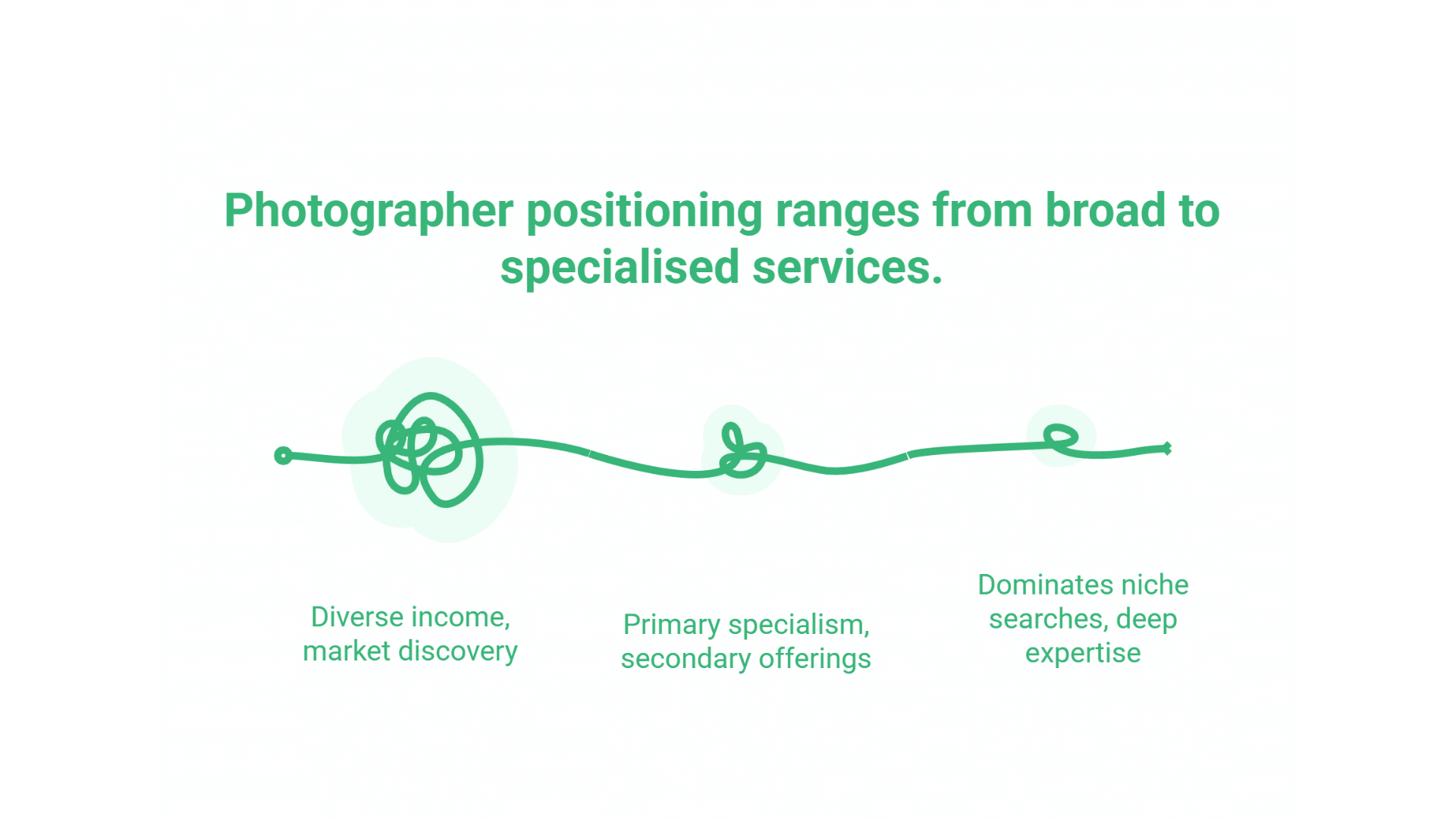
One of the most important positioning decisions for photographers is whether to specialise or offer broad services. This choice significantly affects your SEO strategy.
The Case for Specialisation
Photographers known for specific genres can dominate those searches. “Belfast newborn photographer” is easier to rank for than “Belfast photographer,” and the clients finding you through specialised searches are pre-qualified, they want exactly what you offer.
Specialists also build deeper expertise and portfolios in their chosen area, which shows. A wedding portfolio from a wedding specialist typically demonstrates more range and depth than wedding work from a generalist.
From an SEO perspective, specialisation allows focused content creation. A newborn photographer can create extensive content around newborn sessions, baby preparation, milestone photos, and related topics, building topical authority that’s hard for generalists to match.
The Case for Breadth
Generalists benefit from diverse income streams and seasonal balance. Wedding photographers often struggle in winter; those who also offer portraits and commercial work smooth out the year.
Breadth also allows photographers to discover what they most enjoy and where their market opportunities lie. Many photographers start broad and narrow over time.
Finding Your Balance
Most successful photographers find a middle ground: a primary specialism with secondary offerings. Your SEO strategy should reflect this, focused effort on ranking for your main work, with presence maintained for secondary services.
What matters is clear communication. Clients should understand what you’re best known for and what they can expect from you. Confusion about your positioning helps no one.
Measuring Success
How do you know if your SEO efforts are working? Focus on metrics that connect to actual business outcomes.
Visibility metrics tell you whether you’re appearing in relevant searches. Track your rankings for key terms, “[genre] photographer [location]” combinations that matter for your business. Track Google Business Profile views and actions.
Engagement metrics tell you whether visibility is translating to interest. Are people spending time on your site? Are they viewing multiple galleries? Are they visiting your contact page?
Conversion metrics are what ultimately matter. Enquiries from organic search. Bookings that originated from someone finding you through search. Revenue from those bookings.
The temptation is to focus on visibility metrics because they’re easiest to track and improve. But rankings that don’t lead to bookings are vanity metrics. Keep your focus on the complete journey from search to signed contract.
Getting Started
If you’re just beginning to address your search visibility, or if you’ve neglected it and want to improve, here’s where to focus:
- Claim and optimise your Google Business Profile. This single action has the highest immediate impact for most photographers. Complete every section, upload your best work, encourage reviews.
- Ensure your website has dedicated pages for each service you offer. Wedding photography, portrait photography, commercial photography, each deserves its own page with relevant content, not just images.
- Implement proper image optimisation. Rename files descriptively, add alt text, compress appropriately. This is foundational work that pays ongoing dividends.
- Start creating content around your sessions. Blog posts featuring individual shoots, with location information and relevant details, build searchable content over time.
- Ask satisfied clients for reviews. Systematically, not occasionally. Reviews compound over time, start now.
These foundations, consistently maintained, build visibility that attracts clients for years.
The Photographers Who Get Found
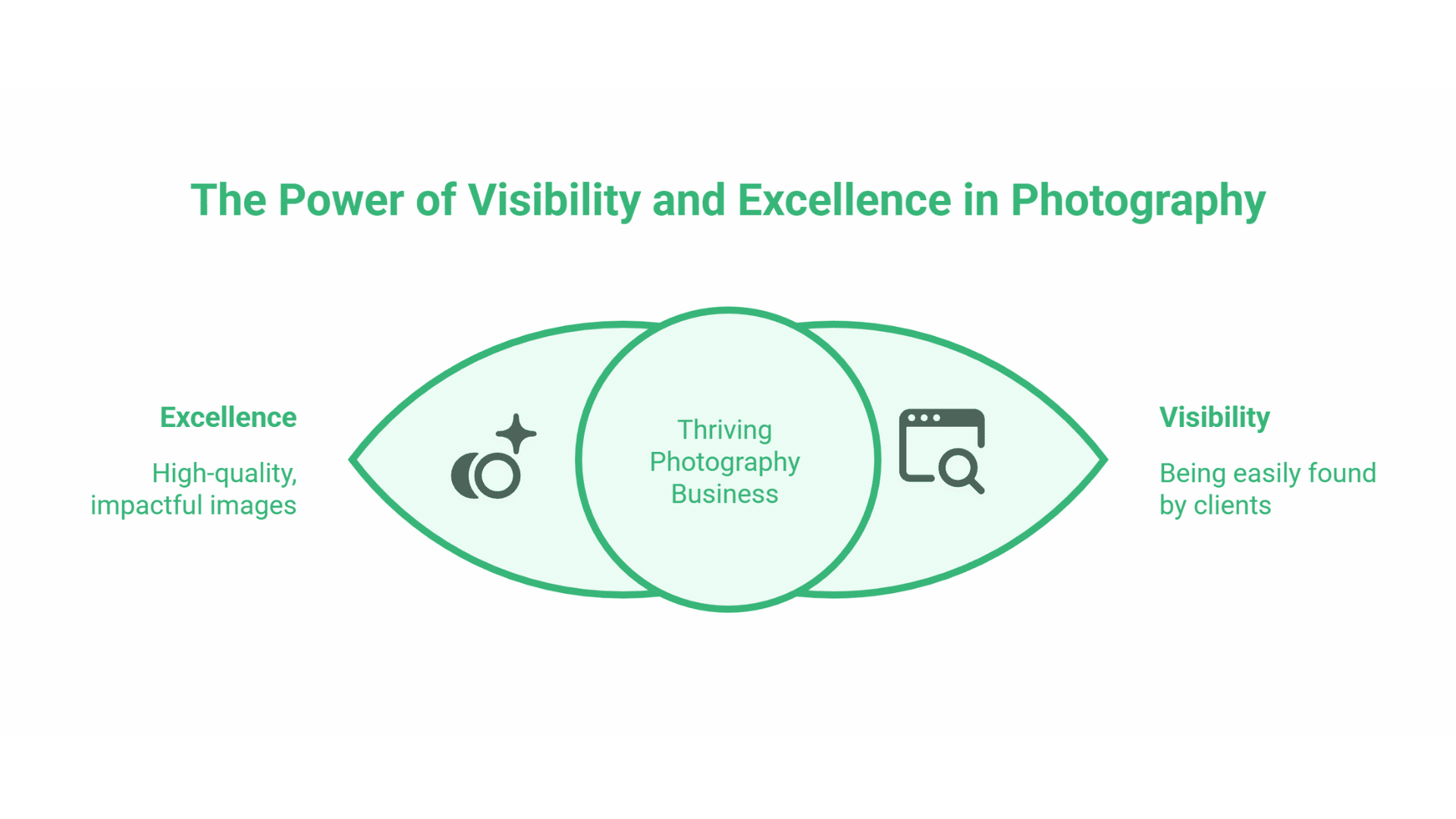
The photographers who thrive aren’t necessarily the most talented, though talent certainly helps. They’re the ones who understand that visibility precedes opportunity. They’re the ones who invest in being findable as well as being excellent.
Your images speak for themselves, to people who see them. SEO is what ensures more of the right people see them. More engaged couples finding your wedding portfolios. More businesses discovering your commercial work. More families finding someone to capture their milestones.
The clients searching for photographers right now have real needs, moments to capture, images to create. They’re looking for photographers whose work resonates with them and whose professionalism gives them confidence. The question is whether they’ll find you.
If you’re ready to improve your photography business’s search visibility and connect with more of the right clients, ProfileTree’s team works with creative businesses across Northern Ireland, Ireland, and the UK. We understand both the technical requirements of effective SEO and the unique challenges of marketing visual services. Get in touch to discuss how we can help your photography business grow through search.