
How to Build a Social Media Distribution Strategy That Reaches the Right Audience
Table of Contents
Most businesses lose audience reach at distribution, not creation. A structured approach to social media distribution decides whether good content reaches the people who need it or disappears unseen. For businesses across Northern Ireland, Ireland, and the UK, the gap between content that earns engagement and content that goes nowhere usually comes down to how it is distributed, not how well it was written.
Creating excellent content solves only half the equation. Without a clear plan for getting that content in front of the right segments, on the right platforms, at the right time, even strong material underperforms. This guide covers the strategic frameworks, platform choices, and measurement methods that turn social media distribution from a posting schedule into a measurable business asset.
What Social Media Distribution Means
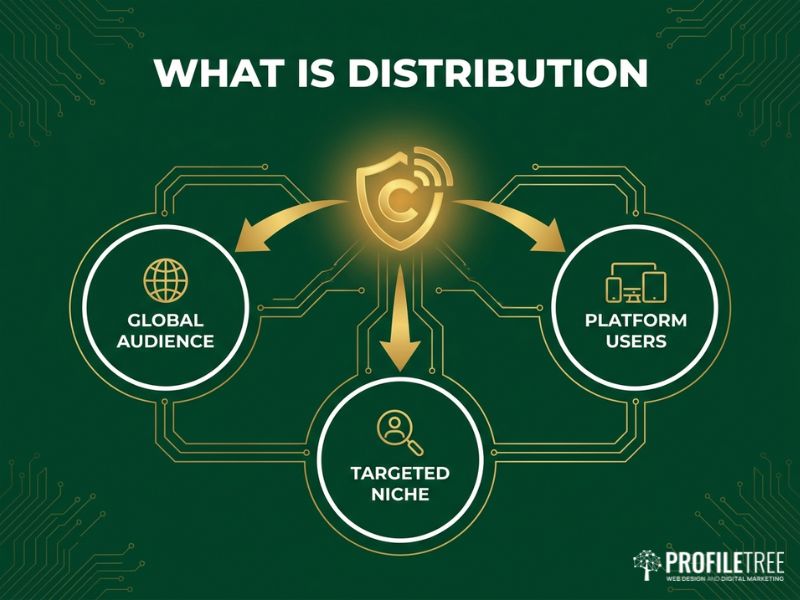
Social media distribution is the systematic delivery of content to defined audience segments across multiple platforms, at sensible times, in formats suited to each channel. It is broader than scheduling posts at fixed intervals. Done well, it connects what you publish to who sees it and what they do next.
Effective social media distribution depends on understanding how each platform ranks content, how audience behaviour shifts between channels, and how to adapt a message without losing its core value. For SMEs working with limited time and budget, that understanding is what separates wasted effort from results. Our social media marketing support is built around exactly this kind of structured planning.
The platforms have grown into distinct environments. LinkedIn works as a professional and thought leadership space where longer posts perform. Instagram rewards visual storytelling. X (formerly Twitter) favours timely commentary. TikTok wants short video that entertains first. Each needs its own approach to format, timing, and engagement.
The Infrastructure Behind Distribution
Social media distribution also covers the practical tooling that supports delivery: scheduling platforms, analytics dashboards, content management systems, and light automation. These let a small team keep a steady presence across several channels. The technical side matters because consistency, not occasional bursts, is what builds audience trust over time.
Platform-Specific Distribution Strategies
Each platform runs on different rules and serves a different user mindset, so social media distribution needs to flex to fit. What follows breaks down the main channels SMEs use, with the practical points that affect reach on each one. Treat these as starting positions to test against your own audience data, not fixed rules.
LinkedIn Distribution
LinkedIn favours content that sparks professional discussion. Posts that pick up comments within the first hour gain far more visibility than those that gather quiet likes, so timing and early engagement are central to social media distribution here. For B2B companies, focus on industry observations, company news, practical guidance, and employee sharing. The platform rewards native posts over external links, and placing a link in the first comment rather than the post body often protects reach.
Employee advocacy multiplies LinkedIn reach. When team members share company content to their own networks, reach grows without paid spend. That needs simple internal support: ready-made assets, clear guidance on professional sharing, and a process light enough that people actually use it. Our digital training courses help teams build that sharing habit without creating extra work.
Facebook Distribution
Facebook prioritises posts from friends and family over business pages, so organic reach for commercial accounts keeps shrinking. Facebook Groups offer an alternative channel, where a business can build a community around shared interests rather than direct selling. Video tends to outperform static images, especially with captions, since most people watch without sound. Facebook Live gets extra priority, which makes it useful for launches and Q and A sessions. For local firms across Northern Ireland and Ireland, Facebook’s geographic targeting remains hard to match for driving footfall or promoting regional services.
Instagram Distribution
Instagram sets a high visual bar as the entry point. Distribution success depends on using its formats well: feed posts, Stories, Reels, and longer video each play a different role in a social media distribution plan. Reels currently get the strongest algorithmic push as Instagram competes with TikTok, so businesses that build Reels into their schedule usually see wider reach. Stories suit frequent, less polished updates, polls, and time-limited offers, and the 24-hour lifespan creates urgency without cluttering the feed. A mix of broad and niche hashtags, plus location tags, improves discovery for local businesses.
X (Twitter) Distribution
X moves in real time, so content lifespan is measured in minutes rather than hours. That makes frequency and timing matter more than on slower platforms, and successful distribution here means steady activity rather than the occasional post. Threads extend the life and depth of a topic, since people can share a single point or the whole sequence. Lists help a business monitor and engage specific groups, which in turn informs what to distribute and when.
TikTok Distribution
TikTok shows new content to small test audiences first, then widens reach based on engagement. That gives businesses without a following a real chance at visibility if early content lands. TikTok rewards authentic, entertaining material over polished marketing, so brands that show personality and join trends tend to do better. Participating in existing hashtag challenges is an accessible entry point for SMEs, and the format keeps improving as a route to younger audiences. Bringing in AI marketing support can match this kind of short-video output to the platforms where it performs.
Content Repurposing for Maximum Distribution
Creating unique content for every platform exhausts resources fast. Strategic repurposing lets a business keep a multi-platform presence without a matching rise in production effort. The principle is simple: build one substantial piece, then adapt it into many channel-specific formats for social media distribution.
The strongest repurposing starts with long-form foundations: blog articles, recorded interviews, webinars, or research. From there, a single blog article can become several assets. Pull quotes turn into X posts, key statistics become Instagram graphics, sections become LinkedIn posts, and the core idea inspires a Reel or TikTok. Video offers even more range, since a full interview yields YouTube content, highlight clips for Reels, audio for a podcast, and a transcript that becomes a written article. Professional video marketing production makes this clip-first approach far easier to sustain.
This approach inverts the usual habit. Rather than producing separate content for each channel, you produce one strong piece and distribute it across channels in adapted forms. ProfileTree uses this method with client content programmes, which lets small marketing teams hold a steady cross-platform presence. Repurposing does need a content calendar that tracks the original, its derivatives, and the schedule across platforms, so the same idea reaches different audiences without feeling repetitive to any one of them.
Timing and Frequency Optimisation
How often and when you post both shape social media distribution results, though the best pattern varies by platform and audience. Frequency without quality wastes attention, and quality without consistency never builds momentum. The guidance below gives sensible starting frequencies, but your own analytics should settle the final schedule.
Platform Frequency Guidelines
LinkedIn performs best at three to five posts a week, since heavier posting often reduces engagement per post as audiences sense overselling. Facebook suits daily posting for active communities, though quality matters more than volume, and Groups support higher frequency because people opt in. Instagram Stories take several daily posts without fatigue, while feed posts sit best at one or two a day and Reels can go more often. X needs high frequency, often several posts a day mixing original content, replies, and reshares. TikTok rewards consistency over volume, so one to three posts a day on a steady schedule tends to beat sporadic bursts.
Timing That Fits Your Audience
Best posting times depend on your specific audience, not generic charts. Each platform’s analytics show when your followers are active, and testing different slots reveals your peak windows. UK audiences are online more than ever, with adults averaging around four and a half hours a day according to Ofcom’s Online Nation research, and most of that time spent on a smartphone. For B2B, weekday mornings and lunch hours often work well on LinkedIn as professionals check in around commutes and breaks.
For B2C, evenings tend to perform across most platforms as people browse during leisure time, and weekends suit lifestyle and retail brands. Businesses serving audiences across Northern Ireland, Ireland, and the wider UK should account for the working day, and scheduling tools that hold a consistent local time make social media distribution more reliable for dispersed audiences.
Paid Distribution Strategies
Shrinking organic reach across the major platforms makes paid distribution a practical necessity for businesses chasing measurable results. The goal is not to boost everything, but to put budget behind content that has already earned attention and points to a clear outcome.
When Paid Distribution Makes Sense
Paid promotion is worth it when you have content that has already shown organic engagement, a clear conversion goal, a budget that supports a sustained campaign rather than one-off boosts, and the analytics to measure return. Boosting every post wastes money. Focus spend on high-performing content, time-sensitive announcements, conversion-focused posts with a clear call to action, or awareness campaigns aimed at new segments. A structured social media marketing campaign keeps that spend tied to evidence rather than guesswork.
Platform Advertising and Retargeting
Meta advertising across Facebook and Instagram offers detailed targeting by demographics, interests, behaviours, and custom audiences built from website visitors or customer lists, with delivery optimised toward likely actions. LinkedIn advertising costs more but produces higher-quality B2B leads when targeting is precise, which suits professional services and higher-value products. X advertising suits amplifying specific messages or joining timely conversations. Retargeting shows ads to people who already visited your site or engaged with your content, and these warm audiences convert far better than cold prospecting. Lookalike audiences then find new people who resemble your best customers, which expands reach while reducing wasted impressions.
Community Building and Engagement
Social media distribution is not a one-way broadcast. Effective distribution treats community building and genuine engagement as core parts of the work, because the platforms reward conversation and penalise silence. The businesses that reply, ask, and listen tend to compound their results over time.
Responding to Comments and Messages
Platform algorithms reward accounts that generate real discussion, and posts that gather comments get more visibility than those collecting only likes. Replying within the first hour signals active engagement, and even short responses help. Asking a follow-up question encourages deeper threads that lift visibility further. Direct messages need handling too, since several platforms now reduce reach for accounts that ignore them. A simple acknowledgement with a realistic reply time keeps you in good standing without overwhelming a small team.
User-Generated Content
User-generated content is one of the most valuable social assets a business can hold. Customers sharing their experiences, reviews, or photos create authentic material that converts better than branded posts. Encouraging it takes opportunity and incentive: a branded hashtag that gathers customer content, a contest or challenge, featured customer stories, or content that prompts people to tag a friend. Reposting with permission provides social proof, fills the calendar, and makes customers feel valued, which often prompts them to share the repost onward and widen distribution again.
Analytics and Performance Measurement

Social media distribution should be measured against business objectives, not vanity metrics like follower counts or raw impressions. The numbers that matter connect activity to outcomes, and clear measurement tells you when to stop, not just when to scale.
Choosing the Right Metrics
Different goals call for different measures. Awareness work tracks reach and impressions. Engagement content measures comments, shares, and saves. Conversion-driven content tracks click-through rates, traffic, and form submissions. Platform analytics give the basics, but a cross-platform view usually needs an additional tool to show which channels drive the most valuable traffic and which themes connect best.
Attribution and ROI
Attribution is genuinely hard, because customer journeys rarely run in a straight line. Someone might find you on Instagram, research on Facebook, visit your site several times, then convert weeks later through search. Multi-touch attribution shares credit across those touchpoints and gives a fairer picture than crediting only the final click. Adding UTM parameters to links lets you trace specific campaigns, posts, and platforms through your analytics, connecting social activity to behaviour and conversions on the site. This kind of measurement underpins any serious digital strategy service.
Automation and Efficiency Tools
Managing multi-platform social media distribution by hand becomes unsustainable quickly. The right tools let a small team hold a consistent presence without an unmanageable workload, provided the tooling matches the team’s actual capability rather than its ambitions. The aim is to automate the repetitive parts and keep human judgement on strategy and conversation.
Scheduling and Creation Tools
Platforms such as Hootsuite, Buffer, Sprout Social, and Later let a team schedule across channels from one dashboard, which protects posting consistency through holidays and busy periods. The better tools add analytics, collaboration, and approval workflows. For creation, Canva and Adobe Express provide templates sized for each platform, while apps like CapCut and InShot make short-form video accessible without a production background.
AI-Assisted Distribution
AI tools now help with several social media distribution tasks: generating copy variations, suggesting posting times from historical data, writing captions and alt text, analysing comment sentiment, and surfacing relevant trending topics. ProfileTree helps clients put these tools to work so they can scale distribution without a matching rise in headcount. The key is using AI for repetitive work while keeping human oversight on strategy, creativity, and authentic engagement.
Local Distribution for Northern Ireland and UK Markets
Businesses serving Northern Ireland, Ireland, and the UK benefit from distribution that fits regional audiences rather than borrowing wholesale from US playbooks. Local relevance affects both reach and trust, and it is one of the clearest advantages a regional SME holds over a distant national competitor. Geography, timing, and partnerships all shift when you plan for a specific market.
Geographic Targeting and Local Relevance
Most platforms allow targeting at country, region, or city level, which prevents wasted impressions outside your service area. Local hashtags tied to Belfast business or Northern Ireland enterprise connect content with regional conversations. Distribution calendars should reflect regional events, bank holidays, and sporting occasions that generate strong regional interest, since content tied to those moments earns higher engagement. Partnerships with complementary local businesses multiply reach by exposing each brand to a relevant new audience.
Implementing a Distribution Strategy
Businesses starting or improving social media distribution do best with a phased rollout rather than trying to do everything at once. A staged plan builds the habit and the infrastructure together, so the schedule you create is one the team can actually sustain.
A Three-Month Rollout
The first month is foundation and audit: review existing accounts and their performance, identify which platforms reach your audience, set baseline metrics, and choose your tools. The second month builds the systems: a content calendar, posting schedules per platform, defined team roles, and templates that speed creation. The third month focuses on improvement: analyse the data, identify top-performing formats, adjust frequency and timing, and explore paid promotion for proven organic content. After that, quarterly reviews keep distribution aligned with business priorities as platforms and goals change.
How ProfileTree Supports Social Media Distribution
ProfileTree works with SMEs across Northern Ireland, Ireland, and the UK to plan and run social media distribution that fits real goals and real resources. The agency favours sustainable systems a business can maintain long term over intensive campaigns that collapse when external support ends. That means documenting processes, training internal teams, and choosing tools that match the team’s technical comfort.
“Social media distribution is where good content becomes good marketing,” says Ciaran Connolly, Director of ProfileTree. “We see too many businesses creating strong content that never reaches the right audience because they lack a structured way to distribute it. Our job is to build those systems, the calendars, workflows, and reporting that turn social media from a time sink into a measurable business asset.”
The services that support distribution connect across the agency. ProfileTree’s social media management service covers platform strategy, calendar development, community management, and reporting that links activity to outcomes. Video marketing services produce the short-form clips and testimonials built for social channels, while a clear digital strategy plan positions social within the wider marketing picture. For teams who want to run distribution in house, digital training sessions build the practical skills, and AI marketing services help scale repetitive work without adding headcount. AI chatbot solutions can also handle routine social enquiries so the team stays focused on content and conversation.
Distribution drives traffic, so the destination matters as much as the message. Search engine optimisation services make sure pages reached through social actually rank and convert, supported by professional website design services and ongoing website development support. Reliable website hosting management keeps those pages live and fast, with hosting available from competitive monthly packages. For nurturing the audiences that social brings in, email marketing resources turn one-off visitors into repeat contact.
For businesses unsure where to focus limited resources, ProfileTree runs distribution audits that assess current presence, identify the highest-opportunity platforms and formats, and recommend practical next steps based on capacity and budget. The common thread is connecting activity to outcomes, because likes and followers only matter when they translate into leads, sales, or other meaningful results.
FAQs
What is social media distribution?
It is the process of delivering content to the right audience segments across multiple platforms, at suitable times, in formats designed for each channel. It goes beyond simply scheduling posts.
How is distribution different from posting?
Posting puts content on a platform. Distribution makes sure it reaches the intended audience through platform choice, timing, repurposing, engagement, and paid promotion where it is justified.
Which platform should a small business start with?
Start where your audience already spends time. B2B firms often see the strongest return on LinkedIn, while B2C and local businesses tend to do well on Facebook and Instagram.
How often should I post?
It varies by platform. Three to five posts a week suits LinkedIn, daily suits Facebook and Instagram feeds, and X needs higher frequency. Let your own analytics confirm the pattern.
Do I need to pay for distribution?
Not always, but organic reach is limited on most platforms. Paid promotion works best applied to content that has already proven its engagement organically.
How do I measure whether distribution is working?
Track metrics tied to your goal, such as click-through rate, traffic, and conversions, rather than follower counts. Use UTM links and attribution to connect social activity to results.