
Zero-Click SEO is Here: How to Win Traffic in an AI-Dominated SERP
Table of Contents
Search behaviour has fundamentally shifted. Over 65% of Google searches now end without a click to any website, with AI-generated overviews and featured snippets satisfying user queries directly in search results. This new zero-click SEO reality demands new strategies that go beyond traditional ranking metrics to capture value even when users never leave the search page.
ProfileTree’s analysis of search patterns across Northern Ireland businesses reveals a stark truth: traditional SEO metrics like rankings and click-through rates no longer tell the complete story. Brands appearing in AI overviews gain visibility and authority even without direct traffic, while those optimising solely for clicks miss opportunities to build recognition in this new search landscape.
The transition from click-based to impression-based value represents the most significant shift in search marketing since mobile-first indexing. Smart businesses now measure success through brand mentions, entity recognition, and indirect traffic patterns rather than focusing exclusively on organic clicks. This evolution requires rethinking everything from content structure to performance measurement.
Understanding the Zero-Click Search Landscape
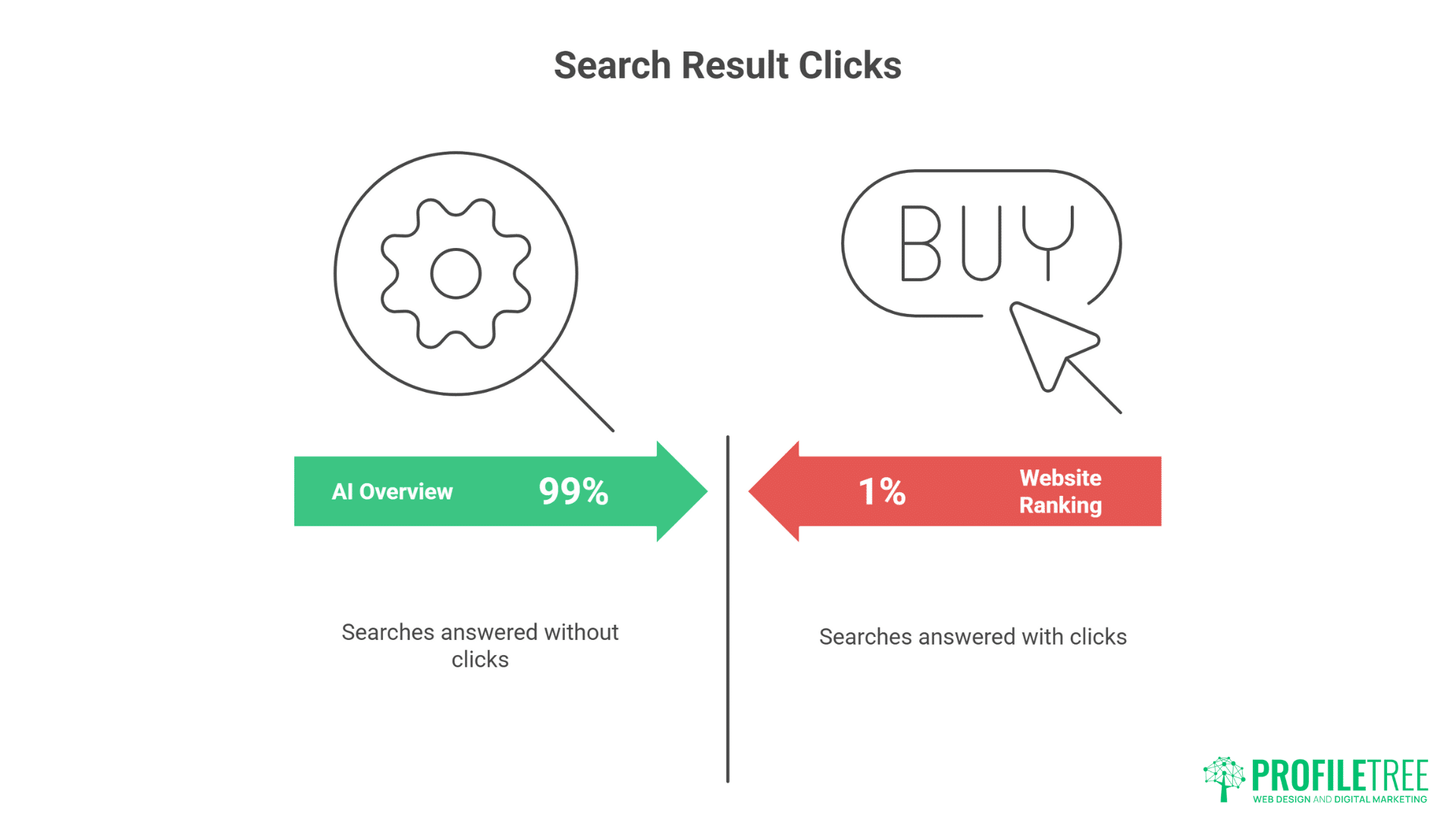
Zero-click searches occur when users find their answers directly on the search results page without clicking through to any website. Google’s AI overviews, featured snippets, knowledge panels, and local packs all contribute to this phenomenon, providing instant answers that satisfy user intent without requiring additional navigation.
The data tells a compelling story about this shift. Searches for simple facts, definitions, and quick answers almost never generate clicks anymore. When someone searches “what time does Tesco close” or “how many teaspoons in a tablespoon,” they get their answer immediately. Your perfectly optimised page ranking first below the AI overview might receive zero traffic despite high visibility.
This change affects different industries unequally. Local businesses face particular challenges as Google’s local pack displays opening hours, reviews, and contact information without users needing to visit websites. E-commerce sites watch product information appear in shopping panels, while service businesses see their carefully crafted FAQ content summarised in AI responses.
Yet, zero-click searches aren’t entirely negative for businesses that adapt their strategies. Brand visibility in featured snippets and AI overviews builds recognition and authority. Users who see your business name repeatedly in search results develop familiarity that influences future purchasing decisions, even if they never click through immediately.
“The game has changed from capturing clicks to capturing mindshare,” explains Ciaran Connolly, ProfileTree founder. “Businesses winning in zero-click search understand that visibility itself has value – being the cited source in AI responses positions you as the authority, whether users click or not.”
Understanding which queries generate clicks versus impressions helps prioritise content efforts. Transactional searches (“buy running shoes Belfast”) still drive clicks, while informational queries increasingly resolve without website visits. This distinction shapes how you structure content for maximum impact.
Brand Building in the Age of AI Search
Brand recognition becomes your primary defence against zero-click erosion. When users see your brand consistently cited in AI overviews and featured snippets, you build mental availability that transcends immediate clicks. This accumulated brand equity drives direct traffic, branded searches, and word-of-mouth referrals that bypass the zero-click problem entirely.
Creating a distinctive brand voice that AI systems recognise and reference requires consistency across all digital touchpoints. Your unique perspective, proprietary methodologies, and distinctive terminology become signals that help AI systems identify and cite your content as authoritative. This isn’t about gaming algorithms but developing genuine expertise that naturally attracts citations.
Entity optimisation helps search engines understand your brand as a distinct entity rather than just a website. Building connections between your brand, your founders, your location, and your expertise creates a knowledge graph presence that increases your likelihood of appearing in AI-generated responses. Northern Ireland businesses can particularly benefit from strong local entity signals that connect them to their geographic market.
Thought leadership content that introduces new concepts or frameworks often gets preferentially cited in AI overviews. Rather than rehashing existing information, businesses that contribute original research, unique methodologies, or innovative perspectives find their ideas referenced even when users don’t click through. Developing a comprehensive digital strategy helps align thought leadership efforts with business objectives.
Brand mentions without links still carry value in modern search algorithms. When other websites, social media users, and online discussions reference your brand name, you build entity authority that influences both traditional rankings and AI citation preferences. This unlinked brand building requires active reputation management and strategic PR efforts.
Visual brand elements gain importance as search results become more visual. Consistent use of brand colours, logos, and visual styles across images and videos helps users recognise your content instantly, even in image carousels or video snippets where your URL might not be prominently displayed.
Content Strategies for AI Citation
Structuring content for AI citation requires understanding how these systems extract and present information. Clear, concise answers positioned prominently in your content increase citation likelihood, while buried insights get overlooked regardless of their value.
The inverted pyramid structure serves AI systems well. Leading with your key insight or answer, then providing supporting detail, helps AI extract the most valuable information efficiently. This journalistic approach contradicts traditional SEO advice about building suspense but aligns perfectly with how AI systems parse content.
Question-and-answer formats naturally align with how users search and how AI presents information. Dedicated FAQ sections using schema markup help AI systems understand your content structure, while conversational Q&A throughout your content provides multiple citation opportunities. Each question should receive a direct, quotable answer within the first sentence of your response.
Statistical claims backed by credible sources attract AI citations. When you state “73% of Belfast businesses increased online visibility through local SEO,” AI systems can confidently cite this specific, sourced information. Vague claims like “many businesses see improvements” get passed over for more authoritative alternatives.
List-based content performs exceptionally well in AI overviews. Numbered steps, bulleted key points, and structured comparisons provide easy extraction points for AI systems. However, these lists must offer genuine value rather than arbitrary divisions of content. Quality trumps formatting tricks.
Creating definitive guides on narrow topics establishes topical authority that AI systems recognise. Rather than broad content covering everything superficially, deep dives into specific aspects of your expertise increase citation likelihood. Content marketing strategies that focus on depth over breadth align with this approach.
Technical markup including schema, proper heading structure, and semantic HTML helps AI systems understand your content’s meaning and structure. While not guaranteeing citations, proper technical implementation removes barriers that might prevent AI from accurately interpreting your content.
Newsletter and Email List Strategies
Email lists provide direct access to your audience independent of search algorithms or AI intermediaries. Building a substantial email list creates a traffic source you control completely, insulating your business from zero-click impact while maintaining direct customer relationships.
Value exchange strategies encourage newsletter signups without seeming desperate or pushy. Exclusive insights, early access to new content, or subscriber-only resources provide genuine reasons for users to share their email addresses. The key lies in offering something unavailable through simple search queries.
Newsletter content should differ from your public content to maintain subscriber value. While your website might answer “what,” newsletters can explore “why” and “how” in greater depth. This differentiation gives subscribers reasons to remain engaged even when AI can answer their basic questions.
Segmentation strategies ensure subscribers receive relevant content that maintains engagement. A one-size-fits-all newsletter quickly loses effectiveness, while targeted content based on subscriber interests and behaviours maintains high open rates and click-through rates. Digital training programmes often overlook email marketing sophistication, yet it’s crucial for zero-click resilience.
Interactive email elements like polls, quizzes, and embedded videos increase engagement beyond simple text newsletters. These elements can’t be replicated in search results, providing unique value that keeps subscribers opening your emails rather than relying on AI summaries.
Newsletter monetisation through sponsorships, affiliate partnerships, or premium tiers creates revenue streams independent of website traffic. This direct monetisation reduces reliance on ad-supported content models vulnerable to zero-click erosion.
Cross-promotion between newsletters and other owned channels creates an ecosystem of engaged users. Newsletter subscribers become YouTube viewers, podcast listeners, and social media followers, building multiple touchpoints that transcend search dependence.
Alternative Traffic Sources Beyond Search
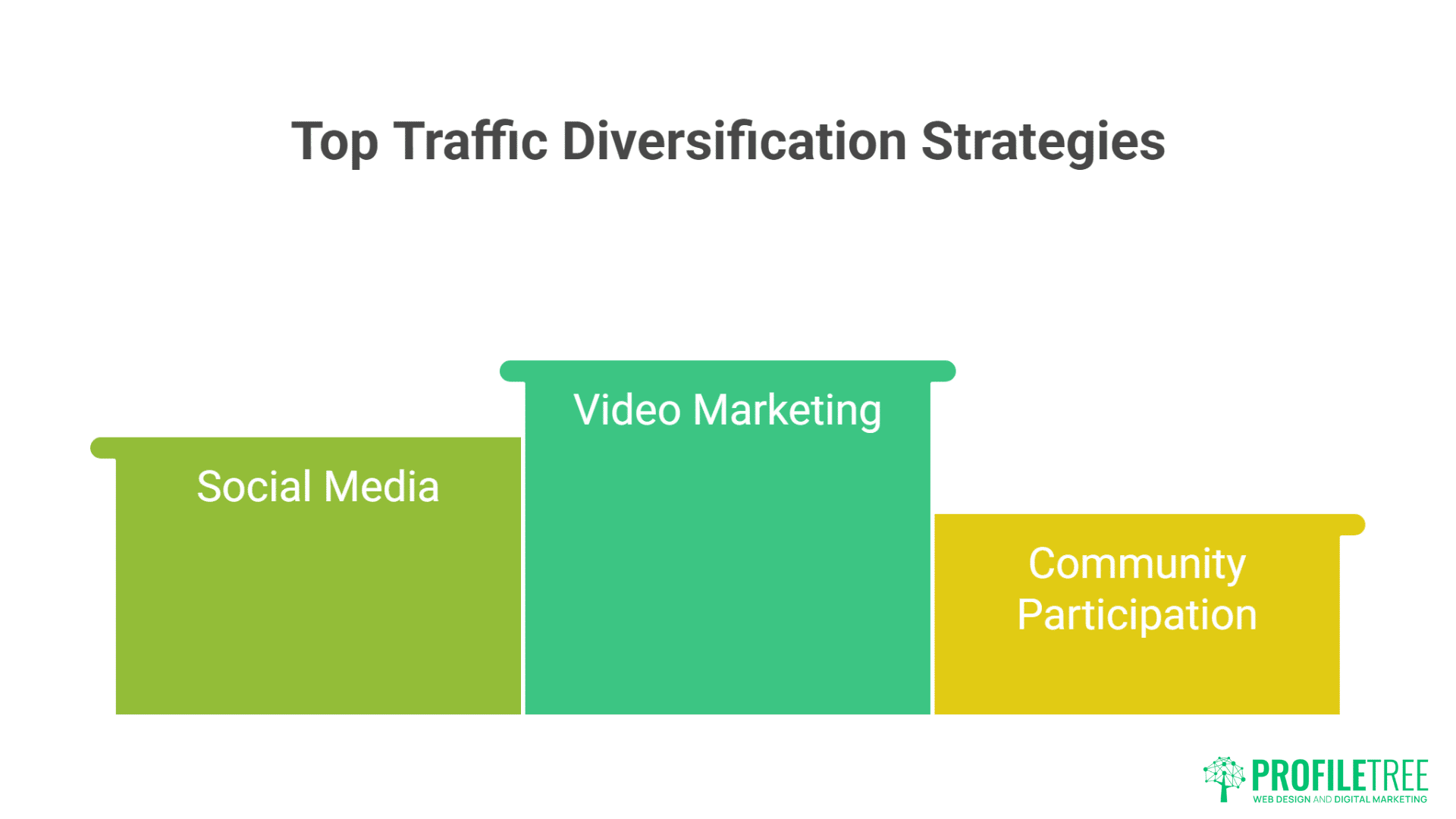
Diversifying traffic sources protects against zero-click impact while building resilient marketing channels. Social media, video platforms, podcasts, and community forums offer direct audience access without search intermediation.
YouTube search operates differently from Google search, with zero-click being less prevalent in video results. Creating video content that ranks in YouTube search provides traffic opportunities even as traditional search becomes more zero-click dominated. Video marketing strategies that prioritise YouTube SEO can capture significant traffic.
Social media platforms increasingly keep users within their ecosystems, but strategic social content still drives meaningful traffic. Platform-native content that provides value while subtly encouraging website visits balances platform algorithms with traffic generation needs. Understanding each platform’s unique culture and expectations improves success rates.
Podcast appearances and guest posting build authority while driving direct traffic. When you appear on relevant podcasts or contribute to industry publications, you reach engaged audiences actively seeking expertise. These appearances often generate sustained traffic over time as content remains discoverable.
Community participation in forums, Reddit, and industry-specific platforms builds relationships that transcend algorithmic changes. Genuine contribution to discussions, answering questions, and sharing expertise builds reputation that drives both direct traffic and branded searches.
Partnership and collaboration strategies multiply reach without depending on search rankings. Joint ventures, co-marketing campaigns, and strategic partnerships expose your brand to new audiences through trusted intermediaries. Northern Ireland’s tight-knit business community particularly benefits from collaborative marketing approaches.
Offline marketing driving online engagement creates attribution challenges but provides algorithm-proof traffic. Speaking engagements, trade shows, and traditional advertising can direct audiences to owned digital properties without search intermediation.
Measuring Success in Zero-Click SEO
Traditional SEO metrics require recalibration for zero-click reality. Impressions, brand searches, and indirect conversions become as important as clicks and rankings in measuring true SEO impact.
Impression share metrics reveal how often your content appears in search results regardless of clicks. High impression share with low click-through rates might indicate successful zero-click visibility rather than poor performance. Understanding this distinction prevents misguided optimisation efforts.
Brand search volume indicates growing awareness from zero-click exposure. When branded searches increase following improved visibility in featured snippets or AI overviews, you’re building brand equity even without direct clicks. Tracking brand search trends reveals the cumulative impact of zero-click visibility.
Assisted conversions through analytics show how zero-click impressions contribute to eventual conversions. Users might see your brand in search results multiple times before eventually converting through direct traffic or branded search. Attribution modelling that acknowledges these assist touches provides clearer ROI pictures.
Share of voice analysis compares your visibility against competitors across all SERP features. Dominating featured snippets, AI citations, and knowledge panels in your industry builds authority even with declining click-through rates. This competitive context matters more than absolute metrics.
Engagement metrics on owned platforms indicate whether traffic quality improves even as quantity decreases. Higher time on site, increased page views per session, and improved conversion rates might offset reduced traffic volumes. Quality often matters more than quantity in zero-click optimisation.
Search engine optimisation services must evolve beyond traditional ranking reports to encompass these broader success metrics. Clients need education about changing search behaviour and adjusted expectations about what constitutes SEO success.
Technical Optimisation for AI Understanding
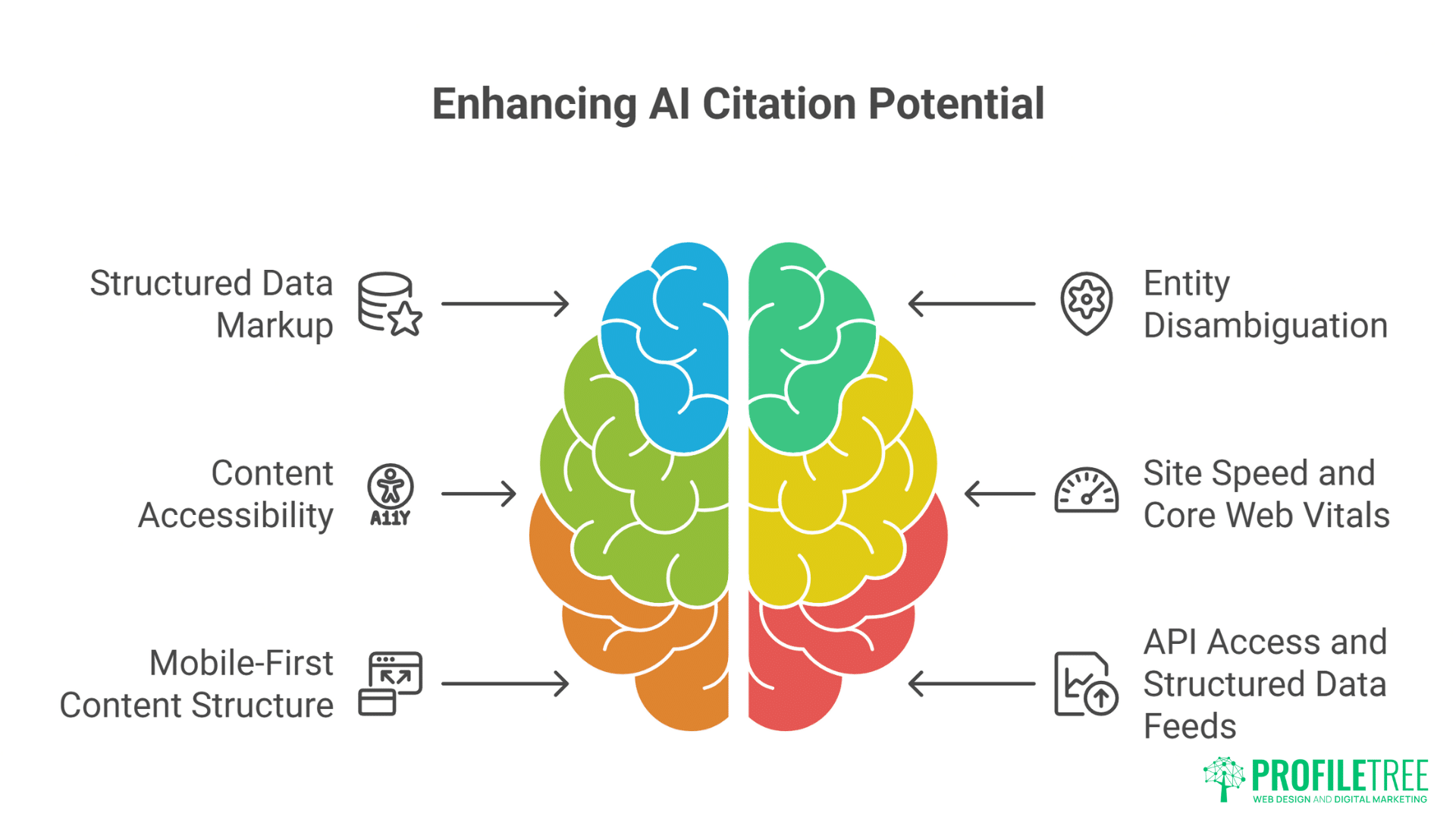
Structured data markup becomes critical for AI interpretation of your content. Schema markup for FAQs, how-tos, products, and organisations helps AI systems understand your content’s meaning and structure, increasing citation likelihood.
Entity disambiguation through consistent NAP (Name, Address, Phone) information and knowledge graph optimisation helps AI systems correctly identify and cite your business. Inconsistent business information across the web confuses AI systems and reduces citation opportunities.
Content accessibility improvements benefit both users and AI systems. Clear heading structures, descriptive alt text, and semantic HTML help AI understand content relationships and extract meaningful information. Accessibility isn’t just ethical – it’s strategically advantageous.
Site speed and Core Web Vitals affect how AI systems crawl and interpret your content. Slow-loading pages might not be fully indexed or understood by AI crawlers operating under time constraints. Technical performance directly impacts citation potential.
Mobile-first content structure acknowledges that many AI systems prioritise mobile versions of content. Ensuring your mobile experience delivers complete information without requiring desktop viewing improves AI citation likelihood.
API access and structured data feeds provide direct content access to AI systems. While not all businesses need APIs, those with frequently updated information benefit from providing structured access methods that bypass traditional crawling.
Creating Shareable Assets
Infographics, data visualisations, and original research create shareable assets that build brand visibility beyond search results. These assets generate backlinks, social shares, and brand mentions that collectively build authority.
Original research and surveys provide unique data that others reference and cite. When your business becomes the source of industry statistics, you build authority that transcends individual search queries. This research investment pays dividends through sustained citations and references.
Interactive tools and calculators provide value that can’t be replicated in search results. Users must visit your site to access these tools, creating zero-click-proof engagement opportunities. Well-designed tools become destination resources that drive direct traffic.
Templates and downloadable resources exchange value for email addresses while building brand affinity. Users who download your resources develop familiarity with your brand that influences future behaviour. These resources continue providing value long after initial download.
Visual content optimised for image search provides alternative discovery paths. As visual search grows, well-optimised images with proper alt text and structured data capture traffic that text-based content might miss. Website design that prioritises visual content supports this strategy.
Case studies and success stories build trust while providing shareable proof points. Detailed explorations of client successes create content that others reference when making purchasing decisions. These narratives resist AI summarisation while building brand credibility.
Voice Search and Conversational AI
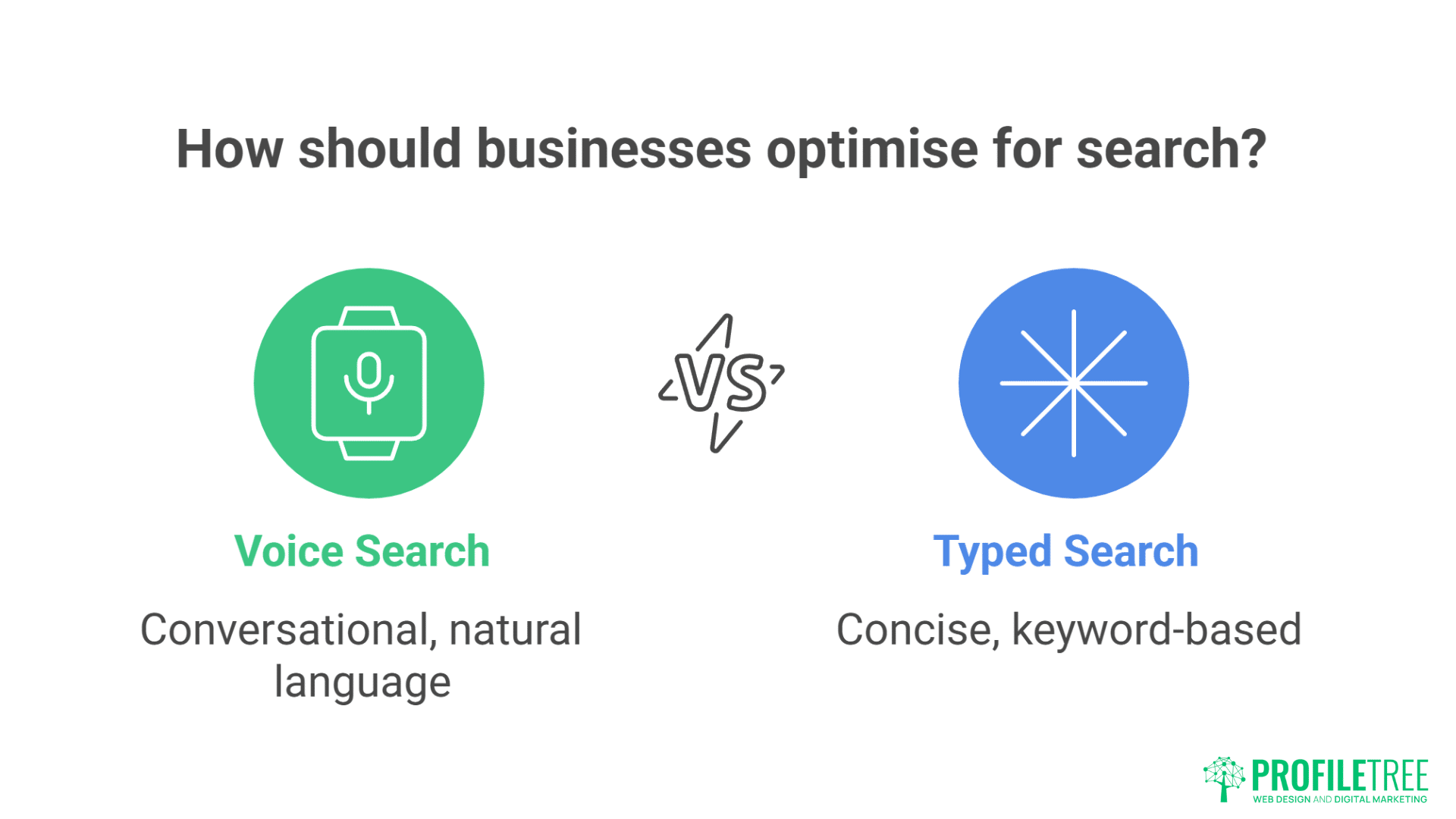
Voice search queries differ fundamentally from typed searches, often being longer and more conversational. Optimising for voice search means understanding natural language patterns and providing direct answers to conversational queries.
Featured snippet optimisation becomes even more critical for voice search, as virtual assistants often read these snippets as answers. Winning featured snippets for voice-friendly queries captures value even when users never see your website.
Local voice search presents unique opportunities for Northern Ireland businesses. Queries like “best web design agency near me” or “Belfast SEO services open now” require specific optimisation strategies combining local SEO with conversational content.
Conversational content that mirrors how people speak naturally performs better in voice search. Writing in a natural, conversational tone while maintaining expertise helps your content align with voice search queries.
FAQ pages optimised for voice search should anticipate conversational questions and provide concise, speakable answers. Each answer should stand alone as a complete response that makes sense when read aloud by a virtual assistant.
AI chatbot integration on your website provides conversational experiences that mirror voice search interactions. These chatbots can capture leads and provide information even when organic search traffic decreases.
Building Community and Direct Relationships
Community building creates loyal audiences that transcend search dependence. Whether through social media groups, forums, or branded communities, direct relationships provide sustainable traffic sources.
User-generated content from community members provides authentic social proof while reducing content creation burden. Reviews, testimonials, and community discussions create unique content that AI can’t easily replicate.
Exclusive community benefits encourage membership and engagement. Early access to content, member-only resources, or community events provide value beyond what search results can offer. This exclusivity drives direct visits and sustained engagement.
Community feedback loops help you understand actual user needs rather than relying solely on keyword research. Direct communication with your audience reveals content opportunities and service improvements that search data might miss.
Referral programmes turn community members into brand advocates. When satisfied customers actively recommend your services, you build traffic sources immune to algorithm changes. Word-of-mouth remains powerful despite technological advancement.
Community-generated questions inform content strategy while building engagement. When community members ask questions, you create content that genuinely serves their needs while fostering continued participation.
Future-Proofing Your SEO Strategy
Adaptability becomes more important than any specific tactic as search continues evolving. Building flexible strategies that can pivot as AI capabilities advance ensures long-term success regardless of specific changes.
Investment in brand building pays dividends regardless of how search evolves. Strong brands survive platform changes, algorithm updates, and technological shifts. This brand investment might seem less measurable than traditional SEO metrics but provides lasting value.
First-party data collection becomes increasingly valuable as third-party cookies disappear and privacy regulations tighten. Building direct relationships with customers provides insights and targeting capabilities that transcend platform-specific limitations.
Content expertise depth matters more than keyword optimisation breadth. Becoming the recognised authority in narrow niches builds defensible positions that AI systems must reference. This expertise focus requires saying no to broader opportunities to maintain authority depth.
Platform diversification spreads risk while maximising opportunity. Presence across multiple platforms ensures no single algorithm change devastates your visibility. This diversification requires resource investment but provides stability.
AI training for marketing teams ensures your organisation can adapt as technology evolves. Understanding AI capabilities and limitations helps you make strategic decisions about where to invest effort. Check out ProfileTree’s comprehensive guide to future-proofing your business with AI for practical implementation strategies.
Continuous testing and iteration reveal what works in your specific context. What succeeds for Belfast retailers might fail for London consultancies. Testing different approaches and measuring results guides strategy refinement.
FAQs
What exactly are zero-click searches and why should businesses care?
Zero-click searches occur when users find answers directly in search results without clicking any links. Businesses should care because over 65% of searches now end this way, fundamentally changing how SEO delivers value from pure traffic generation to brand visibility and authority building.
How can small businesses compete when AI summaries dominate search results?
Small businesses can compete by focusing on local SEO, building strong brand recognition, creating in-depth expertise content that AI systems must reference, and developing direct relationships with customers through email lists and communities that bypass search entirely.
Does traditional SEO still matter in a zero-click world?
Yes, traditional SEO remains foundational but requires evolved thinking. Good technical SEO helps AI systems understand and cite your content, while strategic keyword targeting ensures visibility in both traditional and AI-generated results. The difference lies in measuring success through impressions and brand impact rather than just clicks.
What content types perform best for earning AI citations?
Structured content with clear answers performs best: FAQ formats, numbered lists, statistical claims with sources, and definitive explanations of specific topics. Content should prioritise clarity and directness over engagement tricks, with key information appearing early in the text.
How long before zero-click searches completely eliminate website traffic?
Complete traffic elimination is unlikely. Transactional searches, complex research needs, and detailed content consumption still require website visits. However, businesses should expect continued erosion of informational query traffic and plan accordingly through traffic diversification.
Should businesses stop investing in SEO given these changes?
No, but SEO investment should evolve. Modern SEO encompasses brand building, entity optimisation, featured snippet targeting, and AI citation optimisation alongside traditional ranking factors. The investment focus shifts from pure traffic generation to comprehensive visibility strategies.
Taking Action in the Zero-Click Era
Success in zero-click SEO requires fundamental strategy shifts rather than tactical adjustments. Businesses must accept that visibility without clicks has value, that brand building matters more than ever, and that owned audiences provide crucial algorithm independence.
Start by auditing your current traffic sources to understand zero-click impact on your business. Identify which queries drive clicks versus impressions, then adjust content strategy accordingly. Build measurement frameworks that capture total visibility impact rather than just click-through metrics.
Invest in brand building through consistent messaging, thought leadership, and entity optimisation. Your brand becomes your moat against algorithmic changes and zero-click erosion. This investment might not show immediate ROI but provides long-term protection.
Develop owned audiences through email lists, communities, and direct relationships. Every subscriber represents a connection independent of search algorithms. Prioritise list building alongside traditional SEO efforts.
For expert guidance navigating these changes, ProfileTree’s comprehensive SEO services help Northern Ireland businesses adapt to the zero-click reality while maintaining sustainable growth. Our Belfast-based team understands local market dynamics while applying cutting-edge strategies that work in an AI-dominated search landscape.
The zero-click era isn’t ending SEO – it’s forcing evolution toward more sophisticated, multi-channel strategies that build lasting business value beyond simple traffic metrics.