
Starting an Accounting Business from Home: A UK Roadmap
Table of Contents
Running an accounting business from home is one of the most practical routes into self-employment for qualified finance professionals in the UK. The overhead is low, the demand is consistent, and the shift to cloud-based software has made it entirely feasible to serve clients professionally without a high-street office. What separates the practices that grow quickly from those that stall is rarely technical ability. It is almost always visible. Getting found online, presenting professionally, and converting enquiries into paying clients are the challenges that no accounting qualification prepares you for, and that most startup guides fail to address properly.
This guide works through the full process of starting an accounting business from home: qualifications, legal requirements, tech setup, and the digital presence you need to compete with established local firms from day one.
Step 1: Qualifications and Legal Requirements
Before you start an accounting business from home, your qualification status determines what services you can legally offer and how you present yourself to clients.
UK Accounting Bodies and Practising Certificates
In the UK, the main professional bodies for practising accountants are the Institute of Chartered Accountants in England and Wales (ICAEW), the Association of Chartered Certified Accountants (ACCA), and the Chartered Institute of Management Accountants (CIMA). For those at an earlier stage, the Association of Accounting Technicians (AAT) offers a recognised route into bookkeeping and some accounting services.
Each body has its own membership tiers, examination requirements, and continuing professional development (CPD) obligations. If you intend to offer services to the public, most bodies require you to hold a practising certificate, which is issued separately from membership and typically requires a minimum period of supervised experience. Operating without one where it is required is a regulatory breach, so confirm your position with your body before taking on clients.
It is worth noting that in the UK, the title “accountant” is not legally protected in the way “solicitor” or “doctor” is. Technically, anyone can call themselves an accountant. Without membership of a recognised body, however, you cannot obtain professional indemnity insurance through the body’s scheme, and many business clients will not engage you without it. For anyone setting up an accounting business from home, professional body membership is the practical foundation on which everything else builds.
Bookkeeping vs Accounting: Choosing Your Scope
If you are at an earlier stage of qualification, starting with bookkeeping services is a practical entry point into running an accounting business from home. Bookkeeping does not require a practising certificate from a professional body in the way that audit or tax advisory work does, though you will still need to register for Anti-Money Laundering supervision (covered in the next section). Many home-based practices begin with bookkeeping and payroll, then broaden their service offering as qualifications progress.
Choosing your scope early also shapes your marketing. An accounting business from home that specialises in one area — sole traders, e-commerce sellers, or construction firms, for example — is easier to position online than a generalist practice trying to appeal to everyone.
Step 2: Compliance — HMRC, AML, and Insurance
This is the section most startup guides skim over, and it is the one that creates the most problems for new home-based practices in the UK. Getting the compliance right before you take on your first client protects both your business and your clients.
Anti-Money Laundering Supervision
Under the Money Laundering Regulations 2017, all accountants and bookkeepers operating an accounting business from home in the UK must register with an approved supervisory body. If you are a member of ACCA, ICAEW, or another recognised professional body, your supervision is typically provided through them. If you are not a member of such a body, you must register directly with HMRC for AML supervision before you begin trading. Operating without supervision is a criminal offence. The HMRC registration process involves an application, a fit-and-proper person assessment, and an annual fee.
HMRC Registration and Business Structure
Most home-based practices start as sole traders, which requires registration with HMRC for self-assessment. If you intend to operate as a limited company, you will need to incorporate through Companies House. One practical consideration for anyone running an accounting business from home as a limited company is that Companies House requires a registered office address, which becomes public. Many home-based practitioners use a registered office service rather than their home address to maintain privacy. This also prevents your home address from appearing on Google Maps when you set up a Google Business Profile.
Professional Indemnity Insurance
Professional indemnity insurance (PII) is not optional for any accounting business from home that offers services to the public. It protects you if a client suffers a financial loss and attributes it to your advice or an error in your work. Most professional bodies require PII as a condition of holding a practising certificate. The level of cover required varies, but for a sole practitioner working with small business clients, policies typically start from several hundred pounds per year. Public liability insurance is also worth considering if any clients visit your home.
GDPR and Data Handling
Accountants handle significant volumes of personal and financial data. When you run an accounting business from home, your data handling obligations are identical to those of any other practice. Under UK GDPR, you are a data controller and must register with the Information Commissioner’s Office (ICO) unless you qualify for an exemption. You will need a privacy policy, a data retention schedule, and secure systems for storing client documents. Cloud-based accounting software with strong access controls goes a long way toward meeting these requirements, but the policy documentation is your responsibility.
Step 3: Tech Stack for a Home-Based Accounting Practice
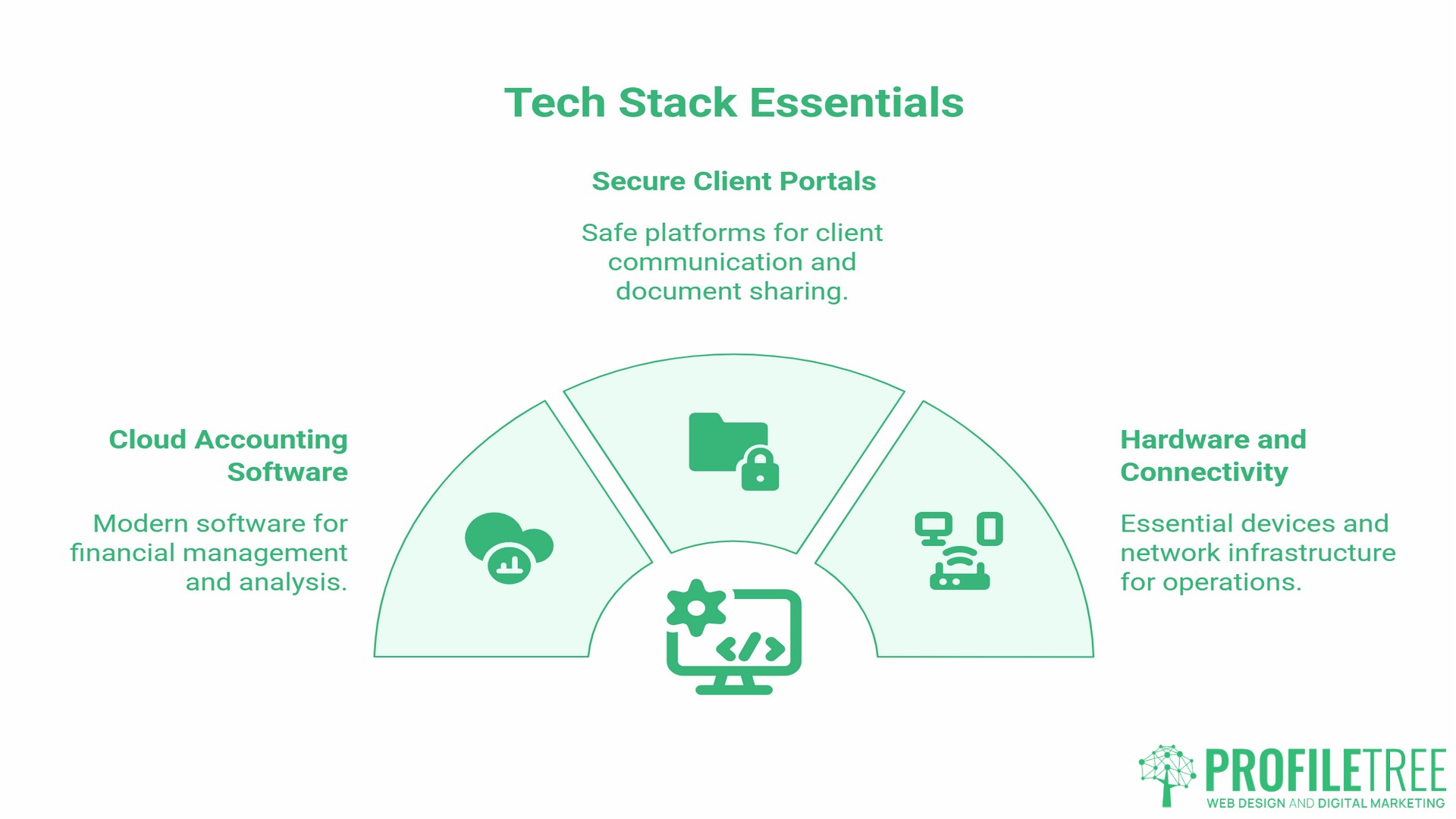
The right technology removes the friction between you and your clients and presents your accounting business from home professionally, regardless of where you are based.
Cloud Accounting Software
The three platforms that dominate the UK market for small business accounting are Xero, QuickBooks, and Sage. Each has a different pricing structure, interface, and integration ecosystem. Xero is widely favoured by practices working with small business clients for its clean interface and bank feed reliability. QuickBooks has a strong hold among sole traders and freelancers. Sage has broader penetration among mid-sized businesses and is the platform most commonly encountered if you work with clients who use legacy desktop software. Most platforms offer partner programmes for accountants that provide discounted or free access to the software in exchange for managing client accounts on their platform.
Secure Client Portals and Document Management
Exchanging sensitive financial documents by email is a risk and a poor client experience. For an accounting business from home, a dedicated client portal is not a luxury — it is a trust signal. Clients can upload documents, view reports, and sign off on returns securely, without anything sitting in an email inbox. Several portal platforms integrate directly with cloud accounting software. Setting this up from the start, rather than retrofitting it later, signals professionalism from the first client interaction.
Hardware and Connectivity
A reliable broadband connection, a second monitor, and a dedicated printer/scanner are the practical baseline for any accounting business from home. If you plan to conduct video calls with clients regularly, a decent webcam and a neutral background matter more than most new practitioners expect. A separate business phone number, even a virtual one through a VoIP provider, keeps personal and professional communications distinct from day one.
| Essential | Estimated Year 1 Cost |
|---|---|
| AML supervision (HMRC, if applicable) | £300 to £400 |
| Professional indemnity insurance | £400 to £800 |
| Cloud accounting software (partner plan) | £0 to £300 |
| Secure client portal | £100 to £300 |
| ICO registration | £40 per year |
| Registered office service (if limited company) | £50 to £150 |
These are indicative figures for planning purposes. Costs vary depending on your business structure, insurance provider, and software choices.
Step 4: Building a Professional Online Presence
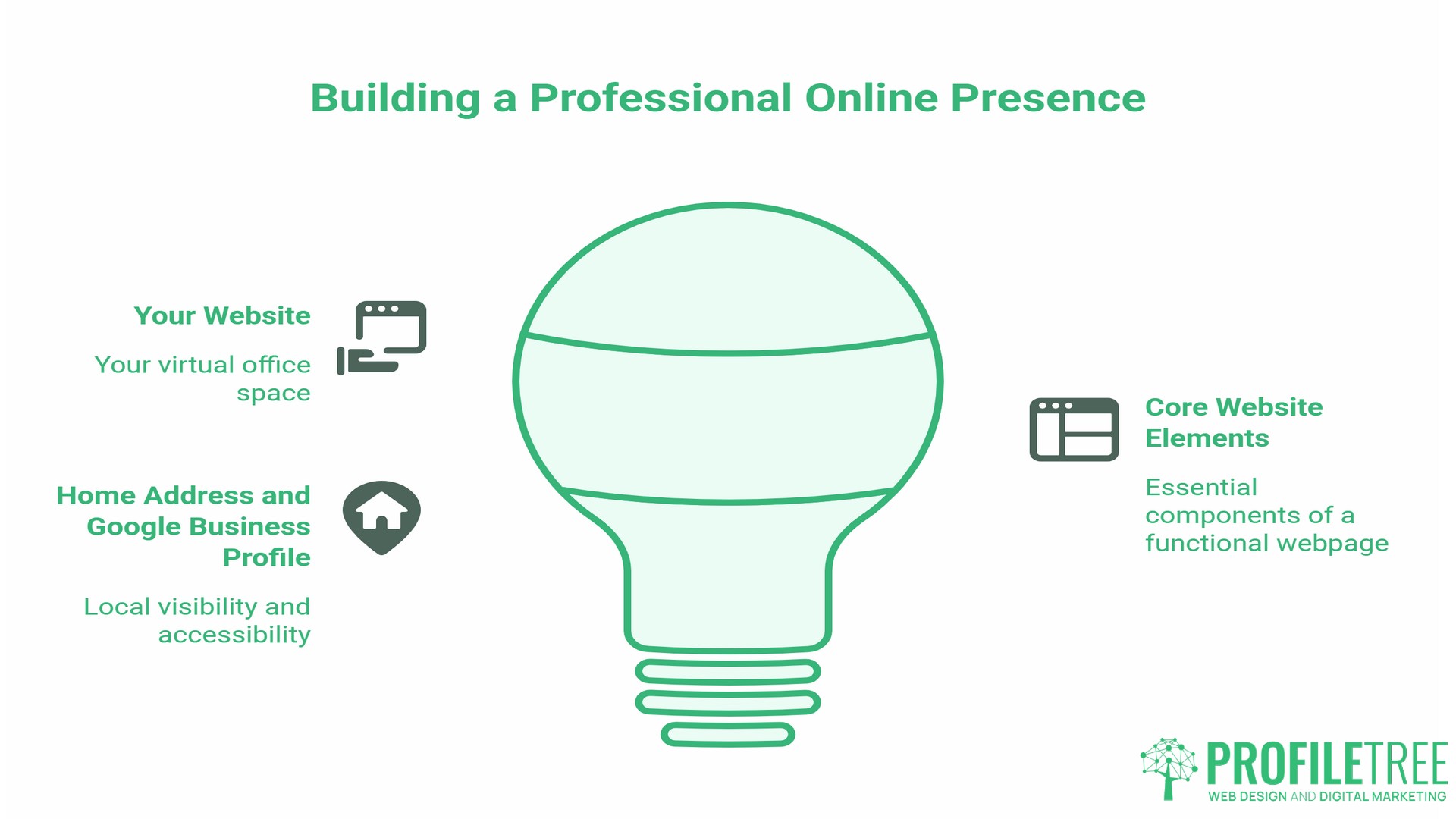
This is where most guides on how to start an accounting business from home fall short. They treat the website as an afterthought — something to set up once you have clients. In practice, it is the first thing a prospective client checks, and it is the primary signal they use to decide whether a home-based practice is credible enough to trust with their finances.
Why Your Website Does the Work Your Office Used to Do
A client walking into a high-street accountancy firm gets immediate trust signals: a reception desk, framed qualifications on the wall, and professional staff. When you run an accounting business from home, your website carries every one of those signals instead. A poorly designed or outdated site does not just fail to convert visitors; it actively suggests the practice is amateur or unreliable. The design, copy, and structure of the site need to communicate competence before the visitor reads a single word.
“When home-based accounting firms come to us for a website, the brief is always the same — make it look like we have been doing this for twenty years,” says Ciaran Connolly, founder of Belfast-based digital agency ProfileTree. “The answer is always a clean, professional design with clear service descriptions, client testimonials, and an easy path to a discovery call. That combination closes the credibility gap between a home office and a high-street firm.”
Core Website Elements That Convert Enquiries
Your website needs a homepage that states clearly what you do, who you serve, and where you are based. Service pages covering each distinct offering — bookkeeping, payroll, tax returns, management accounts — help Google understand your scope and give prospective clients a clear picture of what to expect. A professional bio page with your qualifications, professional body memberships, and a photograph builds the personal trust that accounting relationships depend on. Client testimonials, where you have permission to use them, carry significant weight. A clear contact page with a call-booking option removes friction from the enquiry process.
ProfileTree works with professional services businesses across Northern Ireland, Ireland, and the UK to build websites that present them credibly and convert visitors into clients. For anyone starting an accounting business from home, getting the website right early rather than patching it together later is one of the highest-return decisions in the first year. You can explore ProfileTree’s web design services for small businesses to understand what a professionally built site involves.
Your Home Address and Google Business Profile
If you have used a registered office service, you can list that address on your Google Business Profile. If not, and you do not want your home address to be public, Google allows service-area businesses to hide their address and display only the areas they serve. For most people running an accounting business from home and serving local small business clients, a Google Business Profile is one of the most cost-effective tools available. A complete, verified profile with a professional description and genuine client reviews directly affects whether you appear in local search results.
Step 5: Getting Your First Clients: A Digital-First Approach
Word of mouth is how most new home-based accounting practices hope to grow. It is not a strategy; it is a hope. For a practice starting from scratch, without an existing network of former colleagues or clients who know you personally, referrals alone produce slow and unpredictable growth. A digital-first approach gives your accounting business from home a repeatable client acquisition system that works in parallel with referrals.
Local SEO for Accountants Without a Physical Office
Local SEO is the process of appearing in Google search results when someone in your area searches for an accountant or bookkeeper. For an accounting business from home, key target keywords include “accountant for small businesses Belfast,” “bookkeeper [town name],” or “self-assessment tax return [area].” These are queries with clear commercial intent from people actively looking to hire.
A well-structured website with location-specific service pages, a complete Google Business Profile, and consistent business details across online directories forms the foundation of local SEO. ProfileTree’s SEO services support home-based professional services businesses across the UK and Ireland in building this foundation, particularly in the early months when organic visibility matters most and paid advertising budgets are typically limited.
Content Marketing as a Client Acquisition Tool
Publishing useful content on your website, a guide to self-assessment for freelancers, an explanation of what records small businesses need to keep, and a summary of current HMRC reporting thresholds, does two things simultaneously. It demonstrates your expertise to prospective clients who find the content through search, and it builds the topical authority that search engines reward with higher rankings over time. An accounting business from home that publishes one well-written, genuinely useful article per month will, within a year, have a body of content that generates enquiries independently of any active marketing effort. ProfileTree’s content marketing services can support this process for practices that want professional help building their editorial presence.
LinkedIn and Professional Networking
For accountants targeting small business owners and self-employed professionals, LinkedIn remains one of the most effective direct outreach channels. A complete, professional profile with clear service descriptions and genuine recommendations from past colleagues or clients provides a second online presence that works alongside your website. Connecting with local business owners, commenting substantively on posts about business finances, and sharing brief, practical insights positions you as a knowledgeable professional in your local network before they need an accountant.
Choosing Your Niche to Accelerate Growth
Starting an accounting business from home with a clear niche almost always produces faster growth than offering everything to everyone. A specialism in freelancers and contractors, e-commerce businesses, hospitality, or construction gives you a specific audience to target, a focused message to communicate, and a stronger basis for referrals within a sector. It also makes your content marketing more focused and therefore more effective. You are not competing with every generalist accountant in your area; you are the go-to practice for a specific type of client.
Step 6: Managing Growth Beyond the Spare Room
Starting an accounting business from home does not mean staying at home indefinitely. Many successful practices grow into hybrid models, using co-working spaces or serviced offices for client meetings while maintaining a home base for day-to-day work. This preserves the cost advantage of a home office while addressing clients’ preference for meeting in a professional environment.
As the practice grows, the administrative and marketing load grows with it. Digital training through ProfileTree Academy equips home-based business owners with the skills to manage their online presence more effectively, covering topics from website content management to social media strategy and basic SEO. This reduces reliance on external support and keeps costs manageable during the growth phase.
The point at which outsourcing your digital marketing makes financial sense varies by practice. For most sole practitioners, it becomes relevant when time spent on marketing is consistently displacing billable work. At that point, the cost of professional support is offset by recovered capacity.
Conclusion
Starting an accounting business from home in the UK is genuinely achievable for qualified professionals who treat the digital side of the business with the same rigour they apply to the technical side. Qualifications and compliance form the foundation. A professional website, a visible local presence, and a content strategy that demonstrates expertise are what turn that foundation into a practice that grows. If you are building your accounting business from home and want support with web design, SEO, or digital marketing, get in touch with the ProfileTree team to discuss what the right setup looks like for your practice.
FAQ
Do I need a licence to practise accounting from home in the UK?
The title “accountant” is not legally protected in the UK, so there is no single licence required. If you are a member of a professional body such as ACCA or ICAEW, you will need a practising certificate from that body to offer public services. All home-based accountants and bookkeepers must also register for Anti-Money Laundering supervision, either through their professional body or directly with HMRC.
What qualifications do I need to start an accounting business in the UK?
The most widely recognised qualifications are from ACCA, ICAEW, CIMA, and AAT. The right qualification depends on the services you plan to offer and the clients you want to work with. AAT is a practical entry point for bookkeeping; ACCA and ICAEW are required for more complex advisory and audit work. All require ongoing CPD to maintain an active status.
How much does it cost to start an accounting business from home?
Year one costs for a sole practitioner typically include AML supervision fees (£300 to £400 if registering directly with HMRC), professional indemnity insurance (£400 to £800), cloud accounting software, ICO registration, and website costs. A realistic budget for the non-software setup costs is £1,000 to £2,000 in year one, depending on business structure and the level of professional support you use.
Can I use my home address on my accounting business website?
You can, but many home-based practitioners choose not to for privacy reasons. If you operate as a limited company, your registered office address appears on Companies House and is public. A registered office service lets you use an alternative address. For your Google Business Profile, you can display a service area rather than a specific address if you do not have commercial premises.
How do I get my first accounting clients?
The most reliable early strategies combine local SEO, LinkedIn outreach to your existing professional network, and referrals from former colleagues or employers. A professional website with clear service descriptions and a simple contact process makes every one of those channels more effective by giving interested parties somewhere credible to land.
What insurance do I need for a home-based accounting business?
Professional indemnity insurance is the primary requirement and is mandatory if you hold a practising certificate from a professional body. Public liability insurance is worth considering if clients visit your home. If you employ anyone, employers’ liability insurance is a legal requirement.
Is it legal to run an accounting practice without ACCA or ICAEW membership?
Yes, in the sense that the title is not legally protected. Without membership of a recognised body, however, you cannot obtain a practising certificate through them, your access to professional indemnity insurance schemes is more limited, and many business clients will not engage a practice without recognised credentials. AML supervision remains a legal requirement regardless of professional body membership.