
What Is Business Level Strategy? Discover 3 Key Types
Table of Contents
What is a business-level strategy? Coming up with a big goal or mission is easy, but figuring out the concrete steps you need to take to achieve this is more complicated.
This is where business-level strategy is vital. For SMEs across Belfast, Northern Ireland, and the wider UK, it’s the difference between scattered marketing efforts and a coherent approach that builds genuine competitive advantage.
Companies are very good at setting big goals or missions. The problems start to happen when they actually try to achieve them. That’s where the details can come under criticism, cost more than expected, or trigger new surprises nobody was expecting.
A business-level strategy is a key step in outlining the phases and steps a business will take to regularly achieve its goals. Without such a strategy, frustration multiplies and company energy gets misdirected.
Understanding what a business-level strategy is and why it matters avoids this frustration and keeps your team focused on actions that deliver measurable progress.
What Is a Business Level Strategy?
It’s easy to confuse a business-level strategy with an overall company strategy. That’s because they both involve similar planning exercises and seem to be chasing the same results.
Many businesses regularly implement a business-level strategy and mistakenly label it the company strategy. This ends up confusing employees entirely regarding what they are supposed to be doing at any given time.
Where a company strategy involves the overall organisational direction for how the company meets its mission, the business-level strategy is focused on key elements of revenue generation.
Business level strategy answers these questions:
- How to attain and meet the needs of customers
- What goods or services are the ideal choices that meet customer needs
- How to generate profit consistently
- How to grow operating profits once they are obtained regularly
- Improving your position against competitors
- How to use technology and market behaviour for competitive advantage
For digital agencies and SMEs, this translates directly into decisions about web design approach, SEO priorities, content marketing investment, and whether to adopt AI automation tools.
The Strategic Hierarchy: Corporate vs Business vs Functional Strategy
Business-level strategy sits in the middle of the three strategic layers:
Corporate strategy (at the top level) decides which markets or industries to compete in. For example, a Belfast manufacturing firm deciding whether to expand into the Republic of Ireland market or launch a new product line.
Business-level strategy (middle level) determines how to compete within the chosen markets. That same manufacturer is choosing between competing on price (cost leadership), unique engineering quality (differentiation), or specialising in pharmaceutical-sector work (focus).
The functional strategy (bottom level) covers department-specific plans—marketing, HR, and finance—that support the business-level approach.
Most confusion happens when businesses treat functional decisions (like “we need a new website”) as strategic ones, without first establishing whether that website should emphasise low pricing, premium quality, or specialist expertise.
Business Level Strategy Examples for Digital Agencies
For Belfast-based businesses and UK SMEs working with digital agencies, your business-level strategy shapes every tactical decision:
Cost leadership example: A Northern Ireland plumbing company chooses affordable WordPress web design with solid SEO fundamentals rather than custom development. This supports price competition while maintaining professional visibility through local search. Their digital strategy prioritises cost-efficient solutions that deliver essential functionality.
Differentiation example: A Derry manufacturing firm invests in video production to showcase their unique engineering processes. While competitors rely on static product pages, video content demonstrates expertise and builds brand authority. Higher investment in video marketing supports premium pricing by demonstrating superior capabilities.
Focus example: A Belfast accountancy practice specialising in hospitality businesses builds deep content clusters around restaurant compliance, pub licensing, and hotel financial reporting. Rather than broad “accounting services” SEO, they target specific, high-intent searches in their niche, delivering qualified leads rather than price-shopping enquiries.
The Strategic Hierarchy in Digital Terms
| Strategy Level | Question Answered | Digital Example |
|---|---|---|
| Corporate | Which markets should we compete in? | “Should we offer services UK-wide or focus on Northern Ireland?” |
| Business | How do we compete in those markets? | “Do we compete on price, quality, or specialisation?” |
| Functional | What specific actions support our approach? | “SEO targeting cost-conscious searches vs premium brand searches” |
Understanding this hierarchy prevents digital marketing decisions from being made in isolation. Your SEO strategy, content marketing approach, and web design choices should all reinforce the same competitive position.
The 3 Types of Business Level Strategy
Understanding these strategies is critical to making coherent decisions about your digital presence and marketing investment.
1. Cost Leadership Strategy
Cost leadership means reducing operating costs relative to competitors, enabling you to charge lower prices while maintaining acceptable margins.
For Northern Ireland SMEs, cost leadership in 2026 isn’t just about cheap manufacturing—it’s about operational efficiency through technology. AI automation, streamlined processes, and cost-effective digital tools create sustainable cost advantages.
What Does Cost Leadership Mean for Digital Services?
A Belfast retailer pursuing cost leadership might choose:
- Template-based web design rather than custom builds
- Focused local SEO rather than national campaigns
- Social media marketing they managed in-house rather than paid advertising
- WordPress hosting rather than enterprise solutions
This isn’t about cutting corners—it’s about maximising efficiency so competitive pricing becomes possible without sacrificing quality.
ProfileTree’s website development service helps SMEs identify where template solutions deliver 90% of the custom functionality at 40% of the cost, enabling sustainable cost leadership.
Cost Leadership Example: Aldi and Lidl
German discount supermarkets Aldi and Lidl dominate UK cost leadership. They achieve this through:
- Limited product ranges (1,500 items vs 30,000+ in traditional supermarkets)
- Own-brand focus reduces supplier negotiations
- Efficient store layouts minimise staff requirements
- Technology investment in inventory and logistics systems
Their digital presence reflects this—functional websites focusing on weekly offers and store locations rather than extensive online shopping experiences. The cost strategy shapes every customer touchpoint.
Technology’s Role in Modern Cost Leadership
Competitors treat cost leadership as a manufacturing concept. In 2026, technology fundamentally changes how businesses achieve cost advantages:
AI automation handles routine customer enquiries through chatbots, reducing support staff requirements while maintaining 24/7 availability. A Belfast professional services firm using AI chatbots can compete with larger practices on responsiveness without expanding its team.
Process automation through tools like Zapier connects systems that previously required manual data entry. An estate agent in Northern Ireland automating property listing distribution across platforms saves 10+ hours weekly—time redirected to client service.
Cloud-based tools eliminate expensive server infrastructure. SMEs access enterprise-grade software through subscription services, turning capital expenses into manageable operational costs.
ProfileTree’s AI training programmes help Northern Ireland businesses identify practical automation opportunities that reduce costs without requiring technical expertise or enterprise budgets.
2. Differentiation Strategy
Differentiation means competing on unique features, superior quality, or brand perception rather than price. Customers pay premium prices because they perceive genuine additional value.
For UK SMEs, differentiation often comes through expertise, personalised service, or specialised knowledge that larger competitors can’t replicate economically.
Product Differentiation in Digital Services
Differentiation in digital terms might include:
- Video marketing that showcases processes competitors don’t explain
- In-depth content demonstrating expertise beyond surface-level advice
- Custom web development creating unique functionality that competitors lack
- Personal branding through thought leadership and expert positioning
The key is charging more for distinctive features than those features cost to create. A manufacturing firm investing £8,000 in video production must generate additional revenue exceeding that investment through premium pricing or increased conversion rates.
“Most differentiation strategies fail because businesses invest in features customers don’t value enough to pay for,” says Ciaran Connolly, founder of ProfileTree. “For Northern Ireland SMEs, successful differentiation usually comes from demonstrating expertise in ways that build trust—detailed guides, case study videos, transparent processes—rather than superficial branding exercises.”
Examples of Differentiation Strategy
Dyson: Competes on engineering innovation and design rather than price. Vacuum cleaners costing £400+ succeed because patents, performance testing, and distinctive aesthetics create perceived value justifying premium pricing. Their digital presence emphasises R&D investment and engineering detail.
Waitrose: Differentiates through quality perception, customer service, and brand association with premium lifestyles. Prices average 15-20% above competitors, but target customers value the shopping experience, product sourcing transparency, and ethical positioning.
Monzo Bank: Digital-native bank differentiating through user experience rather than traditional banking features. Real-time notifications, spending insights, and app design foster loyalty despite offering products similar to competitors’. Technology enables differentiation without the need for physical infrastructure costs.
Differentiation for Belfast SMEs
A Northern Ireland engineering firm competing for UK contracts faces established competitors with longer track records. Differentiation through video case studies showing actual projects, detailed process documentation, and responsive communication creates competitive advantages that pure price competition wouldn’t support.
Educational Voice (ProfileTree’s animation studio) works with manufacturers that differentiate through explainer videos that demonstrate complex processes. While the initial investment exceeds competitors’ static websites, video content provides shareable assets that build authority and support premium positioning.
Effects of Product Differentiation
Successful differentiation delivers:
- Higher margins through premium pricing
- Customer loyalty reduces acquisition costs over time
- Reduced price sensitivity as customers value unique features
- Competitive protection if differentiation is difficult to replicate
The risk is investing in features customers don’t value sufficiently. Market research, customer feedback, and testing different approaches help identify genuine differentiation opportunities versus expensive distractions.
3. Focus Strategy
A focus strategy combines elements of cost leadership and differentiation, but targets a specific market segment rather than the entire industry.
A firm pursuing a focus strategy serves a particular niche more effectively than broadly-positioned competitors. They tailor everything—from web design messaging to SEO keyword targeting—for that specific audience.
Focus Strategy for UK SMEs
Focus strategies work particularly well for Northern Ireland and UK SMEs who can’t match larger competitors’ resources but can dominate specific niches:
Geographic focus: A web design agency specialising exclusively in Belfast retail businesses understands local market dynamics, typical budgets, and regulatory requirements better than national agencies.
Industry focus: An accountancy practice serving only hospitality businesses develops expertise in licensing, seasonal cash flow, and sector-specific tax regulations that generalist accountants can’t match.
Service focus: A digital marketing consultant specialising exclusively in Google Business Profile optimisation for service businesses develops depth of knowledge that broad-service agencies can’t replicate.
Focused Cost Leadership vs Focused Differentiation
Focused cost leadership targets a narrow segment with cost advantages. Example: A Belfast commercial photographer offering fixed-price packages exclusively for restaurants achieves efficiency through standardised processes, purpose-built equipment, and deep knowledge of exactly what restaurants need. Lower costs than generalist photographers in that niche.
Focused differentiation targets a narrow segment with premium, specialised offerings. Example: A web development agency serving only medical practices charges premium rates but offers expertise in GDPR compliance, medical sector design conventions, and appointment integration that general web agencies don’t.
Focus Strategy in Practice
Firms that succeed with focus strategies tailor their product development strengths to relatively narrow segments. They target market niches where:
- Competition is weakest or least attentive
- Specific needs aren’t well-served by broad-market competitors
- They can achieve sustainable competitive advantages through specialisation
For digital agencies, a focus strategy often means superior content targeting. Rather than competing for “SEO services” (highly competitive), a focused agency targets “SEO for Northern Ireland manufacturers” or “local search for Belfast hospitality businesses”—specific terms with commercial intent but manageable competition.
ProfileTree’s content marketing service helps SMEs identify focus opportunities by analysing search patterns, competition levels, and commercial intent. Often, the highest ROI comes from dominating narrow niches rather than fighting for broad, competitive terms.
Choosing the Right Business Level Strategy for Your Business
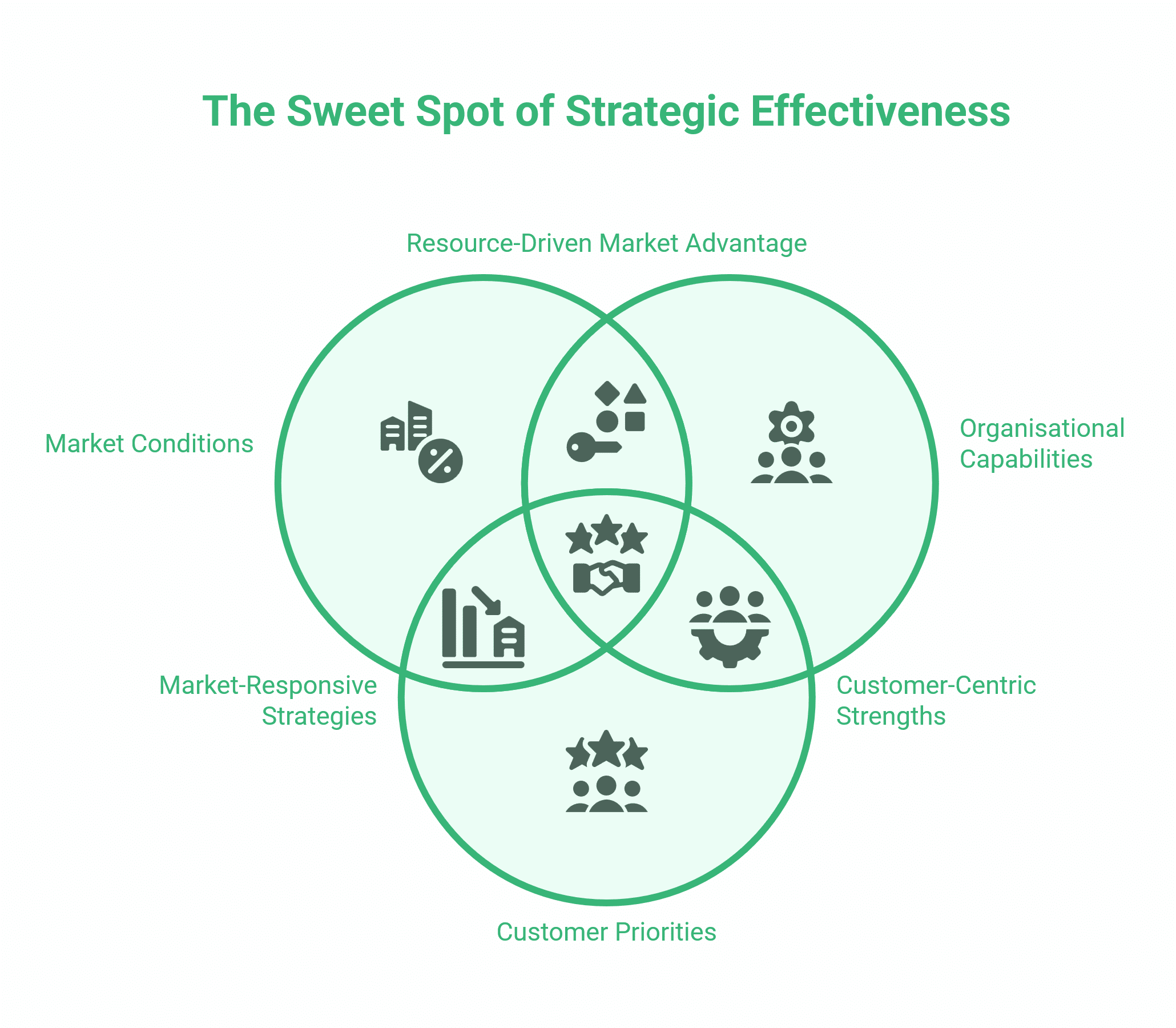
No single “best” strategy exists—only what fits your market conditions, capabilities, and customer priorities.
Factors Influencing Your Strategic Choice
Customer price sensitivity: If your target customers primarily make decisions on price (commodity markets, government contracts with defined budgets), cost leadership or focused cost leadership makes sense. If customers value expertise, service quality, or unique features, differentiation becomes viable.
Your sustainable capabilities: Choose strategies you can maintain long-term. A Belfast design agency claiming differentiation through cutting-edge creativity needs to consistently deliver innovative work—if one talented designer leaves, the strategy fails. Choose positions you can defend.
Market saturation: Highly competitive markets with established players often make broad strategies difficult to execute. Focus strategies targeting underserved niches provide entry points. Once established in a niche, expansion becomes possible.
Technology capabilities: Modern cost leadership increasingly requires technology adoption—AI automation, process optimisation, cloud infrastructure. If your team lacks technical capability or the willingness to adopt new tools, differentiation through personal service might fit better.
Investment capacity: Differentiation sometimes requires upfront investment—such as video production, custom web development, or extensive content creation—before returns materialise. Cost leadership might offer faster returns but requires sustained operational discipline.
The “Stuck in the Middle” Danger
The most common strategic failure is being “stuck in the middle”—no clear cost advantage, no meaningful differentiation, no focused expertise. You compete on nothing distinctive.
Warning signs you’re stuck in the middle:
- Competing primarily on price despite not having the lowest costs
- Claiming “quality” without specific features that customers value enough to pay for
- Offering “everything” to “everyone” rather than excelling at specific things
- Losing customers both to cheaper competitors and premium alternatives
- Unclear elevator pitch—struggling to explain your competitive advantage concisely
Example of stuck in the middle: A Belfast web design agency charging mid-range prices, using similar templates to cheaper competitors, but without the premium branding or specialised expertise of higher-priced alternatives. Customers can’t identify why they’d choose this agency over clearly cheaper or clearly better options.
Recovery from this position requires decisive strategic choice—either reduce costs significantly and compete on value, develop genuinely differentiating features, or focus on a specific niche you can dominate.
Business Level Strategy in the Digital Age
Digital transformation blurs traditional strategy boundaries. Software-as-a-service businesses deliver premium experiences at low costs. E-commerce enables focused targeting previously impossible.
How Digital Changes Strategic Options
Cost leadership through technology: A small Belfast accountancy practice using AI-powered bookkeeping automation achieves lower costs, enabling it to underprice larger traditional firms while maintaining quality. Technology creates scalability without proportional cost increases.
Differentiation through content: A Northern Ireland manufacturing firm publishes detailed technical guides, video walkthroughs of its processes, and industry analysis. This content marketing builds authority and trust—differentiation achieved through consistent content investment rather than product features alone.
Hyper-focused targeting: Digital marketing enables precise niche targeting. A web design agency can focus exclusively on “Belfast restaurant websites” with content and SEO specifically targeting that audience—a focus strategy executed through digital channels.
Hybrid approaches: Digital tools enable what Porter called “integrated” strategies—delivering both cost efficiency and differentiation. Monzo provides a premium user experience (differentiation) while operating with lower costs than traditional banks (cost leadership). Technology makes previously contradictory positions achievable.
Strategic Implementation Through Digital Services
Your business level strategy should shape every digital decision:
If pursuing cost leadership:
- Choose template-based web design over custom builds
- Focus SEO on commercial-intent keywords rather than broad awareness
- Use cost-effective content marketing (blogging, social) over paid advertising
- Implement AI chatbots for customer service efficiency
- Select affordable, proven technology over cutting-edge tools
If pursuing differentiation:
- Invest in custom web design reflecting brand distinctiveness
- Create video content demonstrating unique processes or expertise
- Develop in-depth content, establishing thought leadership
- Use premium hosting and performance optimisation
- Consider animation for explaining complex offerings
If pursuing a focus strategy:
- Target niche-specific keywords rather than broad industry terms
- Create content addressing specific audience pain points
- Build topic clusters demonstrating deep expertise in your niche
- Optimise for local search if geographic focus
- Develop case studies specifically from your target segment
ProfileTree’s digital strategy service helps Northern Ireland and UK SMEs align web design, SEO, content marketing, and AI implementation with their chosen competitive strategy, ensuring all digital investments reinforce the same market position.
Implementing Business Level Strategy: Practical Steps
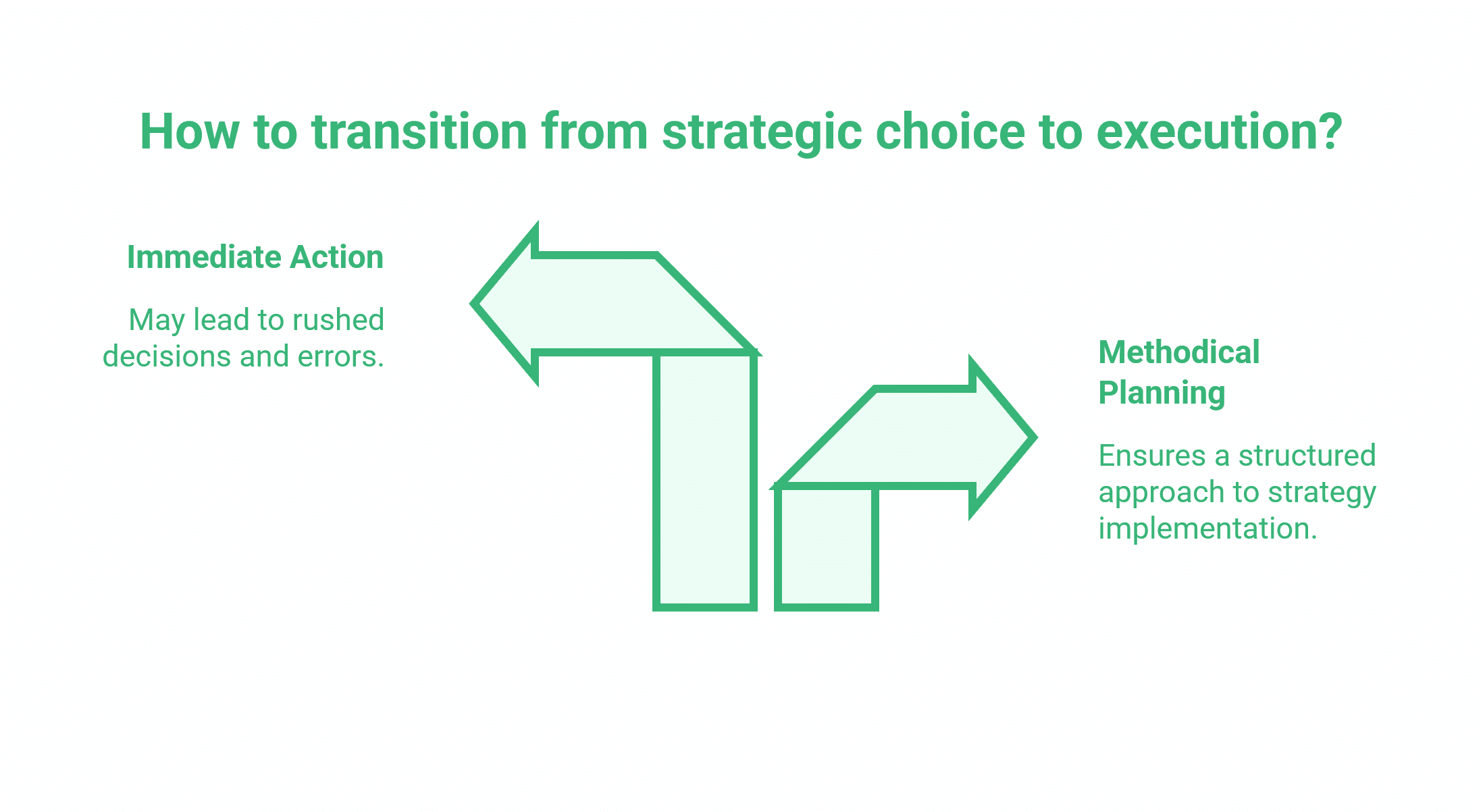
Moving from strategic choice to execution requires structured planning:
1. Define Your Competitive Position Clearly
Write a one-sentence strategy statement: “We compete by [cost leadership/differentiation/focus] targeting [specific market] through [key capabilities].”
Example: “We compete by focused differentiation targeting Belfast hospitality businesses through specialist knowledge of licensing, sector-specific web design, and local search expertise.”
2. Audit Current Activities Against Strategy
List your current digital activities, marketing investments, and operational processes. Flag anything misaligned with your stated strategy.
If pursuing cost leadership but investing heavily in custom web development for aesthetic reasons, there’s misalignment. If pursuing differentiation but using generic website templates identical to competitors, there’s misalignment.
3. Identify Strategic Gaps
Compare your capabilities against competitors pursuing the same strategy. Where do gaps exist?
A manufacturer pursuing differentiation through quality needs evidence customers can see—video of quality control processes, detailed specifications, and customer testimonials focused on reliability. Without this evidence, the claimed differentiation rings hollow.
4. Create Action Plans for Each Function
Translate business-level strategy into functional strategies:
Marketing: What messaging, channels, and content support your strategic position? Operations: What processes, technology, and efficiency gains support your strategic position?
Finance: What pricing, cost control, and investment priorities support your strategic position? HR: What skills, culture, and team structure support your strategic position?
5. Measure Strategic Progress
Define metrics showing whether your strategy is working:
Cost leadership metrics:
- Operating cost per transaction vs competitors
- Price positioning relative to the market
- Volume growth as pricing advantages attract customers
Differentiation metrics:
- Premium pricing achieved vs competitors
- Customer loyalty and retention rates
- Brand perception scores
- Content engagement demonstrating authority
Focus metrics:
- Market share within the chosen niche
- Percentage of revenue from the target segment
- Customer acquisition cost within niche vs broad market
Common Business Level Strategy Mistakes
Understanding pitfalls helps avoid them:
1. Confusing Tactics with Strategy
“We need better SEO” is a tactic, not a strategy. Strategy defines how you compete—then tactics follow. Better SEO for cost leadership (targeting commercial-intent keywords with high conversion) looks different from better SEO for differentiation (targeting expertise-demonstrating keywords building authority).
2. Changing Strategy Too Frequently
Strategic shifts take 2-3 years to mature. Switching from differentiation to cost leadership after six months because immediate returns disappoint prevents either strategy from working. Consistency matters more than a perfect initial choice.
3. Copying Competitor Strategies
If a competitor differentiates through innovation, copying their approach makes you a follower, not a differentiator. Choose strategies that fit your genuine capabilities and market gaps, not those you admire in others.
4. Underestimating Implementation Difficulty
Strategy documents are easy. Execution is hard. Cost leadership requires relentless operational discipline. Differentiation requires sustained investment in distinctive features. Focus requires resisting the temptation to expand beyond your niche when opportunities appear.
5. Ignoring Market Evolution
Strategies need updating as markets change. The cost leadership position viable in 2020 might fail in 2026 if technology shifts alter cost structures. Monitor market conditions and adapt strategies appropriately—but avoid knee-jerk reactions to temporary fluctuations.
Business Level Strategy for Different SME Types
How strategy applies varies by business model:
Service Businesses (Accountants, Consultants, Agencies)
Best fit: Focus or differentiation strategies usually outperform cost leadership for service businesses. Personal relationships, depth of expertise, and customised solutions create value that price-focused competitors can’t match.
Digital application: Content marketing demonstrating expertise, detailed case studies, video explaining processes, and thought-leadership positioning to support differentiation. Niche targeting through SEO supports focus strategies.
Product Businesses (Manufacturers, Retailers)
Best fit: All three strategies work depending on market conditions. Mass-market retailers often pursue cost leadership. Specialist manufacturers pursue differentiation or focus.
Digital application: E-commerce platforms, product photography, technical specifications, and comparison content support various strategies. Cost leaders emphasise value and selection. Differentiators emphasise quality and unique features.
B2B vs B2C Considerations
B2B: Longer sales cycles and relationship importance often favour differentiation or focus. Business customers value expertise, reliability, and specific capabilities that match their needs. Web design should emphasise credibility, case studies, and detailed information.
B2C: Price sensitivity varies by market, but consumer markets often segment into clear cost/premium divisions. Digital marketing can hyper-target specific segments—Facebook ads reaching premium-seeking customers differently than price-conscious ones.
Conclusion
Business-level strategy determines how you compete. For Northern Ireland and UK SMEs, strategic clarity transforms scattered activities into focused competitive advantage.
The most common failure isn’t choosing the wrong strategy—it’s never truly choosing one at all. Businesses stuck in the middle compete on nothing distinctive, losing customers to both cheaper and premium alternatives. Real competitive advantage comes from choosing a defensible position, then ensuring every digital decision reinforces it.
Your website, SEO approach, content marketing, and technology adoption should all serve the same strategic purpose. A Belfast manufacturer pursuing differentiation needs different digital investments than a Derry retailer pursuing cost leadership.
FAQs
Which business level strategy is best?
No single “best” strategy exists. The right choice depends on your market conditions, sustainable capabilities, competition intensity, and resources. Cost leadership works when customers prioritise price. Differentiation works when customers value unique features enough to pay premiums. Focus works when you can dominate a specific niche better than broad-market competitors.
Can a company have two business-level strategies?
Attempting multiple strategies simultaneously usually fails—you end up “stuck in the middle” without clear advantages. Large companies with multiple business units can pursue different strategies for different divisions. The integrated (hybrid) strategy combines cost and differentiation elements but requires exceptional operational capability that most SMEs can’t replicate.
What is an example of a differentiation strategy in the UK?
Lush Cosmetics differentiates through ethical sourcing, handmade production, and zero-packaging options. Brompton Bicycles charges £1,000+ through UK manufacturing and customisation. Pret A Manger differentiates through fresh daily preparation and natural ingredients. Each charges premium prices justified by unique features that target customers’ value.
How long does it take to implement a business-level strategy?
Strategy definition takes 4-8 weeks. The initial implementation takes 3-6 months to adjust operations and the digital presence. Measurable competitive impact appears within 6-12 months. Full strategy maturity takes 2-3 years. Consistency over multi-year timeframes matters more than perfect initial choices.