
Training AI: Machine Learning Model Development
Table of Contents
Most articles about machine learning read as if they were written for PhD students or Silicon Valley engineers. This one is not. It is written for business owners and decision-makers in Northern Ireland, Ireland, and the UK who want to understand what machine learning model development actually involves, what it costs in practice, and whether it is something their organisation can act on without a dedicated data science team.
The short answer is yes, in many cases it is. But only if you understand the basics well enough to ask the right questions and avoid the wrong vendors.
What Is Machine Learning, and Why Does It Matter for Your Business?
Machine learning is a method of training software to make predictions or decisions based on data, rather than following fixed rules set by a programmer. You give the system examples; it identifies patterns and applies them to new situations.
That might sound abstract, so here is a concrete version. A traditional rule-based system for detecting fraudulent bank transactions would say: “flag any transaction over £500 from a new device.” A machine learning model, by contrast, learns from thousands of past fraud cases and legitimate transactions to identify combinations of signals that suggest fraud, including patterns no human analyst would have thought to code in manually.
This is why machine learning has moved from academic research into live commercial deployment across finance, healthcare, retail, and manufacturing. It handles problems that are too complex or variable for rules-based approaches to solve well.
For SMEs, the practical relevance is usually one of three things: automating a repetitive judgement task, making better predictions from existing data, or improving how customers interact with your product or service.
The Three Types of Machine Learning
Understanding the three main approaches to machine learning model development helps you have an informed conversation with any AI vendor or development team. Each suits different types of problems.
Supervised Learning
Supervised learning is the most common approach for business applications. You train the model on labelled data: examples where you already know the right answer. A classification model trained on labelled customer records, for instance, can learn to predict which new customers are likely to churn.
The model’s job is to learn the relationship between the input features (customer behaviour, purchase history, demographics) and the output label (churned or retained). Once trained, it applies that relationship to records where the outcome is not yet known.
Common supervised learning tasks include classification (sorting inputs into categories), regression (predicting a continuous value, such as a price or demand), and sequence prediction (what is the most likely next event given a series of past events).
Unsupervised Learning
Unsupervised learning works on data with no labels. The model looks for structure on its own, grouping similar records together or identifying unusual patterns.
Clustering is the classic use case. If you give an unsupervised algorithm your customer transaction data, it might discover that your customers naturally fall into four or five distinct behavioural groups, even if you had never defined those groups in advance. This can inform segmentation, product development, and marketing strategy.
Anomaly detection is another valuable application. A model trained on normal network traffic patterns will flag anything that deviates significantly, which is useful for cybersecurity and quality control in manufacturing.
Reinforcement Learning
Reinforcement learning is further from most SME use cases, but worth understanding. The model learns by taking actions in an environment and receiving rewards or penalties based on the outcome, gradually developing a strategy that maximises the reward signal over time.
Game-playing AI and robotics extensively use reinforcement learning. In commercial settings, it appears in dynamic pricing engines, recommendation systems that optimise for long-term engagement, and logistics route optimisation. For most UK SMEs, this is less immediately relevant than supervised or unsupervised approaches, but it is the type of learning behind some of the AI tools your business may already be using.
How Machine Learning Model Development Actually Works
The process of building a machine learning model involves several stages. Understanding these stages helps you assess vendor proposals more critically and set realistic expectations for timelines and outcomes.
Data Collection and Preparation
No model is better than the data used to train it. This is the stage most projects underestimate. Before any algorithms are involved, you need data that is relevant to the prediction you want to make, labelled correctly where supervised learning is used, representative of the situations the model will face in production, and cleaned of errors, inconsistencies, and missing values.
In practice, data preparation often accounts for 60 to 80% of the total project time during a first deployment. Organisations that invest in data governance before attempting machine learning move significantly faster than those that do not. Our guide to the importance of data in AI implementation covers what to audit before starting a project.
Model Selection and Training
Once data is prepared, you select an algorithm appropriate to the problem type. Linear regression for continuous predictions, decision trees or gradient boosting for classification tasks, neural networks for image or text-heavy problems. The algorithm is then trained on a portion of the dataset, with the model adjusting its internal parameters to minimise prediction error.
Training is iterative. The model makes predictions on the training data, compares them to the known correct answers, calculates the error, and adjusts. This cycle repeats until performance plateaus or meets a pre-defined accuracy threshold.
Validation and Testing
A model that performs well on training data but poorly on new data is said to be “overfitted.” It has memorised the training examples rather than learning generalisable patterns. Avoiding this requires testing the model on data it has never seen, which is why datasets are typically split into training, validation, and test sets before work begins.
Cross-validation techniques, such as k-fold validation, are used to get a more reliable estimate of generalisation performance by rotating which portion of the data is held out for testing.
Deployment and Monitoring
A trained model in a file is not a business asset. It only becomes one when it is integrated into a system where it receives new inputs and returns predictions in a useful format. This might be an API that your CRM calls when a new lead is created, a scheduled batch process that runs nightly on new transaction data, or a real-time endpoint embedded in a customer-facing application.
After deployment, model performance must be monitored over time. Real-world data distributions shift; what was an accurate model six months ago may have drifted as customer behaviour or market conditions change. Monitoring for this “data drift” and scheduling periodic retraining are operational costs that are often absent from initial project estimates.
Build vs Buy: The Decision Most UK SMEs Face
For most businesses in Northern Ireland, Ireland, and the UK, the question is not whether to build a machine learning model from scratch or use a pre-trained one. It is where on the spectrum between “fully custom” and “off-the-shelf API” the right answer sits for their specific use case.
| Approach | Best For | Indicative Cost | Time to Value |
|---|---|---|---|
| Off-the-shelf AI API (OpenAI, AWS Bedrock, Google Vertex) | Common tasks: text classification, translation, image recognition | Low monthly usage fees | Days to weeks |
| Fine-tuned pre-trained model | Industry-specific language or classification on proprietary data | £5,000–£30,000 depending on complexity | 4–12 weeks |
| Custom model built from scratch | Unique prediction problems with large proprietary datasets | £30,000–£200,000+ | 3–12 months |
The gap between the first and third rows is significant. Most SMEs overestimate how much custom development they need, because the marketing around enterprise AI focuses on bespoke builds. In reality, a fine-tuned version of an existing large language model or a well-configured classification API solves the majority of SME-scale prediction problems at a fraction of the cost.
Our cost-benefit analysis of AI implementation for SMEs breaks down these figures in more detail, including what factors drive costs up and which shortcuts are false economies.
If you are starting from a low AI maturity position, our guide to how SMEs can implement AI without a large investment is a better starting point than commissioning a custom build.
Machine Learning and UK/IE Regulation: What Your Legal Team Needs to Know
This is the area that most articles on machine learning ignore, and it is the one most likely to cause problems for UK and Irish organisations over the next two to three years.
The EU AI Act
The EU AI Act came into full effect in 2024 and applies to any organisation deploying AI that affects people in the EU. For businesses in Ireland or Northern Ireland trading into the Republic, this means direct compliance obligations. The Act classifies AI systems by risk level, with high-risk systems (those used in hiring, credit scoring, healthcare, education, and certain public services) subject to mandatory conformity assessments, data governance requirements, and transparency obligations.
Machine learning models used for customer segmentation, content recommendation, or operational optimisation generally fall into lower risk categories. Models used in employment decisions, loan approvals, or medical contexts require more formal documentation and oversight.
UK AI Safety Framework
Post-Brexit, the UK has taken a different approach. Rather than a single binding regulation, the UK Government’s AI Safety framework operates through sector-specific regulators (the FCA, ICO, CQC, and others), each applying AI principles within their existing remit. The ICO’s AI and data protection guidance is the most immediately relevant for most SMEs, covering how personal data used in model training must be handled under UK GDPR.
GDPR and Model Training Data
This is the most practically urgent compliance issue. If your machine learning model is trained on data that includes personal information about customers or employees, you need a lawful basis for using that data in training, appropriate data minimisation controls, and a process for responding to deletion requests (which may require retraining or model rollback in some cases).
Our guide to protecting user data and secure storage techniques covers the technical controls required when personal data is used in AI systems.
Machine Learning in Practice: Real Applications for UK SMEs
Rather than generalised claims about what machine learning can do, here are the categories where we most commonly see UK and Irish SMEs achieving measurable results with practical deployments.
Predictive Demand Forecasting
Retailers and wholesalers use supervised regression models trained on historical sales data, seasonal patterns, and promotional activity to forecast demand by product and location. The practical outcome is reduced overstock, fewer stockouts, and leaner purchasing decisions.
Customer Churn Prediction
Subscription businesses and service providers train classification models to identify customers showing early signs of disengagement. The model scores the current customer base weekly, allowing the sales or retention team to prioritise outreach before customers cancel rather than after.
Document Classification and Extraction
Professional services firms, including legal, insurance, and accounting practices, use natural language processing models to classify incoming documents and automatically extract structured information. This replaces manual triage and reduces the time to route and process high volumes of incoming correspondence.
Anomaly Detection for Operations and Finance
Manufacturing and logistics businesses use unsupervised anomaly detection on sensor or transaction data to flag equipment failures before they cause downtime or identify billing irregularities before they accumulate into significant losses.
For a broader look at how organisations in the UK have approached AI adoption, our analysis of AI adoption rates in UK SMEs provides useful benchmarks.
Python, TensorFlow, and the Tools Behind the Models
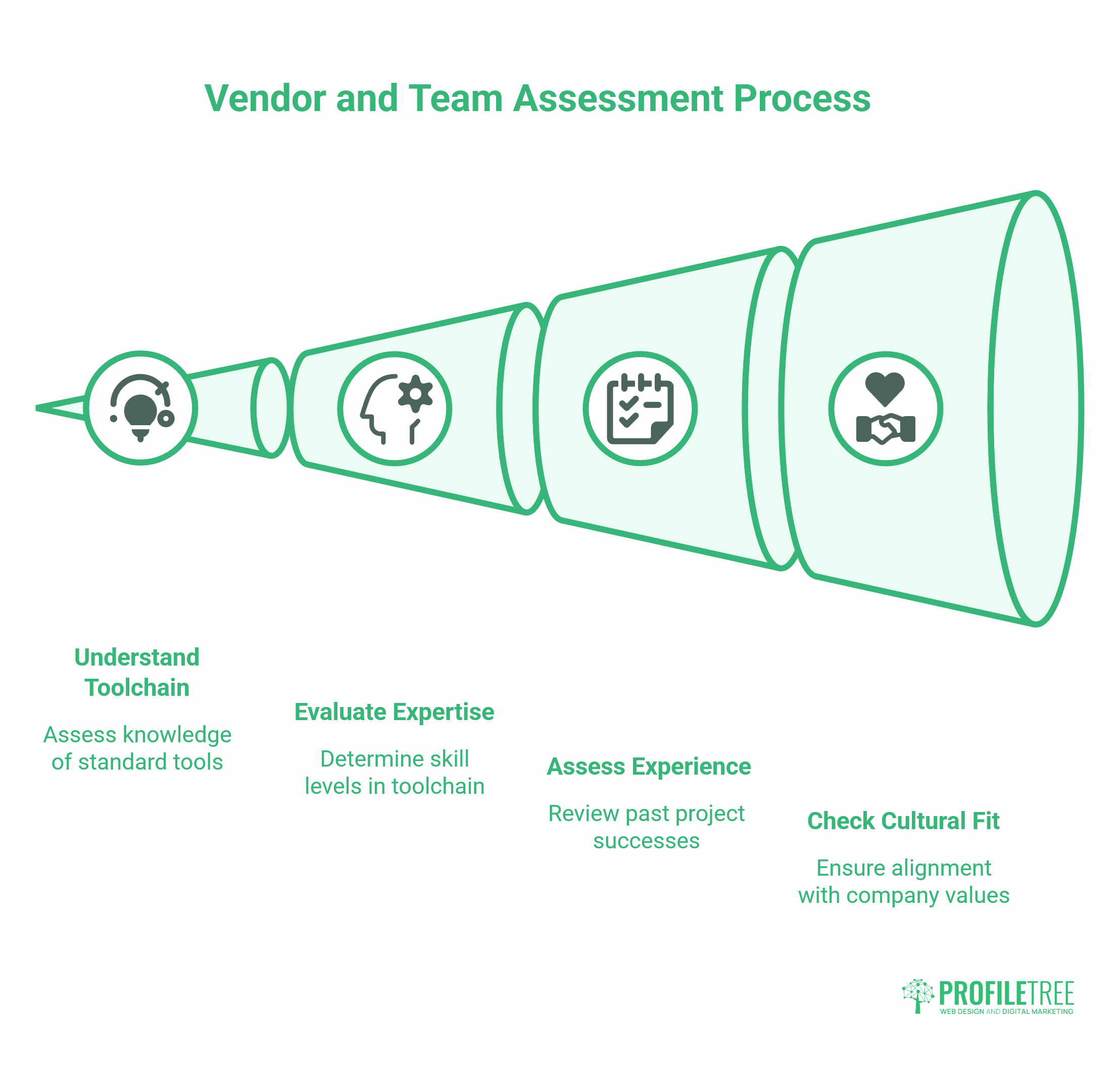
If you are evaluating a vendor or building an internal team, basic familiarity with the standard toolchain helps.
Python is the dominant programming language for machine learning, largely because of the library ecosystem. Scikit-learn provides a consistent, well-documented interface for most classical machine learning algorithms. TensorFlow and PyTorch are used for deep learning, particularly for problems involving images, audio, or large text datasets. Pandas and NumPy handle data manipulation and numerical computation. Our Python programming overview covers the basics of the language for non-technical readers who want to understand what their development team is working with.
Cloud platforms have significantly lowered the barrier to entry. AWS SageMaker, Google Vertex AI, and Azure Machine Learning all provide managed environments where models can be trained and deployed without building custom infrastructure. This has made machine learning accessible to organisations that could not previously justify the engineering overhead.
Building AI Readiness Before You Commission a Model
The businesses that see the clearest returns from machine learning model development share a common characteristic: they invested in readiness before commissioning a model. Readiness means data quality standards and a documented data pipeline, a defined business problem with a measurable target metric, internal clarity on who owns the model’s outputs and what decisions it informs, and a baseline to compare against once the model is live.
Without these, even a technically competent model produces ambiguous value. Our guide to building your own AI models covers the internal groundwork in more detail, and our advanced machine learning techniques for SMEs article addresses the next steps once a first deployment is in place.
The Environmental Cost of Machine Learning
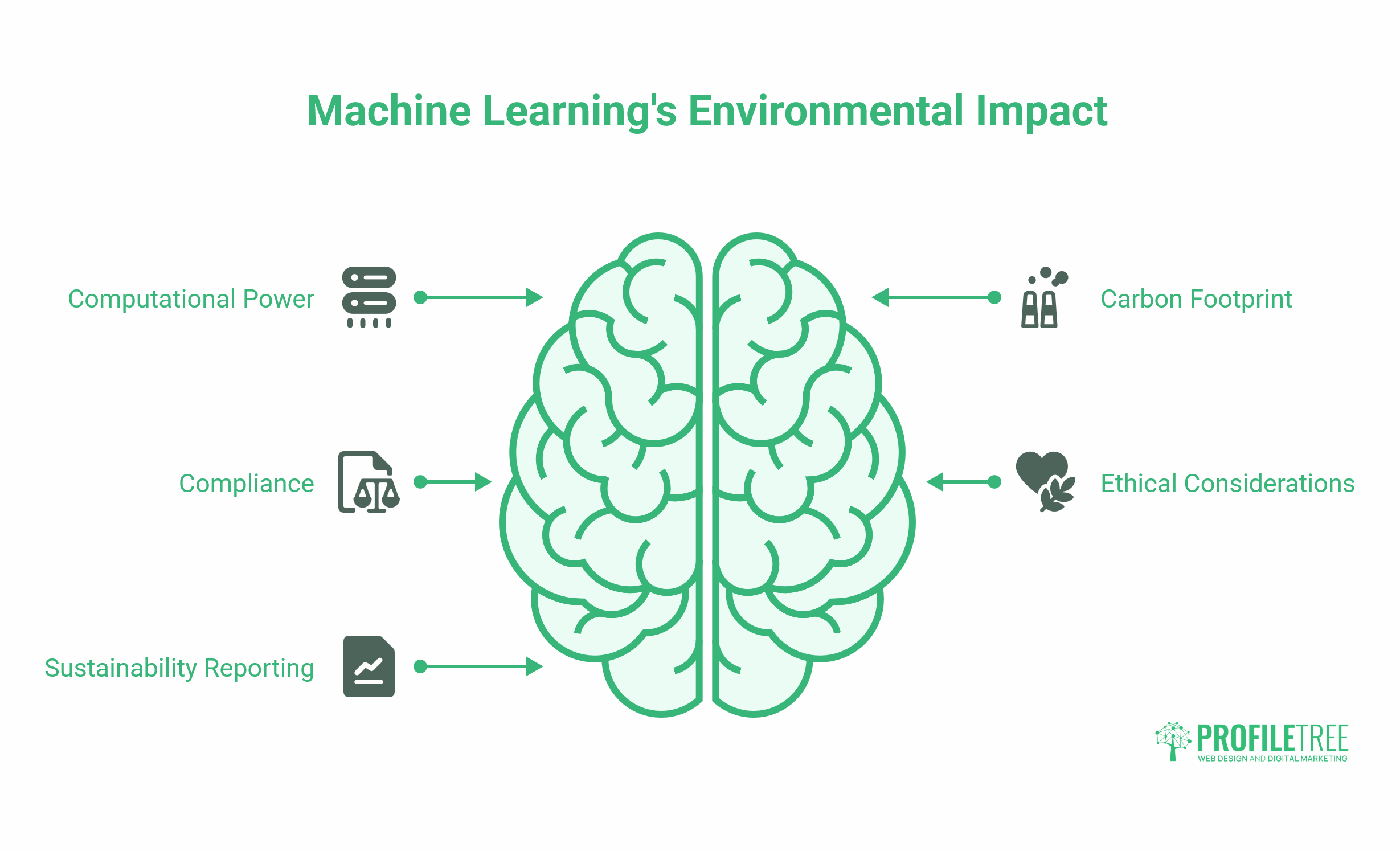
Machine learning is not inherently a clean technology. Training large models demands significant computational power, and that has a measurable carbon footprint. For UK and Irish businesses, this is becoming a compliance consideration as well as an ethical one: the EU AI Act includes environmental impact provisions for high-risk systems, and sustainability reporting obligations are tightening across supply chains on both sides of the border.
The practical response for most SMEs is not to avoid machine learning but to make smarter choices. Using a pre-trained model via an API rather than training from scratch reduces energy consumption by orders of magnitude. Choosing cloud providers with verified renewable energy commitments and opting for smaller, task-specific models over large general-purpose ones both cut the footprint further without sacrificing performance.
Conclusion
Machine learning model development is no longer the preserve of large enterprises with dedicated data science teams. The combination of mature cloud platforms, accessible APIs, and pre-trained models has brought practical AI within reach of SMEs across Northern Ireland, Ireland, and the UK. The barrier now is rarely technical. It is organisational: having clean data, a defined problem, and the internal clarity to act on what the model tells you.
If your business is at the stage of seriously evaluating AI, ProfileTree’s team can help you move from questions to a practical plan. Talk to us about your AI implementation options.
FAQs
What is machine learning in simple terms?
Machine learning trains software to recognise patterns in data so it can make predictions on new inputs, without a programmer writing explicit rules. The system learns from examples of past outcomes and applies that learning going forward.
What are the three types of machine learning?
The three main types are supervised learning (training on labelled data with known answers), unsupervised learning (finding patterns in unlabelled data), and reinforcement learning (learning through actions and rewards). Most business applications use supervised or unsupervised approaches.
How much does machine learning cost to implement for a UK SME?
Off-the-shelf AI APIs typically cost a few hundred pounds per month. Fine-tuning a pre-trained model for a specific business problem usually runs between £5,000 and £30,000. Custom models built from scratch can reach £200,000 or more. Most SMEs find the middle option delivers the best return.
What data do I need to train a machine learning model?
You need data that is relevant to your prediction target, available in sufficient volume, and accurately labelled for supervised tasks. Quality matters more than quantity: a smaller, consistently labelled dataset will outperform a larger, noisy one.