
ROI of Storytelling: Why Narrative Beats Commodity Content
Table of Contents
Every week, another wave of AI-generated articles lands on search engines and social feeds. The floor for “acceptable” content has never been lower, and the ceiling for standing out has never been higher. Businesses that rely on generic, information-only content are finding it harder to attract attention, build trust, or convert visitors into customers.
The ROI of storytelling, the measurable return that narrative-driven content produces over feature-led copy, is the practical answer to that problem. This guide gives you a framework to prove it, grounded in real brand storytelling principles and a three-tier measurement model any SME can apply.
The Content Crisis: Survival in the AI Slop Era

Understanding the ROI of storytelling starts with understanding why content saturation has made generic publishing so costly. The volume of published content has accelerated sharply since generative AI tools became widely available. More pages are competing for the same attention, and the majority of new content adds no original value. The result is what content researchers now call “brand invisibility”: the state in which a business publishes regularly but fails to register with its target audience at all.
Why Generic Content No Longer Ranks or Converts
Search engines have adapted to content saturation faster than most digital marketing teams have realised. Google’s Helpful Content updates since 2022 have progressively devalued content that simply restates what competitors have already said. Pages that offer no information gain – no original data, no genuine expertise, no useful frameworks – are pushed down in favour of content that demonstrates real-world experience. The February 2026 core update made author credentials a first-class ranking input, reinforcing the direction: generic content from an unnamed author is structurally disadvantaged regardless of how well the page is technically optimised.
For UK and Irish SMEs, the stakes are clear. A business that publishes ten average articles gains little ground in search or with its audience. A business that publishes three articles with genuine depth, real examples, and a distinctive brand narrative builds a presence that compounds over time.
The Trust Deficit in UK and Irish Markets
UK and Irish consumers have a measurably higher scepticism threshold than their US counterparts, and that difference shapes how brand storytelling needs to work here. Hard-sell language, superlative claims, and promotional framing generate resistance rather than engagement. A well-constructed brand narrative bridges that gap because it demonstrates rather than claims. A case study that shows how a Belfast manufacturer reduced its sales cycle is more convincing than any amount of copy asserting that the agency produces results. This is not a content strategy preference; it is a commercial reality in this market.
| Metric | Commodity / SEO-first content | Narrative / story-led content |
|---|---|---|
| Avg. time on page | Under 45 seconds | 2 to 4 minutes |
| Social shares | Minimal; no emotional hook | Higher: identity-driven sharing |
| Conversion rate | Lower; no trust built | Higher: credibility established |
| AI citation likelihood | Low; no unique information | Higher: original data and frameworks |
| Shelf life | Short: replaced by newer versions | Long: authentic examples age well |
The Neuroscience of Narrative: Why the Brain Favours Stories
The ROI of storytelling is not simply a matter of creative preference. Research into how humans process information reveals consistent structural differences in how the brain handles brand narrative compared to data-only presentation – and those differences have direct consequences for content marketing outcomes and brand recall.
Neural Coupling and the Oxytocin Response
When someone reads a well-constructed narrative, their brain activity mirrors that of the storyteller, a phenomenon Princeton researchers describe as neural coupling. Simultaneously, brand storytelling that features human characters in recognisable situations triggers the release of oxytocin, the neurochemical associated with trust and social bonding. This isn’t a metaphor. It is a measurable biological response that data-heavy content does not produce, which is why a strong content strategy built on narrative outperforms one built on information alone.
“The businesses we work with that invest in the ROI of storytelling see a measurable shift within two to three months. It’s not just that their content performs better in search; it’s that their sales conversations are shorter because prospects already trust them before they make contact. That’s the commercial case for narrative content in plain terms,” says Ciaran Connolly, founder of ProfileTree.
Why Data-Only Marketing Fails the Memory Test
People retain approximately 5 to 10 per cent of information presented as isolated statistics. When the same information is embedded in a narrative – a character, a conflict, a resolution – retention climbs to around 65 to 70 per cent. For any digital marketing team trying to make a brand memorable in a saturated market, that gap explains why product specification pages rarely move buyers while case studies consistently do. Brand storytelling is not a soft tactic; it is the mechanism by which information becomes memorable enough to influence decisions.
The 3-Tier ROI of Storytelling Framework
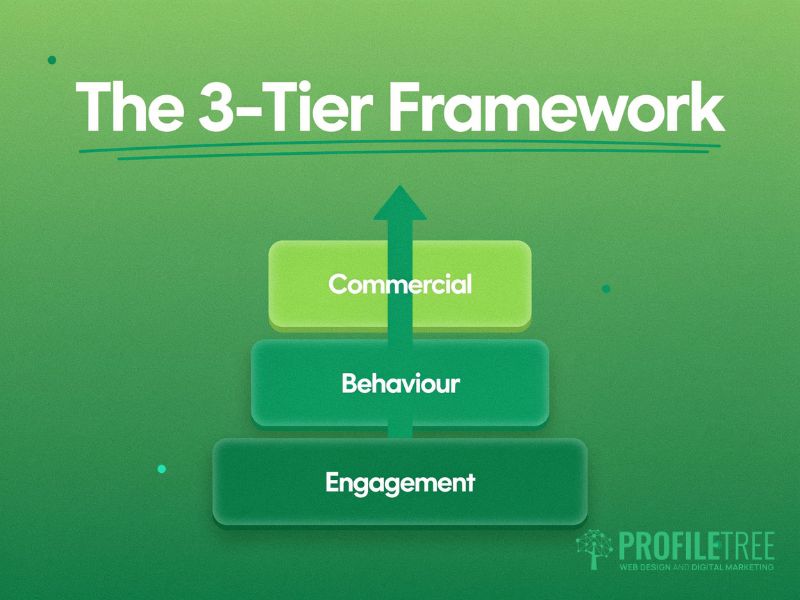
Calculating the ROI of storytelling becomes manageable when you break it into three tiers, each corresponding to a different stage of the customer journey. This framework is designed for a finance director, not just a content strategy team. It converts creative activity into metrics that map directly to business outcomes.
Tier 1: Engagement and Brand Salience (Leading Indicators)
These metrics are available from any standard analytics platform and give early signals about whether your brand narrative is resonating before it produces commercial outcomes. They are the leading indicators of storytelling ROI.
- Average time on page: Story-led content consistently outperforms product-led pages. A benchmark target for narrative articles is two minutes or above.
- Scroll depth: Aim for 70 per cent or higher, indicating that readers are completing the brand narrative rather than bouncing after the first paragraph.
- Video completion rate: For video brand storytelling content, a completion rate above industry average (typically 35 to 45 per cent for mid-length video) indicates genuine engagement.
- Branded search volume: Rising searches for your company name signal that your content strategy is building awareness beyond the immediate page visit.
- Social shares and saves: Shares indicate that the content serves the reader’s identity – the highest endorsement in digital marketing available at zero additional cost.
Tier 2: Behavioural Shifts (Mid-Funnel Metrics)
At this tier, you are measuring whether your brand narrative is changing how prospects behave: whether they’re moving from awareness into active consideration. These mid-funnel signals are where content saturation becomes visible as a business problem – and where a differentiated brand storytelling approach starts to show its value.
- Return visit rate: Readers who return to narrative content are building a relationship with the brand, not simply harvesting a single piece of information.
- Content-to-lead path: Use UTM tracking to identify what percentage of leads visited story-based content – a case study, a founder narrative, or a client success piece – before converting.
- Email forwarding and referral traffic: Story content shared on closed channels indicates trust that your content strategy is building genuine relationships.
- Sales cycle length: Prospects who have engaged with your brand narrative before a sales conversation typically need less convincing. Track whether touchpoints before close differ for leads with story content in their journey.
Tier 3: Commercial Impact (Customer Lifetime Value and Acquisition Cost)
This is the tier that justifies the ROI of storytelling to a board. The question here is not whether people read your brand stories, but whether those stories produced measurable commercial outcomes that your content strategy can point to.
- Conversion rate by content type: Run a direct comparison of conversion rates from product pages versus case study or narrative pages. The difference quantifies the storytelling premium.
- Customer lifetime value: Clients acquired through narrative content often show higher retention rates. Track CLV separately for cohorts that engaged with brand storytelling content before signing.
- Customer acquisition cost: If narrative content reduces touchpoints before a sale, CAC should fall. Calculate CAC for leads where a case study was the attributed first touch.
- Price elasticity: Businesses with strong brand narratives can frequently command a premium over competitors. Track this through win/loss analysis at the proposal stage.
“Businesses that invest in storytelling don’t just get better engagement numbers. They get shorter sales cycles, higher average deal values, and clients who already trust them before the first conversation. The ROI of storytelling isn’t soft. It shows up on the bottom line, and it compounds over time in a way that paid advertising simply can’t match.”
Ciaran Connolly, Founder, ProfileTree
| Story Element | Business KPI | Measurement Tool |
|---|---|---|
| Client success stories | Reduced sales cycle | CRM touchpoint tracking |
| Character-led video | Brand recall and recognition | Branded search volume |
| Founder journey content | Trust and price premium | Win/loss analysis |
| User-generated testimonials | Lower customer acquisition cost | First-touch attribution |
| Educational narrative guides | Higher customer lifetime value | Cohort CLV comparison |
UK and Irish Case Studies: Cutting Through the Noise
Abstract frameworks only go so far. To make the ROI of storytelling tangible, the following examples show how brand narrative has produced measurable outcomes in the UK and Irish market, where high consumer scepticism means the quality of brand storytelling matters more than volume. These are markets where content saturation has made authenticity a genuine competitive advantage.
John Lewis: The Annual Narrative as a Business Asset
The John Lewis Christmas advertising series has become the benchmark for the ROI of storytelling in UK retail. Each campaign follows a consistent brand narrative structure: a relatable character, a clearly defined emotional challenge, and a resolution rooted in human connection rather than product features. The commercial outcome is documented in annual retail trading statements: the campaign consistently drives a measurable spike in footfall and online revenue in the fortnight following launch, far exceeding the effect of discount-led digital marketing in the same period.
The lesson for SMEs is not to replicate the budget; it’s to replicate the structure. John Lewis doesn’t lead with product specifications. It leads with a character the audience cares about. The product appears as a natural part of the resolution, which is the same principle that makes a B2B case study more persuasive than a service page.
Guinness: Entity Associations and Cultural Storytelling
Guinness offers a different model of brand storytelling, equally relevant to businesses operating in Irish and Northern Irish markets. The brand has consistently associated its product with specific cultural values, such as patience, craftsmanship, and community, rather than taste or price. The “Good things come to those who wait” campaign didn’t describe the beer; it described the character of the people who drink it. This identity-based brand narrative creates an emotional association that content saturation and commodity messaging cannot replicate.
For B2B companies in Northern Ireland and Ireland, the takeaway is about long-term brand narrative building. When your content strategy consistently connects your business to specific values, precision, local knowledge, and honest advice, those associations become the mental shorthand prospects use when they think of your category. That’s the long-game version of the ROI of storytelling.
The ProfileTree Approach: Brand Storytelling for SMEs
ProfileTree works with SMEs across Northern Ireland, Ireland, and the UK to develop a content strategy grounded in genuine brand narrative rather than generic digital marketing promotion. Laura MacMillan of Cosensa Learning and Development, who engaged ProfileTree through the Go-Succeed programme, described the result as “thorough, organised, targeted and totally meeting our needs,” adding that the team had found “a partner we can trust.” That language partner, trust, is the commercial expression of the ROI of storytelling in a B2B context.
The approach combines content marketing strategy with practical guidance on how to present genuine client outcomes as compelling brand narratives that drive organic rankings and build lasting brand authority.
Strategic Implementation: From Commodity Content to Brand Narrative
Achieving a positive ROI of storytelling requires more than writing better content; it requires a content strategy that identifies your unique story angle, structures it for maximum impact, and distributes it across the right channels. Most businesses already have the raw material. The gap is knowing how to use it.
Identifying Your Brand’s Unique Story Angle
Start with the question most digital marketing briefs skip: what has your business learned that no other business in your category knows? This might be a repeated pattern across client projects, a counter-intuitive finding from operational experience, or a genuinely original perspective on how your market works. That insight is the foundation of brand storytelling that cannot be replicated by a competitor using the same AI tools.
For many SMEs in Northern Ireland and Ireland, the story angle is local specificity. A digital marketing agency that understands the grant funding cycles and the regulatory environment for businesses in the region holds information that a US-based content platform cannot replicate. That local specificity is a brand storytelling asset that directly supports the ROI of storytelling because it creates content saturation immunity – your angle exists nowhere else.
Building the Narrative Structure: Character, Conflict, and Resolution
Every effective brand narrative follows a recognisable arc. The structure doesn’t require literary ambition; it requires clarity about who the story’s about, what problem they faced, and how that problem was resolved. In a B2B context, the character is typically the client, the conflict is the business challenge they brought to you, and the resolution is the specific outcome your work produced.
Resist the urge to make the brand narrative about your business. A case study that says “we built a website” produces minimal ROI in storytelling. One that says “the client’s leads from organic search doubled within six months of launch” creates the kind of proof that shortens sales cycles and justifies investment in content strategy.
Distribution: Getting Your Brand Narrative Past Content Saturation
A well-constructed brand narrative that sits unread produces no ROI of storytelling. Distribution is the second half of the equation. Your content marketing plan should reformat story-based content for each channel rather than copying it directly:
- Long-form case studies on the website: The full brand narrative with data, direct client quotes, and a clear outcome. This is the version that ranks in search and earns AI citations.
- Abbreviated versions for email marketing: A two-paragraph summary with a link to the full case study. Email subscribers are already engaged; give them the hook and let the landing page do the rest.
- Video adaptations for YouTube and social: A two to three-minute video with the client speaking about the outcome in their own words. Brand storytelling authenticity cannot be scripted.
- Social media extracts: A single data point or direct quote from the case study, with a link to the full version. Not a summary: a specific, memorable detail.
Businesses looking to build this content strategy capability internally benefit from digital marketing training that covers both the strategic principles and the practical tools for consistent brand narrative production.
The 60-Second CFO Pitch
Brand storytelling investment is regularly cut in budget reviews because it’s framed as a soft digital marketing activity. The following structure converts the argument into financial language that any finance director will follow:
- “Our current cost per qualified lead from product-led content is £X.”
- “Leads who engaged with case study content before converting show a Y per cent shorter sales cycle.”
- “We propose investing £Z in three in-depth client stories. Based on current conversion data, the break-even point is N new leads.”
Replace the variables with your actual numbers. The structure remains the same regardless of the figures, and it reframes the ROI of storytelling in the commercial language that secures the budget.
Measuring the ROI of Storytelling: Practical Tracking Setup
Frameworks only work if they are connected to actual measurement. The ROI of storytelling is not inherently difficult to track; it requires the same analytics discipline you’d apply to any other content strategy investment. The following setup is sufficient for most SMEs without specialist digital marketing tooling.
Setting Up Content Attribution
Use UTM parameters on every content link shared externally, including in email marketing campaigns, social posts, and digital strategy documents. In Google Analytics 4, create a custom segment for sessions where the user visited a narrative content page, a case study, a founder story, or a blog article before converting. Compare the conversion rate and average order value for this segment against sessions without a content touch.
The simplest version of this, entirely feasible with a free GA4 account, is a monthly comparison of conversion rates from brand storytelling pages versus product-led pages. That single comparison, tracked over three to six months, will either justify further investment in narrative content or flag that your content strategy needs to change.
Iterative Optimisation of Narrative Content
The ROI of storytelling compounds when the stories are improved based on performance data. This is where a disciplined content strategy separates brands that publish from brands that grow. Three practical optimisation steps:
- A/B test the opening: The first paragraph of a case study determines whether a reader continues. Test two versions with different openings: one leading with the problem, one leading with the outcome. Then track scroll depth and time on the page for each.
- Expand sections that generate enquiries: If a specific section of brand storytelling content consistently generates follow-up questions, it is telling you that this topic has more depth than the current article provides. Build a separate piece around it.
- Update outcomes: A case study with outdated results is less compelling than one with current data. Schedule a quarterly review of your top five performing brand narrative pieces and refresh the outcome data where the client relationship allows.
How ProfileTree Can Help You Build Narrative Content That Converts
Most SMEs already have the raw material for compelling brand storytelling: client relationships, project outcomes, and hard-won knowledge of their market. The gap is between having that material and knowing how to turn it into a content strategy that ranks, builds trust, and shortens the sales cycle. ProfileTree’s content marketing team works with businesses across Northern Ireland, Ireland, and the UK to close that gap with a brand narrative approach rather than volume-driven digital marketing production.
The service covers the full cycle: identifying your unique story angle, structuring case studies and client narratives, distributing brand storytelling across channels, and tracking the three-tier ROI framework outlined in this guide. If you’re currently producing content that isn’t driving measurable returns, the issue is almost always the absence of a coherent brand narrative rather than a lack of volume.
Explore ProfileTree’s content marketing services to see how a narrative-first content strategy can produce a measurable ROI of storytelling for your business.
FAQs
1. How do you measure the ROI of brand storytelling?
The ROI of storytelling is measured across three tiers: engagement metrics (time on page, scroll depth, video completion), behavioural shifts (return visits, content-to-lead path, sales cycle length), and commercial outcomes (conversion rate by content type, customer acquisition cost, and customer lifetime value). Start with a direct comparison of conversion rates from brand storytelling pages versus product pages; that single metric gives a workable baseline within one quarter.
2. Why is storytelling more effective than traditional advertising in the UK market?
Content saturation means UK consumers process and discard promotional claims within seconds, but brand narrative earns attention voluntarily because readers choose to continue when a story is relevant to their situation. The neurological mechanism is the oxytocin response: relatable characters and genuine conflict trigger a trust hormone that digital marketing advertising does not produce, which is why earned attention through brand storytelling consistently outperforms bought attention in the UK and Irish markets.
3. What are the most important KPIs for a brand storytelling content strategy?
The five KPIs with the clearest connection to commercial outcomes are: average time on page (target two minutes or above), branded search volume, content-to-lead attribution rate, customer lifetime value by acquisition cohort, and sales cycle length for leads who engaged with a case study before converting. Together, they give a full picture of the ROI of storytelling across the funnel without requiring specialist digital marketing analytics tooling.
4. Can B2B companies in Northern Ireland and Ireland use brand storytelling effectively?
B2B brand storytelling is particularly effective in Northern Ireland and Ireland because buying decisions are relationship-driven, and a well-structured case study lets the reader mentally rehearse their own evaluation through someone else’s experience. The most effective format is the client-led journey: the client describes the challenge and outcome in their own words, while the brand stays in a supporting role, which is what drives the ROI of storytelling in professional services.
5. How does content saturation affect SEO for smaller businesses?
Content saturation means publishing on a competitive topic no longer ranks without genuine information gain, and Google’s Helpful Content updates have progressively penalised pages that replicate what competitors have already covered. Brand storytelling solves this because a case study with verifiable outcomes, a framework from real project work, or a perspective grounded in local market knowledge adds something that cannot be found elsewhere, which is also what earns citations in Google AI Overviews, Perplexity, and ChatGPT.