
SEO for Tutors and Education Services: Get Found by Students
Table of Contents
When parents worry about their child’s GCSE preparation, or students need help with university modules, they search online. “Maths tutor near me,” “GCSE English tutor Belfast,” “A-level chemistry tutoring”, these searches happen constantly, and the tutors appearing in results book the students.
Tutoring SEO operates in a trust-intensive environment. Parents are choosing who will influence their children’s education. Students are investing time and money in improving their prospects. Both need confidence that a tutor has the expertise, experience, and approach to deliver results.
The tutoring market has expanded dramatically, particularly since the growth of online tutoring. This creates both opportunity and competition. Effective SEO helps qualified tutors stand out in a crowded market, attracting students who need exactly what they offer.
ProfileTree works with service businesses across Northern Ireland, Ireland, and the UK to build search visibility that generates quality enquiries. For tutors, that means appearing when students and parents search, demonstrating expertise and trustworthiness, and attracting students whose needs match your teaching.
SEO for Tutors: Why Search Visibility Matters
The tutoring industry has evolved significantly. Understanding how students and parents find tutors shapes effective marketing.
The Trust-First Decision Process
Choosing a tutor involves significant trust:
- Parents entrust their children’s education to someone
- Students invest time and money expecting results
- Both want confidence in qualifications and ability
- Past results and testimonials carry enormous weight
Your online presence must establish trust before students or parents make contact. Qualifications, experience, results, and reviews all contribute to this essential credibility.
Different Tutoring Types, Different Searches
Tutoring searches vary by subject, level, and format:
- Subject-specific: “Maths tutor,” “English tutor,” “science tutor,” “language tutor”
- Level-specific: “GCSE tutor,” “A-level tutor,” “11+ tutor,” “university tutor,” “primary school tutor”
- Exam-specific: “GCSE revision tutoring,” “A-level preparation,” “11+ exam tutor”
- Format-specific: “Online tutor,” “home tutor,” “one-to-one tutoring,” “group tutoring”
- Combined searches: “GCSE maths tutor Belfast,” “online A-level chemistry tutor”
Each combination represents different student needs. Targeting your specific subjects, levels, and formats captures relevant enquiries.
Online vs. Local Tutoring
The tutoring market now spans both local and online:
- Local tutoring: Face-to-face sessions, home visits, or students visiting you. Requires local SEO focus.
- Online tutoring: Video-based sessions serving anywhere. Requires broader geographic targeting.
- Hybrid: Offering both options. Requires strategy for each market.
Your SEO approach depends on which markets you serve and want to grow.
Google Business Profile for Tutors
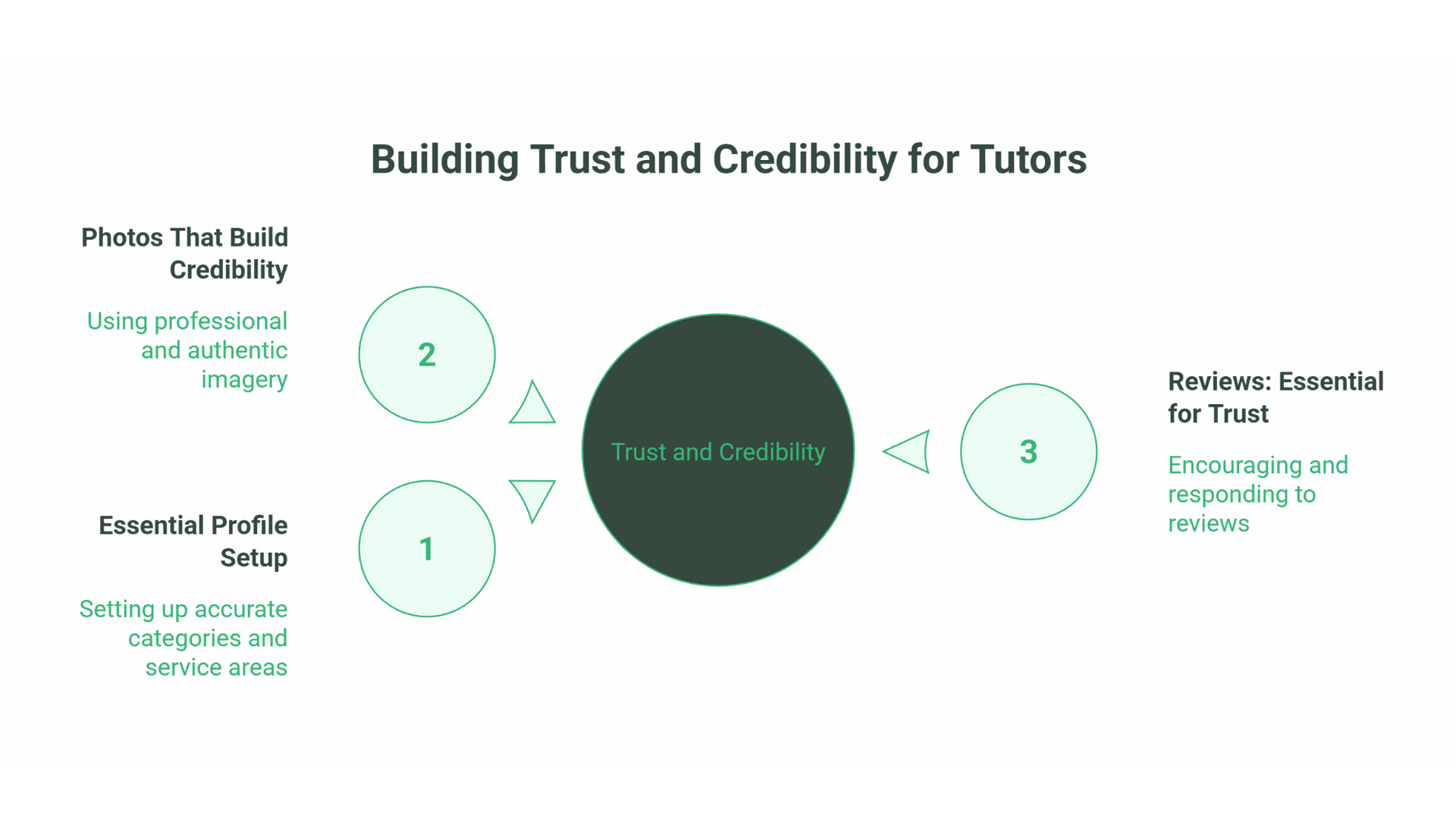
For tutors offering local services, Google Business Profile is essential. Even online tutors benefit from the credibility a complete profile provides.
Essential Profile Setup
Categories: Select accurate categories:
- Tutor (primary for most)
- Tutoring Service
- Educational Service
- Test Preparation Center
- Language School (for language tutors)
- Music School (for music tutors)
Choose based on your main offering. Add secondary categories for additional services.
Service Areas: Define where you work for local tutoring:
- Areas you’ll travel to for home tutoring
- Areas students travel from to reach you
- For online tutoring, you can indicate broader coverage
Business description: Use the description to communicate:
- Subjects and levels you teach
- Your qualifications and experience
- Your teaching approach
- Results you’ve helped students achieve
Photos That Build Credibility
Tutors should consider appropriate imagery:
- Professional headshot: A professional, approachable photo of yourself
- Teaching environment: Your tutoring space, if you have one (tidy, professional)
- Qualifications: Photos of relevant qualifications and certifications
- Resources: Teaching materials, whiteboards, educational resources
- Student success: Any appropriate imagery showing results (certificates, graduation, with permission)
Avoid photos that seem overly staged or stock-like. Authentic images build trust better than generic education imagery.
Reviews: Essential for Trust
Reviews are particularly powerful for tutors. Parents and students want assurance from others who’ve been through the experience:
Encouraging reviews:
- Ask students and parents after successful exam results
- Request reviews when students complete programmes
- Follow up at natural milestones
- Never offer incentives
What to encourage reviewers to mention:
- Specific subjects and levels tutored
- Results achieved (grades, improvements)
- Teaching style and approach
- Reliability and professionalism
- Value for investment
Responding to reviews:
- Respond to every review professionally
- Thank parents and students for feedback
- Keep responses appropriate to educational context
- Show your commitment to student success
“Tutoring is fundamentally about trust. Parents are making decisions about their children’s education; students are investing in their future. Strong online presence with genuine reviews and clear credentials builds the trust that converts searches into booked students.” — Ciaran Connolly, ProfileTree
Website Essentials for Tutors
Your website establishes expertise and converts interest into enquiries.
Critical Website Elements
Subjects and levels: Clear information about what you teach:
- Subjects offered
- Levels covered (primary, GCSE, A-level, university, professional)
- Exam boards if relevant (AQA, Edexcel, OCR, CCEA)
- Any specialisms within subjects
About and qualifications: Your background and credentials:
- Academic qualifications
- Teaching qualifications if applicable
- Professional experience
- Teaching experience and approach
- DBS check status (essential for working with children)
Approach and methodology: How you teach:
- Teaching philosophy
- Session structure
- How you identify and address student needs
- Resources and materials used
Pricing: Tutoring clients typically want pricing information:
- Hourly rates
- Package options if offered
- Any differences by level or format
Service areas/availability: Where and how you tutor:
- Local areas covered for face-to-face
- Online tutoring availability
- Scheduling and availability
Testimonials: Student and parent feedback with specific details about subjects, levels, and results.
Contact: Easy ways to enquire, form, email, phone.
Subject and Level Pages
Create dedicated pages for each subject and level combination you teach:
- /gcse-maths-tutor/: GCSE mathematics tutoring
- /a-level-chemistry-tutor/: A-level chemistry tutoring
- /11-plus-tutor/: 11+ preparation tutoring
Each page should include:
- Specific information about tutoring at that level
- Your relevant qualifications and experience
- Curriculum coverage and exam board familiarity
- Typical results and success stories
- Appropriate testimonials
- Clear call to action
Location Pages (for Local Tutors)
Create pages for areas you serve:
- /tutor-belfast/: Tutoring services in Belfast
- /maths-tutor-lisburn/: Maths tutoring in Lisburn
Each location page should include:
- Services available in that area
- Relevant testimonials from local students
- Practical information about tutoring in that area
- Clear call to action
Content That Demonstrates Expertise
Beyond service pages, create content showing subject expertise:
- Study guides: Helpful content for students studying your subjects
- Exam tips: Advice for specific exams you help students prepare for
- Subject explanations: Clear explanations of difficult concepts
- Resource recommendations: Books, websites, and tools students might find helpful
This content demonstrates expertise while capturing students researching subjects.
Technical Foundations
Basic technical SEO supports visibility:
- Speed: Fast-loading pages for good user experience
- HTTPS: Security matters, especially for sites where young people might browse
- Mobile: Many searches happen on phones, ensure good mobile experience
- Schema markup: Implement LocalBusiness and EducationalOrganization schema
Our guide at profiletree.com/seo-basics/ covers technical fundamentals.
Local SEO Strategy for Tutors
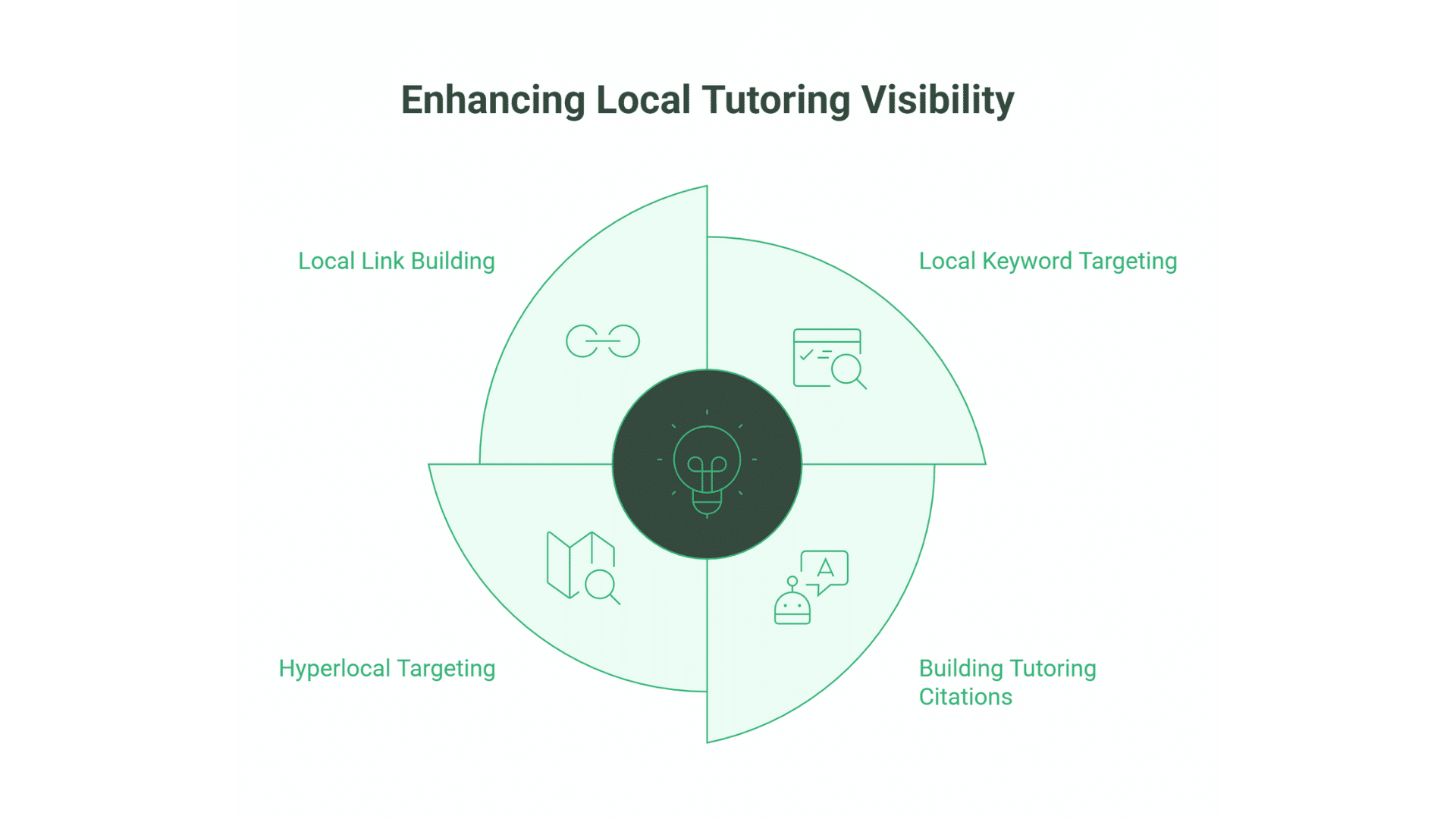
Tutors offering local services need strong local visibility.
Local Keyword Targeting
Understand how students and parents search:
- Subject + tutor + location: “Maths tutor Belfast,” “English tutor near me”
- Level + tutor + location: “GCSE tutor Derry,” “A-level tutor Lisburn”
- Combined: “GCSE maths tutor Belfast,” “A-level physics tutor Bangor”
- Problem-based: “Help with GCSE revision,” “struggling with A-level chemistry”
Your Google Business Profile and website content should target these search patterns.
Building Tutoring Citations
Directory listings reinforce presence:
Tutoring platforms:
- Tutorful
- Superprof
- Tutor Hunt
- First Tutors
- MyTutor
- The Tutor Pages
General directories:
- Yell.com
- Thomson Local
- Bark
Local directories:
- Local family directories
- Community listings
- School and parent networks (where appropriate)
Professional bodies:
- The Tutors’ Association
- Subject-specific associations
Ensure consistent Name, Address, and Phone across listings.
Hyperlocal Targeting
Tutors benefit from hyperlocal focus:
- Neighbourhood targeting: Specific areas, suburbs, and districts
- School proximity: “Tutor near [school name]” if appropriate
- Catchment targeting: Areas where specific schools draw students from
Our hyperlocal SEO guide at profiletree.com/hyperlocal-seo/ covers these strategies.
Local Link Building
Local links strengthen visibility:
- Partner with complementary businesses (bookshops, educational suppliers)
- Connect with local schools (carefully and appropriately)
- Join local business networks
- Participate in community education initiatives
- Build relationships with local parent groups
Content Strategy for Tutors
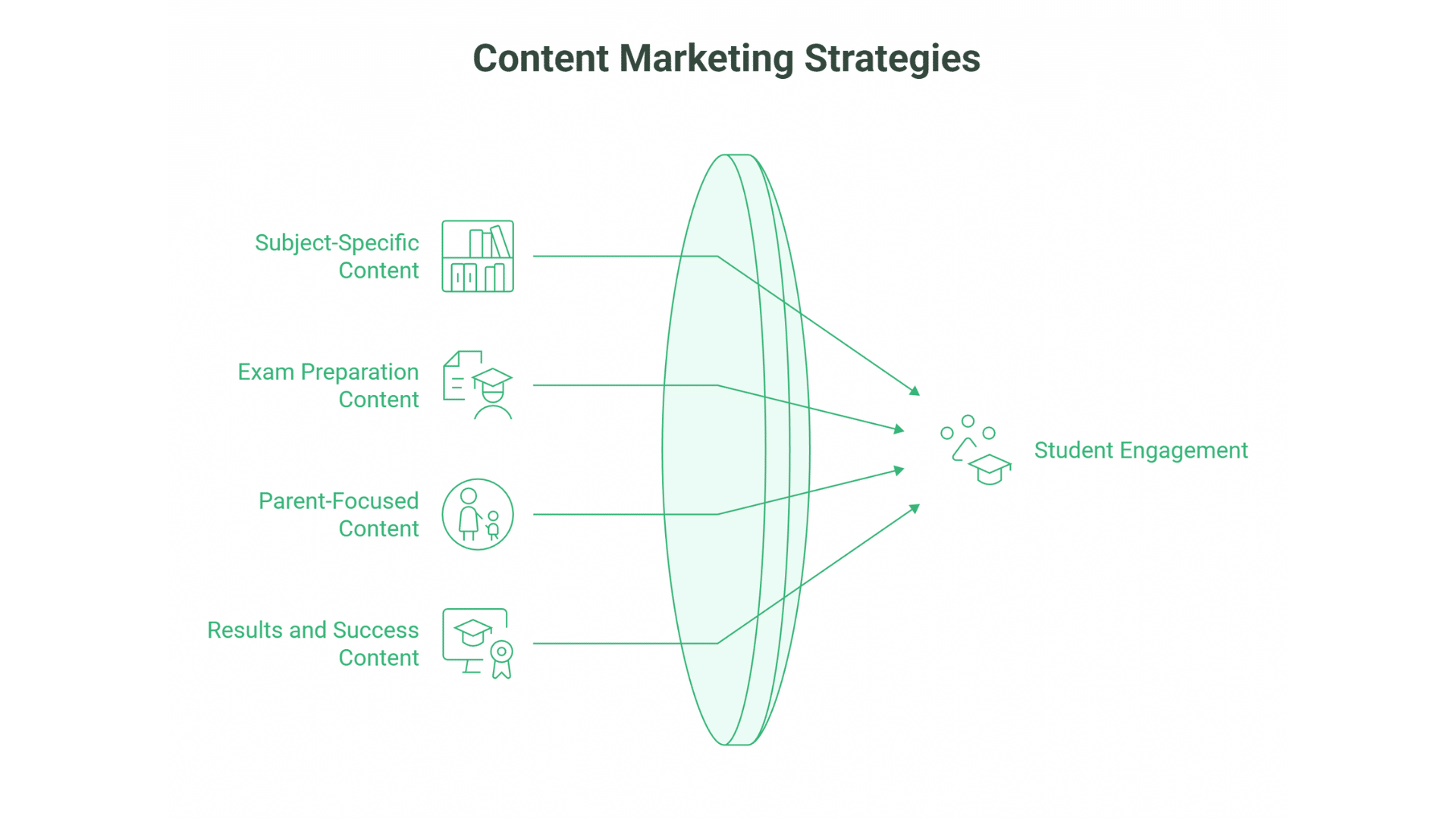
Content marketing demonstrates expertise and captures students at different stages.
Subject-Specific Content
Create content demonstrating subject expertise:
- Topic explanations: Clear explanations of difficult concepts in your subjects
- Common mistakes: Common errors students make and how to avoid them
- Study techniques: Subject-specific study strategies
- Curriculum guides: What students need to know for specific qualifications
Exam Preparation Content
Content helping students prepare for specific exams:
- Exam guides: “Complete guide to GCSE maths revision”
- Exam tips: “A-level chemistry exam technique tips”
- Past paper guidance: How to use past papers effectively
- Time management: Revision scheduling and exam time management
Parent-Focused Content
Content addressing parent concerns:
- When to get a tutor: “Signs your child might benefit from tutoring”
- Choosing a tutor: “What to look for in a GCSE maths tutor”
- Supporting learning: “How parents can support exam revision”
- Understanding qualifications: Explanations of exam systems and grading
Results and Success Content
Content showcasing outcomes:
- Results announcements: Celebrating student achievements (with permission)
- Success stories: Case studies of student progress (anonymised if needed)
- Methodology explanations: How your approach delivers results
This content builds confidence while demonstrating your track record.
Online Tutoring SEO
Online tutoring requires different approach from local-only services.
Broader Geographic Targeting
Online tutors can target wider areas:
- National targeting: “Online GCSE maths tutor UK”
- No location: “Online A-level chemistry tutor”
- International: Targeting students globally for language or specialist subjects
Online-Specific Keywords
Target online-specific searches:
- “Online tutor [subject]”
- “Virtual tutoring [subject]”
- “Remote [subject] lessons”
- “Zoom tutor [subject]”
Building Trust for Online
Online tutoring faces additional trust barriers:
- Video introduction: Video content showing you and your approach
- Platform information: How sessions work technically
- Technology requirements: What students need for sessions
- Trial sessions: Offering introductory sessions to build confidence
Platform Presence
Online tutoring platforms provide visibility:
- Major platforms: Tutorful, Superprof, MyTutor, Wyzant
- Subject-specific platforms: Platforms focused on languages, music, or other specialisms
- Profile optimisation: Complete, compelling profiles on platforms you use
Platforms take commission but provide visibility and initial credibility.
Exam-Focused SEO
Much tutoring demand centres on specific exams.
Exam Period Timing
Tutoring searches peak before exam periods:
- September-October: New academic year, identifying needs
- January-February: Mock exams approaching, panic setting in
- April-May: Final revision push before summer exams
- August-September: Results released, resit needs emerge
Time content and campaigns around these cycles.
Exam Board Targeting
Different areas use different exam boards:
- England: AQA, Edexcel, OCR primarily
- Northern Ireland: CCEA predominantly
- Wales: WJEC primarily
- Scotland: SQA qualifications (different structure)
Target your relevant exam boards specifically: “AQA GCSE maths tutor,” “CCEA A-level biology tutoring.”
Specific Qualification Content
Create content for specific qualifications:
- Qualification guides: “Complete guide to AQA GCSE Mathematics”
- Specification coverage: What’s on the specification and how you cover it
- Paper-specific preparation: If qualifications have multiple papers
Trust Building for Tutors

Trust is paramount when parents choose tutors for their children.
Qualifications and Credentials
Display all relevant qualifications:
- Academic qualifications: Degrees, relevant certifications
- Teaching qualifications: PGCE, QTS if applicable
- DBS status: Enhanced DBS check (essential)
- Subject certifications: Any subject-specific credentials
- Professional memberships: Tutors’ Association membership
Experience Demonstration
Show your tutoring experience:
- Years tutoring: How long you’ve been teaching
- Students taught: Number of students (approximately if large)
- Results track record: Typical improvements and outcomes
- Subject experience: Depth of experience in each subject
Safeguarding
For tutors working with children:
- DBS check: Clear statement of enhanced DBS status
- Safeguarding training: Any relevant training completed
- References: Available on request from parents
Insurance: Public liability insurance if appropriate
This information is essential for parent confidence.
Measuring Tutor SEO Success
Track metrics connecting to student acquisition.
Key Metrics
Visibility:
- Google Business Profile views
- Website organic traffic
- Subject/level keyword rankings
- Content page views
Engagement:
- Time on site
- Subject page views
- Contact page visits
- Enquiry submissions
Business outcomes:
- Enquiries from organic search
- Trial sessions booked
- Ongoing students from search
- Revenue from search-acquired students
Student Lifetime Value
Tutoring students often continue for extended periods:
- GCSE students: Often 1-2 years of tutoring
- A-level students: Often 2 years
- Primary students: Potentially multiple years
Consider lifetime value when assessing marketing investment, not just initial booking value.
Seasonal Tracking
Account for tutoring seasonality:
- Compare to same period previous year
- Track peaks around exam periods
- Monitor enquiry quality through cycles
Common Mistakes Tutors Make
Avoid these frequent errors:
- Hidden qualifications: Not prominently displaying credentials that build trust.
- No DBS mention: Failing to mention DBS status when working with children.
- Generic content: Content that could describe any tutor. Show your specific expertise.
- No results evidence: Not showcasing the results students achieve with your help.
- Missing subject/level pages: Generic tutoring pages instead of specific subject and level targeting.
- No testimonials: Missing the social proof that builds confidence.
- Unclear pricing: Complete opacity about costs when parents want to budget.
- Poor local targeting: Missing local opportunities for face-to-face tutoring.
- Neglecting platforms: Ignoring tutoring platforms that provide visibility.
- No parent-focused content: Only addressing students when parents often search.
Getting Started with Tutor SEO
If you’re beginning SEO or reviewing existing efforts:
Immediate priorities:
- Claim and complete Google Business Profile
- List all subjects and levels clearly
- Display qualifications and DBS status
- Ensure contact information is correct
First month:
- Respond to any existing reviews
- Create subject/level-specific pages
- Verify consistent information across directories
- Request reviews from current students/parents
First three months:
- Build profiles on tutoring platforms
- Create location pages if offering local tutoring
- Develop subject-specific helpful content
- Build citations in relevant directories
Ongoing:
- Regular content demonstrating expertise
- Seasonal content around exam periods
- Prompt review requests
- Monitor and improve based on results
FAQs
How quickly can SEO generate tutoring enquiries?
Google Business Profile improvements often show results within weeks. Website content and broader visibility typically takes three to six months. Tutoring demand has seasonal peaks, optimise before these periods for maximum impact.
Should I be on tutoring platforms or focus on my own website?
Both. Platforms provide immediate visibility and credibility, especially for newer tutors. Your own website builds long-term presence and avoids platform commission. Most successful tutors use both.
How important is DBS check visibility?
Essential for tutoring children. Parents expect to see DBS status clearly stated. Not mentioning it raises questions and loses enquiries.
Should I display pricing on my website?
Yes. Parents typically want pricing information upfront to budget and compare. Transparency builds trust and qualifies enquiries.
How do I compete with tutoring agencies?
Individual tutors often win on personal connection, flexibility, and direct communication. Agencies have scale but can feel impersonal. Emphasise your direct relationship with students and personalised approach.
What content works best for tutors?
Subject-specific guides and exam preparation content perform well. Content demonstrating expertise attracts students while helping them, they remember you when they need more help.
How do I target multiple subjects without diluting focus?
Create dedicated pages for each subject and level. Clear website organisation helps visitors find relevant information and search engines understand your offerings.
Should I target students or parents?
Both, but differently. Parents often search for younger students (primary, GCSE). Older students (A-level, university) often search themselves. Content should address both audiences appropriately.
How do I handle different exam boards?
Specify which exam boards you’re experienced with. Create content targeting specific boards where relevant. Students and parents often search with exam board names.
Can new tutors compete with established ones?
Yes. Fresh qualifications, recent exam experience, and specific expertise can appeal to students. Strong SEO with clear positioning helps newer tutors compete effectively.
Building Long-Term Tutoring Business Growth
Tutor SEO rewards demonstrated expertise and trust-building. The fundamentals are clear: prominent qualifications and credentials, clear subject and level targeting, genuine reviews from students and parents, and content demonstrating knowledge.
Tutors executing these basics attract quality enquiries from students who need exactly what they offer. The opportunity isn’t sophisticated tactics, it’s establishing trust and expertise when students and parents search for help.
The tutors with full schedules aren’t necessarily the most qualified. They’re the ones visible when students search, credible when families research, and easy to contact when they decide. Make sure you’re one of them.
If you’re ready to improve your tutoring business’s search visibility and attract more students, ProfileTree’s team works with service businesses across Northern Ireland, Ireland, and the UK. We understand both the technical requirements of effective SEO and the trust-building essential for education services. Get in touch at profiletree.com/contact-us/ to discuss how we can help your tutoring business grow through search.