
SEO for Personal Trainers: How to Attract More Clients Through Search
Table of Contents
When someone decides to get fit, lose weight, or improve their health, they search online. “Personal trainer near me,” “fitness trainer Belfast,” “weight loss coach”—these searches happen constantly, and the trainers appearing in results book the clients while invisible competitors struggle to fill their diaries.
Personal trainer SEO operates in a highly local, relationship-driven market. Clients want trainers they can access easily—whether at a local gym, outdoor location, or their home. They’re making decisions about their health and committing significant time and money. The relationship matters as much as the service.
The fitness industry is competitive and constantly evolving. Online coaching, gym chains, boutique fitness studios, and countless individual trainers all compete for clients. But the personal trainers building sustainable businesses are those who become visible when local people search for fitness support.
ProfileTree works with service businesses across Northern Ireland, Ireland, and the UK to build search visibility that generates quality enquiries. For personal trainers, that means appearing when potential clients search, demonstrating expertise and results, and making it easy to start the conversation.
Why Search Visibility Matters for Personal Trainers
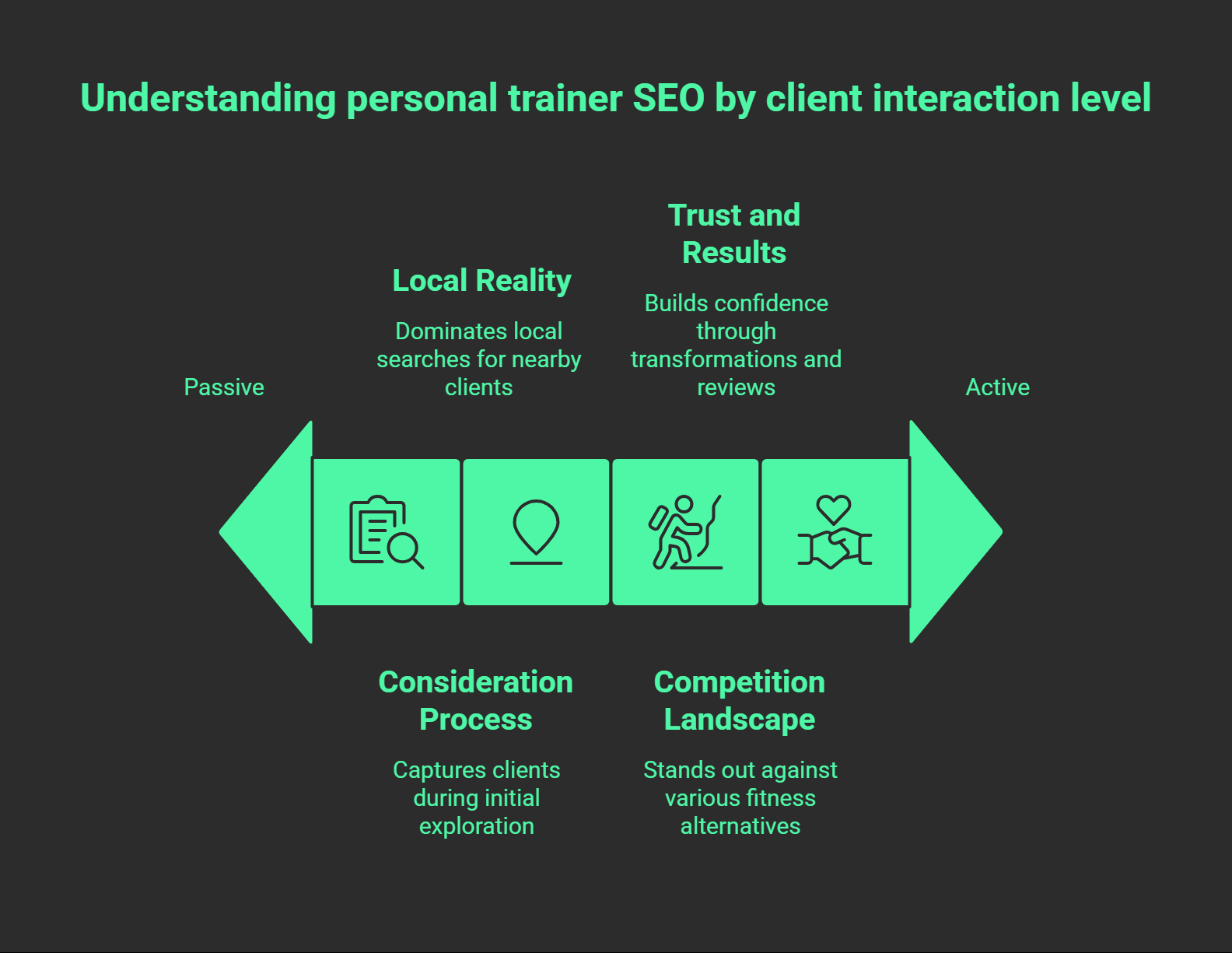
The fitness market has distinct characteristics that shape SEO strategy.
The Local Reality
Personal training is inherently local:
- Clients need trainers they can physically access
- Sessions happen at gyms, parks, homes, or studios
- Convenience affects adherence and results
- Local reputation matters through word of mouth
This geographic focus makes local SEO particularly powerful. Dominating searches in your specific area captures clients who can actually train with you.
The Consideration Process
People considering personal training typically:
- Research options before committing
- Compare trainers by specialism, location, and price
- Look for evidence of results
- Want to understand the approach and personality
- Often delays decision (motivation cycles)
Your online presence must capture people during research, build confidence, and make taking action easy.
Competition Landscape
Personal trainers compete against various alternatives:
- Other independent trainers
- Gym-employed PTs
- Boutique fitness studios
- Online coaching programmes
- Fitness apps and technology
- Group fitness classes
Effective SEO helps you stand out by emphasising your specific expertise, approach, and the results you help clients achieve.
Trust and Results
Fitness involves vulnerability:
- Clients may feel embarrassed about their current state
- They’re investing time, money, and effort
- Results depend on commitment from both sides
- Failed previous attempts may create scepticism
Your online presence must build confidence that you understand their challenges and can help them succeed.
“Personal trainers live or die on local visibility and trust. When someone searches for a PT, they’re looking for someone they can work with, someone who understands their goals, and someone who gets results. A strong online presence with genuine client transformations and reviews wins the clients.” — Ciaran Connolly, ProfileTree
Google Business Profile for Personal Trainers
Your Google Business Profile is foundational for PT local SEO. It appears when potential clients search and provides essential information.
Essential Profile Setup
Categories: Select accurate categories:
- Personal Trainer (primary)
- Fitness Trainer
- Health Coach
- Sports Coach
- Yoga Instructor (if applicable)
- Pilates Studio (if applicable)
Service areas: Define where you work:
- Gyms you operate from
- Areas you travel to
- Online if offered
Attributes: Complete relevant attributes:
- Online appointments/consultations available
- In-person sessions
- Payment methods
Business description: Communicate:
- Your training specialisms
- Who you help (demographics, goals)
- Where do you train clients
- Qualifications and experience
- Your approach and philosophy
Photography: Your Most Powerful Asset
For personal trainers, visuals are crucial:
Essential photos
- Professional headshot/portrait
- Action shots (training clients, demonstrating exercises)
- Training environment (gym, studio, outdoor locations)
- Client transformations (with permission)
- Qualifications and certifications
Photo approach
- Authentic over polished
- Show your personality
- Demonstrate capability
- Include a variety of clients (with permission)
- Update regularly with fresh content
Transformation photos
- Obtain clear permission
- Present respectfully
- Include context (timeframe, approach)
- Never exaggerate or mislead
Managing Reviews
Reviews heavily influence PT choice:
Encouraging reviews
- Ask clients who’ve achieved results
- Time requests when motivation is high
- Make it easy with direct links
- Never offer incentives
What to encourage clients to mention
- Goals achieved
- Your training style and support
- How you helped them overcome challenges
- Overall experience
- Specific results were comfortable sharing
Responding to reviews
- Respond to every review warmly
- Celebrate client achievements
- Thank them for their trust and commitment
- Address concerns professionally
Website Strategy for Personal Trainers
Your website showcases your expertise and converts interest into enquiries.
Essential Website Elements
About you
- Your background and story
- Why did you become a trainer
- Qualifications and certifications
- Experience and expertise
- Personality and approach
Services offered
- One-to-one personal training
- Online coaching (if offered)
- Small group training
- Specialist programmes
- Package options
Who you help
- Target demographics
- Goals you specialise in
- Types of clients you work with
- Case studies and examples
Results and transformations
- Client success stories
- Before and after (with permission)
- Testimonials
- Measurable outcomes
Pricing
- Session rates or packages
- What’s included
- Payment options
- Introductory offers if applicable
Location and logistics
- Where you train
- Travel coverage
- Gym partnerships
- Online options
Contact
- Easy enquiry process
- Free consultation offer
- Multiple contact methods
Specialism Pages
Create pages for your key specialisms:
/weight-loss-personal-trainer/: Weight loss expertise
/strength-training/: Strength and conditioning focus
/post-natal-fitness/: Post-pregnancy specialism
/over-50s-fitness/: Mature client focus
/sports-performance/: Athletic training
Each page should include:
- Your expertise in this area
- Who you help
- Your approach
- Results achieved
- Testimonials from relevant clients
- Clear call to action
Location Pages
Target geographic searches:
/personal-trainer-belfast/: Belfast training services
/pt-lisburn/: Lisburn area coverage
/fitness-trainer-bangor/: Bangor services
These pages capture location-specific searches.
Results and Transformation Content
Showcase client success:
Case studies:
- Client starting point
- Goals and challenges
- Approach and programme
- Results achieved
- Client testimonial
- Photos (with permission)
Why it matters:
- Demonstrates capability
- Shows understanding of different clients
- Provides social proof
- Captures long-tail searches
Technical Foundations
Basic technical SEO supports visibility:
Speed: Fast-loading, especially on mobile
Mobile: Many fitness searches happen on phones
HTTPS: Security for contact forms
Schema markup: LocalBusiness and PersonalTrainer schema
Our guide at profiletree.com/seo-basics/ covers technical fundamentals.
Local SEO Strategy: SEO for Personal Trainers
Personal training is intensely local. Clients need trainers they can access.
Local Keyword Targeting
Understand how potential clients search:
Generic + location: “Personal trainer Belfast,” “PT near me,” “fitness trainer Derry”
Goal + location: “Weight loss trainer [location],” “strength coach near me”
Demographic + location: “Female personal trainer,” “over 50s fitness [location]”
Specialism + location: “Boxing fitness [location],” “yoga teacher near me”
Your Google Business Profile and website should target these patterns.
Building PT Citations
Directory listings reinforce presence:
Fitness directories:
- Register of Exercise Professionals (REPs)
- CIMSPA registered professionals
- National Register of Personal Trainers
- Fitness platform profiles (MyFitnessPal, etc.)
General directories:
- Yell.com
- Thomson Local
- Bark
- Yelp
Local directories:
- Local business listings
- Gym directories
- Community directories
Ensure consistent Name, Address, and Phone across all listings.
Gym and Location Presence
If you work from specific gyms:
- Ensure the gym website links to you
- Be listed on the gym’s PT page
- Optimise for “[gym name] personal trainer”
- Create content about training at that location
Local Link Building
Local links strengthen visibility:
- Partner with local health businesses
- Connect with local sports clubs
- Build relationships with physiotherapists and nutritionists
- Participate in local fitness events
- Join local business networks
- Support local sports teams and charity events
Content Strategy for Personal Trainers
Content marketing demonstrates expertise and captures clients at different stages.
Educational Fitness Content
Helpful content demonstrating knowledge:
Exercise guides: “How to deadlift properly,” “Perfect squat technique,” “Core exercises for beginners”
Training information: “How often should you train,” “Rest and recovery guide,” “Progressive overload explained”
Nutrition basics: “Nutrition for weight loss,” “Protein requirements,” “Meal prep tips”
Goal-specific: “How to lose belly fat,” “Building muscle over 40,” “Getting started with fitness”
Client Journey Content
Content for people considering personal training:
Decision content: “Is personal training worth it,” “What to expect from a PT,” “How to choose a personal trainer”
Comparison content: “Personal training vs gym membership,” “Online coaching vs in-person training”
Barrier-busting: “Too unfit for a personal trainer,” “Personal training on a budget,” “Overcoming gym anxiety”
Results and Transformation Content
Content showcasing outcomes:
Client stories: Detailed case studies of client journeys
Transformation features: Before/after with context and approach
Progress content: What realistic progress looks like
Local Fitness Content
Content with local relevance:
Location content: “Best outdoor training spots in Belfast,” “Running routes in [area]”
Local events: Local fitness events, park runs, challenges
Community content: Local fitness community involvement
Video content works particularly well for fitness—exercise demonstrations, client testimonials, and training sessions. Our guide at profiletree.com/video-storytelling/ covers video strategy.
Specialism SEO Strategies: Personal Trainers SEO
Different PT specialisms require different approaches.
Weight Loss Specialism
Target keywords:
- “Weight loss personal trainer [location]”
- “Fat loss coach”
- “Help losing weight”
Content focus:
- Weight loss success stories
- Sustainable approach content
- Nutrition guidance
- Mindset and habit content
Trust elements:
- Before/after transformations
- Client testimonials
- Realistic timeframe setting
Strength and Conditioning
Target keywords:
- “Strength training [location]”
- “Powerlifting coach”
- “Build muscle personal trainer”
Content focus:
- Strength programming content
- Technique and form guides
- Progress tracking methods
- Competition preparation
Post-Natal Fitness
Target keywords:
- “Post-natal personal trainer [location]”
- “Mum fitness”
- “Post-pregnancy exercise”
Content focus:
- Safe return to exercise
- Diastasis recti awareness
- Mum-specific challenges
- Flexible training options
Trust elements:
- Relevant qualifications
- Understanding of post-natal bodies
- Testimonials from mums
Senior Fitness
Target keywords:
- “Personal trainer for over 50s”
- “Senior fitness [location]”
- “Older adult exercise”
Content focus:
- Age-appropriate training
- Health condition considerations
- Maintaining independence
- Social and mental benefits
Trust elements:
- Experience with older clients
- Understanding of limitations
- Testimonials from senior clients
Social Media and Personal Trainer SEO Integration
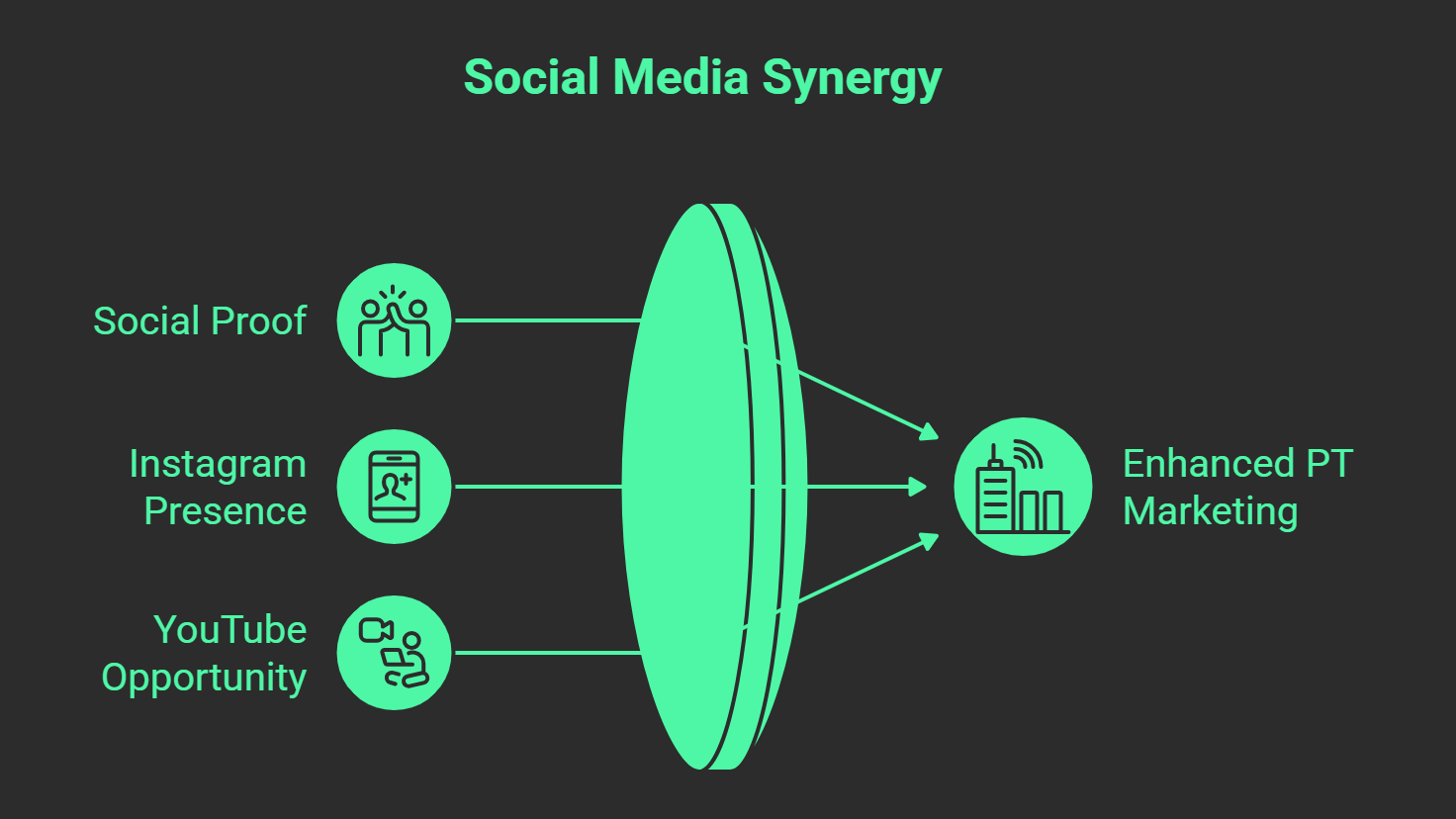
Social media plays a significant role in PT marketing.
Social Proof and Content
Social media provides:
- Regular content for engagement
- Transformation and results sharing
- Personality demonstration
- Community building
- Content that can be repurposed for SEO
Instagram Presence
Instagram is particularly important for PTs:
- Visual platform suits fitness content
- Stories show daily activity
- Reels demonstrate exercises
- Testimonials and transformations
- Direct enquiry channel
YouTube Opportunity
Video content creates SEO opportunity:
- Exercise tutorials rank in search
- Client testimonials build trust
- Training vlogs show personality
- Content embeds on the website
Measuring PT SEO Success
Track metrics connecting to actual client acquisition.
Key Metrics
Visibility:
- Google Business Profile views
- Website organic traffic
- Local keyword rankings
- Content engagement
Engagement:
- Enquiries from search
- Free consultation bookings
- Phone calls from the search
- Contact form submissions
Business outcomes:
- Consultations from the search
- Clients signed from search leads
- Revenue from search-acquired clients
- Client retention by source
Client Lifetime Value
PT clients can have significant lifetime value:
- Regular ongoing sessions
- Long-term relationships
- Programme renewals
- Referrals to others
Track retention and referral patterns by acquisition source.
Seasonal Patterns
Fitness has predictable seasonality:
- January new year resolution peak
- Pre-summer body goals
- Post-holiday fitness returns
- Autumn routine establishment
Compare performance to the same periods in previous years.
Common Mistakes Personal Trainers Make
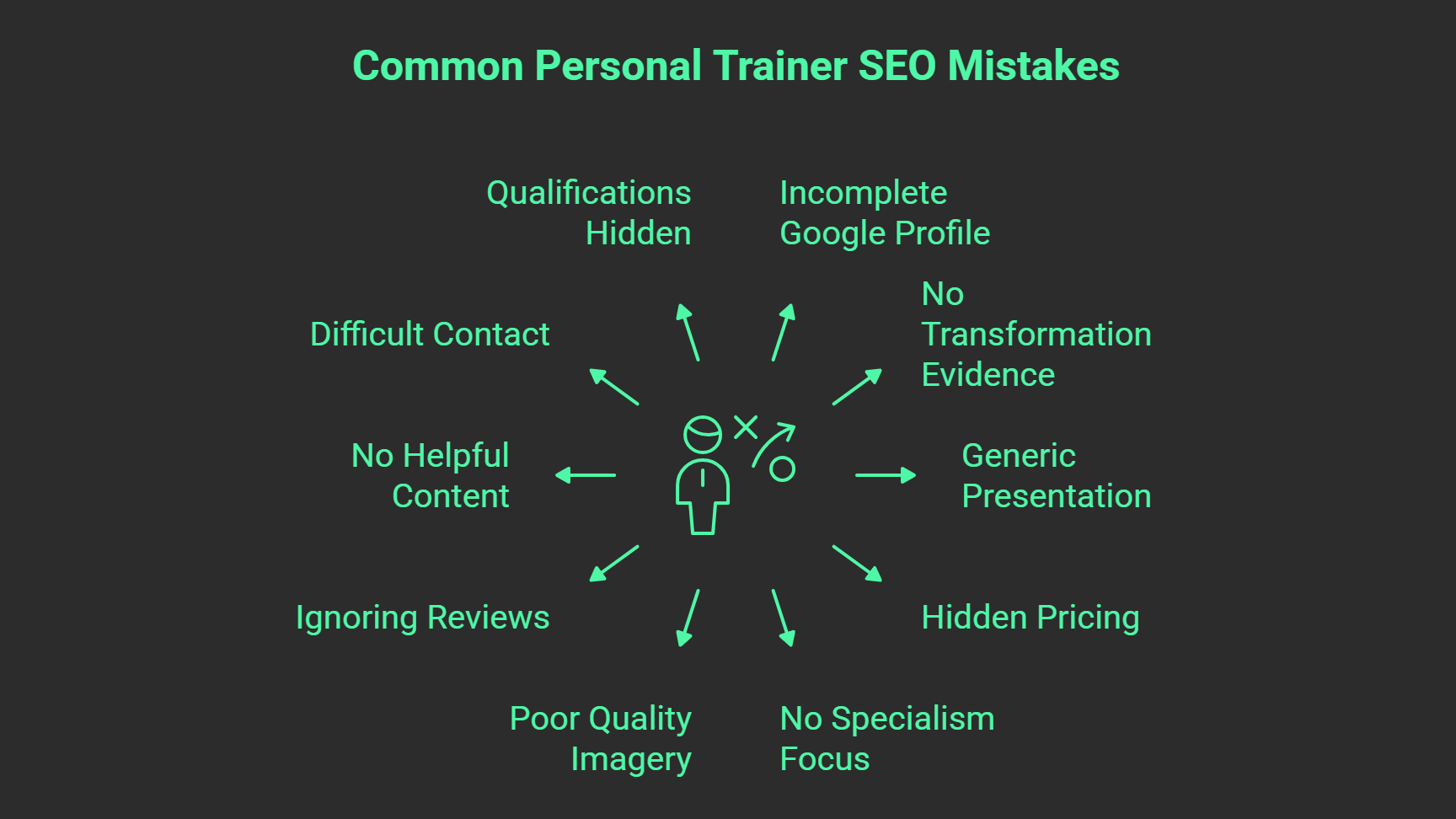
Avoid these frequent errors:
Incomplete Google Business Profile: Missing services, few photos, and unmanaged reviews. Complete profiles dramatically outperform basic ones.
No transformation evidence: Missing opportunity to show results with before/after photos and case studies.
Generic presentation: A website that could describe any PT. Show what makes you distinctive.
Hidden pricing: Not indicating costs at all. Some pricing guidance helps qualify enquiries.
No specialism focus: Trying to appeal to everyone instead of owning specific niches.
Poor quality imagery: Low-quality or outdated photos. Visual quality matters in fitness.
Ignoring reviews: Not requesting reviews from successful clients.
No helpful content: Missing opportunity to demonstrate expertise through educational content.
Difficult contact: Complicated enquiry process or slow response to potential clients.
Qualifications hidden: Not displaying certifications and insurance prominently.
Getting Started with Personal Trainer SEO
If you’re beginning SEO or reviewing existing efforts:
Immediate priorities:
- Claim and complete the Google Business Profile
- Add quality photos, including action shots
- Display qualifications prominently
- Ensure contact is easy
First month:
- Respond to all existing reviews
- Create specialism pages
- Verify consistent information across directories
- Implement the review request process
First three months:
- Build citations in fitness directories
- Create helpful fitness content
- Add client transformation case studies
- Improve technical foundations
Ongoing:
- Regular fitness content
- Fresh transformation features
- Reviews from successful clients
- Monitor and improve based on results
Frequently Asked Questions
How quickly can SEO generate PT client enquiries?
Google Business Profile improvements often show results within weeks. Website and broader visibility typically take three to six months. Seasonal peaks (January especially) may show faster results if you’re visible.
Should I display pricing on my website?
Yes, at least starting prices or package ranges. Price-sensitive prospects will go elsewhere anyway. Transparency qualifies enquiries and reduces time-wasters.
How important are transformation photos?
Very important—they’re your most powerful proof of results. Always get proper permission, present respectfully, and provide context about timeframes and approach.
What content works best for personal trainers?
Exercise tutorials and guides capture research searches. Transformation stories provide proof. Goal-specific content (weight loss, strength) targets motivated searchers. Local content captures geographic searches.
How do I compete with gym-employed PTs and big chains?
Personal service, flexibility, specialism, and individual attention. Many clients prefer independent PTs who focus entirely on them. Emphasise what makes your service personal.
Should I focus on online or in-person training for SEO?
Focus on what you primarily offer. In-person requires a local SEO focus. Online opens a broader geography but more competition. Many trainers offer both—create distinct content for each.
How important is social media compared to SEO?
Both matter, but differently. Social builds engagement and personality; SEO captures active searchers. Instagram is particularly valuable for PTs, but shouldn’t replace SEO efforts.
Can new trainers compete with established ones?
Yes. Fresh approach, strong online presence, and excellent service can attract clients regardless of experience. Focus on your specialism and build reviews quickly from early clients.
How do I handle reviews from clients who didn’t get results?
Respond professionally, acknowledge their experience, and avoid being defensive. Consider what you might learn. Most reasonable people understand that fitness requires client commitment, too.
Should I invest in video content?
Yes, if possible. Video works extremely well for fitness—exercise demonstrations, client testimonials, and personality content. YouTube videos can rank in search and be embedded on your website.
Building Long-Term PT Success
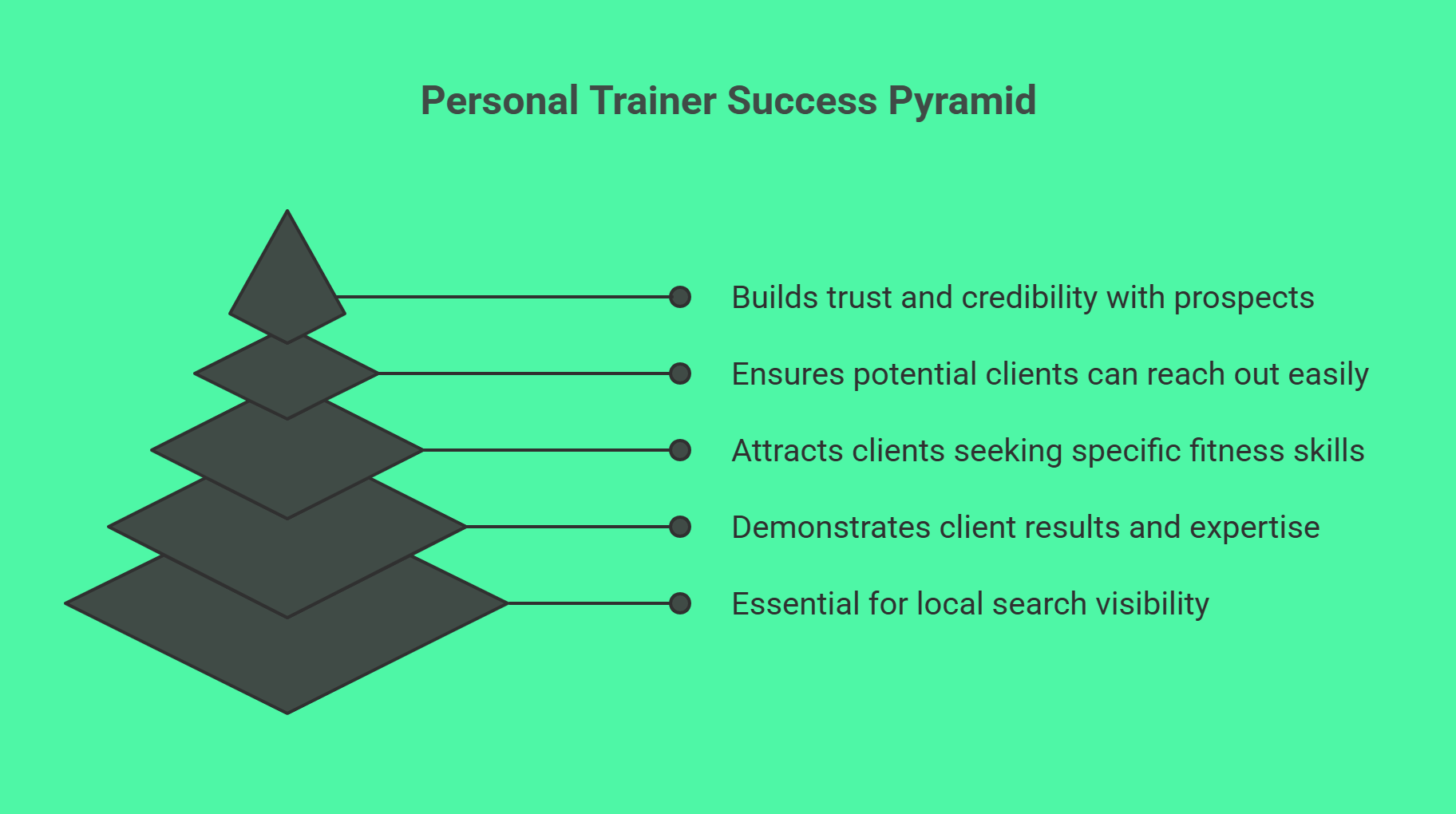
Personal trainer SEO rewards demonstrated expertise and local focus. The fundamentals are clear: complete Google Business Profile, transformation evidence, specialism content, easy contact, and genuine reviews.
Trainers executing these basics attract clients from competitors who don’t. The opportunity isn’t sophisticated tactics—it’s being visible and credible when local people search for fitness support.
The personal trainers building sustainable businesses aren’t necessarily the most qualified or cheapest. They’re the ones visible when potential clients search, convincing when prospects research, and easy to contact when people are ready to start. Make sure you’re one of them.
If you’re ready to improve your personal training business’s search visibility and attract more clients, ProfileTree’s team works with service businesses across Northern Ireland, Ireland, and the UK. We understand both the technical requirements of effective local SEO and the trust-building essential for fitness marketing. Get in touch at profiletree.com/contact-us/ to discuss how we can help your business grow through search.