
Link Building Services: Building Authority Through Quality Backlinks
Table of Contents
Link building services focus on acquiring quality backlinks from relevant, authoritative websites to improve search engine rankings. ProfileTree provides link building services across Northern Ireland, Ireland, and the UK, helping businesses build the off-page authority signals that search engines use to determine which websites deserve top rankings.
Backlinks remain one of Google’s most important ranking factors. When authoritative websites link to your content, they’re essentially vouching for its quality and relevance. The more quality sites that vouch for you, the more search engines trust your content deserves visibility. But not all links are created equal—and in 2024, the wrong approach to link building can harm rankings rather than help them.
Why Link Building Matters
Backlinks continue to be fundamental to SEO success:
Links as Trust Signals
Search engines interpret links as endorsements:
| Link Source | Trust Signal |
| Industry authority site | Strong relevance endorsement |
| News publication | Credibility and noteworthiness |
| Educational institution | Academic trust |
| Government site | Institutional authority |
| Relevant blog | Topical relevance |
The Logic: If respected websites link to your content, that content is probably valuable. If nobody links to you, search engines have less evidence of value.
Ranking Impact
Links directly affect rankings:
Correlation Studies: Multiple industry studies consistently show strong correlation between backlink profiles and rankings. Sites ranking position 1 typically have significantly more referring domains than those ranking position 10.
Practical Reality: For competitive keywords, strong content alone rarely achieves page one rankings. Authority built through quality links is typically required.
Domain and Page Authority
Links build authority at multiple levels:
Domain Authority: Links to any page on your site build overall domain authority, benefiting all pages.
Page Authority: Links to specific pages concentrate authority, helping those pages rank for their target terms.
Authority Distribution: Internal linking then distributes acquired authority throughout your site.
Competitive Necessity
In competitive markets, link building is essential:
Competitive Reality:
- Competitors actively building links
- Standing still means falling behind
- Quality content needs promotion to earn links
- Natural link acquisition alone is rarely sufficient
What Makes a Quality Backlink?
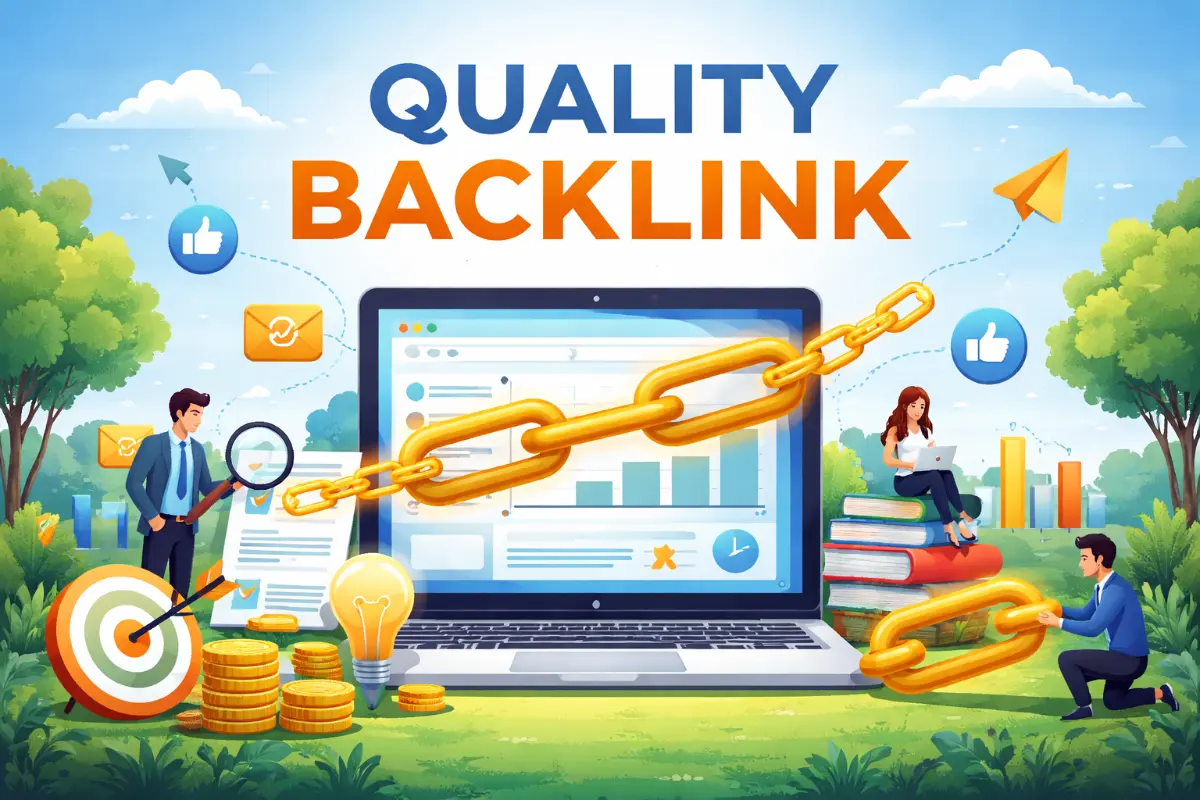
Not all links provide equal value:
Relevance
The linking site should relate to your content:
| Relevance Level | Example | Value |
| Highly relevant | Industry publication linking to industry content | Highest |
| Topically related | Business blog linking to business service | High |
| Broadly relevant | Local news linking to local business | Good |
| Loosely related | General directory listing | Lower |
| Irrelevant | Random unrelated site | Minimal/risky |
Why Relevance Matters: Google understands context. A link from a relevant source makes logical sense. A link from an unrelated site looks suspicious.
Authority
The linking site’s own authority matters:
Authority Indicators:
- Domain age and history
- Quality of site’s own backlinks
- Traffic and engagement levels
- Content quality
- Industry recognition
Authority Metrics: Tools provide proxy metrics (Domain Authority, Domain Rating, Trust Flow) but these are third-party estimates, not Google metrics.
Link Placement
Where the link appears affects value:
| Placement | Value |
| Within main content | Highest |
| Author bio | Good |
| Resource section | Good |
| Footer | Lower |
| Sidebar | Lower |
| Comment section | Minimal |
Contextual Links: Links surrounded by relevant content in the main body provide the strongest signals.
Anchor Text
The clickable text of the link matters:
Anchor Text Types:
| Type | Example | Notes |
| Branded | “ProfileTree” | Safe, natural |
| Naked URL | “profiletree.com” | Safe, natural |
| Generic | “click here,” “read more” | Safe but less valuable |
| Partial match | “web design services | Useful, moderate risk if overused |
| Exact match | SEO agency Belfast | Valuable but risky if overused |
Natural Anchor Distribution: A natural backlink profile includes varied anchor text. Over-optimisation with exact match anchors can trigger penalties.
Follow vs Nofollow
Link attributes affect value:
Follow Links: Pass authority (PageRank). The default for links.
Nofollow Links: Tell search engines not to pass authority. Common on social media, sponsored content, user-generated content.
Sponsored Attribute: Indicates paid/sponsored links. Should be used for any paid placements.
UGC Attribute: Indicates user-generated content links.
Reality: A natural profile includes both follow and nofollow links. Nofollow links still provide brand exposure and referral traffic.
Link Building Approaches
Multiple strategies can build quality backlinks:
Content-Based Link Building
Creating content that earns links:
Linkable Content Types:
| Content Type | Why It Earns Links |
| Original research | Unique data people cite |
| Comprehensive guides | Reference resource |
| Tools and calculators | Practical utility |
| Infographics | Visual, shareable |
| Industry statistics | Citable data |
| Expert roundups | Participant sharing |
The Process:
- Create genuinely valuable content
- Identify who would benefit from it
- Outreach to relevant sites
- Encourage sharing and linking
Content Promotion: Quality content still needs promotion. Building it doesn’t guarantee links—you must actively reach potential linkers.
Digital PR
Earning links through media coverage:
Digital PR Tactics:
- Newsworthy story creation
- Expert commentary provision
- Data-driven story pitches
- Newsjacking (timely commentary)
- Award submissions
- Event sponsorship
Media Relationships: Building relationships with journalists and publishers in your industry creates ongoing link opportunities.
Coverage Types:
| Coverage | Link Potential |
| News article mention | Editorial link possible |
| Expert quote | Linked attribution |
| Feature story | Multiple link opportunities |
| Award recognition | Award site link + coverage |
| Event coverage | Event and news site links |
Guest Posting
Contributing content to other sites:
Quality Guest Posting:
- Target relevant, quality publications
- Provide genuinely valuable content
- Natural link inclusion
- Build ongoing relationships
Guest Posting Best Practices:
Target Selection:
- Relevant to your industry
- Engaged audience
- Editorial standards
- Real traffic (not just link farms)
Content Quality:
- Original, valuable content
- Matches publication style
- Genuinely useful to their audience
- Not thinly-veiled self-promotion
Link Inclusion:
- Natural, contextual links
- Varied anchor text
- Link to genuinely relevant resources
- Don’t force links where they don’t fit
Guest Posting Red Flags:
- “Write for us” pages soliciting any topic
- Sites accepting any submission
- Payment for publication
- Low content quality standards
- Obvious link schemes
Resource Link Building
Getting included in resource pages:
The Approach:
- Find resource pages in your industry
- Identify gaps in their listings
- Create content filling that gap
- Reach out suggesting inclusion
Resource Page Types:
- Industry resource compilations
- Tool and software lists
- Reading lists and guides
- Local business directories
- Educational resource pages
Broken Link Building
Replacing broken links with your content:
The Process:
- Find resource pages with broken links
- Identify what the broken link pointed to
- Create equivalent or better content
- Contact site owner suggesting replacement
Why It Works: You’re helping site owners fix problems while gaining links—a genuine value exchange.
Competitor Backlink Analysis
Learning from competitor link profiles:
The Approach:
- Identify competitor backlinks
- Analyse their link sources
- Identify replicable opportunities
- Pursue similar links with better content
Replicable Link Types:
- Directory listings
- Industry association memberships
- Guest post opportunities
- Resource page inclusions
- Speaking and event opportunities
Local Link Building
Building links within geographic areas:
Local Link Opportunities:
| Source | Approach |
| Local business directories | Submit listings |
| Chamber of Commerce | Membership |
| Local news sites | Story opportunities |
| Community organisations | Sponsorship, participation |
| Local charities | Support and involvement |
| Business associations | Membership |
| Local blogs | Collaboration |
Local Relevance: For local businesses, links from local sources provide strong geographic relevance signals.
What to Avoid in Link Building
Certain practices risk penalties:
Link Schemes
Google explicitly penalises manipulative link schemes:
Prohibited Practices:
- Buying or selling links for rankings
- Excessive link exchanges
- Large-scale article marketing with keyword-rich links
- Automated link building
- Private Blog Networks (PBNs)
- Comment spam
- Forum signature spam
Low-Quality Link Sources
Avoid links from problematic sources:
| Source Type | Risk |
| Link farms | High penalty risk |
| Irrelevant directories | Wasted effort, potential risk |
| Comment spam | No value, risk |
| Private Blog Networks | High penalty risk |
| Purchased links (undisclosed) | Against guidelines |
| Article directories | Low value, potential risk |
Over-Optimised Anchor Text
Unnatural anchor text patterns trigger penalties:
Warning Signs:
- High percentage of exact match anchors
- Same anchor text from many sources
- Keyword-stuffed anchors
- Anchors that don’t fit context
Sudden Link Velocity Changes
Unnatural link acquisition patterns raise flags:
Suspicious Patterns:
- Sudden spike in links
- Links from single source type only
- Rapid follow by no activity
- Patterns matching known schemes
Natural Patterns: Steady, gradual link acquisition from varied sources with varied anchors.
Measuring Link Building Success
Track metrics indicating link building effectiveness:
Link Profile Metrics
Quantitative Measures:
| Metric | What It Shows |
| Total referring domains | Breadth of link profile |
| New referring domains | Growth rate |
| Domain authority of linking sites | Quality of profile |
| Anchor text distribution | Natural vs optimised |
| Follow vs nofollow ratio | Link value balance |
| Link placement types | Contextual vs peripheral |
Quality Assessment:
- Manual review of new links
- Relevance evaluation
- Authority assessment
- Risk identification
Ranking and Traffic Impact
Ultimate Success Measures:
- Rankings for target keywords
- Organic traffic growth
- Referral traffic from links
- Brand search volume
Attribution Challenges: Links work alongside other SEO factors. Isolating link building impact requires careful analysis.
Link Building KPIs
Monthly Tracking:
- New referring domains acquired
- Quality of domains acquired
- Content pieces earning links
- Outreach response rates
- Coverage secured (for digital PR)
Link Building Process
A structured approach to link acquisition:
Phase 1: Analysis
Current State Assessment:
- Existing backlink profile audit
- Competitor link analysis
- Gap identification
- Opportunity mapping
Strategy Development:
- Prioritised target sites
- Content needs identification
- Approach selection
- Timeline and targets
Phase 2: Asset Creation
Linkable Asset Development:
- Content creation
- Resource development
- Tool or calculator creation
- Data compilation
Assets Supporting Outreach:
- Quality content for guest posting
- Story angles for PR
- Resources for inclusion
Phase 3: Outreach
Prospecting:
- Target site identification
- Contact research
- Relationship mapping
Outreach Execution:
- Personalised outreach
- Value proposition communication
- Follow-up sequences
- Relationship building
Phase 4: Monitoring and Refinement
Ongoing Activities:
- New link tracking
- Quality verification
- Strategy refinement
- Opportunity expansion
Why Choose ProfileTree for Link Building?
ProfileTree combines ethical link building with comprehensive SEO expertise.
White Hat Approach
We build links that last:
- No purchased links
- No private blog networks
- No manipulative schemes
- Quality over quantity focus
- Sustainable long-term value
Content and PR Capability
Links earned through quality:
- Content marketing creating linkable assets
- Digital PR expertise
- Story development capability
- Media relationship building
Integrated SEO Service
Link building as part of comprehensive SEO:
- SEO services aligning all elements
- Technical foundation ensuring links deliver value
- Content strategy supporting link acquisition
- Local SEO integration
UK and Irish Market Understanding
Local market expertise:
- UK publication landscape
- Irish media relationships
- Regional link opportunities
- Local business ecosystem
Transparent Reporting
Clear visibility into link building activities:
- All links reported and documented
- Quality metrics tracked
- No hidden or risky practices
- Regular progress communication
Proven Track Record
Our 5-star rating from over 450 Google reviews includes clients who’ve achieved significant ranking improvements through our link building services.
FAQs
How much do link building services cost?
Link building typically ranges from £500-£2,000/month for basic campaigns to £2,000-£5,000+/month for comprehensive link acquisition including digital PR. Costs depend on competition level, target quantity and quality, and content creation requirements. Quality links require significant effort—cheap link building usually means low-quality or risky links.
How long does link building take to show results?
Individual links can affect rankings within weeks. Building a substantial link profile that meaningfully impacts competitive rankings typically takes 6-12+ months of consistent effort. Link building is a long-term strategy, not a quick fix.
How many links do we need?
There’s no universal number. What matters is acquiring more quality, relevant links than competitors for your target keywords. Analysis of competitor profiles reveals the approximate threshold for competitiveness. Quality always matters more than quantity.
Is buying links safe?
Buying links for SEO purposes violates Google’s guidelines and risks penalties. Google increasingly detects purchased links. Any legitimate paid placements (sponsored content, advertising) should use proper disclosure and nofollow/sponsored attributes. We don’t purchase links for ranking purposes.
Can bad links hurt our rankings?
Yes. Links from spammy, irrelevant, or manipulative sources can harm rankings. Google’s algorithms identify unnatural link patterns. In some cases, manual penalties result. If you have concerning existing links, disavow processes can address them.
What’s the difference between link building and digital PR?
Digital PR focuses on earning media coverage that naturally includes links. Traditional link building focuses directly on acquiring links through various methods. Digital PR often produces higher-authority links but requires newsworthy stories. Effective strategies often combine both approaches.
Should we disavow old bad links?
If you have clearly spammy or manipulative links from past activities or negative SEO attacks, disavowing can be appropriate. However, disavowing should be done carefully—disavowing legitimate links harms your profile. We can analyse your backlink profile and recommend appropriate action.
Conclusion
Link building services help businesses acquire the quality backlinks that signal authority and trust to search engines. In competitive markets, quality content alone rarely achieves top rankings—off-page authority built through strategic link acquisition is typically required.
ProfileTree provides link building services across Northern Ireland, Ireland, and the UK. Our white-hat approach focuses on earning quality, relevant links that provide sustainable ranking benefits without the risks of manipulative practices.
Ready to build the authority your website needs to compete? Contact ProfileTree to discuss how link building can improve your search visibility.