
Social Media as a News Source: The New Primary Choice
Table of Contents
Social media has become the primary news source for most of the global population, fundamentally changing how businesses should approach content marketing and digital strategy. For Belfast companies and UK organisations, understanding this shift is critical for reaching customers who now discover information through social feeds rather than traditional search or direct website visits.
ProfileTree helps Belfast businesses navigate this landscape through integrated digital strategy services. Our approach combines content marketing, video production, and social media strategy to position companies as trusted information sources.
“Most small businesses haven’t grasped that their potential customers are consuming information like news consumers now – through social feeds, video snippets, and real-time updates rather than deliberately seeking out company websites,” says Ciaran Connolly, founder of ProfileTree.
How Social Media Became the Primary News Source
Social media has replaced traditional news channels as the main information gateway for substantial portions of the population. According to Ofcom’s 2024 research, 71% of UK adults aged 16-24 use social platforms as their primary news source. This shift happened because social platforms deliver news instantly as events unfold, unlike newspapers or scheduled broadcasts.
Breaking news now reaches audiences in seconds through social feeds. This creates an accelerated information cycle that businesses can leverage for their own content strategies. Understanding these consumption patterns helps you position your expertise where customers actually look for information.
Why Traditional Media Lost Ground
Traditional newspapers faced declining readership and revenue as digital platforms offered faster, more accessible alternatives. The fundamental change wasn’t simply moving content online; it was recognising that social media platforms had become the gateway through which most people access all content. Despite this shift, newspapers maintain importance for credible reporting, but the discovery mechanism has changed completely.
Business Implications for Northern Ireland Companies
For Belfast businesses and organisations across Northern Ireland, this creates both opportunity and complexity. Your potential customers no longer follow predictable paths to information. They discover content through algorithm-curated feeds, trust sources differently, and expect real-time updates over static information.
Understanding these patterns determines where you invest in content creation and how you structure your approach. ProfileTree’s SEO services integrate these insights to position Belfast businesses where customers actually consume information.
Benefits of Social Media News Consumption for Business Strategy

The transformation of news consumption through social platforms brings three distinct advantages: speed, reach, and diversity of perspective. Breaking news spreads across networks instantly, meaning your business content can reach audiences just as quickly when you understand platform dynamics.
When industry developments occur, timely commentary positions you as an active participant rather than a late observer. This speed advantage alone justifies developing social media capabilities for business communication.
Key Statistics on News Consumption Patterns
The data reveals clear patterns about how different populations rely on social media for news:
| Region | Social Media for News | Key Platform |
|---|---|---|
| Kenya | 76% | |
| South Africa | 75% | X/Twitter |
| Nigeria | 78% | |
| Malaysia/Philippines | 72% | |
| Chile | 69% | |
| United States | 48% | |
| UK (16-24 year olds) | 71% | Instagram/TikTok |
| Europe (overall) | 40% | |
| Japan | 23% | X/Twitter |
- Most of the world population relies on social media as their main news source, with 48% in America, 69% in Chile, and 72% in Malaysia and the Philippines.
- The highest percentage that relies on social media for news is in Kenya and South Africa, reaching 76% and 75%, respectively.
- A recent survey conducted on the usage of social media as a news platform found that the users in Nigeria amounted to 78%, while those in Japan were only 23%.
- Europe remains the continent with the smallest percentage of users using social media as a news source, scoring 40%.
- New findings claimed that Facebook was among the most used platforms for getting news, with 61% of users, yet only 11% of adult users on Instagram use it for news.
- X/Twitter scores the highest as the social media platform used as a news source, with 74% of active accounts.
Platform-specific data shows X/Twitter leads as a news source platform, with 74% of active accounts using it for news. Facebook reaches 61% of users for news content despite being primarily social. Only 11% of Instagram users access news content there despite high overall usage.
Why Diverse Perspectives Matter for Business
Social media exposes audiences to multiple narratives around the same story. Unlike traditional journalism that presents one editorial viewpoint, social platforms show various perspectives. For businesses, this means your expertise can contribute to industry conversations rather than simply broadcasting promotional messages.
Sharing informed commentary on industry developments positions you as a thought leader. This approach builds authority more effectively than traditional advertising, particularly when combined with the social media marketing strategies we discuss in our guide to social media interaction.
How Businesses Can Position Themselves as Trusted News Sources
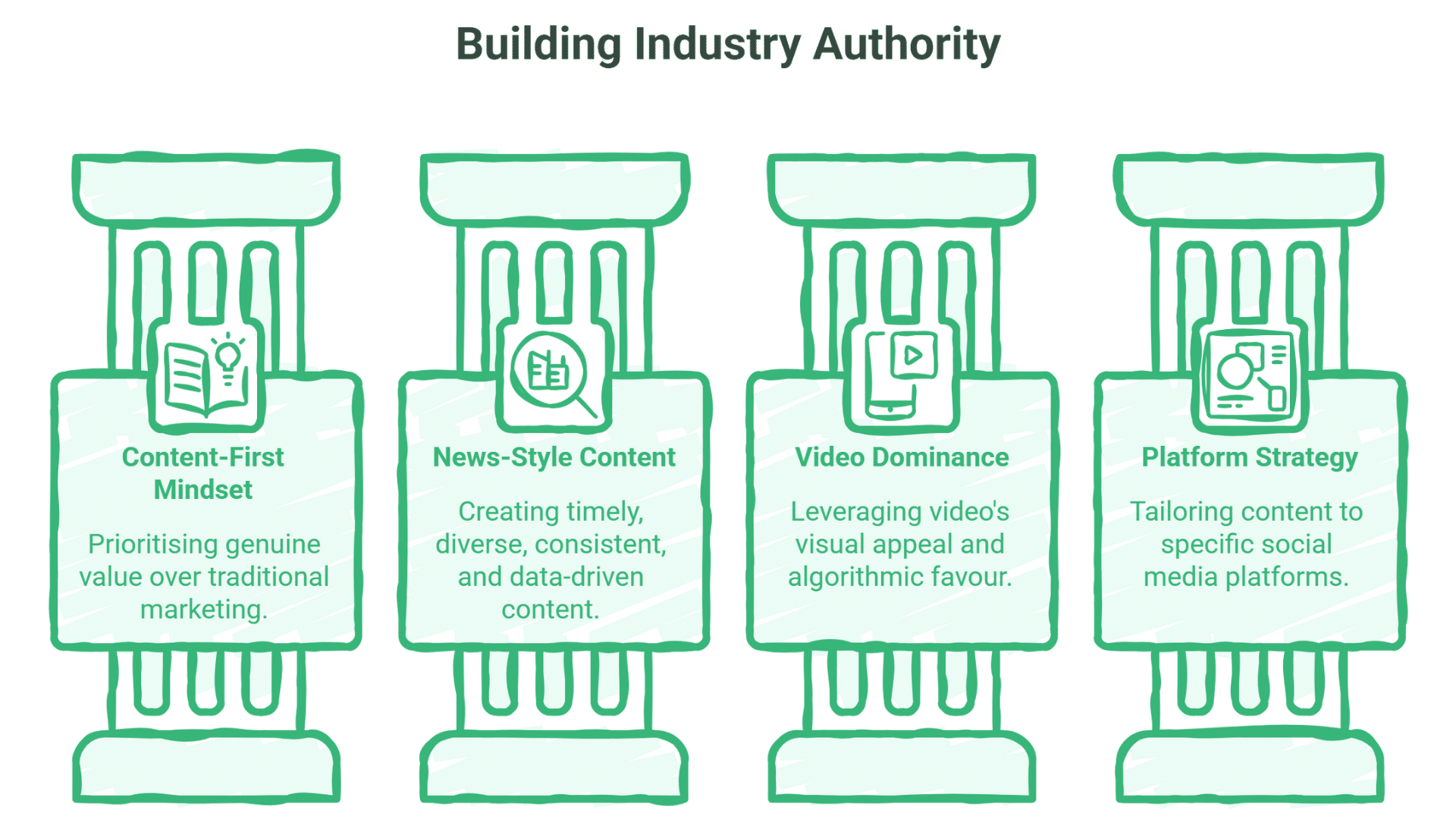
Businesses can establish industry authority by becoming reliable information sources within their sectors. This requires shifting from traditional marketing thinking to a content-first mindset that prioritises genuine value. Your business possesses expertise about your industry, market trends, and challenges facing customers.
Developing News-Style Business Content
Creating content that functions like industry news requires four specific approaches.
- Timeliness: Respond to industry developments as they happen.
- Multiple formats: Different audiences prefer different content types.
- Consistency: Regular publishing establishes reliability.
- Data-driven insights: Support perspectives with verifiable information.
ProfileTree’s content marketing services help Belfast businesses develop these approaches without requiring full-time content teams. We work with SMEs to create sustainable publishing schedules that build authority over time.
Why Video Content Dominates Social Media News
Video has become the preferred format because people process visual information three times faster than reading text. Platform algorithms heavily favour video, particularly formats like Reels and TikTok videos, giving video content preferential distribution in feeds. This isn’t optional—it’s now standard for effective social media presence.
ProfileTree’s video production services help businesses create news-style content that informs audiences whilst building brand authority. The approach differs from traditional corporate video, requiring content that grabs attention in three seconds and delivers value quickly. Learn more about video strategy in our article on YouTube marketing.
“Video isn’t optional anymore for businesses serious about social media presence. Your customers expect visual content, algorithms reward it, and competitors are already doing it,” says Ciaran Connolly.
Platform-Specific Strategy for Business News Content
Different platforms serve different purposes in your content strategy. LinkedIn works well for professional insights and B2B thought leadership. Twitter facilitates real-time commentary on industry developments. Instagram and TikTok suit visual storytelling and quick updates.
ProfileTree develops social media strategies that match content formats to platform requirements and audience expectations. A Belfast manufacturing company might share production innovation updates through LinkedIn articles, equipment demonstrations through YouTube videos, and quick industry tips through Instagram Reels.
The Role of Algorithms in Shaping News Discovery
Social media algorithms determine what content appears in user feeds by analysing engagement patterns and user behaviour. For businesses, understanding these algorithmic priorities shapes effective content strategy because algorithms reward specific content types and posting patterns. The challenge lies in breaking through to new audiences when algorithms prioritise familiar content.
How Echo Chambers Form and What This Means
Algorithms create filter bubbles—personalised content environments based on past behaviour. Users see content similar to what they’ve previously engaged with, potentially limiting exposure to diverse perspectives. This echo chamber effect means your content might only reach people already familiar with your perspective unless you employ deliberate expansion strategies.
Breaking through requires collaborating with complementary businesses and engaging in industry discussions beyond your immediate followers. The echo chamber effect also means that monitoring only your own social feeds provides incomplete market intelligence.
Working With Algorithms Rather Than Against Them
Four factors primarily influence how algorithms distribute content.
- Engagement signals: Comments, shares, and saves count more than passive likes.
- Video preference: Most platforms prioritise video because it generates longer engagement times.
- Posting timing: Content posted when your audience is active receives faster initial engagement.
- Consistency: Regular publishing schedules help algorithms categorise your account as reliable.
ProfileTree’s digital training programmes teach Belfast business teams how to create content that satisfies both audience needs and platform algorithms. This knowledge transforms social media from a promotional channel into a genuine business development tool.
Training Teams to Navigate Social Media News Trends
Business success with social media as a news source requires a team’s capability to execute effective strategies. Marketing teams need training in platform literacy, content creation skills, trend monitoring, community management, and analytics interpretation. Without these capabilities, your social media efforts will struggle regardless of budget or tools.
Essential Skills for Social Media Business Strategy
Five core capabilities matter most for businesses leveraging social media news consumption patterns.
- Platform literacy: Understanding how different networks function shapes where you invest resources.
- Content creation: Writing engaging copy and producing basic video content.
- Trend monitoring: Using tools to track industry conversations and spot opportunities.
- Community management: Engaging with audiences who comment.
- Analytics interpretation: Reading platform insights to understand what content resonates.
AI Tools for Social Media Monitoring
AI tools increasingly help businesses monitor social media conversations and identify opportunities. These systems track brand mentions, analyse sentiment around industry topics, and alert you to trending conversations where your expertise adds value. ProfileTree’s AI implementation services help Belfast SMEs adopt accessible AI solutions that deliver measurable ROI.
AI-powered social listening identifies when potential customers discuss problems your business solves. The key is using AI as a research assistant rather than replacing human judgment. Technology identifies opportunities, but your expertise creates content that builds relationships.
Challenges of Using Social Media as a News Source
Three primary challenges affect both news consumers and businesses: misinformation spread, echo chambers, and the lack of verification mechanisms. Understanding these obstacles helps you navigate them effectively whilst maintaining credibility. Each challenge requires specific strategies to address.
Spreading False Information and Misleading Content
Social media’s speed advantages create vulnerability to inaccurate information spreading rapidly. Unlike traditional journalism with editorial oversight, social platforms allow anyone to publish content instantly. For businesses, this creates reputational challenges when commenting on breaking news without verification.
The solution involves balancing responsiveness with responsibility through internal verification processes. When breaking news affects your industry, acknowledge developments whilst noting if details remain unconfirmed. This demonstrates awareness without premature commitment to potentially inaccurate narratives.
Echo Chambers Limit Audience Reach
Algorithms create personalised environments that can limit exposure to diverse perspectives. Users see content similar to previous interests, potentially reinforcing existing viewpoints. For businesses, this means content primarily reaches audiences already familiar with your perspective unless you actively expand reach.
Use social listening tools to track conversations outside your immediate network. This ensures you understand the full range of customer perspectives and industry discussions happening beyond your existing follower base.
Lack of Verification Mechanisms
Social platforms don’t offer built-in fact-checking for most content. Users often share, like, or comment without verifying accuracy, which increases post visibility through algorithmic promotion. Your accurate, well-researched content competes with less rigorous but potentially more engaging posts.
Address this by positioning your business as a trusted verification source. When industry misinformation circulates, create content that clarifies facts without condescension. Provide data, cite reputable sources, and explain complex topics clearly.
How Belfast Businesses Can Capitalise on Social Media News Consumption
Belfast businesses benefit from several advantages in leveraging social media news consumption. The city’s compact professional networks mean industry expertise spreads efficiently through social channels. Northern Ireland companies can establish a regional authority before expanding to broader UK markets.
Leveraging Local News Trends
Monitoring Northern Ireland news cycles reveals opportunities to connect business expertise with current conversations. When local policy changes, economic developments, or industry trends generate discussion, businesses can contribute informed perspectives demonstrating relevance. This involves commenting on how new regulations affect your sector or explaining economic data in accessible terms.
ProfileTree’s digital strategy services help Belfast businesses identify these opportunities and develop response frameworks. This includes monitoring local news sources, tracking social conversations, and preparing content positioning you as an informed industry voice.
Website Features That Support Social Sharing
Your website serves as the foundation for social media news strategy, even as discovery happens primarily through social platforms. Technical implementation determines how shared content appears in feeds and whether it attracts clicks. Four features support effective social sharing.
- Open Graph optimisation ensures content displays correctly when shared on Facebook and LinkedIn.
- Social sharing buttons make it effortless for visitors to share content across preferred platforms.
- Content hubs organised around industry topics position your website as an information resource.
- Mobile optimisation matters critically since most social media usage happens on mobile devices.
ProfileTree builds WordPress websites optimised for social sharing and mobile performance. Our web design approach treats websites as integrated digital presence hubs, ensuring technical implementation supports content strategy goals.
Integrating SEO and Social Media Strategy
The relationship between search engine optimisation and social media has evolved beyond simple link-building. Social signals now influence how search engines perceive authority, topical expertise, and content relevance through several mechanisms. When content performs well on social media, it triggers SEO-relevant outcomes.
Increased branded searches occur as people learn about your business through social platforms, then search for your company name directly. Social sharing generates referral traffic, signalling content value to search algorithms. Brand mentions across social platforms contribute to entity recognition in search systems.
How Social Media Supports Search Rankings
Four mechanisms connect social media performance to search visibility.
- Content amplification: Social sharing increases audience exposure to your content, improving chances of earning genuine backlinks.
- Brand signals: Consistent social media presence builds brand recognition, influencing click-through rates from search results.
- Topical authority: Regular content publication around specific subjects demonstrates expertise to both social algorithms and search systems.
- Local relevance: For Belfast businesses, active social media presence contributes to local search authority.
ProfileTree’s SEO services integrate social media strategy to maximise these connections. We treat search optimisation and social media as complementary approaches to building digital visibility and authority rather than separate channels.
Creating Multi-Platform Content
An effective digital strategy involves creating content serving multiple purposes across channels. A well-researched article published on your website can generate social media posts, video content, email newsletter segments, and search-optimised landing pages. This approach maximises content investment return whilst maintaining consistent messaging.
The key is adapting format and presentation to each platform’s requirements and audience expectations. A Belfast manufacturing company might create a detailed article about new industry regulations, then generate LinkedIn articles discussing business implications, Instagram carousel posts highlighting key points, YouTube video interviews, Twitter threads, and email updates.
The Responsibility of Platforms and Business Users
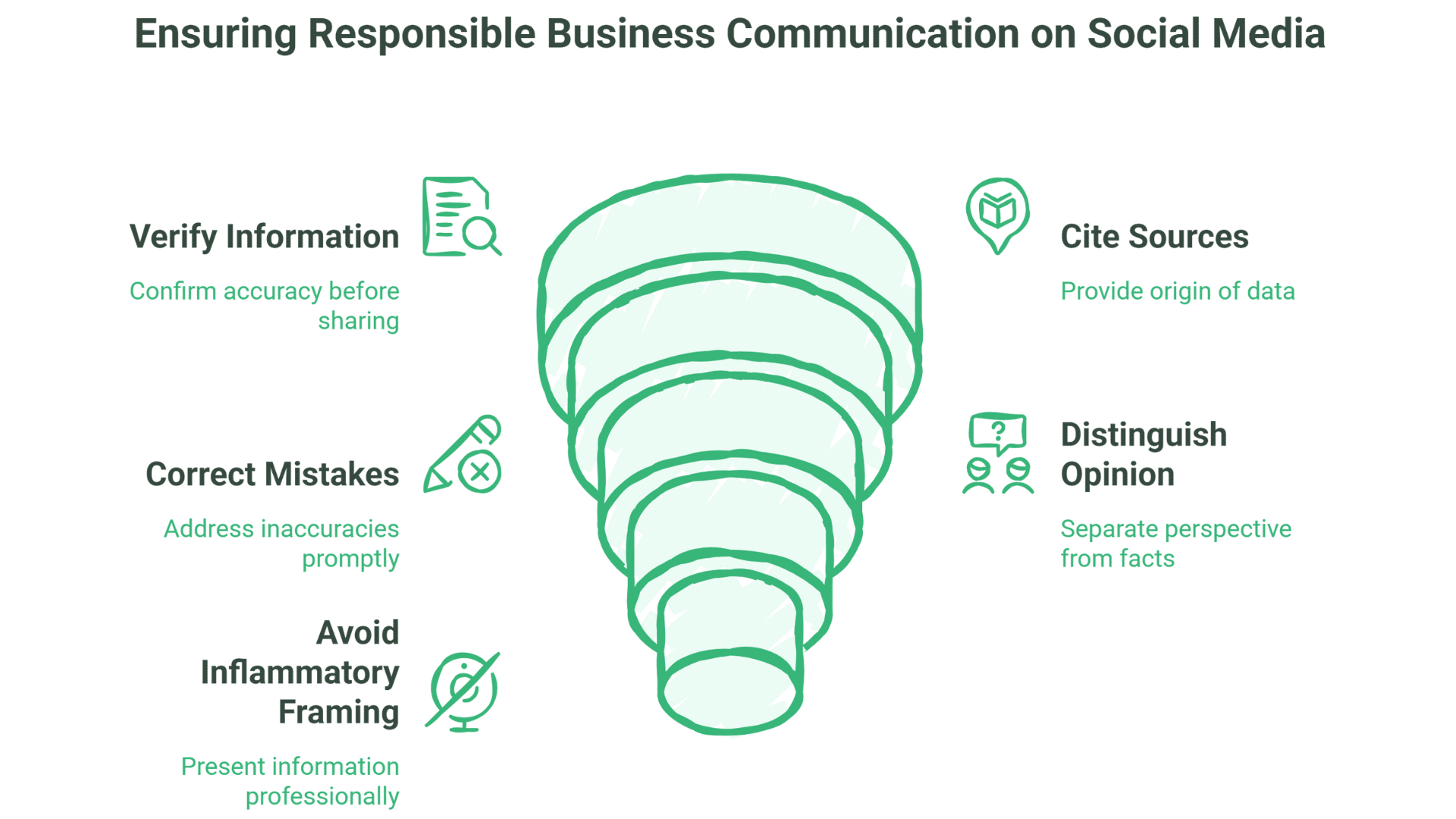
Social media companies face pressure to monitor content, limit misinformation, and create safer information environments. These efforts affect how business content is distributed and what posts receive algorithmic promotion. Companies using social media as part of their content strategy carry responsibility for accuracy and transparency.
Five practices support responsible business communication.
- Verify before sharing: Don’t amplify information without confirming accuracy.
- Cite sources: When sharing industry data, reference where information originated.
- Correct mistakes promptly: If you share inaccurate information, correct it quickly and transparently.
- Distinguish opinion from fact: Make clear when you’re offering perspective versus reporting verified information.
- Avoid inflammatory framing: Present information professionally rather than using sensational language.
Social media users must cultivate critical thinking when consuming news online. By adopting these practices, we can safeguard information integrity on social media and collectively combat false narratives spread.
The Future of Social Media News and Business Content
AI increasingly influences both content creation and distribution. AI-powered tools help businesses monitor conversations, identify trending topics, and even generate initial content drafts. Platforms use AI to personalise feeds more precisely, creating both opportunities and challenges for businesses trying to reach target audiences.
AI-Driven Search and Discovery
Traditional search engines now incorporate AI systems that understand context and user intent more sophisticatedly. Google’s Search Generative Experience provides AI-generated summaries alongside traditional search results, drawing from multiple sources to answer queries directly. For businesses, this means content needs to establish authority that AI systems will reference and cite.
Clear, factual information presented in well-structured formats becomes more valuable. AI tools seek reliable sources to include in generated responses, making your authoritative content more valuable in this new landscape.
Video Format Evolution
The trend toward video content shows no signs of reversing. Expectations for video quality, authenticity, and value continue rising as audiences become sophisticated consumers. Future social media content strategy will likely involve increasing video production as standard practice rather than an occasional supplement to written content.
The format is also evolving. Vertical video has become standard for mobile viewing. Live streaming creates real-time engagement opportunities. Interactive video allows viewers to choose their own content path.
Conclusion
Social media’s role as a primary news source creates opportunities for businesses to establish industry authority and reach target audiences through content strategies, positioning companies as trusted information sources. For Belfast businesses looking to establish authority and reach new customers, mastering social media as an information channel has become necessary for competitive success.
Frequently Asked Questions
How do social media platforms affect traditional news consumption?
Social media platforms make information available instantly through personalised feeds rather than requiring deliberate visits to news websites. Users encounter news whilst scrolling social content, with algorithms determining which stories appear based on interests and behaviour. This shift reduced direct traffic to news websites whilst increasing the importance of social sharing for content visibility.
What percentage of people use social media for news?
48% of Americans use social media as their main news source, rising to 72% in Malaysia and the Philippines. In the UK, 71% of 16-24-year-olds use social platforms for news, according to Ofcom research. Europe shows the lowest adoption at 40%, whilst Kenya and South Africa see the highest usage at 76% and 75% respectively.
Why is video content more effective than text on social media?
People process visual information three times faster than reading equivalent text, making video more efficient for information consumption. Platform algorithms heavily favour video formats like Reels and TikTok videos, giving video content preferential distribution in feeds. Video also communicates tone and emotion more effectively than text, building stronger audience connections.
How can businesses become trusted information sources on social media?
Consistently share accurate, valuable information related to your industry expertise. Respond to industry developments promptly, cite credible sources, present data transparently, and correct mistakes quickly. Focus on educating audiences rather than only promoting products, whilst maintaining consistent publishing schedules that build audience expectations.
What role does AI play in social media news distribution?
AI powers algorithms determining what content appears in feeds by analysing engagement patterns and user behaviour to predict individual preferences. AI systems help businesses monitor conversations, identify trending topics, and understand audience interests. AI-driven search tools like Google’s Search Generative Experience use social media as real-time information sources.
How do social media algorithms create echo chambers?
Algorithms personalise content feeds by showing users material similar to previous engagement, creating filter bubbles that reinforce existing viewpoints. Platforms optimise for engagement, and people typically engage more with content confirming existing beliefs. Content primarily reaches audiences already familiar with your perspective unless you actively expand reach through collaborations and diverse content formats.
What are the main challenges of using social media as a news source?
Rapid spread of unverified information, algorithmic filter bubbles limiting perspective diversity, and lack of fact-checking mechanisms present primary challenges. Content spreads based on engagement rather than accuracy, potentially amplifying misleading information. Users often share without verification, and personalisation systems can limit the viewpoint ranges encountered.
How can Belfast businesses leverage local news trends on social media?
Monitor Northern Ireland news cycles to identify opportunities where expertise connects with current conversations. Comment on regional policy changes affecting your sector, explain local economic developments, or provide context around business trends affecting the Northern Ireland market. Contributing informed local perspectives builds regional authority whilst demonstrating relevance to target customers.
What website features support effective social media sharing?
Open Graph optimisation controls how content appears when shared on platforms like Facebook and LinkedIn. Strategically placed social sharing buttons make sharing effortless. Mobile-optimised design matters since most social usage happens on phones. Content hubs organised around topics establish websites as information resources rather than just company brochures.
How does social media performance affect search engine rankings?
Strong social performance increases branded searches as people discover businesses on social platforms then search directly. Social sharing generates referral traffic, signalling content value to search algorithms. Brand mentions across social platforms contribute to entity recognition in search systems, indirectly influencing rankings through multiple mechanisms.
ProfileTree helps Belfast businesses and UK organisations develop these strategies through comprehensive digital marketing services, including content creation, video production, social media training, and digital strategy development. Contact ProfileTree to discuss how we can help your business leverage social media news consumption trends to build authority and generate leads in your industry.