
How to Achieve Viral Growth with Your Blog
Table of Contents
Most blog posts get written, published, and quietly forgotten. A small number spread across social feeds, earn backlinks, and keep pulling traffic months after they go live. The difference between the two is rarely luck. It comes down to how well the content is built, distributed, and connected to the people most likely to care about it.
This guide covers the practical steps behind viral growth: from content structure and SEO fundamentals to social media distribution, audience engagement, and monetisation. Whether you are running a blog for an SME or building a personal brand, the principles apply across the board.
Understanding What Makes Blog Content Spread
Viral content is not accidental. It reliably shares three qualities: it reaches the right audience at the right moment, it gives readers something worth passing on, and it arrives in a format that is easy to consume and share. Understanding each of these factors is the starting point for any growth strategy.
Relevance and Timing
Content spreads when it connects directly with what an audience is already thinking about. That means keeping a close eye on industry conversations, seasonal trends, and the questions people are actively searching for. A post published two weeks after a topic peaks will struggle; the same post published at the right moment can capture substantial organic momentum.
Emotional Resonance
Posts that generate shares tend to trigger a specific emotional response: surprise, validation, curiosity, or a sense of useful discovery. Content that simply informs rarely spreads as well as content that makes someone feel something and want to pass it along. Identifying the emotional angle before writing is as important as choosing the topic itself.
Clear, Measurable Value
Every piece of shareable blog content delivers something specific: a practical answer, a time-saving framework, a perspective the reader had not encountered before. Vague, general posts rarely earn shares. The more precisely a post solves a defined problem, the more likely it is to be recommended.
Creating Blog Content That Earns Shares
High-quality content is not simply well-written content. For a blog post to earn organic distribution, it needs to be structured, specific, and genuinely useful to the person reading it. These are the building blocks.
Lead with a Specific, Searchable Problem
The opening of any blog post should address a real question or frustration that the target audience has. Generic introductions lose readers in the first few sentences. Opening with a direct statement of the problem, or a surprising data point related to it, signals immediately that the content is worth reading. This also helps with search visibility: posts that mirror the language of real search queries tend to rank higher and attract more qualified traffic.
Structure for Scannability
Online readers scan before they commit to reading. Clear H2 and H3 subheadings, short paragraphs, and occasional bullet lists (where the content genuinely calls for them) make it easier for someone to judge whether a post is worth their time. Posts that are hard to scan are abandoned quickly, which damages both engagement metrics and search performance.
Include at Least One Original Element
The content that earns citations, backlinks, and social shares almost always contains something that cannot be found elsewhere: a specific example, a tested framework, a proprietary data point, or an opinion that challenges the usual advice. Summarising what everyone else has already written offers no reason to share or link to the post. One genuinely new element can make the difference between a post that passes without notice and one that earns sustained attention.
If you are working with a content marketing strategy built around topical authority, every post should contribute something to the cluster it belongs to rather than repeating ground already covered elsewhere on the site.
Use Visuals that Add Context, Not Decoration
Relevant images, diagrams, and embedded video increase the time readers spend on a post and improve the likelihood of social sharing. The keyword is relevant: a stock photo that illustrates nothing adds no value. A simple diagram that visualises a process, or an embedded video that expands on the written content, genuinely improves the reader’s experience. Original images also perform better in image search and earn more engagement on social media than generic stock assets.
SEO Fundamentals for Blog Growth
Organic search is the most consistent driver of blog traffic over time. Social sharing can generate spikes, but search compounds: a well-optimised post continues pulling traffic long after its publish date. Getting SEO right from the start is not a technical exercise; it is a content quality exercise.
Keyword Research Before Writing
Before writing any post, identify the specific phrase that the target audience would search for. Tools like Google Search Console, Google’s People Also Ask section, and AnswerThePublic surface the exact language people use. Writing a post without this step means guessing at intent rather than matching it. Use the primary keyword in the H1, the opening paragraph, and naturally throughout the body text. Do not force density at the expense of readability.
Match the Post to the Search Intent
Search intent is the reason behind a query. Someone searching “what is a content calendar” wants an explanation. Someone searching “content calendar template for small business” wants a practical tool. A post that answers a different question than the one the searcher asked will rank poorly, regardless of how well it is written. Before structuring a post, confirm what type of result currently occupies the top positions for that query.
Internal Links Strengthen the Whole Site
Every blog post is an opportunity to direct readers toward related content and service pages. Internal links distribute authority across the site, help search engines understand the site’s topical structure, and give readers a clear path to the information most relevant to their needs. Place the most important links early in the post, not clustered at the bottom. Anchor text should be descriptive and specific rather than generic phrases like “click here” or “read more”. For businesses running digital marketing services, a well-linked blog is one of the most cost-effective tools for building site-wide authority over time.
Distributing Blog Content Across Social Media
Publishing a post is the beginning of the distribution process, not the end. Organic search takes time to build; social media can generate immediate traffic if the content reaches the right audience on the right platform. Each platform has different content norms, and treating all of them the same reduces performance across the board.
Adapt the Post for Each Platform
A Facebook post introducing a new article should read differently from an X (Twitter) thread drawing out its key points, which should differ again from a LinkedIn post positioning the content for a professional audience. The underlying article is the same; the framing changes to suit what performs on each platform. Repurposing a post headline without adapting it is one of the most common reasons social distribution underperforms.
Timing and Consistency
Consistent publishing schedules build audience expectations. Readers and followers who know when to expect new content are more likely to check back, share updates, and engage with posts when they appear. Most platforms also reward accounts that post consistently with higher organic reach. A content calendar that maps posts to publication dates and distribution touchpoints across platforms makes consistency achievable rather than aspirational.
Use Hashtags and Community Features Strategically
Hashtags on platforms like Instagram, LinkedIn, and TikTok make content discoverable to audiences who do not yet follow the account. Community features, such as LinkedIn newsletters, Facebook groups, and YouTube community posts, allow direct engagement with established audiences outside the usual feed algorithm. Neither tactic replaces strong content, but both extend the reach of posts that are already worth sharing.
Building Audience Engagement Over Time
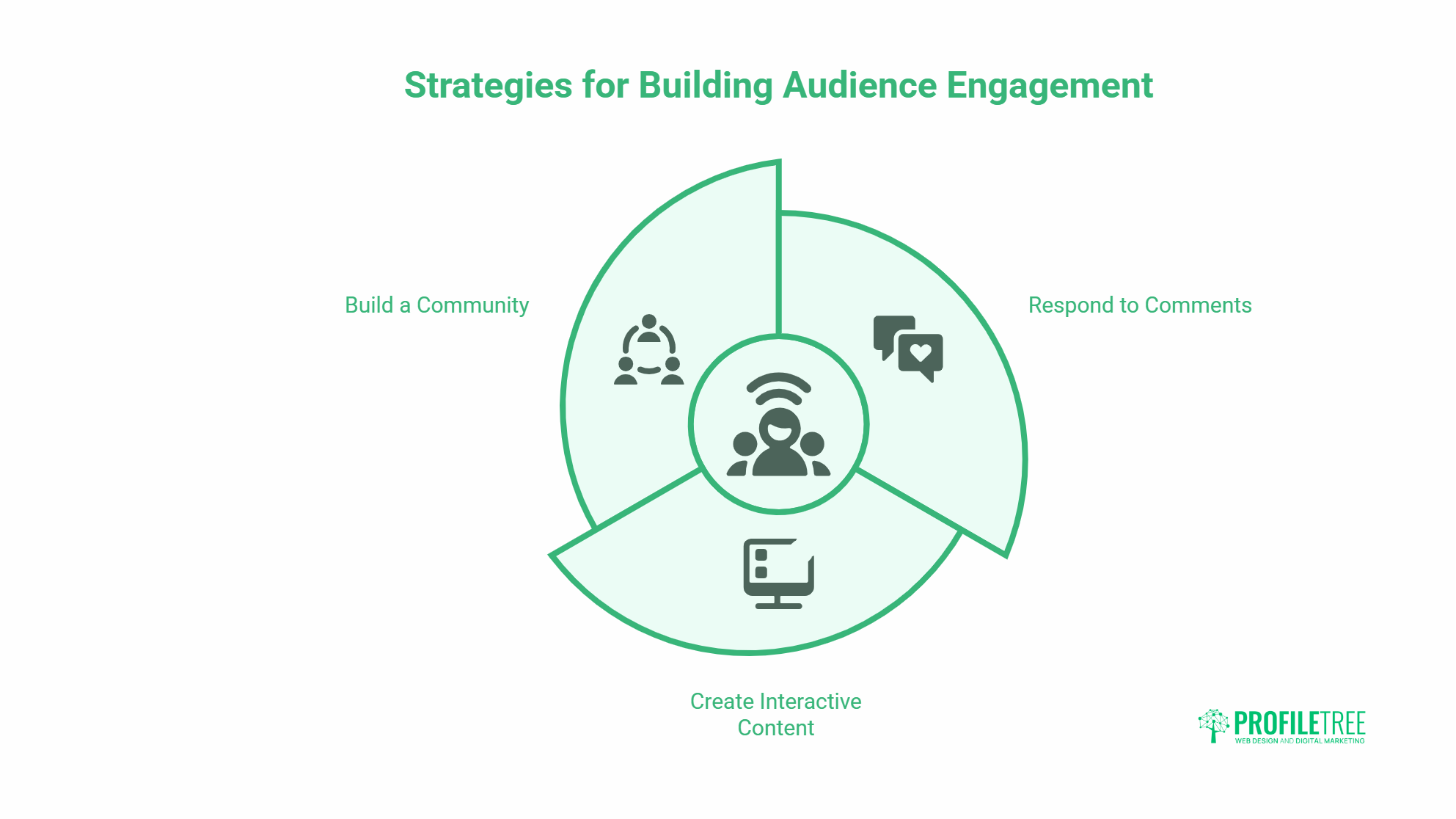
Traffic numbers tell part of the story; engagement tells the rest. A blog that generates comments, shares, and return visits is building an asset. A blog that attracts single visits from people who never return is running on a treadmill. The difference comes down to how well the content builds a relationship with its readers.
Respond to Comments and Questions
Comments on a blog post or social share are direct signals of interest. Responding promptly, and with genuine substance rather than a template reply, demonstrates that there is a real person behind the content. This encourages further engagement and builds the kind of trust that turns a first-time reader into a regular visitor. It also generates additional content within the comment thread that can contribute to the page’s search signals.
Create Content That Invites Participation
Polls, reader questions embedded in posts, and end-of-article prompts asking for opinions are simple ways to turn passive readers into active participants. Interactive content has measurably higher engagement rates than static content. It also generates data about what the audience wants to read next, which directly informs the content calendar.
Build a Community Around the Content
The most durable blog audiences are communities, not just readerships. This might mean a newsletter list, a LinkedIn group, or a Discord server: some channel where readers who share interests can connect with each other and with the content creator. Communities are harder to build than audiences, but they are also far more resilient to algorithm changes and platform shifts.
“The blogs that achieve sustained viral growth are those that treat their audience as participants rather than passive consumers. Consistent value, genuine engagement, and a willingness to take a clear position on what matters in the industry: those are the foundations we see working for SMEs across Northern Ireland and the UK,” says Ciaran Connolly, founder of ProfileTree.
Defining Your Niche and Target Audience
A blog that tries to reach everyone reaches no one. Narrowing the focus is not a limitation; it is a competitive advantage. The more precisely a blog defines its audience, the more likely it is to become the go-to resource for that specific group, which in turn drives the organic sharing and backlink acquisition that fuel growth.
Identify a Specific, Addressable Audience
Broad audiences, such as “small business owners” or “marketing managers,” are starting points rather than destinations. The more useful question is: which specific type of small business owner, at which stage of growth, with which specific problem? A blog that speaks directly to restaurant owners in Northern Ireland looking to improve their local search visibility will outperform a general “small business digital marketing” blog in both relevance and engagement within that audience.
Map Content to Audience Challenges
Every post should solve a specific problem that the defined audience faces. This means understanding not just what they want to read, but what decisions they are trying to make, what obstacles they encounter, and what information would genuinely help them move forward. A content strategy built on audience challenges rather than topical keywords produces posts that get shared because they are useful, not just because they are well-optimised.
Use Search Data to Validate Topics Before Writing
Search Console data, keyword tools, and community forums show exactly what questions an audience is asking at volume. Validating topic ideas against real search data before committing to a post avoids the common trap of writing content that the creator finds interesting, but the audience never searches for. It also surfaces opportunities: high-impression, low-click queries that a well-targeted post could capture.
Advanced Content Strategies for Sustained Growth
Consistent posting and solid SEO lay the groundwork. The blogs that sustain viral-level growth over time go further: they develop a recognisable voice, connect content to trending conversations, and build series that give readers a reason to return.
Develop Themed Series
A content series creates anticipation. Readers who found the first instalment useful will return for the second, and they will share within their networks when a new post goes live. Series also build topical authority more efficiently than standalone posts, because each instalment reinforces the site’s coverage of a subject area. For a web design and development agency, a series on “common SME website mistakes and how to fix them” would serve both the audience and the site’s authority in a single content stream.
Connect Content to Current Trends
Trend-adjacent content, where a post connects a timely topic to the blog’s core subject matter, can generate significant short-term traffic when the timing is right. The key is relevance: the connection between the trend and the blog’s niche should be genuine and useful to the audience, not a forced attempt to capitalise on a viral moment. When it works, trend-connected content earns shares from audiences who would not otherwise have encountered the blog.
Use AI Tools to Identify Content Gaps, Not Replace Writing
AI tools are useful for identifying topics that competing sites have not covered well, for surfacing related questions around a primary keyword, and for structuring outlines. They are not a substitute for the specific examples, original perspectives, and genuine expertise that make content shareable. Blogs built primarily on AI-generated content consistently underperform in engagement and authority metrics. For SMEs looking to integrate AI effectively into their content workflows without losing the human element, AI transformation support from a specialist team can help define where automation adds value and where it does not.
Monetising a Blog with Viral Growth
A blog with genuine audience growth opens several revenue paths. The most effective monetisation strategies are those that align with the audience’s interests rather than interrupting them.
Ad Revenue As A Baseline
Display advertising through platforms like Google AdSense provides a relatively passive income stream once a blog reaches sufficient traffic volumes. CPM (cost per thousand impressions) rates vary significantly by niche and audience geography. UK audiences typically attract higher CPM rates than global averages, which makes geographic targeting an important consideration for blogs with international readership.
Sponsored Content and Brand Partnerships
Sponsored posts, product reviews, and brand collaborations can generate substantially higher revenue per piece than display ads, but they require an audience that trusts the blog’s editorial judgment. Transparency is non-negotiable: undisclosed sponsorships damage trust and carry legal implications in the UK under ASA guidelines. The most effective brand partnerships are those where the sponsor’s product or service genuinely aligns with the audience’s needs.
Owned Products and Services
For SMEs and consultants, a blog is often the top of a conversion funnel rather than a revenue source in itself. The blog builds authority and trust; that trust converts into enquiries for services, purchases of digital products, or registrations for training programmes. Treating the blog as a lead generation channel rather than a direct revenue source is often the more profitable long-term approach for business-oriented blogs.
Conclusion
Viral blog growth is a result of consistent decisions: writing for a specific audience, solving real problems, distributing content effectively, and building relationships with readers over time. There are no shortcuts that produce sustainable results, but there are clear principles that reliably work. Start with the fundamentals, measure what matters, and build from there.
Frequently Asked Questions
What makes a blog post go viral?
Blog posts spread when they are genuinely useful or interesting to a specific audience, arrive at a moment when the topic is front of mind, and make sharing feel worthwhile. The most reliably viral posts solve a defined problem clearly, include something that cannot be found in competing posts (a specific example, an original framework, or a surprising data point), and are easy to share via social media. Emotional resonance also plays a role: posts that generate surprise, validation, or a sense of useful discovery are shared more than posts that simply inform.
How long does it take to see viral growth on a blog?
There is no fixed timeline. A well-timed post on a trending topic can generate significant traffic within days; an evergreen guide built on solid SEO might take three to six months to rank and then pull traffic consistently for years. Most blogs see a combination of both patterns: occasional traffic spikes from trending content and steady baseline growth from search-optimised evergreen posts. Consistent publishing over six to twelve months is the minimum timeframe for seeing meaningful compounding growth.
How important is social media for blog growth?
Social media is important for initial distribution and for reaching audiences who have not yet discovered the blog through search. It is less reliable as a long-term growth channel because algorithm changes and platform shifts can significantly reduce organic reach. The most resilient blog growth strategies combine social distribution for short-term traffic with SEO for long-term compounding. Building an email list as a direct channel to the audience reduces dependence on both search and social.
What types of content are most likely to spread?
How-to guides, original research, data-driven posts, and opinion pieces that take a clear and well-supported position consistently outperform generic informational content in terms of shares and backlinks. Comparison posts (covering two approaches or tools in depth) and “common mistakes” posts also attract strong engagement. The common thread is specificity: the more precisely a post addresses a defined question for a defined audience, the more likely it is to be shared within that audience.
Do I need a large audience to go viral?
No. Many posts reach wide audiences without the author having an established following. Distribution through niche communities, industry newsletters, and social sharing by a small number of influential readers can push content to large audiences quickly. The quality of the content and the relevance to the initial distribution channel matter more than the size of the starting audience. That said, a larger existing audience makes it easier to achieve consistent growth because each post starts with a base of engaged readers who are likely to share.
How does SEO connect to viral growth?
SEO and viral growth reinforce each other. A post that earns social shares and backlinks gains authority in search, which drives more organic traffic, which in turn attracts more shares and links. Starting with solid SEO, specifically clear keyword targeting, a well-structured post that matches search intent, and strong internal linking to related content, creates the conditions for compounding growth rather than one-off traffic spikes. Pages that rank well for specific queries pull consistent traffic that compounds over months and years, while social sharing provides the initial push that helps new content gain authority.