
How to Build a Social Media Referral Programme That Works
Table of Contents
A social media referral programme turns your existing customers into a route to new ones, using the trust they already hold with their own networks. For SMEs across Northern Ireland, Ireland and the UK, it is one of the lower-cost acquisition channels available, but most guides written about it are American, skip the legal rules that apply here, and ignore what actually happens when someone taps a link on their phone. This guide covers the strategy, the platform tactics, the technical setup, UK and EU compliance, and how to stop the whole thing from being drained by fraud.
What Is a Social Media Referral Programme and Why It Works
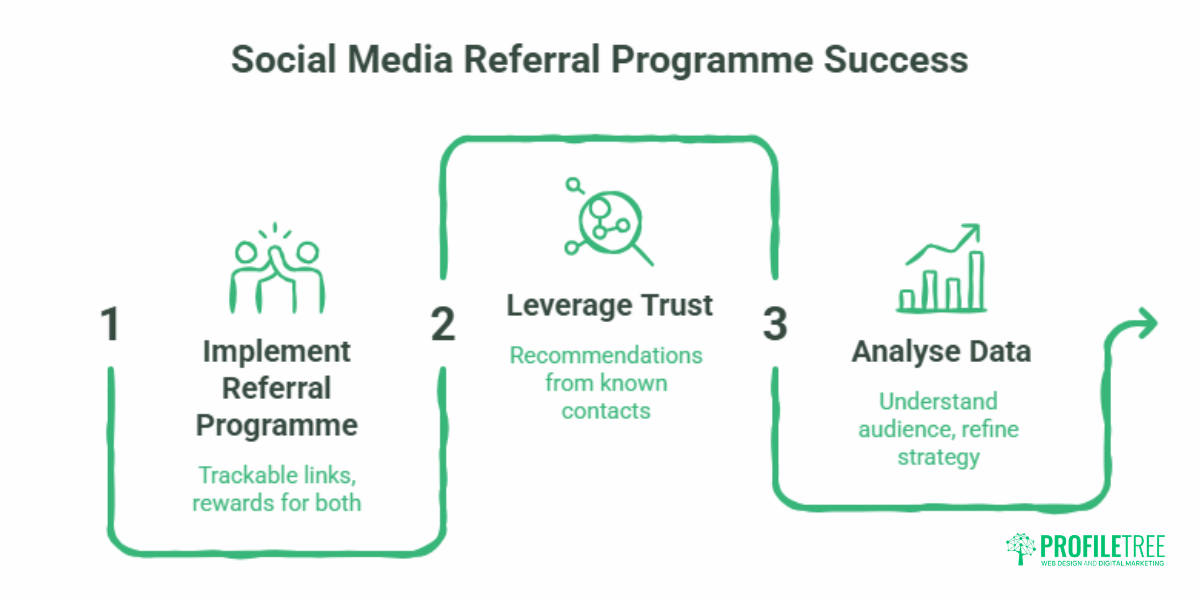
A social media referral programme is a structured system where current customers share a trackable link or code with their own followers, and both sides are rewarded when a referral converts. It differs from word-of-mouth in one respect: it is measurable. You know who referred whom, through which platform, and what it produced.
The reason it works comes down to trust. People act on recommendations from people they know far more readily than on advertising, a pattern Nielsen has documented for years across global markets. A referral arrives pre-qualified: the new customer already holds a positive impression before they reach your site. That is why social media referral marketing tends to convert better than cold paid traffic and why a structured social referral strategy lowers the average cost of winning a customer. If you are also running paid campaigns, it is worth reading our guide to lower marketing costs alongside this, because referrals and paid ads pull on the same budget.
Knowing who refers and who converts also feeds back into how you understand your audience. The data a programme produces supports sharper customer segmentation, which in turn makes every other channel work harder.
“The businesses that get the most from referrals treat them as a system, not a happy accident. You design the reward, build the tracking properly, and give your customers something genuinely easy to share. Get those three right and your best customers become your most credible marketing,” says Ciaran Connolly, founder of ProfileTree.
Social Sharing Versus Email Referrals: Which Performs Better
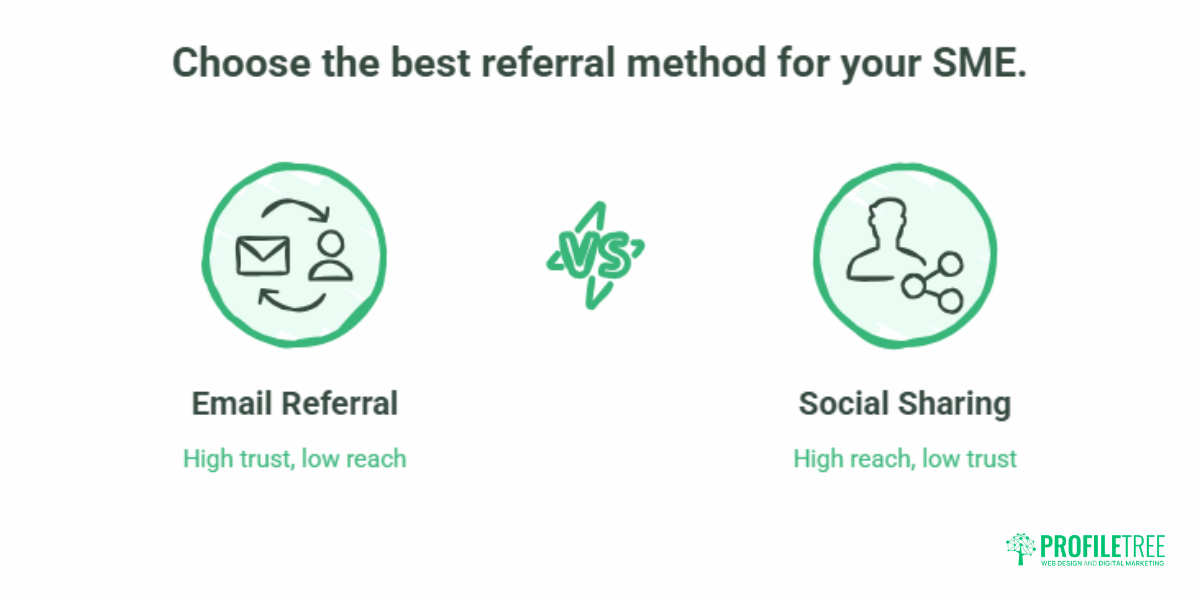
Most referral programmes can run through email, through social sharing, or both, and the two behave differently. Email referrals are private, direct and easy to attribute, but their reach is capped at the people the advocate is willing to email one by one. Social sharing reaches far more people in a single post, but trust per impression is lower because the message is broadcast rather than personal, and the legal position is different, as the compliance section below explains.
| Factor | Email referral | Social sharing |
|---|---|---|
| Reach per share | Low (one to one) | High (one to many) |
| Trust per impression | Higher (personal) | Lower (broadcast) |
| Attribution | Straightforward | Needs link tagging |
| Setup complexity | Lower | Higher |
| UK compliance risk | Higher if the brand emails the referee | Lower if the advocate posts themselves |
For most SMEs, the answer is both, with social sharing as the volume driver and email as the higher-trust follow-up. If email is already part of your mix, our guide to email marketing covers the basics of running it well.
Tactical Best Practices for Promoting Your Programme
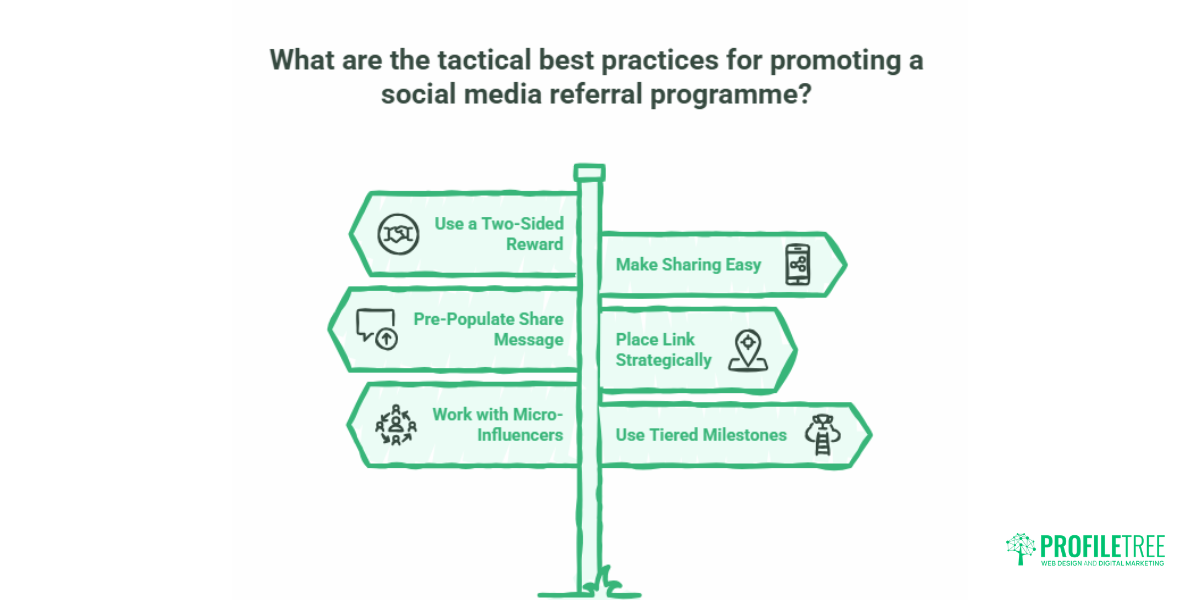
Strategy decides whether a programme can work; execution decides whether it does. The tactics below are where most of the difference shows up, and they apply whether you are a Belfast retailer or a Dublin professional services firm.
Use a Two-Sided Reward
Reward both the advocate and the new customer. A “give £10, get £10” structure removes the awkwardness of an advocate appearing to profit from their friends. Single-sided rewards, where only the referrer benefits, consistently underperform on public social networks because the advocate looks self-interested. This is the one tactic worth treating as non-negotiable.
Make Sharing Genuinely Easy
Every extra step costs you, participants. Offer one-tap sharing, pre-written copy the advocate can edit, and a short link that works the same on every platform. If a customer has to log in, copy a code and write their own message, most will not bother.
Pre-Populate the Share Message
Write the share copy for your advocates and let them adjust the tone. A pre-filled WhatsApp or Instagram message lowers friction and keeps your offer described accurately, rather than leaving customers to explain the terms themselves and get them wrong.
Put the Link Where People Already Are
Bio links, post-purchase confirmation screens and order emails are the highest-intent placements. Someone who has just bought from you is at their most willing to recommend you, so the post-purchase moment is the single best place to ask.
Work With Micro-Influencers, Carefully
Smaller creators with engaged local audiences often outperform large accounts for referral activity, and they cost less. Any paid or incentivised arrangement brings disclosure obligations, covered below.
Use Tiered Milestones
Reward advocates more as they refer more. An escalating structure, where the third successful referral unlocks a bigger reward than the first, encourages repeat sharing. The mechanics overlap heavily with customer loyalty programmes, and the two work well together.
Designing the incentive, choosing the platforms and setting the rules are strategic decisions, not afterthoughts. This is the work covered by a digital strategy engagement, and where most programmes are won or lost. ProfileTree’s social media marketing team builds and runs programmes like these for SMEs across the UK and Ireland.
Overcoming Mobile Friction: The Deep-Linking Logic
Most social referral traffic happens on a phone, and that is exactly where programmes quietly break. When someone taps a referral link inside Instagram or TikTok, the link often opens in that app’s in-app browser rather than the device’s main browser, and the discount code or attribution can be lost on the way. The fix is deep-linking.
A deep link sends the user to a specific destination, a product page or a checkout with the code already applied, rather than a generic homepage. Deferred deep-linking goes further: if the user has to install an app first, the link remembers the referral and applies it after installation, so the advocate still gets credited. Attribution survives the journey.
In practice, this means carrying the referral code as a URL parameter, configuring the destination to read and auto-apply it, and testing the full path from a real phone before launch. This is development work, not a marketing setting, and getting it wrong means paying for referrals you cannot track. ProfileTree’s web development team handles this kind of tracking and attribution setup as part of building the referral mechanics into a site.
It is worth testing the journey on both iOS and Android, and from inside the main apps your audience actually uses, because in-app browsers behave differently from one another. A link that applies the code cleanly in Safari may strip it inside the TikTok browser. The only reliable check is to walk the path yourself on a real device, tap the shared link as a customer would, and confirm the code is still attached at checkout. Skip this step, and you will usually find out the hard way, when the first month’s referral numbers do not match the sales they should have produced.
UK and European Compliance: GDPR, PECR and ASA
This is where the American guides leave UK and Irish businesses exposed. Three rules apply here that most overseas advice ignores entirely, and breaching them carries real financial risk. None of them is a reason to avoid referral marketing; they simply shape how you build the programme. Get the structure right at the design stage, and compliance stops being a worry, because the mechanics themselves keep you on the right side of the rules.
PECR and How You Contact the Referee
Under the Privacy and Electronic Communications Regulations, sending a marketing message to a referred person who has not consented is unlawful. The safe structure is simple: the advocate sends the invitation themselves, from their own social or messaging account, to people they already know. Your brand never emails the referee directly. Keep the data boundary on the advocate’s side, and the programme stays compliant.
UK GDPR and Referee Data
The moment you collect the referred person’s details, you are processing their data, and GDPR applies. Have a lawful basis, tell people how their data is used, and do not retain referee details beyond what the programme needs. If your sign-up or referral capture uses forms, our guide to GDPR web forms covers the practical points, and there is more in our overview of data privacy in marketing.
ASA Disclosure
The Advertising Standards Authority treats an incentivised recommendation as advertising. If an advocate posts a referral link in exchange for a reward, that post must be identifiable as an ad, typically with a clear label such as #Ad. Make the disclosure requirement part of your programme rules and your pre-written share copy, so advocates comply without having to think about it.
Getting these rules across a team is itself a task. ProfileTree’s digital training covers compliant marketing for in-house teams who run their own campaigns.
Mitigating Fraud on Public Social Networks
Open social sharing invites abuse. Self-referrals, bot sign-ups and codes leaked to public coupon sites can drain a budget fast, and almost no competitor guide addresses it. Build the barriers before you launch, not after the first month’s numbers look wrong.
- Block self-referrals by matching device, IP and payment details so a person cannot refer themselves.
- Set a minimum spend before a reward triggers, which removes the incentive to game low-value sign-ups.
- Add an approval delay so referrals are confirmed only after the order clears, and any return window passes.
- Watch velocity, because a sudden spike from one source usually signals a code leaked to a coupon site.
These controls protect the budget without adding friction for honest customers, which is the balance to aim for. A few sensible barriers beat chasing a high volume of low-quality clicks.
Common Pitfalls to Avoid
Most failed programmes fail for predictable reasons, and all of them are avoidable with a little planning.
Making It Too Complicated
If referring takes multiple steps or a long form, participation collapses. Test the full process with real customers before launch.
Weak Incentives
The reward has to feel worth the effort. It need not always be cash, but the perceived value must justify the act of recommending you to a friend.
Nobody Knows It Exists
Programmes fail quietly when customers never hear about them. Promote it through email, social posts, your site and at the point of purchase. Tying it into your wider community engagement keeps it visible.
Forgetting to Thank Advocates
People who refer you are doing you a favour. A personal thank you, the occasional bonus for top referrers, and public recognition where they are comfortable with it all sustain participation. How you treat advocates also feeds your online reputation more widely.
Measuring and Improving Your Programme
A referral programme is only as good as the data you act on. Track referral link clicks, conversion rate from referred traffic, revenue per referral, your most active advocates, and which platforms produce the best customers rather than just the most clicks.
Free tools cover the basics; our roundup of social media analytics tools is a sensible starting point before you pay for anything. Whatever you measure, review it monthly and shift effort toward the platforms and rewards that produce genuine customers. The share assets themselves, the graphics, short videos and copy that make a programme easy to spread, are a content marketing job, and a programme that ranks and gets found also benefits from solid SEO services.
Frequently Asked Questions
What is a social media referral programme?
It is a system where existing customers share a trackable link or code on their social accounts, and both they and the new customer are rewarded when a referral converts.
How do you encourage referrals through social media?
Use two-sided rewards, pre-populate the share message, and place the referral link where intent is highest, such as the bio and the post-purchase screen.
What makes a social media referral programme successful?
Low mobile friction through deep-linking, a reward worth sharing for, and clear, transparent rules that advocates can explain in one line.
Can I run a social media referral programme on a £0 budget?
Yes. A small business can track referrals manually before paying for software. Give each advocate a unique short link or a simple code, record sign-ups in a spreadsheet or a free form, and hand out rewards by hand. It is more work per referral, but it proves the concept and tells you whether the reward and the offer resonate before you invest in automation. Once volume makes manual tracking impractical, that is the point to move to a paid platform.
Do UK ASA guidelines apply to customer referrals?
Yes. Any post incentivised by a reward must be identifiable as an ad, so advocates should label incentivised shares clearly, for example, with #Ad.
What is a good referral incentive for social media?
A two-sided reward, such as “give £10, get £10”, works best because both the advocate and the new customer benefit and the advocate avoids looking self-interested.
Turning Customers Into Advocates
A referral programme rewards the work you have already done to make customers happy. Set a clear objective, design a two-sided reward, build the tracking so attribution survives a mobile tap, stay on the right side of PECR and the ASA, and put fraud barriers in before launch. Do that, and your existing customers become a steady, low-cost source of new ones.