
Emerging Digital Marketing Trends for 2026: Five Key Shifts
Table of Contents
Five emerging digital marketing trends are shaping 2026: voice search optimisation, AI in content creation, short-form video, data privacy and trust-focused marketing, and interactive content. For SMEs across Northern Ireland, Ireland, and the UK, the priority is matching these shifts to your audience rather than chasing everyone. ProfileTree helps businesses plan that with a practical digital strategy.
Digital marketing keeps shifting as technology improves and customer expectations move with it. Heading through 2026, brands that want to stay competitive are adopting trends that improve engagement, personalisation, and efficiency. Artificial intelligence is more capable, privacy rules are tighter, and immersive experiences are more common, so businesses are rethinking how they reach people.
From AI-assisted content creation to voice and visual search, new approaches are changing how marketers connect with audiences. Consumer behaviour is shifting too: people want interactive, personalised, and authentic experiences. Brands that use data, automation, and emerging platforms well tend to gain an edge, while those that resist change struggle to keep pace.
This article covers the top five emerging digital marketing trends for 2026. Whether you run a business, manage marketing, or create content, understanding these shifts will help you refine your approach and plan for what’s next. For a broader context, see our overview of digital marketing services and how they fit together.
“Staying ahead in digital marketing is about balance: knowing which emerging channels or technologies to adopt while remaining true to your brand’s unique strengths. Trend-chasing without strategy can lead to wasted budgets,” remarks Ciaran Connolly, Director of ProfileTree.
Voice Search Optimisation
Voice-enabled search has grown steadily, and adoption is now well established rather than a future prediction. Ofcom’s Communications Market Report 2025 put UK household smart-speaker penetration at 41%, and Edison Research reported UK home-speaker reach at 45% of the 16-plus population in 2025, up from 25% four years earlier. Around 54% of UK adults have used a digital assistant in the past three months. With smart speakers, phone assistants, and car systems all common, a meaningful share of searches now happens by voice.
Unlike typed searches, voice queries tend to be longer, more conversational, and phrased as direct questions. That shift means rethinking SEO so your content appears in voice results.
People use voice search for speed and convenience, whether asking for directions, finding local businesses, or getting quick answers. To suit this, focus on conversational keywords, question-and-answer formats, and natural-language content. FAQ pages with direct, concise answers often rank well because assistants pull from them. Structured data and schema markup help search engines understand your content, improving the chance of being chosen as a voice result.
Local SEO matters here, since many voice searches are location-based: think “where can I find affordable office furniture near me?” Belfast and Northern Ireland businesses in particular should keep their local listings accurate and use “near me” phrasing naturally in content. As voice technology develops, adapting to it remains important for competitiveness. For the underlying numbers, our voice search statistics guide goes deeper, and our SEO services cover how to put this into practice.
AI in Content Creation and SEO
Artificial intelligence is reshaping digital marketing by speeding up content creation and optimisation. AI copywriting tools can draft blog outlines, suggest meta tags, and refine ad copy to improve click-through rates. They let marketers produce content faster while keeping it consistent across platforms. With human oversight, AI-generated drafts can be shaped to match brand voice and audience expectations.
AI content generation has become more capable, with platforms using advanced language models to produce product descriptions, social posts, and long-form articles quickly. While these drafts cut production time, human editors keep the work accurate, creative, and authentic. Using AI for the first draft and refining it by hand lets businesses balance efficiency with quality.
Beyond writing, AI is changing SEO. AI-powered tools analyse competitor keywords, track ranking changes in near real time, and flag emerging search trends. That helps marketers make data-led decisions while AI handles time-consuming research. Some agencies report that AI-based SEO tools have cut research time by 50 to 60%, freeing them to produce better content with less manual effort.
The risk is over-reliance: lean on AI too heavily, and the output turns generic, repetitive, or off-brand. A human editorial layer keeps AI content resonating with the audience. The strongest approach is AI-human collaboration, where AI speeds the process, and people add creativity and judgment. If you want your team to use these tools well rather than badly, that’s exactly what our AI training and content marketing services are built around.
Short-Form Video Dominance
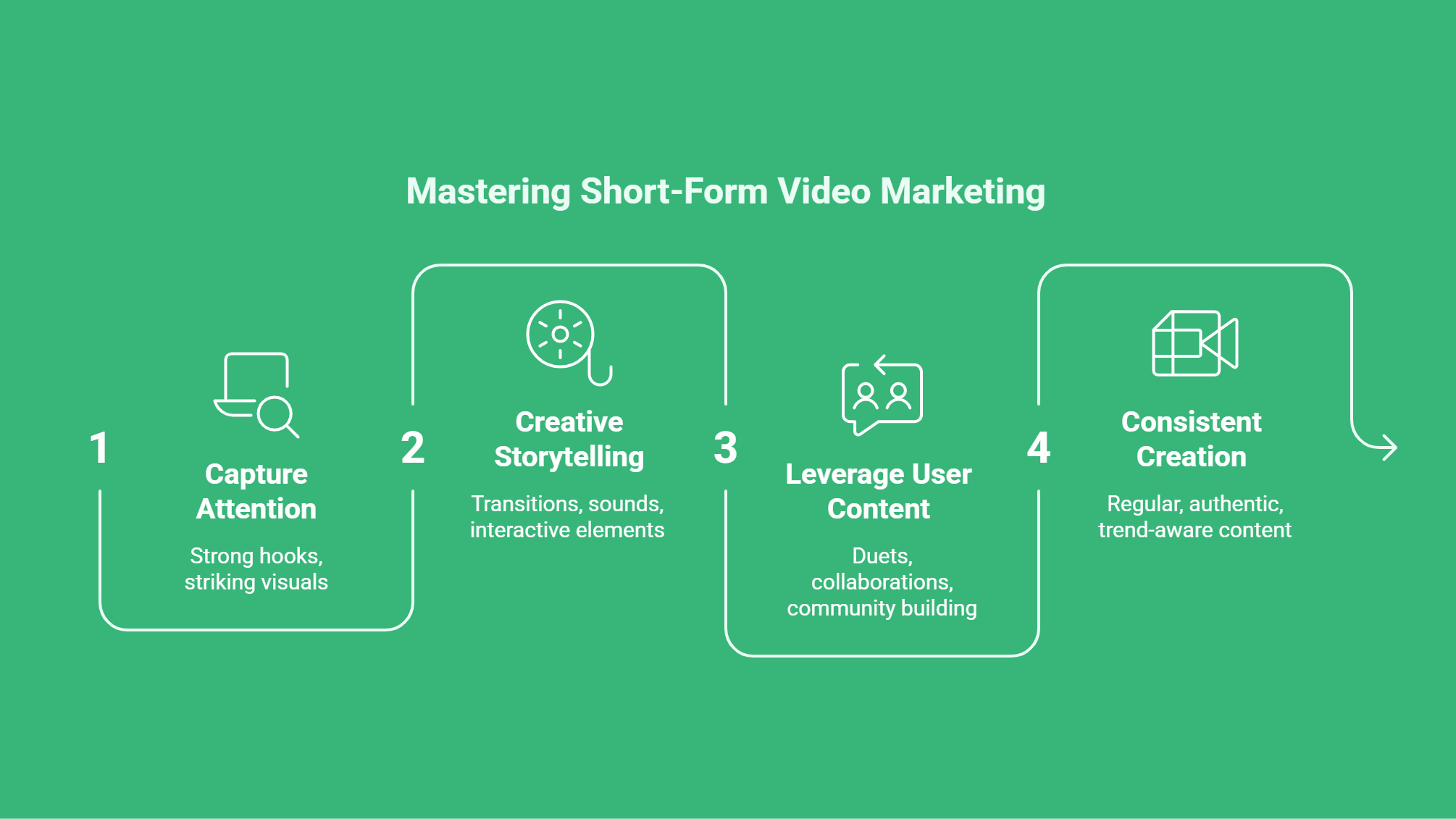
Short-form vertical video has become one of the most effective content formats in digital marketing, driven by TikTok, Instagram Reels, and YouTube Shorts. These quick clips, usually 15 to 60 seconds, are built to grab attention fast and deliver entertainment or information in a digestible format. With shorter attention spans and a preference for snackable content, short videos give brands an effective way to connect with people visually.
Why It Works
Short-form video fits how people consume content now: scrolling quickly, reacting, and sharing without committing to long watch times. Unlike long-form video, these clips deliver high-impact messages in seconds. The algorithms on TikTok and Reels also reward engagement, so brands that handle short-form storytelling well can reach large audiences organically.
What Makes Short Videos Stand Out
To get engagement, capture attention in the first few seconds. Strong hooks, whether striking visuals, bold text overlays, or an engaging question, stop people from scrolling past. Creative transitions, trending sounds, and interactive elements like polls or challenges add to it. User-generated content is another driver: TikTok “duets” and Instagram collaborations let audiences interact with brand content and build a sense of community.
Businesses Leveraging Short-Form Video
Brands across sectors are working short-form video into their marketing. Product businesses use quick demos, tutorials, and unboxings to show value in seconds. Behind-the-scenes clips, customer testimonials, and tips help humanise a brand. Even B2B companies use short videos to break complex topics into digestible insights, share success stories, or add humour.
The Future of Short-Form Video
As platform algorithms keep prioritising video, short-form’s dominance is set to grow. Brands that don’t adapt risk losing visibility to competitors who use the format well. Success comes down to consistency, creativity, and keeping up with platform trends. Used strategically, short-form video builds stronger audience connections and brand awareness. Our video marketing service and our look at the rise of short-form video cover how to do this in practice.
“Short-form video is a huge equaliser. A small local brand can earn global attention if the content resonates. But consistency matters: regular, authentic clips often outperform one-off glitzy productions,” suggests Ciaran Connolly.
Data Privacy and Trust-Focused Marketing
Data privacy is now a pressing concern, with consumers and regulators wanting more transparency and tighter control over how personal data is collected and used. In the UK, this is governed by the UK GDPR and the Privacy and Electronic Communications Regulations (PECR), overseen by the Information Commissioner’s Office (ICO). The phasing out of third-party cookies, stricter data-protection laws, and high-profile breaches have all raised public scrutiny. People are more aware than ever of how their data is tracked, which is moving marketing away from intrusive tactics toward ethical, trust-based approaches.
This means marketers must adapt to a world where third-party tracking is no longer reliable. First-party data, collected directly from your audience through voluntary interactions, is becoming central. Consent-based marketing, where people knowingly share data in exchange for value, is now the norm. To succeed, businesses should drop aggressive tracking and build direct, transparent relationships with customers.
Importantly, consumers aren’t against personalised experiences; they want control over how their data is used. Brands with clear data policies, secure handling, and good communication about privacy can build trust and stand out. When people feel confident their data is handled responsibly, they engage more and share more willingly, leading to better personalisation that helps rather than intrudes.
To build that trust while still gathering insight, refine your first-party data collection. Newsletter sign-ups, loyalty schemes, gated content, and interactive experiences like quizzes or surveys gather data in a way that feels natural and useful. Offering exclusive content, discounts, or personalised recommendations in exchange creates a fair, mutually beneficial relationship.
As UK and EU rules tighten and expectations rise, brands that embrace privacy-first marketing will do better. Those who ignore transparency risk their credibility and customer loyalty. By moving toward responsible data practices, stronger security, and genuine value in exchange for data, businesses can plan ahead while building lasting, trust-based relationships. Our guide to the ethics and legalities of digital marketing covers the compliance side in more detail.
Interactive and Immersive Content
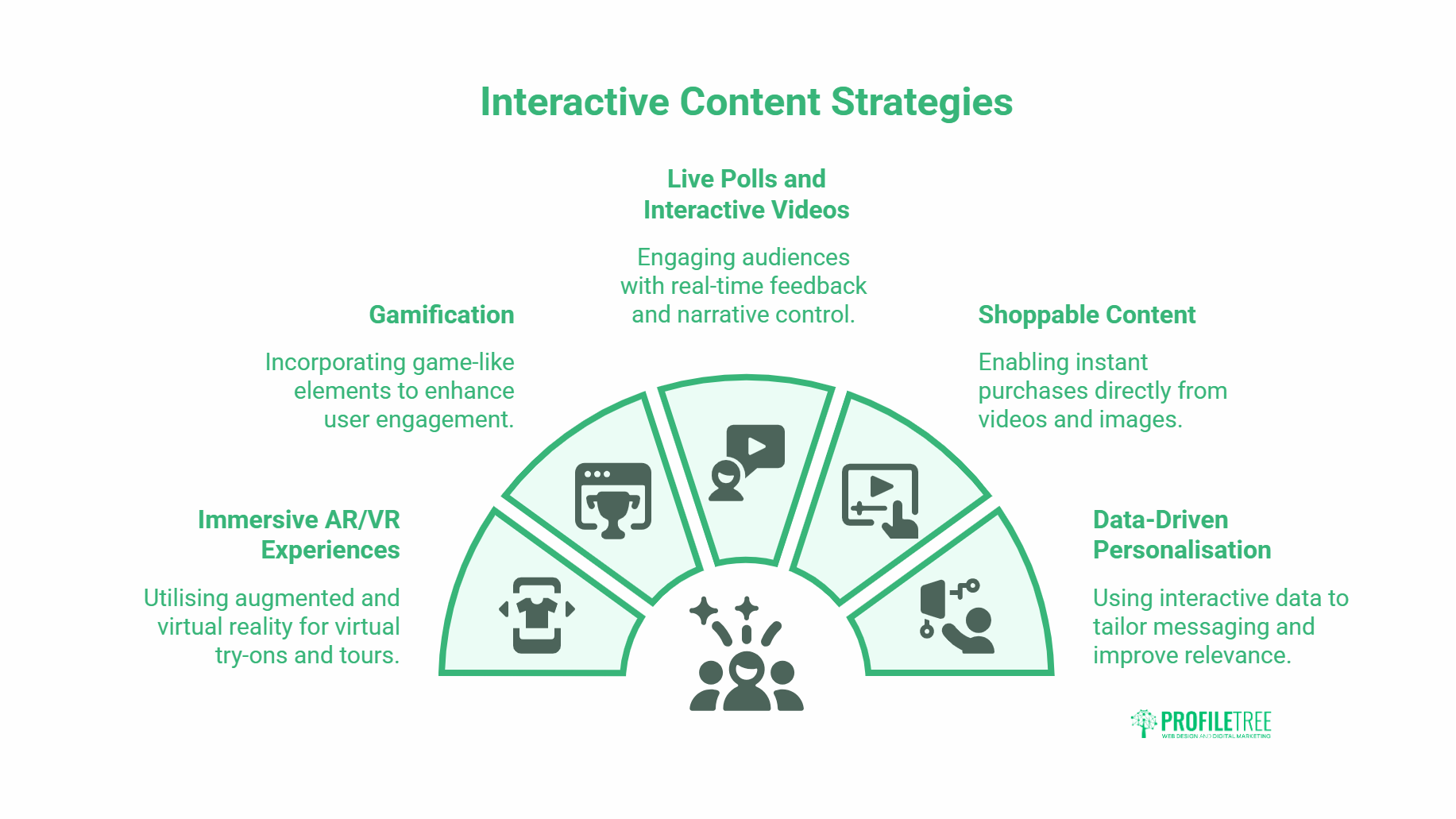
Audience expectations are moving beyond passive consumption: people want interactive experiences that involve them. Quizzes, polls, augmented reality (AR) filters, 360-degree videos, and immersive storytelling are changing how brands connect with consumers. Through 2026, these elements are an expected part of digital marketing, bridging physical and digital interaction while improving engagement, retention, and conversions.
Immersive AR/VR Experiences
Augmented and virtual reality have moved from a futuristic concept to practical tools. Retail brands let shoppers virtually try on clothes, test makeup, or place 3D furniture in their homes before buying. Estate agencies use immersive 3D property tours so buyers can explore remotely. Travel brands offer virtual previews of destinations. These experiences build stronger emotional connections and make customers more confident in their decisions.
Gamification
Adding game-like elements encourages participation and extends engagement. Brands use leaderboards, achievement badges, and mini-games to keep users entertained while guiding them through the customer journey. A skincare brand might use an interactive skin-assessment quiz that recommends products; a fashion brand might build an AR “virtual makeover” tool. Gamification adds enjoyment and gives brands useful insight into customer preferences.
Live Polls and Interactive Videos
Real-time tools like live polls and interactive videos are changing how brands talk to audiences. Platforms now let viewers influence story outcomes, vote on features, or give instant feedback. That two-way interaction makes audiences feel valued and increases loyalty. Brands use these for live Q&A, product input, or choose-your-own-adventure-style ads where users control the narrative.
Shoppable and Clickable Content
Interactive shopping is also rising, with users clicking directly on products in videos, images, or live streams to buy instantly. Instagram, TikTok, and YouTube have integrated shopping features that create a smooth path from content to purchase. This reduces the steps needed to buy and improves the user experience. Getting this right depends on solid website development behind the scenes.
Data-Driven Personalisation
Interactive content does more than engage; it gathers useful insight. When people take quizzes, use AR, or answer polls, brands collect data on their preferences and needs. That data then feeds more personalised messaging, improving relevance and conversion.
The Power of Interactive Content
Interactive content tends to engage more than static content. Research by Mediafly found that interactive content sees 52.6% more engagement than static formats, and the Content Marketing Institute reports that it generates roughly twice the engagement of passive content. Higher involvement leads to better brand recall, longer sessions, and more sharing. With users participating rather than just consuming, brands get more chances to build connections and drive conversions.
The Future of Engagement
As digital experiences develop, interactivity is becoming an expectation rather than a bonus. Brands that invest in immersive, gamified, and interactive content will stand out. Whether through AR try-ons, live polls, or personalised quizzes, the brands that create participatory experiences tend to do best in 2026’s market.
Recapping the Emerging Digital Marketing Trends
Putting these trends to work needs an integrated approach.
- Voice search: overhaul FAQ pages, adopt a more conversational tone, and keep local listings accurate.
- AI-driven SEO and content: publish more frequent, relevant posts and run real-time keyword analysis to catch trending searches.
- Short-form video: shift to a fast, vertical-friendly content style, tapping into younger audiences on TikTok or Reels.
- Data privacy: build trust-based relationships, gather first-party data ethically, and respect consent at every step.
- Interactive content: use it to lift engagement across channels, from immersive website experiences to AR social campaigns.
The common thread is user-centricity. Meeting people where they are, on voice assistants, short-form apps, or interactive AR, while respecting their data, builds loyalty and brand affinity.
“The best marketing trends are those that fit your audience’s lifestyles and preferences. Don’t chase every hype. Instead, align these emerging tactics with your brand story and add genuine value,” advises Ciaran Connolly.
Potential Pitfalls and Considerations
These trends offer real opportunities, but they need a strategic approach to pay off.
Overextending
Trying to implement every trend at once stretches resources thin and dilutes focus. Assess which trends fit your goals and audience, then prioritise. The right few will beat doing everything at once.
Quality vs Quantity
Rushing out short-form video or AI content without planning leads to low-quality output. Generic, unpolished, or unoriginal content loses audiences fast. Consistency matters, but never at the cost of meaningful, engaging storytelling.
Skill Gaps
Each new tool, whether AI analytics, AR development, or interactive media, often needs specialised knowledge. Invest in upskilling your team or work with specialists. Without the right expertise, innovation can feel half-finished. This is where structured digital training closes the gap quickly.
Ethical Use of Data
Personalisation improves experiences, but only with transparency and adherence to data-governance rules. Mishandling personal information or losing user trust causes real reputational damage. A responsible approach protects your brand and strengthens loyalty over time.
Preparing for the Future
The marketing field changes constantly, and the shifts through 2026 are notable. Voice search, AI-driven automation, short-form video, privacy-focused engagement, and immersive content are all changing how brands connect with people. Businesses that adapt early, experiment responsibly, and stay authentic tend to do well.
If you want to apply these trends while staying true to your brand, ProfileTree can help. From AI-led content strategies to video marketing, we offer the services SMEs across Northern Ireland, Ireland, and the UK need. Book a call with our team to plan your digital marketing approach for the year ahead.