
Amazon Skills: The Complete UK Business Guide
Table of Contents
Amazon Skills are voice-activated applications that run on Alexa-enabled devices, and they have become one of the most overlooked channels in UK digital marketing. With over 100,000 options available globally, Alexa has grown from a smart speaker novelty into a platform that powers smart homes, business productivity, and voice-first customer experiences. For UK businesses, that shift has a practical consequence: voice search is now mainstream, and whether your business appears when someone asks Alexa a question depends largely on how your website and content are structured.
This guide covers what the platform offers, how the different skill types work for UK users, and how voice engine optimisation and voice marketing strategy connect to the kind of digital presence SMEs need to build.
What Is Amazon Alexa?
Amazon Alexa is the cloud-based voice assistant that powers the entire Amazon Skills ecosystem. Launched in November 2014 alongside the first Echo device, Alexa processes spoken commands, answers questions, controls smart home devices, and connects to third-party services through its skill library. It runs across the Echo range and on third-party hardware with built-in support, from smart televisions to car dashboards.
In the UK market, Alexa’s advantage over rival assistants is its depth of integration with British services. BBC Sounds, National Rail live departures, and the Met Office are all available as native skills, giving UK users genuinely useful daily functionality that competitors have been slower to match.
What Are Amazon Skills?
Amazon Skills are the individual voice applications that extend Alexa beyond its built-in functions. Each skill gives the assistant a new capability: playing a BBC radio station, retrieving live train times, running a quiz, controlling a heating system, or delivering a branded business briefing. Think of them as apps, but built entirely for spoken interaction rather than a screen.
Users add Amazon Skills by asking Alexa directly, through the Alexa app, or via Amazon’s website. The Blueprints feature, launched in 2018, lets people with no coding experience create basic personalised skills, opening the platform to small businesses that want a branded voice presence without a development budget.
Creating and Monetising Amazon Skills
Amazon’s Skills Store lets developers publish and, in some cases, monetise their work through three models: one-time purchases for permanent access, consumables that deplete and can be repurchased (similar to in-app purchases), and subscriptions for recurring content. For businesses, a branded skill can function as a customer service channel, a product discovery tool, or a booking interface that reduces friction to almost nothing.
Whether the investment makes sense depends on your audience and how natural voice interactions suit your product.
Types of Amazon Skills: What UK Users Actually Use
Amazon Skills are grouped into categories that reflect how people use Alexa day to day. Understanding which types perform best for UK audiences helps both developers and businesses evaluate where a voice presence delivers real value.
Smart Home Skills
Smart home skills are the most widely used category in the UK. They allow Alexa to control heating, lighting, security cameras, door locks, and energy monitors through a spoken command. The table below shows compatibility across key UK smart home providers.
| UK Provider / Device | Alexa Compatible | Voice Control | Notes |
|---|---|---|---|
| Hive (British Gas) | Yes | Full | Heating, lights, plugs |
| Octopus Energy | Yes | Partial | Smart meter and usage queries |
| Ring (Amazon) | Native | Full | Doorbell, cameras, alarm |
| Tado | Yes | Full | Smart thermostat control |
| Philips Hue | Yes | Full | Lighting scenes and routines |
| National Rail | Yes | Partial | Live departures via skill |
| BBC Sounds | Yes | Full | UK radio and podcasts |
| Met Office | Yes | Full | UK localised forecasts |
For businesses that build or manage websites for property developers, estate agents, or home services companies, smart home integration is a topic their customers actively search for. Content that addresses these questions drives qualified traffic, which is why it fits naturally within a broader content marketing strategy rather than as a standalone page.
UK News, Weather and Travel Skills
This is where the platform most clearly differentiates itself for British users. The Flash Briefing on Amazon Skills pulls personalised updates from BBC News and Sky News. National Rail provides live departure times. The Met Office delivers localised forecasts without a screen. For businesses in travel, tourism, or hospitality, a flash briefing skill places content directly into a user’s morning routine, a high-attention slot that standard advertising rarely reaches.
Business and Productivity Skills
Alexa for Business brings the platform into meeting rooms, reception desks, and remote working setups, managing room bookings, joining calls, and connecting to corporate applications. Amazon Skills for Business represents a lower-friction entry point than most enterprise software solutions for SMEs exploring AI tools.
Kids, Educational, and Gaming Skills
The kids category includes CBeebies stories, educational quiz games, and parental controls that restrict age-inappropriate content. The gaming category ranges from trivia rounds to interactive story formats. Both Amazon Skills categories have grown steadily in the UK and represent real opportunities for brands targeting families or younger, tech-forward audiences through a voice-first touchpoint.
Skill Stacking: Combining Skills Into Daily Routines
One of the most underused features of Amazon Skills is the ability to chain several together within a single Alexa routine. Skill stacking triggers a sequence of automated actions from one spoken command. A morning commute routine might read the Met Office forecast, follow it with National Rail departure times, and close with a BBC News briefing, all from a single “Good morning, Alexa” without further input.
For businesses, stacking opens a channel for ambient brand presence. A news publisher, financial services firm, or retailer can create a flash briefing skill that slots naturally into a user’s existing routine. That kind of habitual, low-friction engagement is difficult to replicate through standard digital advertising.
Voice Engine Optimisation and Amazon Skills
Voice engine optimisation (VEO) is the practice of structuring digital content so that voice assistants, including Alexa, surface it in response to spoken queries. It shares its foundations with standard SEO but demands a different approach to content writing and indexing. Where SEO targets typed keywords, VEO targets natural, conversational questions spoken aloud.
In the UK, where smart speaker adoption is high, voice queries are now a significant share of local searches. Phrases like “find a web designer near me” are spoken as often as they are typed, and Amazon Skills for information and local discovery are frequently how those queries get answered. That is why VEO belongs inside a broader digital marketing strategy rather than being treated as a separate discipline.
How Voice Search Differs From Text Search
Typed searches are short: “web design Belfast.” Voice queries are longer and conversational: “Who is the best web design agency in Belfast for small businesses?” Direct answers, question-based headings, and concise paragraph structure all improve the chance of Alexa selecting your content as a spoken response.
Four Practical Steps to Improve Voice Search Visibility
These steps apply whether you are building a branded skill or ensuring your website appears in voice results.
Keep Business Data Accurate
Alexa pulls business information from Amazon’s own sources and third-party directories, including Google Business Profile and Bing Places. Outdated addresses or trading hours cause inaccurate results. Regularly auditing this data directly feeds into local SEO performance across both voice and text search.
Prioritise Page Speed
Voice results are pulled from fast-loading pages. When a user asks Alexa for a recommendation, results arrive in seconds. Slow sites are invisible in that process. Speed optimisation is a direct investment in voice visibility, not just traditional rankings.
Structure Content to Answer Questions Directly
An FAQ section built around the questions your customers actually ask, with direct one or two-sentence answers, gives Alexa content it can read aloud. A question like “How much does web design cost in Belfast?” answered plainly on a service page is far more likely to be selected as a voice result than a page that buries the same information mid-paragraph.
Write for Conversational Queries
Voice queries are longer than typed ones. Content targeting phrases such as “which smart home skills work with Hive in the UK” match how people actually speak to Alexa. Extend standard keyword research to include question-based and long-tail variations that reflect spoken language.
Voice Marketing Strategy Using Amazon Skills

Voice marketing reaches customers through voice-activated platforms, whether through a branded skill, a flash briefing, or content structured to appear when Alexa answers a spoken query. It reduces the customer journey to its minimum: a spoken instruction and a spoken confirmation. For businesses in retail, hospitality, or professional services, that friction reduction is commercially significant. The underlying principle mirrors what makes video marketing effective: removing barriers between a customer’s intention and their action.
Building a Voice Marketing Strategy for UK SMEs
A strategy that delivers results typically combines three things: website content structured for voice search; accurate data across all directories; and, where it makes sense, a branded skill or flash briefing creating a direct channel to users. Most SMEs should start with the first two before commissioning a custom skill build.
ProfileTree’s team consistently finds that the gap between a client’s existing content and voice search visibility is structural, not technical. Content written to answer questions directly, using conversational phrasing and loading quickly, is already better positioned for voice results than content optimised purely for desktop keywords.
Amazon Skills vs Other Voice Platforms: UK Comparison
Amazon Skills sit within one of four major voice assistant platforms, each with different strengths for UK users. The table below covers the factors that matter most for consumers and businesses evaluating which platform to prioritise.
| Feature | Amazon / Alexa | Google Assistant | Apple Siri | Extensive, diverse UK brands |
|---|---|---|---|---|
| Skill Library | Largest (~100,000+) | Growing rapidly | Smaller; quality focus | Moderate; Samsung focused |
| Smart Home | Strong, popular brands | Strong; popular brands | Limited to HomeKit | Primarily Samsung devices |
| UK Services | BBC Sounds, National Rail, Met Office | Google & BBC | Apple Music; Shortcuts | Limited UK integrations |
| Privacy | Data collection concerns | Moderate collection | Strong privacy focus | Some Samsung data concerns |
| Device Range | Echo family + third-party | Android & smart displays | Apple devices only | Primarily Samsung devices |
| Best For | Smart home; broad skill library | Information retrieval | Apple ecosystem users | Samsung device owners |
Privacy and Data Transparency
Privacy concerns around Alexa skills are legitimate and increasingly scrutinised by UK regulators. When a user enables a skill, they often grant access to location data, contact lists, or usage history. For businesses building a branded skill, clarity about data use is not just a GDPR obligation; it is a trust signal that directly affects whether users keep it active.
How to Review Your Skill Permissions
Reviewing permissions takes under five minutes through the Alexa app.
- Open the Alexa app on your smartphone or tablet.
- Tap ‘More’ in the bottom navigation, then select ‘Skills and Games’.
- Tap ‘Your Skills’ to see every skill currently enabled on your account.
- Select any skill, then tap ‘Settings’ to review the permissions it has.
- Revoke any permission that is not necessary for the skill’s core function.
For businesses deploying skills in a work environment, reviewing permissions as part of a regular IT audit is good practice.
Where Amazon Skills Are Headed: Three Trends for UK Businesses
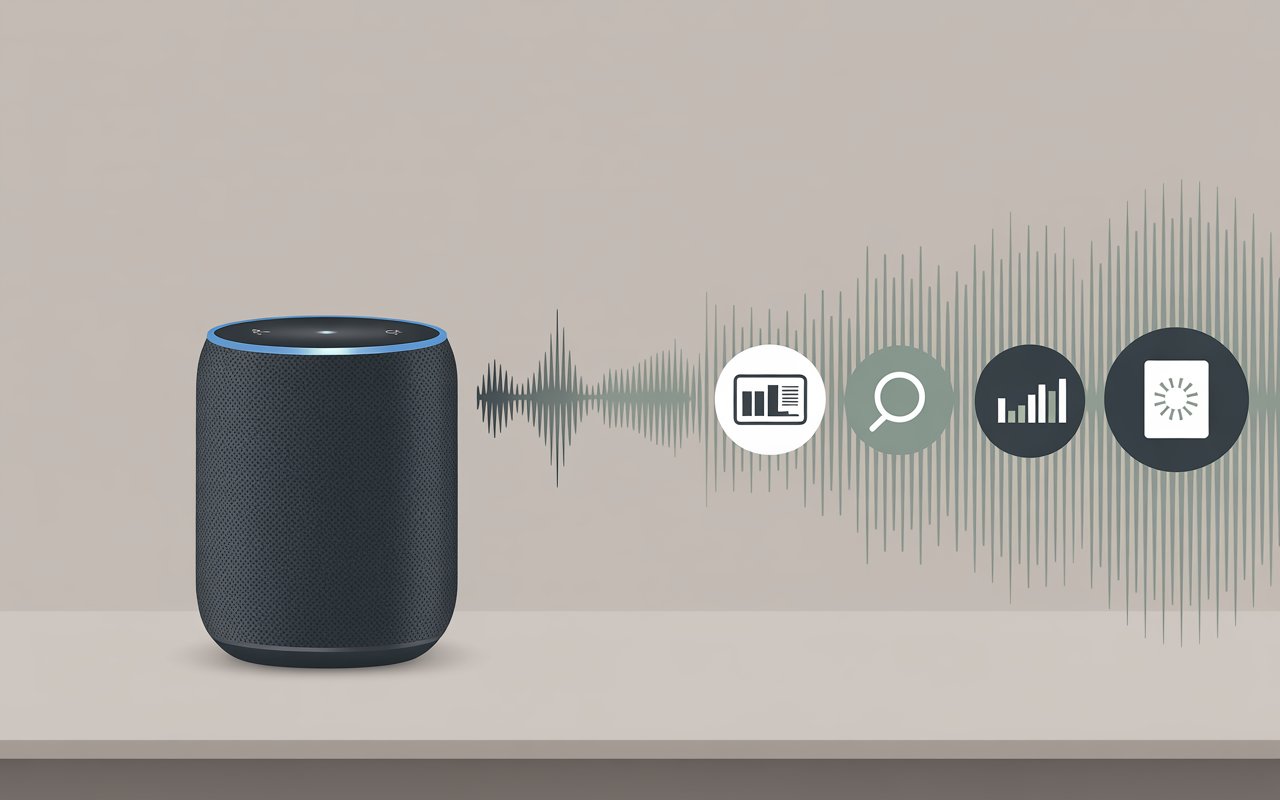
The trajectory of development points towards deeper personalisation, more natural conversational AI, and tighter integration with health, finance, and workplace tools.
Deeper Personalisation and Routine Automation
Amazon Skills is moving beyond single-command interactions towards understanding user routines and anticipating needs. As AI improves, routines will trigger based on context rather than explicit commands. For businesses, this means voice content will need to be more precisely targeted to appear at the right moment, not just the right query.
Health, Wellbeing and Professional Skills
Skills for health monitoring, medication reminders, and workplace productivity are growing in number and sophistication. For professional services businesses, a branded briefing or FAQ-based customer service skill is a genuinely underused channel. The parallel development of AI for staff training is covered through our AI training programmes for SMEs and our guidance on training staff to use AI tools confidently.
Democratisation of Skill Development
Amazon’s Blueprints tool has already lowered the barrier to creating basic Amazon Skills. Improved low-code tools and AI development assistants will soon make it practical for any SME to build a functional branded skill without a dedicated development team. The investment to make now is in the content strategy that makes the skill worth enabling. A skill that answers your five most common customer questions clearly will outperform a technically sophisticated one with no genuine content value.
Amazon Skills have moved well past the novelty stage. Voice search is already shaping how UK customers find services, compare options, and make decisions, often without touching a keyboard. Whether your priority is structuring existing content for voice queries, auditing whether your business data is accurate enough for Alexa to surface, or exploring a branded skill, the practical steps are accessible, and the returns are measurable.
ProfileTree works with SMEs across Northern Ireland, Ireland, and the UK on the full range of digital strategy challenges introduced by voice technology, from content architecture and SEO to AI training and digital marketing strategy. The businesses that act now will have a structural advantage over those that treat it as a future consideration. Our digital training programmes for SME teams and AI strategy resources for business owners are a practical place to start.
Amazon Skills have quietly shifted from a consumer novelty to a practical business tool. For UK SMEs, the opportunity is straightforward: structure your content to answer spoken questions, keep your business data accurate across directories, and consider whether a branded skill or flash briefing could create a direct channel to your customers. Voice search is not a future trend to monitor; it is already influencing how people find and choose businesses today. The organisations that treat it seriously now will be harder to displace later.
FAQs
1. What are Amazon Skills and how do they work?
Amazon Skills are voice-activated applications that run on Alexa-enabled devices. Each extends what the assistant can do, from controlling a smart heating system to delivering a personalised news briefing. Users enable them through voice commands, the Alexa app, or Amazon’s website. The skills run in the cloud, drawing on the data or services they connect to, and can be built by Amazon, third-party developers, or businesses wanting a branded voice channel.
2. Are Alexa skills free to use in the UK?
Most Alexa skills are free to enable and use. Where a skill offers premium content, Amazon supports three purchase models: one-time purchases, consumables, and subscriptions. The detail page in the Alexa app shows the cost structure and permissions before enabling. The majority of everyday UK options, including BBC Sounds, National Rail, and the Met Office, are entirely free.
3. What are the best Alexa skills for UK users?
The most consistently useful options include BBC Sounds for radio and podcasts, the Met Office for localised forecasts, National Rail for live departure information, Hive for smart heating, Ring for security camera management, and so on for task management. The right selection depends on which devices and services are already part of your home or office setup.
4. How does voice engine optimisation connect to Amazon Skills?
Voice engine optimisation improves the likelihood that your content is selected when Alexa answers a spoken query about your business. Amazon Skills and voice search draw from the same pool of well-structured, fast-loading, question-answering content. The practical steps overlap almost entirely with strong SEO: accurate data, direct answers, and conversational phrasing. For businesses in competitive markets such as Belfast, Dublin, or Manchester, voice visibility is increasingly the difference between appearing in a customer’s shortlist and being invisible at the right moment.
5. Can I build a branded skill without coding experience?
Yes. Amazon’s Blueprints tool allows anyone to create basic personalised skills, including branded Q&A experiences and trivia games, without programming knowledge. For more capable integrations, Amazon provides the Alexa Skills Kit with full documentation. Businesses wanting a fully functional branded skill typically work with a digital agency.