
B2B Content Marketing Statistics: What UK Marketers Need to Know
Table of Contents
B2B content marketing statistics for 2026 tell a more complicated story than most round-up articles admit. Adoption is close to universal, budgets keep rising, and AI has removed most of the production barriers that used to slow teams down. What the data also shows is that the gap between businesses producing content and those turning it into a pipeline has widened, and that gap is where the real strategic question sits for UK SMEs.
This article draws on current research from the Content Marketing Institute, HubSpot, Gartner and DemandSage to map where B2B content marketing stands in 2026 and what the numbers mean for format, distribution and measurement priorities. ProfileTree works with businesses across Northern Ireland, Ireland and the UK on exactly these challenges, and the patterns we see on client projects broadly match what the data shows.
Three numbers worth knowing before you read on:
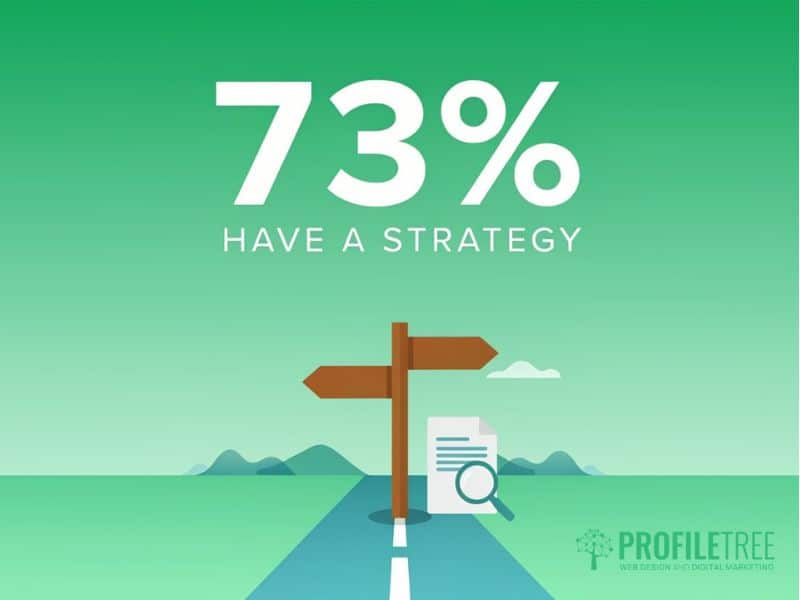
- 91% of B2B marketers use content marketing, but only 73% have a documented strategy (DemandSage; CMI, 2026)
- 56% of B2B marketers still find it difficult to attribute ROI to content (CMI/MarketingProfs)
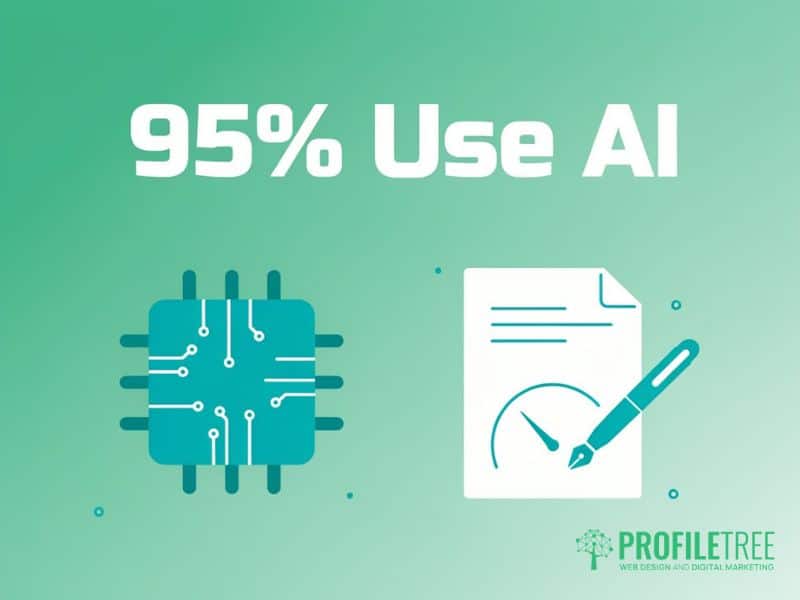
- 95% now use AI somewhere in their workflow, yet only around 39% say it’s actually improving performance (CMI, 2026)
The b2b content marketing trends and b2b content marketing stats behind these headlines are covered in detail below, alongside how b2c content marketing statistics compare and what changes for UK teams specifically.
The State of B2B Content Marketing in 2026
B2B content marketing statistics for 2026 point to a widening gap between adoption and execution. Most businesses are creating content. Far fewer are doing it with a documented plan behind it.
B2B buyers now complete most of their research before they ever speak to a salesperson. CMI’s 2026 data puts this at around 67% of the buying journey happening without any vendor contact, with the average buyer working through roughly 13.4 pieces of content first. That self-education phase demands content that answers technical, commercial and risk questions, not surface-level SEO topics. Several B2B content marketing trends point the same way this year: buyers reward depth and specificity, and they penalise generic, interchangeable advice.
UK professional audiences tend to respond to evidence-based authority and clear regulatory context, UK GDPR, FCA rules, sector-specific requirements, more readily than hyperbole. Buyers who’ve already read a dozen pieces of content before contacting you notice when a page repeats the same generic claims as everyone else’s. That’s a big part of why a documented strategy matters: it forces a business to decide what it’s actually saying that’s different, rather than producing content for its own sake.
Businesses with a documented content strategy are 3.5 times more likely to describe their content marketing as successful than those without one, according to CMI’s 2026 research. If your team is producing content without a written plan behind it, ProfileTree’s content marketing services start with exactly that step.
This is also where the UK content marketing market starts to diverge from the more heavily documented US picture, a theme we come back to in the regional section below.
Key B2B Content Marketing Statistics
These B2B content marketing statistics for 2026 draw heavily on the Content Marketing Institute’s annual B2B Content Marketing Benchmarks, Budgets, and Trends research, alongside HubSpot, DemandSage and Gartner data, and the wider b2b content marketing stats and b2b content performance figures these organisations publish, covering how much businesses spend and where the money is going.
Strategy and adoption:
- 91% of B2B marketers use content marketing as part of their overall strategy (DemandSage, 2026)
- 97% of B2B marketers have some form of content strategy, but only 73% have it formally documented, up from around 40% several years ago (CMI, 2026)
- 96% of B2B brands now produce thought leadership content, though only a small minority rate their programme as advanced (CMI, 2026)
- 45% of B2B marketers name AI tools as a top-three investment priority for 2026, ahead of events and experiential marketing (33%) and owned media, including websites and email (32%) (CMI, 2026)
- Broader b2b marketing statistics tell a similar story on usage: b2b content marketing usage has stayed above 90% for several years running, even as documentation rates lag behind
The UK content marketing market lags slightly behind the US on formal documentation, though the gap has narrowed over the past two years as more UK teams adopt the same benchmarking approach.
Budget:
- B2B organisations typically allocate somewhere between a quarter and a third of their total marketing budget to content activities, depending on company size and sector (CMI; SageFrog)
- Larger mid-market businesses tend to sit toward the higher end of that range; UK teams we work with commonly plan monthly content spend in the low thousands
- Gartner’s most recent CMO survey put average total marketing budgets at 7.7% of company revenue, broadly flat year on year
- B2B content marketing spend is trending upward across the board, one of the clearer content marketing growth statistics in this year’s data, even where overall marketing budgets are flat
Challenges:
- 56% of B2B marketers say attributing ROI to content is difficult, and the same proportion struggle to track the customer journey (CMI/MarketingProfs)
- Measuring ROI is the single most cited marketing challenge overall, named by a third of marketers in HubSpot’s 2026 State of Marketing survey
- 54% cite limited resources, people, time or budget as a persistent constraint (CMI)
Most of this year’s b2b content marketing stats point to the same underlying issue, covered in more depth in CMI’s full b2b content marketing report, and the wider b2b marketing stats tell a similar story: businesses are measuring the wrong things.
Content performance also varies sharply by industry. B2B SaaS businesses report some of the highest content marketing ROI of any sector, at around 420%, with financial services close behind at roughly 380% (FirstPageSage). b2b content performance and b2b seo statistics both show the same pattern: sector context matters more than a single average figure.
These figures highlight a fundamental tension: near-universal adoption and rising planned investment sit alongside persistent measurement gaps. For UK SMEs willing to document a strategy and commit to proper measurement, that gap is an opportunity rather than a barrier. A documented digital strategy is usually the fastest way to close it.
Content Formats and Channels That Convert
B2B content marketing statistics for 2026 show a format shift toward video, and a widening distribution gap between content that’s created and content that actually gets seen. The b2b content marketing stats on format are just as clear as the strategy numbers above: video and social are pulling ahead of static formats for engagement, even if not yet for volume of leads.
Video’s Growing Role in B2B Content
Video is no longer optional. 91% of businesses now use video as a marketing tool, and B2B marketers who do consider it essential for reaching decision-makers (Wyzowl, 2026; DemandSage). Company websites remain the biggest distribution point for B2B video (67%), followed by email (49%), LinkedIn (43%) and YouTube (40%).
What’s changed is the purpose. Beyond top-of-funnel awareness, UK businesses increasingly use video for product demonstrations, technical explainers and client testimonials that move prospects through consideration, not just brand recall. b2b content performance data on video specifically tracks watch-through rate and follow-up engagement more usefully than raw view counts, and the b2b seo statistics on video are increasingly tied to page dwell time rather than views alone. For companies working with agencies like ProfileTree on video production, the brief has shifted from pure creativity toward video that earns its place further down the funnel.
LinkedIn and Social Distribution
LinkedIn remains the dominant B2B distribution channel, used by most B2B marketers and rated the most effective platform by around 85% of them (CMI; SeoProfy). Organic social was the most-used distribution channel overall in CMI’s most recent B2B survey, ahead of company blogs and email newsletters.
The wider b2b social media marketing statistics for 2026 tell the same story: reach without a plan behind it rarely converts. Employee advocacy multiplies content reach without a proportional cost increase: when team members share company content through personal profiles, it lands in networks a brand page never reaches on its own. UK businesses considering a social media marketing push should build employee sharing into the plan from the start, not treat it as an afterthought.
Email as a B2B Distribution Channel
Email hasn’t lost its place despite newer channels crowding the conversation. Most B2B marketers use email newsletters for lead generation, and email consistently ranks among the top few most effective distribution channels in CMI’s research.
What separates effective B2B email from noise is segmentation: by industry, by role, and by stage in a buying cycle that, as covered above, can run for months. A structured email marketing programme that sends useful insight rather than a constant stream of offers tends to outperform a bigger, less targeted list.
AI’s Impact on B2B Content Marketing
AI has changed what’s possible in B2B content marketing faster than almost any other part of the marketing stack, and the B2B content marketing statistics for 2026 show a clear gap between adoption and actual performance gain.
95% of B2B marketers now use AI somewhere in their workflow, most commonly for content creation (around 80%) and media production (around 75%). Only about 39% say AI use is genuinely improving performance, which is the most useful number here. Using a tool isn’t the same as using it well.
The businesses seeing a real lift tend to combine AI for research, structure and first drafts with a human expert doing the final pass: adding real examples, catching inaccuracies and injecting the judgment a generic model can’t replicate. Subject matter expertise hasn’t become less valuable because of AI. If anything, buyers who’ve read a dozen AI-flavoured articles before finding yours notice the difference immediately when a page demonstrates genuine hands-on experience. Businesses exploring what this looks like in practice, from content workflows to broader operations, often start with AI transformation support rather than trying to bolt AI onto an existing process piecemeal.
AI adoption shows up in the budget data, too. Marketers rank AI tools as their top investment priority for 2026, ahead of events and owned media, which suggests most teams see this as a multi-year shift rather than a short-term experiment. The risk for UK SMEs is treating AI spend as a replacement for strategy rather than an addition to it. A documented plan still determines whether that investment translates into better content or just more of it. It’s also one of the clearest b2b content marketing trends in this year’s data: adoption keeps climbing while measured impact lags well behind it.
B2B vs B2C Content Marketing: What Changes and Why It Matters
Not every content marketing statistic behaves the same way across B2B and B2C.
| Dimension | B2B Content Marketing | B2C Content Marketing |
|---|---|---|
| Audience | Small, defined group of decision-makers | Broad consumer audience |
| Typical format | Whitepapers, case studies, technical guides | Entertainment-led, emotionally engaging content |
| Sales cycle | Months, multiple stakeholders | Days, often a single decision-maker |
| Documented strategy | 73% (CMI, 2026) | Around 70% |
| Primary metric | Pipeline contribution, lifetime value | Engagement, traffic, brand sentiment |
Documentation and investment tell part of the story, too. B2C marketers invest more heavily in influencer marketing (61% use influencers, versus 34% in B2B).
Relationship building matters too. B2B content marketing nurtures long-term client relationships through thought leadership and case studies, while B2C leans more on brand awareness and repeat purchase. For UK professional services and technology companies, that relationship dimension is often the whole point of the content programme.
That difference in what “success” means is usually the real reason a B2C playbook underperforms when applied directly to a B2B content marketing statistics comparison. b2c content marketing statistics diverge from the B2B picture in one further way worth naming: B2C measurement leans more on brand-lift studies than the pipeline-first metrics that dominate the b2b content marketing stats covered above, and the UK content marketing market shows this split just as clearly as the US data does.
Measuring B2B Content Marketing Performance
The persistent challenge with B2B content marketing statistics on ROI isn’t a measurement problem so much as a wrong-metrics problem. Traffic and social shares show engagement, not business impact.
Marketing Qualified Leads (MQLs) are a starting point, not an endpoint; more useful measurement tracks content’s role in pipeline creation and revenue, which requires connecting content platforms to a CRM.
Key metrics worth tracking, roughly in order of maturity:
- Engagement: time on page, scroll depth, completion rate, and an early signal of relevance
- Lead generation: downloads, form submissions, newsletter signups, the traditional top-of-funnel measure
- Pipeline contribution: content-influenced opportunities and deal velocity by stage
- Revenue impact: closed revenue influenced by content, customer acquisition cost and lifetime value
Multi-touch attribution matters because B2B buyers interact with multiple pieces of content before purchasing. First-touch and last-touch models both give an incomplete picture; a multi-touch model spreads credit across the actual journey rather than crediting just the first or last thing a buyer saw. The b2b seo statistics behind organic visibility are consistent year to year and still underpin most of this: 83% of B2B marketers incorporate SEO tactics into their content strategy, and technical foundations, page speed, mobile performance, and structured data determine whether good content ever gets the chance to convert. If your content is strong but isn’t showing up, SEO services that connect technical health to content strategy usually close that gap faster than more content alone.
Local SEO considerations matter for UK businesses serving specific regions, too. The b2b seo statistics on local intent are a useful reminder here: content built around a specific service and location captures geographically specific demand while building regional authority. B2B content performance, and the b2b content marketing conversion rate specifically, is more useful measured by content type and funnel stage than as one blended average across everything you publish. The same b2b seo statistics that show technical health matters also show up in b2b content performance data once teams start tracking by funnel stage rather than by page.
UK and Ireland: Regional Considerations for B2B Content
Most B2B content marketing statistics are compiled from US and global data, and the uk content marketing market doesn’t always behave the same way, so applying global benchmarks directly to a UK business misses real regional differences. The b2b content marketing trends we see on client projects here tend to lag the US picture by six to twelve months.
UK B2B buyers tend to respond to understated expertise and clear regulatory context over hyperbolic claims or disruption narratives; content that leans on “revolutionary” or “industry-leading” language typically lands worse here than in more promotional markets. Content focused purely on benefits looks thin to experienced buyers; the stronger approach addresses the cost of inaction directly, giving an internal champion the data needed to get budget signed off.
“The businesses seeing real growth from content marketing are the ones treating it as a strategic input to sales conversations, not a marketing checkbox,” says Ciaran Connolly, founder of ProfileTree. “We work with clients across Northern Ireland, Ireland and the UK to build content that supports specific sales conversations and shows measurable pipeline contribution, not just traffic.”
For UK SMEs without in-house content capability, that often means either building the skill internally or bringing in outside support. Digital training programmes that build content and measurement skills within a team tend to outlast a single outsourced campaign, because the team keeps applying the framework after the project ends. Specific b2b marketing UK statistics and b2b marketing data UK remain thin on the ground compared with US research, which is exactly why a documented, UK-specific content strategy is worth more here than importing someone else’s benchmark.
Sustainability and ESG messaging are also gaining ground in UK B2B buying, particularly in public sector procurement and among larger corporate buyers. This shows up most clearly in b2b enterprise content marketing aimed at that audience, where genuine value alignment, not a token paragraph, increasingly shapes supplier shortlists.
Conclusion
B2B content marketing statistics for 2026 point in one direction: production is no longer the constraint. With AI lowering the cost of content creation and 91% of B2B marketers already active in the space, the businesses pulling ahead are the ones solving the harder problems, distribution, measurement and genuine differentiation. The b2b content marketing trends, b2c content marketing statistics and UK content marketing market data covered above all point the same way: strategy and documentation separate the businesses getting real value from those just producing volume.
For UK businesses, three things stand out from this data. A documented strategy still separates the businesses that succeed from those that don’t; the gap between marketers who measure ROI properly and those who don’t is a planning problem, not a technology one. Owned channels, particularly email, SEO and a well-maintained website, continue to deliver the strongest measurable return despite the noise around newer platforms.
And AI-driven search means content now needs to serve two audiences at once: the human buyer doing independent research, and the AI system deciding what to cite. None of that requires a bigger budget, just a written strategy and honest measurement.
FAQs
1. What percentage of B2B marketers use content marketing?
91% of B2B marketers use content marketing as part of their overall strategy, and 97% have some form of content plan (DemandSage; CMI, 2026). The bigger gap is documentation: only 73% have that plan formally written down, which is the factor most strongly linked to success.
2. What is the biggest challenge in B2B content marketing?
Measuring ROI. 56% of B2B marketers find it difficult to attribute return on investment to content, and the same proportion struggle to track the customer journey across multiple touchpoints (CMI/MarketingProfs). Limited resources and creating genuinely engaging content follow close behind.
3. How much should a B2B company spend on content marketing?
Most B2B businesses allocate somewhere between a quarter and a third of their total marketing budget to content, though the right figure depends heavily on sector, company size and how competitive the target keywords are. A documented strategy matters more than hitting a specific percentage.
4. How do B2B and B2C content marketing statistics differ?
B2B content marketing statistics skew toward longer sales cycles, smaller and more specific audiences, and informational formats like whitepapers and case studies. b2c content marketing statistics reflect shorter, more impulsive buying decisions and heavier investment in emotional, entertainment-led content and influencer marketing. The two data sets measure fairly different behaviour, so blending them into one benchmark tends to mislead more than it helps.
5. How is AI changing B2B content marketing statistics in 2026?
95% of B2B marketers now use AI somewhere in their workflow, but only around 39% say it’s actually improving performance (CMI, 2026). The gap between adoption and impact is the clearest signal in the current data: using AI and using it well aren’t the same thing.