
Amazon SEO: Optimise Listings for Marketplace Success
Table of Contents
ProfileTree provides Amazon SEO services to help sellers improve product visibility and drive sales on the world’s largest e-commerce marketplace. Amazon operates differently from Google—understanding the A9 algorithm and Amazon’s unique ranking factors is essential for marketplace success.
Amazon is a search engine, but it’s one with a single goal: selling products. Every ranking decision Amazon makes prioritises products most likely to generate sales. This commercial focus shapes every aspect of Amazon SEO, from keyword strategy to listing optimisation.
Understanding Amazon’s Search Algorithm
How Amazon decides which products to show:
The A9 Algorithm
Amazon’s search algorithm (commonly called A9, though Amazon has evolved beyond this) determines product rankings based on factors designed to maximise sales:
Core Ranking Principles:
| Principle | What It Means |
| Relevance | Does the product match what the shopper searched for? |
| Performance | Does the product sell well when shown? |
| Customer satisfaction | Do buyers rate it well and keep it? |
Key Ranking Factors:
| Factor Category | Elements |
| Relevance factors | Title keywords, bullet points, description, backend keywords |
| Performance factors | Sales velocity, conversion rate, click-through rate |
| Customer factors | Reviews, ratings, return rate, seller feedback |
| Availability | Stock levels, fulfilment method, delivery speed |
| Price | Competitiveness, Buy Box eligibility |
Amazon vs Google SEO
Understanding the fundamental differences:
| Aspect | Amazon | |
| Primary goal | Sell products | Answer queries |
| User intent | Purchase | Various (information, navigation, transaction) |
| Ranking signals | Sales performance critical | Content and links critical |
| Keyword approach | Exact match still important | Semantic understanding |
| Content length | Concise, scannable | Often longer, comprehensive |
| External links | Not a factor | Major ranking factor |
| Algorithm updates | Less publicised | Regular, publicised updates |
The Sales Velocity Factor:
Amazon heavily weights sales performance. Products that sell well rank higher, generating more sales and improving their ranking further. This creates a flywheel effect—and makes launching new products challenging without initial momentum.
The Buy Box Factor
Most Amazon sales happen through the Buy Box (the “Add to Cart” button). Buy Box eligibility affects visibility:
Buy Box Factors:
| Factor | Impact |
| Price | Competitive pricing essential |
| Fulfilment | FBA preferred over FBM |
| Seller metrics | Account health, feedback, performance |
| Stock availability | In-stock products prioritised |
| Shipping speed | Faster delivery preferred |
For brand owners and private label sellers with exclusive listings, Buy Box competition is less relevant. For resellers, it’s critical.
Our Amazon SEO Services
Comprehensive optimisation for Amazon sellers:
Keyword Research for Amazon
Amazon keyword research differs from Google research:
Amazon-Specific Research:
| Source | What It Provides |
| Amazon autocomplete | Real shopper search suggestions |
| Competitor listings | Keywords successful products target |
| Amazon Brand Analytics | Search term data (for brand registered sellers) |
| Amazon advertising data | Search term reports from PPC |
| Third-party tools | Helium 10, Jungle Scout, etc. |
Keyword Categories:
| Type | Example | Usage |
| Primary keywords | “wireless bluetooth headphones” | Title, primary focus |
| Secondary keywords | “noise cancelling earbuds” | Bullets, description |
| Long-tail keywords | “wireless headphones for running gym” | Backend, bullets |
| Competitor keywords | Terms competitors rank for | Strategic targeting |
| Seasonal keywords | “christmas gift headphones” | Seasonal optimisation |
Search Term Strategy:
Amazon allows backend search terms (hidden keywords). Strategy includes:
- No repetition needed (Amazon indexes each word once)
- Include misspellings and alternate spellings
- Use synonyms and related terms
- Include Spanish terms if relevant to the market
- Avoid competitor brand names (policy violation)
Product Title Optimisation
The most important on-page element for Amazon SEO:
Title Best Practices:
| Element | Guideline |
| Length | Use available characters (varies by category, typically 150-200) |
| Structure | Brand + Product + Key Features + Size/Quantity |
| Keywords | Primary keywords near the beginning |
| Readability | Balance keywords with human readability |
| Accuracy | Must accurately describe the product |
Title Formula:
[Brand] [Product Type] [Key Feature 1] [Key Feature 2] [Size/Quantity] [Colour/Variant]Example:
TechBrand Wireless Bluetooth Headphones with Active Noise Cancelling, 40-Hour Battery Life, Over-Ear Design, BlackTitle Mistakes to Avoid:
| Mistake | Why It’s Wrong |
| Keyword stuffing | Hurts readability and conversion |
| ALL CAPS | Against Amazon policy |
| Promotional language | “Best seller” etc. not allowed |
| Price information | Not permitted in titles |
| Excessive punctuation | Looks spammy |
Bullet Point Optimisation
Bullet points (Key Product Features) drive both ranking and conversion:
Bullet Point Strategy:
| Aspect | Approach |
| Number | Use all 5 bullets (most categories) |
| Length | 200-250 characters each typically |
| Structure | Feature + Benefit format |
| Keywords | Include secondary keywords naturally |
| Scannability | Easy to read quickly |
Effective Bullet Structure:
[FEATURE IN CAPS]: Explanation of the feature and why it benefits the customer. Include relevant keywords naturally within the benefit description.Example:
ACTIVE NOISE CANCELLATION: Block out distractions with advanced ANC technology that reduces ambient noise by up to 95%, perfect for commuting, working from home, or focusing in noisy environments.What to Include in Bullets:
- Key features and specifications
- Benefits and use cases
- Materials and construction quality
- What’s included in the package
- Compatibility information
- Size and dimension details
- Warranty or guarantee information
Product Description Optimisation
The product description provides additional ranking and conversion opportunity:
Description Approaches:
| Format | When to Use |
| Basic HTML description | Standard listings without A+ Content |
| A+ Content (EBC) | Invited brand-registered sellers |
| Premium A+ Content | Invited brand registered sellers |
Basic Description Optimisation:
- Use the available character limit (2,000 characters typically)
- Include additional keywords not in the title/bullets
- Expand on features and benefits
- Tell the product story
- Basic HTML formatting allowed (bold, line breaks, lists)
A+ Content (Enhanced Brand Content):
For brand-registered sellers, A+ Content replaces the basic description:
| A+ Element | SEO/Conversion Value |
| Brand story | Brand building, trust |
| Comparison charts | Cross-selling, differentiation |
| Feature highlights | Benefit communication |
| Lifestyle images | Emotional connection |
| Technical specifications | Detail-oriented buyers |
A+ Content Best Practices:
- Use all available modules
- Include lifestyle and product images
- Create comparison charts with other products in your range
- Tell your brand story
- Highlight key differentiators
- Mobile-optimised design
Backend Search Terms
Hidden keywords that help Amazon understand your product:
Backend Optimisation:
| Field | Best Practice |
| Search terms | 250 bytes of additional keywords |
| Subject matter | Category-specific keywords |
| Target audience | Who the product is for |
| Other attributes | Category-specific fields |
Search Term Rules:
- Don’t repeat words already in the title/bullets
- No commas needed (space-separated)
- Include misspellings customers make
- Include synonyms and alternate terms
- No competitor brand names
- No subjective claims (“best”, “amazing”)
Example Search Terms:
noise canceling headphone bluetooth wireless over ear audiophile hifi commute travel airplane office work from home podcast music gamingImage Optimisation
Images affect both click-through rate and conversion:
Amazon Image Requirements:
| Requirement | Specification |
| Main image | White background, product only, 85%+ frame fill |
| Image size | Minimum 1000px (for zoom), 1600px+ recommended |
| Format | JPEG, PNG, GIF, TIFF |
| Image count | Up to 7-9 images depending on category |
Image Strategy:
| Image Slot | Purpose |
| Main image | Clear product shot, white background |
| Image 2-3 | Different angles, detail shots |
| Image 4-5 | Lifestyle/in-use images |
| Image 6 | Infographic with key features |
| Image 7 | Size reference, what’s included |
| Image 8-9 | Additional lifestyle, comparison |
Image Optimisation Tips:
- Professional photography essential
- Show scale with reference objects
- Include infographics with key specs
- Lifestyle images showing the product in use
- Feature callouts on images
- Mobile-friendly (readable on small screens)
Review and Rating Strategy
Reviews significantly impact both ranking and conversion:
Review Factors:
| Factor | Impact |
| Review count | More reviews = more trust |
| Review rating | Higher ratings improve conversion |
| Recent reviews | Fresh reviews indicate active product |
| Review quality | Detailed reviews help buyers decide |
| Verified purchases | More weight than unverified |
Legitimate Review Building:
| Method | Description |
| Amazon Vine | Invite programme for brand registered sellers |
| Request a Review | Amazon’s official review request button |
| Product inserts | Cards requesting feedback (following guidelines) |
| Follow-up emails | Through Amazon’s buyer-seller messaging |
| Excellent product | Quality products earn organic reviews |
Review Policy Compliance:
Amazon strictly prohibits:
- Paying for reviews
- Incentivised reviews (except Vine)
- Review manipulation
- Fake reviews
- Review exchanges
Violations can result in listing suspension or account termination.
Pricing Strategy
Price affects Buy Box, conversion, and indirectly ranking:
Pricing Considerations:
| Factor | Consideration |
| Competitiveness | Price relative to competitors |
| Profit margins | Sustainable pricing |
| Amazon fees | FBA fees, referral fees |
| Perceived value | Price-quality relationship |
| Promotional pricing | Strategic discounts |
Pricing Tools:
- Automated repricing tools
- Competitor price monitoring
- Promotional planning (coupons, deals)
- Subscribe & Save pricing
Amazon Advertising Integration
PPC advertising supports organic ranking:
Advertising-SEO Connection:
| Advertising Element | SEO Benefit |
| Sponsored Products | Drive sales velocity for new products |
| Search term reports | Discover converting keywords |
| Product targeting | Appear on competitor listings |
| Brand awareness | Increase branded searches |
Strategic Advertising Use:
- Launch campaigns for new products (build initial velocity)
- Keyword research through auto campaigns
- Defend brand terms
- Target competitor products
- Support seasonal pushes
Advertising isn’t SEO, but it supports SEO goals by driving the sales that improve organic ranking.
Amazon SEO for Different Seller Types
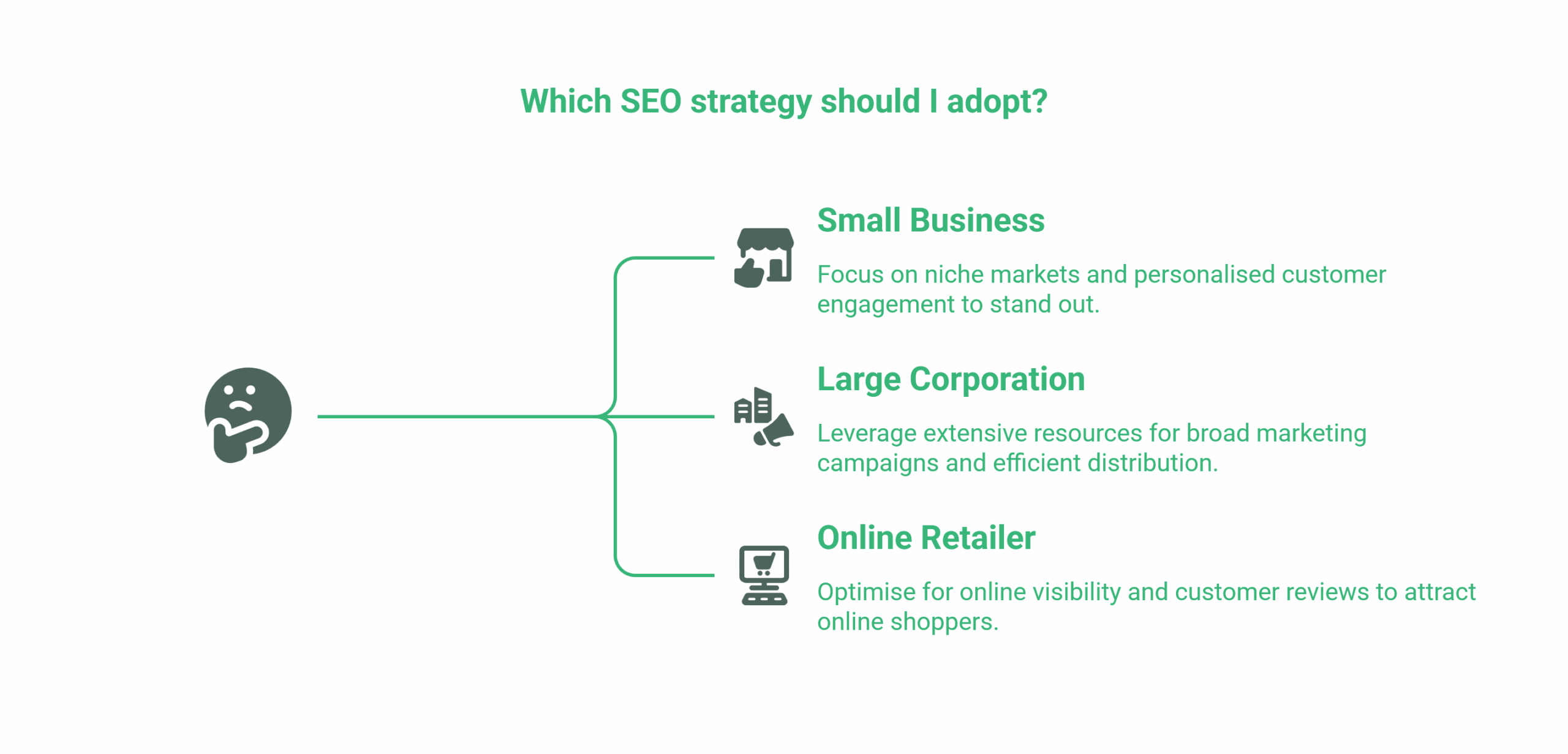
Strategies vary by seller type:
Private Label Sellers
Sellers with their own branded products:
| Focus Area | Priority |
| Brand Registry | Essential for A+ Content, protection |
| Listing optimisation | Full control over all elements |
| Product differentiation | Stand out from competitors |
| Review building | Critical for new products |
| Brand building | Long-term value creation |
Wholesale/Resellers
Sellers of other brands’ products:
| Focus Area | Priority |
| Buy Box winning | Essential for sales |
| Pricing strategy | Competitive pricing critical |
| Inventory management | Stock availability |
| Seller metrics | Account health |
| Authorisation | Brand approval where required |
Brand Owners
Established brands selling on Amazon:
| Focus Area | Priority |
| Brand Registry | Protect brand, access tools |
| A+ Content | Premium content capability |
| Brand Store | Dedicated storefront |
| Brand Analytics | Search and market data |
| Brand protection | Monitor for violations |
Measuring Amazon SEO Success
Tracking performance on Amazon:
Key Metrics
Visibility Metrics:
| Metric | What It Shows |
| Organic ranking | Position for target keywords |
| Search impression share | % of relevant searches where you appear |
| Page 1 keywords | Count of keywords ranking page 1 |
| Best Seller Rank | Category ranking by sales |
Performance Metrics:
| Metric | What It Shows |
| Unit session percentage | Conversion rate |
| Sessions | Traffic to listings |
| Page views | Total listing views |
| Buy Box percentage | Share of Buy Box |
| Sales velocity | Units sold over time |
Customer Metrics:
| Metric | What It Shows |
| Review rating | Average star rating |
| Review count | Number of reviews |
| Return rate | Product returns percentage |
| Customer feedback | Seller feedback score |
Tools for Amazon Analytics
Amazon Native Tools:
| Tool | Data Provided |
| Seller Central reports | Sales, traffic, conversion |
| Brand Analytics | Search terms, market basket, demographics |
| Search Query Performance | Impression share, click share |
| Advertising console | PPC performance, search terms |
Third-Party Tools:
| Tool | Purpose |
| Helium 10 | Keyword research, listing optimisation, tracking |
| Jungle Scout | Product research, keyword tracking |
| Sellics/Perpetua | Analytics, advertising optimisation |
| DataHawk | Market intelligence, tracking |
Amazon SEO Challenges
Common challenges and solutions:
New Product Launch
The Cold Start Problem:
New products have no sales history, reviews, or ranking. Breaking through requires:
| Strategy | Approach |
| PPC investment | Advertising to drive initial sales |
| Promotional pricing | Competitive launch pricing |
| Vine reviews | Amazon Vine for initial reviews |
| External traffic | Drive traffic from outside Amazon |
| Variations | Attach to existing successful listings |
Competitive Categories
Standing Out in Crowded Markets:
| Challenge | Solution |
| Established competitors | Find underserved niches or angles |
| Price pressure | Differentiate on value, not just price |
| Review disparity | Focus on product quality and service |
| Keyword competition | Long-tail keyword strategy |
Algorithm Changes
Adapting to Amazon Updates:
Amazon regularly adjusts its algorithm. Strategies for adaptation:
- Focus on fundamentals (relevance, conversion, satisfaction)
- Monitor ranking changes
- Stay current with Amazon seller news
- Test and iterate continuously
Policy Compliance
Staying Within Guidelines:
| Area | Compliance Requirement |
| Listing content | No prohibited claims, accurate information |
| Reviews | No manipulation or incentivisation |
| Pricing | No artificial inflation for discounts |
| Images | Meet technical and content requirements |
| Keywords | No competitor brand names, no prohibited terms |
Why Choose ProfileTree for Amazon SEO
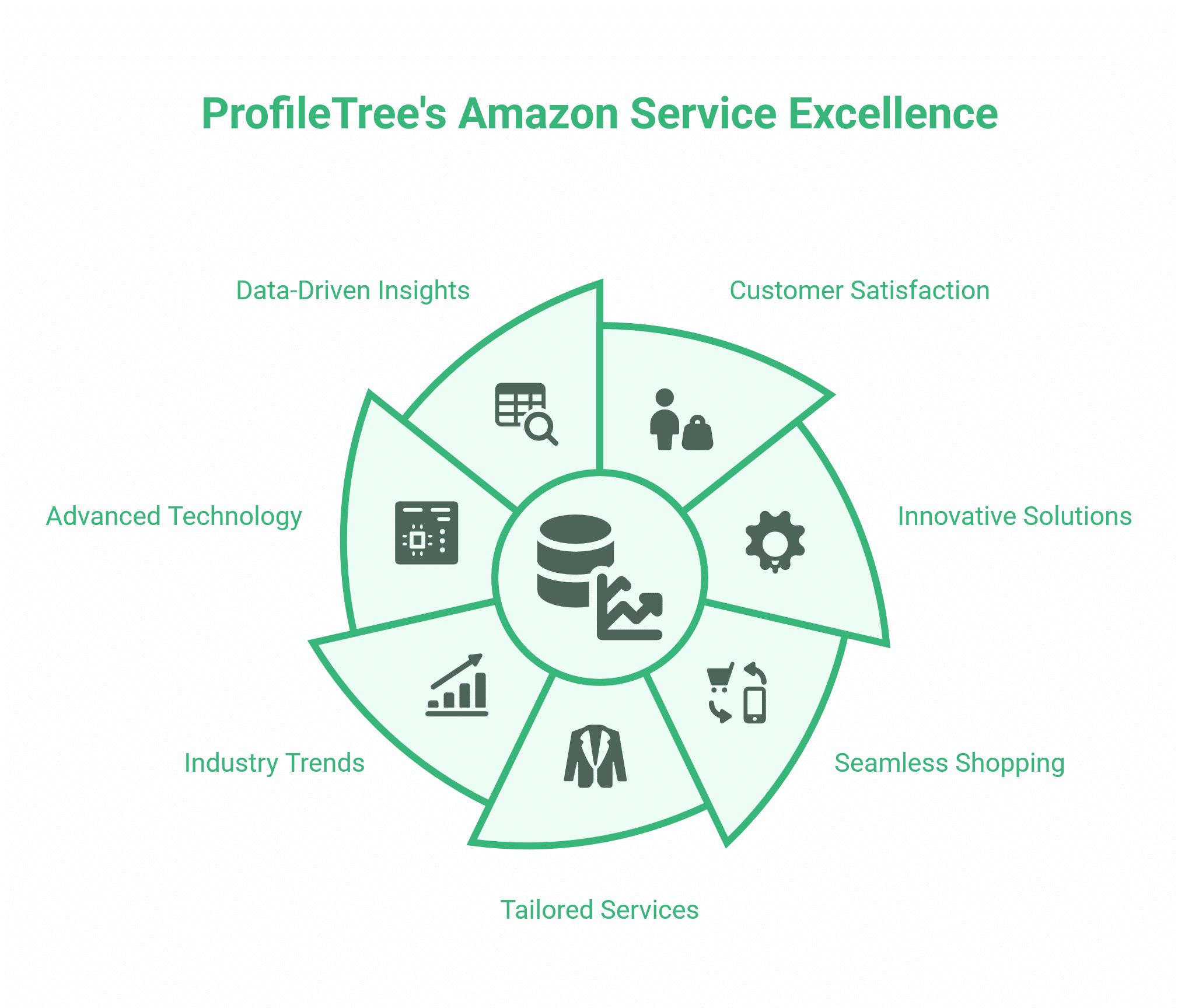
What differentiates our Amazon services:
Marketplace Expertise
Understanding Amazon’s unique environment:
- A9 algorithm knowledge
- Category-specific optimisation
- Amazon policy compliance
- Seller Central proficiency
Ecommerce Integration
Amazon as part of a broader ecommerce strategy:
- E-commerce SEO services for your own website
- Shopify SEO integration
- WooCommerce SEO coordination
- Multi-channel strategy development
Content Capability
Supporting Amazon with broader content:
- Product photography guidance
- A+ Content design
- Video production for product videos
- Brand story development
Data-Driven Approach
Analytics-based optimisation:
- Keyword tracking and analysis
- Competitor monitoring
- Performance reporting
- Continuous optimisation
UK and Ireland Market Focus
Understanding local marketplace dynamics:
- Amazon UK specifics
- UK consumer behaviour
- VAT and compliance considerations
- UK fulfilment strategies
Conclusion
Amazon SEO operates on different principles than traditional search engine optimisation, but the goal is the same: visibility that drives sales. Understanding Amazon’s unique algorithm, optimising every listing element, and building sustainable performance creates competitive advantage on the world’s largest marketplace.
ProfileTree provides Amazon SEO services helping sellers across the UK and Ireland improve product visibility and drive marketplace sales, whether Amazon is your primary channel or part of a broader ecommerce strategy.
FAQs
How long does Amazon SEO take to work?
Amazon SEO can show results faster than Google SEO because sales velocity directly impacts ranking. Well-optimised listings with advertising support can see improvement within 2-4 weeks. However, building a sustainable organic ranking without heavy advertising typically takes 3-6 months. New products with no reviews face longer timelines.
How much do Amazon SEO services cost?
Amazon SEO services typically range from £500-£1,500/month for smaller catalogues to £2,000-£5,000+/month for larger sellers or competitive categories. Investment depends on catalogue size, competition level, and whether advertising management is included. ROI should be measured against sales increases and improved organic ranking.
Can we do Amazon SEO without advertising?
Yes, but it’s harder for new products. Established products with good reviews can rank organically without advertising. New products typically need advertising to generate initial sales velocity that supports organic ranking. Once established, advertising can be reduced while maintaining organic position.
Should we focus on Amazon or our own website?
Both, typically. Amazon provides access to millions of ready-to-buy shoppers but takes significant fees, and you don’t own the customer relationship. Your own website offers better margins and customer data, but requires driving your own traffic. Most successful e-commerce businesses use both channels strategically.
Ready to improve your Amazon product rankings? Contact ProfileTree to discuss how Amazon SEO can drive growth for your marketplace business.