
Skip to content

Video Production for Regulated Industries: UK Compliance Guide

Updated on:
Updated by: Ciaran Connolly
Reviewed byAhmed Samir

Video production in regulated industries demands compliance expertise alongside creative execution. Financial services firms, healthcare providers, and legal practices across Ireland face data protection requirements, disclosure obligations, and consent frameworks that transform standard video production into a specialised discipline requiring both marketing skill and regulatory knowledge.

Regulated industries cannot approach video content with the same flexibility as retail or technology sectors. Every testimonial video requires documented consent processes. Product demonstrations must meet disclosure standards. Marketing claims need substantiation. Employee content involves privacy considerations. The intersection of compelling storytelling and regulatory compliance creates challenges that generic video production companies often misunderstand.

Irish businesses operating under Central Bank regulations, GDPR frameworks, and sector-specific compliance requirements need video production partners who understand these constraints without sacrificing content quality. The right approach transforms compliance from a creative limitation into a competitive advantage, producing authentic content that builds trust whilst meeting all regulatory obligations.

This guide addresses the specific compliance considerations facing regulated industries across Ireland, Northern Ireland, and the UK, providing frameworks that enable confident video marketing without regulatory risk.

Understanding Video Compliance Requirements Across Regulated Sectors
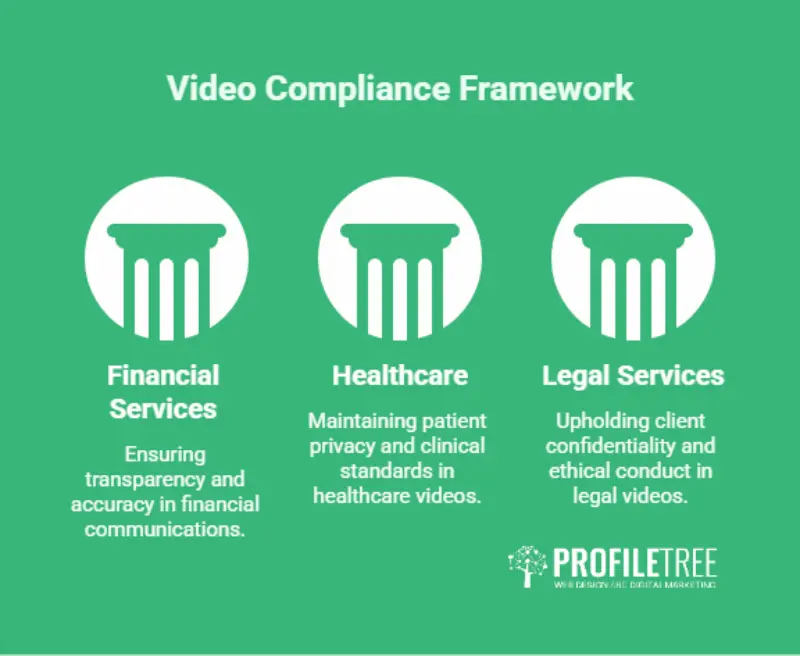
Different regulated industries face distinct compliance frameworks that shape video production approaches. Understanding sector-specific requirements prevents costly mistakes whilst enabling effective content creation.

Financial Services Video Compliance

Financial services firms operate under Central Bank of Ireland supervision, FCA regulations in the UK, and consumer protection directives that directly impact video content.

Advertising Standards RequirementsPromotional videos must include appropriate risk warnings. Investment product videos require clear disclosure of capital risk. Loan and credit product demonstrations must display representative APR information. Performance claims need substantiation through documented evidence. These requirements apply across all distribution channels—a compliance video works on YouTube and LinkedIn equally.

Consumer Protection Considerations Financial promotions via video must be clear, fair, and not misleading. Complex products require appropriate target audience restrictions. Testimonial videos from customers need balanced representation—showing only positive experiences without acknowledging potential downsides creates misleading impressions. Animation and graphics must accurately represent product mechanics without oversimplification.

Record-Keeping Obligations Regulated firms must retain copies of all promotional materials, including video content, for minimum periods (typically 5-7 years). This retention extends to raw footage, scripts, and approval documentation. Cloud storage solutions must meet data residency requirements. Version control becomes essential when videos get updated—you need clear records of what content ran when.

Healthcare and Pharmaceutical Video Compliance

Healthcare providers and pharmaceutical companies navigate strict advertising regulations, patient privacy protections, and clinical accuracy requirements.

GDPR and Patient Privacy Patient testimonial videos require explicit, informed consent that goes beyond standard model releases. Consent documentation must specify exact usage—a video approved for website use doesn’t automatically permit social media distribution. Identifiable patient information (faces, voices, distinctive characteristics) requires written permission. Even waiting room footage showing other patients in the background creates privacy issues without proper consent.

Clinical Accuracy Standards Health claims in video content require clinical evidence. Before-and-after transformations need appropriate disclaimers about individual result variations. Medical device demonstrations must show approved uses only. Pharmaceutical product videos operate under strict regulatory review processes. Animation of biological processes must maintain scientific accuracy whilst remaining accessible.

Professional Standards Compliance Medical Council of Ireland and GMC regulations govern how healthcare professionals present themselves in marketing materials. Testimonials from doctors require careful navigation of professional ethics. Specialist qualifications mentioned in videos must be current and verifiable. Healthcare facility videos showing clinical areas need infection control compliance.

Legal Services Video Compliance

Law firms face professional conduct rules, advertising restrictions, and client confidentiality obligations that shape video content.

Solicitors Regulation Authority Requirements Legal services advertising must not be misleading about expertise, success rates, or service outcomes. Video testimonials from clients require careful positioning—you cannot guarantee legal outcomes. Case study videos must protect client confidentiality even with permission. Fee information in videos must be current and include all material costs.

Client Confidentiality Protections Even anonymised case studies in video format risk confidentiality breaches through identifying details. Client testimonials require written consent that acknowledges potential implications. Office footage showing case files or client information creates data protection risks. Recording client meetings for training or promotional purposes demands advance consent.

Professional Indemnity ConsiderationsVideo content making claims about legal expertise or success rates can create professional indemnity insurance implications. Misleading content, even unintentionally, increases liability exposure. Insurance policies may require compliance review of marketing materials before publication.

ProfileTree’s analysis of why brands choose strategic video marketing demonstrates these multiplicative effects.

GDPR Compliance Framework for Video Production

Data protection regulations apply universally but create specific challenges for video content involving identifiable individuals.

Consent Management Systems

Valid GDPR consent for video requires specific, informed, and freely given agreement. Generic model releases don’t satisfy GDPR requirements without additional elements.

Essential Consent Components Video consent documentation must specify: exact purposes (marketing, training, recruitment), distribution channels (website, social media, exhibitions), geographic reach (Ireland only, EU-wide, global), and duration of use (one year, indefinitely, specific campaign). Checkbox forms don’t constitute valid consent—participants must actively opt-in to specific uses.

Ongoing Consent Rights Individuals maintain the right to withdraw consent at any time. Your video production workflow needs processes for removing content when consent withdraws. This requirement extends to third-party platforms—a testimonial video on YouTube requires removal capabilities when someone exercises withdrawal rights. Archive footage containing individuals who later withdraw consent cannot be repurposed in new videos.

Employee Video Consent Employees appearing in corporate videos present complex consent scenarios. Employment relationships create power imbalances that affect whether consent is “freely given” under GDPR. Best practice separates employment obligations from video participation. Document that video participation is voluntary and that refusal carries no employment consequences. Works council or union consultation may be required in larger organisations.

Data Protection Impact Assessments

Large-scale video programmes involving customer or patient data may require formal Data Protection Impact Assessments (DPIAs).

DPIA Trigger ScenariosCustomer testimonial video campaigns collecting consent from multiple individuals typically trigger DPIA requirements. Video surveillance footage repurposed for marketing materials creates privacy concerns requiring assessment. AI-powered video personalisation using customer data demands DPIA evaluation. Cross-border video distribution involving data transfers outside the EU requires DPIA review.

Privacy by Design Principles Build data protection into video production workflows from project inception. Minimise personal data collection—capture only information necessary for the specific video project. Implement security controls for raw footage containing identifiable individuals. Plan data retention schedules before filming begins. Design consent processes that make withdrawal straightforward.

Third-Party Data Processor Agreements

Video production companies processing personal data on your behalf become data processors under GDPR, requiring formal agreements.

Processor Contract Requirements Data Processing Agreements with video production vendors must specify: processing purposes, data types, security measures, sub-processor permissions, data return or deletion after project completion, and breach notification procedures. Standard production contracts often lack GDPR-compliant processor terms—review and amend before filming begins.

International Production Considerations Video shoots outside the EU involving EU residents’ personal data create transfer compliance issues. Standard Contractual Clauses or adequacy decisions must cover data transfers to production companies in non-EU countries. Cloud storage of raw footage needs geographic controls ensuring EU data residency.

Sector-Specific Compliance Frameworks

Beyond general data protection and advertising standards, specific industries face additional regulatory layers requiring specialist knowledge.V

Insurance Industry Video Requirements

Insurance marketing operates under strict regulations governing product comparison, claims handling, and customer communications.

Product Comparison Restrictions Video content comparing insurance products must meet fairness requirements—cherry-picking favourable comparisons without balanced context creates misleading impressions. Comparison tables shown in video need like-for-like comparisons across equivalent coverage levels. Price comparisons require clear effective dates and qualifying criteria.

Claims Process Representations Videos depicting claims handling must accurately represent typical timelines and processes. Showing exceptionally fast claim settlements without indicating they’re not representative creates false expectations. Customer testimonials about claims experiences need balanced selection—exclusively positive claim stories without acknowledging that some claims get declined misleads viewers.

Investment and Wealth Management Video Compliance

Investment firms face perhaps the strictest video marketing regulations, requiring detailed disclosures and risk warnings.

Performance Advertising Rules Past performance shown in video content must include standard disclaimers about future performance not being guaranteed. Performance periods shown must be representative—selecting only strong-performing periods creates misleading impressions. Benchmark comparisons need appropriate index selection and clearly displayed methodology.

Target Market Appropriateness Investment product videos must target appropriate investor sophistication levels. Complex derivatives cannot be marketed through accessible social media video to retail investors. Content distribution channels must align with target market definitions in product governance frameworks.

Risk Disclosure Integration Risk warnings in video content must be prominent and clearly communicated. Text overlays displaying risks need sufficient duration and readability. Voiceover risk disclosures require clear enunciation without rushed delivery. Risk information cannot be relegated to video descriptions—it must appear within the video content itself.

Banking and Credit Product Video Requirements

Retail banking faces consumer credit regulations that shape how loans, mortgages, and credit cards get presented in video marketing.

APR Display Requirements Representative APR must appear prominently in any video mentioning interest rates or monthly payments. The standard disclosure text must remain visible for minimum durations. Font sizes must meet readability standards. This applies to short-form social media content—a 15-second Instagram Reel promoting a loan still requires APR disclosure.

Affordability and Responsible LendingVideo content promoting credit products cannot encourage borrowing beyond consumer means. Lifestyle imagery must avoid glamorising debt. Testimonials about loan approvals must include responsible lending messages. Debt consolidation videos require appropriate warnings about securing debt against property.

Building Compliant Video Production Workflows

Regulatory compliance requires systematic processes embedded throughout video production, from initial concept through final distribution.

Pre-Production Compliance Planning

Compliance begins before cameras start rolling. Pre-production planning prevents expensive mistakes and content that cannot be published.

Regulatory Review Integration Identify applicable regulations during concept development. Financial services firms should involve compliance teams when scripting product videos. Healthcare organisations need clinical accuracy reviews before filming patient education content. Legal practices require professional conduct assessment of testimonial concepts.

Approval Workflow Design Multi-level approval processes suit regulated industries. Marketing teams assess creative effectiveness. Compliance officers review regulatory adherence. Legal teams evaluate contractual and liability implications. Senior management signs off on content with regulatory risk exposure. Document each approval stage—if challenged later, you need proof of appropriate review.

Risk Assessment Documentation Formal risk assessment for higher-stakes video projects identifies potential compliance issues before production. Assessment should cover: regulatory requirements across all jurisdictions where content will distribute, data protection implications, professional indemnity exposures, reputational risks, and mitigation strategies for identified issues.

Production Day Compliance Protocols

On-set protocols ensure you capture necessary documentation and obtain proper consents during filming.

Consent Collection Procedures Obtain written consent before filming begins, not afterwards. Explain how footage will be used in plain language. Provide consent forms in advance when possible. Keep signed consents with project files. For complex shoots involving multiple participants, maintain a consent log tracking who signed what.

Restricted Content Handling Filming in regulated environments requires additional care. Financial services office shoots must avoid showing customer information on screens. Healthcare facility filming needs patient privacy protections beyond participants. Legal office videos must prevent case file visibility. Production crews need briefing on confidentiality requirements specific to regulated environments.

Version Control Systems Regulated industries often require multiple video versions for different audiences or jurisdictions. Maintain clear version identification from production through distribution. Tag footage during filming for different compliance requirements—this simplifies editing when creating jurisdiction-specific versions.

Post-Production Compliance Reviews

Editing decisions affect regulatory compliance. Testimonial editing that removes qualifying statements changes meaning. Performance data displays require accuracy verification.

Accuracy Verification Statistical claims in video require source documentation. Performance figures need current data verification. Product feature demonstrations must match actual functionality. Medical claims demand clinical evidence. This verification happens before final rendering—fixing compliance issues after distribution proves expensive.

Disclosure Timing Requirements Risk warnings, disclaimers, and regulatory disclosures need appropriate duration and prominence in edited content. Standard practice: minimum three seconds for simple text disclosures, five seconds for complex information. Voiceover disclaimers should not be rushed—verify comprehension through test viewers.

Captioning and Accessibility Compliance Accessibility regulations increasingly require captions for video content. Beyond legal compliance, captions improve comprehension and search visibility. Regulated industries should prioritise professional captioning over automated services—accuracy matters when content includes technical terms or regulatory disclosures.

Distribution Compliance Across Platforms

Business Case for Video Production

Publishing video content across multiple platforms multiplies compliance complexity. Each platform has terms of service, each jurisdiction has regulations, and each audience segment has protection requirements.

Platform-Specific Compliance Considerations

Social media platforms, video hosting services, and corporate websites each present distinct compliance scenarios.

YouTube and Video Hosting Compliance YouTube’s advertiser-friendly content guidelines affect regulated industries—financial services content may face restricted advertising eligibility. Age restrictions may be necessary for healthcare content. Geographic restrictions enable compliance with jurisdiction-specific regulations. Regulated firms often disable comments to prevent misleading information or inappropriate advice in comment sections.

LinkedIn Professional Network Standards LinkedIn’s professional context suits B2B regulated industry content but requires careful claims substantiation. Sponsored content regulations apply differently than organic posts. Professional qualifications mentioned in videos must be accurate and current. Thought leadership content must avoid crossing into regulated advice without appropriate disclaimers.

Paid Social Media Advertising Facebook and Instagram advertising faces additional regulatory scrutiny beyond organic content. Financial services advertising requires pre-clearance in many jurisdictions. Healthcare advertising has category restrictions. Targeting parameters must align with product appropriateness—you cannot target pension products to 25-year-olds regardless of sophisticated targeting capabilities.

Geographic Distribution Controls

Regulated industries operating across multiple jurisdictions need geographic distribution strategies that respect local regulations.

Geo-Blocking Strategies Content compliant in Ireland may violate regulations in other EU countries. Financial services firms often geo-block promotional videos to markets where they hold regulatory permissions. Healthcare content may need restriction based on product licensing geography. Technical implementation includes IP-based restrictions, region-specific unlisted URLs, and platform-level geographic controls.

Multi-Jurisdiction Disclosure Management Creating separate video versions for different markets enables appropriate localisation. UK-focused financial services videos display FCA registration details. Irish healthcare videos reference HPRA approvals. This approach proves more compliant than single global videos attempting to satisfy all jurisdictions simultaneously.

Working with Compliance-Aware Video Production Partners

Not all video production companies understand regulated industry requirements. Selecting partners with relevant expertise prevents compliance failures and reduces internal review burden.

Evaluating Production Company Compliance Expertise

Interview potential video production partners about regulatory knowledge relevant to your sector.

Essential Compliance Capabilities Production companies serving regulated industries should demonstrate: understanding of sector-specific regulations affecting your business, experience with compliance review processes, documented workflows for consent collection and management, data protection policies meeting GDPR requirements, professional indemnity insurance covering compliance failures, and references from other regulated industry clients.

Red Flags Indicating Insufficient Expertise Avoid production companies that: dismiss compliance concerns as “legal’s problem,” lack formal consent collection processes, cannot articulate GDPR requirements, have never worked with regulated industries, resist compliance review procedures, or promise that “everyone does it this way” when questioned about regulatory requirements.

Contractual Protections for Regulated Industries

Standard video production contracts often lack provisions essential for regulated industries.

Critical Contract Terms Agreements should specify: compliance with relevant regulations as an explicit deliverable, liability allocation for regulatory failures, consent collection procedures and documentation, data processing terms meeting GDPR requirements, revision rights if content fails compliance review, and IP ownership terms enabling content removal if necessary.

Indemnification Considerations Clarify which party bears liability for different compliance failures. Production company errors in consent collection might warrant their indemnification. Your firm’s provision of misleading claims in scripts creates different liability allocation. Mutual indemnification for respective areas of responsibility provides balanced protection.

Technology Solutions for Compliance Management

Modern video compliance requires technology systems that manage consent, control distribution, and maintain audit trails.

Consent Management Platforms

Manual consent tracking becomes unmanageable at scale. Dedicated consent management systems solve this challenge.

Core Functionality Requirements Consent platforms should: store digital consent forms with timestamps, link consents to specific video assets, enable consent withdrawal processing, generate audit reports for regulatory review, integrate with video content management systems, and maintain GDPR-compliant consent records.

Consent Lifecycle Management Track consent from initial collection through potential withdrawal. Alert when time-limited consents approach expiration. Automatically flag videos requiring consent renewal. Generate reports showing which content has valid consent and which needs attention.

Digital Asset Management with Compliance Controls

Storing and distributing video content requires systems supporting compliance requirements beyond standard media management.

Regulatory Metadata Tag video assets with compliance-relevant information: applicable regulations, required disclosures, geographic distribution restrictions, consent status, regulatory approval dates, and review renewal dates. This metadata enables compliance officers to quickly assess content status.

Version Control and Audit Trails Maintain complete history of video versions, approval stages, and distribution changes. When regulators question content, you need documentation showing what ran when, who approved it, and what review occurred. Audit trails transform potential compliance issues into documented due diligence.

Geographic Distribution Technology

Implementing jurisdiction-specific content distribution requires technical capabilities beyond standard video hosting.

IP-Based Geo-Restrictions CDN (Content Delivery Network) configurations enable different video versions for different geographic regions. Viewers in Ireland see Irish-specific disclosures. UK audiences receive FCA-appropriate content. This automatic selection prevents manual distribution errors.

Platform-Native Geographic Controls YouTube, Vimeo, and other platforms offer geographic availability settings. Configure these at upload rather than relying on post-publication adjustments. Remember that VPNs can circumvent IP-based restrictions—determined viewers access content regardless of technical controls.

Compliance Training for Internal Teams

Video production increasingly involves internal marketing teams, not just external agencies. These teams need compliance training appropriate to their role in content creation.

Marketing Team Compliance Education

Marketing professionals creating video content need practical understanding of regulatory requirements, not just theoretical knowledge.

Essential Training Components Training programmes should cover: regulatory framework applicable to your industry, common compliance mistakes in video marketing, consent collection procedures and documentation, GDPR requirements for video content, approval workflow navigation, and escalation procedures for compliance concerns.

Ongoing Compliance Updates Regulations evolve. Annual compliance refresher training keeps teams current. Alert systems notify marketing teams about regulatory changes affecting video content. Subscribe to regulatory authority updates relevant to your jurisdiction and sector.

Legal and Compliance Team Briefings

Legal and compliance officers need understanding of video-specific issues, even if they grasp broader regulatory frameworks.

Video-Specific Compliance Challenges Train compliance teams on: how editing affects compliance context, disclosure timing and prominence requirements, platform-specific distribution considerations, consent withdrawal implementation, and archival requirements for video content.

Review Process Efficiency Establish clear review criteria enabling faster turnaround without compromising compliance rigour. Create approved messaging libraries that marketing teams can use without full review. Develop templated disclaimers and disclosures for common scenarios.

Digital training programmes help teams develop capabilities supporting video strategy evolution.

Regulatory environments evolve. Smart compliance strategies anticipate changes rather than react to them.

European Accessibility Act Preparation

The European Accessibility Act (EAA), effective June 2025, imposes new accessibility requirements on digital content including video.

EAA Video Requirements Videos must include captions for deaf and hard-of-hearing accessibility. Audio descriptions benefit visually impaired viewers. Accessible video players require keyboard navigation support. Text alternatives provide content access for users who cannot view video.

Implementation Timeline Begin implementing accessibility features now rather than rushing compliance in 2025. Professional captioning services cost more than automated solutions but deliver higher accuracy. Audio description production requires planning during initial filming—retrofitting proves expensive.

Artificial Intelligence Regulation Impact

Proposed EU AI Act may affect video content using AI-generated presenters, personalisation, or automated editing.

Potential AI Transparency Requirements Regulations may require disclosure when video uses AI-generated content. Deepfake prevention measures might mandate watermarking or source verification. Automated decision systems (like AI-powered video personalisation) could face specific compliance requirements.

Preparing for AI Regulation Document AI use in video production processes now. Maintain human oversight of AI-generated content. Test AI outputs for accuracy and bias. Build disclosure capabilities into video production workflows anticipating future transparency requirements.

Compliance Incident Response Planning

Despite best efforts, compliance issues sometimes arise. Prepared response procedures minimise damage and demonstrate regulatory good faith.

Incident Detection Systems

Early detection enables faster response before minor issues become major violations.

Monitoring Mechanisms Regular audits of published video content identify potential compliance drift. Social media monitoring catches unauthorised content sharing. Customer complaint procedures flag potential misleading content. Regulatory authority alerts provide early warning of enforcement priorities.

Staff Reporting Channels Encourage employees to report compliance concerns without fear of reprisal. Anonymous reporting channels enable whistleblowing when necessary. Fast escalation procedures get issues to compliance officers quickly.

Response Protocols

When compliance issues emerge, systematic response protocols ensure appropriate action.

Immediate Actions Suspend distribution of potentially non-compliant content pending investigation. Document the issue comprehensively—what happened, when discovered, potential scope, and affected audiences. Notify internal stakeholders including legal, compliance, and senior management.

Remediation Steps Correct the compliance issue—update content, remove non-compliant versions, and redistribute corrected versions. Communicate with affected parties when necessary. Report to regulatory authorities if required. Implement process improvements preventing recurrence.

Documentation Requirements Maintain complete records of compliance incidents and responses. This documentation demonstrates to regulators that you take compliance seriously, identify issues proactively, and respond appropriately. Pattern analysis of incidents reveals systemic issues requiring broader process changes.

Creating Compliant Content That Still Engages

Business Case for Video Production

Compliance constraints need not mean boring content. Strategic creativity produces engaging videos that meet all regulatory requirements.

Authentic Storytelling Within Compliance Boundaries

Regulations restrict claims and disclosures, not compelling narratives.

Customer Success Stories Patient testimonials in healthcare can be powerful when properly executed. Focus on patient experience and emotional journey rather than clinical outcome guarantees. Include appropriate disclaimers about individual result variations. Show the patient’s perspective of working with your healthcare team.

Financial services client testimonials work when they discuss service experience rather than investment performance. Show how clients feel working with your advisors. Highlight communication, accessibility, and professionalism. Avoid specific return figures requiring complex compliance disclosures.

Educational Content Approaches Thought leadership videos build authority without triggering promotional regulations. Explain industry trends affecting your customers. Provide practical guidance on topics within your expertise. Educational content positions your organisation as helpful rather than salesy.

Animated explainers communicate complex regulatory topics accessibly. Show how regulations protect consumers. Explain compliance processes transparently. Animation allows visual communication without patient or client privacy concerns.

Disclosure Integration That Enhances Rather Than Distracts

Required disclosures need not destroy content flow when integrated thoughtfully.

Creative Disclosure Techniques Animated text disclosures can be visually appealing whilst maintaining regulatory prominence. Motion graphics draw attention to important information. Voiceover disclosures delivered conversationally feel less legalistic. On-screen presenters can discuss risk factors naturally within content narrative.

Timing and Pacing Strategies Structure content placing disclosures at natural transition points. After demonstrating product benefits, transition to risk discussion feels logical. Following customer testimonials, regulatory disclaimers about individual variations make sense contextually.

ProfileTree’s Compliance-First Video Production Approach

ProfileTree combines creative excellence with compliance expertise, serving regulated industries across Ireland, Northern Ireland, and the UK with video content that builds trust whilst meeting all regulatory obligations.

Our compliance-first methodology embeds regulatory considerations throughout production rather than treating compliance as a post-production obstacle. This integration delivers content that satisfies both marketing objectives and compliance requirements without compromise.

Pre-production compliance planning identifies regulatory requirements specific to your industry and jurisdiction. We research applicable regulations, consult with your compliance teams, and design content concepts that achieve creative goals within regulatory boundaries. This front-end investment prevents expensive re-shoots or unusable content.

Production processes include systematic consent collection, documentation, and data protection protocols that meet GDPR requirements and industry-specific regulations. Our crews understand regulated environment filming, protecting confidential information whilst capturing compelling footage.

Post-production compliance reviews verify accuracy, appropriate disclosure timing, and regulatory adherence before final delivery. We work collaboratively with your compliance officers, incorporating feedback efficiently whilst maintaining production schedules.

Distribution strategies account for platform-specific requirements, geographic restrictions, and multi-jurisdiction compliance needs. We configure appropriate controls ensuring content reaches intended audiences whilst respecting regulatory boundaries.

For comprehensive guidance on video marketing effectiveness, see ProfileTree’s strategic video marketing resource demonstrating how compliance and creativity combine successfully.

Taking the Next Step in Compliant Video Production

Regulated industries cannot avoid video marketing in 2025’s digital environment, but they can execute it with confidence through compliance-first production approaches that protect regulatory standing whilst building authentic audience connections.

The question isn’t whether to invest in video content but how to do so responsibly. Compliance expertise must match creative capability. Production workflows must embed regulatory requirements from concept through distribution. Technology systems must support consent management and audit requirements.

ProfileTree brings comprehensive compliance and creative expertise to regulated industry clients ready to harness video’s power without regulatory risk. Our Belfast-based team serves financial services, healthcare, legal, and other regulated industries across Ireland, Northern Ireland, and the UK.

Contact ProfileTree to discuss how compliant video production strengthens your market position whilst meeting all regulatory obligations. Let’s create content that regulatory authorities approve and audiences engage with.

FAQs

What makes video production different for regulated industries compared to other sectors?

Regulated industries face advertising standards, data protection requirements, and disclosure obligations that don’t apply to most sectors. Financial services videos require risk warnings and performance disclaimers. Healthcare content needs patient privacy protections and clinical accuracy verification. Legal services must navigate professional conduct rules and client confidentiality. These requirements demand production partners who understand regulatory frameworks alongside creative execution.

How do GDPR requirements affect customer testimonial videos?

GDPR requires specific, informed consent that explains exactly how testimonial videos will be used—website, social media, exhibitions, etc. Generic model releases don’t satisfy GDPR without additional detail. Individuals maintain the right to withdraw consent at any time, requiring systems for removing content when requested. Employee testimonials present particular challenges because employment relationships affect whether consent is “freely given” under GDPR.

What compliance documentation should we maintain for video content?

Retain signed consent forms from all participants, regulatory approval records, scripts and storyboards reviewed by compliance teams, final published versions, distribution records showing where content appeared, and performance data. Financial services regulations typically require 5-7 year retention. This documentation proves compliance if regulatory questions arise later.

Can we use the same video content across different countries?

Different jurisdictions have varying regulatory requirements. UK financial services content needs FCA registration details whilst Irish equivalents require Central Bank information. Healthcare product videos may need country-specific licensing disclosures. Creating jurisdiction-specific versions enables appropriate localisation. Geographic distribution controls ensure viewers see compliant versions for their location.

How do we balance compliance requirements with engaging content?

Compliance constraints don’t prevent engaging content when integrated thoughtfully. Focus on authentic customer stories about service experience rather than outcome guarantees. Use educational thought leadership content that builds authority. Integrate required disclosures at natural transition points rather than end-stacking them. Professional production quality maintains engagement whilst meeting all regulatory requirements.

What should we ask video production companies about their compliance expertise?

Request examples of regulated industry work, ask about their consent collection procedures, verify GDPR compliance in their data processing, confirm they carry professional indemnity insurance, and check references from similar regulated clients. Production companies lacking regulatory experience create compliance risks regardless of creative capabilities.

Leave a comment

Your email address will not be published.Required fields are marked *

Join Our Mailing List

Grow your business with expert web design, AI strategies and digital marketing tips straight to your inbox. Subscribe to our newsletter.