Heritage brands carry decades of trust and story, but a weak digital presence means that history stays invisible to new customers. ProfileTree, a Belfast-based web design and SEO agency, redesigned the website for Favourit Foods, Ireland’s oldest herb and spice supplier, ahead of their 110th anniversary. The project delivered a 15% increase in organic traffic and gave the brand a digital platform worthy of its long-standing reputation.
Heritage brands carry something newer businesses spend years trying to build: genuine recognition, earned trust, and a story worth telling. The challenge is that none of that shows up online if the website isn’t doing its job. A century of reputation sitting behind a basic landing page is not a digital strategy; it’s a missed opportunity.
This case study covers our heritage web design work with Favourit Foods and sets out what effective heritage brand website design actually involves.
The Digital Gap Heritage Brands Fall Into
Established businesses built their reputations through retail relationships, consistent product quality, and word of mouth across generations. Digital presence often came as an afterthought, bolted on rather than built with any real intent. The result is a recurring pattern: strong brand recognition in the real world, almost none of it translating online.
The specific problems we see most often with heritage brands include no central platform to tell the brand story, product ranges with no searchable home, and nothing to engage customers between purchase occasions. Trade buyers doing research find a bare-bones page. Consumers who discover the brand through a retailer have nowhere to go to learn more. Journalists and food writers looking for background find nothing worth using.
For heritage food brands, the gap is even more pronounced. Recipe content, sourcing stories, seasonal relevance — these are natural assets that most established food businesses simply haven’t converted into digital content. That content gap is both an SEO problem and a brand problem, and it’s exactly why SEO for heritage brands deserves a different approach than SEO for a business launching from scratch.
About Favourit Foods: The Project
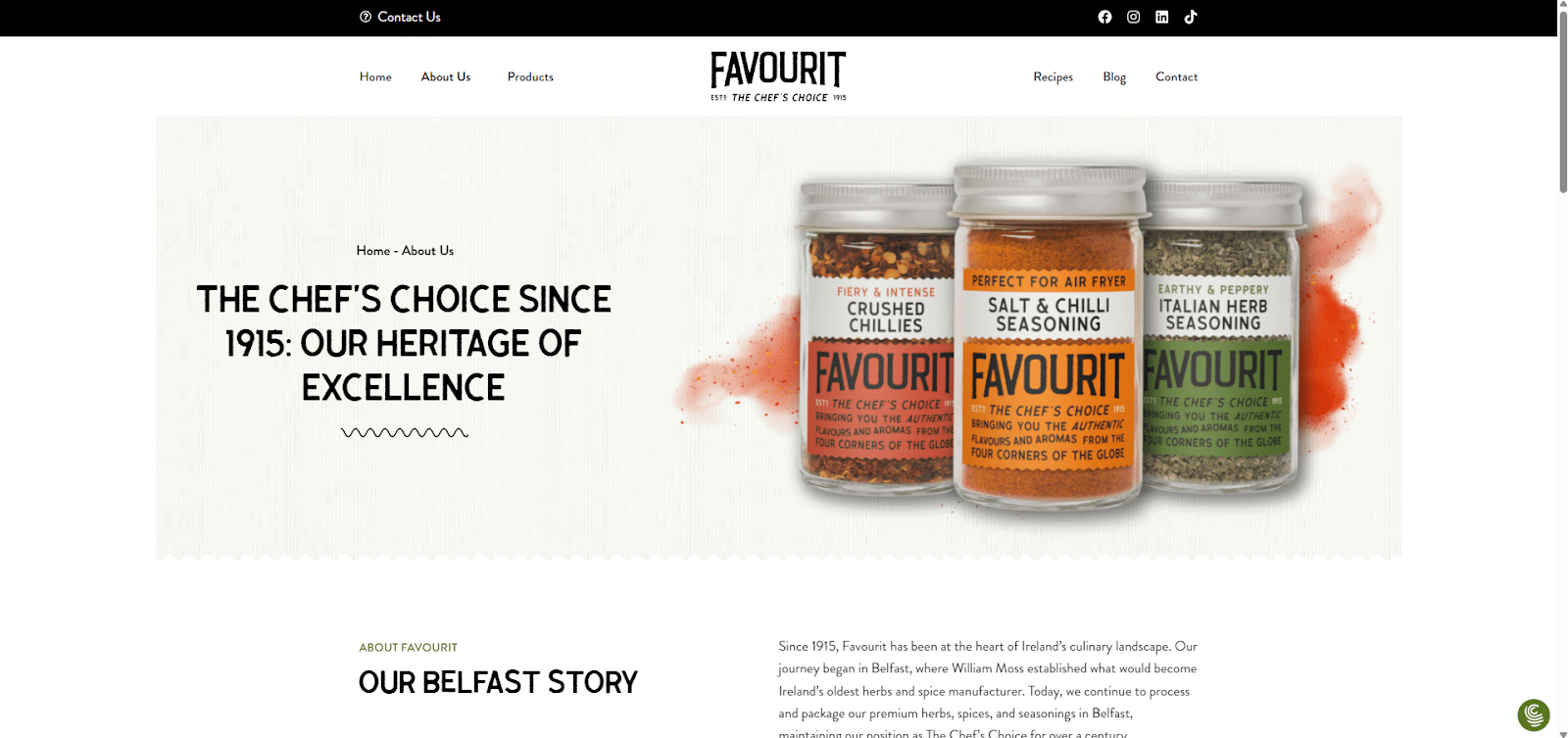
Favourit Foods is Ireland’s oldest supplier of herbs and spices, a Belfast-based company founded in 1915 that has been a household name across Ireland and Northern Ireland for generations. Despite over a century of trading and genuine consumer recognition, their digital presence when we started the project consisted of a basic landing page and external marketplace listings.
With their 110th anniversary approaching, the business recognised it was the right moment to build a digital platform that reflected their standing. The brief was clear: create a website that honours the brand’s history, presents the full product range, and gives consumers and trade buyers a reason to engage beyond the point of purchase.
There was no existing SEO foundation to protect, no established content to migrate, and no e-commerce requirement; Favourit Foods sells through retailers rather than direct to consumers. That clarity of scope made it possible to focus entirely on building something that would perform well from launch rather than managing legacy constraints.
What We Did: The Web Design Approach
Getting the strategy right before touching any design or development work is where most heritage brand projects either succeed or fail. For Favourit Foods, that meant agreeing on the platform, the content architecture, and the commercial priorities before a single page template was built.
Strategy and Planning
WordPress was the right platform for this project. It supports the kind of content architecture that a heritage food brand needs (custom post types for products and recipes, flexible page templates, structured taxonomy) without the overhead of a full e-commerce build. Since Favourit Foods sells through established retail channels, a brochure-style WordPress site gave us everything the brief required at a lower cost and with better performance characteristics than a transactional platform would have delivered.
The content structure was planned around four areas: brand heritage, production process, product catalogue, and an ongoing blog. Each area had a distinct audience purpose. The heritage and process sections address trust and provenance for both consumers and trade buyers. The product catalogue makes the range searchable and filterable. The blog supports heritage brand SEO and gives the marketing team a space for recipes, seasonal content, and brand news.
“Heritage brands often have more to say than any newer competitor; they just haven’t been saying it in a place where it can be found,” says Ciaran Connolly, founder of ProfileTree. “Getting the architecture right means that content works in search as well as for the people who find it.”
Implementation
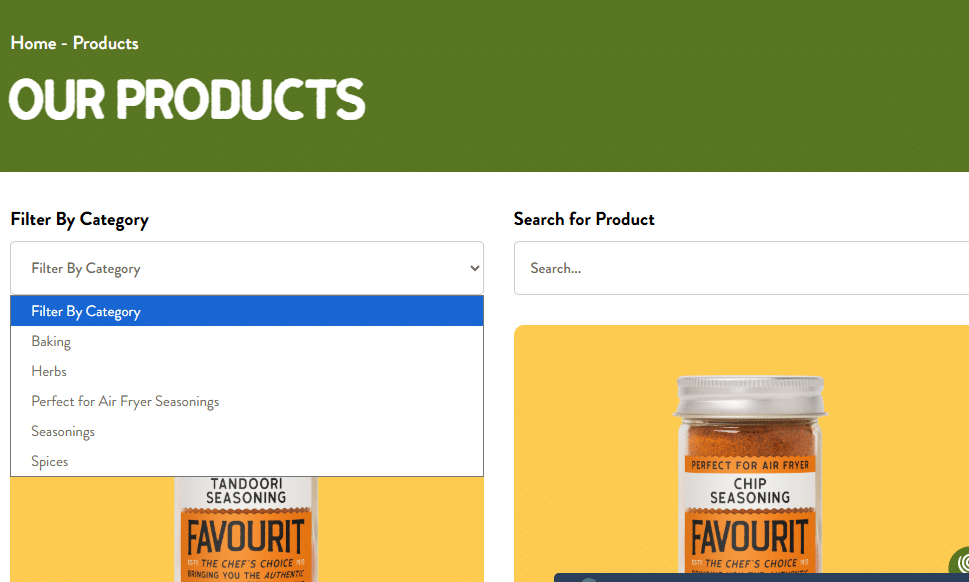
The product catalogue was built using a filterable structure organised by use case rather than product category. A home cook looking for something to use with chicken doesn’t need to navigate industry-style classifications; they filter by application and find relevant products directly. Each product page carries detailed descriptions, usage suggestions, and clear “Where to Buy” guidance that supports the retail network rather than competing with it.
The heritage section covers the company’s history from 1915 to the present, with content written to serve both consumer and trade audiences. The emphasis is on what has remained consistent (sourcing standards, quality controls, relationships with growers) rather than a simple timeline of milestones. That consistency is the brand’s main differentiator against supermarket own-label alternatives, and the content is structured to make that point clearly.
The process section adds another layer of transparency that food brands increasingly need. Consumers want to know where ingredients come from and how quality is managed. Trade buyers want the same information for different reasons. A single well-written section serves both without needing separate content streams.
Blog and Ongoing Content
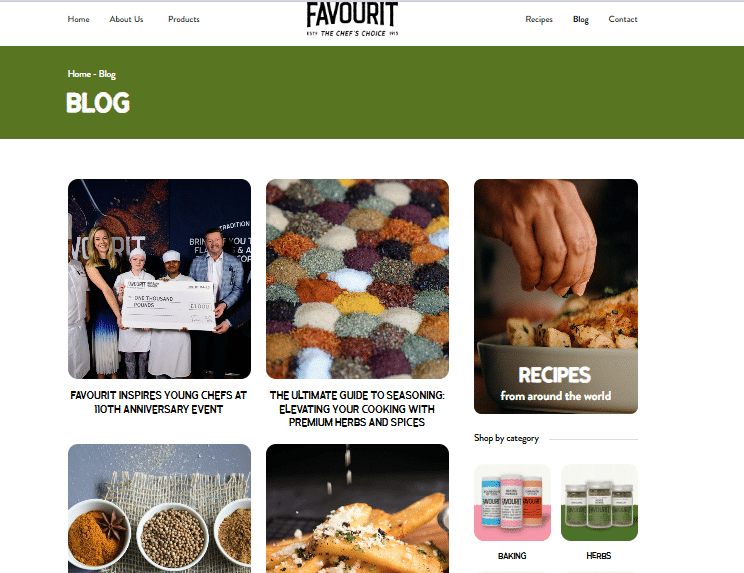
A blog section was added to support ongoing SEO and give the internal team the ability to publish new content without agency involvement for routine updates. Recipe content, product launches, seasonal ideas, and brand news all sit within the same section, with category filtering to keep it navigable as the content library grows.
Blog content also builds internal link equity across the site. Recipe articles link naturally to relevant product pages. Seasonal content connects back to the heritage section when relevant. Over time, a library of well-structured recipe and ingredient content builds domain authority in a way that general brand pages alone cannot — and this is one of the clearest advantages good heritage web design creates. Established brands have stories, processes, and product histories that generate genuinely useful content, giving them a natural head start in search that newer competitors simply cannot shortcut.
Results
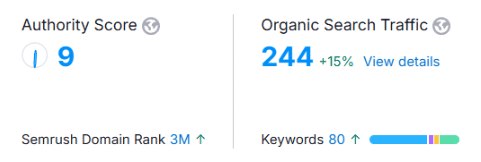
Since launch, organic search traffic has increased by 15%, with keyword rankings and domain authority continuing to improve. The structured content architecture (clear heading hierarchy, optimised page titles, internal linking between recipes, products, and brand content) gives search engines a clear, consistent picture of what the site covers and who it serves.
Beyond the traffic figure, the site now gives Favourit Foods a professional digital foundation that matches their standing as a brand. Press enquiries, trade buyer research, consumer discovery through social and search — all of it now lands on a platform that reflects 110 years of reputation rather than undermining it.
The brochure website format delivered well against the commercial requirements. Development and maintenance costs were lower than an e-commerce build, load times are fast, and the content management system is straightforward enough for the internal team to manage routine updates independently.
How ProfileTree Approaches Heritage Brand Website Design
Every heritage brand project we take on starts with the same question: what does this business’s history actually mean to its customers, and how do we make that visible without turning the website into a corporate timeline?
The answer usually involves a content structure that connects brand story to product range, so history and commerce reinforce each other. A technical build that performs well without requiring heavy ongoing maintenance. And a heritage brand SEO strategy that targets the terms real customers and trade buyers actually use — not just brand-adjacent keywords that no one outside the industry searches for.
SEO for heritage brands works differently from SEO for a new business. You’re not starting from zero authority; you’re converting existing reputation into search visibility. That means identifying what your brand is genuinely known for, building content that makes those strengths findable, and structuring the site so search engines can connect the dots between your history, your products, and the questions your customers are actually asking.
If you’re working with an established brand that needs a digital presence to match its reputation, our web design services cover the full process from strategy through to launch and ongoing optimisation. You can also explore our SEO services if search visibility is the primary gap you need to close.
FAQs About Heritage Brand Website Design
Do heritage brands need a different approach to web design than newer businesses?
In practical terms, yes. Newer businesses need to establish credibility from scratch through their website. Heritage brands already have it; the challenge is making it visible and searchable online. Effective heritage brand website design reflects a different kind of authority, one built over decades, and the content architecture needs to communicate that without burying the commercial message.
What does SEO for heritage brands involve?
Heritage brand SEO focuses on converting existing reputation into search visibility. That typically means building content around the brand’s provenance and product range, targeting the search terms customers and trade buyers use, and structuring the site so search engines can understand what the brand covers. Established brands often have a natural authority advantage; the work is making sure the website reflects it.
Should a heritage food brand build an e-commerce site or a brochure website?
It depends on how the business sells. If you sell through retailers rather than direct to consumers, a brochure website is usually the right starting point. It costs less to build and maintain, performs better technically, and lets you focus content on brand story and product education without the added complexity of a transactional system.
How long does SEO take to show results for a heritage brand website?
Most businesses see measurable improvements in organic traffic within three to six months of a well-structured website launch. Heritage brands often progress faster than newer sites because they carry existing brand recognition and, in some cases, existing backlinks from third-party coverage. Consistent content publishing accelerates that timeline further.
How does recipe content help a food brand’s SEO?
Recipe content targets long-tail search queries that food brands often overlook — specific ingredients, meal types, seasonal occasions. Each well-optimised recipe page creates an entry point for users who have never heard of the brand but are searching for something the brand’s products can help with. Over time, a library of recipe content builds domain authority and keeps the site relevant between product launch cycles.
What platform works best for heritage brand websites?
WordPress is the most practical choice for the majority of heritage brands with SME-scale teams. It supports complex content architecture, integrates well with SEO tools, and gives non-technical staff a manageable content management experience. If direct-to-consumer sales are part of the model, Shopify is worth considering, but for brands selling through retail channels, a WordPress brochure site is usually the more efficient build.
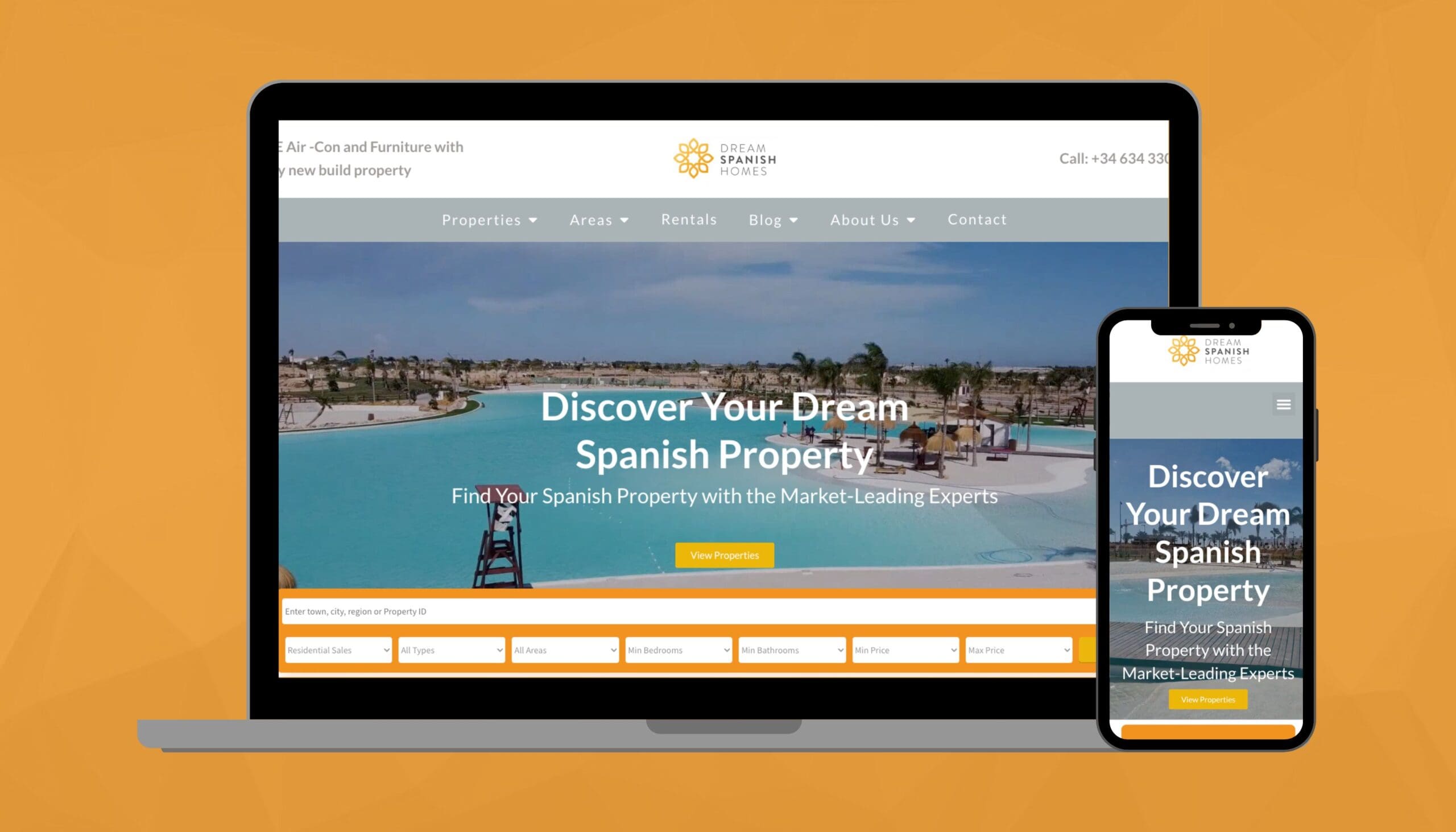
ProfileTree delivered a full digital strategy for estate agents at Dream Spanish Homes, a property firm covering southern Spain. The project included website design, video production, content strategy, and social media - growing monthly...
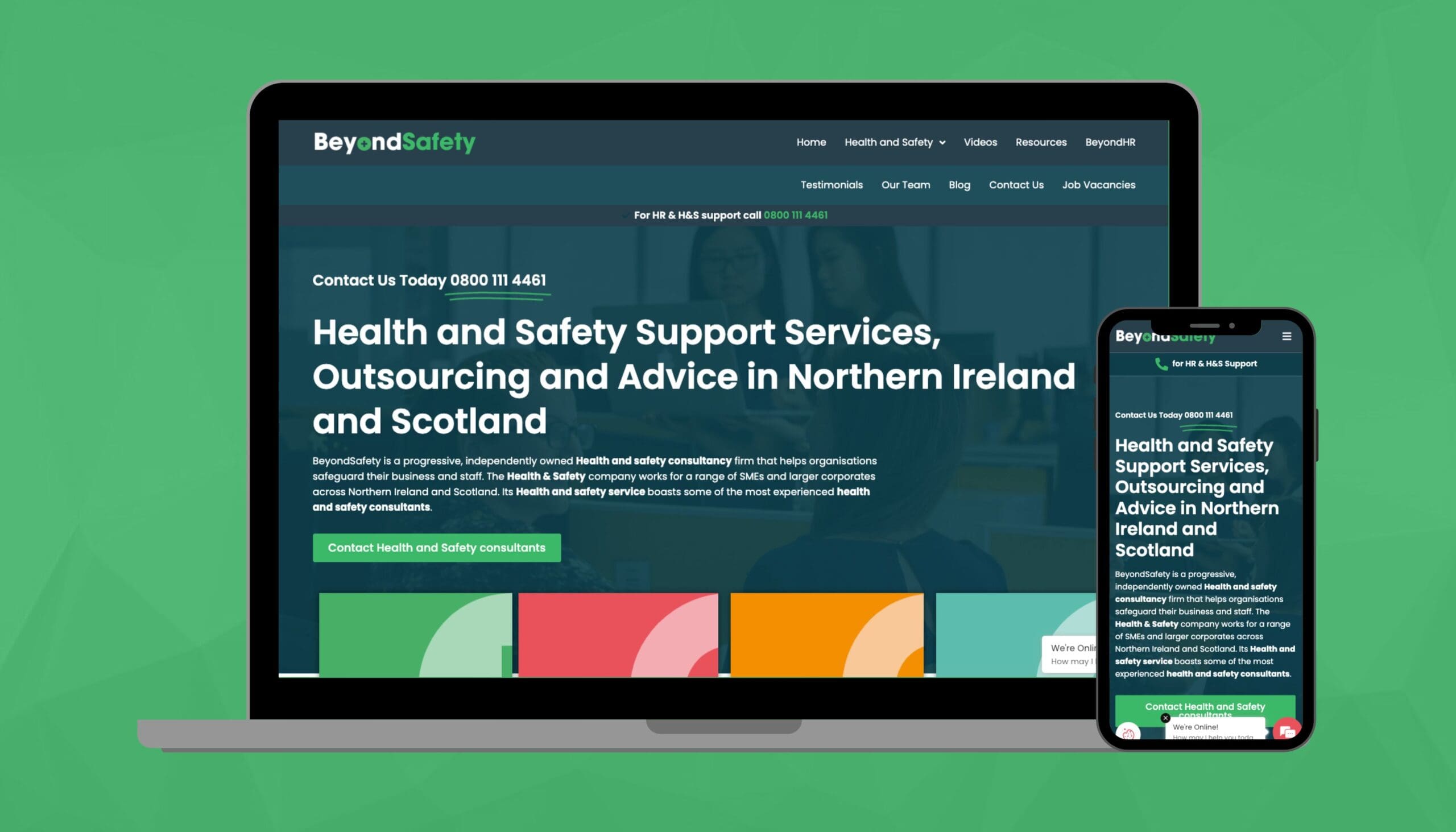
ProfileTree, a Belfast-based web design and SEO agency, delivered a microsite solution for BeyondHR, a Northern Ireland HR consultancy expanding into health and safety services. Rather than splitting domains and risking existing rankings, the...
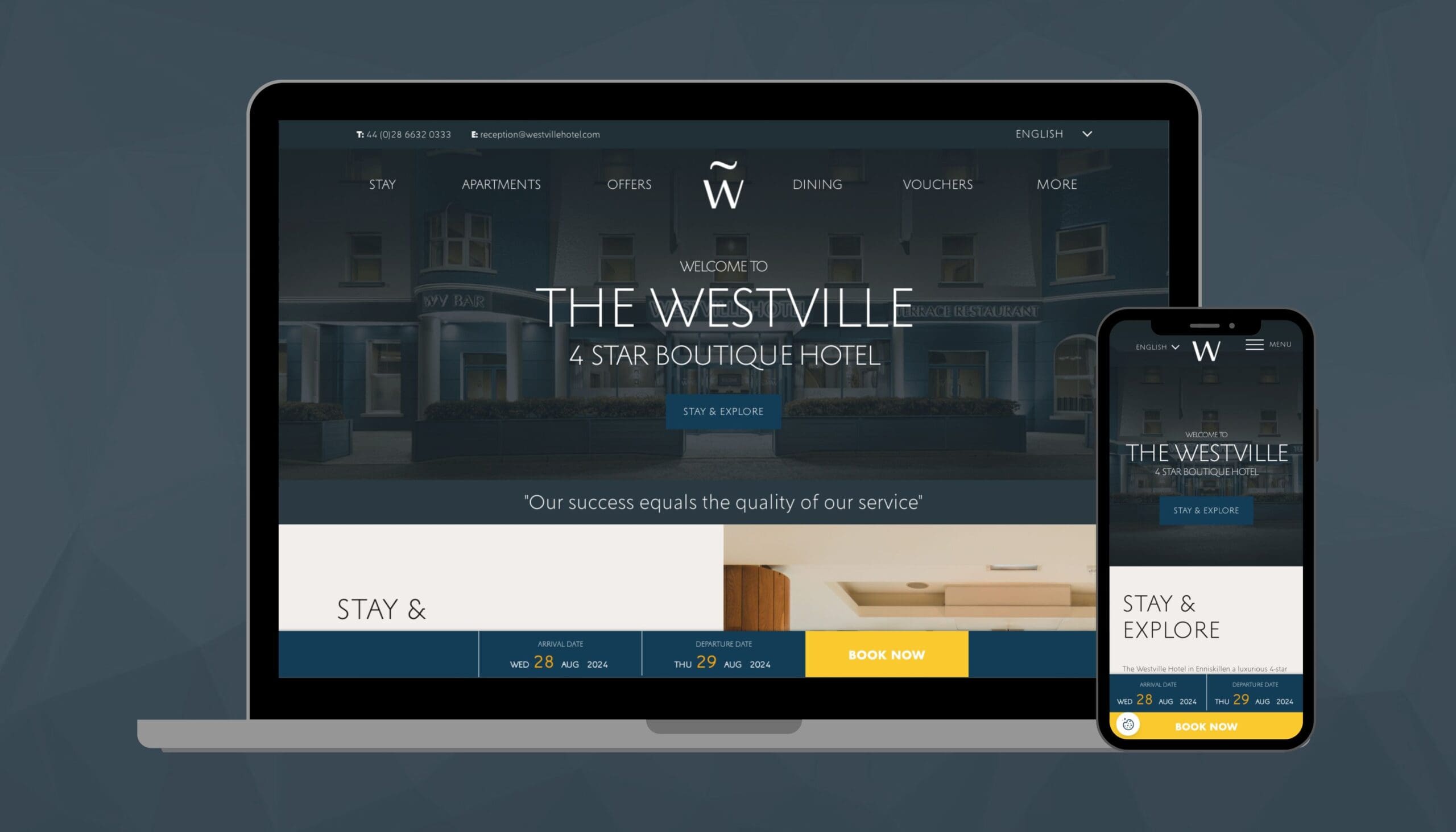
ProfileTree, a Belfast-based web design and digital marketing agency, works with hotels and hospitality businesses across Northern Ireland and Ireland to build websites that generate direct bookings. This case study covers a full website...
Navigate the digital landscape with a marketing strategy. Our team crafts comprehensive plans that resonate with your target audience, drive engagement, and boost conversions.
Elevate your digital proficiency. Our in-depth training sessions equip your business with cutting-edge digital marketing techniques to outperform competitors and thrive online.
Captivate and grow your social following. We create tailored social media strategies that ignite engagement, amplify your brand's online presence, and foster lasting connections.
Harness the power of your mailing list. Our precision-targeted email marketing campaigns are engineered to nurture relationships and drive tangible business outcomes.
Elevate your brand with our content marketing mastery. From thought-provoking blogs to eye-catching infographics, we craft content that captivates, informs, and converts your ideal audience.
Bring your brand's story to life with authenticity. We craft compelling narratives that strike a chord with your audience, forging a powerful emotional bond with your brand.
Empower your business with AI expertise. Our tailored training demystifies AI, equipping your team with the knowledge to leverage its potential for growth and innovation.
Transform customer service with AI chatbots. We develop sophisticated chatbots that elevate user experience, streamline interactions, and deliver unparalleled efficiency.
Transform your reach with AI-driven marketing. Harness data-driven insights for laser-targeted campaigns that captivate, engage, and convert your audience.
Optimise your operations with cutting-edge AI tools. We integrate intelligent solutions that streamline processes, enhance efficiency, and support data-driven decision-making.
Join Our Mailing List
Grow your business with expert web design, AI strategies and digital marketing tips straight to your inbox. Subscribe to our newsletter.