
5 Amazing Web Development Ideas for Profitable Projects
Table of Contents
Most lists of web development ideas read like homework assignments from 2019. Build a to-do app. Make a weather widget. Clone a Twitter feed. These are fine for learning the basics, but they do nothing for your portfolio, your career, or your business, and they certainly do not reflect where web development actually is in 2026.
This guide takes a different approach. Every idea here is grounded in real commercial need, current technology, and the UK and Irish market. Whether you are a junior developer building your first portfolio or an SME thinking about what a bespoke web application could do for your business, the goal is the same: understand what is worth building, why it works, and what it takes to get there.
What Makes a Web Development Idea Worth Building?
Before listing any project, it is worth being clear about what separates a strong idea from a time-waster.
It Solves a Real Problem
The best web projects start with friction. Something that people currently do badly, slowly, or not at all. A local tradesperson who cannot get online bookings. A small manufacturer with no way to show its product catalogue. A landlord managing maintenance requests by text message. These are real problems with straightforward web solutions.
It Has a Clear User
Vague ideas fail because they have no defined audience. “A platform for people who like music” is not a brief. “A setlist generator for gigging musicians in Northern Ireland who play covers” is. The more specific the user, the sharper the product.
It Can Be Built to a Useful State
Scope kills projects. A web development idea is only as good as the version you can actually finish. A well-executed, focused application is worth more in a portfolio and more to a client than a half-built platform with ten half-baked features.
Portfolio-Ready Ideas for Junior Developers
These projects are achievable within weeks, demonstrate core front-end and back-end skills, and give you something genuinely worth showing.
API-Powered GIF Search Tool
Building a web application that queries the Giphy API and displays results in a responsive grid is a clean, self-contained project that touches search inputs, asynchronous data fetching, and UI layout. The Giphy API requires no complex authentication to get started, making it accessible for beginners. You can extend it with trending content sections, pagination, and a favourites feature saved to local storage.
Personal Carbon Footprint Tracker
This is a genuinely timely project. Build a form-based tool that calculates an estimated carbon footprint based on travel, energy use, and diet inputs. Use a chart library such as Chart.js to visualise the output. There is no need for a database to get started; session or local storage works for an MVP. The project demonstrates form handling, data calculation logic, and data visualisation in a single build.
Interactive Recipe Generator
Pull from a free recipe API such as TheMealDB and build a filtered search interface. Users choose ingredients, cuisine type, or dietary requirements and get matched results. This teaches conditional filtering, API pagination, and responsive card layouts. It is a better portfolio piece than a weather app because it involves multi-parameter queries and a more complex UI state.
AJAX-Style Login Form
Building a login interface that validates credentials and returns feedback without a page reload is one of the most practical skills a junior developer can demonstrate. Hard-code a set of test credentials for the portfolio version, display appropriate error and success states, and show that you understand how client-server communication works without full page refreshes. This remains a relevant skill for any web application involving authentication.
Profitable SaaS and Web App Concepts
These ideas have real commercial potential if executed well. They require more planning, greater technical depth, and a clearer understanding of the target user, but they are the kinds of projects that can generate revenue or serve as the foundation of a business.
Micro-SaaS for Tradespeople Scheduling
Plumbers, electricians, and heating engineers across Northern Ireland and Ireland still manage bookings by phone or WhatsApp. A lightweight scheduling tool with a public booking page, automated SMS confirmation, and a simple admin dashboard addresses a real gap. The tech stack is accessible: Next.js for the front end, a simple database like Supabase, and a messaging API such as Twilio for notifications. A freemium model with a paid tier for calendar sync and invoicing is a realistic monetisation path.
GDPR-Compliant Data Dashboard for SMEs
UK and Irish businesses have compliance obligations, but most SME owners lack visibility into the data they hold, where it resides, or when it was last reviewed. A lightweight data audit dashboard that lets a business owner log data sources, track consent records, and set review reminders is a high-value product for a market with a legal requirement to use it. This is also a strong demonstration of building privacy-respecting software by design, which is increasingly a hiring signal.
Niche Marketplace for Local Services
The platform model works at the micro scale. A vetted directory and booking platform for a specific trade or profession in a specific region, such as Irish wedding photographers or Belfast-based freelance designers, can generate revenue through featured listings, commissions, or subscription tiers. The important distinction from generic directories is curation. ProfileTree has built web solutions for clients across Northern Ireland that have taken exactly this approach: a narrowly defined audience and a platform built to serve them specifically, rather than competing with national generalists.
Subscription Management Dashboard
A tool that helps users track all their recurring subscriptions, categorise them by cost, flag those they haven’t used in 30 days, and calculate monthly and annual totals addresses a problem most people realise they have the moment someone shows them a prototype. The front end is relatively simple. The interesting challenge is helping users connect services through OAuth or manual entry and presenting the data in a way that prompts action.
AI-Integrated and Agentic UX Projects
The most significant shift in web development over the past 18 months is not a new framework. It is the emergence of AI agents within the user interface. Rather than a chatbot that answers questions, agentic UX means building web experiences where an AI model can take actions on the user’s behalf: filling forms, navigating pages, placing orders, or retrieving information from multiple sources in a single step.
AI-Powered Customer Support Wrapper
Take an existing documentation set or knowledge base and build a conversational interface on top of it using a large language model API. The user asks a question in plain language and gets a direct answer drawn from the documentation, with source references. This is more technically interesting than a generic chatbot because it requires retrieval-augmented generation (RAG), in which the model is given relevant context at runtime rather than relying solely on its training data.
“What we’re seeing in 2026 is that the value of agentic UX is not the AI itself — it’s the decisions you make about what actions the agent can take, and where you put the human back in the loop,” says Ciaran Connolly, founder of ProfileTree. “For SMEs, the opportunity is narrow but real: automate the repetitive, flag the complex, and let the business owner focus on the work that actually requires them.”
Real-Time Multilingual Support Interface
Build a live chat widget that uses a translation API to allow a customer service operator to respond in English while users see responses in their preferred language. This has immediate commercial application for businesses with international customers and is a realistic showcase of WebSocket communication, API integration, and asynchronous UI updates.
AI-Enhanced E-commerce Product Recommendations
Rather than building another full e-commerce store, build the recommendation layer. Given a product catalogue and a browsing history (simulated for the portfolio version), use an LLM to generate personalised product descriptions and recommendations. The interesting challenge here is prompt engineering for consistent, brand-appropriate output rather than generic AI copy.
High-Demand Web Solutions for UK and Irish Businesses
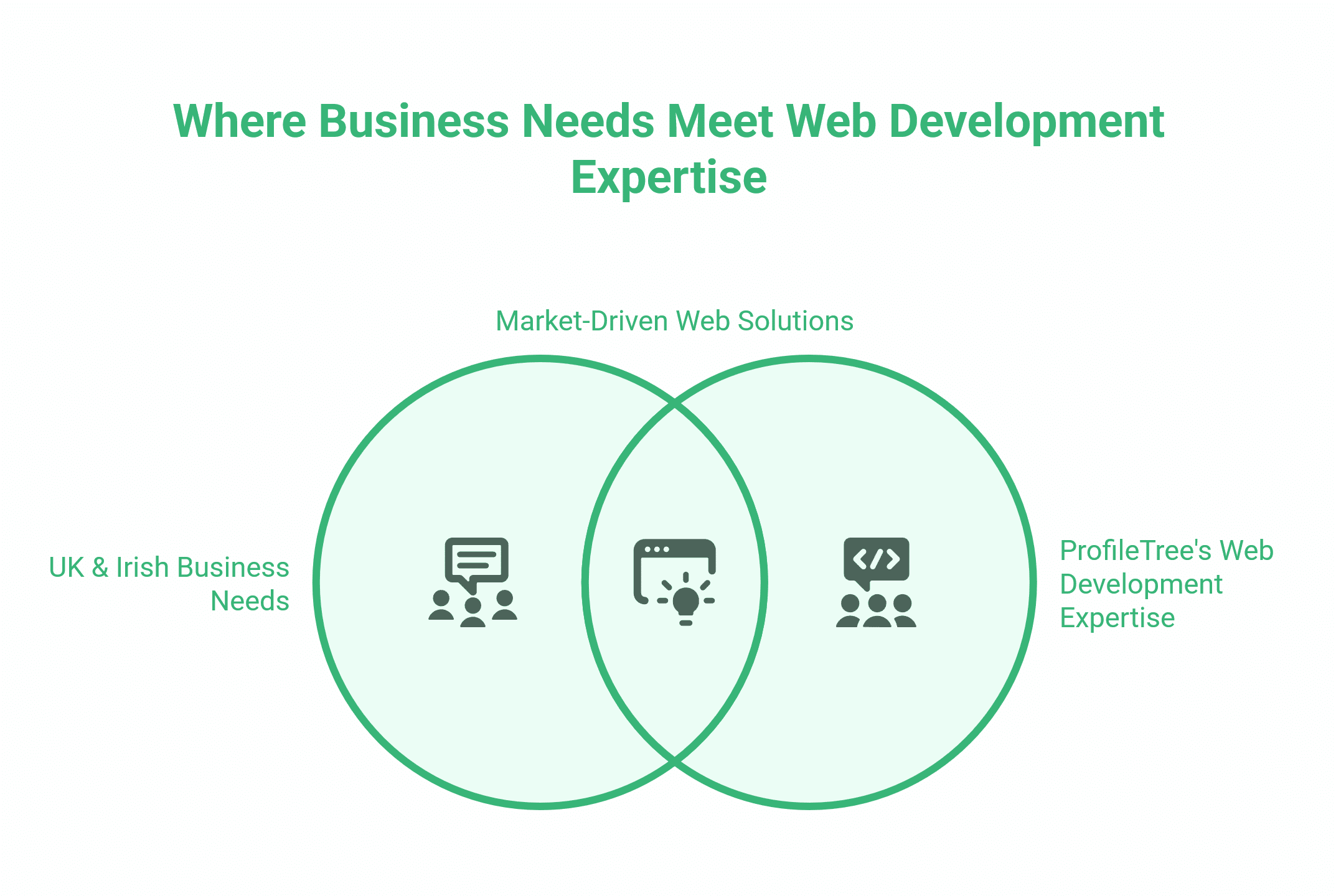
The ideas in this section are shaped by what UK and Irish businesses are actually looking for right now, based on the types of briefs, questions, and gaps that ProfileTree’s team encounters working with SMEs across Northern Ireland, Ireland, and the UK.
Accessibility-First Government Tender Sites
The European Accessibility Act came into force across the EU in 2025, and UK equivalents under the Public Sector Bodies Accessibility Regulations have been in place since 2018. Despite this, a significant number of smaller business websites fail basic accessibility criteria. Building a public-facing site that is rigorously WCAG 2.2-compliant, with proper semantic HTML, keyboard navigation, and screen reader support, is a genuine differentiator for public sector contracts and regulated industries.
Localised Directory for Social Value Suppliers
Public procurement in Northern Ireland and across the UK increasingly requires suppliers to demonstrate social value. A vetted directory of businesses that can demonstrate local employment, environmental commitments, or community impact has a genuine audience among procurement teams at councils, housing associations, and NHS trusts. This is a niche with real institutional demand.
SEO-Optimised WordPress Sites for NI Businesses
Understanding technical SEO and web development together is one of the most commercially valuable skill combinations for any developer working with small businesses. A site that loads quickly, renders correctly on mobile, uses semantic heading structures, and passes Core Web Vitals gives a business a genuine organic search advantage. Building this well requires understanding URL structure, image optimisation, schema markup, and how page performance affects search rankings. ProfileTree’s web development work for Northern Irish SMEs consistently shows that technical execution is where the gap between good-looking and good-performing sites lies.
Automated Property Maintenance Request Portal
UK landlords managing multiple properties face real administrative overhead. A tenant-facing portal where residents log maintenance requests, upload photos, and track resolution status is a practical tool with a clear paying audience. Build it with role-based access for tenants, landlords, and contractors, a notification system, and a basic reporting dashboard. This demonstrates database design, authentication, file uploads, and multi-role permissions in a single project.
The 2026 Tech Stack: What to Build With
The correct answer to “what tech stack should I use?” depends on the project. For most of the ideas in this article, the following combinations represent the current best practices for UK and Irish developers.
| Project Type | Front End | Back End / Database | Notable Tools |
|---|---|---|---|
| Portfolio / static site | Next.js 15+ or Astro | None / Vercel | Tailwind CSS |
| SaaS application | Next.js + TypeScript | Supabase (Postgres) | Stripe, Resend |
| E-commerce | Next.js or Remix | Supabase / PlanetScale | Stripe, Shopify API |
| AI-integrated app | Next.js + TypeScript | Supabase + OpenAI API | LangChain, RAG pipelines |
| Real-time features | Next.js + TypeScript | Supabase Realtime | WebSockets |
TypeScript over plain JavaScript is not a preference at this point; it is the standard for any project with more than one contributor or any codebase you expect to maintain over time. Next.js remains the most practical choice for the majority of web applications because it handles routing, server-side rendering, and API routes in a single framework without requiring you to configure everything from scratch.
Regulatory and Sustainability Considerations for 2026
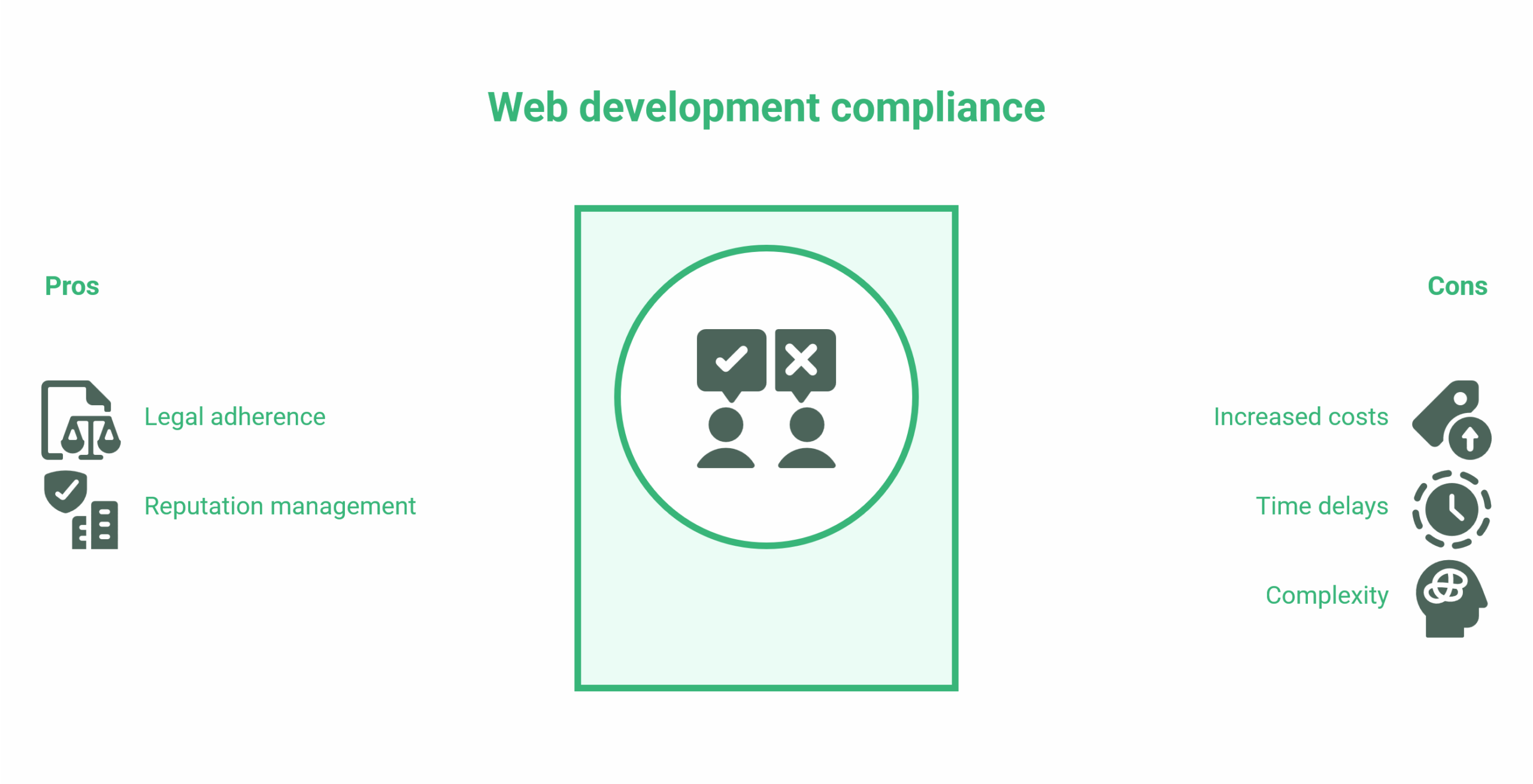
Building something that works is not enough if it does not meet legal requirements or reflects badly on the businesses using it.
Key Compliance Checkpoints
The UK Online Safety Act places obligations on services that host user-generated content, including moderation requirements. If your web application allows users to post, comment, or upload, you need to understand which provisions apply before you launch.
The European Accessibility Act (EAA), which entered into force in June 2025, applies to digital products and services sold into the EU market. For developers building for Irish or European clients, this is not optional.
GDPR remains in force in both the UK (as UK GDPR) and the EU. Any application handling personal data needs a lawful basis for processing, a clear privacy notice, and a mechanism for data subject requests.
Green Web Development
Low-carbon web development is not a niche concern. The Green Web Foundation estimates that the internet accounts for around 3–4% of global carbon emissions, a figure that continues to grow. Practical steps include choosing a hosting provider that uses renewable energy, minimising unnecessary JavaScript, using efficient image formats such as WebP and AVIF, and implementing server-side rendering to reduce client-side processing. These are also performance improvements, so the environmental and technical cases align.
Turning Web Development Ideas into a Live Project
The jump from idea to shipped product is where most projects fail. A structured approach reduces the risk.
Start with the smallest version that demonstrates the core value. For a scheduling tool, that might be a public booking form and an email notification to the business owner. For a data dashboard, it might be a static layout populated with dummy data. Build that first, test it with real users, and let their feedback determine what to build next.
Choose tools you can actually use, not tools you aspire to learn eventually. A project built in a framework you know well will always outperform one built in a framework you are still figuring out, and the portfolio piece is the output, not the technology underneath it.
If you are building for a client rather than for yourself, understanding what success looks like for them matters more than any technical decision. A small business owner does not care which database you used; they care whether their customers can book appointments without calling. For help understanding how to build web solutions that serve real business outcomes, ProfileTree’s web development services take exactly this approach with clients across Northern Ireland and beyond.
FAQs
What are the most profitable web development ideas in 2026?
Micro-SaaS tools targeting specific professional niches offer the clearest paths to revenue. Scheduling tools for tradespeople, compliance dashboards for regulated businesses, and AI-enhanced customer support wrappers all address genuine pain points for paying customers.
What should a junior developer build for their portfolio?
Focus on projects that combine API integration, asynchronous data handling, and responsive UI design. An API-powered search tool with filtering and pagination shows more technical depth than a to-do app, and a real-world data source makes the project feel purposeful.
How do I ensure my web project is GDPR compliant?
Only collect data you actually need, establish a lawful basis for processing it, and provide a clear privacy notice. Build in a mechanism for users to request access to or deletion of their data. For UK applications, the ICO’s guidance is the authoritative reference.
Are web apps better than static sites for making money?
Static sites are faster, cheaper to host, and better suited to informational or marketing content. Web applications with databases and authentication support subscription or transaction-based revenue models. The right choice depends entirely on what your product needs to do.
Which programming language is best for these projects?
TypeScript with a Node.js runtime is the most versatile choice for full-stack web development in 2026, covering front-end, back-end, and API integrations within a single language. Python is a strong secondary option for anything with significant data processing or AI integration.
How can I make my web project more sustainable?
Choose a hosting provider powered by renewable energy and audit your third-party scripts, as tracking pixels and chat widgets can add significant page weight. Use server-side rendering where possible and convert images to WebP or AVIF format before deployment.