
User-Generated Content (UGC): A Practical Guide for UK & Irish SMEs
Table of Contents
User-generated content (UGC) is any photo, video, review, or post created by customers about a brand, rather than content the brand produces itself. For SMEs across Northern Ireland, Ireland, and the UK, a structured approach to collecting and using UGC can meaningfully reduce content production costs while improving trust with potential buyers, and it increasingly shapes how AI-powered search tools describe a business, too.
Customers are already talking about a business online, whether that business is paying attention or not. The question is whether that conversation is working in the brand’s favour or simply happening unnoticed. This guide covers what UGC actually is, the legal basics that apply in the UK and Ireland, how it fits into a wider digital marketing strategy, and how services like web design, SEO, and video production turn scattered customer content into something a business can actually use.
What Is User-Generated Content?
User-generated content refers to anything created by customers, followers, or third parties that references a brand, product, or service, and is distinct from content the brand produces itself, even when the brand later shares or repurposes it.
Two distinct categories now fall under the UGC umbrella, and mixing them up causes problems later. Organic UGC is unprompted: a customer leaves a Google review, tags a business in an Instagram photo, or mentions a product in a Facebook group without being asked. Paid UGC creators are a separate, increasingly common arrangement: a business pays someone to produce content that looks and sounds like an authentic customer post, but is a commissioned piece of work with a fee attached. Both have a place in a content plan, but they carry different disclosure obligations, which is covered in the next section.
People trust peer recommendations more than advertising. A positive review posted to Google, a photo shared to Instagram, or an unboxing video on TikTok reaches audiences that most paid campaigns struggle to match at a similar cost per impression, because the audience understands the creator has no obvious commercial incentive to say something positive. Content featuring real customers tends to generate stronger engagement than brand-produced content, a pattern that appears across most product categories and is particularly pronounced in consumer-facing sectors, though B2B brands with visible client stories see similar effects.
Reviews, testimonials, and customer-created content also contribute to how Google and AI systems assess a brand’s trustworthiness and real-world presence. Pages that aggregate verified customer sentiment and that are supported by a structured SEO strategy strengthen the entity signals that influence both organic rankings and AI-generated answers. Pages covering multiple sub-questions on a topic tend to be cited more often by AI systems, and well-structured UGC naturally addresses the questions real buyers ask.
UK and Ireland Legal Basics for UGC
Most UGC guidance written for a US audience skips over a question that matters a great deal to businesses operating under UK and Irish rules: when does customer content need a disclosure label, and who owns the rights to use it?
The UK’s Advertising Standards Authority (ASA) and its CAP Code cover any content a brand pays for or has material control over, including content that appears to be an ordinary customer post. Where a business commissions a paid UGC creator, or offers a reward significant enough to influence what’s said, that content generally needs to be clearly identifiable as advertising, commonly through a label such as #ad. Purely unprompted organic content, where a customer posts spontaneously with no payment or brief from the brand, does not carry the same disclosure requirement. The distinction matters because getting it wrong risks a complaint to the ASA, which is a reputational problem few SMEs want to deal with alongside everything else on their plate.
Rights and permissions are the second piece. A public social media post does not automatically grant permission to reuse that content in advertising or on a website. Best practice is to ask explicitly, whether that’s in the comments, via a direct message, or in a terms-of-entry clause built into a competition or hashtag campaign, and to keep a simple record of what was granted and when. A workable version of this process looks like three steps: ask for written permission, get an explicit yes before anything goes live, and keep a dated record of the exchange somewhere easily retrievable.
Businesses handling a reasonable volume of UGC, or anyone unsure how the disclosure rules apply to their specific campaign, are usually better off having the process checked once by someone who regularly handles digital compliance rather than guessing and hoping. Building this into a wider digital marketing strategy, rather than treating it as an afterthought each time a good piece of content turns up, tends to save time later.
GDPR sits alongside this. Customer photos and videos can count as personal data, particularly when a person is identifiable, so consent for use should specify where the content will appear and for how long, not blanket permission with no boundaries.
Types of UGC Worth Collecting
Not all UGC is equally useful, and the format to prioritise should match audience behaviour and the platforms where customers are actually active, not the format a business finds easiest to produce.
Reviews and Ratings
The most commercially valuable form of UGC for most businesses. Google reviews directly influence local search rankings and conversion rates on a Google Business Profile, and review volume signals authenticity to both algorithms and buyers, often more than a marginally higher average rating does on its own.
Collecting reviews needs a system rather than a hope. Results tend to come from a short, frictionless request sent at the right moment: after a completed project, after a positive conversation, or once a delivery is confirmed. The request should include a direct link to the review platform and take under a minute to complete. Marketing automation tools can handle the timing automatically, sending a review request a set number of hours after a job is marked complete rather than relying on someone remembering to send it manually, which is the kind of workflow a HubSpot-style marketing automation set-up is built to handle. Once reviews are flowing in, aggregating them properly across business listing sites rather than leaving them scattered across five different platforms makes them easier for both customers and search engines to find.
Once collected, reviews need somewhere to live beyond the review platform itself. A website built with review and testimonial modules in mind can surface a rotating selection of reviews and testimonials on service pages, rather than burying strong reviews on a single dedicated page that nobody visits. That’s a web development task as a content one: the underlying markup that displays a review needs to be structured correctly so search engines can pick it up as genuine review content, not decorative text.
Social Media Posts and Photos
Customer photos and posts featuring products in real-life settings tend to outperform studio photography in social contexts, because they look credible for the simple reason that they are credible. For brands with a visual product or experience, food, interiors, fashion, hospitality, customer social content is often more persuasive than anything the brand produces itself. A digital marketing piece for hospitality businesses, for instance, leans heavily on this exact pattern: a diner’s photo of a full table does more work than a professional food shot in some contexts, because it shows real people choosing to be there.
A branded hashtag gives customers a clear mechanism for sharing and gives the brand a searchable collection to curate from. Keep hashtags short, specific, and distinct enough that they don’t surface unrelated content. Managing this properly, deciding which platforms to prioritise, which posts to repost, and how often to post original content alongside customer content, sits squarely within social media marketing as an ongoing discipline rather than a one-off task.
Video Testimonials and Demonstrations
Video UGC carries real weight because it’s harder to fabricate convincingly than a written quote. A short video of a client describing a specific result is more persuasive than a third-person case study, and it can be repurposed across YouTube, LinkedIn, Instagram Reels, and TikTok with minimal editing.
The video above from ProfileTree covers how social media strategy is evolving and where authentic content fits into a modern digital marketing approach. For businesses investing in video production, customer testimonial content fills gaps in the production schedule and adds a kind of authenticity that scripted brand videos can’t fully replicate.
Raw testimonial footage doesn’t have to stay raw, either: light editing, captions, and a consistent intro and outro built through animation can turn a handful of customer clips into a short highlight reel worth repurposing across several channels rather than using each clip once and filing it away. Once a testimonial video exists, YouTube marketing is the natural next step for giving it a permanent home, proper titles and descriptions, and a chance to surface in search over the long term rather than disappearing down a social feed after a few days.
Written Testimonials and Client Quotes
A direct quote from a client, used with permission, can anchor a service page, an email campaign, or a paid advert. Specificity is the key requirement: a vague compliment carries far less weight than a specific outcome. “The redesign made the website look better” does far less work than something closer to “after the redesign, enquiry form submissions increased noticeably within six weeks”, because specificity signals that the claim is real rather than boilerplate praise.
“The businesses we see getting the most traction from UGC are not running one-off campaigns,” says Ciaran Connolly, founder of Belfast digital agency ProfileTree. “They build UGC collection into their standard process: follow-up emails, packaging, social prompts. When it becomes habitual, the content keeps coming without extra spending.”
Community Content and Forum Mentions
Brand mentions in industry forums, LinkedIn comments, or Reddit threads are a form of UGC that most businesses overlook entirely. They matter specifically for AI citation purposes, since AI systems frequently draw on community discussions when forming answers to research-stage queries, which means a handful of genuine, unprompted forum mentions can carry more weight for AI visibility than a polished brand page on its own.
Monitoring brand mentions with a tool such as Google Alerts or Brand24 keeps these conversations visible so they can be responded to or, where appropriate, amplified. Understanding where a business’s audience actually gathers online, whether that’s a specific forum, a Facebook group, or a LinkedIn community, is part of the broader digital marketing strategy audit work worth doing before assuming social platforms are the only place customers talk.
UGC vs. Influencer Content vs. Brand-Produced Content
The three main content sources sit at different points on cost, authenticity, and control, and confusing them leads to campaigns that don’t quite match the goal.
| Organic UGC | Paid UGC Creator | Brand-Produced Content | |
|---|---|---|---|
| Who creates it | Genuine customers, unprompted | Commissioned creator, styled to look organic | In-house team or agency |
| Typical cost | Low (incentive or reward only) | Moderate (creator fee per piece) | Higher (production time and resource) |
| Perceived authenticity | Highest | Moderate, depends on disclosure | Lowest by default |
| UK disclosure requirement | Polished service pages, campaigns, and brand storytelling | Usually required (#ad or similar) | Not applicable, brand-owned |
| Best use | Reviews, social proof, trust signals | Filling content gaps quickly, consistent output | Polished service pages, campaigns, brand storytelling |
None of these three should be a business’s only source of content. A workable mix usually leans on organic UGC for trust and social proof, brand-produced content for service pages and campaigns, and paid UGC creators to fill gaps when organic content isn’t flowing quickly enough on its own.
UGC for B2B and Professional Services
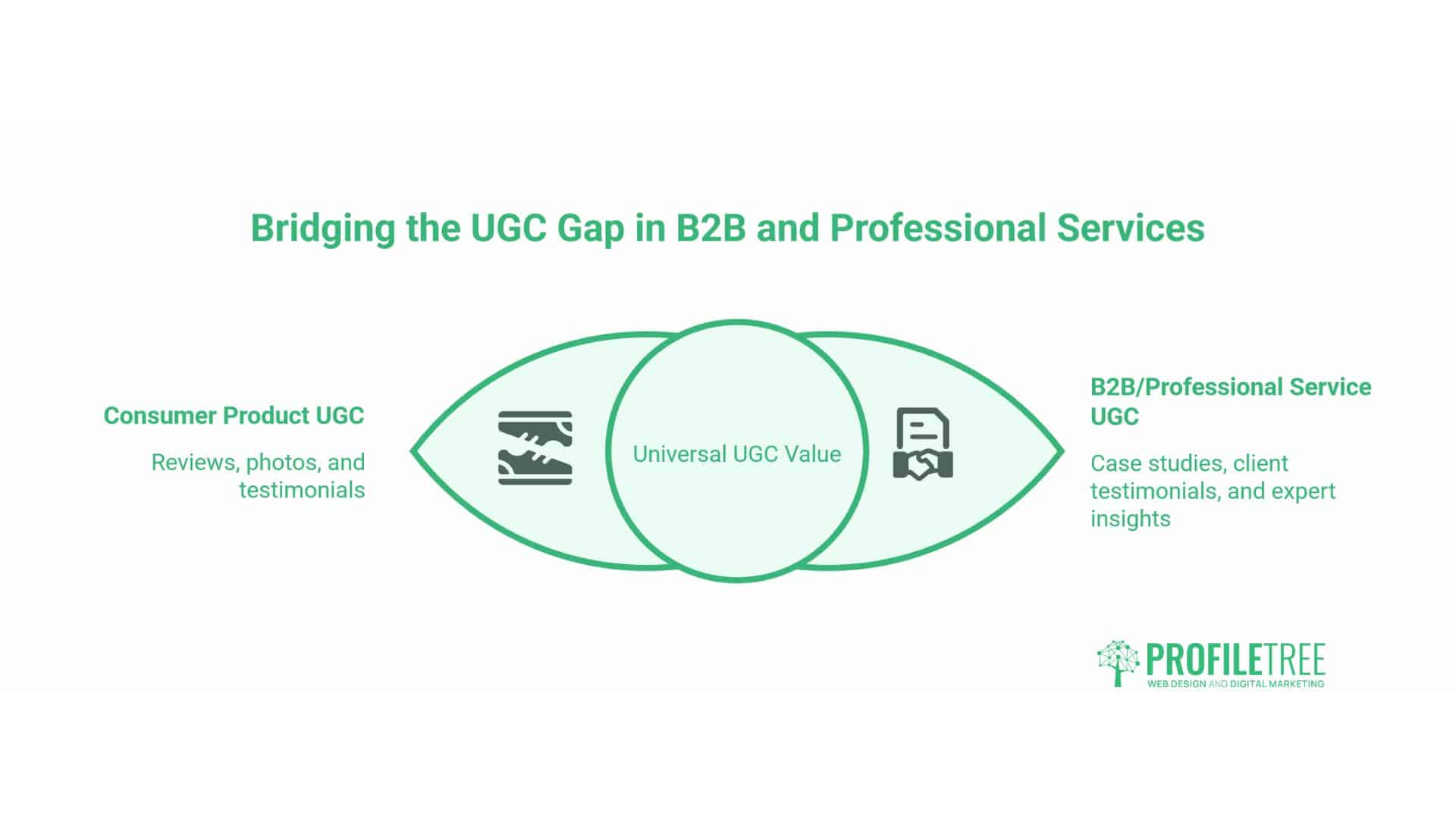
Most UGC advice assumes a consumer product: trainers, skincare, restaurant food. B2B and professional service businesses, common across the SME base in Northern Ireland and Ireland, tend to dismiss UGC as not applying to them, leaving a genuine gap that other businesses aren’t filling.
A short LinkedIn post from a satisfied client, a screen recording of a client walking through results in a dashboard, or a written quote from a decision-maker at another business all count as UGC in a B2B context, and they carry particular weight because business buyers are researching a purchase decision rather than an impulse one. A specific, named client describing a measurable improvement does more to move a B2B buyer through consideration than a generic case study written by the vendor. Encouraging this kind of content from clients and asking permission to feature it fits naturally alongside content marketing work rather than sitting as a separate initiative.
How to Build a UGC Strategy That Supports Wider Digital Marketing
A UGC campaign is a defined initiative to generate a specific type of customer content within a set timeframe, and the structure matters as much as the incentive behind it.
Set a Single, Clear Goal
Campaigns that try to collect reviews, increase social mentions, and generate video testimonials all at once tend to yield weak results across the board. Picking one content type and one platform for the campaign period, then layering in additional streams once the first is working, produces better results than spreading effort thin from the start.
Choose the Right Incentive
Incentives work, but the type matters. Entering participants into a prize draw for a large-value item tends to attract people motivated by the prize rather than any real affinity with the brand. Smaller, immediate rewards tied directly to the act of sharing, such as a discount code sent after a review is posted or access to a useful resource, attract more motivated participants and tend to produce higher-quality content.
For B2B contexts specifically, recognition often works better than a discount. Featuring a client’s business in a case study, naming them in a LinkedIn post, or including them in a piece of content they can share with their own network carries commercial value for them without requiring any financial outlay from the brand.
Make Participation Easy
The most common reason UGC campaigns underperform is friction. If sharing content requires more than two steps, most customers won’t complete it. Every request should include a clear ask, a specific platform, a direct link, and a rough sense of how long it will take. “Could you leave us a Google review? It takes about 60 seconds and almost every time outperforms a vague, open-ended request for feedback across unspecified platforms.
Moderate Before Publishing
Not every piece of customer content is suitable for brand use. Before repurposing UGC, check three things: whether the creator has rights to any music or imagery used, whether the content aligns with brand values without anything that could be misrepresented, and whether the customer has given explicit permission for the specific use planned. Implied permission from a public post isn’t sufficient for use in paid advertising under UK rules.
For businesses handling a genuinely high volume of reviews and social mentions, some of the early sorting, flagging obviously irrelevant content, grouping mentions by sentiment, spotting the strongest quotes worth following up on, can now be handled with AI-assisted tools rather than a person working through everything manually. Getting a team comfortable with those tools, and understanding where AI genuinely saves time versus where a human judgement call is still needed, particularly around anything touching consent or disclosure, is the kind of practical skill digital training covers, alongside broader AI foundations available through Future Business Academy, ProfileTree’s training-focused sister organisation.
Integrate UGC Across the Wider Content Plan
UGC performs best when distributed across channels rather than kept on one platform. A strong customer photo can appear on a website product page, in an email campaign, as a social post, and in a retargeting advert. A video testimonial can anchor a service page, appear in a sales proposal, and be shared on LinkedIn, all from the same source material. The content itself doesn’t change; the distribution context does.
For businesses building out their wider digital marketing approach, UGC is one of the highest-return content types available because the production cost is largely absorbed by the customer rather than the business. The remaining tasks are collection, curation, and distribution, all of which fit comfortably within a structured content marketing plan.
Measuring UGC Performance
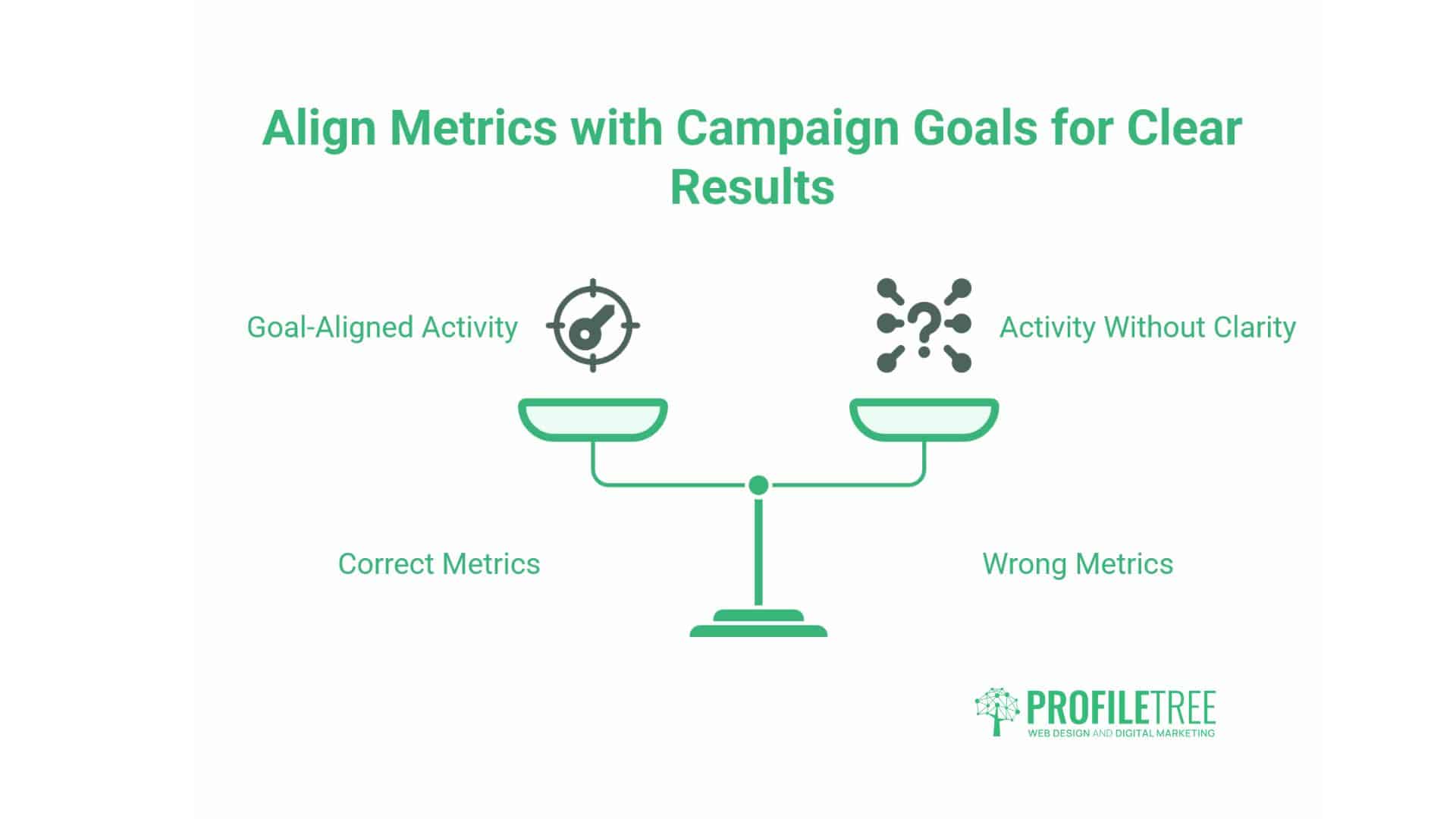
The metrics that matter depend on the campaign goal, and tracking the wrong ones tends to produce a lot of activity with no clear read on whether it worked.
For a review-generation campaign, track total new reviews, average rating, and any change in local search ranking over 60 to 90 days. For social UGC, track reach generated by campaign hashtag posts, engagement on brand reposts of customer content versus brand-created content, and referral traffic arriving from social profiles. For video testimonials, track time-on-page for service pages featuring testimonials versus those without, and any difference in conversion rate between the two.
Avoid vanity metrics. The raw number of hashtag submissions in isolation says very little; what matters is whether the campaign content influenced a commercial outcome. Reviewing this kind of data properly, rather than glancing at a follower count and assuming things are going well, is closer to how a big data-informed approach to marketing decisions treats any other channel: evidence over instinct, checked regularly rather than once a year.
Building UGC Into an Existing Website and Brand Presence
A UGC programme sits on top of existing brand infrastructure rather than replacing it, and it works best when a business’s website, social channels, and review platforms are already set up to receive and display that content properly. A site with no obvious place to showcase reviews, a social presence with inconsistent posting, or review platforms that nobody’s monitoring will all blunt the effect of even a well-run UGC campaign, regardless of how much genuine customer enthusiasm it has behind it.
This is where the pieces connect. SEO work benefits from genuine review content and long-tail language customers naturally use, which brand copy rarely replicates on its own. Community engagement, as tracked in online community statistics for SME marketing managers, often surfaces the exact forums and groups where UGC-worthy conversations are already happening. And a wider digital marketing strategy engagement, built around an audit of what’s currently working, ties UGC collection into the same measurement framework as every other channel, rather than treating it as a separate side project with its own reporting.
Build a Content Stream That Works While You Work
User-generated content is one of the few marketing channels where customers do a significant portion of the production work. The businesses that benefit most aren’t the ones running the most elaborate campaigns; they’re the ones that have made UGC collection a habit and built distribution into an existing content marketing workflow. Getting the legal basics right from the start, disclosing where needed, and properly recording permissions avoids most of the problems that catch businesses out later.
FAQs
What does UGC stand for?
UGC stands for user-generated content: any photo, video, review, or written post created by a customer, follower, or third party about a brand, rather than content the brand produces itself.
Do I need to pay for user-generated content?
Not necessarily. Organic UGC from genuine customers is typically free, sometimes prompted with a small incentive such as a discount code. Paid UGC creators charge a fee to produce content styled to look organic, and that arrangement usually needs to be disclosed under UK advertising rules.
How do I legally use someone else’s content in the UK?
Ask for explicit permission rather than assuming a post is public. A direct message, a comment reply, or a terms-of-entry clause in a campaign all work, and keeping a dated record of what was agreed protects the business if a question comes up later.
Can UGC be used for B2B companies?
Yes. A client’s LinkedIn post, a recorded walkthrough of results, or a specific written quote from a decision-maker all function as B2B UGC, and they often carry more weight with business buyers than a generic case study written by the vendor.