
Social Media Popularity Statistics: What the Data Means for Your Business
Social media popularity has grown from a curiosity into one of the most consequential forces in modern communication, commerce, and culture. Whether you are a business owner in Belfast, a marketer in Dublin, or a digital strategist working across the UK, understanding the scale and direction of social media popularity is no longer optional; it is a prerequisite for making informed decisions. As of 2024, social media popularity spans more than 5 billion users worldwide, representing over 62% of the global population. That number carries enormous implications for anyone trying to reach, engage, or convert an audience online.
At ProfileTree, a Belfast-based web design and digital marketing agency, we work with clients across Northern Ireland, Ireland, and the UK who are navigating exactly this challenge. The question we hear most often is not whether social media matters; it is which platforms deserve attention, how the audience behaves, and what the statistics actually mean for a real business trying to generate leads and grow. This article addresses all of those questions, drawing on the most current data available and filtering it through the lens of practical digital strategy.
Social media popularity is not a single, uniform phenomenon. It varies by platform, by age group, by geography, and by the type of interaction involved. The headline figures tell one story; the demographic breakdowns, regional variations, and emerging behavioural shifts tell another. To act on this data effectively, you need both. That is what this guide provides.
Table of Contents
Social Media Popularity: The Global Picture
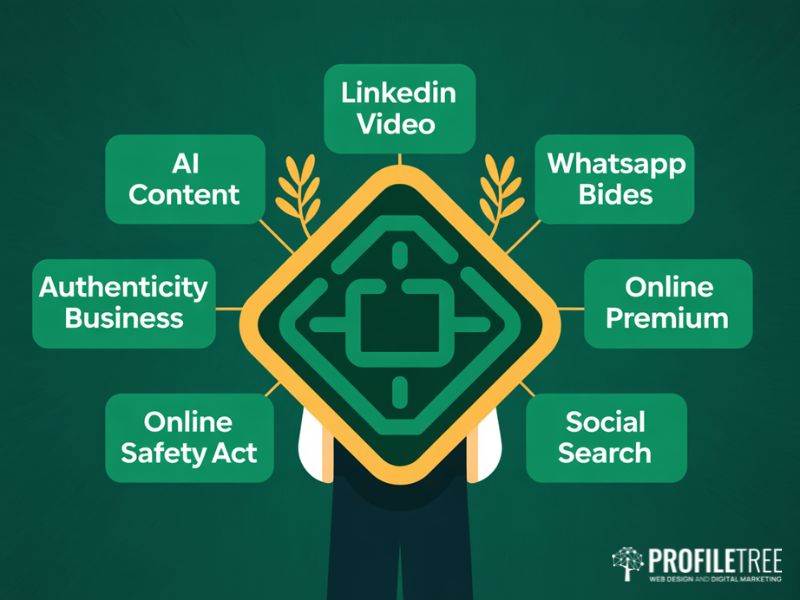
Understanding the true scale of social media popularity requires looking beyond the headline user count. The numbers reveal not just how many people are online, but how deeply these platforms have become embedded in daily life, and what that means for businesses trying to cut through.
Global User Counts and Growth Rates
Social media popularity reached a significant milestone in 2024 when the number of active users surpassed 5.04 billion, with an annual growth rate of roughly 8%. To put that in perspective, the number of people using social media today is larger than the combined population of every country except China and India. Growth is not slowing. New users are entering the ecosystem from emerging markets across Southeast Asia, Latin America, and sub-Saharan Africa, driven by expanding mobile infrastructure and falling data costs.
The average person now spends 2 hours and 23 minutes on social media every day. Across a working week, that equates to more than 16 hours; across a year, more than 35 full days. For a fuller picture of how this breaks down by platform and age group, our analysis of time spent on social media statistics explores the data in more depth. For businesses, this volume of daily attention is, at least in part, addressable through the right content strategy.
According to DataReportal’s Digital 2024 Global Overview Report, mobile devices now account for the majority of social media access globally, with 72% of users accessing platforms primarily through their phones. This has direct implications for how content is formatted, how quickly pages must load, and how much text a user will reasonably read before scrolling past.
Social Media Popularity in the UK
The United Kingdom presents a particularly interesting case study for social media popularity. With a 73% penetration rate as of 2024, the UK sits above the global average and shows patterns that differ meaningfully from US-centric data that dominates much of the published research. Businesses working with ProfileTree’s social media marketing services often highlight these UK-specific nuances as the deciding factor in platform strategy.
| Platform | UK Penetration Rate | Key Audience Segment |
|---|---|---|
| ~75% of internet users | All age groups; especially 25–54 | |
| YouTube | 75%+ across income groups | Broad; DIY, education, entertainment |
| ~70.7% | 35+ demographic; strong purchase intent | |
| ~56.4% | 18–34; visual brands and lifestyle sectors | |
| TikTok | Growing rapidly | Under-35; high engagement, short attention windows |
| Strong professional base | B2B; decision-makers in business and public sector |
The disproportionately high use of WhatsApp in the UK compared to the US is a frequently overlooked insight. For service businesses targeting local audiences, WhatsApp has become a practical customer service and lead nurturing channel, not just a personal messaging app. Facebook retains extremely high penetration among the 35-to-54 age group, which includes many of the decision-makers that B2B and high-ticket service businesses most want to reach. For a dedicated breakdown of the fastest-growing platform in this market, our TikTok statistics for the UK article covers the data in detail.
Platform Breakdown: Where the Audiences Live
Social media popularity is not evenly distributed across platforms. Each one serves a distinct function, attracts a distinct audience, and rewards a distinct content approach. Treating them as interchangeable is one of the most common and costly strategic mistakes businesses make.
Facebook: Scale, Targeting and Commercial Intent
With 3.05 billion monthly active users globally, Facebook remains the largest social media platform by a considerable margin. Its commercial infrastructure, including advertising tools, business pages, and Marketplace, makes it one of the most directly monetisable platforms for businesses of all sizes. The algorithm has shifted significantly toward paid reach for business content in recent years, which means organic social media popularity on Facebook requires consistent effort and a clear value exchange for the audience.
For Northern Ireland and Irish businesses in particular, Facebook Groups remain a genuinely useful organic channel. Local community groups, industry forums, and niche interest communities can deliver targeted reach that paid advertising sometimes cannot replicate at a local level.
Instagram, TikTok and the Content Graph Shift
One of the most significant structural changes affecting social media popularity in recent years is the transition from the “social graph” (content from people you follow) to the “content graph” (content the algorithm believes you will engage with, regardless of source). TikTok pioneered this model. Instagram’s Reels algorithm has adopted a version of it. The implication for businesses is profound: reach is no longer determined primarily by your follower count. A well-crafted short-form video from a small Belfast consultancy can, in theory, reach tens of thousands of users who have never heard of the brand.
Instagram counts 2.04 billion monthly active users globally, with particularly strong social media popularity among the 18-to-34 age group. It is the dominant platform for product-based businesses, lifestyle brands, and any sector where visual demonstration adds value. TikTok, with 1.22 billion monthly active users, has seen rapid growth in older demographics; the share of users aged 35 and above has increased each year since 2021.
YouTube: Video, Social Media Popularity and Search
YouTube occupies a unique position in the social media popularity landscape because it functions simultaneously as a social platform and the world’s second-largest search engine. With 2.49 billion monthly active users, it reaches more than 75% of internet users in the UK across all income brackets. For businesses producing educational content, tutorials, product demonstrations, or thought leadership video, YouTube offers something other platforms do not: durable, searchable reach. Our video marketing and production services are built around this principle, helping clients create YouTube presences that generate compounding returns across search and social simultaneously.
At ProfileTree, we work with clients on YouTube strategy as part of their broader content and SEO plans. The overlap between YouTube social media popularity and Google search visibility is well-documented; Google frequently surfaces YouTube videos in organic search results for instructional and informational queries. This means investment in quality video content delivers returns across multiple channels simultaneously. For more on how to structure a content programme that works across both, see our guide to content marketing strategy for UK businesses.
“The businesses that treat YouTube as a standalone social media channel often underperform those that integrate it into their SEO and content strategy from the outset. The algorithm rewards consistency, but Google rewards relevance. Get both right and you have a significant advantage.” Ciaran Connolly, Founder of ProfileTree
LinkedIn: B2B Social Media Popularity
LinkedIn’s 424 million monthly active users skew heavily toward professional and business audiences, making it the primary platform for B2B social media popularity. For professional services, technology companies, consultancies, and manufacturing businesses targeting procurement decision-makers, LinkedIn offers unmatched targeting precision. When building a digital strategy for B2B growth, LinkedIn is almost always part of the platform mix for Northern Ireland and Irish businesses seeking to build client relationships across Britain and the Republic.
How Social Media Popularity Shapes Consumer Behaviour
Statistics about user counts only tell part of the story. The more commercially important question is how social media popularity influences the way people make decisions, form opinions, and ultimately spend money.
Demographics and Daily Habits
Age remains the strongest predictor of social media behaviour. Millennials, born between 1981 and 1996, represent the most active demographic, with 68.8% engaging with social media on a daily basis. Generation Z, born between 1997 and 2012, spends the most time: roughly 35% of their waking day involves social media in some form. The relationship between heavy social media use and declining attention span statistics is a closely related challenge for any business trying to hold audience attention long enough to communicate value.
| Age Group | Primary Platforms | Daily Usage Pattern |
|---|---|---|
| Gen Z (1997–2012) | TikTok, Instagram, Snapchat | High-frequency, short sessions, visual-first |
| Millennials (1981–1996) | Facebook, Instagram, YouTube | Mixed; discovery and connection |
| Gen X (1965–1980) | Facebook, LinkedIn, Pinterest | Lower frequency; news and professional content |
| Baby Boomers (1946–1964) | Facebook, YouTube | Growing adoption; news and family connection |
Social Media Popularity and Mental Health
Any honest analysis of social media popularity must acknowledge its documented negative effects alongside its commercial value. The research connecting heavy platform use with anxiety, depression, and social comparison is substantial. Our dedicated articles on social media and self-esteem statistics and on how social media shapes beauty standards explore these relationships in detail. For businesses, this matters: UK regulators including Ofcom are moving to require platforms to demonstrate proactive harm reduction, particularly for users under 18, under the Online Safety Act. Brands whose content strategies depend on emotionally manipulative formats face genuine regulatory and reputational risk.
Social Media, Education and Information Access
Social media popularity has significantly changed how people access information and engage with education. Across the UK, social media platforms are now primary sources of news for significant portions of the population, particularly those under 35. Our analysis of social media and education statistics shows how platforms are being used for learning as well as leisure, with practical implications for training providers, universities, and businesses running CPD programmes. Short-form video, carousel posts, and interactive polls consistently outperform text-only posts for educational content across every major platform.
Social Media for Business: Leads, Content and Strategy
Understanding social media popularity in the abstract is one thing. Translating it into a practical business strategy is another. This section addresses the specific implications for businesses in Northern Ireland, Ireland, and the UK trying to generate leads, build brand authority, and grow their digital presence.
Organic Social Media Popularity: What Still Works
Organic reach on most platforms has declined over the past five years as platforms have invested in paid advertising infrastructure. Despite this, organic social media popularity remains viable for businesses that understand how the algorithms work and commit to consistent, genuinely useful content.
The formats that consistently achieve the highest organic reach going into 2025 are short-form video (particularly Reels and TikTok), carousel posts on Instagram and LinkedIn, and long-form thought leadership on LinkedIn. Text-heavy posts on Facebook and LinkedIn continue to perform well for content that generates discussion; both algorithms reward comments more heavily than likes or shares. For small and medium-sized businesses, the most practical approach is to focus on one or two platforms where your target audience is most active and publish on a consistent schedule. Sporadic posting with high production values is less effective than regular posting with genuine relevance.
Social Media Popularity and SEO: The Indirect Connection
There is a persistent misconception that social media activity directly affects Google rankings. It does not, at least not through any direct algorithmic signal. What it does affect is brand search volume, which is one of the signals Google uses to evaluate site authority. Research from Raptive’s December 2025 network analysis found that sites with more than 4% branded search clicks showed resilience against algorithm updates. Building social media popularity increases brand recognition, which drives branded search, which in turn supports organic performance. For businesses looking to connect their social presence to measurable ranking improvements, our SEO services for UK businesses take an integrated view of social signals, content, and technical performance.
It is also worth noting that a stronger online presence through social media comes with security considerations. Our report on social media hacking statistics highlights the risk landscape for businesses and the steps worth taking to protect accounts and brand reputation.
AI, Digital Training and Social Media Strategy
Artificial intelligence is changing how businesses approach social media popularity on two levels. The first is content production: AI tools now assist with copywriting, image generation, and data analysis in ways that meaningfully reduce the time and cost of maintaining an active social media presence. The second is content evaluation: AI-powered analytics make it possible to identify which content themes and formats generate the strongest engagement with specific audience segments. Our AI marketing and automation services help businesses put these tools to work within a coherent strategy, rather than as isolated experiments.
At ProfileTree, we also provide digital training for business teams through our Future Business Academy, helping staff understand how to integrate AI and social media tools into their day-to-day marketing workflows. The businesses building sustainable social media popularity in 2025 are not those producing the most content; they are those producing the most relevant content, calibrated to a specific audience and optimised through data.
The Future of Social Media Popularity
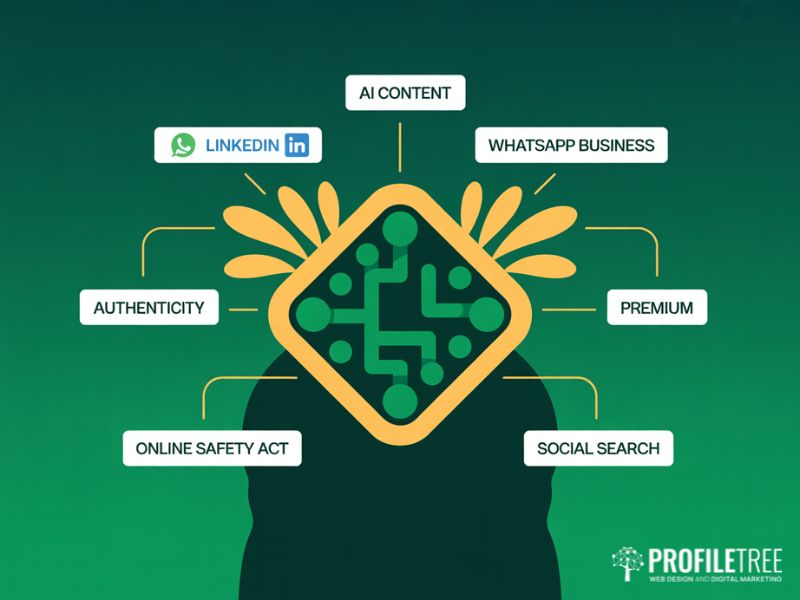
Social media popularity is not static. The platforms that dominate today are not guaranteed to dominate tomorrow, and the behavioural patterns of users are shifting in ways that carry real implications for business strategy over the next two to three years.
AI-Generated Content and the Authenticity Premium
The volume of AI-generated content across all social media platforms is increasing rapidly. Paradoxically, this is likely to increase the value of genuinely human, authentic content. As feeds become saturated with AI-generated material, social media popularity will increasingly accrue to accounts and brands that demonstrate genuine expertise, real experience, and consistent character. This is not a reason to avoid AI tools; it is a reason to use them to support authentic content rather than replace it.
Regulation and the UK Online Safety Act
The UK Online Safety Act represents the most significant regulatory intervention in the social media space in the country’s history. Its implementation requires platforms to take proactive steps to identify and remove harmful content, with particular protections for users under 18. The practical implications for business social media popularity include stricter enforcement of advertising content standards, greater scrutiny of targeting practices that reach younger audiences, and increasing pressure on platforms to reduce misinformation. Businesses whose strategies rely on genuine value and transparent communication have little to fear from this direction. Those relying on manipulative formats face growing risk.
Forecasting Social Media Popularity to 2027
Based on current growth trajectories, several shifts in social media popularity are reasonably predictable over the next two years.
| Trend | Direction | Business Implication |
|---|---|---|
| TikTok’s 35+ audience | Continued growth | Broaden creative beyond Gen Z framing |
| LinkedIn video content | Significant growth | Invest in professional short-form video |
| WhatsApp Business features | Expanding | Integrate as customer service and nurture channel |
| AI-generated content volume | Rapid increase | Prioritise authenticity and first-hand expertise |
| UK regulatory enforcement | Increasing | Audit content for compliance with Online Safety Act |
| Social media search behaviour | Growing | Optimise profiles and captions for discoverability |
Taking Action: What to Do With This Data
Social media popularity statistics are only useful if they inform decisions. Based on the data and analysis above, here are the practical next steps for businesses in Northern Ireland, Ireland, and the UK looking to improve their social media performance in 2025.
- Audit your current platform presence against the demographic data for your target audience. Are you active where your customers actually are?
- Invest in short-form video if you are not already doing so. It is the highest-reach format across most platforms and the gap between businesses that use it and those that do not is widening.
- Build a YouTube presence with an SEO strategy. The compound returns from durable, searchable video content are significantly higher than most businesses realise.
- Consider WhatsApp as a business communication channel, particularly for local service businesses in Northern Ireland and Ireland where usage rates are exceptionally high.
- Review your content strategy in light of the UK Online Safety Act. Ensure all content, including advertising, is accurate, transparent, and appropriate for the audiences it reaches.
- Use AI tools to assist content production, but ensure your social media presence retains genuine human expertise and character. Authenticity is an increasingly scarce and therefore valuable asset.
If you would like to discuss how ProfileTree can help your business build a social media strategy that drives genuine commercial results, our team works with clients across Northern Ireland, Ireland, and the UK on web design, SEO, video production, content strategy, and AI training.
FAQs
How many people use social media globally?
Approximately 5.04 billion people actively use social media as of 2024, representing around 62.3% of the world’s population. This grows at roughly 8% per year.
Which platform has the highest social media popularity in the UK?
YouTube and WhatsApp both reach approximately 75% of UK internet users. Facebook follows at around 70.7%. The right platform for your business depends on your target audience and content type.
How much time do people spend on social media each day?
The global average is 2 hours and 23 minutes per day. Among Gen Z, social media can account for up to 35% of daily leisure time. Over 72% of social media access in the UK happens on mobile.
Does social media popularity affect SEO?
Not directly. Social media does not influence Google rankings through an algorithmic signal, but it drives brand recognition, which increases branded search volume, which is a positive authority signal for Google.
What does social media popularity mean for AI-powered search?
Brands with strong social media popularity and a consistent web presence are more likely to be cited in AI-generated responses from tools like ChatGPT, Perplexity, and Google AI Overviews. The principle is the same as traditional SEO: be present, be credible, and provide genuinely useful in