
SEO for Garages and MOT Services: How Drivers Find Mechanics Today
Table of Contents
When a car develops a problem, or when the MOT reminder lands on the doormat, drivers search online. “Garage near me,” “MOT [town],” “car service [location]”, these searches happen constantly as vehicle owners look for somewhere trustworthy to maintain and repair their cars.
The automotive repair market is intensely local and built on trust. Drivers want a garage close enough to be convenient, but more importantly, they want mechanics they can trust not to overcharge them, recommend unnecessary work, or do a poor job. Finding that trustworthy garage often starts with a search.
This guide explores how garages and MOT centres can build search visibility that attracts steady customer flow, drivers who become loyal, returning customers when they find a garage they trust.
SEO for Garages: How Drivers Search for Garages
Understanding how drivers search helps you meet them at the right moment.
The MOT Search
MOT searches are predictable and regular. Every car needs an annual test, and drivers search when their reminder arrives: “MOT near me,” “MOT [location],” “MOT test [town].”
MOT searches represent clear opportunity. Every MOT is a chance to demonstrate competence and earn future service work. Visibility for MOT searches builds a customer pipeline.
The Service Search
Regular maintenance drives searches: “car service [location],” “full service near me,” “interim service.” Drivers know their car needs servicing and search for options.
Service work often leads to ongoing relationships. A driver satisfied with their service returns year after year.
The Problem Search
When something goes wrong, drivers search urgently: “car won’t start,” “brake warning light,” “engine noise,” “car overheating.” They need help and search for local solutions.
Problem searches often indicate immediate need and willingness to act quickly. Being visible for these searches captures customers when they most need help.
The Specific Repair Search
Some drivers know what’s wrong and search specifically: “clutch replacement [location],” “brake pads [town],” “timing belt service near me.”
Specific repair searches indicate drivers who may have had diagnosis elsewhere or researched their symptoms online.
The Brand or Type Search
Some drivers want specialists: “BMW specialist,” “German car mechanic,” “classic car garage.” They want expertise with their particular vehicle.
If you specialise in certain makes or types, visibility for these searches attracts well-matched customers.
Local Search: Where Drivers Start
Garage searches are fundamentally local. Drivers need somewhere they can get to easily, often needing to drop off and collect vehicles around work schedules. They won’t travel far for routine work.
This local focus creates opportunity for garages that invest in local visibility. You’re competing with other garages serving your area, a winnable competition for those who make the effort.
Google Business Profile for Garages
Your Google Business Profile is foundational for local visibility.
- Accurate information: Address, phone, website. Accuracy matters, drivers may be using maps to navigate to you.
- Categories: Select appropriate categories, Auto Repair Shop, MOT Testing Centre, Car Service, Mechanic. Your primary category matters most for search matching.
- Hours: Accurate opening hours, including weekend availability if offered. Drop-off and collection options if different from staffed hours.
- Services: List your services comprehensively, MOT testing, servicing, diagnostics, specific repairs, tyres, air conditioning. This helps you appear for specific service searches.
- Attributes: Payment options, amenities (waiting area, wifi), accessibility features.
- Photos: Show your premises, workshop, team, and equipment. A well-equipped, organised workshop signals professionalism. Before and after photos of work completed can be powerful.
Reviews: The Trust Builder
Reviews are crucial for garages. The industry has trust issues, drivers worry about being overcharged, sold unnecessary work, or receiving poor repairs. Reviews from satisfied customers overcome this scepticism.
Encourage reviews consistently. After successful MOTs, completed services, and resolved problems, ask customers to share their experience. Most satisfied customers are happy to help when asked.
Respond to all reviews professionally. Thank positive reviewers. Address negative reviews constructively, your response shows other potential customers how you handle concerns.
Your Website: From Search to Booking
Your website should make it easy for drivers to understand what you offer and take action.
Essential Information
Drivers visiting your website want answers quickly:
- Services: What do you offer? MOT, servicing, repairs, diagnostics, tyres, air con?
- Location: Where exactly are you? Directions, parking, public transport access.
- Hours: When can they bring their car? When can they collect?
- Pricing: What do things cost? MOT price, service prices, common repair estimates.
- Booking: How do they book? Online, phone, just turn up?
- About: Who are you? How long have you been trading? What’s your approach?
Service Pages
Create dedicated pages for your main services:
- MOT testing: What’s tested, how long it takes, what happens if it fails, your pricing
- Servicing: Service levels offered (full, interim, manufacturer), what’s included, intervals
- Diagnostics: Your diagnostic capabilities, warning light investigation
- Repairs: Common repairs you handle, your approach to quoting and communicating
- Specific services: Tyres, air conditioning, brakes, clutches, whatever you specialise in
Each page should explain the service, when it’s needed, what’s involved, and how to book.
Pricing Transparency
Drivers worry about garage costs. Transparent pricing builds trust:
- MOT price
- Service prices
- Common repair price ranges
- How you handle quotes and unexpected findings
- No hidden charges policy
You don’t need to publish every price, but giving drivers a sense of your pricing builds confidence.
Online Booking
If you can offer online booking, it removes friction. Drivers comparing garages may choose whoever makes booking easiest.
Even simple online enquiry forms or booking requests help, anything easier than “phone us during business hours.”
Content That Attracts Drivers
Beyond service pages, helpful content attracts drivers during their research and builds trust.
Maintenance Education
Help drivers understand vehicle maintenance:
“How Often Should You Service Your Car?” “Understanding Your Car’s Warning Lights” “When to Replace Your Brake Pads” “Preparing Your Car for Winter” “Summer Car Care Checklist”
Educational content demonstrates expertise while attracting searches from drivers seeking information.
MOT-Related Content
MOT generates significant search volume:
“How to Prepare Your Car for MOT” “Common MOT Failure Reasons and How to Avoid Them” “What Happens During an MOT Test” “MOT vs Service: What’s the Difference?” “Can You Drive Without MOT? What You Need to Know”
MOT content captures searches while positioning you as the obvious choice for the test itself.
Problem-Solving Content
Help drivers understand car problems:
“Why Is My Car Making That Noise?” “What Does the Engine Management Light Mean?” “Car Won’t Start: Common Causes” “When Brake Warning Signs Shouldn’t Be Ignored”
Problem content captures drivers researching symptoms, often before they decide which garage to visit.
Local Content
Content relevant to your area:
“MOT Testing in [Location]: What You Need to Know” “Finding a Reliable Garage in [Town]”
Local content reinforces your geographic relevance while capturing location-specific searches.
Building Trust in a Sceptical Market
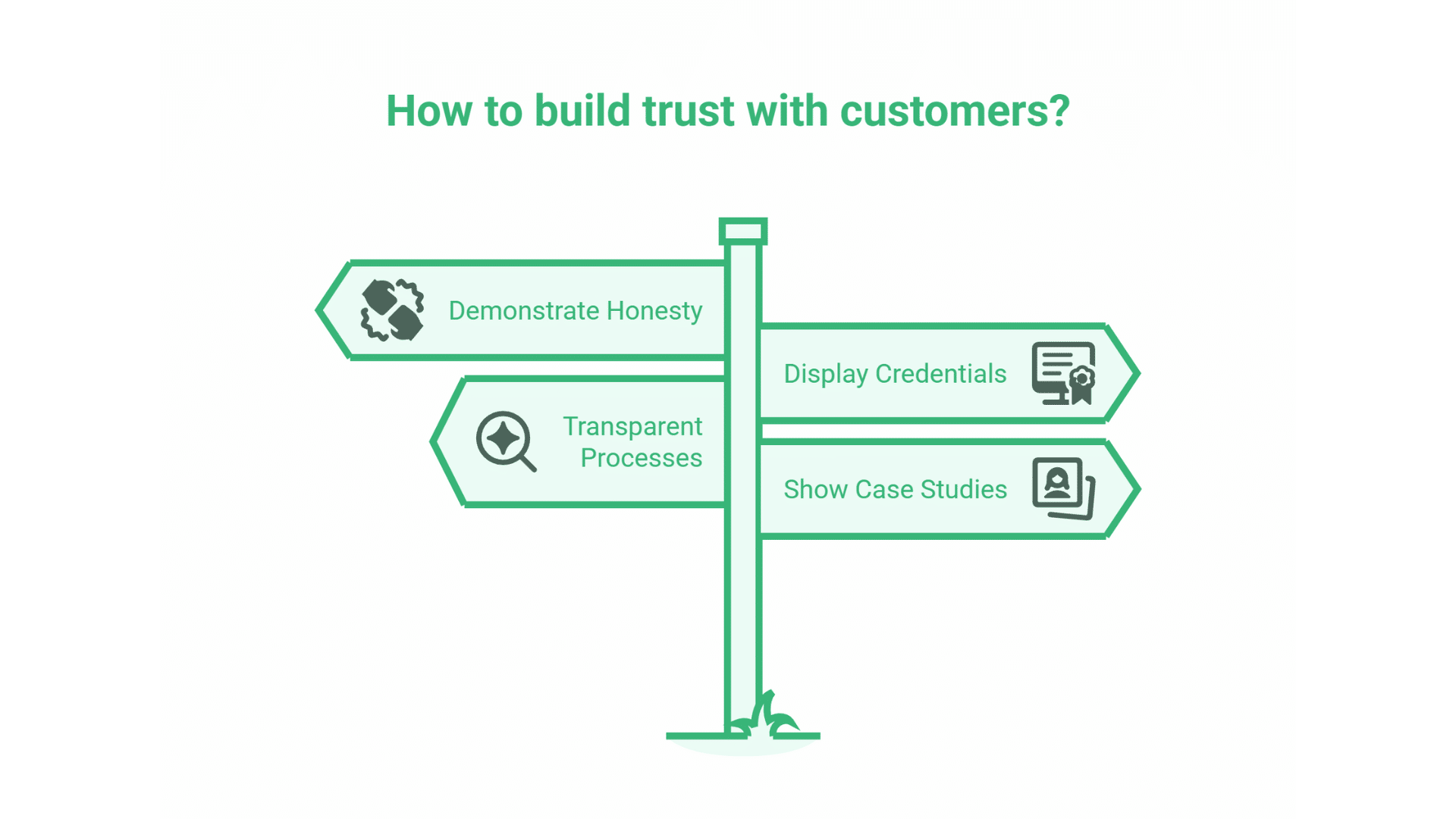
Drivers are often sceptical of garages. Stories of unnecessary work, overcharging, and poor repairs circulate widely. Your online presence must overcome this default suspicion.
Demonstrating Honesty
Communicate your honest approach:
- How you explain work needed
- Your policy on showing customers what you find
- How you handle quotes and unexpected discoveries
- Your approach to recommending only necessary work
Explicit honesty signals help distinguish you from garages that have earned the industry’s poor reputation.
Credentials and Expertise
Display your credentials:
- MOT testing station authorisation
- Manufacturer training
- Diagnostic equipment capabilities
- Trade association memberships
- Technician qualifications
Credentials reassure drivers about competence.
Transparent Processes
Explain how you work:
- How you communicate during repairs
- How you handle additional work discovered
- Your parts policy (OE, OEM, aftermarket)
- Warranty on your work
Transparency builds confidence.
Case Studies and Examples
Show your work:
- Before and after repairs
- Diagnostic detective work
- Successful restorations
- Problems identified and solved
Evidence of good work builds credibility.
Competing Effectively
The garage market includes franchised dealers, fast-fit chains, and independents. How do you compete?
Against Dealers
Dealers have manufacturer backing but often higher prices. Compete by:
- Offering equivalent expertise at better value
- Emphasising that servicing elsewhere doesn’t void warranties
- Showing specialist training or manufacturer experience
- Providing more personal service
Against Fast-Fit Chains
Chains have marketing budgets and nationwide presence. Compete by:
- Personal service and continuity (same mechanic knows your car)
- Expertise beyond basic servicing
- Flexibility in scheduling
- Genuine problem-solving capability
Building Local Loyalty
Your advantage is being genuinely local:
- Known in the community
- Accountable to local reputation
- Accessible for issues
- Personal relationships with customers
Local loyalty, once earned, is hard for competitors to displace.
Seasonal Patterns and Opportunities
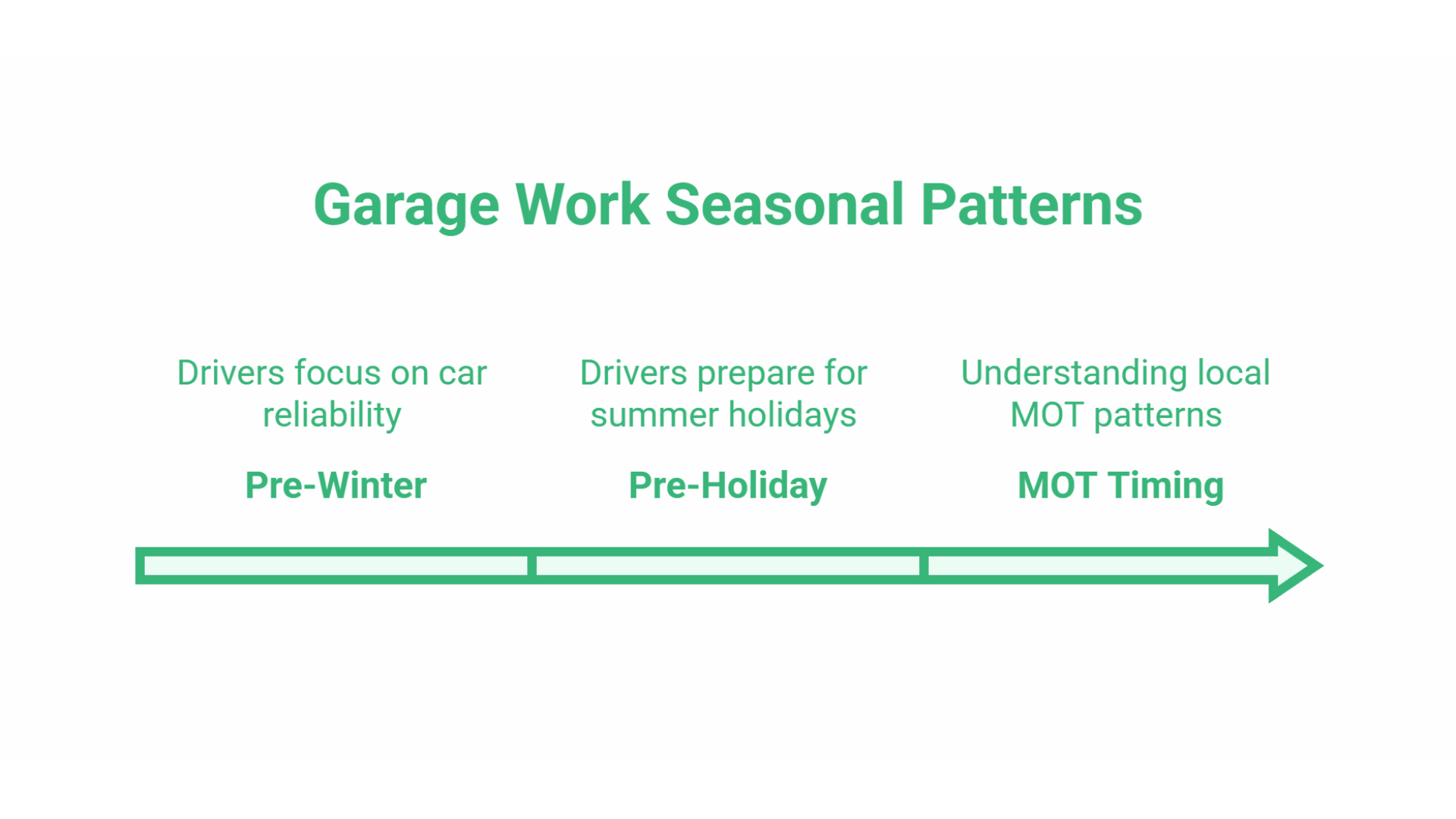
Garage work has seasonal patterns you can leverage.
Pre-Winter
As winter approaches, drivers think about car reliability:
- Battery health
- Antifreeze
- Wiper blades
- Tyres
Content and visibility around winter preparation captures this seasonal concern.
Pre-Holiday
Before summer holidays, drivers want reliable cars:
- Air conditioning checks
- Long journey preparation
- Pre-holiday vehicle checks
Holiday preparation content captures planning drivers.
MOT Timing
While MOTs are distributed throughout the year, understanding your local patterns helps capacity planning. Content around MOT timing (“When to Book Your MOT”) captures planning searches.
Measuring Success
Track metrics that connect to business outcomes:
- Visibility: Are you appearing for relevant local searches? MOT, service, and repair terms?
- Website traffic: Is organic traffic growing? Which services attract interest?
- Bookings: Are bookings increasing? From which sources?
- New customers: Are you attracting new customers through search?
- Retention: Are search-acquired customers returning?
The ultimate measure is building a base of loyal customers who return year after year.
Getting Started
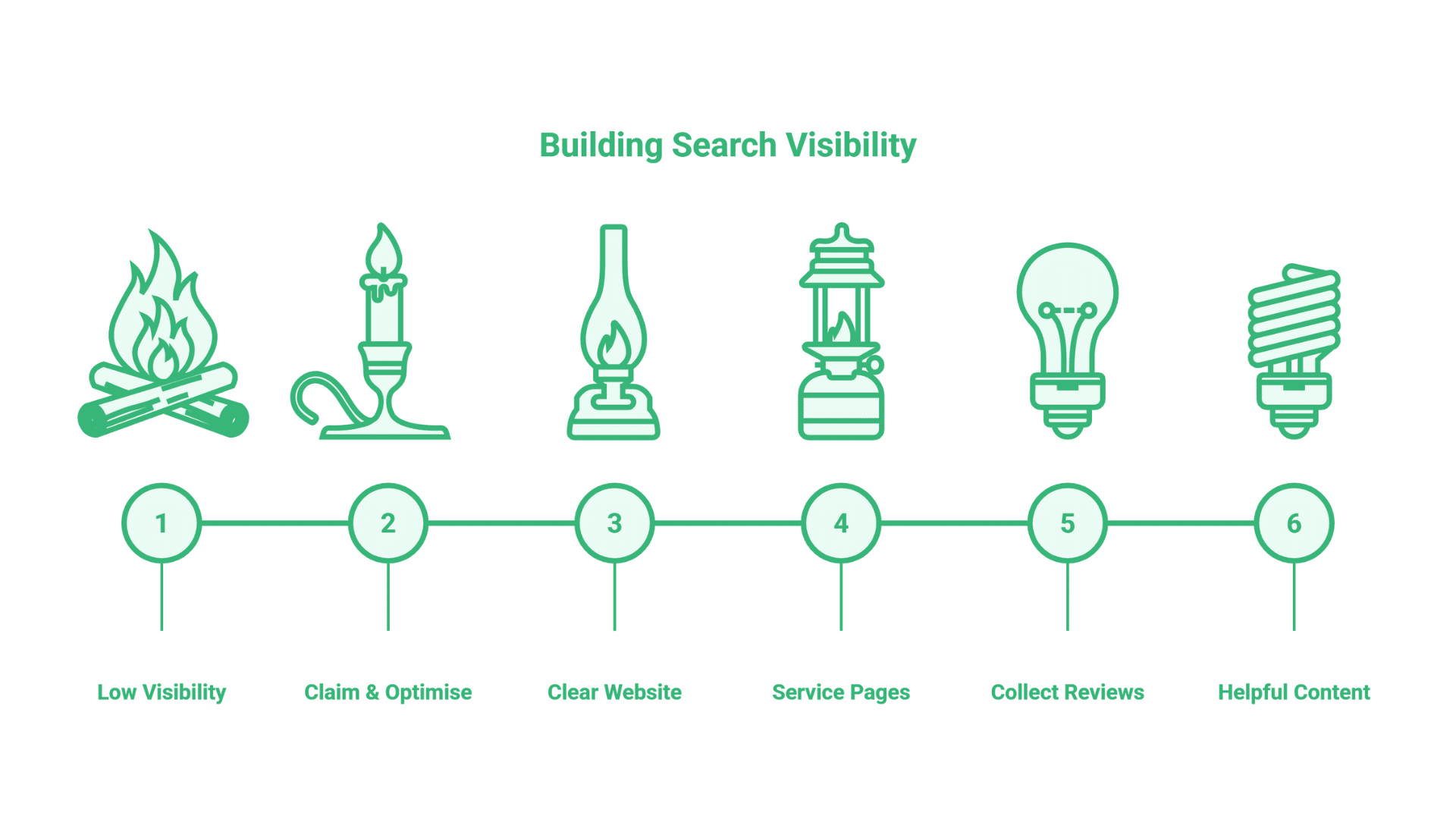
If you’re beginning to address search visibility:
- First: Claim and optimise your Google Business Profile, services, hours, photos, and ensure your MOT testing station status is clear.
- Second: Ensure your website clearly shows services, pricing (at least indicative), and how to book.
- Third: Create or improve pages for your main services, MOT, servicing, key repairs.
- Fourth: Implement review collection from satisfied customers after every completed job.
Fifth: Develop helpful content around MOT preparation and common car maintenance questions.
These foundations build visibility that attracts steady customer flow over time.
Connecting with Drivers Who’ll Become Loyal Customers
The drivers searching for garages today are looking for somewhere they can trust with their car, often an expensive and essential possession. They’re looking for mechanics who are honest, competent, and fair.
When your online presence demonstrates your expertise and integrity, when reviews from satisfied customers show what you’re really like, when you make it easy to book and understand your pricing, you attract the customers who’ll become loyal clients for years.
If you’re ready to improve your garage’s search visibility and attract more customers, ProfileTree’s team works with automotive and service businesses across Northern Ireland, Ireland, and the UK. We understand both the technical requirements of effective SEO and the trust-building essential for garage marketing. Get in touch to discuss how we can help your business grow through search.