
SEO for Estate Agents: Win Instructions & Attract Buyers
Table of Contents
When homeowners decide to sell, they search online. When buyers start their property journey, they search online. When landlords need a letting agent, they search online. The property market has moved decisively to digital, and estate agents who don’t appear in search results are losing business to competitors who do.
Estate agency is intensely local. Nobody searches for “estate agent UK”—they search for “estate agent Holywood” or “letting agent South Belfast.” This local focus creates genuine opportunities for independent and regional agents to compete effectively against national chains, provided you invest in making your agency visible when people search.
The challenge is that most estate agents rely heavily on property portals—Rightmove, Zoopla, and OnTheMarket—for buyer enquiries. These portals dominate property searches, but they don’t help you win instructions. Vendors choose their agent before properties hit the portals. Your website and local search presence determine whether homeowners considering selling find you, trust you, and pick up the phone.
ProfileTree works with businesses across Northern Ireland and beyond to build search visibility that generates real results. For estate agents, that means appearing when potential vendors search for local agents, when buyers search for area information, and when landlords look for letting services.
Why SEO Matters for Estate Agents
The property industry has a peculiar dynamic. Portals capture most buyer traffic, but agents still need their own digital presence for several critical reasons.
Winning Instructions
Vendors research agents before making contact. They search for “best estate agent [town]”, read reviews, compare services, and assess professionalism on websites. The agent with strong search visibility, good reviews, and a professional website wins instructions over competitors who are invisible online.
Research shows that homeowners typically consider two to three agents before choosing. If you’re not appearing in their research, you’re not making that shortlist. The instruction—and the fee—goes to someone who showed up when the vendor was looking.
Local Market Authority
Appearing consistently in local property searches positions your agency as the area expert. When someone searches “house prices [area]” or “best areas to buy in [town],” finding your content establishes authority before they’ve even decided to move.
This authority compounds. The local expert receives more valuation requests, wins more instructions, and builds a reputation that generates referrals. SEO visibility feeds this virtuous cycle.
Reducing Portal Dependence
Portals charge significant fees for premium listings and featured placements. Agents with strong organic visibility have more negotiating power and alternative lead sources. You’ll never escape portals entirely, but reducing dependence improves margins and business resilience.
Attracting Landlords
Letting agents face a particular opportunity through SEO. Landlords searching for “letting agent [area]” or “property management [town]” are actively seeking agent relationships. Unlike sales, where vendors may already have an agent, landlords frequently search when acquiring new properties or becoming dissatisfied with their current agent.
Google Business Profile for Estate Agents
Your Google Business Profile determines local search visibility. For estate agents, a well-optimised profile generates direct enquiries and valuation requests.
Category Selection
Google offers relevant categories:
- Estate Agent (primary for most agencies)
- Real Estate Agency
- Letting Agent
- Property Management Company
- Commercial Real Estate Agent
Select your primary category based on your main business. Most high street agents should use “Estate Agent” as the primary, and add “Letting Agent” or “Property Management Company” as secondary categories if you offer those services.
Commercial agents might prefer “Commercial Real Estate Agent” as primary, with others as secondary.
Profile Completion
Complete every field thoroughly:
Business Description: Summarise your agency, services, and areas covered. Mention how long you’ve operated locally, any specialisms, and what makes you different from competitors. Include the towns and areas you serve.
Services: List each service clearly:
- Property sales
- Property valuations
- Lettings
- Property management
- Land and new homes (if applicable)
- Commercial property (if applicable)
Use terms such as vendors and landlords that are actually searched for alongside industry terminology.
Areas Served: Estate agency is hyperlocal. Specify the towns, villages, and neighbourhoods you cover. Someone searching “estate agent Bangor” should find an agent who explicitly serves Bangor.
Photos: Upload quality images of your office, team, and—with permission—sold/let properties. Show your local presence. Team photos build personal connection before vendors even visit for a valuation.
Opening Hours: Keep hours accurate, including weekend availability for viewings. Many property decisions happen at weekends—if you’re open, make sure searchers know.
Reviews and Reputation
Reviews significantly influence vendor decisions. Homeowners trust agents with strong review profiles over those with few or poor reviews.
Build reviews systematically:
- Request reviews after successful completions
- Ask satisfied landlords for feedback
- Follow up with buyers who’ve had positive experiences
- Train staff to mention reviews when clients express satisfaction
Respond to every review professionally. Thank positive reviewers specifically. Address negative reviews calmly, acknowledge concerns, and offer to discuss offline. Never argue publicly or reveal client details.
Website Structure for Estate Agents
Your website serves multiple audiences—vendors considering instructing you, buyers researching areas, and landlords seeking letting services. Structure must accommodate all while supporting SEO goals.
Essential Pages
Service Pages: Create dedicated pages for each core service:
- Selling your property (focused on vendors)
- Property valuations
- Lettings for landlords
- Property management
- Tenant services
- First-time buyer guidance
- Land and new homes
- Commercial services
Each page should address that audience’s specific concerns, explain your approach, and include clear calls to action.
Area Pages: Create comprehensive pages for each area you cover. An agent covering multiple towns might have separate pages for:
- Holywood
- Bangor
- Newtownards
- Comber
Each area page should include:
- Local property market overview
- Types of properties typically available
- Local amenities and transport links
- Why do people choose to live there
- Recent sold prices context (without specific data that dates quickly)
- Your experience selling/letting in that area
Area pages capture searches from people researching locations while demonstrating your local knowledge to potential vendors.
About and Team Pages: Property transactions are personal. Vendors want to know who’ll be handling their sale. Create detailed profiles for negotiators and partners, including experience, local knowledge, and professional qualifications.
Sold/Let Pages: Showcase successful transactions. Case studies of properties sold or let (with client permission) demonstrate results and provide social proof.
Blog or Insights: Regular content about local property matters, market updates, and buying/selling guidance attracts search traffic and demonstrates expertise.
Property Listings Integration
Most agents display current listings on their website, often fed from property management software. Ensure:
- Listings are properly indexed by search engines
- Individual property pages have unique, descriptive titles
- Location data is correctly structured
- Images are optimised for speed without losing quality
- Sold/let properties remain accessible (with status updated) rather than disappearing entirely
Property pages themselves rarely rank against portals for specific property searches. Their value is demonstrating your current stock to website visitors and supporting overall site quality.
Technical Foundations
Estate agent websites often suffer from technical issues that harm SEO:
Speed: Property websites with many images often load slowly. Compress images, use efficient hosting, and ensure pages load quickly on mobile.
Mobile Experience: Many property searches happen on phones. Ensure your site works flawlessly on mobile devices—easy navigation, readable content, and clickable contact buttons.
Security: HTTPS is essential. Property transactions involve sensitive information; an unsecured site undermines professional credibility.
If your current website has technical limitations, ProfileTree’s development team builds property websites designed for both user experience and search performance—details at profiletree.com/services/website-development/.
Content Strategy for Estate Agents
Content marketing positions your agency as the local property expert while capturing search traffic from people at various stages of their property journey.
Area Guide Content
Comprehensive area guides capture searches from people researching locations:
Living in [Area] guides: Cover everything someone considering moving to an area would want to know:
- Property types and typical prices
- Schools and education options
- Transport links and commuting
- Shopping and amenities
- Restaurants and leisure
- Community and lifestyle
- Parks and outdoor spaces
These guides serve both buyers researching areas and vendors who want to see that you understand their neighbourhood.
Best areas for [audience] guides: Target specific audience searches:
- Best areas for families in [region]
- Best areas for first-time buyers near [city]
- Best commuter towns for [city]
- Best areas for retirees in [county]
This content captures people early in their property journey and positions you as the knowledgeable local expert.
Vendor-Focused Content
Content addressing vendor concerns and questions:
Process guides:
- How to sell your house (step-by-step)
- Preparing your home for sale
- Understanding estate agent fees
- How property valuations work
- Tips for successful viewings
Market content:
- Local property market updates
- What affects house prices in [area]
- Best time to sell your property
- How long does it take to sell
Comparison content:
- Online agents vs high street agents
- Sole agency vs multi-agency
- What to look for in an estate agent
This content builds trust with potential vendors while targeting searches from people considering selling.
Landlord-Focused Content
For letting agents, content addressing landlord needs:
Letting guides:
- How to let your property
- Landlord responsibilities and regulations
- Tenant referencing explained
- Managing rental properties
Regulatory content:
- Right to Rent checks explained
- EPC requirements for landlords
- Safety certificates and compliance
- Deposit protection requirements
Investment content:
- Buy-to-let considerations
- Rental yield calculations
- Property investment in [area]
Landlord searches often have high intent—someone searching “how to let my property” is actively considering becoming a landlord client.
Local Market Updates
Regular market commentary demonstrates current knowledge:
- Monthly or quarterly local market updates
- Analysis of sold prices in your area
- Commentary on local development and regeneration
- New build developments in your area
This content serves existing clients (keeping them informed) while attracting search traffic from people researching local property markets.
“Estate agents have natural content advantages—you know your local market better than anyone. The agencies that translate that knowledge into helpful online content build authority that generates both vendor instructions and buyer enquiries.” — Ciaran Connolly, ProfileTree
Local SEO for Estate Agents
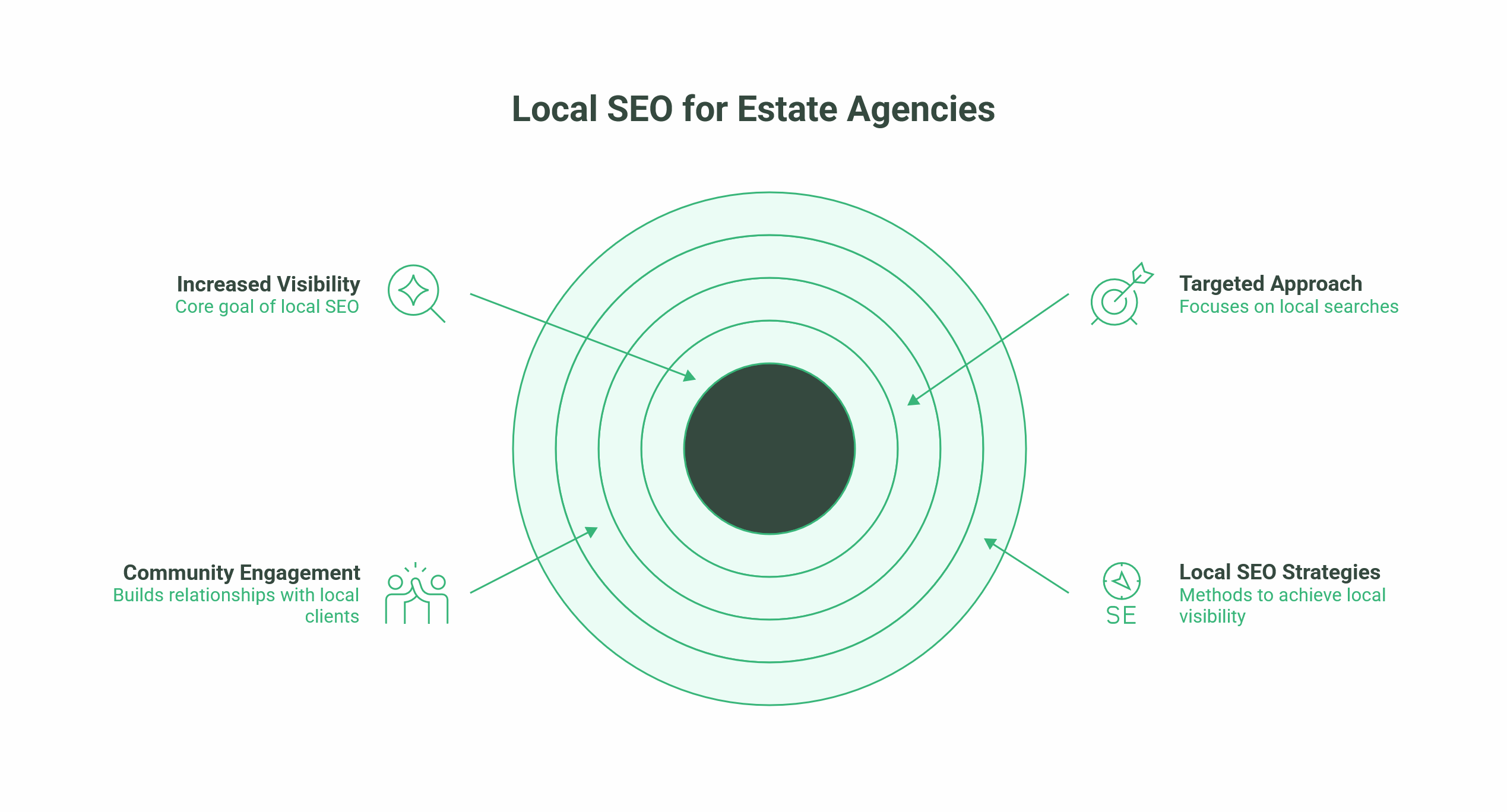
Estate agency is fundamentally local. Local SEO ensures visibility when people search for agents in your area.
Building Local Citations
Directory listings reinforce local presence:
Property-specific directories:
- Rightmove (your agent profile)
- Zoopla (agent profile)
- OnTheMarket (agent profile)
- The Property Ombudsman directory
- ARLA Propertymark (for letting agents)
- NAEA Propertymark
- Guild of Property Professionals
Business directories:
- Yell.com
- Thomson Local
- Yelp
- Local chamber of commerce
Regional directories:
- PropertyPal (Northern Ireland)
- Local council business directories
- Regional business networks
Ensure Name, Address, and Phone number consistency across all listings. Our guide at profiletree.com/check-backlinks/ explains citation auditing.
Hyperlocal Targeting
Estate agency rewards hyperlocal focus:
Neighbourhood pages: Create content for specific neighbourhoods, not just towns. In Belfast, separate pages for Stranmillis, Malone, Ballyhackamore, and other distinct areas capture specific searches.
Street and development content: For new developments or notable streets, dedicated content can capture very specific searches.
Postcode targeting: Some searches include postcodes. Content referencing specific postcode areas can capture these searches.
Our hyperlocal SEO guide at profiletree.com/hyperlocal-seo/ covers these strategies in detail.
Local Link Building
Local links strengthen geographic visibility:
- Sponsor local community events
- Contribute property commentary to local publications
- Partner with local solicitors, mortgage brokers, and removal companies
- Support local charities and organisations
- Participate in local business networks
These activities build links while establishing a community presence that generates referrals.
Competing with Property Portals
Portals dominate generic property searches. Your SEO strategy should work around this reality rather than fighting it directly.
Searches Portals Don’t Capture
Focus on searches where portals are weak:
Agent searches: “Estate agent [location]” and “best estate agent [area]” are in your territory. Portals list agents but don’t optimise for these searches.
Area information: “Living in [area]” and “best areas to buy [region]” searches often return local agent content over portal results.
Process searches: “How to sell your house” and similar searches frequently surface agent content.
Vendor-focused searches: “How much is my house worth” and valuation-related searches target people portals aren’t serving.
Your Advantages Over Portals
Portals have scale; you have local depth:
- Genuine local knowledge they can’t replicate
- Personal service and relationships
- Specific neighbourhood expertise
- Local market insight and commentary
- Community involvement and presence
Content demonstrating these advantages captures searches portals can’t satisfy.
Technical SEO for Estate Agent Websites
Technical foundations affect both rankings and user experience.
Schema Markup
Implement structured data:
RealEstateAgent schema: Specify your services and the areas you cover.
LocalBusiness schema: Your agency’s address, contact details, and opening hours.
FAQPage schema: For FAQ content about buying, selling, or letting.
Product schema: Can be applied to property listings, though it offers limited SEO benefits compared to portals.
Site Architecture
Organise content logically:
- Clear service sections (sales, lettings, valuations)
- Comprehensive area coverage with internal linking
- Easy navigation between related content
- Logical URL structure reflecting content hierarchy
Property Listing Technical Considerations
Property listings present specific technical challenges:
Indexation: Ensure current listings are indexed, but manage how sold/let properties are handled (redirect, update status, or remove from index).
Duplicate content: If listing descriptions appear on portals and your site, ensure your site is the canonical source.
Dynamic content: Property websites that frequently update require efficient crawling and indexation.
Image optimisation: Property photos need a balance between quality and file size.
Measuring Estate Agent SEO Performance
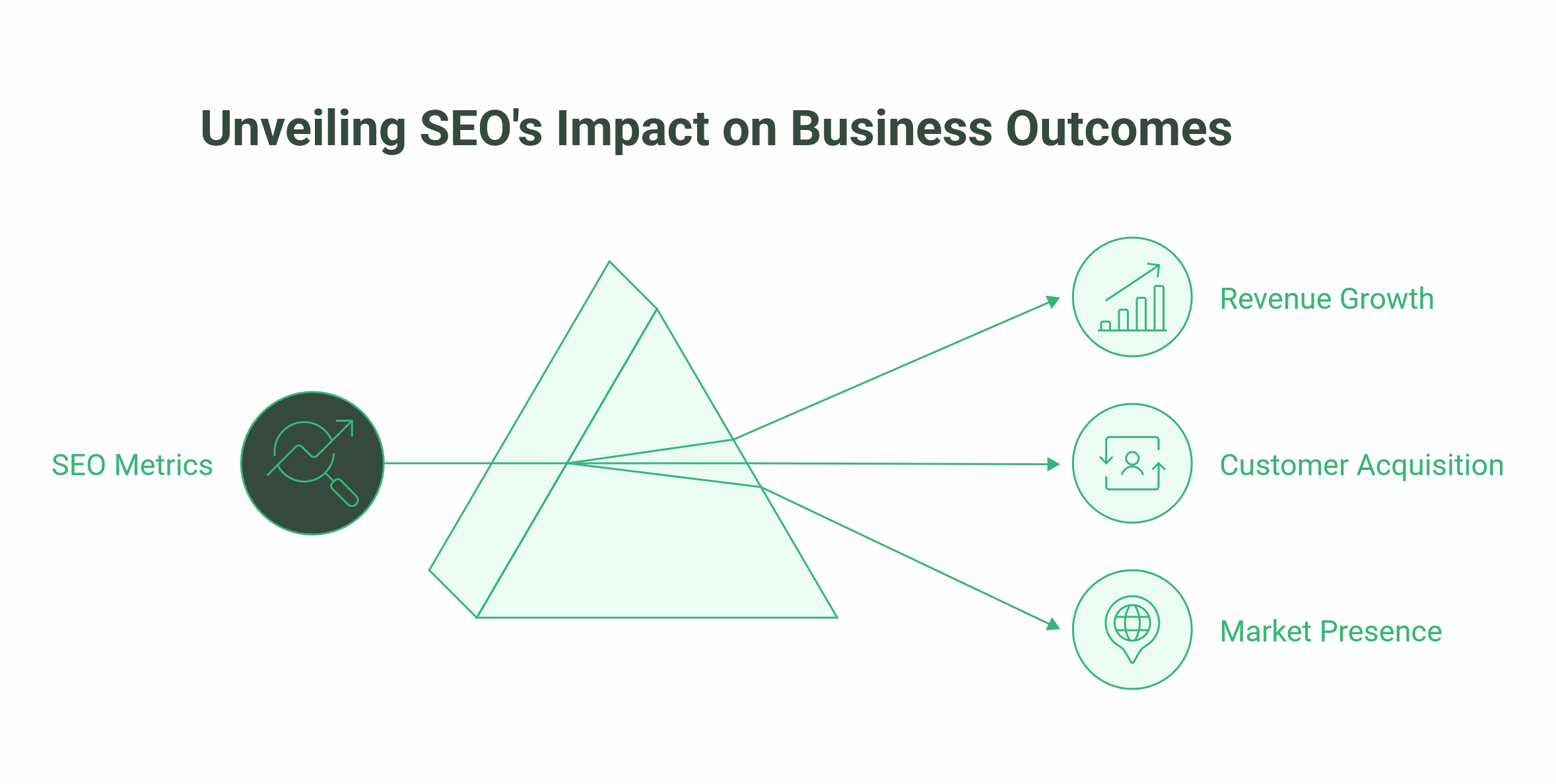
Track metrics connecting SEO to business outcomes.
Key Metrics
Visibility:
- Rankings for “[area] estate agent” searches
- Rankings for area guide content
- Organic traffic to service and area pages
- Local pack appearances
Engagement:
- Valuation request form submissions
- Property alert sign-ups
- Time on area guide pages
- Return visitors
Conversions:
- Valuation requests
- Landlord enquiries
- Phone calls from the website
- Email enquiries
Business outcomes:
- Instructions won from website leads
- Instruction value from organic sources
- Cost per instruction compared to other channels
Tracking Valuation Requests
Valuation requests are the key conversion for sales agents. Track:
- Online valuation form submissions
- Phone calls from website (use call tracking)
- Source of valuation requests (first visit attribution)
Understanding which content and keywords drive valuation requests helps focus future efforts.
Common Mistakes Estate Agents Make
Avoid these frequent errors:
Portal over-reliance: Treating your website as secondary to portal presence. Your website wins instructions; portals help sell listings you’ve already won.
Thin area pages: Brief area descriptions provide no ranking advantage. Comprehensive guides demonstrating genuine local knowledge outperform thin content.
Neglecting landlord content: Letting agents often focus on vendor content, missing opportunities from landlord searches.
Outdated market content: Property market commentary with stale data damages credibility. Regular updates matter.
No clear valuation call to action: The valuation request is your key conversion. Make it prominent throughout the site.
Ignoring reviews: Review quantity and quality significantly influence vendor choices. Build review collection into your processes.
Generic content: Content that could appear on any estate agent’s website provides no advantage. Local specificity differentiates.
Getting Started with Estate Agent SEO
If you’re beginning SEO or reviewing existing efforts:
Immediate priorities:
- Complete your Google Business Profile thoroughly
- Ensure service pages clearly explain your offerings
- Verify consistent NAP across portal profiles and directories
- Check the website’s mobile experience
First three months:
- Develop comprehensive area guides for key locations
- Create vendor-focused content addressing common questions
- Build citations in property and local directories
- Implement review request processes
Ongoing:
- Publish regular local market updates
- Respond to all reviews promptly
- Update area guides with current information
- Monitor performance and adjust focus based on results
FAQs
How can we compete with Rightmove and Zoopla in search results?
You can’t compete for property-specific searches—and you don’t need to. Focus on search portals that don’t serve well: agent searches, area information, selling guides, and valuation-related queries. These searches connect you with potential vendors and landlords before they list properties.
How long before SEO generates valuation requests?
Most agencies see initial improvements within three to four months, with meaningful valuation request increases between four and eight months. Area guides and local content often gain traction faster than competitive service pages.
Should we create content for areas with few listings?
If you genuinely serve an area and want to grow there, yes. Area content positions you for future instructions, even if the current stock is limited. However, prioritise areas with existing presence and growth potential.
How much content do we need to publish?
Quality over quantity. One comprehensive area guide, monthly plus regular market updates, is sustainable and effective. Avoid thin, rushed content that provides no real value.
Do property listings help SEO?
Minimally for direct rankings against portals. Their value is demonstrating current stock to website visitors and supporting overall site quality. Ensure listings are technically sound, but don’t expect them to outrank portals for specific property searches.
Building Sustainable Property Search Visibility
SEO for estate agents isn’t about tricks or quick wins. It’s about building a digital presence that reflects your local expertise and helps potential vendors and landlords find you when they’re actively looking for an agent.
The fundamentals matter: complete the Google Business Profile, provide comprehensive area content, offer helpful vendor and landlord resources, and consistently monitor reviews and local presence.
Agents who execute these basics build a significant advantage over competitors who still treat digital as an afterthought. In most local markets, the opportunity isn’t about outspending competitors—it’s about actually showing up with helpful, relevant content.
If you’re ready to improve your agency’s search visibility, ProfileTree’s SEO team works with businesses across Northern Ireland, Ireland, and the UK. We understand both the technical requirements of effective SEO and the specific dynamics of property marketing. Get in touch at profiletree.com/contact-us/ to discuss how we can help your agency win more search instructions.