
Purpose of a Website: What Your Site Should Actually Do
Table of Contents
The purpose of a website goes far beyond giving your business an online address. For most SMEs, a website is the single most important sales and credibility tool they own, and the difference between a site that generates enquiries and one that quietly costs money each month comes down to whether that purpose was clearly defined before a single page was built.
This guide explains what a website is designed to do, how different types of sites serve different commercial goals, and what it means to build or refresh a site that genuinely performs in 2026 (including how the rise of AI search is shifting what “performing” looks like).
What Do We Mean By a Website?
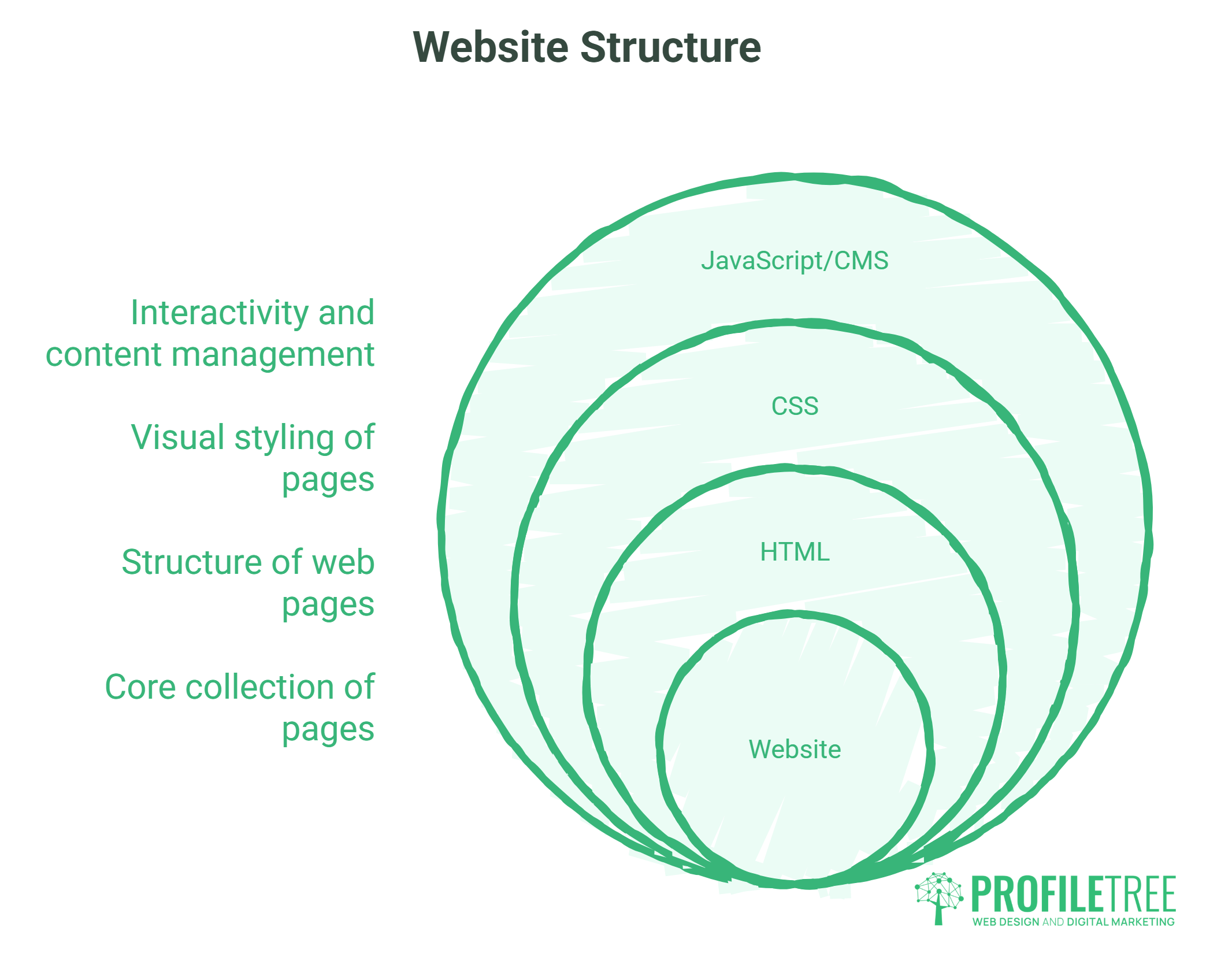
A website is a collection of interconnected pages hosted under a single domain name, accessible to anyone with an internet connection. Each page is built with HTML to provide structure, CSS to handle visual presentation, and (in most modern sites) JavaScript or a content management system like WordPress to manage interactivity and content updates.
What matters more than the technical definition is the strategic one. A website is your business’s most controllable digital asset. Unlike a social media profile, you own it outright. Unlike a marketplace listing, it works entirely on your terms. Its purpose, its content, and its structure are decisions you make, which is precisely why getting those decisions right matters so much.
The Five Core Purposes of a Modern Website
Most websites are built to serve one primary purpose, with secondary functions layered on top. The clearer you are about which of these you’re building for, the more focused and more effective.
Information and Education
Some websites exist primarily to answer questions. Government sites, NHS pages, Wikipedia, and industry knowledge bases are the obvious examples, but many B2B businesses run content-led sites whose main job is to establish expertise and attract search traffic. A solicitor’s site that explains inheritance tax clearly, or a manufacturer’s site that covers product specifications in depth, is doing exactly this.
For this purpose to work commercially, the information has to be genuinely useful, not a thin layer of marketing language. Google’s Helpful Content System has become stricter about this since 2024: pages that look like they answer a question but don’t actually help the reader have seen significant ranking drops.
E-Commerce and Direct Sales
E-commerce websites exist to sell. Their purpose is transactional: get the right product in front of the right visitor, make purchasing as easy as possible, and handle the transaction securely. The design, navigation, and content decisions on a good e-commerce site are all made in service of that goal.
Beyond the product pages themselves, effective e-commerce sites include strong category architecture, clear delivery and returns policies, and trust signals like verified reviews. A site that looks good but loses customers at the checkout is failing its core purpose regardless of how well it ranks.
Lead Generation
Many service businesses (web design agencies, accountants, consultants, solicitors) don’t sell online directly. Their website’s job is to generate qualified enquiries that the sales team converts. This is a different design challenge from e-commerce. The goal isn’t an immediate transaction but a form fill, a phone call, or a booking.
For lead generation sites, the purpose of every page is to move the visitor closer to contacting you. That means clear calls to action, obvious contact information, social proof in the right places, and content that addresses the questions a prospect would ask before picking up the phone. ProfileTree’s web design work for Northern Ireland service businesses is built around this model: a site that earns trust quickly and makes the next step obvious.
Brand Awareness and Credibility
Established businesses often need a website that reinforces their position rather than generating new enquiries. For a company whose work comes almost entirely through referrals or tenders, the website’s purpose is validation: it’s what a potential client checks after they’ve been recommended. The site needs to convey credibility, depth, and professionalism quickly, because the visitor already knows who you are; the website just needs to confirm they made the right choice calling you.
Customer Support and Portal Access
Software companies, utilities, and financial services providers frequently run sites where the primary purpose is self-service support: FAQs, knowledge bases, account portals, and help documentation. Reducing inbound support calls is a measurable commercial outcome, and a well-structured support site delivers it at scale.
Types of Websites and Their Primary Goals
Different business models call for different site structures. The table below maps common website types to their primary purpose and the metric that best indicates whether the site is doing its job.
| Website Type | Primary Purpose | Key Performance Metric |
|---|---|---|
| E-commerce store | Direct sales | Conversion rate / revenue per session |
| B2B service site | Lead generation | Form fills / qualified enquiries |
| Portfolio / creative | Credibility | Conversion rate/revenue per session |
| Informational / blog | Organic search traffic | Time on page/contact requests |
| Donations/volunteers | Trial sign-ups or demos | Trial conversion rate |
| Not-for-profit | News/media | Donation conversion / sign-ups |
| Personal/professional | Audience engagement | Profile views/outreach received |
| Return visitors/ad impressions | Networking and visibility | Sessions/pages per visit |
Most SME sites are hybrid: they need to rank in search, communicate credibility, and generate enquiries. The risk with hybrid sites is that trying to serve every purpose equally often means serving none particularly well. A clear primary purpose, with secondary goals explicitly mapped, keeps design and content decisions grounded.
How the Purpose of a Website is Changing in the AI Era
The purpose of a website hasn’t changed fundamentally (it still needs to attract visitors and convert them), but how it does that is shifting in ways that matter for any business publishing content in 2026.
AI-powered search tools (Google AI Overviews, Bing Copilot, ChatGPT, Perplexity) now answer many informational queries directly in the search interface. If someone asks “what is the purpose of a website,” they may get a summarised answer without clicking on any results. That doesn’t make websites redundant; it changes which websites benefit.
Pages being cited in AI answers share several characteristics: they’re structured clearly so AI systems can extract self-contained sections, they cover multiple sub-questions within a topic rather than just one, they include original data or specific examples rather than generic statements, and they’re updated regularly. Ahrefs data across 17 million AI citations found that content with tables is cited 2.5 times more often than content without, and long-form content over 2,000 words gets cited roughly three times as often as shorter pieces.
The practical implication for most SME websites is this: if your site’s purpose is information sharing, that content now needs to earn AI citations to maintain visibility, not just search rankings. Websites that exist purely as digital brochures (a few static pages with no depth and no updated content) are being squeezed out at both ends. They don’t rank well, and they’re not cited in AI answers.
“The businesses we see holding their organic visibility in 2026 are the ones that treat their website as a publishing platform, not a brochure,” says Ciaran Connolly, founder of ProfileTree. “A site that answers real questions in depth, and answers them better than any other source, is the one that gets cited, by Google and by AI.”
For conversion-focused sites, the shift matters differently. AI Overviews handle the informational query; what they don’t do is replace the experience of actually using a service. Booking a consultation, speaking to a real team, seeing a portfolio of work: these are the things a website delivers that AI cannot replicate. Designing your site around those unique human experiences is increasingly the strategic advantage for service businesses.
Building Regional Trust: The UK and Ireland Context
For businesses in Northern Ireland, Ireland, and the UK, a website’s purpose includes something global competitors rarely address: demonstrating local credibility to a local audience.
Regional trust signals matter more than many businesses realise. A .co.uk or .ie domain immediately signals geographic presence to a UK or Irish visitor. Displaying a VAT number on your contact page or footer is standard practice for established businesses and reassures B2B buyers in particular. GDPR-compliant privacy policies and cookie notices are legal requirements in the UK and EU, but they’re also trust signals; a site without them can look unfinished or unreliable to a business buyer who knows they should be there.
Local NAP data (name, address, phone number) displayed consistently across your website and Google Business Profile helps search engines confirm your geographic relevance and supports local SEO rankings. For businesses serving a specific area (a Belfast accountant, a Derry solicitor, a Dublin marketing agency), this kind of localised trust-building is part of what the website is for, not an afterthought.
ProfileTree’s work with SMEs across Northern Ireland consistently shows that regional buyers respond to specificity. A page that mentions your town, references familiar local business conditions, and shows a team based in the same area converts at a higher rate than a generic national template. That specificity has to be genuine; city-name swapping on a template is easy for Google to identify and provides no real value to the visitor.
How to Design a Website That Serves Its Function Effectively
Knowing what your website should do is the starting point. Designing it to actually do that is where most sites fall short. The following framework addresses the most common gaps between stated purpose and actual performance.
Step 1: Define the primary purpose before touching design
Every design and content decision follows from purpose. A lead generation site needs prominent calls to action, fast load times on mobile, and trust signals near every contact point. An e-commerce site needs clear product photography, efficient checkout, and well-structured category navigation. These are incompatible priorities if you try to serve both equally without knowing which matters most.
State your primary purpose in one sentence before briefing any designer or writing any content. “This site exists to generate telephone enquiries from Northern Ireland businesses looking for a web design agency” is a brief. This site is our online presence” is not.
Step 2: Match your content to your visitor’s intent
Visitors arrive at different stages of a buying decision. Some are researching, some are comparing options, and some are ready to buy. A website that serves its purpose well has content for each stage: awareness content that answers questions, comparison content that addresses objections, and conversion content that makes the next step easy.
The mistake most SMEs make is writing only for themselves. Product descriptions written from the seller’s perspective, “about us” pages that talk only about the company’s history, and contact pages with no explanation of what happens after you submit the form: these are all symptoms of a site built around the business rather than the visitor.
Step 3: Treat speed and mobile performance as non-negotiable
Google’s Core Web Vitals are ranking factors, not recommendations. A site that loads slowly on mobile fails its purpose regardless of how good the content is, because most of its potential visitors will leave before they see any of it. WordPress sites in particular need active attention to image optimisation, caching, and hosting quality to maintain acceptable performance.
Step 4: Use data to verify that the site is doing what you think it is
Google Analytics (or equivalent) should be configured to track the actions that correspond to your site’s purpose: form submissions, phone number clicks, time on key pages, and product purchases. If you’re not measuring those specific actions, you don’t actually know whether your site is serving its purpose; you’re guessing based on traffic numbers alone.
ProfileTree’s web design and SEO services include analytics configuration as a standard part of any new build or redesign, because a site without measurement is a site without accountability.
Website Purpose Alignment Checklist
Use this against your current site before investing in any redesign or content refresh:
- Is the primary purpose of the site defined in writing?
- Does the homepage make that purpose clear within five seconds?
- Is there at least one call to action above the fold on every key page?
- Are your contact details visible without scrolling on mobile?
- Do you have conversion tracking set up for the actions that matter?
- Is the site loading in under three seconds on a standard mobile connection?
- Does your content address the questions a new visitor would actually ask?
- Are your trust signals (reviews, case studies, credentials) visible near conversion points?
If any of these answers is no, that’s where to focus before anything else.
Frequently Asked Questions
What is the main purpose of a website?
The main purpose of a website is to represent a business or individual online and achieve a specific goal: generating leads, processing sales, sharing information, or building credibility. Which of these applies depends on the business model; the mistake is building a site without deciding which one matters most.
What do you mean by a website?
A website is a collection of pages hosted under a single domain name, built with HTML, CSS, and typically a content management system like WordPress. It’s the most controllable digital asset a business owns; unlike social media platforms, the rules, structure, and content are entirely yours to determine.
Why is it important to define the purpose of your website?
Without a defined purpose, design and content decisions are made by default rather than strategy. The result is usually a site that looks reasonable but performs poorly: it doesn’t rank, doesn’t convert, and doesn’t reflect what the business actually offers. Defining purpose first means every subsequent decision has a clear test: does this help us achieve the goal or not?
What is the purpose of a business website vs a personal website?
A business website is primarily commercial: its job is to attract potential customers and convert them into enquiries, sales, or relationships. A personal website serves different goals (portfolio building, professional networking, or sharing expertise), where the return is career development rather than direct revenue.
How many purposes can one website have?
A site can have multiple purposes, but it should have one primary one. Secondary goals are fine as long as they don’t conflict with the main one. A B2B service site can include a blog for SEO purposes and a resources section for existing clients, but if those additions make the site harder to navigate for someone who arrived wanting to hire you, they’re undermining the primary purpose.
What are the five main purposes of a website?
The five most common website purposes are: sharing information and education, facilitating e-commerce and direct sales, generating leads and enquiries, building brand awareness and credibility, and providing customer support or portal access. Most SME sites are built for lead generation, even when they’re not explicitly designed that way.
How is the purpose of a website changing in 2026?
AI-powered search tools now handle many basic informational queries directly, reducing clicks to information-only pages. This makes it more important for websites to offer genuine depth, original content, and experiences that AI cannot replicate: direct access to a team, specific local knowledge, or complex transactional functionality. Websites that survive the AI shift are the ones that do things an AI answer cannot.
If you’re reviewing a site that isn’t generating the results it should, the problem is almost always traceable to a misaligned purpose: a site built for one goal that’s being asked to serve another, or a site with no defined goal at all. ProfileTree works with businesses across Northern Ireland, Ireland, and the UK to build and optimise websites around clear commercial outcomes. Talk to our team about what your site should be doing.