
Product Video Production: A Buyer’s Guide for UK and Irish SMEs
Table of Contents
Product video production is one of the most direct investments an SME can make in its digital marketing. A well-made product video shortens the buying decision, reduces return rates, and gives your website content that earns attention on every channel where your customers spend time.
This guide is written for business owners and marketing managers in the UK and Ireland who are deciding whether to commission professional product video production, what the process entails, and how to get the best return on investment. Whether you sell through your own e-commerce site or on Amazon and third-party platforms, e-commerce product video production has become a standard part of how competitive brands present their products online.
According to Wyzowl’s State of Video Marketing 2026, 85% of people have been convinced to buy a product or service after watching a video, and 63% say they would rather watch a short video than read text when researching a purchase. These are not marginal differences in preference. They represent a fundamental shift in how buying decisions are made.
What Is Product Video Production?
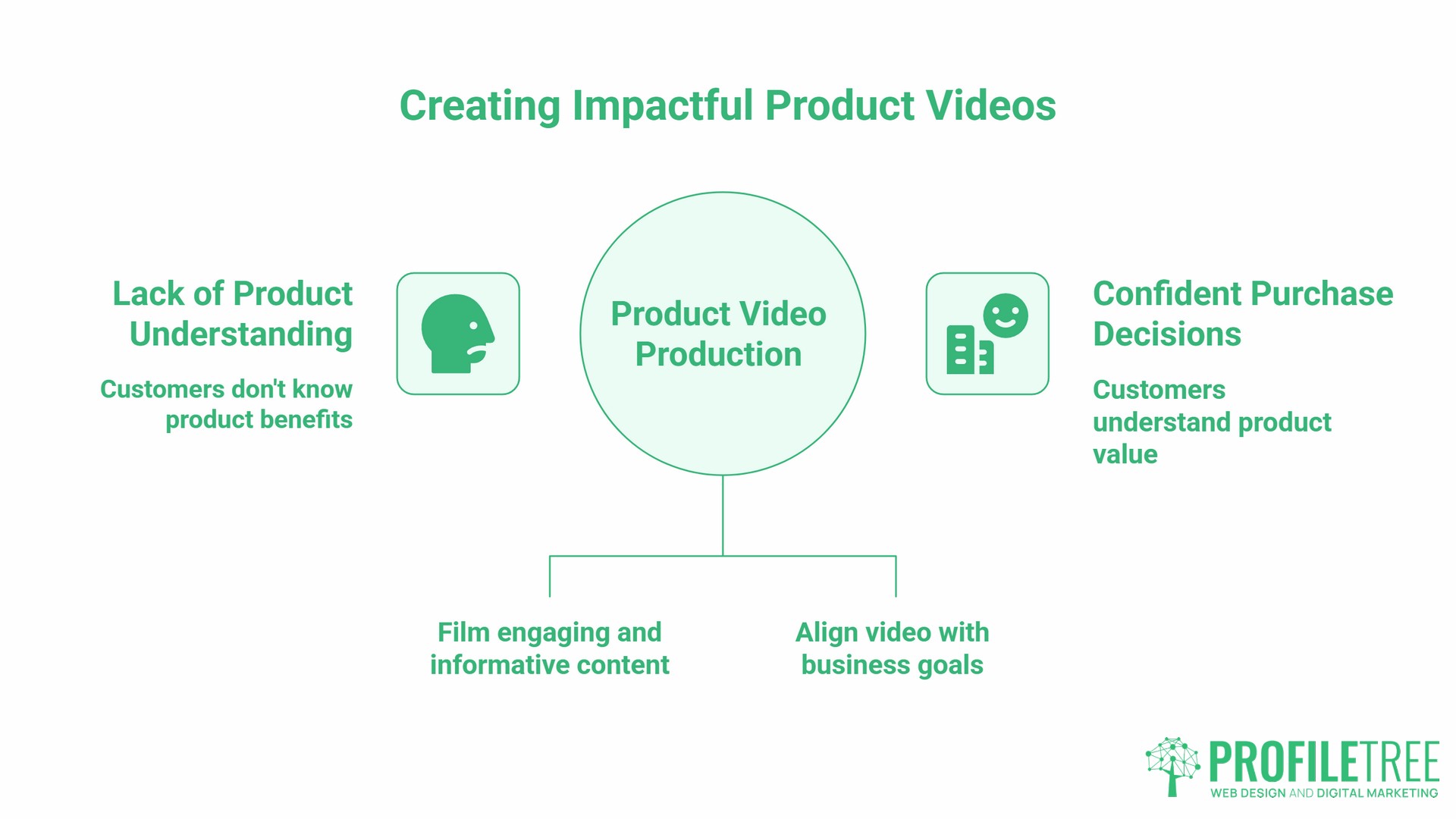
Product video production is the process of creating video content that shows what a product does, how it works, and why a customer should buy it. It sits at the intersection of creative production and commercial strategy.
Done well, a professional product video does three things at once: it gives potential customers the information they need to make a confident purchase, it builds trust in your brand, and it generates reusable content for your website, social channels, and paid campaigns.
Product videos range from a 30-second social clip for Instagram to a two-minute cinematic brand film. The right format depends on your product, your audience, and where in the buyer journey the video will appear.
The 4 Main Types of Product Video
Understanding which type of product video you need before approaching an agency saves time and avoids scope creep. These are the four most common formats, each with a different purpose.
The Demo Video
A demo video shows the product in use. It walks the viewer through what the product does, step by step, with the emphasis on function over emotion. This format works well for technical products, software, and anything where the key selling point is what the product actually does rather than how it makes you feel.
For a Northern Ireland-based food equipment supplier, for example, a demo video showing the speed and ease of a commercial slicing machine serves the buyer far better than a lifestyle film. The viewer needs to see the machine work.
The Lifestyle or Brand Video
A lifestyle video places the product in the context of the customer’s life or business. It is less about features and more about aspiration, identity, and feeling. This format is most effective for consumer goods, fashion, food and drink, and premium products where emotional connection drives the purchase.
This type of production typically demands a higher budget because it requires location scouting, styling, and a more developed creative concept.
The Technical Explainer
For B2B products, SaaS tools, or any product with a complex proposition, an animated or screen-recorded explainer video communicates what would take several paragraphs of text to say. ProfileTree’s animated video production service handles this format, using animation to make technical concepts visually clear without requiring a physical shoot.
The Social-First Clip
Short-form vertical video for TikTok, Instagram Reels, and YouTube Shorts follows different rules from traditional product video production. The hook must land in the first two seconds, the format is 9:16 rather than 16:9, and the content is designed to stop a scroll rather than sustain attention. Many SMEs now brief agencies to capture both formats in a single shoot: one horizontal version for the website and YouTube, and one vertical version cut for social.
Professional Production vs. DIY: What the Difference Actually Costs
The appeal of DIY product video is obvious: modern smartphones shoot in 4K, editing software is widely available, and the upfront cost is low. The real cost is harder to see.
A business owner spending 15 hours learning to shoot, light, and edit a product video has spent 15 hours not running their business. If the result does not perform, those hours produce no return. If the video goes live with inconsistent colour, poor audio, or framing that does not flatter the product, it can actively damage brand perception.
The table below outlines the key differences between DIY and professionally produced product video.
| DIY (Internal Team) | Professional Agency | |
|---|---|---|
| Equipment cost | £500–£2,000 one-off | Included in production fee |
| Time investment | 15–40 hours per video | 2–4 week turnaround with agency managing the process |
| Audio quality | High failure rate without specialist kit | Broadcast-quality sound recording |
| Brand consistency | Variable | Brand guidelines applied throughout |
| Multi-format output | One format per shoot | Horizontal, vertical, and cut-downs from one shoot |
| Reusable footage | Limited | Full footage archive retained |
The question is not whether DIY is technically possible. It often is. The question is whether the output will perform at the level your product and brand deserve.
What to Expect from a Professional Agency
Understanding the production process helps you brief an agency clearly and know what questions to ask. A professional product video production workflow runs across three phases.
Phase 1: Pre-Production
Pre-production is where the commercial outcome of the video is decided. A good agency will ask about your target audience, the platform where the video will live, the key message you want viewers to take away, and the action you want them to take.
From the brief, the creative team develops a concept, writes a script, and produces a storyboard. This is also when decisions about location, talent, props, and timeline are made. Arriving on shoot day without a finalised script and storyboard is one of the most common reasons production runs over budget.
For SMEs new to commissioning video, the pre-production stage often takes longer than expected. That is not a problem; it is where the thinking happens that makes the production efficient.
Phase 2: Production
The shoot is the most visible part of the process. A professional crew will typically include a director or producer, a camera operator, and a lighting and sound technician, depending on the scale of the job.
Lighting is where professional production earns its fee most visibly. The difference between a product filmed under office strip lighting and one filmed under a properly set three-point lighting rig is the difference between a video that builds confidence and one that undermines it.
Audio is where amateur productions most often fail. Poor audio is more damaging to brand perception than imperfect visuals. Wyzowl’s 2026 research found that 89% of consumers say video quality directly impacts their trust in a brand. If your video includes voiceover, presenter dialogue, or location sound, professional sound recording is not optional.
Phase 3: Post-Production
Post-production covers editing, colour grading, sound mixing, graphics, and the delivery of final files. A professional agency will also handle licensing for any music used in the video, which is a legal requirement that DIY productions frequently overlook.
This is also where AI tools are now genuinely changing the economics of production. Agencies use AI-assisted editing tools to speed up the assembly cut, automated subtitle generation, and AI voiceover for preliminary reviews. These tools accelerate the process without replacing the creative judgement that determines whether a cut actually works.
Ciaran Connolly, founder of ProfileTree, puts it this way: “Most businesses focus on the shoot day because that is what they can see. The work that determines whether a product video converts happens before and after the camera rolls. Pre-production sets the commercial intent; post-production shapes whether a viewer keeps watching or clicks away. Both are where the real craft lives.”
For an overview of how video fits into a wider campaign, ProfileTree’s video marketing services page covers how production connects to distribution and performance.
Budgeting for Product Video Production in the UK and Ireland
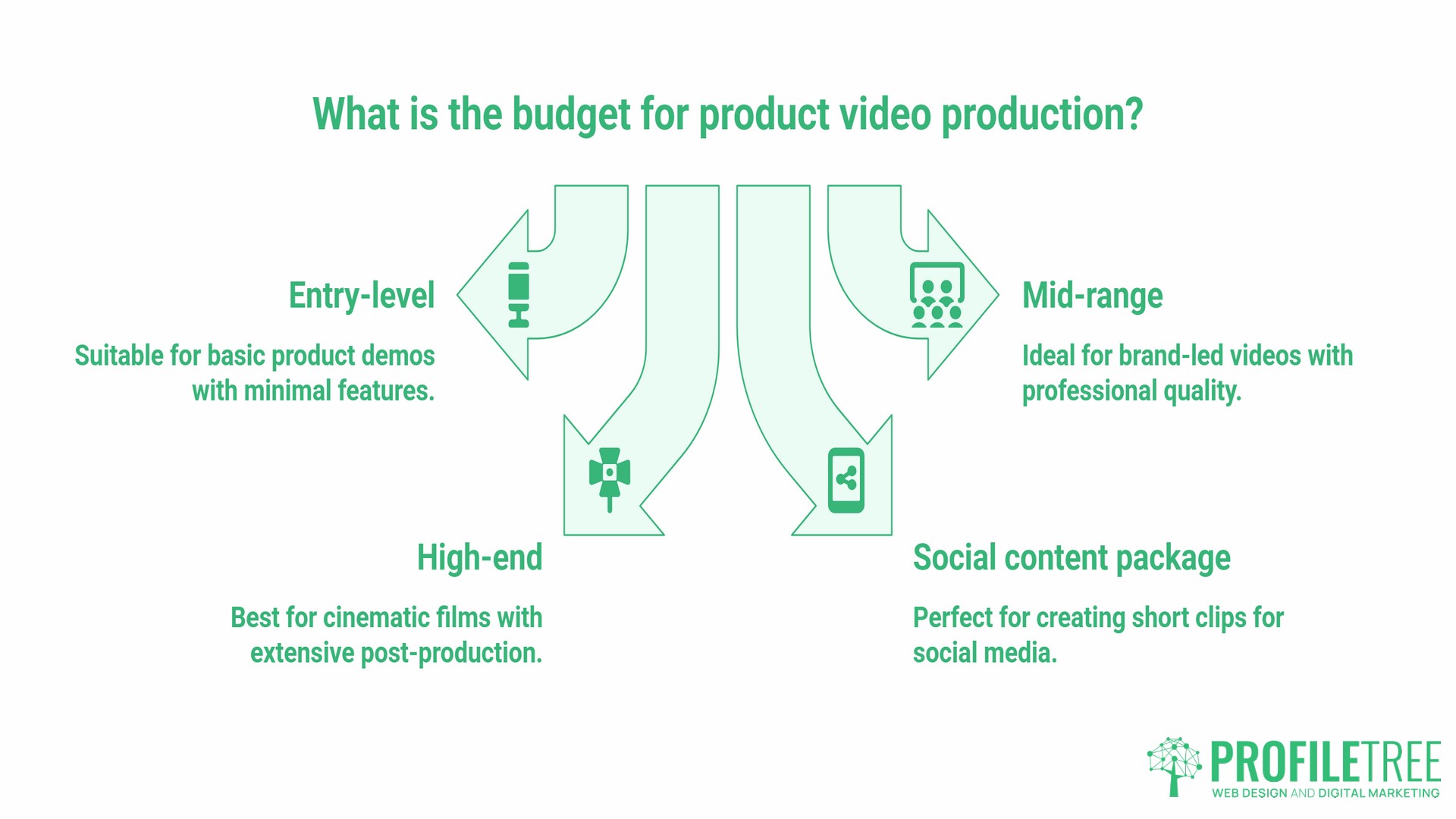
Pricing transparency is one of the most consistent gaps in the UK video production market. Most agencies direct every enquiry straight to “contact us for a quote,” which is unhelpful if you are trying to set a realistic budget for a product video production project.
The ranges below reflect typical professional production costs in the UK and Ireland, excluding VAT.
| Production Level | Description | Typical Range |
|---|---|---|
| Entry-level | Single product demo, one location, basic graphics, up to 60 seconds | £1,500–£3,000 |
| Mid-range | Brand-led product video, one or two locations, professional lighting and sound, 60–90 seconds | £3,000–£7,000 |
| High-end | Cinematic product or lifestyle film, multiple locations, talent, full post-production with motion graphics | £7,000–£20,000+ |
| Social content package | Three to five short-form clips from a single shoot, cut for vertical and horizontal delivery | £2,000–£5,000 |
Several factors move a project up or down this range: the number of locations, whether the shoot requires hired talent or actors, the complexity of post-production, the number of final deliverable formats, and whether you need licensed music or original composition.
One consideration worth raising with any agency: who retains the raw footage after the project? Professional agencies typically hand over the finished edit and an archive of raw files. Retaining raw footage gives you material for future cut-downs and social clips without having to commission a new shoot.
How Product Video Connects to Your Digital Strategy
A product video that lives only on a single product page is underperforming. The same asset can drive results across multiple channels, and understanding that from the outset changes how you brief the production.
Video, SEO, and AI Overviews
Google indexes video content and surfaces it in search results, video tabs, and AI Overviews. Pages with embedded video tend to see longer average session durations because viewers stay on the page to watch, and longer dwell time is a positive engagement signal for search rankings. To make this work, the video needs to be embedded directly on the product page rather than just linked to YouTube, the page needs a descriptive title and supporting copy, and the video should have a transcript available so search engines can read the content.
Structured data matters here too. Adding VideoObject schema markup to an embedded video helps Google understand the content and increases the chance of the video appearing in rich results.
For help structuring product pages and video content for search, ProfileTree’s digital marketing strategy team works with clients across the UK and Ireland on exactly this.
YouTube as a Product Discovery Channel
YouTube is the world’s second-largest search engine. A product demo video uploaded with a properly optimised title, description, and chapter markers can surface in search results for months and years after publication.
ProfileTree’s video marketing services include YouTube channel strategy and optimisation alongside production, so the video you commission is built to perform on the platform, not just exist on it.
Paid Social and Remarketing
Short-form product video clips are among the highest-performing ad formats on Meta, TikTok, and LinkedIn. A professional production shoot can deliver your long-form website video and a set of 15–30 second social cuts from the same day’s filming, at a fraction of the cost of commissioning them separately. Brief your agency for multi-format output from the start.
The SME Pre-Brief Checklist
Before contacting an agency for a product video quote, work through these ten questions. Answering them clearly will sharpen your brief, speed up the quotation process, and reduce the likelihood of scope changes mid-project.
- What is the single most important thing you want the viewer to do or feel after watching the video?
- Where will the video primarily live? (Website product page, YouTube, Instagram, paid ads, or all of the above.)
- What format does the platform require? (16:9 for YouTube and web; 9:16 for Reels, TikTok, and Stories.)
- Who is the target audience, and what do they already know about your product category?
- What are the two or three product features or benefits you must show on camera?
- Do you have existing brand guidelines, colour palettes, or tone-of-voice documents to share?
- Do you need on-screen presenters, voiceover, or will the video be visual-only with text overlays?
- What is your realistic budget range?
- When do you need the final video delivered?
- Who within your organisation has sign-off authority on the script and the final edit?
Measuring the Performance of Your Product Video
A product video is a marketing asset, and like any marketing asset, it should be measured against commercial outcomes rather than vanity metrics alone. The same principles that apply to any campaign apply to product video production: set your KPIs before launch, not after.
Views and impressions indicate reach. Watch time and completion rate indicate whether the video holds attention. For a product page, the metrics that matter most are conversion rate (what percentage of visitors who watch the video go on to purchase or enquire) and return rate (do customers who watched the video return items less often than those who did not).
Set up the measurement framework before the video goes live. If the video is embedded on a product page, make sure your analytics platform records play events and attributes conversions correctly. This is a step many businesses skip, then find themselves unable to demonstrate the return from their product video production spend when reporting back to stakeholders. If you are running it as a paid ad, set up a split test against your existing creative to get a clear before-and-after comparison.
Track performance over a 90-day window rather than the first week. Product videos tend to improve performance over time as they accumulate watch time and begin to appear in search results.
Working with a production team that understands both the creative and commercial sides of product video production will save you time, reduce revision cycles, and produce an asset that performs. If you would like to discuss a project, get in touch with the ProfileTree team.
FAQs
How much does professional product video production cost in the UK?
Professional product video production in the UK typically ranges from £1,500 for a simple single-product demo to £20,000 or more for a cinematic brand film. Most SME projects fall within the £3,000–£7,000 range for a 60–90-second video with one or two locations, professional lighting and sound, and a finished edit with graphics and licensed music. The final cost depends on production complexity, location requirements, talent, and the number of final deliverable formats you need.
How long does the production process take from brief to final delivery?
For a standard SME product video, expect two to four weeks from the initial brief to final delivery. This covers pre-production (scripting, storyboard, location confirmation), the shoot day or days, and the editing and revision cycle. Rush projects are possible but typically carry a premium.
Who owns the footage after the shoot?
Standard professional practice is that the client owns the finished edited video and receives an archive of raw footage files. Confirm this in your contract before signing. Retaining raw footage is valuable because it provides material for future social cuts, updated edits, and repurposing without the need to commission a new shoot.
Can one shoot produce content for both YouTube and TikTok?
Yes, and briefing for both formats from the outset is strongly recommended. Professional camera operators can capture footage that works in both 16:9 (horizontal) and 9:16 (vertical) framing. The post-production team then delivers separate edited versions for each format. This approach costs marginally more than a single-format production but far less than two separate shoots.
Is AI replacing professional video production?
AI tools are changing specific parts of the post-production workflow, particularly automated subtitles, AI-assisted editing, and voiceover generation for rough cuts. They have not replaced the creative judgement, lighting expertise, sound recording, or brand-led direction that defines professional production. What AI has done is make professional production faster and, in some cases, more affordable by reducing the time spent on repetitive post-production tasks.
What do I need to provide for a product shoot?
At minimum: product samples in shoot-ready condition, brand guidelines or reference materials showing your visual identity, a list of the key features or USPs you need the video to communicate, and sign-off authority so decisions can be made on the day. The more detailed your pre-production brief, the smoother the shoot.