
SEO for Solicitors: Win More Legal Clients Through Search
Table of Contents
When someone needs legal help, buying a house, ending a marriage, writing a will, or facing a criminal charge, they search online first. “Solicitor near me,” “conveyancing solicitor Belfast,” “employment lawyer”: these searches happen every hour of every day, and the firms appearing in the results win the new instructions.
SEO for solicitors is how a law firm earns that visibility on purpose rather than by accident, and solicitors’ SEO done properly turns anonymous searchers into genuine client enquiries. ProfileTree works with solicitors and law firms across Northern Ireland, the Republic of Ireland, and the wider UK, building the search presence that converts a search into an instruction. A two-partner firm in a market town doesn’t have the same resources as a national conveyancing chain, and the strategy that works for one won’t work for the other; this guide covers both the fundamentals every firm needs and the choices that change depending on your size and market.
Why SEO for Solicitors Matters
The legal services market rewards firms that show up first, so search engine optimisation for solicitors isn’t a nice-to-have marketing extra; it’s how new instructions arrive in 2026. Firms that treat solicitor SEO as core infrastructure, on the same footing as case management software, consistently out-compete those who treat it as an afterthought.
A High-Stakes Search Journey
A person choosing a solicitor is usually stressed, worried, or dealing with money, property, or family matters that carry real consequences. They research carefully before making contact, and they need to trust a firm before they ever pick up the phone. Solicitor SEO has to build that trust at exactly the moment someone is searching, not after they land on the page. Your site has to read as professional and approachable at once; a page that feels intimidating loses the enquiry, and a page that feels unprofessional loses it just as fast.
A More Competitive Legal Market
Consolidation has created large regional and national firms, while online legal services now compete hard on price for commoditised work such as basic conveyancing or template wills. Clients have more choices and more information than ever, so law firm SEO has to work harder to earn attention. Firms that invest in SEO for solicitors, whether a high street general practice or a boutique specialist, capture the clients who specifically want their expertise rather than the cheapest quote. ProfileTree’s specialist SEO services for solicitors are built around this reality: ranking is only useful if it brings in the right kind of enquiry, not just traffic.
The right approach also depends heavily on scale. A national conveyancing chain competes on volume and price across many towns at once. A two-partner firm in a market town can’t and shouldn’t try to match that; it wins by dominating a smaller, well-chosen set of practice areas and local terms, with a focused Google Business Profile, a few strong practice area pages, and steady review generation. Both are legitimate strategies, but applying one firm’s playbook to the other wastes budget.
Different practice areas produce very different searches, and a one-size approach to legal SEO rarely works well across all of them. Conveyancing generates “conveyancing solicitor Belfast” and “house sale solicitor.” Family law drives “divorce solicitor” and “child custody lawyer.” Wills and probate bring “will writing solicitor” and “inheritance dispute.” Personal injury, employment, criminal, and commercial work each have their own search language, and a firm’s solicitors’ SEO strategy needs to reflect the areas it actually practises, not a generic template borrowed from a different sector.
Google Business Profile for Solicitors
Your Google Business Profile is the single most important local ranking asset for solicitor SEO, since it is usually the first thing a searcher sees before they ever reach your website. Get this one profile right, and the rest of your SEO for solicitors work has a far better foundation to build on.
Categories, Attributes, and Business Description
Choose the primary category that matches your main focus: Solicitor or Law Firm for general practice, or a specific category where that’s the real specialism. Secondary categories should reflect actual practice areas: conveyancing solicitor, divorce lawyer, family law attorney, personal injury lawyer, criminal defence attorney, estate planning attorney, immigration attorney, employment attorney, corporate lawyer, and notary public, where applicable.
Google’s category list varies by region, so add every relevant option that genuinely matches what your firm handles; a missing category simply means a missing search. Add every attribute Google offers, including online appointments, in-person consultations, payment methods, accessibility, and languages spoken. The business description should state practice areas, the types of clients you serve, your regulatory status, and what sets your approach apart, written in plain language rather than marketing copy. This is basic groundwork for solicitors’ SEO, but it is skipped surprisingly often.
Service Listings
Detail every service area your firm handles, since Google matches these listings directly to specific searches. Property work covers residential and commercial conveyancing, remortgages, lease extensions, and property disputes. Family work covers divorce, child arrangements, prenuptial agreements, and financial settlements. Wills and probate work covers will writing, lasting powers of attorney, estate administration, and inheritance disputes. Personal injury covers road traffic claims, workplace accidents, and medical negligence. Employment covers unfair dismissal, redundancy, and tribunal representation. Commercial work covers business formation, contracts, and shareholder disputes. Someone searching for “lasting power of attorney Belfast” finds firms that list that specific service, not just firms that mention “wills” in passing.
Photos That Build Trust
Authentic photography does more for law firm SEO than most firms expect. Include the office and reception area, team and individual solicitor headshots, accreditation badges such as Law Society membership or Lexcel, and images from genuine community involvement. Short client testimonial pieces produced through professional video marketing for law firms can build the same trust in a format many visitors engage with more readily than a photo gallery. Generic stock photography is easy to spot and undermines the trust a legal client needs before making contact, so real images of real premises and real people consistently outperform anything bought from a stock library.
Managing Reviews with Confidentiality in Mind
Reviews influence solicitor choice more than almost any other local ranking signal, but legal reviews need particular care. Time requests around natural conclusion points: after a matter concludes, after property exchange, after a claim settles. The solicitor who actually handled the matter should make the ask, not a generic firm-wide email, since a personal request converts better and feels more genuine. Some matters run for months or years, so patience matters; requesting a review mid-case rarely goes well.
Never offer incentives, and never identify a client’s matter without their explicit consent. Encourage clients to mention the type of matter in general terms, the quality of communication, and the outcome, rather than specifics that could breach confidentiality. Respond to every review professionally. For positive reviews, thank the client without discussing case details, even in a positive context. For negative reviews, a response along the lines of “We’re sorry your experience didn’t meet expectations; please contact us directly to discuss your concerns” is appropriate and safe; never argue with a reviewer or reveal client information in public, even if the reviewer shared details themselves first.
Confidentiality and trust are the two things a legal review strategy has to get right at the same time, and getting either one wrong costs a firm more than a slow month of enquiries.
Website Strategy for Law Firms
A law firm’s website has to do three jobs at once for SEO for solicitors to work: demonstrate expertise, establish credentials, and convert genuine interest into enquiries.
Core Pages Every Firm Needs
Cover every practice area clearly, introduce each solicitor with real qualifications and admissions, and display regulatory status prominently: SRA registration for England and Wales, Law Society of Northern Ireland membership, or Law Society of Ireland regulation, alongside any Legal 500 or Chambers rankings. Location and contact information should be unmistakable, and the site should explain plainly how a client starts working with you, including whether a free or fixed-fee initial consultation is available. ProfileTree’s WordPress web design for law firms builds these elements into a single, coherent site rather than a collection of disconnected pages, which is where a lot of law firm SEO quietly falls apart.
Practice Area and Location Pages
Create a dedicated page for each practice area, conveyancing, family law, wills and probate, personal injury, employment law, and any other specialism, each covering the services offered, the types of matter handled, fee or funding information where possible, and a clear enquiry call to action. A conveyancing page should target “conveyancing solicitor [location]” and cover residential and commercial work separately if both are substantial.
A personal injury page should clearly explain no-win-no-fee arrangements, since cost and risk are the two things clients worry about most before contacting a firm. Getting the structure and calls to action right on these pages is as much a design problem as a content one; user-focused website design for solicitors keeps a nervous or stressed visitor moving toward an enquiry rather than bouncing off a cluttered page.
Firms with more than one office should build a separate page for each location, since “solicitor Belfast” and “solicitor Lisburn” are different searches with different local intent, and a single generic page can’t serve both. A single-office firm should resist the temptation to build thin pages for twenty surrounding towns; focus on your real catchment area with content that actually reflects it. This kind of structural work is unglamorous, but it is where most of the return on solicitors’ SEO actually comes from.
Individual Solicitor Profiles and Schema Markup
Dedicated pages for each solicitor, with photo, qualifications, experience, and professional memberships, support both local SEO and client trust. Connecting a person schema for each solicitor to the firm’s organisation schema helps search engines and AI systems understand who is actually providing the service, which matters more for legal content than for most other sectors, since a named, verifiable person behind the advice is part of what Google’s quality guidance expects from sensitive content. Building this correctly usually means custom website builds for solicitors rather than a generic template, since schema needs to be wired into the actual page structure rather than bolted on afterwards.
Technical Requirements
Legal websites carry a higher bar than most commercial sites. HTTPS is non-negotiable because clients share sensitive personal information through these pages. Accessible design matters because clients often access legal services during difficult moments, not convenient ones. Fast loading matters because much initial research happens on mobile. Schema markup should include LocalBusiness and LegalService for the firm and Attorney schema for individual solicitor profiles. Reliable, well-configured hosting underpins all of this; a slow or unstable site undoes the trust that good content and reviews build elsewhere. ProfileTree’s managed website hosting for law firms covers exactly this groundwork.
Fee Transparency
Legal fees are a genuine client concern, and complete opacity discourages enquiries. Solicitors regulated by the SRA in England and Wales must publish price information for a defined set of consumer-facing services under SRA’s Transparency Rules, including residential conveyancing, uncontested probate, immigration work excluding asylum, motoring offences dealt with summarily, and employment tribunal claims for unfair or wrongful dismissal, along with details of who is providing the service and their experience.
Even outside these specific requirements, and outside England and Wales, some transparency consistently builds more trust than none: state fixed fees where you offer them, explain funding options such as legal aid eligibility or no-win-no-fee arrangements, and give a general indication of cost ranges where full pricing detail isn’t practical for every matter type.
E-E-A-T, YMYL, and Jurisdictional Accuracy
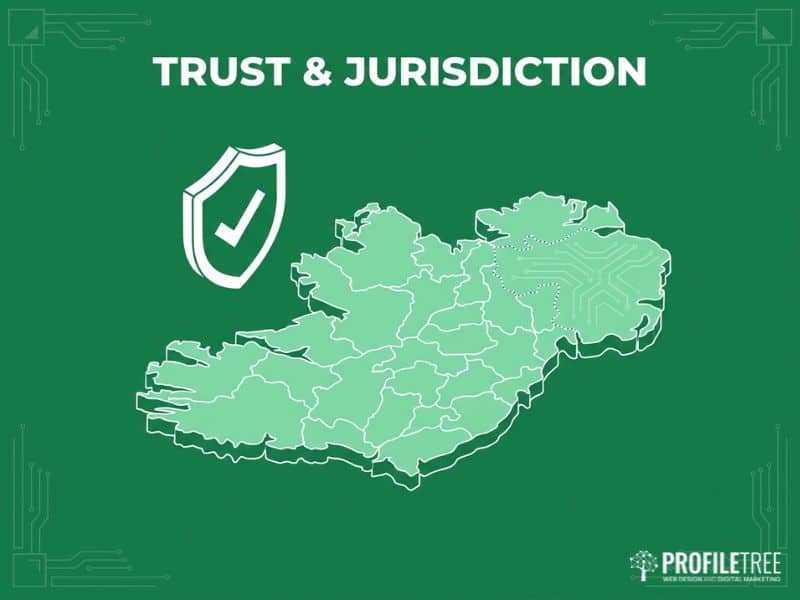
Legal content sits squarely inside Google’s Your Money or Your Life category, so E-E-A-T isn’t optional background reading for anyone doing SEO for solicitors; it shapes whether the content ranks at all. Get this wrong, and no amount of technical legal SEO work elsewhere on the site will compensate for it.
Demonstrating Experience, Expertise, Authority, and Trust
Show real experience through appropriately anonymised case discussions and practical insight rather than generic advice. Display qualifications, admissions, and continued professional development prominently to establish expertise. Build authority through Law Society membership, regulatory registration, and any panel memberships or rankings. Trustworthiness comes from clear regulatory status, transparent fee information, and genuine client testimonials, all published where a visitor can find them without searching. Google’s own guidance on people-first content sets out these same expectations for any site operating in a sensitive category, and legal content is about as sensitive as it gets. This is the part of solicitors’ SEO that a template rewrite can never fake; it has to be built from what the firm actually does.
Every page should also carry a named author with a verifiable role at the firm, and any AI-assisted drafting should be reviewed by a qualified person before it goes live. Firms exploring AI-enhancing marketing for law firms should treat AI tools as a drafting aid, never as the final word on anything client-facing, and it helps if whoever reviews the output has been through proper digital training for legal teams first. That last point isn’t just good practice; regulators have started paying closer attention to unreviewed AI content appearing on law firm websites.
“Solicitors are natural experts in their practice areas. The real challenge is translating that expertise into content that helps potential clients while meeting Google’s quality bar for legal content. Firms that get this right build an advantage that keeps compounding,” says Ciaran Connolly, founder of ProfileTree.
Getting Jurisdiction Right Across NI, ROI, England and Wales, and Scotland
This is where a lot of solicitor SEO falls down. England and Wales, Northern Ireland, Scotland, and the Republic of Ireland each run different legal systems, so content has to state clearly which jurisdiction it applies to.
Solicitors in Northern Ireland are governed by the Law Society of Northern Ireland, an independent, self-funding body established by Royal Charter in 1922 that regulates education, conduct, and discipline under the Solicitors (Northern Ireland) Order 1976. It is not the SRA. Solicitors in the Republic of Ireland are regulated by the Law Society of Ireland under the Solicitors Acts 1954 to 2015; historically, this was the same body that regulated solicitors across the whole island before partition, and five Council seats on the Law Society of Ireland are still reserved for Law Society of Northern Ireland members as a legacy of that shared history.
A firm operating across Northern Ireland and the Republic of Ireland needs to address both sets of rules explicitly, and a firm marketing across England/Wales and Northern Ireland needs to check which regulator actually applies to which office, rather than assuming SRA guidance covers everything.
This dual-jurisdiction angle is a genuine differentiator for solicitors’ SEO in this market; most competitor content is written for a single jurisdiction and simply ignores the cross-border reality that many NI and ROI firms and clients actually live with. Confusing readers on jurisdiction damages credibility fast, and it can mislead someone about their actual legal position, so every non-obvious claim needs a clear jurisdictional caveat, and content should never present England and Wales law as though it applied in Northern Ireland or Ireland.
Standing Out in a Competitive Legal Market
Most areas have multiple firms competing for similar clients, so differentiation matters more than volume of content.
General practice firms compete with everyone in their area. Specialists attract clients actively seeking specific expertise: positioning around a defined specialism creates clearer differentiation than describing the firm as full-service. Accreditation signals such as Conveyancing Quality Scheme membership, Resolution membership for family law, or Lexcel certification separate accredited firms from those without formal recognition. Sector focus, such as agricultural law or technology start-ups, builds expertise that a generalist competitor simply can’t claim. A strategic digital planning process helps a firm decide which of these angles is actually worth pursuing before committing content and budget to it.
Local authority-building matters just as much as digital tactics. Chamber membership, local event sponsorship, charity work, and school governance all build a firm’s genuine presence within its own community, rather than just marketing to it from the outside. Sharing that involvement through consistent social media marketing for solicitors turns offline community work into an online trust signal too. A clear digital strategy ties these offline relationships to the online presence, so local credibility and search visibility reinforce each other instead of running as separate efforts.
Local SEO for Solicitors

Even where some legal work can be delivered remotely, most clients still want a solicitor they can visit, so local SEO remains central to any serious SEO for solicitors strategy.
Local Keyword Targeting
Potential clients search in predictable patterns: generic plus location (“solicitor Belfast,” “law firm Derry”), practice area plus location (“conveyancing solicitor Belfast,” “divorce lawyer Lisburn”), and specific matter plus location (“house sale solicitor,” “will writing near me”). Your Google Business Profile and website content should target these patterns directly rather than relying on generic national copy to rank locally. Firms based in Belfast and serving both Northern Ireland and the Republic of Ireland should build content for both markets rather than assuming one set of location pages covers a genuinely cross-border client base.
Legal Directories and Local Citations
Consistent listings in the Law Society Find a Solicitor directory, the SRA Solicitors Register, and the Law Society of Northern Ireland directory reinforce your regulatory legitimacy as well as your local search profile. General platforms such as Google Business Profile, Bing Places, Apple Maps, Yell, Yelp, and Thomson Local, alongside local Chamber of Commerce listings and accreditation directories like the Conveyancing Quality Scheme, add further consistency signals. Keep name, address, and phone number identical across every listing; small variations quietly undermine local rankings and, over time, dilute the effect of otherwise solid SEO services for solicitors’ work elsewhere on the site.
Local Link Building
Join local business networks and professional groups, partner with local accountants, financial advisors, and estate agents, and speak at local business events where relevant. These relationships build genuine local links over time and reinforce the firm’s standing in its own community, which is exactly the kind of signal that solicitors’ SEO depends on and that no amount of technical work can substitute for.
Content Strategy and Compliance for Law Firms
Content marketing demonstrates expertise and captures clients at different stages of their search, but every piece written as part of an SEO for solicitors strategy has to sit within the rules that govern legal marketing.
Educational Content That Converts
Process explanations (“the conveyancing process explained”), rights information (“your rights at work”), and practical guidance (“what to include in your will”) capture people who are actively researching a legal matter. This content should be accurate, appropriately caveated as general information rather than specific advice, and current with today’s legislation and case law; outdated legal content quickly damages credibility. ProfileTree’s legal content marketing services build this kind of content around what real clients are actually searching for, drawing on search console data rather than guesswork, which is a core part of any properly run SEO service for solicitors’ engagement.
Staying Inside SRA and Law Society Rules
The SRA Code of Conduct requires publicity to be accurate and not misleading, and it must not compare a firm’s charges with a competitor’s without adequate information. The Law Society of Northern Ireland expects marketing to be dignified, accurate, and not likely to bring the profession into disrepute. In practice, that means no outcome claims you can’t substantiate, no unverifiable statistics, and no testimonials that stray into confidential territory. Review website content against the current professional conduct rules periodically, especially after a major rewrite, and treat this as a standing part of legal SEO rather than a one-off check before launch.
Measuring SEO Success and Avoiding Common Mistakes
SEO for solicitors only matters if it connects to real client instructions, so measurement has to go beyond rankings and traffic. A firm running proper SEO services for solicitors should expect regular reporting against these numbers, not a single dashboard glanced at once a quarter.
The Metrics That Matter
Track Google Business Profile views, organic traffic, and practice area keyword rankings alongside phone calls, form submissions, and consultation bookings. A well-configured AI chatbot development for law firms can also capture and qualify out-of-hours enquiries before a solicitor ever picks up the phone, which is worth tracking as its own channel. Add review growth, monthly count, average rating, and sentiment, since this reflects both search performance and client experience.
Then go a step further and connect search-driven enquiries to actual instructions and revenue by practice area, since conveyancing, family law, wills, and personal injury each convert differently and carry different lifetime value. A referral-generating repeat client is worth tracking separately from a single transactional matter. ProfileTree’s digital marketing strategy for law firms ties these numbers back to instructions, not just impressions, which is ultimately what solicitors’ SEO is meant to deliver.
Mistakes Worth Fixing First
The most common errors are an incomplete Google Business Profile, hidden regulatory credentials that should be front and centre, generic content that could describe any law firm, no dedicated practice area pages, and total opacity about fees. Outdated legal content and an over-formal tone that discourages enquiries both quietly cost firms new instructions every month, and both are classic legal SEO mistakes that are simple to fix once identified. Fixing these is usually faster than it looks: most of them are content and profile gaps rather than technical problems, and a firm can address the biggest ones within a single working month of focused law firm SEO work.
Building Long-Term Practice Growth
Legal SEO rewards demonstrated expertise and professional credibility, not shortcuts. A complete Google Business Profile, prominent qualifications, genuine reviews, dedicated practice area pages, accurate jurisdiction-aware content, and clear differentiation from other local firms form the foundation, and firms that get these fundamentals right consistently outperform competitors who treat SEO for solicitors as an afterthought.
“Law firms that take local SEO seriously consistently outperform those relying solely on reputation and referrals,” says Ciaran Connolly, ProfileTree founder. “Referrals remain valuable, but potential clients now search to verify recommendations before making contact. Appearing well in that search, with strong reviews, clear practice areas, and a credible presentation, confirms the referral and wins the client.”
The firms winning new instructions aren’t necessarily the largest or the longest established. They are visible when potential clients search, credible when those clients research, and easy to contact once they decide to reach out. ProfileTree works with solicitors and law firms across Northern Ireland, Ireland, and the UK on exactly this combination of visibility and credibility, drawing on a full range of digital marketing services built specifically for regulated professions, and solicitor SEO is the mechanism that makes it happen. Talk to the team about a full SEO audit for your firm and see where your current search visibility stands.
FAQs
How quickly can SEO generate legal client enquiries?
Google Business Profile improvements often show results within weeks. Broader website visibility from law firm SEO typically takes three to six months. Competitive practice areas, such as personal injury, usually take longer than less contested areas.
Should law firms display fees on their website?
Where possible, yes. Fixed fees for standard services, realistic cost ranges, or a clear explanation of billing all build trust. Complete opacity about costs makes potential clients anxious before they even make contact.
How do we handle Google reviews given the confidentiality rules?
Request reviews carefully and time them sensitively. Never identify a client’s matter or discuss details in a public response. A simple, professional acknowledgement is often the safest option for sensitive practice areas.
Which practice areas are most competitive for local SEO?
Personal injury and conveyancing are usually most competitive due to case values and volume. Family law sits in moderate competition. Wills, probate, and commercial work are often less competitive, though this varies by area.
How does SEO for small solicitors’ practices differ from larger firms?
Smaller practices should prioritise their highest-value practice areas and most achievable local terms rather than competing broadly. A focused Google Business Profile, a few strong practice area pages, and steady review generation tend to outperform a scattered approach.
Should I target individuals or businesses?
Most firms serve both and need distinct content for each. Consumer searches, such as divorce, conveyancing, and wills, carry higher volume; commercial searches often carry higher matter values.