
Social Media Platforms for Small Businesses: A UK Selection Guide
Table of Contents
Most social media advice tells you to be everywhere at once. Post daily on Instagram. Build a TikTok presence. Stay active on LinkedIn. Keep Facebook updated. For a marketing team with a dedicated resource, that might be manageable. For a small business owner in Belfast, Glasgow, or Cardiff who is also answering phones, quoting jobs, and running the accounts, it is not a strategy it is a recipe for burnout with nothing to show for it.
This guide cuts through that noise. It covers the social media platforms that genuinely matter for UK SMEs in 2025 and 2026, explains who each one is actually for, and gives you a practical framework for choosing the one or two channels worth your limited time. It also covers the newer and emerging platforms Threads, Discord, BeReal, Substack, Patreon, and Clubhouse, so you can make an informed decision about whether any of them belong in your strategy.
The Case for Doing Less, Better
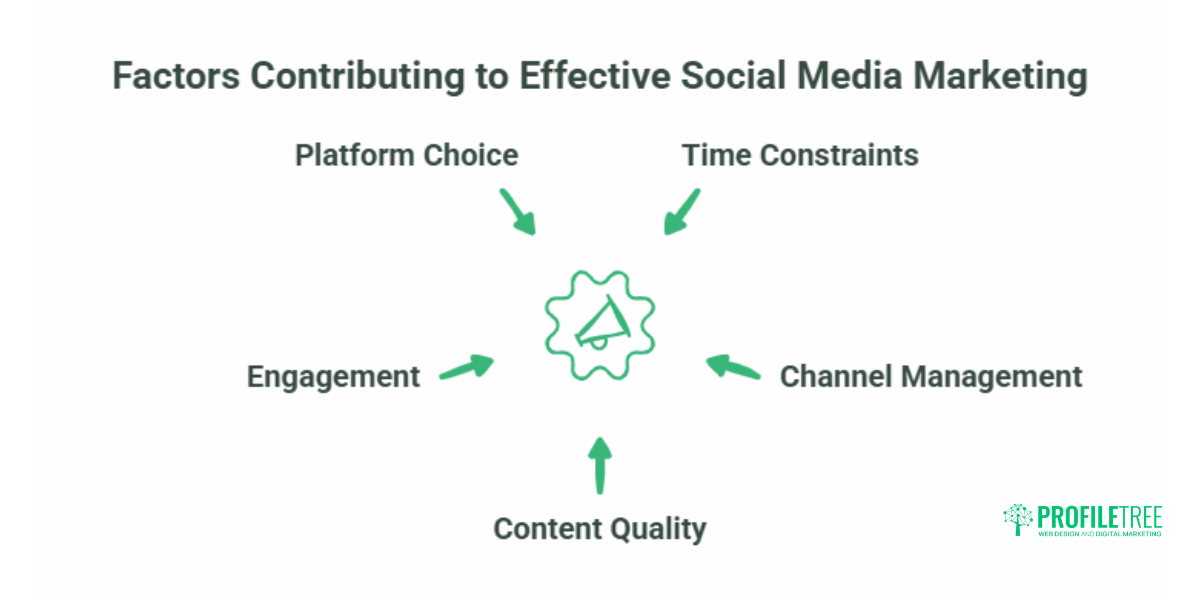
The Federation of Small Businesses consistently finds that time is the resource small business owners are least able to spare. Running one social media channel well, posting consistently, responding to comments, and building a recognisable content style takes roughly three to five hours a week when you factor in planning, creation, and engagement. Add a second channel with a different format and different audience expectations, and that climbs to eight to twelve hours. Add a third, and you are effectively running a part-time content operation on top of your actual business.
The result of spreading too thin is predictable: inconsistent posting, low-quality content, minimal engagement, and a profile that looks neglected when a potential customer checks you out. That is worse than no profile at all, because it signals a business that started something and gave up.
The more effective approach is to pick one primary channel, treat it seriously, and let everything else be secondary or absent. A focused social media strategy built around one well-chosen platform will outperform a diluted presence across four every time. For SMEs that need help making that choice and maintaining a consistent presence, social media marketing for businesses can provide a more structured approach to planning, content creation, and engagement.
The Core UK Platform Landscape
Before considering the newer platforms, it is worth being clear on where the majority of UK social media users actually spend their time. The following four platforms account for the bulk of commercial social media activity in the UK.
LinkedIn: The B2B Standard
LinkedIn has roughly 37 million users in the UK, with a high concentration of decision-makers, senior managers, and business owners. If your customers are other businesses’ accountants, solicitors, manufacturers, consultants, or training providers, LinkedIn is the most direct route to them. Content that performs well here includes practical advice, professional commentary, short-form articles, and case study posts that demonstrate the outcome of your work.
For professional services businesses across Northern Ireland, Ireland, and the wider UK, LinkedIn typically delivers a better return on time than any consumer-facing platform. The organic reach remains stronger than Facebook or Instagram for B2B content, and the audience is actively looking for suppliers and expertise.
Instagram: Visual Brands and Social Commerce
Instagram suits businesses whose product or service is visually demonstrable: food and hospitality, retail, interior design, fashion, beauty, fitness, and creative services. With over 30 million UK users, it reaches a broad demographic, but performs best for the 18–44 age group. Reels, short vertical videos, now drive significantly more reach than static posts on the platform.
For businesses with a visual story to tell, Instagram also integrates directly with e-commerce, making it a viable sales channel rather than just a brand awareness tool. The content requirement is high, though: quality visuals and consistent output matter more here than on most other platforms. Short-form video production for Instagram Reels is one of the most efficient investments a consumer-facing business can make in its social media output.
Facebook: Hyper-Local Groups and Established Demographics
Facebook’s organic reach for business pages has declined significantly over the past several years. For most businesses, the page format now requires paid promotion to reach meaningful audiences. However, Facebook Groups remain genuinely useful for local and service-based businesses. Local community groups, trade groups, and neighbourhood networks on Facebook often have tens of thousands of active members and high engagement.
For a plumber in Derry, a solicitor in Cork, or a hairdresser in Edinburgh, getting visible in the right local Facebook Group is often more valuable than any amount of content on a page. Facebook also skews older than Instagram and TikTok, with the 35–65 age bracket significantly overrepresented compared to other platforms relevant if that is your core customer.
TikTok and YouTube Shorts: Short-Form Video Reach
TikTok launched in 2016 and now has over 20 million UK users, with the highest concentration in the 18–34 bracket. Its algorithm is unusual among social platforms in that it distributes content to non-followers based on quality signals, meaning new accounts can reach large audiences without an established following. That makes it attractive for brand awareness.
The catch is content volume. TikTok rewards frequent posting often daily, and the editing style is distinctly informal and fast-paced. For most B2B businesses or service businesses with older customer bases, the effort-to-return ratio is poor. For B2C brands targeting under-35s, it can be powerful.
YouTube Shorts operates on similar short-form video principles but sits within the broader YouTube ecosystem. For businesses already producing longer YouTube content tutorials, explainers, behind-the-scenes Shorts provides a relatively low-effort way to repurpose that material for short-form audiences. This makes it a more efficient secondary channel than TikTok for businesses already invested in video marketing.
UK Platform Selection at a Glance
| Platform | Primary UK Audience | Best for | Content effort | Organic reach |
|---|---|---|---|---|
| 25–55, professionals | B2B, professional services | Medium | Good for B2B | |
| 18–44, consumer | Visual brands, retail, hospitality | High | Moderate (Reels perform best) | |
| 35–65, broad | High if content volume is maintained | Low–Medium | Low for pages; stronger in Groups | |
| TikTok | 18–34, consumer | B2C brands targeting younger audiences | Very High | Long-form authority, tutorials, and Shorts repurposing |
| YouTube | 18–55, broad | Long-form authority, tutorials, Shorts repurposing | High (long), Low (Shorts) | Strong long-term via search |
Emerging and Niche Platforms Explained
Beyond the established four, a number of newer platforms have attracted significant coverage over the past two to three years. Whether they belong in your strategy depends heavily on your audience, your content capability, and your goals. Here is an objective summary of each.
Threads
Launched by Meta in July 2023, Threads is a text-first platform that connects directly to Instagram accounts. Posts run up to 500 characters and can include links, photos, and short videos. It positioned itself as an alternative to X (formerly Twitter) and saw a rapid initial spike in sign-ups.
For most UK small businesses, Threads currently offers limited strategic value. Engagement rates are inconsistent, the advertising infrastructure is not yet mature, and the platform has not established the professional-community dynamic that makes LinkedIn useful for B2B. It is worth monitoring, but not worth prioritising for a limited content resource.
Clubhouse
Clubhouse launched in April 2020 as an audio-only social network. It reached peak attention during the early pandemic period when live, interactive audio filled a genuine gap. Usage has contracted significantly since then as competing platforms, including LinkedIn Audio and Twitter Spaces, launched similar features.
Clubhouse can still work well for knowledge-based businesses running regular panel discussions or networking sessions. A consultancy, training provider, or professional services firm running weekly expert conversations might find it useful for niche audience building. For most businesses, the audience size no longer justifies the preparation time.
BeReal
BeReal launched in 2020 with a distinctive mechanic: once per day, at a random time, the app prompts users to take a simultaneous front-and-back camera photo within two minutes. No filters, no retakes. The intent is authenticity over curation.
BeReal’s user base skews young (predominantly 18–24), and the platform has no advertising functionality. For brands, it has been used primarily for behind-the-scenes content and culture-building rather than direct marketing. It is relevant if your audience is that demographic and authenticity is a core brand value, but it is not a commercial channel for most UK SMEs.
Discord
Discord started as a communication tool for gaming communities but has expanded significantly. It now hosts professional communities, educational cohorts, creator fan groups, and brand communities across a wide range of topics. Users join servers organised around interests, with separate channels for different conversation types.
For businesses running ongoing digital training programmes, membership communities, or professional networks, Discord offers a genuinely useful infrastructure. It is more actively engaged than a Facebook Group and more flexible than most forum platforms. A business delivering digital training or professional development could build a cohort community on Discord with real retention value.
The majority of Discord users in the UK fall between 18 and 34. Gender skew has historically been male, though this is narrowing.
Patreon
Patreon is a membership platform founded in 2013. It allows creators, writers, podcasters, video producers, and artists to offer tiered subscriptions to supporters in exchange for exclusive content, early access, or personalised interaction. It is not a social network in the traditional sense but a monetisation layer for audience relationships built elsewhere.
For businesses that produce regular content, a podcast, a newsletter, or a YouTube channel, Patreon provides a route to recurring income from the most engaged part of your audience. It is most relevant for content-led businesses that have already built a following and are looking to diversify revenue. It is not a platform for audience building from scratch.
Substack
Substack, launched in 2017, gives writers and content creators a straightforward tool for publishing email newsletters with an option to charge subscribers. It handles writing, delivery, and payment in one place, with both free and paid tiers available.
For businesses with a genuine point of view, a specialist accountancy firm, a sector-specific consultancy, a training organisation, or a Substack newsletter builds a direct-to-inbox audience that is not subject to social media algorithm changes. It complements a content marketing strategy rather than replacing social entirely. The important distinction from a social media platform is that Substack’s value is in audience ownership: your subscriber list is yours, not held by a platform that can change its algorithm or terms.
For businesses already producing regular written content, Substack or a comparable newsletter tool is worth considering as part of the content distribution mix.
Choosing Your Platform: A Time-Based Framework
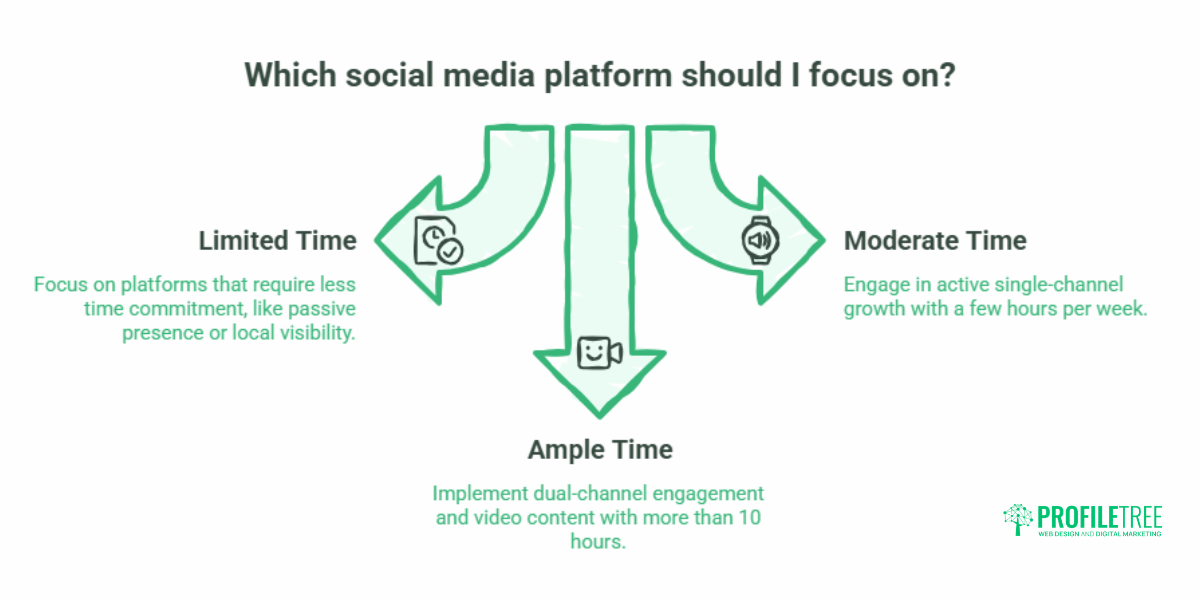
The most useful question is not “which platform is best?” but “which platform can I actually maintain to a decent standard with the time I have?” The answer to that question narrows your options quickly.
The 2-hour weekly plan: passive presence and local visibility
If you have around two hours a week for social media, choose one platform and focus on consistency over volume. For most local service businesses, that means Facebook Groups and a maintained Google Business Profile rather than active posting. Two hours a week is enough to respond to comments, post once or twice, and stay visible in local community groups. It is not enough to build a following on TikTok or Instagram.
The 5-hour weekly plan: active single-channel growth
Five hours allows for genuine content creation on one platform. This is enough to post three to four times a week on LinkedIn or Instagram, engage with comments, and develop a recognisable content style. At this level, you should see measurable growth in followers and engagement over a three to six-month period, provided the content is genuinely useful to your target audience.
If you are working to this budget and are unsure where to invest it, a digital strategy review can identify which platform your specific customers are most active on, saving months of trial and error.
The 10-plus-hour weekly plan: dual-channel engagement and video
With ten or more hours, a second channel becomes viable, particularly if it allows content repurposing. A business producing YouTube videos, for example, can repurpose that footage into LinkedIn posts, Instagram Reels, and TikTok clips. Video production investment stretches further across platforms when there is a clear repurposing workflow in place.
At this level, it is also worth considering whether outsourcing some of the execution scheduling, community management, or video editing makes financial sense. The time cost of social media at ten-plus hours a week is equivalent to a part-time hire.
Platform selection decision guide
Work through these four questions to identify your primary channel:
- Are your customers primarily businesses or consumers? B2B points strongly toward LinkedIn. B2C points toward Instagram, Facebook, or TikTok, depending on the age group.
- What age group are your best customers? Under 35: TikTok and Instagram. 35–55: Facebook and LinkedIn. 55 and over: Facebook, with email as a stronger complement.
- Can you produce video content consistently? If yes, Instagram Reels, YouTube, or TikTok become viable. If not, text and image-first platforms (LinkedIn, Facebook) are more sustainable.
- Do you need local or national reach? Local: Facebook Groups, Google Business Profile, Nextdoor. National or international: LinkedIn, Instagram, YouTube.
UK Legal Compliance: What Small Businesses Need to Know
This is an area most social media guides skip entirely. Two sets of rules affect UK small businesses running social media accounts: ASA (Advertising Standards Authority) guidelines and GDPR.
Under CAP Code rules administered by the ASA, any post that promotes a product or service in exchange for payment, including gifted products, affiliate arrangements, or sponsored content, must be clearly labelled. This applies to influencer partnerships but also to any business promoting a supplier’s product in exchange for a benefit. The label “#ad” or “advertisement” must be clear and prominent, not buried in hashtags.
For giveaways and prize draws, the rules require all entry terms to be clearly stated: the close date, the prize, how a winner will be selected, and how they will be notified. A draw that requires purchase is a lottery under UK law and requires a licence free-entry alternative routes must be available and communicated clearly.
On GDPR: if you are using social media to drive traffic to a landing page that captures email addresses, that data collection must be covered by a privacy policy, and the use of that data must be consented to explicitly. This applies to lead magnets, newsletter sign-ups, and competition entry forms. An SEO-optimised landing page paired with proper GDPR-compliant data collection is the correct infrastructure for social-to-email lead generation.
The Information Commissioner’s Office (ICO) and the ASA both publish free guidance. This article cannot substitute for legal advice on specific campaigns, but the FSB’s social media guidance provides a useful starting point for small businesses navigating these requirements.
Frequently Asked Questions
Which social media platform is best for small businesses in the UK?
There is no single answer. For B2B and professional services businesses, LinkedIn consistently delivers the strongest return. For consumer-facing businesses with visual products, Instagram or TikTok suit audiences under 35, while Facebook remains more effective for reaching customers aged 35 and over, particularly through local Groups. The right platform depends on where your specific customers spend time, not on which platform has the most total users.
Is Facebook still worth using for UK businesses?
For local service businesses, yes, primarily through Facebook Groups rather than business pages. Page organic reach has declined sharply, but active participation in relevant local community groups remains a practical, low-cost way to stay visible in a specific area. For businesses targeting younger demographics or national audiences, Facebook is less competitive than it was five years ago.
How many social media platforms should a small business focus on?
One primary platform, maintained to a high standard, is more effective than a diluted presence across three or four. A second channel is justified only if you have the time to sustain quality on both, or if content can be efficiently repurposed across them. Managing more than two without a dedicated marketing resource typically results in poor-quality output on all channels.
What are the ASA rules for social media giveaways?
Under CAP Code rules, UK businesses must clearly state all terms for any prize draw: the closing date, the prize, how winners are selected and notified, and any eligibility restrictions. Draws that require purchase to enter are classified as lotteries under UK law and require a licence. A free-entry alternative must be prominently available. The “#ad” label is required on any post promoting a product or service in exchange for payment, gifting, or affiliation.
Is Nextdoor worth using for local UK tradespeople?
For local trades plumbers, electricians, gardeners, cleaners, Nextdoor can be more effective than a standard Facebook page because recommendations within the platform carry explicit neighbourhood trust signals. Verified local businesses appear in neighbourhood searches, and recommendations from nearby residents carry more weight than anonymous reviews. It is a low-effort secondary channel for businesses that serve a defined local area.
Do I need a paid advertising budget to start on social media?
No. Organic content on LinkedIn, Instagram, and TikTok can reach meaningful audiences without paid promotion, particularly in the early stages. However, organic Facebook reach is limited for business pages without ad support. The more sustainable approach is to build organic presence first on one platform, understand what content resonates with your audience, and then use paid promotion to amplify what is already working. A digital strategy consultation can help identify where paid and organic efforts complement each other for your specific business.
What social media strategy should a business with no marketing team use?
Pick one platform, commit to a posting frequency you can sustain (even once a week is better than bursts of daily posts followed by silence), and focus on content that answers your customers’ actual questions. Documenting real work, a completed job, a client challenge you solved, or a process explained is more effective than polished content that says nothing specific. If producing content consistently is not feasible in-house, outsourcing content creation to a specialist is often more cost-effective than the time cost of doing it poorly in-house.
Where to Go From Here
The platforms covered in this guide, from LinkedIn and TikTok to Threads, Discord, Substack, and Patreon, each have a legitimate place in a social media strategy for the right business. The key is matching the platform to your audience, your content capability, and your available time, rather than following generic advice about where to be.
For UK SMEs with limited marketing resources, the most effective starting point is a clear answer to one question: where do my best customers already spend time online? Everything else follows from that. If you need help working through that question and building a strategy around it, ProfileTree’s social media marketing service works with businesses across Northern Ireland, Ireland, and the UK to build focused, sustainable social strategies that match their actual resources.ial media users!