
A Seasonal Digital Marketer’s Guide to Irish Halloween Traditions
Table of Contents
Irish Halloween traditions give digital marketers a content angle most brands miss: Halloween began as the Celtic festival of Samhain, and that cultural depth sets seasonal campaigns apart from generic pumpkin-and-sweets content. This guide shows how to build social posts, interactive content and costume-trend campaigns around Irish folklore. ProfileTree, a Belfast digital agency, plans seasonal content like this for SMEs.
Halloween is one of the few dates in the calendar where audiences actively want brand content, as long as it’s good. The problem is that most of it looks identical: the same pumpkins, the same “spooky savings”, the same recycled costume roundups. An Irish angle solves that. Halloween started here, as the Celtic festival of Samhain, and that history gives you a content seam competitors in other markets simply can’t reach for. This guide is about turning that seam into a seasonal campaign you can actually run.
If you’d rather have the campaign built for you, ProfileTree handles seasonal content marketing services as part of a wider digital strategy for businesses across Northern Ireland and Ireland.
The Celtic Roots That Give You The Angle
Bottom line: Halloween’s origin story is your competitive advantage, because almost no one uses it. Most seasonal content treats Halloween as decoration. The history underneath it is far more interesting and far more shareable.
From Samhain To The Modern Holiday
Halloween grew out of Samhain, the ancient Celtic festival marking the end of harvest and the start of winter. The Celts believed the boundary between the living and the dead thinned during Samhain, which is where jack-o’-lanterns, masks and divination rituals come from. That lineage is still visible in modern Irish celebrations, and it’s the part audiences rarely hear about.
Why The Irish Version Stands Out
Ireland doesn’t just borrow Halloween; it gave the holiday its roots, and the celebrations reflect that. Derry/Londonderry hosts one of Europe’s largest Halloween festivals, drawing tens of thousands each year. Traditional foods like barmbrack (a fruit loaf baked with a hidden ring and other tokens) and games such as snap-apple still feature. For a brand, these specifics are content gold: they’re true, they’re local, and they’re things your audience hasn’t read a hundred times already.
Tactics For Turning Irish Halloween Traditions Into Content
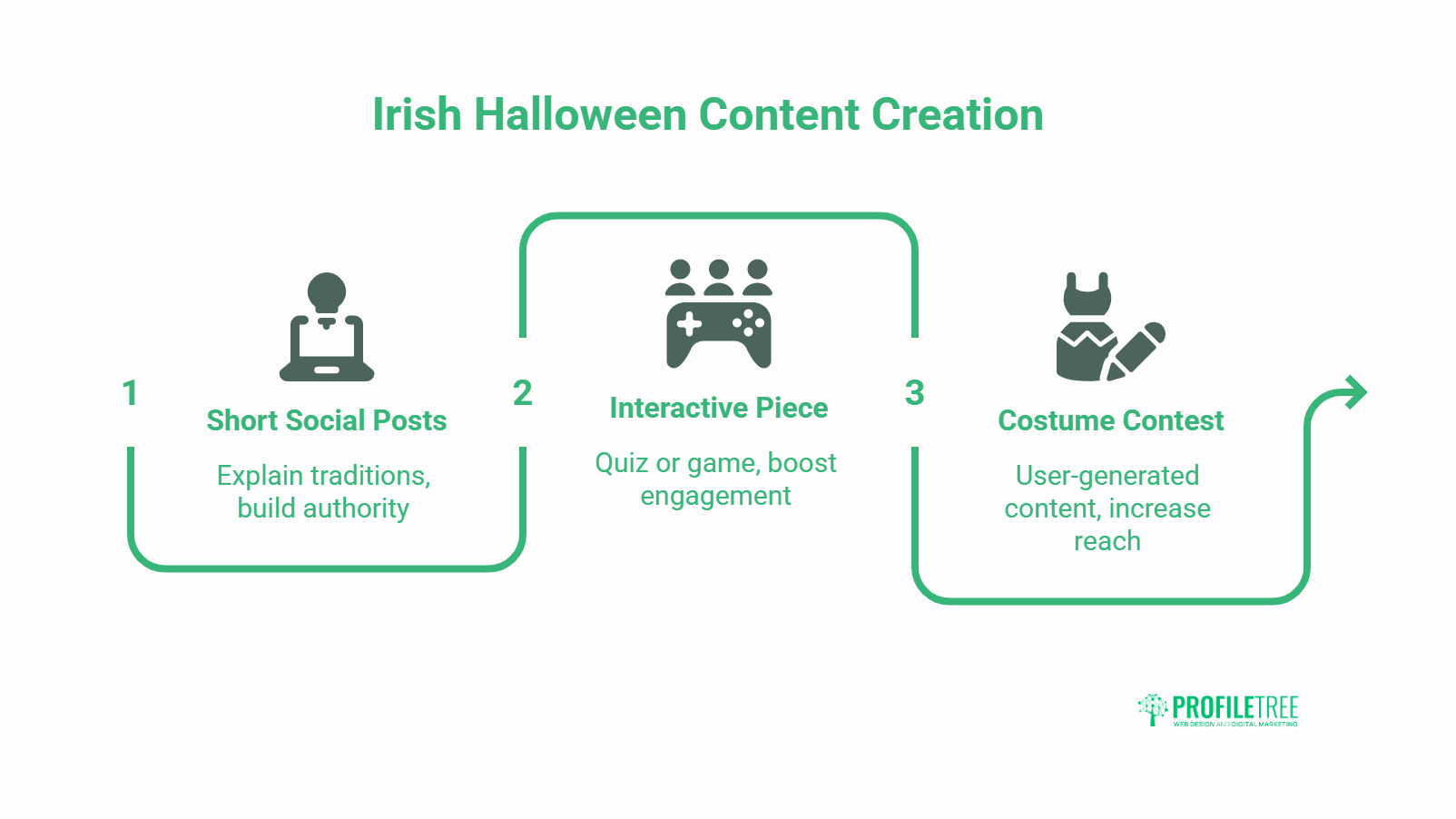
Bottom line: the strongest seasonal content teaches the audience something while staying on-brand. Here are the formats that work, ordered by how much effort they take to produce.
Explain The Traditions In Short Social Posts
People like learning the story behind a custom. A short series explaining Samhain, barmbrack or the origin of the jack-o’-lantern (originally carved from turnips, not pumpkins) gives you a week of posts that educate rather than sell. Pair each with a strong visual and a caption that ties back to your brand’s voice. This format builds authority cheaply, and it’s the easiest place to start. ProfileTree runs exactly this kind of social media marketing for clients who want a seasonal presence without a big production budget.
Build A Simple Interactive Piece
Interaction lifts engagement and time on page. A short quiz on Celtic myths, or a digital “find the trinket” game based on the barmbrack tradition, gives people a reason to click and share. These don’t need to be technically complex; a well-made quiz or poll on Instagram Stories does most of the job. The point is participation, which the algorithms reward.
Run A Costume Contest With An Irish Category
User-generated content is among the most cost-effective seasonal tactics because your audience makes the content for you. Ask followers to share costumes, then add a category competitors won’t have, such as “Best Celtic-Inspired Costume” or “Most Creative Banshee”. Offer a small prize, set a clear hashtag, and you generate shareable content plus reach. Contests like this travel well on Instagram, TikTok and Facebook.
For a wider look at planning seasonal content that fits an annual calendar, ProfileTree’s team covers the approach in this short guide.
Working This Season’s Costume Trends
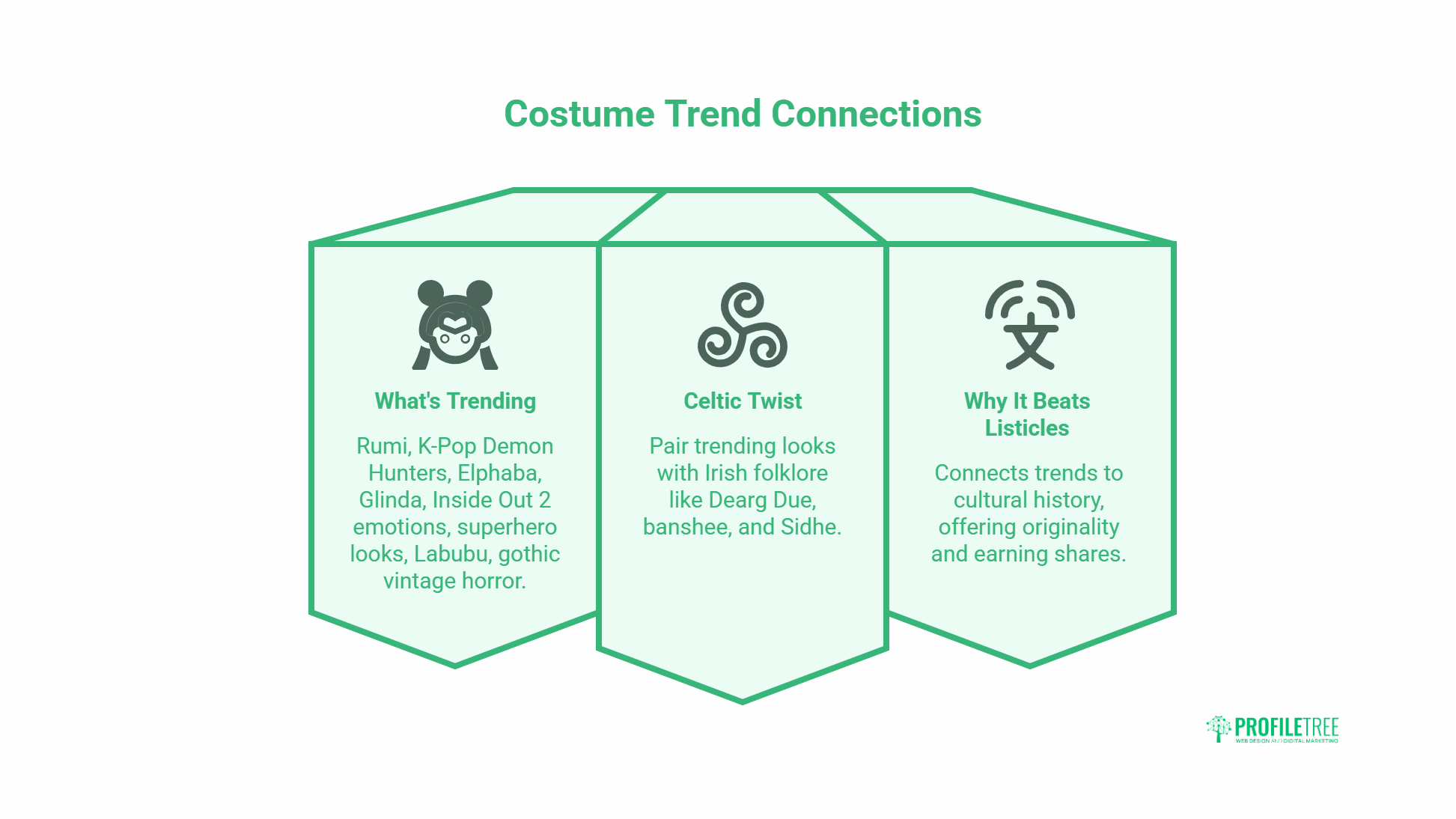
Bottom line: costume trends are a reliable annual content hook, but they date fast, so the tactic is what matters, not any single costume. Each year, watch what’s trending, then connect it to an Irish or Celtic twist competitors won’t think of. Here’s how that looks for the current season.
What’s Trending This Year
The current season is being shaped by a few clear front-runners. Rumi and the cast of K-Pop Demon Hunters are among the most-searched looks, alongside Elphaba and Glinda from the Wicked films. Group costumes are strong: the new emotions from Inside Out 2 work well for colour-coded friend groups, and superhero looks (helped by the Fantastic Four reboot and other major releases) remain a staple. There’s also a clear “ugly-cute” streak driven by viral collectables like Labubu, plus a return to gothic vintage horror, think Nosferatu-style vampires and Victorian ghosts.
Giving Each Trend A Celtic Twist
This is where the Irish angle earns its keep. Pair a trending gothic vampire with the lore of the Dearg Due, Ireland’s own vampire legend. Reframe an ethereal “haunted bride” look through the banshee, the wailing spirit of Irish folklore. Set a group costume against the backdrop of the Sidhe, the fairy folk of Celtic myth. The trend gives you the reach; the folklore gives you the originality. Content that does both tends to outperform a straight costume roundup.
Why This Beats A “Best Costumes” Listicle
A plain list of popular costumes is the most generic seasonal content there is, and search engines have cooled on that format. A piece that connects current trends to genuine cultural history offers something new, which is what earns shares and links. The costume is the hook; the tradition is the substance.
Mining Celtic Mythology For Visuals
Bottom line: Celtic folklore is a deep, underused well of visual and storytelling material that suits Halloween perfectly.
Creatures And Legends Worth Featuring
Beyond the banshee, Celtic myth offers changelings, the Sidhe, the pooka (a shape-shifting spirit), and divination customs tied directly to Samhain. Each is a ready-made content theme: a short explainer, an illustrated post, or a “legend of the week” run through October. These stories are distinctive; they’re tied to the season’s real origins, and they give a designer plenty to work with.
Turning Folklore Into Branded Content
Visual content built on Celtic symbols and folklore travels well, and it lends itself to video marketing just as easily as static posts. A short animated retelling of a Samhain legend, or a designed series on Celtic symbols, gives a brand something memorable that doesn’t read as an advert. That’s the balance seasonal content has to strike: festive and genuine, never a thinly veiled sales push.
“Seasonal content fails when it’s interchangeable. Every brand posts a pumpkin in October. The ones that get remembered find an angle nobody else has, and for a business marketing in Ireland, the real history of Halloween is sitting right there. Use it, and you’re telling a story your competitors literally cannot copy.” Ciaran Connolly, founder of ProfileTree
Key Takeaways
Halloween is a content opportunity most brands waste by being generic. An Irish angle, grounded in Samhain and Celtic folklore, gives you material competitors can’t reach for. Start with low-effort educational posts, add an interactive piece or a costume contest, and connect this season’s trending costumes to genuine Irish legends. Keep the balance between festive fun and authenticity, and the season works for the brand rather than against it.
Frequently Asked Questions
When Should A Brand Start Planning Halloween Content?
Begin in late August or early September. Costume and seasonal trends become clear by then, and starting early means you can build a proper content calendar rather than reacting at the last minute. The heaviest audience interest runs from early October through Halloween itself, so your content should be ready to publish from the start of the month. Planning ahead also lets you produce higher-quality assets, such as video or designed graphics, which take longer than a quick social post. Brands that wait until mid-October end up competing for attention with rushed, generic content, which is exactly what an Irish-folklore angle is designed to avoid.
What Makes Irish Halloween Content Different From Generic Halloween Marketing?
The difference is cultural depth. Generic Halloween marketing leans on pumpkins, sweets and costume roundups that look the same across every brand. Irish Halloween content draws on Samhain, the Celtic festival Halloween actually descends from, and on folklore such as the banshee, the Sidhe and traditions like barmbrack. This gives a brand genuine information gain: it’s telling the audience something true and interesting they haven’t read elsewhere. For businesses marketing in Ireland or to Irish audiences, it also signals local knowledge and authenticity, which builds trust. The folklore angle is harder for competitors in other markets to copy convincingly, which is what makes it a defensible content position rather than a one-off idea.
Which Platforms Work Best For Seasonal Halloween Campaigns?
Visual and video-first platforms carry seasonal content best. Instagram and TikTok suit costume contests, short folklore explainers and behind-the-scenes content, while Facebook works well for longer storytelling posts and community engagement. The format matters more than the platform: short video and carousels tend to outperform static images for this kind of content. Match the platform to where your specific audience already spends time rather than trying to run the campaign everywhere at once. A focused effort on one or two platforms, with content tailored to each, beats spreading the same posts thinly across all of them.
How Do You Keep Seasonal Content From Feeling Like An Advert?
Lead with value, not with the sell. The strongest seasonal content teaches, entertains or involves the audience first, and connects to the brand second. A post explaining the origin of the jack-o’-lantern earns goodwill; a post pushing a Halloween discount does not, unless the audience already came for the offer. Keep any promotional element light and make sure the content would still be worth sharing even if your logo weren’t on it. Authenticity is the test: if the piece aligns with your brand values and genuinely interests your audience, it works. If it reads as a sales pitch wearing a costume, it won’t.