
Does SEO Really Work? The Honest Truth for UK Businesses
Table of Contents
Does SEO really work? Yes, but only when built on the right foundations. Search engine optimisation is not a switch you flip once and forget; it is a channel that compounds over months, provided the site is technically sound, the content genuinely answers what people are searching for, and the work continues after the first few rankings appear. Most businesses that say “SEO didn’t work for us” were not let down by the discipline itself, but by an inadequate website, an unrealistic timeline, or content that never demonstrated real expertise.
This guide sets out, in plain commercial terms, how SEO really works for SMEs in the UK and Ireland, how effective it is against paid alternatives, why so many campaigns fail, and what AI-powered search means for the question.
The Direct Answer: Yes, SEO Really Works, With One Caveat
Search engine optimisation delivers measurable results for SMEs when it is properly planned, technically sound, and consistently maintained. The caveat is that it rewards patience and punishes shortcuts, so the “yes” only holds if the fundamentals are in place first.
A business in Belfast ranking on page one for “accountants Belfast” or “kitchen fitters Northern Ireland” is not there by chance. That visibility is the product of a site that loads quickly, content that matches what searchers actually want, and a backlink profile that signals credibility to Google. Remove any one of those three elements, and the rankings tend to slip.
SEO is not a lever you pull once. It behaves more like a well-maintained business reputation: it compounds when it is looked after, and it decays when it is neglected. The businesses that see the strongest returns treat it as an ongoing programme rather than a project with a fixed finish line, which is precisely why so much SEO spend gets wasted on one-off bursts of activity that are never followed through.
Why Most SEO Investments Produce Zero Traffic
Before looking at how SEO succeeds, it is worth being honest about why so many attempts fail outright. Independent research from Ahrefs, which analysed billions of web pages, found that the overwhelming majority of published content receives no organic traffic from Google at all. That statistic alone explains most of the scepticism business owners bring to the topic, and it divides into three recurring causes.
Technical Debt from Poor Web Development
A website built without SEO in mind works against you from day one. Slow load times, missing metadata, unindexed pages, broken internal linking, and poor mobile performance all reduce a site’s ability to rank, regardless of content quality. Google has confirmed that its Core Web Vitals, which measure loading performance, interactivity, and visual stability, form part of its page experience ranking systems, so weak scores put a site at a disadvantage against competitors of similar content quality. If the underlying build is weak, SEO investment applied on top of it will underperform.
ProfileTree’s website development services treat technical SEO as part of the build rather than an afterthought, so that site architecture, page speed, and crawlability are correct from the day a site launches rather than retrofitted eighteen months later.
Shallow Content That Matches No Real Search Intent
Publishing content for its own sake does not make SEO work. Understanding how SEO really works at the content level means understanding search intent: Google has become far more sophisticated at judging whether a page genuinely answers the question someone typed. A 400-word article padded with keyword repetition satisfies neither the algorithm nor the reader. Thin content, content that paraphrases what every competitor has already said, and content with no real expertise are all actively suppressed by Google’s Helpful Content systems.
For a trades business in Derry, a law firm in Dublin, or a hospitality operator in Belfast, the content that ranks is the content that speaks directly to the specific questions their customers ask, written with genuine knowledge of the local market rather than generic industry filler.
No Integrated Digital Strategy
SEO does not operate in isolation. A well-optimised page on a site with no clear path to enquiry produces impressions, not business. A business that invests in SEO while neglecting its Google Business Profile, its internal linking, and its wider content programme leaves most of the potential value on the table. The businesses that see SEO deliver its full potential treat it as one channel within a joined-up digital strategy rather than an isolated task handed to a single specialist.
How Effective Is SEO Compared to Paid Advertising?
Asking how effective SEO is, or whether SEO is effective enough to justify the spend, only makes sense alongside the alternative most businesses are weighing it against, which is paid search. The two behave in fundamentally different ways over time, and that difference is the strongest argument for why SEO effectiveness tends to improve the longer a campaign runs.
The Compound Interest Effect of Organic Search
Paid advertising stops delivering the moment the budget stops. Organic rankings, once earned, keep generating traffic without an incremental cost per click. A service page that reaches page one for a competitive local term generates enquiries around the clock, and as the page ages and its authority grows, the effective cost per acquisition typically falls relative to the initial investment.
This is the economic case for why SEO really works so well for SMEs relative to paid channels. A Google Ads campaign for “web design Belfast” charges per click for as long as it runs. An organic ranking for the same term, once established, carries no per-click cost, though it still needs ongoing maintenance to protect. The investment is front-loaded; the returns compound afterwards.
The businesses that see the clearest results are those where keyword strategy, quality content, and sound web development all work together. A fast, well-structured site gives the content team a platform to work with; content that addresses genuine search intent earns rankings; rankings bring qualified traffic; traffic directed toward pages built to convert produces enquiries and sales. When any one link in that chain is missing, the whole thing breaks.
SEO vs PPC: The Cost Comparison
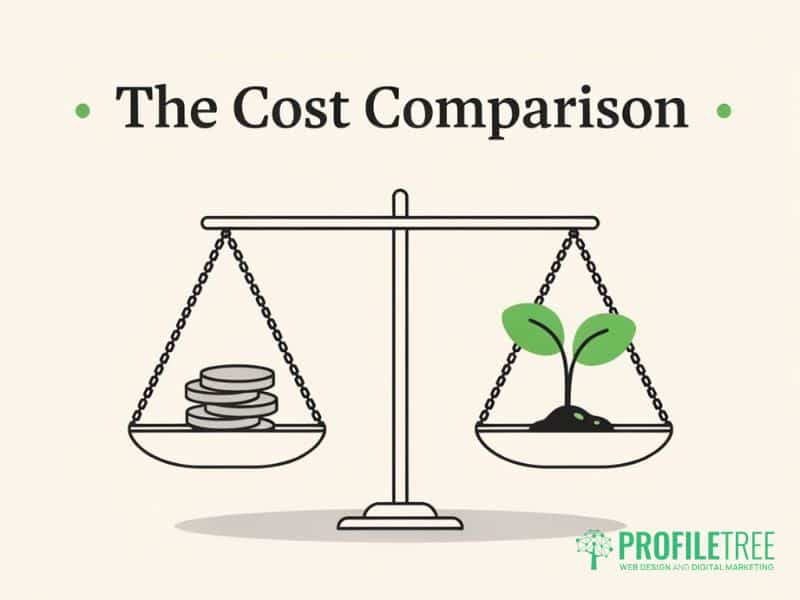
| Channel | Typical setup cost | Time to results | Long-term cost per lead | Ownership of results |
|---|---|---|---|---|
| SEO | Medium | 3–12 months | Decreases over time | You own the rankings |
| PPC (Google Ads) | Low–Medium | Immediate | Fixed or increasing | Stops when budget stops |
| Social advertising | Low | Immediate | Variable | No lasting asset |
Neither PPC nor social advertising is without value. A new business needing leads immediately can use paid channels while an organic programme builds in the background. But a business that never develops organic visibility stays permanently dependent on paid spend, which is the core reason SEO really works as a long-term asset: it builds something the business owns, rather than renting attention that disappears the moment the budget stops.
Why SEO “Doesn’t Work”: Understanding the Failures
This is the most common objection, and it deserves a direct answer rather than a dismissal. For SEO to really work, each of the following conditions has to be met; campaigns that skip one are usually the ones a business owner later describes as “SEO that didn’t work.”
The Website Wasn’t Ready
Technical issues, such as slow load times, poor mobile experience, thin page content, and a weak URL structure, prevent even well-targeted content from ranking. Google cannot rank a page it cannot properly index, and will not recommend a page with a poor user experience. If the underlying site carries these problems, fixing them is the prerequisite for everything else, which is why a proper technical SEO review is usually the first task on any serious campaign.
The Timeline Expectations Were Wrong
SEO is not a paid channel and does not produce results in week two. Businesses that judge a campaign after sixty or ninety days and conclude “it didn’t work” are measuring the wrong timeframe. Meaningful organic traction in a competitive local market typically takes four to six months to appear and around twelve months to reach its full potential. Abandoning a campaign before that point is roughly equivalent to cancelling a savings plan three months in and concluding that saving doesn’t work.
The Content Was Generic
Writing about SEO concepts or business topics in a way that adds nothing new to what already exists online produces no rankings. Google’s systems now actively filter for content that demonstrates genuine expertise, first-hand experience, or information that cannot be found elsewhere. The emphasis on Your Money, Your Life (YMYL) content in Google’s quality guidelines made this explicit: content quality, author expertise, and trustworthiness are all evaluated signals, not optional extras.
Ciaran Connolly, founder of ProfileTree, puts it plainly: if a business’s SEO investment isn’t connecting to its sales pipeline, the real question is not whether search engine optimisation works, but whether the site, the content, and the wider strategy are actually giving it a platform to work from.
The UK and Ireland Search Landscape: Local vs National
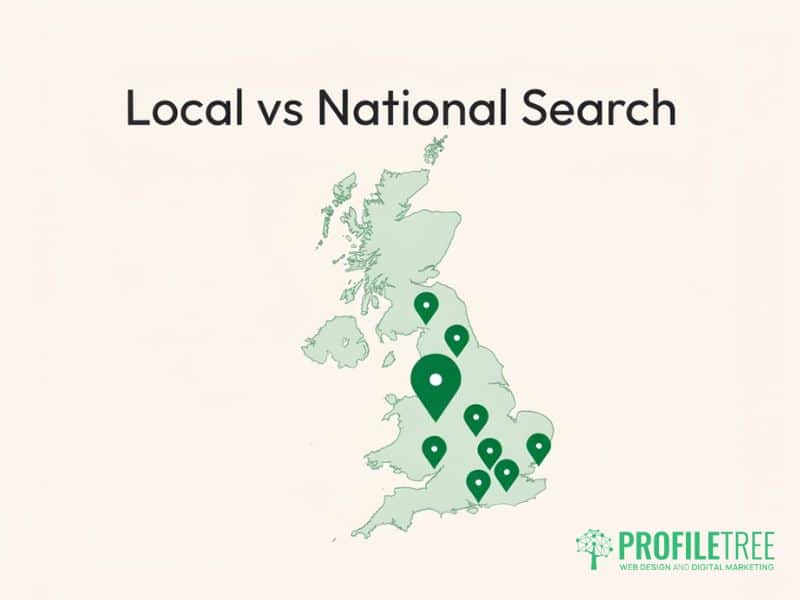
Search behaviour across Northern Ireland, Ireland, and the wider UK has a distinctly local character. Chasing broad national terms is rarely the right goal when the highest-value traffic and the easiest wins sit much closer to home.
Local Search Is Where Most SME Wins Sit
For most service businesses across Northern Ireland, Ireland, and the wider UK, the highest-value search traffic is local. Someone searching “emergency plumber Belfast” or “commercial solicitors Northern Ireland” is a buyer with immediate intent. Those searches generate phone calls, not just page views.
Local SEO, covering Google Business Profile management, locally relevant content, and consistent name, address, and phone (NAP) data across directories, is often where the most accessible ranking opportunities sit for regional businesses. The competition for “accountants Belfast” is a different proposition from “accountants UK,” and the searcher’s intent is far more commercially specific.
Regional Competition and Keyword Difficulty
A common misconception is that ranking nationally is the goal. For most SMEs, it isn’t. Reaching page one for “accountants in Lisburn” or “web design Derry” is commercially more valuable than sitting at position eight for a broad national term, because it reaches people who are actually going to pick up the phone.
The practical implication is that SEO really works within a realistic regional timeframe and budget. A local business is not competing with national brands for broad terms; it is competing with other local businesses for local terms, and that is a winnable position with the right approach. Measured this way, regional SEO effectiveness is usually far higher than a business expects going in, simply because the competitive field is smaller.
Does SEO Work in the Age of AI Search?
This question has effectively replaced “is SEO dead?” and deserves a substantive answer rather than a defensive one.
AI-powered search features, including Google’s AI Overviews and the web search functions built into tools like ChatGPT and Perplexity, do not make SEO irrelevant; they change what it means to be visible. When an AI Overview answers a query directly on the results page, it tends to draw from sources it already considers authoritative and credible. Research into AI citation patterns points to a strong correlation with existing organic search authority, meaning businesses with stronger SEO foundations are generally better positioned to appear inside AI-generated answers.
The practical shift is that content now needs to be structured so AI systems can extract and cite specific answers from it: self-contained sections with clear, direct answers, tables that compare options cleanly, and concise definitions followed by supporting depth. These are the same structures that earn traditional rankings and AI citations alike.
Businesses that treat SEO as synonymous with keyword stuffing will find AI search offers them little. Businesses that treat it as a way to build genuine topical authority, through quality content, technical health, and a coherent digital presence, will find AI search amplifies that visibility rather than replacing it. For them, SEO works harder than ever, because the signals AI systems reward are the same ones that have always driven organic performance. In practice, this makes SEO effectiveness even more important to track than before, since a foundation strong enough to earn traditional rankings is now also the foundation for AI visibility.
How Long Does SEO Take to Show Results?
Setting realistic expectations is part of understanding how SEO really works over time, and it is also the most reliable way to judge SEO effectiveness fairly rather than against an arbitrary deadline. The table below sets out a general pattern for a professionally managed campaign targeting a competitive regional market, assuming consistent effort and no major technical blockers. A site carrying significant technical debt will typically take longer to see traction in the early months.
| Phase | What typically happens |
|---|---|
| Months 1–3: Foundation | Technical audit and fixes, Google Search Console and Analytics configured correctly, keyword research completed, priority pages optimised, Google Business Profile reviewed |
| Months 4–6: Early traction | Indexation improves, some rankings appear on page two or three, impressions grow in Search Console, internal linking is tightened |
| Months 7–12: Compounding returns | Primary target terms move toward page one, organic traffic grows month on month, and conversion data starts identifying which pages generate enquiries |
For teams who want to understand what is happening in their own reporting rather than taking an agency’s word for it, ProfileTree’s digital marketing training covers how to read Search Console and Analytics data and connect it to real business decisions.
How to Tell if Your SEO Is Actually Working
Rankings alone are not proof SEO is delivering for a business, and rankings are the wrong place to look if the real question is SEO effectiveness. The metrics that matter sit closer to revenue: impressions and click-through rate in Google Search Console show whether the right searchers are finding a page; qualified organic sessions, rather than raw visitor counts, show whether that visibility is translating into genuine interest; enquiry or conversion tracking on the pages receiving organic traffic shows whether the channel is producing business rather than vanity metrics; and a falling cost of acquisition over time, against paid channels for the same terms, is the clearest sign the compounding effect described earlier is taking hold.
A business reviewing these figures every quarter, rather than only checking rankings, gets a far more honest picture of whether its SEO investment is working.
Getting SEO Right: What a Professional Approach Looks Like
The pattern running through every section above is the same: SEO works when strategy, content, and technical execution are handled together rather than as separate tasks. That is why ProfileTree’s approach to SEO services for SMEs integrates technical auditing, content strategy, and ongoing optimisation into a single programme, rather than treating them as unrelated engagements bought in isolation.
In practice, that starts with an honest audit of where a site currently stands. Business owners who want to check the fundamentals themselves before committing to a full campaign can work through ProfileTree’s local SEO audit, which covers the same technical and local visibility factors a professional campaign would address first.
ProfileTree is a Belfast-based digital agency providing SEO, web design, content marketing, and digital strategy for SMEs across Northern Ireland, Ireland, and the UK.
FAQs
1. Does SEO really work for a brand-new business?
For a new business, SEO should be a medium-term investment running alongside other channels, not a replacement for them. In the first three to six months, paid search or social advertising may be needed for immediate leads while the organic programme builds underneath. SEO works as a compounding asset: a business starting at launch will typically be in a stronger position eighteen months later than one that waits until month twelve.
2. How long does SEO take to show results in the UK?
For most SMEs targeting regional search terms across the UK and Ireland, initial traction, meaning first positions appearing on page two or three, typically shows at three to four months. Meaningful page-one positions for competitive terms generally take eight to twelve months. Less competitive local terms can rank faster than that. Any agency promising significant results within thirty days is either targeting terms nobody searches for or using techniques that risk a future penalty.
3. Can I do SEO myself, or do I need an agency?
The tools required for basic SEO are free: Google Search Console, Google Analytics, and Google’s own documentation. The time to do it properly is not. A business owner spending ten hours a week on keyword research, content, technical fixes, and link building is spending ten hours not running their business. If there is genuine time to learn, basic SEO is learnable; if that time carries a real cost, a managed service typically produces better results more efficiently.
4. Is SEO dead because of ChatGPT and AI search?
No. AI search tools tend to draw their answers from websites they already consider authoritative and credible. Research into citation patterns for Google’s AI Overviews and Perplexity points to a meaningful correlation with organic search performance, so sites with stronger SEO foundations appear more often in AI-generated answers. If anything, AI search increases the value of genuine authority, because these systems filter out thin or generic content even more aggressively than a traditional results page.
5. Why isn’t my website ranking even though it has the right keywords?
Keyword presence is one ranking factor, not a guarantee of one. The most common causes are insufficient domain authority (not enough credible sites linking to the domain), technical issues preventing proper indexation, content that doesn’t fully match the searcher’s intent, or competition from better-established pages Google already trusts. This is also the most common reason a business questions its own SEO effectiveness despite doing the on-page basics correctly. A proper SEO audit identifies which of these is the limiting factor, rather than leaving a business guessing.