
Developing a Training Programme for Compliance in Digital Marketing
Table of Contents
Compliance in digital marketing operates within an increasingly regulated environment where non-compliance can result in substantial fines, reputational damage, and loss of customer trust. Businesses across Northern Ireland, Ireland, and the UK must navigate complex legislation, including GDPR, the Data Protection Act 2018, PECR (Privacy and Electronic Communications Regulations), and advertising standards set by the ASA (Advertising Standards Authority).
A structured training programme for compliance equips marketing teams with the knowledge and practical skills to execute campaigns that respect legal boundaries and maintain ethical standards. Many organisations assume compliance in digital marketing is solely an IT or legal department concern, yet marketing teams handle personal data daily through email campaigns, social media advertising, website analytics, and customer relationship management systems.
Understanding the Regulatory Landscape
Marketing professionals must grasp the breadth of regulations affecting compliance in digital marketing before any training programme can be effective.
GDPR and Data Protection Requirements
GDPR establishes the framework for processing personal data, requiring lawful bases for collection, transparent privacy notices, and mechanisms for individuals to exercise their rights. The regulation forms a cornerstone of compliance in digital marketing, applying to any organisation processing data of EU citizens, regardless of where the business is located, making it particularly relevant for agencies serving clients across borders.
PECR and Electronic Communications
PECR specifically governs electronic marketing, including email, SMS, and telephone calls. Understanding PECR requirements is essential for compliance in marketing, as the regulation requires prior consent for most direct marketing communications and mandates clear opt-out mechanisms in every message. Cookie compliance falls under PECR’s scope, requiring websites to obtain informed consent before placing non-essential cookies on visitors’ devices.
Advertising Standards and CAP Code
The ASA’s CAP Code sets standards for advertising content, prohibiting misleading claims, requiring substantiation for factual statements, and protecting vulnerable audiences from inappropriate targeting. These standards are fundamental to compliance in digital marketing across all channels. Competition and Markets Authority guidelines add another layer, particularly around pricing transparency, fake reviews, and pressure-selling tactics.
AI and Emerging Technologies
For businesses implementing AI tools in their marketing operations, considerations around algorithmic transparency and bias prevention are becoming increasingly important for compliance in digital marketing. ProfileTree’s AI training services help businesses understand how automation intersects with compliance requirements, particularly for SMEs introducing these technologies for the first time.
Assessing Your Team’s Current Compliance Knowledge
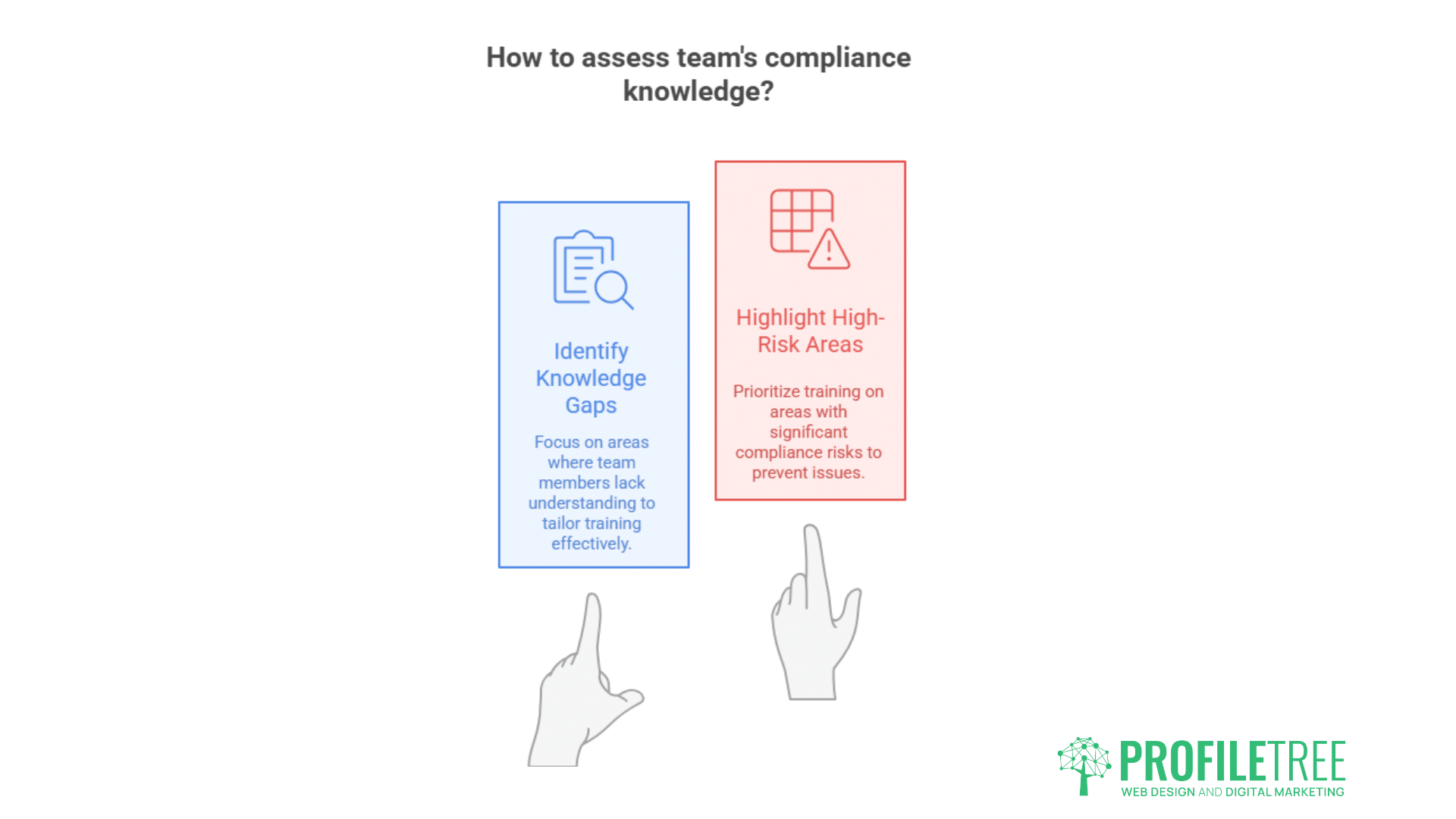
Before designing training content for compliance, conduct a thorough assessment of existing knowledge gaps and high-risk areas within your marketing operations.
Conducting Anonymous Surveys
Anonymous surveys can reveal honest answers about confidence levels across different regulatory areas without putting individuals on the spot. Questions should cover practical scenarios that reflect real-world compliance in digital marketing situations—asking how team members would handle consent for a newsletter signup or what information belongs in a privacy notice tests applied understanding rather than memorisation.
Reviewing Past Campaign Performance
Review past campaigns for compliance with digital marketing issues that went unnoticed or required last-minute corrections. These real examples become valuable case studies within your training programme, demonstrating how theoretical regulations translate to practical marketing decisions. Examine your current data processing activities through a compliance lens: what personal data do you collect, where is it stored, who has access, how long do you retain it, and what security measures protect it.
Role-Specific Knowledge Requirements
Different roles carry different levels of compliance in digital marketing risks. Social media managers need deep knowledge of advertising standards and influencer disclosure requirements. Email marketers must master consent management and suppression list maintenance for compliance communications. Content teams require training on copyright, trademark usage, and substantiation requirements for claims.
Web developers and designers need to understand cookie compliance, accessibility standards, and data minimisation principles embedded in website design and website development processes.
Experience Level Considerations
Consider also the seniority and experience levels within your team when planning training for compliance in digital marketing. Junior marketers may need foundational training on why regulations exist and what they aim to protect, explaining the rationale behind requirements to build genuine understanding rather than rote compliance. Senior team members benefit from advanced training on grey areas, emerging regulatory trends, and strategic decision-making when compliance considerations conflict with campaign objectives.
Defining Learning Objectives and Outcomes
Effective training for compliance in digital marketing establishes clear, measurable objectives that align with both regulatory requirements and business operations.
Creating Actionable Objectives
Objectives should specify what participants will be able to do after training, not simply what they will know. For example, “Participants will be able to write privacy-compliant email copy that includes required disclosures and valid consent mechanisms” provides a clearer target than “Participants will understand email marketing regulations.” These actionable objectives drive practical compliance in digital marketing activities.
Task-Based Learning Goals
Structure objectives around real marketing tasks to improve compliance workflows. After completing GDPR training, team members should be able to conduct a legitimate interest assessment, draft a privacy notice appropriate for their campaigns, and implement data subject request procedures. Following advertising standards training, they should be able to review campaign copy for potentially misleading claims, identify when substantiation is required, and recognise content that needs legal review before publication.
Immediate and Long-Term Outcomes
Consider both immediate and long-term outcomes when developing training for compliance in digital marketing. Immediate outcomes might include passing a knowledge assessment or successfully implementing compliant processes for a specific campaign type. Long-term outcomes involve building a culture where compliance in digital marketing becomes second nature, with team members proactively identifying risks, seeking clarification when uncertain, and staying informed about regulatory changes.
Competency Level Framework
Breaking objectives into specific competency levels helps tailor training for compliance in digital marketing appropriately. Basic competency means recognising when compliance considerations arise and knowing who to consult. Intermediate competency involves independently applying compliance requirements to standard situations using provided tools and templates. Advanced competency includes evaluating novel situations, adapting compliance approaches to new marketing tactics, and mentoring colleagues on compliance matters.
Structuring Your Training Programme Content
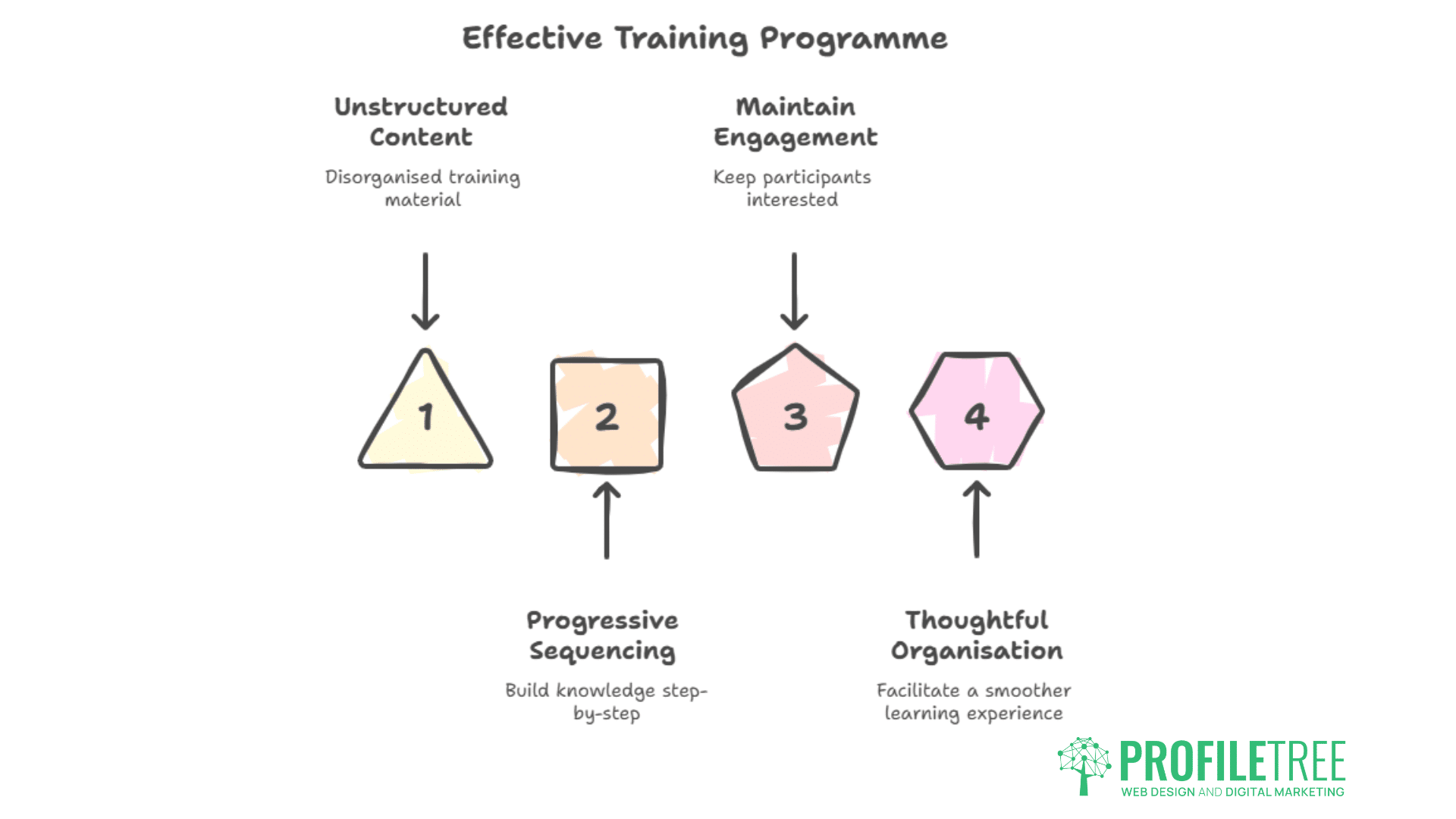
A training programme for compliance requires careful sequencing to build knowledge progressively whilst maintaining engagement.
Foundational Concepts First
Begin with foundational concepts that apply across all compliance in digital marketing activities—what constitutes personal data, the six lawful bases for processing under GDPR, and basic principles of fair and transparent data handling. This creates a common language and conceptual framework before diving into channel-specific or tactic-specific requirements for compliance.
Channel-Specific Modules
Organise content into logical modules that reflect how marketing teams actually work and where compliance in digital marketing matters most. A module on email marketing should cover consent requirements, content that triggers PECR restrictions, proper use of legitimate interest, technical requirements for unsubscribe mechanisms, and record-keeping obligations. A social media module addresses platform-specific advertising policies, influencer partnership disclosure, user-generated content rights, and handling customer data obtained through social channels.
Interactive Learning Elements
Include interactive elements that require active participation rather than passive information absorption when teaching compliance. Scenario-based exercises present realistic situations requiring compliance decisions—for instance, how to handle a data subject access request when customer data spans multiple systems, or whether a proposed advertising claim requires substantiation. Small group discussions allow team members to share experiences and learn from each other’s perspectives on navigating compliance challenges.
Connecting Compliance to Business Benefits
Each module should connect requirements for compliance in digital marketing to practical benefits. Explaining that proper consent management improves email deliverability and engagement rates makes the requirement feel like good marketing practice rather than an arbitrary legal burden. Demonstrating how clear privacy notices build customer trust reframes transparency as a competitive advantage rather than merely a compliance obligation in digital marketing.
Ciaran Connolly, Director of ProfileTree, notes: “Compliance training fails when it’s presented as a box-ticking exercise rather than a practical tool that helps marketers do their jobs better. The most effective programmes connect regulations to everyday decisions and demonstrate how compliance supports business objectives rather than hindering them.”
Incorporating Real-World Examples and Case Studies
Abstract regulatory language becomes meaningful when illustrated through concrete examples that demonstrate compliance in digital marketing challenges teams recognise from their own work.
Using Enforcement Actions
Use actual enforcement actions as teaching tools for compliance in digital marketing training—the ICO regularly publishes monetary penalty notices detailing why specific organisations faced fines, providing ready-made case studies that demonstrate real consequences of non-compliance. Anonymise and adapt these examples to make them more relevant to your specific industry or marketing activities, showing how compliance failures led to tangible business harm.
Creating Relevant Scenarios
Develop case studies that mirror your team’s typical campaigns and compliance in digital marketing challenges. If you run frequent promotional email campaigns, create a case study showing compliant versus non-compliant approaches to consent, content, and unsubscribe mechanisms. If influencer partnerships are part of your strategy, present scenarios requiring decisions about disclosure requirements, contractual obligations, and data protection considerations when sharing customer data with partners.
Showcasing Positive Examples
Include positive examples alongside cautionary tales when teaching compliance in digital marketing. Showcase well-executed compliance in action—privacy notices that are genuinely clear and concise, consent mechanisms that respect user choice without employing dark patterns, and advertising campaigns that make bold claims whilst maintaining accuracy through careful substantiation. These examples prove that compliance in digital marketing and effective marketing are not mutually exclusive.
Local Market Relevance
Local relevance increases engagement for teams based in specific regions, learning about compliance in digital marketing. Reference enforcement actions taken by the ICO against UK businesses, ASA rulings on campaigns visible in the Northern Ireland market, and specific challenges faced by SMEs rather than only multinational corporations. Belfast-based businesses might particularly relate to examples from similar-sized organisations operating across the UK and Ireland markets. ProfileTree’s experience with digital strategy across local markets informs training that addresses region-specific compliance considerations.
Developing Practical Compliance Tools and Templates
Training for compliance in digital marketing becomes immediately applicable when accompanied by tools that marketing teams can use in their daily work.
Campaign Checklists
Develop checklists that guide compliance in digital marketing reviews for common campaign types—email send checklists verifying consent source, content requirements, technical compliance, and record-keeping; social media advertising checklists covering claim substantiation, targeting restrictions, disclosure requirements, and approval workflows. These tools make compliance processes systematic rather than arbitrary.
Document Templates
Create template documents that embed compliance in digital marketing requirements into standard operating procedures. Privacy notice templates with clear guidance on required elements and plain language examples remove guesswork from what can be a daunting drafting task. Consent mechanism templates for website forms, email signup flows, and promotional materials provide tested approaches to compliance in digital marketing that teams can adapt to specific needs.
Data Mapping Resources
Data mapping templates help teams document what personal data they collect, process, and store—essential for compliance in digital marketing under GDPR and invaluable during data subject access requests or security incidents. Decision trees guide teams through complex scenarios, such as determining the appropriate lawful basis for processing in different contexts or deciding whether a proposed marketing activity requires a Data Protection Impact Assessment.
Collaborative Development
Build these compliances in digital marketing tools collaboratively with your marketing team rather than imposing them from above. Front-line marketers understand the practical constraints and real-world complications that generic compliance templates often overlook. Their input creates more usable resources while also building buy-in for using these tools consistently in daily digital marketing activities.
Quick Reference Guides
Quick reference guides distil complex regulations into actionable summaries for digital marketing compliance. A one-page guide on GDPR lawful bases might list each basis, explain when it’s appropriate for marketing, describe what documentation is required, and note common pitfalls. These guides serve as memory aids after initial training and help new team members quickly access essential information about compliance in digital marketing requirements.
Addressing Cookie Compliance and Website Tracking
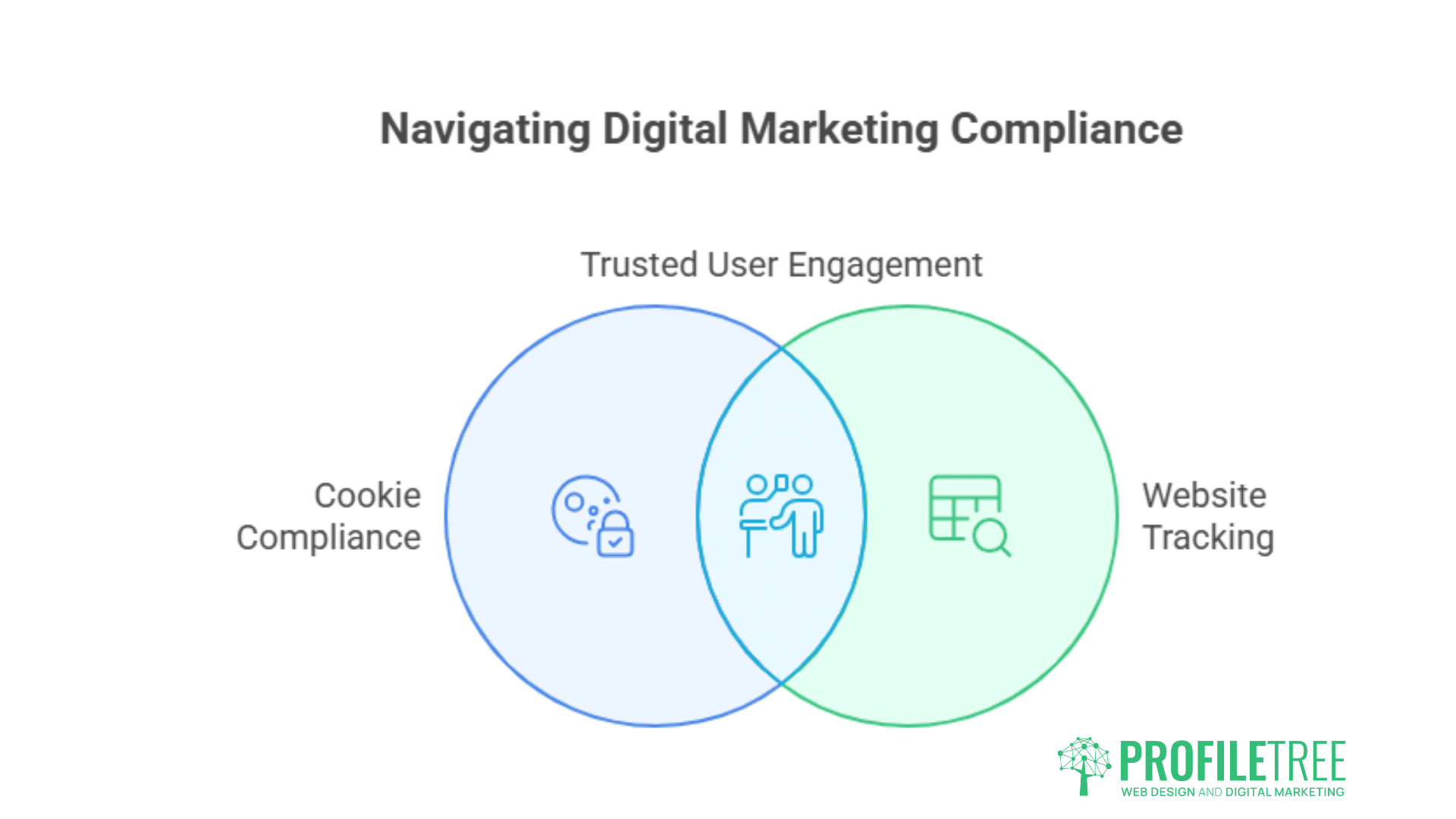
Cookie compliance represents one of the most technically complex and frequently misunderstood areas of digital marketing compliance.
Legal Requirements for Cookies
Training for compliance in digital marketing must cover both the legal requirements under PECR and the ICO’s guidance on cookie consent, as well as the practical implementation challenges of compliant cookie banners and tracking configurations. Many websites still use non-compliant approaches—pre-ticked boxes, implied consent through continued browsing, or cookie walls that deny access to users who reject non-essential cookies, all of which undermine compliance in digital marketing.
Essential versus Non-Essential Cookies
Explain the distinction between essential cookies (strictly necessary for website functionality) and non-essential cookies (analytics, advertising, social media) as part of compliance in digital marketing training. Only essential cookies can be placed before obtaining consent. All others require informed, freely given, specific consent through an action that clearly indicates agreement—clicking an “Accept” button, not merely continuing to browse.
Technical Implementation Coordination
Technical implementation of compliance in digital marketing requires coordination between marketing teams and developers. Marketing professionals need to understand what triggers cookie placement in common tools—such as Google Analytics, Meta Pixel, and marketing automation platforms—so they can clearly communicate compliance with digital marketing requirements to technical teams. They should know how to verify compliant implementation using browser developer tools to check what cookies are placed before and after consent is given.
Multiple Tracking Tools
The complexity of compliance in digital marketing increases when using multiple tracking tools and third-party services. Each tool may place multiple cookies, and marketers need to understand the purpose of each category to provide accurate information in consent interfaces. Training should cover how to audit current tracking implementations, identify what requires consent, and work with technical teams to implement consent-aware tracking that maintains compliance with digital marketing standards.
Training on GDPR Rights and Data Subject Requests
Understanding individual rights under GDPR is crucial for compliance in digital marketing, and marketing teams must understand their role in facilitating these rights.
Understanding Individual Rights
Right of access allows individuals to obtain confirmation of what personal data you hold about them and receive a copy. Right to rectification requires the correction of inaccurate data. Right to erasure (“right to be forgotten”) enables deletion under specific circumstances. Right to restrict processing limits what you can do with data whilst disputes are resolved. These rights directly impact compliance in digital marketing operations.
Marketing Database Implications
These rights have direct implications for marketing databases and compliance in digital marketing campaign execution. When someone exercises the right to erasure, they must be removed from marketing lists, CRM systems, analytics platforms, and any other location where their personal data is processed. Marketing automation workflows that continue to engage deleted individuals create both compliance breaches in digital marketing and poor customer experiences.
Data Portability and Objection Rights
Right to data portability allows individuals to receive their personal data in a structured, commonly used format. Right to object to direct marketing is particularly relevant for compliance in digital marketing—individuals can object at any time, and you must stop processing their data for that purpose. This applies regardless of the original lawful basis for processing, making robust suppression list management essential for compliance in digital marketing.
Record-Keeping Requirements
Record-keeping requirements mean marketing teams must document consent sources, the specific purposes for which consent was given, and when consent was obtained. These records prove compliance in digital marketing during audits or investigations and enable informed decisions about whether existing consent covers proposed new marketing activities or requires seeking fresh consent.
Practical Request Handling
Practical exercises help teams internalise these compliance requirements in digital marketing. Walk through a data subject access request from receipt to completion, identifying every system that needs checking, what information must be provided, and acceptable formats for response. Practice handling objection requests, demonstrating how to immediately suppress marketing communications even whilst verifying the individual’s identity.
Creating Role-Specific Compliance Training
Different marketing roles encounter different compliance in digital marketing challenges, requiring targeted training beyond general awareness.
Social Media Manager Training
Social media managers need detailed knowledge of platform-specific advertising policies, which often exceed legal minimums with their own requirements around prohibited content, targeting restrictions, and ad format specifications. They must understand influencer partnership disclosure requirements for compliance in digital marketing, including when relationships need to be disclosed, what constitutes adequate disclosure, and how to monitor compliance by partners.
Email Marketing Specialist Training
Email marketers require deep expertise in PECR requirements for compliance in digital marketing, including the B2B soft opt-in exemption, proper use of legitimate interest for existing customer communications, content that triggers additional consent requirements (like promotional emails versus service messages), and technical compliance for unsubscribe mechanisms. They should understand the deliverability implications of poor list hygiene and failures in compliance in digital marketing.
Content Creator Training
Content creators and copywriters need training on advertising standards for compliance in digital marketing, including what constitutes a misleading claim, when substantiation is required, how to present comparisons fairly, and specific restrictions around vulnerable audiences or regulated products. They should understand intellectual property basics—when copyright permission is needed for images, music, or text; how to avoid trademark infringement; and proper attribution for quoted material.
Web Development Team Training
Web designers and developers require training on accessibility requirements under the Equality Act 2010 and Public Sector Bodies Accessibility Regulations, privacy by design principles, cookie consent implementation, and data minimisation in form design—all essential for compliance in digital marketing. ProfileTree’s search engine optimisation services integrate compliance considerations into technical implementation.
Marketing Manager Training
Marketing managers and strategists need training at a higher level, understanding how compliance with digital marketing requirements affects strategic decisions like target audience selection, channel mix, data strategy, and partnership approaches. They should be equipped to evaluate compliance in digital marketing risks in proposed initiatives, budget appropriately for compliant implementation, and communicate requirements to stakeholders.
Implementing Scenario-Based Learning Exercises
Abstract policy documents and regulatory texts become concrete through scenario-based exercises that require participants to apply digital marketing compliance knowledge to realistic situations.
Campaign Review Exercises
Present a proposed email campaign and ask participants to identify compliance in digital marketing issues—missing unsubscribe link, unclear consent basis, targeting based on data obtained for a different purpose, and a subject line that could be considered misleading. Discussing their findings as a group reinforces learning about compliance in digital marketing and exposes different perspectives on grey areas.
Role-Playing Scenarios
Role-playing exercises prepare teams for difficult conversations that arise from compliance with digital marketing requirements. Practice explaining to a frustrated manager why their proposed campaign needs modification to comply with regulations, or how to handle a customer’s data subject access request professionally when they’re angry about receiving unwanted marketing.
Decision-Making Scenarios
Provide decision-making scenarios with branching outcomes that demonstrate the consequences of different choices in compliance with digital marketing. A customer asks to be removed from your email list—what steps do you take, what systems need updating, what records do you keep, and how do you verify completion? Each choice leads to different consequences, helping participants understand why specific procedures exist.
Time-Bound Challenges
Time-bound scenarios add realism and urgency to compliance in digital marketing training. You discover a compliance issue in a campaign scheduled to send in two hours—what’s your decision-making process for whether to delay, cancel, or proceed with modifications? These exercises build confidence in making quick decisions whilst still prioritising compliance with digital marketing standards.
Red Team Exercises
Red team exercises challenge experienced team members to identify weaknesses in compliance in digital marketing for existing campaigns or proposed strategies. This advanced application of knowledge builds confidence and creates internal champions who can provide peer guidance on compliance in digital marketing outside formal training sessions.
Building Ongoing Compliance Awareness
Initial training establishes foundational knowledge, but compliance in digital marketing requires continuous learning as regulations evolve, new marketing tactics emerge, and enforcement priorities shift.
Regular Update Channels
Establish regular updates on compliance in digital marketing through channels your team already uses—brief segments in team meetings, dedicated Slack or Teams channels for sharing relevant news, and quarterly lunch-and-learn sessions on specific topics. Frequency matters more than length; consistent touchpoints maintain awareness better than infrequent, lengthy sessions about compliance in digital marketing.
Curated Resources
Curate relevant resources that help team members stay informed about compliance in digital marketing independently. Subscribe to ICO updates, ASA weekly reports, and industry publications covering marketing compliance. Summarise and share items specifically relevant to your team’s work rather than forwarding everything, which creates information overload about compliance in digital marketing requirements.
Compliance Library
Create a library with quick-reference guides, template documents, decision trees, and recordings of past training sessions on compliance in digital marketing, accessible when questions arise. Organise this resource logically—by marketing channel, by regulation, by common task—so team members can quickly find what they need about compliance in digital marketing.
Celebrating Success
Celebrate successes in compliance in digital marketing to reinforce positive behaviour. Recognise team members who proactively identify compliance issues, propose compliant alternatives to challenging campaign requirements, or help colleagues navigate regulatory questions about compliance in digital marketing. This creates positive associations rather than being solely about restrictions.
Measuring Training Effectiveness and Knowledge Retention
Training for compliance in digital marketing represents a significant investment of time and resources, requiring measurement to verify effectiveness and identify areas needing reinforcement.
Assessment Methods
Pre and post-training assessments quantify knowledge gains about compliance in digital marketing, using scenario-based questions that test applied understanding rather than just recall of definitions. Track assessment results over time to identify topics related to compliance in digital marketing that require additional explanation or teams that need targeted support.
Operational Metrics
Monitor operational metrics that reflect real-world compliance in digital marketing. Track the rate of email unsubscribes and spam complaints—rising rates may indicate issues with list management or content that undermines compliance in digital marketing. Review rejected ads and platform policy violations to identify patterns suggesting training gaps.
Compliance Audits
Conduct periodic audits of marketing activities against your standards for compliance in digital marketing. Review recent campaigns for proper consent documentation, accurate record-keeping, compliant cookie implementation, and adherence to advertising standards. Audit findings identify whether failures in compliance in digital marketing stem from knowledge gaps requiring additional training or systemic issues.
Confidence Surveys
Survey team members about their confidence in handling compliance in digital marketing situations and their perception of compliance culture within the organisation. Self-reported confidence levels, whilst subjective, indicate whether training has equipped people to navigate compliance in digital marketing requirements independently or if they still feel uncertain.
Leading Indicators
Leading indicators help predict future issues with compliance in digital marketing before they occur. Monitor how often campaigns are delayed for compliance reviews, how frequently legal or privacy teams must intervene in marketing decisions, and whether the same compliance issues in digital marketing repeatedly arise.
Integrating Compliance into Campaign Workflows
Training creates knowledge about compliance in digital marketing, but operational integration translates knowledge into consistent action.
Workflow Checkpoints
Build checkpoints for compliance in digital marketing into standard campaign workflows at natural decision points rather than adding separate compliance reviews that feel like barriers. During campaign planning, require identification of personal data collection points and consent mechanisms. Before launch, mandate verification that privacy notices are linked and cookie consent is implemented correctly for compliance in digital marketing.
Risk-Based Approval Processes
Create approval workflows that involve appropriate stakeholders based on compliance in digital marketing risk levels. High-risk activities—new data collection methods, complex targeting approaches, controversial content, or novel marketing tactics—should trigger review by data protection or legal specialists. Lower-risk activities can proceed with peer review using checklists for compliance in digital marketing.
Standard Operating Procedures
Document standard operating procedures that embed compliance in digital marketing requirements into routine tasks. Email campaign SOPs include consent verification, unsubscribe link testing, and record-keeping steps as normal checkboxes alongside other quality assurance tasks. Social media advertising SOPs cover platform policy review, disclosure requirements for partnerships, and approval processes that maintain compliance in digital marketing.
Campaign Brief Integration
Build considerations for compliance in digital marketing into campaign briefs and creative briefs from the start. Templates should prompt teams to specify what personal data will be collected, what lawful basis applies, what privacy information needs to be communicated, and what claims require substantiation to maintain compliance with digital marketing standards.
ProfileTree’s content marketing and video marketing services demonstrate how compliance in digital marketing considerations integrates into creative processes without stifling innovation.
Addressing Common Compliance Misconceptions
Training must actively dispel widespread misconceptions about compliance in digital marketing that lead to non-compliant practices despite good intentions.
Existing Customer Marketing Myths
One persistent myth about compliance in digital marketing suggests that if someone has done business with you previously, you can market to them indefinitely without fresh consent. The PECR soft opt-in exception allows emailing existing customers about similar products and services, but it requires clear opt-out opportunities in every message and lapses when the customer relationship ends or significant time passes without engagement.
Cookie Wall Misconceptions
Another misconception treats cookie walls as meeting compliance in digital marketing standards, reasoning that users have a choice to accept or leave. The ICO has explicitly stated that consent is not freely given if users cannot access services without accepting non-essential cookies unless those cookies are genuinely necessary for the specific service requested, making cookie walls incompatible with compliance in digital marketing requirements.
Privacy Policy Assumptions
Many marketers believe that burying data processing details in lengthy privacy policies satisfies compliance with digital marketing transparency requirements. GDPR demands clear, plain language information provided at the point of collection, not legalistic policies that few people read and fewer understand. Privacy notices should explain what data you collect, why you collect it, who you share it with, and how long you keep it in language that your target audience comprehends.
Third-Party Platform Responsibility
Some organisations assume that using a third-party platform absolves them of compliance in digital marketing responsibility. When you use email marketing platforms, advertising networks, or analytics tools that process personal data on your behalf, you remain the data controller with ultimate responsibility for compliance in digital marketing.
Legitimate Interest Misunderstanding
The misconception that “legitimate interest” provides a free pass for marketing needs to be addressed head-on in compliance with digital marketing training. Legitimate interest is the most flexible lawful basis under GDPR, but it requires a careful balancing test weighing your interests against individual rights and freedoms. For direct marketing to new prospects, this test often fails because individuals’ interests in privacy outweigh your commercial interests.
Planning for Regulatory Changes and Updates
The regulatory environment surrounding compliance in digital marketing continues evolving, requiring training programmes to accommodate updates without a complete redesign.
Modular Content Structure
Structure training materials for compliance in digital marketing modularly, so individual sections can be updated when specific regulations change, whilst the overall framework remains stable. Maintain a change log documenting when training content was last reviewed and what updates were made, providing an audit trail for compliance in digital marketing training.
Monitoring Proposed Changes
Monitor proposed regulatory changes that may affect compliance in digital marketing operations. The ICO regularly consults on updated guidance, and government departments publish consultations on potential legislative changes. Advertising standards evolve through ASA rulings on specific campaigns and CAP updates to guidance in response to emerging issues affecting compliance in digital marketing.
Professional Networks
Build relationships with professionals who can provide early warning and interpretation of regulatory developments affecting compliance in digital marketing. External advisors, industry associations, and professional networks share insights about enforcement trends and practical compliance in digital marketing challenges others face.
Comprehensive Reviews
Plan periodic comprehensive reviews of your training programme for compliance in digital marketing, rather than only reactive updates when specific regulations change. Comprehensive reviews assess whether the overall programme structure still meets needs, identify gaps that have emerged as marketing practices have evolved, and incorporate lessons from operational compliance in digital marketing experiences.
About ProfileTree’s Services
ProfileTree helps businesses across Northern Ireland, Ireland, and the UK build effective operations that prioritise compliance in digital marketing through our comprehensive service offerings.
Our technical services incorporate Website design and website development projects built with privacy by default, accessibility compliance, and proper cookie consent mechanisms from the start.Website hosting and management include ongoing monitoring and updates as regulations affecting digital marketing compliance evolve.
Our content services—content marketing, video marketing, and social media marketing—demonstrate how creative excellence and compliance in digital marketing work together rather than in opposition. Search engine optimisation services build visibility through legitimate techniques that create sustainable rankings whilst respecting search engine guidelines and user experience principles that support compliance in digital marketing.
Contact ProfileTree to discuss how we can support your organisation’s training needs for compliance in digital marketing and broader digital marketing objectives.