
Social Listening Tools: How to Choose and Use One for Your Business
Table of Contents
Social media listening tools track what people say about your brand, your competitors, and your wider market across social platforms, forums, news sites, and review pages. For a small business in Belfast, Dublin, or anywhere across the UK and Ireland, the real question is rarely “which tool tops the list” and more often “which one fits my budget, my team, and the decisions I actually need to make”.
This guide skips the ranked product roundup. Instead, it gives you a decision framework: how listening differs from monitoring, what the data is worth once you have it, how to choose by business size, and where UK and Irish data privacy rules change the picture. The tools matter far less than what you do with what they surface.
Social listening versus social media monitoring
Social media monitoring tells you the what. Social listening tells you the why. Monitoring counts mentions, tracks engagement rates, and flags when someone tags your handle. Listening analyses the conversation underneath: sentiment, recurring complaints, the language customers use, and the trends shaping your sector before they reach the mainstream.
Why does the distinction change your tool choice?
If you only need to know when someone mentions your business by name, a free alert service covers it. Listening asks more of the software and more of the person reading the output. A tool that surfaces 4,000 mentions a month is worthless if nobody has time to read them, so the distinction directly affects which tier you should buy into.
The three components most guides skip
Social listening has three parts: collection (gathering mentions across sources), analysis (sorting signal from noise and reading sentiment), and response (acting on what you find). Most businesses buy software that handles the first part well, only to discover that the second and third parts are where the work lives.
Collection is the easy bit, and it is what vendors demo most enthusiastically. The software pulls mentions from social platforms, news sites, blogs, forums, and review pages, then drops them into a dashboard. Analysis is harder because raw mention volume tells you almost nothing on its own. A spike could be a viral compliment or a brewing complaint, and only reading the context tells you which. Response is the part that actually moves the business: replying to a frustrated customer, briefing the sales team on a competitor’s slip, or turning a recurring question into a piece of content. Skip the third stage and the tool becomes an expensive way of watching things happen.
Where sentiment analysis falls short
Automated sentiment scoring struggles with British and Irish phrasing. “That’s sick”, “dead on”, and a dryly sarcastic five-star review can all confuse a tool trained mostly on American English. Treat the sentiment score as a starting point, not a verdict, and check the flagged mentions yourself before acting on them.
This matters more for local businesses than the vendor demos suggest. Regional slang, understatement, and sarcasm are everyday features of how customers in Belfast, Dublin, Glasgow, or Manchester talk online, and a model trained on US data misreads them. A genuinely positive “not bad at all” can be logged as neutral or negative, while sarcasm dressed as praise slips through as a glowing review. Some platforms let you build custom sentiment libraries or train the tool on your own examples, which is worth doing if the regional language is central to your audience. Where it is not available, the practical fix is simple: sample the flagged mentions by hand each week rather than trusting the aggregate score in a report.
What social listening data is actually worth
The value of social listening lies in the decisions it changes, not the dashboards it produces. Vanity metrics like mention volume look impressive in a report and rarely justify the subscription. The return comes from three areas where the data drives action.
Reputation management and crisis response
Negative sentiment can spread within hours, and an unanswered complaint overnight can shape how a business is perceived for weeks. Listening tools flag spikes early so you can respond before a single review becomes a pattern. The signal is only half the job: someone has to act on it quickly, which is why reputation work and crisis management planning belong in the same conversation as the software itself. Pairing alerts with a clear online reputation strategy turns a warning into a recovery.
The practical value here is speed of response, not the alert itself. A restaurant that catches a cluster of complaints about a new menu on a Friday night can address it before the weekend trade arrives. A service business that spots a misunderstanding spreading about its pricing can correct it publicly before it hardens into received wisdom. The tool buys you time; the response protects the reputation. Without a person and a plan attached to the alert, early warning is just early worry.
Competitor intelligence and market gaps
Tracking mentions of competitors shows you what their customers praise and, more usefully, what they complain about. Those complaints are a map of unmet demand. A café chain watching reviews of a rival might spot repeated frustration about slow service and build its own marketing around speed and convenience.
This is some of the cheapest market research available. Rather than commissioning a survey, you read what people already say in public about the businesses you compete with. Patterns emerge quickly: a recurring gripe about a competitor’s booking system, praise for a feature you also offer but never promote, or demand for a service nobody in your area provides. Each of those is a signal you can act on, whether by adjusting your own offer, sharpening your messaging, or producing content that answers a question the market keeps asking. The businesses that get the most from listening treat competitor mentions as an ongoing brief rather than a one-off audit.
Content and product direction
The questions people ask repeatedly are a content calendar in disguise. If the same query keeps appearing in conversations about your sector, that is a blog post, an FAQ, or a video waiting to be made. This is where listening feeds directly into content marketing and into a wider social media marketing plan, rather than sitting in a dashboard nobody reads. The same pattern shows up in work on using social media to drive community engagement: the audience tells you what they want if you read the right signals.
Choosing a tool by business size
There is no single best social listening tool. The right choice depends on your team size, your budget, and how many sources you genuinely need to track. Below is a tiered view rather than a ranking, because a sole trader and a 200-person firm need different things.
The table below sets out the three tiers at a glance; the sections that follow explain who each tier suits.
| Tier | Typical monthly cost | Best for | Trade-off |
|---|---|---|---|
| Entry (Google Alerts, Mention) | Free to ~£50 | Sole traders, startups needing basic alerts | Shallow coverage, light analytics |
| Mid (Sprout Social, Hootsuite Insights, BuzzSumo) | ~£100 to £400 | Small teams wanting listening plus scheduling | Limited historical data, less depth than enterprise |
| Enterprise (Brandwatch, Talkwalker, Meltwater) | £1,000+ | High-volume brands, agencies, PR teams | High cost, steep learning curve |
Prices vary by plan and change often, so treat these as broad bands rather than quotes. The more useful question is not what a tool costs but whether your team can act on what it produces.
Startups and sole traders
At the entry level, free and low-cost options cover the basics. Google Alerts catches web and news mentions for nothing. Affordable tools such as Mention give small businesses keyword tracking, competitor alerts, and scheduled reports without an enterprise price tag. The trade-off is shallower coverage and lighter analytics, which is fine when one person handles social and needs alerts rather than deep research.
For most sole traders, the honest starting point is a free alert on your business name, your founder’s name, and your two main competitors. That alone catches the mentions that matter most without any subscription. Move up to a paid entry tool when the volume of mentions outgrows what email alerts can handle, or when you need to track sentiment over time rather than just catch individual posts. Paying for capability you cannot use is the most common mistake at this level.
Small and medium businesses
Mid-tier platforms combine listening, publishing, and reporting. Tools like Sprout Social and Hootsuite Insights bring mentions, sentiment, and scheduling into one place, which suits a small marketing team that wants fewer logins. BuzzSumo sits alongside these for content-led businesses that care more about topic and engagement tracking than deep sentiment work.
The appeal at this level is consolidation. A small team running three or four social accounts does not want a separate tool for listening, another for scheduling, and a third for reporting. The mid-tier platforms fold those jobs together, saving time and giving a single view of what is working. The limit is depth: historical data is usually capped, and the sentiment analysis is serviceable rather than forensic. For an SME in Northern Ireland or Ireland weighing up the spend, the deciding factor is usually whether the team will use the publishing and reporting features as well as the listening, because paying mid-tier prices purely for mention tracking rarely adds up.
Enterprise and high-volume brands
At the top end, Brandwatch, Talkwalker, and Meltwater offer historical data spanning years, logo recognition in images, and coverage across very large source counts. They also carry enterprise pricing and a real learning curve. For most SMEs in Northern Ireland and Ireland, these platforms are more capable than the business can use, and the monthly cost is hard to justify against the decisions they inform.
“Most small businesses we work with don’t have a tool problem, they have an action problem. They can see the mentions. What they need is a plan for who reads them, who responds, and how that feeds back into the marketing. The software is the cheap part.” Ciaran Connolly, Founder, ProfileTree
GDPR and ethics: Is social listening legal in the UK and Ireland?
Social listening is legal when it analyses public conversations through authorised channels. It becomes risky when it harvests personal data through unauthorised scraping. This is the gap that most US-centric guides ignore entirely, and it matters more for UK- and Irish-based businesses operating under the UK GDPR and the Data Protection Act.
API access versus scraping
Reputable tools pull data through official platform APIs, which set clear rules on what can be collected and how it can be used. Some cheaper services scrape data directly from pages, which can breach platform terms and data protection law when personal information is involved. The distinction is worth checking before you sign up, because the liability sits with you, not only the vendor.
The practical test is to ask the vendor directly how they source their data. A tool that accesses platforms through sanctioned APIs operates within agreed limits and can usually tell you exactly what it collects. A tool that is vague about its sources or that promises coverage of platforms that restrict API access is worth treating with caution. Under UK GDPR and the Data Protection Act, a public post can still contain personal data, and analysing it at scale brings responsibilities even though the content is openly visible. The fact that something is public does not mean it is free of obligations.
What you can and cannot track
Ethical tools only track public-facing content. They cannot read private messages or access private profiles, and any service claiming otherwise should be avoided. For guidance on where marketing data practices cross legal lines, the ethics and legalities of digital marketing are a useful starting point, and the Information Commissioner’s Office publishes plain-English guidance on UK data protection duties.
Keeping your own house in order
If you are collecting and storing sentiment data on named individuals, even from public posts, you have obligations around how long you keep it and why. Build a simple retention rule into your process from day one rather than discovering it during an audit.
A workable approach for an SME is to store only what you need, for only as long as the decision requires, and to keep aggregate trends rather than files on individuals wherever possible. If a customer’s complaint has been resolved, you rarely need to hold their name data indefinitely. Documenting why you collect listening data and reviewing that purpose periodically keeps you on the right side of both regulators and your own customers, who increasingly notice and care how businesses handle their information.
Who runs the tool: the human cost
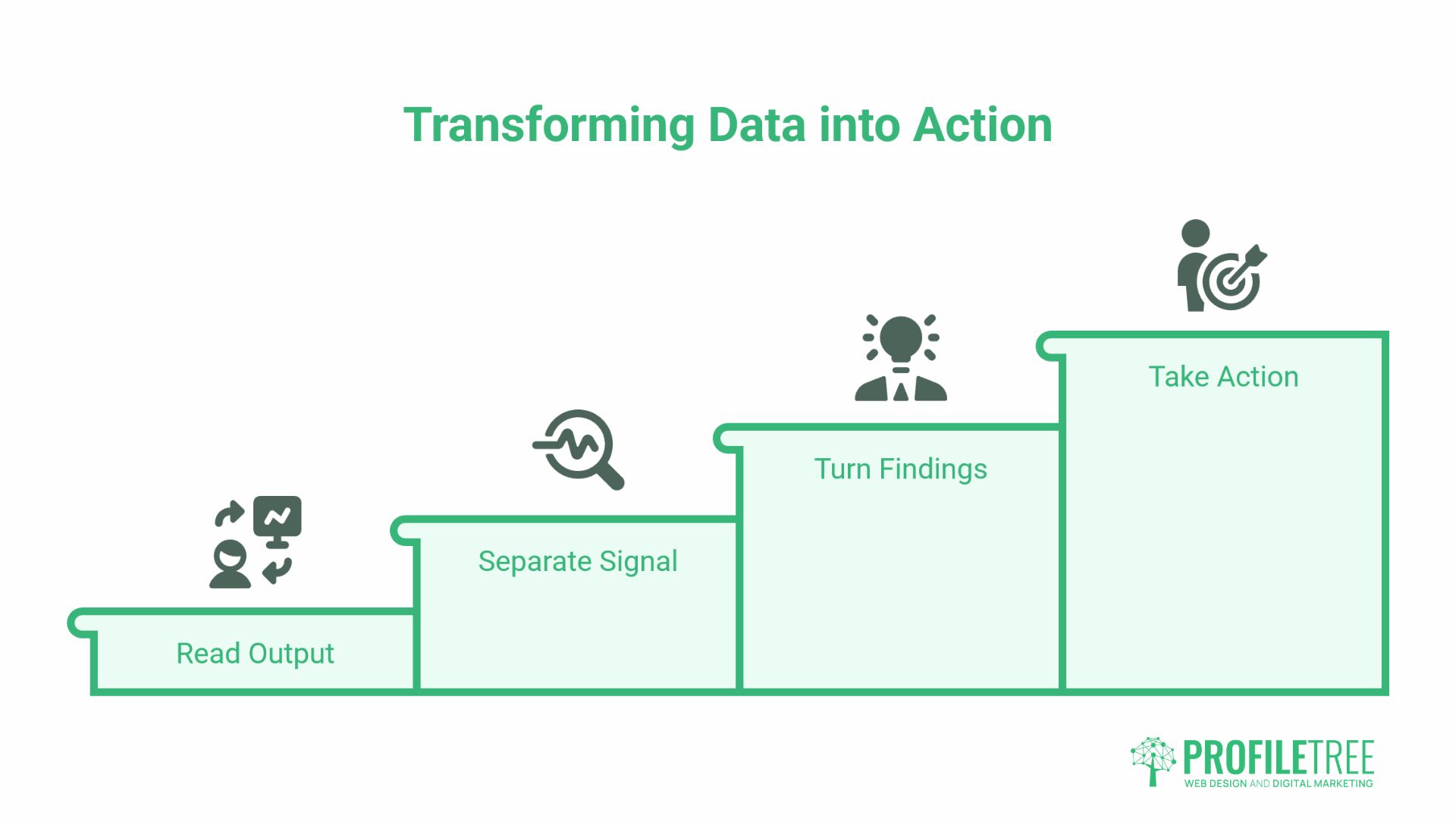
Software does not deliver insight on its own. Someone has to read the output, separate the signal from the noise, and turn findings into action. This is the operational reality competitors rarely mention.
Analyst versus community manager
The two roles are different. A community manager engages in real time, replying to comments and handling day-to-day interaction. An analyst steps back, reads the patterns over weeks, and reports what the data means for strategy. A small business often asks one person to do both, which works until volume grows.
The tension between the two shows up fast. The community manager is reactive by nature, dealing with what lands in the inbox today, while the analyst’s value comes from spotting slow trends that no single day reveals. Ask one person to do both, and the urgent work always wins, so the strategic reading quietly never happens. For smaller businesses, the realistic answer is to ring-fence time: a set hour each week where someone stops responding to mentions and instead reads across them, looking for the patterns that should shape next quarter’s plan.
Budgeting the time, not just the licence
A reasonable rule is to budget the same amount for human time as for the subscription. A tool that costs £100 a month but needs ten hours of skilled attention a week is far more expensive than its invoice suggests. If that time is not available in-house, digital marketing training or outside support closes the gap, and the right social media marketing partner can run the listening process so your team acts only on what matters.
Connecting listening to the rest of your marketing
Listening works best when wired into everything else. Mentions feed content marketing, reputation signals feed your customer service approach on social media, and audience language feeds your brand voice and brand storytelling. On its own, a listening tool is a smoke alarm. Connected to a wider digital strategy, it becomes part of how the business grows. ProfileTree, the Belfast-based digital agency, builds that connection for SMEs across Northern Ireland, Ireland, and the UK, linking the data to the social media marketing and content work that acts on it.
Conclusion: Social media listening tools
A social listening tool is only as valuable as the action it triggers. Choose by business size and budget, check the data privacy basics for UK and Irish operations, and budget for the human time to read and respond. If you want the listening process connected to a working marketing plan rather than left in a dashboard, talk to ProfileTree’s team about social media marketing for your business.
FAQs
What is the best social listening tool for a small business?
There is no single best tool. For sole traders and startups, Google Alerts and affordable options like Mention cover the basics. Small teams often prefer Sprout Social or Hootsuite Insights for combining listening with scheduling.
Is social media listening legal under GDPR?
Yes, when it analyses public conversations through authorised platform APIs. It becomes risky when tools scrape personal data without permission. Always check whether a tool uses official API access before subscribing.
What is the difference between social listening and social media monitoring?
Monitoring is what: it counts mentions and tracks engagement. Listening is the why: it analyses sentiment, trends, and the reasons behind the conversation so you can act on patterns rather than single posts.