
AI Business Training: Essential Skills for Modern Business Success
Table of Contents
AI business training is essential as Artificial Intelligence (AI) has transformed from a theoretical concept to a practical business necessity. For organisations across Northern Ireland, Ireland, and the UK, AI training has become fundamental to maintaining competitiveness and driving digital transformation. Business leaders no longer question if they should implement AI, but rather how quickly they can equip their teams with the necessary skills.
AI business training encompasses more than just technical knowledge—it involves developing a comprehensive understanding of how AI solutions can address specific business challenges, improve operational efficiency, and accelerate digital transformation. As more small and medium enterprises (SMEs) adopt AI technologies, the gap between digitally mature businesses and those lagging behind continues to widen.
“We’ve observed that businesses implementing structured AI training programmes achieve measurably better outcomes than those attempting ad-hoc adoption,” notes Ciaran Connolly, Director of ProfileTree. The companies seeing real returns aren’t necessarily those with the largest budgets, but those investing in proper skills development for their teams.
Why AI Training Matters for Your Business
The strategic implementation of AI requires more than just purchasing technology—it demands developing human capabilities across the organisation. Investing in AI training delivers multiple business advantages that drive digital transformation in ways technology alone cannot provide.
Competitive Advantage Through AI Literacy
AI literacy has become a critical differentiator for businesses of all sizes. Organisations with AI-trained staff can:
- Make data-driven decisions faster and with greater accuracy
- Automate routine tasks to free up human talent for more creative and strategic work
- Deliver more personalised customer experiences
- Identify patterns and insights that might be missed through traditional analysis
For SMEs in particular, AI training provides the opportunity to compete with larger organisations by working smarter rather than bigger. A well-trained team can leverage AI tools to achieve digital transformation outcomes that previously would have required significantly more resources.
Bridging the AI Skills Gap
The demand for AI skills far exceeds the current supply in the job market. According to recent studies, 78% of UK businesses report difficulty hiring staff with adequate AI skills. This skills gap creates a significant opportunity for businesses that invest in training existing staff rather than competing for scarce talent.
Internal training programs offer several advantages:
- Development of AI capabilities tailored to your specific industry and digital transformation needs
- Retention of institutional knowledge while adding new technical skills
- Greater employee engagement and job satisfaction
- Reduced recruitment costs and faster implementation of AI initiatives
From Theory to Practice: Real Business Applications
AI business training delivers the greatest value when it focuses on practical applications rather than theoretical concepts. Effective training programs emphasise how AI can solve existing business problems, such as:
- Customer service enhancement: Training teams to implement AI chatbots and virtual assistants to improve response times and service quality
- Marketing optimisation: Developing skills to use AI for customer segmentation, campaign analysis, and content personalisation
- Operational efficiency: Teaching staff to identify processes that could benefit from automation or AI-enhanced decision making
- Product development: Building capabilities to incorporate AI features into existing products or services
This practical approach ensures that training translates directly into business improvements, creating immediate value while building long-term capabilities.
Core Components of Effective AI Business Training
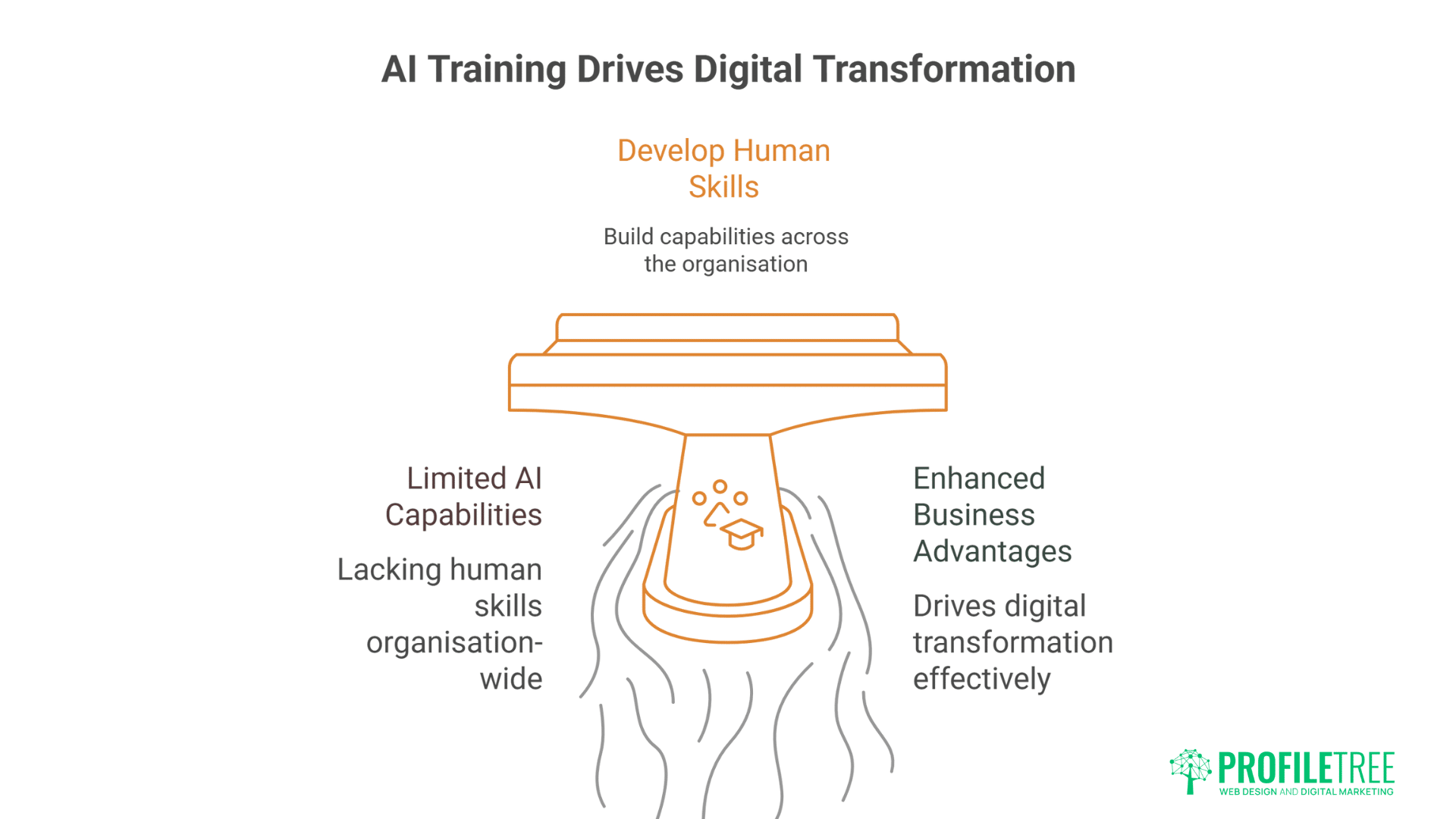
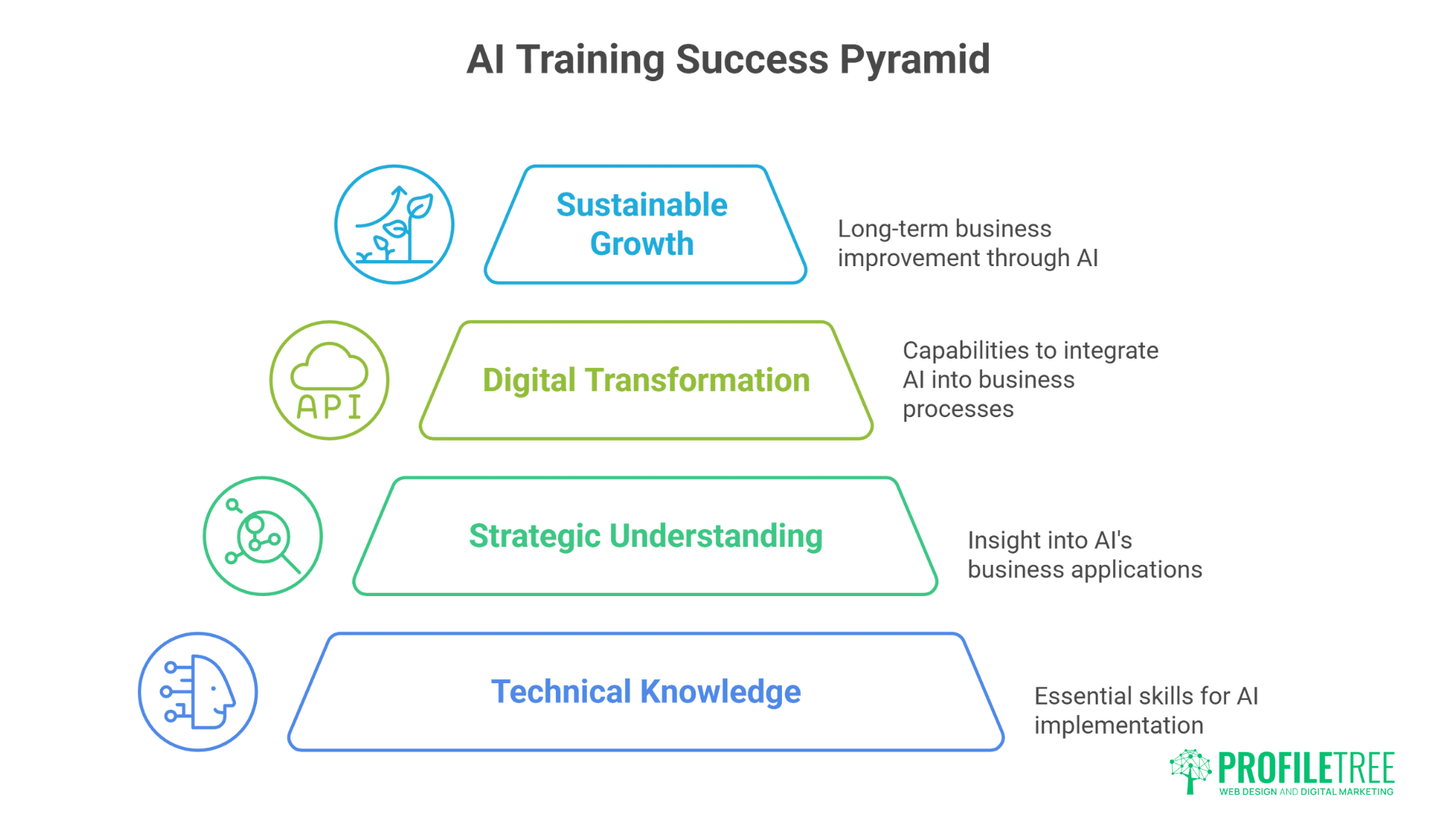
Successful AI training programmes balance technical knowledge with strategic understanding and digital transformation capabilities. These core components work together to create lasting business transformation.
AI Fundamentals for Decision-Makers
Business leaders and decision-makers require a different type of AI training than technical staff. Executive-level training should focus on:
- Strategic understanding of AI capabilities and limitations
- Frameworks for evaluating AI investment opportunities
- Ethical considerations and governance requirements
- Digital transformation strategies for AI implementation
This foundation enables leaders to make informed decisions about AI adoption, set realistic expectations, and provide the necessary support for successful implementation.
Technical Training for Implementation Teams
For staff directly involved in implementing AI solutions, technical training is essential. This typically includes:
- Data preparation and management skills
- Familiarity with common AI platforms and tools
- Basic understanding of machine learning concepts
- Skills for integrating AI solutions with existing systems
The technical depth required will vary depending on whether your organisation plans to build custom AI solutions or implement existing platforms. Most SMEs benefit from focusing on application and integration skills rather than advanced AI development.
Organisational Change Management
Perhaps the most overlooked aspect of AI business training is preparing the wider organisation for digital transformation. Comprehensive training should include:
- Communication strategies for explaining AI initiatives to all stakeholders
- Addressing concerns about job displacement or role changes
- Developing new workflows that effectively combine human and AI capabilities
- Creating feedback mechanisms to continuously improve AI implementations
Organisations that neglect this component often struggle with resistance to adoption, regardless of the technical quality of their AI solutions.
Designing an AI Training Programme for Your Business
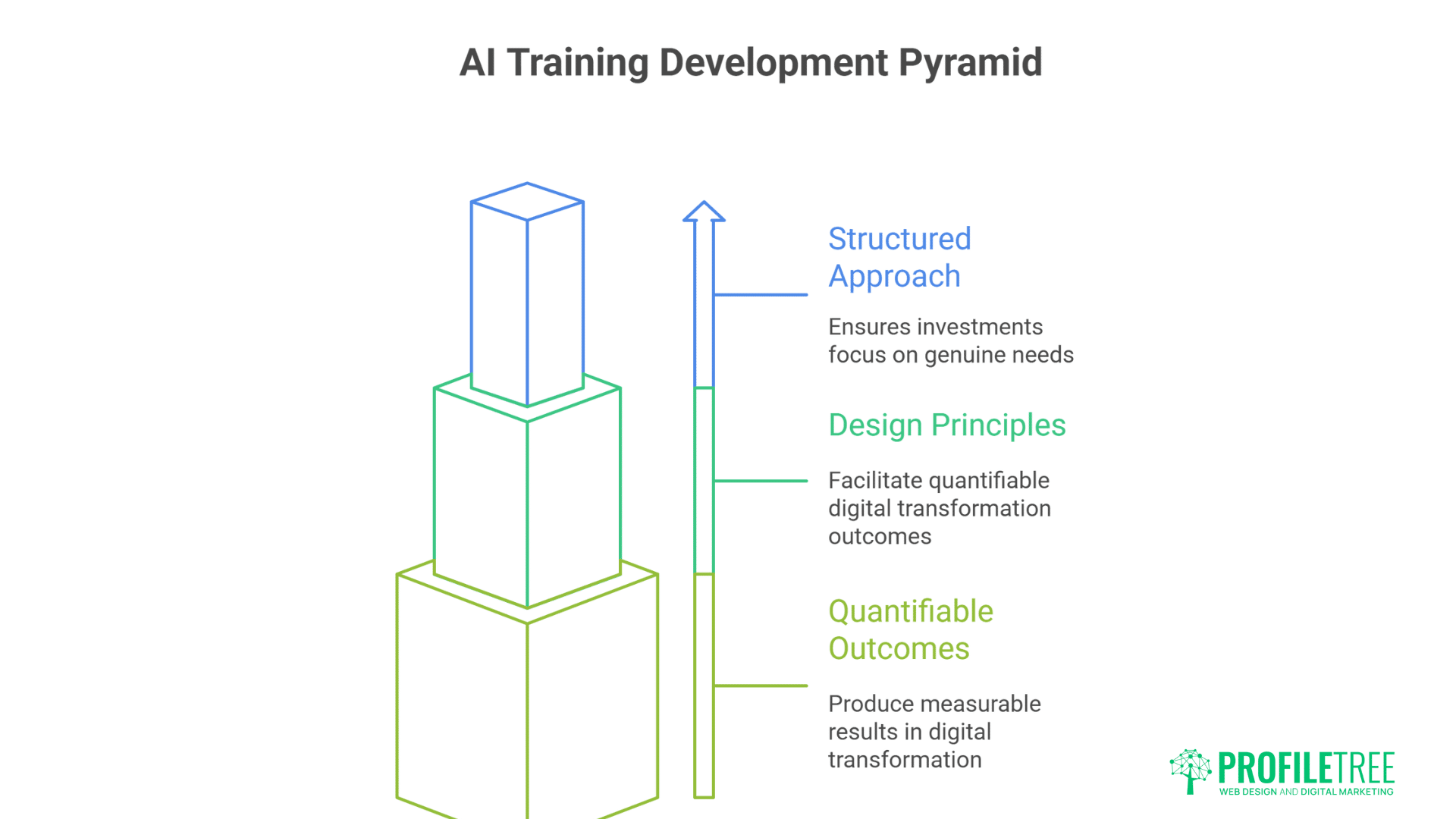
A structured approach to AI training development ensures investment targets the capabilities your organisation truly needs. These design principles help create training that delivers measurable digital transformation impact.
Assessing Your Current AI Readiness
Before investing in training, it’s crucial to assess your organisation’s current AI capabilities and digital transformation readiness. This assessment should consider:
- The digital maturity of your existing systems and processes
- Data availability, quality, and governance
- Current technical capabilities within your team
- Specific business challenges that could benefit from AI solutions
This baseline evaluation helps prioritise training investments and establish realistic timelines for AI implementation.
Creating a Tiered Training Approach
Effective AI training programmes typically adopt a tiered approach, with different content for different roles:
- Executive leadership: Focus on strategic understanding, business case development, and governance
- Middle management: Emphasis on change management, project selection, and team leadership during transition
- Technical teams: Detailed training on specific AI tools, data management, and integration techniques
- General staff: Basic AI literacy, new workflow adoption, and collaboration with AI systems
This approach ensures everyone receives appropriate knowledge without overwhelming team members with unnecessary technical details.
Balancing Internal and External Training Resources
Most organisations benefit from combining internal and external training resources. Consider:
- Engaging specialist training providers for foundational concepts and technical skills
- Developing internal knowledge-sharing mechanisms to spread expertise
- Creating mentorship programmes between technically proficient staff and others
- Utilising online learning platforms for continuous skills development
External specialists bring broader expertise and established curricula, while internal training ensures relevance to your specific business context.
Industry-Specific AI Training Considerations
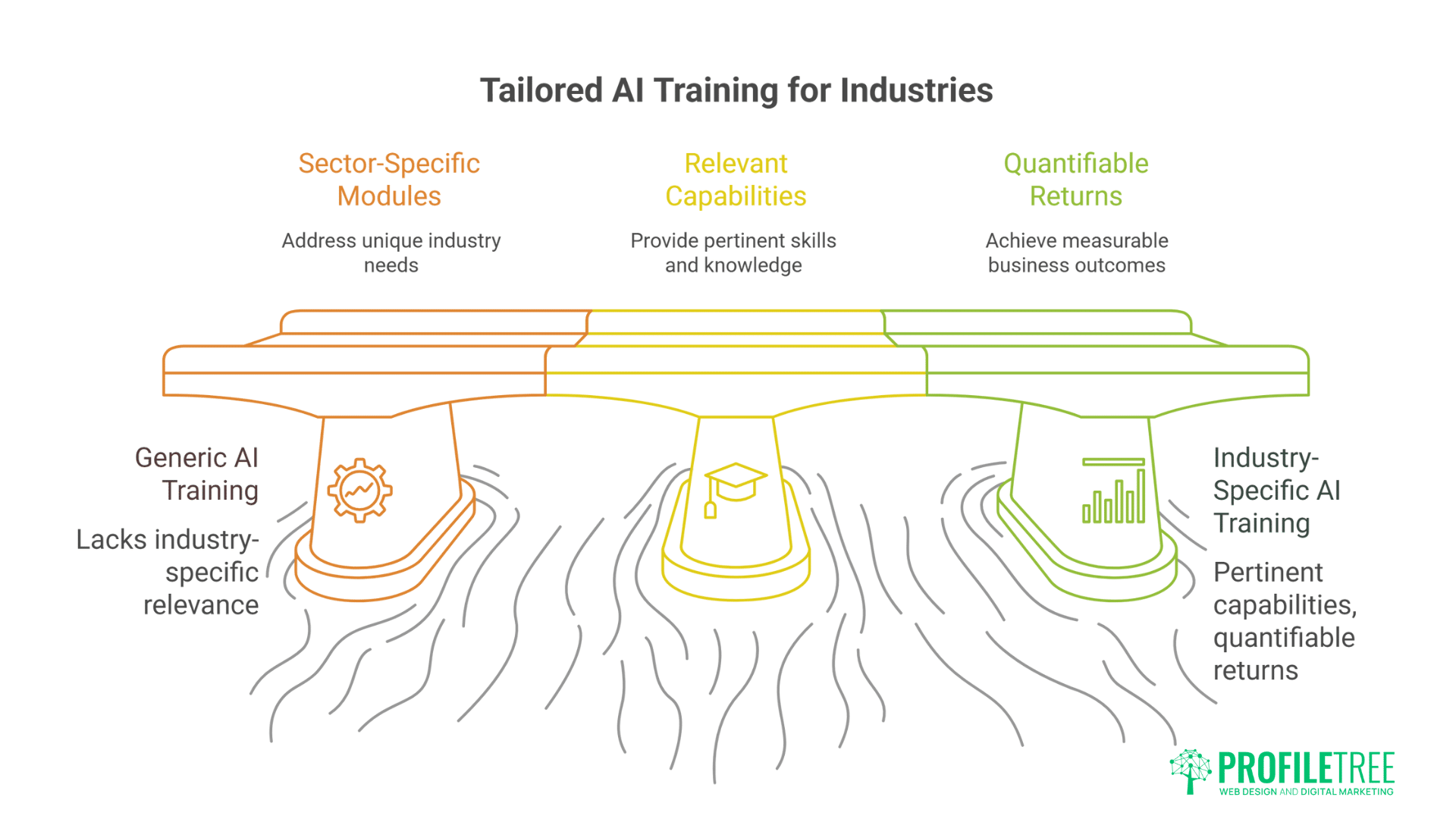
Different industries face unique challenges and opportunities when implementing AI technologies. Training must address these sector-specific digital transformation needs to deliver relevant capabilities and measurable returns.
Retail and E-commerce
The retail sector offers some of the most immediate applications for AI technologies. Businesses in this space can achieve rapid returns through properly targeted training initiatives.
For retail businesses, AI training should emphasise:
- Customer behaviour analysis and personalisation techniques
- Inventory management and demand forecasting
- Visual search and recommendation systems
- Pricing optimisation strategies
Staff need to understand how these capabilities translate into improved customer experiences and operational efficiency.
Manufacturing and Supply Chain
Manufacturing businesses face unique challenges that AI can address effectively. Training in this sector must balance technical depth with practical shop-floor applications.
Manufacturing businesses benefit from AI training focused on:
- Predictive maintenance and equipment optimisation
- Quality control automation
- Supply chain visibility and risk management
- Production planning and scheduling
These applications can deliver significant cost savings and reliability improvements when properly implemented.
Professional Services
Knowledge-based businesses can transform service delivery through strategic AI implementation. Training for professional service firms requires particular attention to client confidentiality and value demonstration.
For professional service firms, AI training should concentrate on:
- Document analysis and information extraction
- Client service enhancement through AI assistants
- Knowledge management and expertise location
- Time and resource allocation optimisation
These capabilities can transform service delivery models while maintaining or improving quality.
Healthcare and Wellbeing
The healthcare sector presents both significant opportunities and unique constraints for AI adoption. Training must navigate complex regulatory requirements while delivering meaningful improvements to care.
Healthcare organisations require specialised AI training covering:
- Patient data privacy and security requirements
- Diagnostic support systems
- Administrative process automation
- Patient engagement and monitoring technologies
The regulatory requirements in healthcare make proper training particularly important.
Measuring the Impact of AI Training
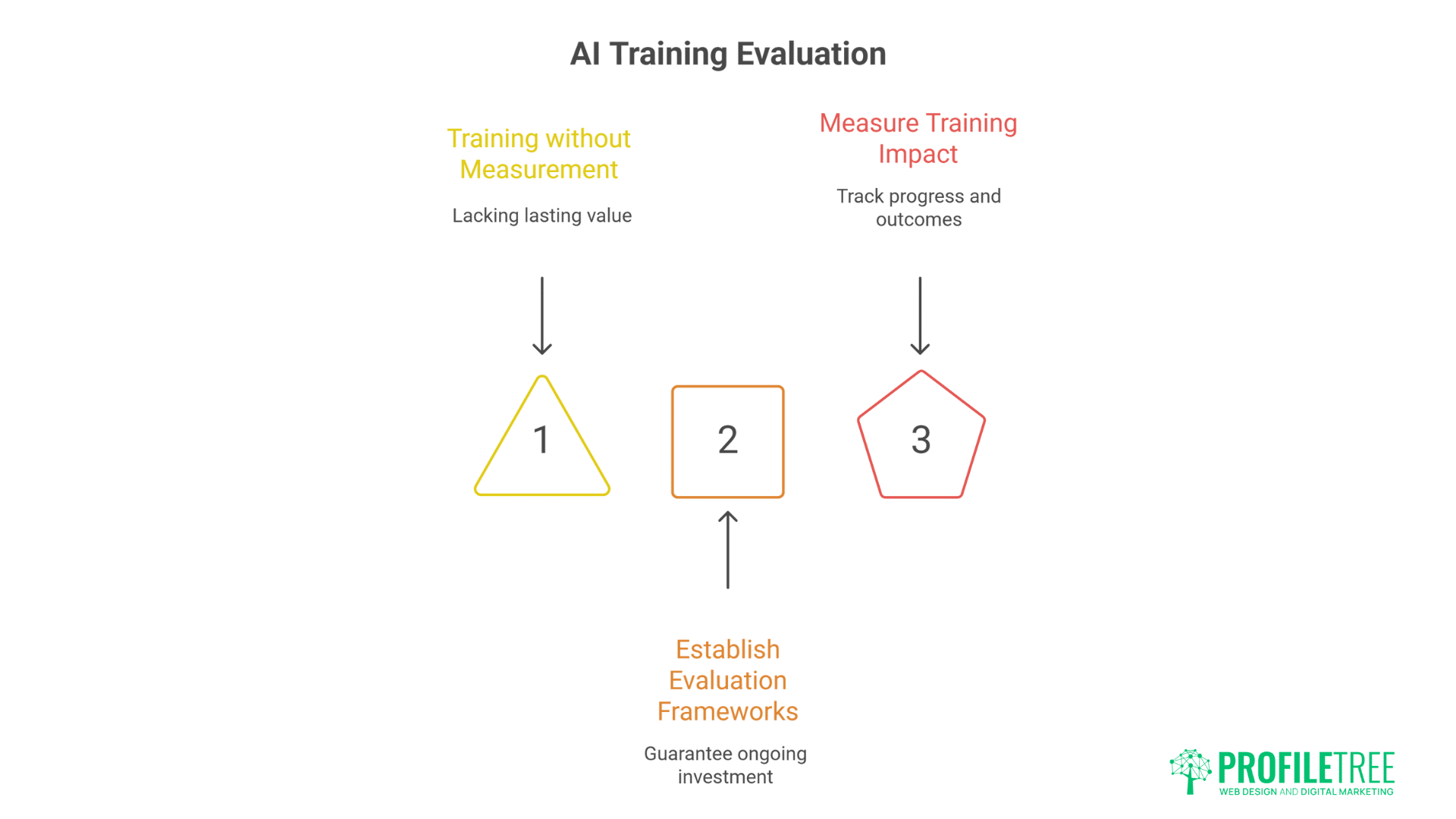
Training without measurement often fails to deliver sustained value. Implementing robust evaluation frameworks ensures continued investment in capabilities that drive digital transformation results.
Defining Success Metrics
Without clear measurement, AI training programmes risk becoming exercises in technology exploration rather than business improvement. Establishing concrete metrics helps maintain focus on business outcomes.
To justify investment in AI training, organisations should establish clear success metrics:
- Skills acquisition (measured through assessments or certifications)
- Implementation milestones for AI projects
- Business impact metrics specific to each AI application
- Digital transformation outcomes and return on investment calculations for training expenditure
These metrics should align with overall business objectives rather than focusing solely on technical achievements.
Continuous Learning and Development
AI skills require ongoing refinement as technologies evolve and new applications emerge. Creating a culture of continuous learning is essential for maintaining a competitive advantage.
AI technologies evolve rapidly, making continuous learning essential. Effective organisations:
- Schedule regular refresher training as technologies advance
- Create communities of practice to share new knowledge and applications
- Recognise and reward AI innovation and skills development
- Allocate time for experimentation and learning
This ongoing commitment ensures that initial training investments continue to deliver value as the technology landscape changes.
Feedback Loops for Programme Improvement
Even the best-designed training programmes require refinement based on real-world implementation. Structured feedback mechanisms ensure continuous improvement and adaptation.
The most effective AI training programmes continuously improve based on:
- Participant feedback on training content and delivery
- Application success metrics from implemented projects
- Identification of emerging skill gaps
- Comparison with industry benchmarks and standards
This iterative approach maximises return on training investment and keeps programmes relevant.
Common Challenges in AI Business Training
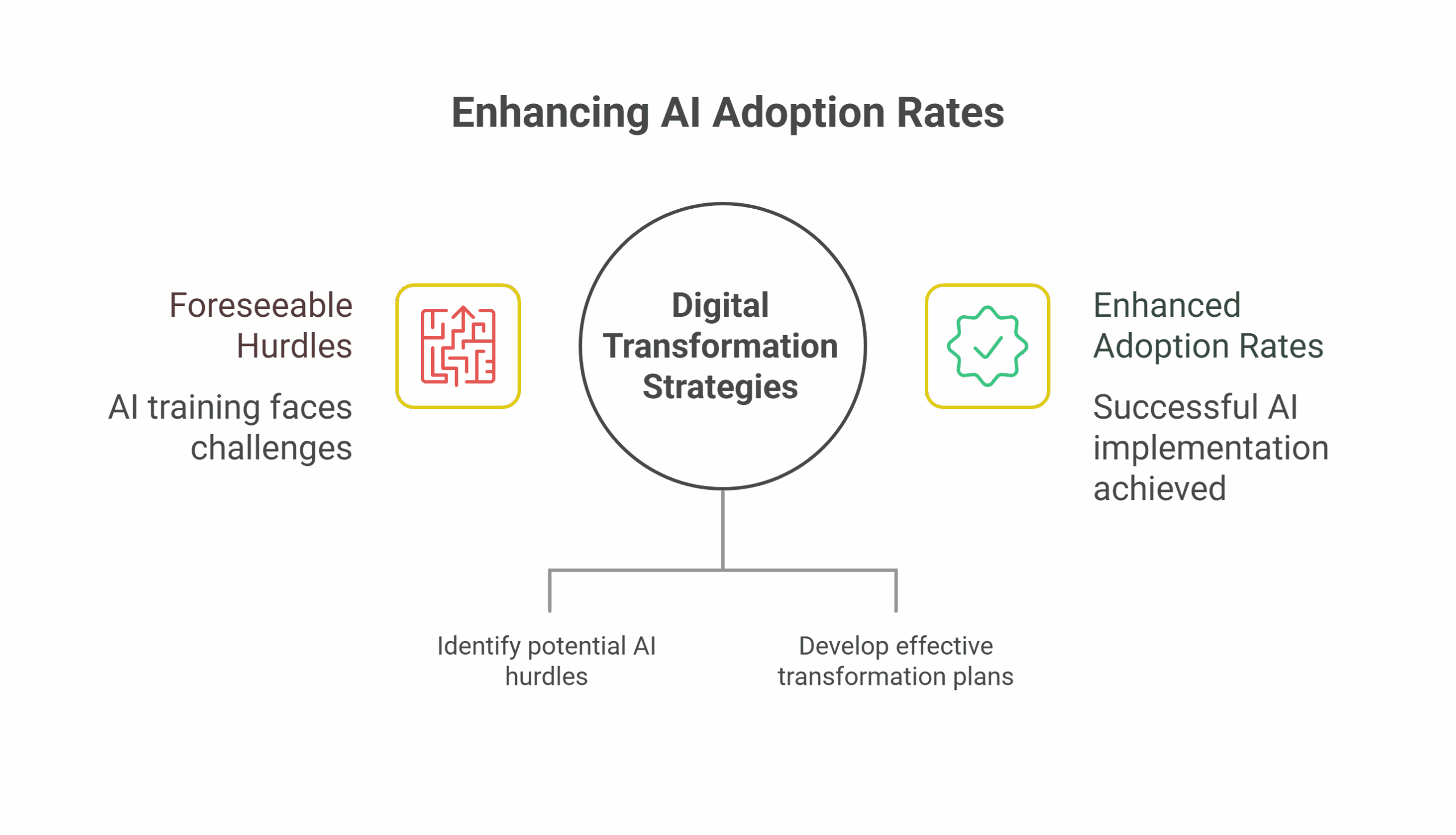
Even well-designed AI training initiatives face predictable obstacles. Understanding these challenges in advance allows organisations to develop effective digital transformation strategies and improve adoption rates.
Overcoming Resistance and Anxiety
Change management represents one of the greatest challenges in digital transformation. Addressing human concerns proactively significantly increases success rates for training initiatives.
AI often triggers concerns about job security and significant workplace changes. Effective training programmes:
- Address fears directly with transparent information about AI’s role
- Emphasise how AI augments human capabilities rather than replacing them
- Showcase success stories where AI has improved job satisfaction
- Involve staff in identifying AI applications for their own work areas
This approach builds enthusiasm rather than resistance.
Avoiding Technical Overwhelm
Technical complexity represents a major barrier to AI adoption for many business users. Gradual skill development creates confidence rather than confusion.
Many training programmes fail by introducing too much technical complexity too quickly. Better approaches:
- Start with business applications rather than technical details
- Use familiar analogies to explain complex concepts
- Provide hands-on experience with user-friendly AI tools
- Create a safe environment for questions and experimentation
This gradual introduction builds confidence and encourages further learning.
Managing Expectations
The gap between AI hype and practical reality can lead to implementation disappointment. Setting realistic expectations from the beginning creates sustainable momentum.
Unrealistic expectations about AI capabilities can lead to disappointment and abandoned initiatives. Training should:
- Clearly communicate what current AI can and cannot do
- Distinguish between short-term applications and longer-term possibilities
- Prepare teams for the iterative nature of AI implementation
- Emphasise that AI systems require ongoing maintenance and improvement
Setting appropriate expectations leads to sustainable adoption rather than initial excitement followed by disillusionment.
How ProfileTree Can Help Your Business with AI Training
ProfileTree brings local expertise and practical implementation experience to AI training for digital transformation across Northern Ireland, Ireland, and the UK. Our approach combines education with action to deliver measurable business results.
Customised AI Training Programmes
Every organisation has unique requirements for digital transformation based on industry, size, and digital maturity. Generic training rarely delivers the specific capabilities businesses need.
ProfileTree offers tailored AI training programmes designed specifically for SMEs across Northern Ireland, Ireland, and the UK. Our training solutions are:
- Business-focused: We emphasise practical applications over theoretical concepts
- Scalable: Training can be adjusted to match your organisation’s size, industry, and current digital transformation readiness
- Role-specific: Different programmes for executives, managers, technical staff, and general employees
- Outcome-oriented: Clear connection between training activities and digital transformation results
Our experienced trainers bring real-world implementation experience rather than just academic knowledge.
Integrated Implementation Support
Training without practical application rarely delivers business value. Implementation support bridges the gap between learning and doing.
Unlike generic training providers, ProfileTree combines training with implementation support:
- Technical assistance during initial AI projects
- Guidance on vendor selection and technology evaluation
- Data readiness assessments and improvement strategies
- Digital transformation and communication planning
This integrated approach ensures that training translates into actual business improvements.
Local Expertise with Global Perspective
Local understanding combined with global technology expertise creates the ideal foundation for AI training. Northern Ireland businesses benefit from contextually relevant guidance.
As a Belfast-based agency, ProfileTree offers the advantage of:
- Understanding of the specific challenges facing businesses in Northern Ireland, Ireland, and the UK
- Familiarity with local business networks and support resources
- In-person training options combined with digital delivery
- Ongoing local support after initial training completion
This local presence, combined with our global technology perspective, ensures relevant, accessible training.
Take the Next Step in Your AI Journey
Moving from interest to action requires practical next steps. ProfileTree offers several pathways to begin developing your organisation’s digital transformation capabilities, regardless of your current digital maturity.
Book a Free AI Readiness Consultation
Understanding your starting point is essential for effective AI training. A professional assessment provides clarity about priorities and potential.
Ready to explore how AI training could benefit your organisation? ProfileTree offers a complimentary 60-minute AI readiness consultation to:
- Assess your current digital capabilities
- Identify high-potential AI applications for your specific business
- Outline a preliminary training and digital transformation roadmap
- Provide a clear understanding of investment requirements and expected returns
This no-obligation consultation provides valuable insights, whether or not you choose to proceed with our training programmes.
Start with a Pilot Programme
Beginning with a focused pilot allows organisations to develop AI capabilities with controlled scope and risk. Success creates internal champions for broader adoption.
For organisations new to AI, we recommend starting with a focused pilot programme:
- Select a specific business challenge with clear success metrics
- Train a cross-functional team to address this challenge using AI
- Implement a solution with our support
- Evaluate results and refine the approach
- Scale successful approaches to other areas of your business
This measured approach minimises risk while demonstrating the potential value of broader AI adoption.
Join Our AI Business Community
Learning from peers accelerates AI adoption and reduces common implementation pitfalls. Community participation provides ongoing support beyond formal training.
ProfileTree hosts a growing community of businesses implementing AI across Northern Ireland, Ireland, and the UK. Community members benefit from:
- Regular knowledge-sharing events and webinars
- Case studies and success stories from similar organisations
- Early access to new training modules and resources
- Networking opportunities with other business leaders
Participation in this community accelerates learning and provides valuable peer support during your AI journey.
Conclusion: The Time for AI Training Is Now
The question for most businesses is no longer whether to adopt AI, but how to do so effectively. AI business training represents one of the highest-return investments organisations can make in their digital transformation journey. By developing internal capabilities rather than relying solely on external expertise, businesses create sustainable advantages that evolve with the technology.
For SMEs in Northern Ireland, Ireland, and the UK, the opportunity is particularly significant. The digital playing field has never been more level, allowing smaller, agile organisations to compete through digital transformation and smart implementation of AI capabilities. However, this window of opportunity requires action now, before AI literacy becomes a standard business expectation rather than a differentiator.
ProfileTree is committed to helping local businesses navigate this digital transformation successfully. Through our specialised AI training programmes, implementation support, and business community, we provide the resources needed to turn AI potential into business results.
Contact ProfileTree today to begin your AI training journey and position your business for digital transformation success. Our team is ready to help you develop the skills, strategies, and systems needed to thrive in an increasingly AI-enhanced business landscape.