
Why the Advantages of CAD Still Matter in 2026
Table of Contents
The advantages of CAD (Computer-Aided Design) have been reshaping industries since the software first replaced the drawing board. Yet in 2026, those advantages are bigger than ever. The advantages of CAD now extend far beyond producing neat technical drawings. Modern CAD tools drive digital twins, feed directly into automated manufacturing workflows, and are central to how engineering, architectural, and product design teams deliver accurate, competitive work at pace.
For businesses evaluating whether to invest in CAD tools, or looking to upgrade legacy workflows, the case is straightforward. The advantages of CAD software span cost reduction, error elimination, faster delivery, and seamless collaboration. This guide covers all of them, clearly and practically, drawing on real industry data and the experience of working with businesses across Northern Ireland, Ireland, and the UK.
At ProfileTree, a Belfast-based digital agency, we work with clients across manufacturing, architecture, and product design. Businesses that pair strong CAD capability with a clear digital strategy for growth are consistently the ones that convert technical excellence into a growing commercial pipeline.
What is CAD Software?
CAD, short for Computer-Aided Design, is software used to create precise 2D drawings and 3D models of physical objects before they are built. It acts as a virtual design environment where engineers, architects, and product designers can draft, test, simulate, and refine designs digitally, before committing time or materials to physical production. In its more advanced forms, it enables parametric modelling, finite element analysis, generative design, and direct integration with manufacturing machinery through CAM systems.
The four main types of CAD software are:
- 2D CAD: For flat technical drawings, schematics, and blueprints. AutoCAD is the best-known example.
- 3D CAD: Produces three-dimensional solid or surface models. Tools include SolidWorks, CATIA, and Fusion 360.
- Parametric CAD: Dimensions are mathematically linked, so changing one feature updates all dependent geometry automatically.
- Direct Modelling CAD: Allows freeform manipulation of geometry without parametric constraints, useful for early concept work.
Each type carries its own set of advantages of CAD, and the right choice depends on your industry, project complexity, and team capability.
Manual Drafting vs CAD: Understanding the Shift
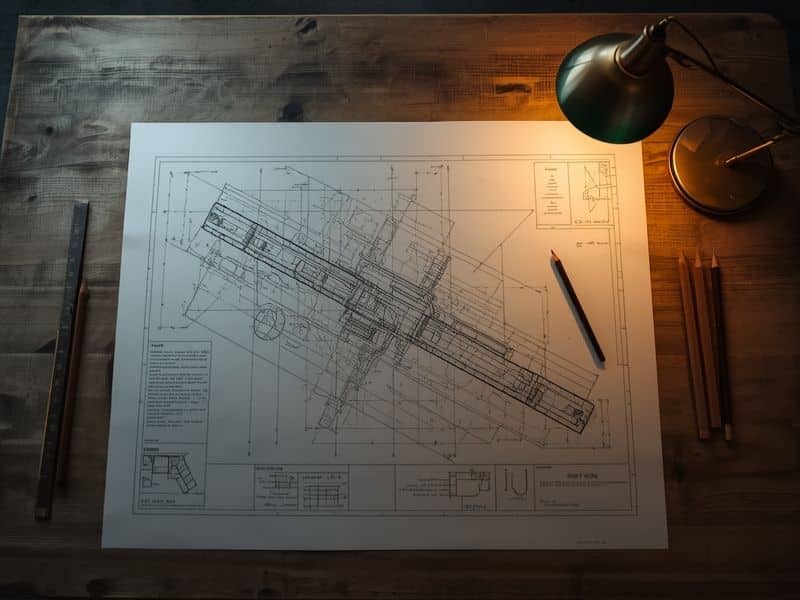
Most existing content on the advantages of CAD skips this comparison entirely. The transition from manual drafting explains why the advantages of CAD are so significant in practice. The table below compares the two approaches across the metrics that matter most:
| Criterion | Manual Drafting | CAD Software |
|---|---|---|
| Accuracy | Dependent on drafter skill; prone to measurement error | Millimetre-level precision enforced by software |
| Revision Speed | Full redraw often required for changes | Parametric updates propagate across the model instantly |
| Error Detection | Visual review only; clashes found on site | Automated clash detection and simulation before build |
| Collaboration | Physical prints shared by post or courier | Cloud-based; multiple users on one model simultaneously |
| Prototype Cost | Physical prototypes required at each design stage | Virtual prototyping reduces physical prototype dependency |
| Compliance Audit | Paper-based, difficult to version-control | Structured digital records, BIM-compliant where required |
The advantages of CAD shown here are not about aesthetics. They are commercial advantages that reduce cost, reduce risk, and accelerate delivery.
The Core Advantages of CAD Software
The core advantages of CAD break down into five areas: precision, cost reduction, collaboration, simulation, and workflow integration. Each has a measurable impact on project outcomes.
Precision and Parametric Modelling
One of the most frequently cited advantages of CAD is precision. CAD software enforces exact dimensional accuracy across every element of a design. Parametric modelling takes this further: every feature is defined by mathematical relationships, so changing one dimension automatically updates all associated geometry. For complex engineering assemblies, this is one of the most time-saving advantages of CAD available. Automotive manufacturers using parametric CAD report design iteration time reductions of up to 40% compared to 2D manual workflows.
Automated Clash Detection and Simulation

Perhaps the most financially significant of the advantages of CAD is automated clash detection. In construction and MEP design, clashes occur when two physical elements occupy the same space. Identifying a clash on site costs thousands of pounds in rework. Identifying the same clash in a 3D CAD model costs nothing to fix.
Modern CAD systems also include Finite Element Analysis (FEA) simulation, allowing engineers to apply virtual forces, heat loads, or pressure to a model before a physical prototype is built. The advantages of CAD simulation cover structural stress testing, thermal analysis, fluid dynamics modelling, and fatigue prediction. Each capability represents direct cost and risk reduction.
Tangible Cost Reduction and ROI
The principal cost advantages of CAD come from four areas: reduced physical prototyping, automated Bill of Materials (BOM) generation, error elimination before manufacture, and faster design cycles. For a UK manufacturing SME with a £500,000 average project budget and a 5% rework rate, that is £25,000 in avoidable costs per project. CAD-based clash detection routinely reduces rework by 70 to 80%, delivering net savings well in excess of typical licensing costs.
Enhanced Collaboration and Cloud Integration
Cloud-based CAD platforms allow distributed teams to work on the same model simultaneously, with automatic version control and a single source of truth. Upskilling teams to work effectively in these environments is a common challenge; digital training for technical teams is often the fastest way to close that gap and realise the full value of a CAD investment.
For UK businesses working with international clients or remote supply chains, these collaboration advantages of CAD are operationally significant. Projects move faster, communication improves, and the gap between design intent and manufactured output narrows considerably.
Workflow Integration: CAD, CAM, and Digital Processes
CAD models feed directly into CAM software, generating machine instructions for CNC routers, lathes, and 3D printers. This integration eliminates manual translation errors and improves part consistency. Businesses exploring automation more broadly often find that AI marketing and automation tools complement production-side gains by streamlining the commercial and client-facing side of the business.
CAD data also feeds into BIM platforms, digital twin environments, and PLM systems. The advantages of CAD in these integrated contexts compound: data created at the design stage continues to deliver value through production, operation, and eventual asset decommissioning.
2D vs 3D CAD: Which Advantages Apply to Your Business?
The advantages of 2D CAD suit technical documentation, schematics, architectural floor plans, and businesses with straightforward drafting needs. The advantages of 3D CAD are essential for product design requiring simulation, structural and MEP engineering, manufacturing workflows feeding into CNC production, and BIM-compliant construction projects requiring ISO 19650 compliance.
For most businesses beyond basic documentation, the advantages of CAD at the 3D level justify the higher investment. The simulation, collaboration, and integration benefits are simply not available in 2D environments.
Industry-Specific Advantages of CAD

The advantages of CAD manifest differently across sectors. Understanding the benefits relevant to your industry helps build a clearer business case for investment or upgrade.
Architecture and Construction
In architecture and construction, the advantages of CAD centre on precision documentation, clash detection, and regulatory compliance. For UK and Irish firms, BIM-compliant CAD workflows are now a requirement for public sector contracts under BS EN ISO 19650. CAD tools that support BIM Level 2 compliance open access to government tender opportunities that manual workflows would exclude. Firms in this sector also find that communicating their capability through professional web design for engineering firms is as important as the capability itself when winning new clients.
Manufacturing and Engineering
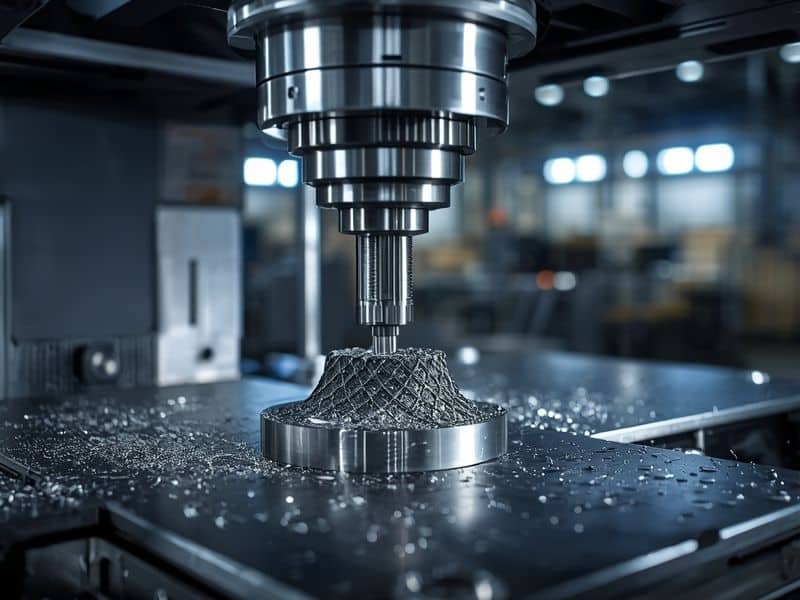
For manufacturers, the most immediate advantages of CAD are in the design-to-production pipeline. Parametric 3D models feed directly into CAM software, reducing setup time and improving part consistency. FEA simulation delivers significant savings at the early design stage for precision-engineered components. Manufacturers who document these gains through content marketing and case studies find it significantly easier to win new contracts by demonstrating measurable outcomes rather than simply listing capabilities.
Product Design and Consumer Goods
Product designers rely on the visualisation advantages of CAD to communicate concepts before production budgets are committed. Parametric models update in minutes when clients request changes, and CAD-derived renders feed directly into video marketing and product animation content, giving businesses a powerful way to showcase new products before physical production begins.
Disadvantages of CAD and How to Manage Them
A credible assessment of the advantages of CAD requires addressing its limitations. The principal disadvantages of CAD are high initial software and hardware costs, a steep learning curve for 3D tools, and data management complexity. Each is manageable.
Software Costs and ROI
AutoCAD subscriptions run to several hundred pounds per user per year, with high-end tools like CATIA considerably more expensive. Subscription-based pricing has reduced the barrier to entry, and cloud-based tools like Fusion 360 offer capable 3D parametric modelling at lower price points. For businesses with regular design workloads, the advantages of CAD in reduced rework and faster delivery typically generate a positive ROI within the first year.
Training and Learning Curve
A drafter competent in 2D AutoCAD may require several months of training before they are productive in SolidWorks or Revit. ProfileTree’s digital training programmes for SMEs are designed around exactly this challenge: building practical capability within teams that have limited time for extended off-site training. Clear objectives, phased rollout, and ongoing support improve CAD adoption outcomes considerably.
Data Management and File Compatibility
CAD projects generate large, complex files. Managing version control and format compatibility across supply chains is a real operational challenge. Modern PLM systems and common exchange formats such as STEP and IGES address most interoperability issues. Establishing clear data management protocols at project outset reduces the practical difficulties significantly.
CAD, Digital Strategy, and Your Business

The advantages of CAD do not exist in isolation. For businesses serious about competitiveness, CAD is one component of a broader digital strategy that includes SEO, content, and online visibility.
A manufacturer who uses CAD to deliver faster, more accurate work has a genuine story to tell. A web presence supported by strong SEO services for engineering businesses puts that capability in front of buyers who are actively searching for what you offer.
The website itself needs to reflect technical credibility. A professional website development project that clearly explains CAD-driven processes and includes measurable case study outcomes is the logical extension of CAD investment. Capability without visibility is a commercial constraint.
Ciaran Connolly, founder of ProfileTree, puts it directly: “The advantages of CAD give businesses something real to talk about. But if that capability is not visible online and is not supported by a content strategy that explains the value to clients, those advantages stay internal. Getting those capabilities in front of the right audience is where digital strategy for technical businesses adds the commercial return.”
The Future of CAD: AI and Generative Design
The advantages of CAD in 2026 include AI-driven generative design, now available in mainstream tools like Fusion 360. Engineers define performance requirements and the software generates optimised geometry automatically, routinely producing designs that are lighter, stronger, and more material-efficient than conventional approaches.
Digital twin integration is extending the advantages of CAD beyond the design phase, connecting physical assets to their digital counterparts through IoT sensors for real-time monitoring. The same AI wave reshaping CAD is also changing client interaction: AI chatbots for technical enquiries are increasingly used by manufacturing and engineering firms to qualify leads and answer specification questions at scale.
For UK businesses planning CAD investment, choosing platforms with strong AI integration and active development roadmaps will determine how quickly the advantages of CAD grow for your team.
Next Steps

The advantages of CAD are commercially proven and available at scale to businesses of every size. The question is not whether the advantages of CAD justify investment, but how to implement CAD effectively and build the digital infrastructure that converts technical capability into commercial results.
ProfileTree works with engineering and design businesses across Northern Ireland, Ireland, and the UK. From SEO services that target engineering buyers to content marketing built around technical expertise, our team helps businesses grow their online pipeline alongside their operational capability.
Engineering and manufacturing businesses increasingly use social media marketing for B2B brand building to reach procurement managers and project directors where they spend time online. Combined with strong CAD-backed content, this builds the brand recognition that turns searches into enquiries.
Explore our digital services for manufacturing and engineering businesses, or get in touch to discuss your specific requirements.
FAQs
How long does it take to see a return on CAD investment?
Most businesses with regular design workloads see a positive return within 6 to 12 months. The savings come quickest from reduced rework and fewer physical prototypes, both of which deliver measurable cost reductions from the first few projects.
Which CAD software is best for small businesses in the UK?
Fusion 360 is the most practical starting point for most UK SMEs: capable 3D parametric modelling, cloud collaboration, and a lower subscription cost than AutoCAD or SolidWorks. The right choice ultimately depends on your industry, with Revit suited to architecture and SolidWorks to mechanical engineering.
Do I need expensive hardware to run CAD software?
3D CAD does require a reasonably powerful workstation, typically a modern multi-core processor, 16GB of RAM minimum, and a dedicated graphics card. Cloud-based tools like Fusion 360 reduce hardware demands somewhat by offloading processing, making them more accessible for smaller teams.
Can CAD files be shared directly with manufacturers?
Yes. Most manufacturers accept standard exchange formats such as STEP and IGES, which work across different CAD platforms. Many CNC and additive manufacturing facilities can work directly from native CAD files, eliminating the need for manual interpretation of drawings entirely.