
World Cup 2026 Digital Domination: Lessons for UK Brands
Table of Contents
The 2026 FIFA World Cup reaches its final today, and it has already reshaped what effective digital domination looks like for UK brands. Unlike a tournament played on home soil, this one ran across four North American time zones, which meant the “live moment” for most UK fans wasn’t the match itself. It was the highlights reel over breakfast. Brands that planned around that gap achieved genuine digital domination. Brands that stuck to a European playbook lost reach, often without realising why their usual posting schedule had stopped working.
Three things stood out. Automation had to cover the overnight hours across every time zone in play. First-party fan data mattered more than follower counts, which is where a clear digital strategy earns its keep. And a tighter set of UK advertising rules changed what could be said, and when, across food and drink, gambling and licensed hospitality. This piece breaks down what digital domination actually looked like during the tournament, what the regulations now require, and how UK brands can carry the lessons into the next major event, including one considerably closer to home.
Beyond the Hype: What World Cup 2026 Digital Domination Rewarded
Generic “engagement” content was the one thing that reliably underperformed during the tournament. The brands that achieved real digital domination weren’t the ones with the biggest production budgets. They were the ones solving a specific, practical problem for their audience. That’s not a new lesson, but the 2026 World Cup made it sharper because of the schedule. With matches running from mid-afternoon to the small hours of the morning UK time, brands still leaning on a “post during the match” strategy simply weren’t posting when their audience was awake.
For SME marketing teams treating World Cup 2026 digital domination as a case study rather than a live campaign, the takeaway is straightforward. Match your content calendar to when your specific audience is actually online, not to when the event happens. That single adjustment explains more of the performance gap between brands than any amount of ad spend. It also applies well beyond football; any UK brands marketing to an audience that isn’t glued to a screen at the moment something newsworthy happens face the same problem, tournament or not.
Our digital strategy work with SME clients across Northern Ireland and Great Britain increasingly starts with this kind of audience-behaviour mapping before a single asset gets built. Knowing when an audience is actually paying attention turns out to matter more than knowing what to say to them, and it’s the foundation every other pillar of digital domination in this piece builds on.
Time-Zone Lessons from World Cup 2026 Digital Domination
World Cup 2026 was played across the United States, Mexico and Canada, and UK kick-off times reflected that. East Coast matches landed around five hours ahead of British Summer Time, Central time zone venues around six hours ahead, and Mountain or Pacific time zone venues pushed some kick-offs past 2 am BST. The final itself, on 19 July, kicked off at 8 pm BST, a rare late-tournament exception. For most of the group stage, UK fans watching live were doing so overnight, which is exactly the gap that decided which brands achieved digital domination and which didn’t.
That created what’s worth calling the “morning window”: the point, usually between 7 am and 9 am BST, when UK fans checked highlights, reactions and scores on their commute rather than watching live. Brands that scheduled social posts, push notifications and paid creative for that morning window consistently outperformed those still posting at kick-off, when most of their UK audience was asleep. The table below sets out the time zone pattern brands actually saw, region by region.
UK Kick-Off Gaps by World Cup 2026 Venue Region
| Venue Region | Approx. Gap vs BST | Typical UK Kick-Off | When UK Fans Actually Engaged |
|---|---|---|---|
| East Coast (New York, Miami, Boston) | 5 hours ahead | Evening BST | Live, plus morning window follow-up |
| Central (Dallas, Houston, Kansas City) | 6 hours ahead | Late evening BST | Mostly the morning window |
| Mountain / Pacific (Denver, Seattle, LA) | 7 to 8 hours ahead | Overnight BST | Almost entirely the morning window |
Automating for the morning window isn’t complicated in principle, though it does mean rethinking who signs off content at 3 am and building creative templates in advance so a result can become a post within minutes rather than hours. The pattern held regardless of which nation a brand was following, or which time zone a match fell in; the gap between “posted at kick-off” and “posted for the morning window” was consistently the better predictor of digital domination, not the specific match or result.
According to Ciaran Connolly, ProfileTree’s founder: “In 2026, the brands that achieved real digital domination weren’t the ones with the biggest live-tweeting teams. They were the ones with a workflow that could reach the fan the moment they woke up, not the moment the final whistle went.”
For UK brands that don’t operate around the clock, this doesn’t mean staffing an overnight team. It means pre-building content variants for likely outcomes (a win, a loss, a standout individual performance) so the morning-after post can go out fast without anyone needing to be awake at 2 am. This is exactly the kind of workflow our social media marketing service builds for UK brands that want tournament-level digital domination without a 24-hour rota.
Three Pillars of World Cup 2026 Digital Domination That Worked
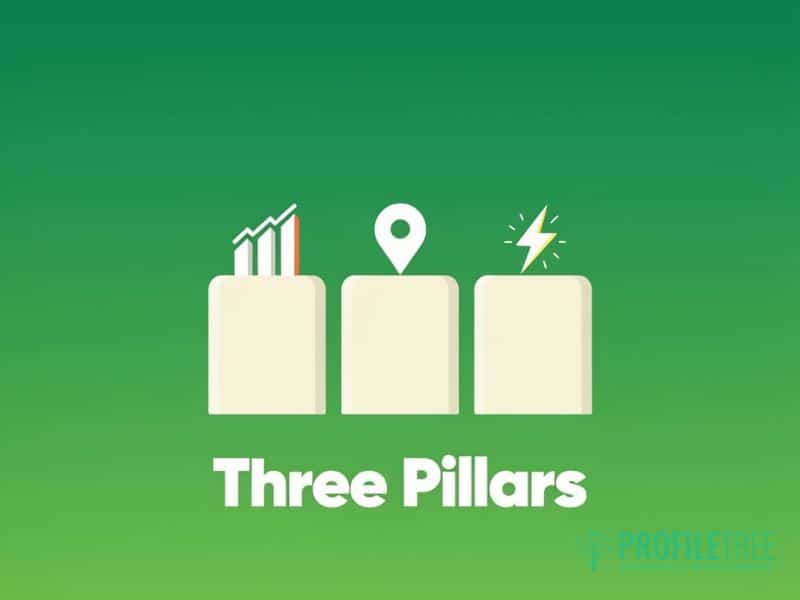
Underneath the tactics, three structural shifts explain most of the difference between brands that achieved digital domination during the tournament and brands that didn’t. None of them is unique to football, but a global event makes them visible faster than a normal marketing quarter would. Zero-party data, hyper-localisation and AI-driven creative each did real work here, and each one is worth treating as a standing capability rather than a tournament-only project. A clear digital strategy is what ties the three together instead of leaving them as separate initiatives.
Zero-Party Data and the Post-Cookie Path to Digital Domination
Follower counts told brands very little about who was actually going to buy something. The more useful signal came from zero-party data: information fans hand over directly, such as a team preference, a shirt size, or a prediction for the tournament’s outcome, usually through a quiz, a prediction game or a preference centre rather than a tracking pixel.
Picture a UK retail brand running a simple “predict the knockout stages” competition tied to newsletter sign-up. Every entry gives the brand a name, an email address, a team preference and a rough sense of purchase intent, all handed over willingly and usable well after the final whistle. That’s a far more durable form of digital domination than a one-off spike in Instagram followers who never open a promotional email again, and it doesn’t depend on a third-party platform’s algorithm to reach that person a second time.
Building that kind of interactive, opt-in zero-party data collection takes planning rather than a large budget. Our content marketing team builds these mechanics for UK brands that want a genuine first-party audience out of a seasonal moment, not just a short-lived vanity metric that disappears once the tournament ends. Treating zero-party data as part of an ongoing digital strategy, rather than a one-off tournament tactic, is what makes the asset last.
Hyper-Localisation: Digital Domination in Belfast, Dublin and London
A national team following isn’t the only lens that matters for UK brands. Fan behaviour in Belfast, Dublin and London during the tournament differed in ways a single UK-wide campaign missed. Local pub screenings, community watch parties and area-specific team allegiances all shaped when and where people were actually searching, and blanket national campaigns tended to talk past that nuance rather than speak to it.
Brands that adjusted local search content, location pages, and even opening hours messaging for these differences saw stronger local digital domination than brands running one identical asset UK-wide. A Belfast hospitality business promoting a late kick-off screening, for instance, needs different search content from a London business doing the same thing at a more sociable hour, even though the underlying offer is nearly identical, and the time zone gap between the two audiences’ patience for a late night is real.
Our SEO services work builds this kind of location-specific visibility for UK brands that need to show up in Belfast, Dublin and London searches with genuinely different, locally relevant content rather than a template with the city name swapped.
AI-Driven Creative at Scale: A Faster Route to Digital Domination
Generative tools let small marketing teams produce many creative variants quickly, which mattered during a tournament with unpredictable, fast-moving results. A goal, a red card or a shock scoreline could be turned into on-brand AI-driven creative within minutes rather than requiring a design queue, letting a two-person marketing team respond at a pace previously only available to much larger budgets, and turning a single result into genuine digital domination on social feeds before a competitor has even briefed their agency.
The brands that used AI-driven creative well kept a human checking every output for accuracy and brand tone before it went live. The ones that didn’t occasionally published creative with factual errors or an off-brand tone, which cost more in correction and reputation than the time saved in the first place. Our AI transformation service helps SME marketing teams set up this kind of AI-driven creative workflow with the right checks built in from the start, rather than bolted on after something goes wrong.
UK and Ireland Ad Rules Shaping World Cup 2026 Digital Domination
Brands running campaigns around the tournament had to work within a noticeably tighter UK advertising environment than at previous World Cups, and getting this wrong undoes any digital domination gained elsewhere. Three changes mattered most, and each one affects a different type of tournament advertiser.
From 5 January 2026, restrictions on advertising for less healthy food and drink (HFSS) became legally enforceable in the UK, banning paid-for online adverts for identifiable HFSS products entirely and imposing a 9 pm watershed on TV and on-demand services. Advertisers had voluntarily complied from October 2025, so most FMCG and hospitality brands built the tournament’s creative around this rule from the outset rather than adapting mid-campaign. Brand advertising without an identifiable HFSS product or logo remained permitted, which shaped how several snack and drinks brands approached their tournament messaging.
Gambling advertising remained subject to the long-standing “whistle-to-whistle” ban, which stops betting adverts appearing from five minutes before a live match to five minutes after it, alongside the wider 9 pm watershed. Premier League clubs also confirmed that front-of-shirt gambling sponsorship will end from the 2026 to 2027 season, though pitch-side hoardings and sleeve sponsorship weren’t included in that change, so gambling brands still had a route to stadium visibility even where shirt sponsorship wasn’t available.
Licensing rules shifted, too. For matches involving a home nation, or those with unusually late kick-off times, some local authorities in England and Wales granted extended licensing hours so venues could legally stay open for very late fixtures. Hospitality brands planning promotions around a 2 am kick-off, deep inside the overnight time zone gap, needed to check this with their local authority rather than assume standard hours applied.
Alcohol advertising sat outside these specific changes but remained governed by the existing Committee of Advertising Practice codes on responsible marketing, which several tournament sponsors underestimated when planning creative aimed at younger fans. Getting this wrong isn’t just a compliance risk; it’s also a reputational one that lingers well past the final whistle. For UK brands in regulated sectors, our digital marketing team can help build campaign creative that works within these restrictions rather than around them, as part of a wider digital strategy rather than a single tournament push.
Measuring World Cup 2026 Digital Domination: ROI Frameworks

Likes and follower growth are the easiest numbers to report and the least useful for judging whether a tournament campaign actually achieved digital domination. The brands getting genuine value moved the conversation to revenue attribution: how many of the people who engaged with tournament content went on to visit the website, sign up, or buy something, rather than how many people simply saw a post scroll past.
That requires the basics done properly, as part of a proper digital strategy rather than a tournament afterthought. Distinct UTM tagging for every tournament-specific asset, a clear view of which content drove website sessions rather than just impressions, and a post-tournament review that separates a short-lived attention spike from a lasting increase in qualified traffic. Several brands ran high-reach campaigns during the tournament that generated plenty of impressions and almost no measurable change in website conversions once the final whistle went, usually because nobody had set up the tracking to see that gap until it was too late to fix.
That gap is avoidable with the right tracking set up in advance, which is where a proper website audit and conversion setup earns its keep long before the next major event rolls around. Reviewing which specific pieces of content, including which zero-party data mechanics and which AI-driven creative variants, actually drove enquiries during the morning window, rather than which ones got the most shares at kick-off, is the single most useful exercise a marketing team can run once the dust settles.
A simple weekly dashboard covering sessions, enquiries and cost per lead against a pre-tournament baseline tells a marketing team far more than a monthly social media report ever will. It’s the difference between reporting activity and reporting genuine digital domination, and it’s the version of the numbers that actually holds up in a budget conversation the following quarter.
Applying World Cup 2026 Digital Domination Lessons to Your Next Campaign
The next major tournament UK brands will plan a digital domination strategy around isn’t nearly as far away, or as far afield, as the 2026 World Cup. UEFA EURO 2028 will be co-hosted across the UK and Ireland, with Belfast’s Casement Park among the confirmed venues. That removes the time zone problem entirely, but the other lessons still apply directly: build zero-party data mechanics early, plan locally rather than nationally, invest in AI-driven creative with proper checks, and set up revenue tracking before the tournament starts rather than during it.
Brands that treat these lessons as a one-off World Cup exercise will be relearning them in 2028. UK brands that build the digital strategy now, automation for the morning window, local content and proper attribution, will already have genuine digital domination in place when the tournament comes to their own back yard, with a home advantage this time round rather than a five-hour time zone handicap.
FAQs
1. When should UK brands start planning for a major tournament’s digital domination strategy?
Ideally, several months before the event, so content templates, tracking and sign-off workflows are ready before kick-off rather than being built mid-tournament. Waiting until the opening match usually means missing the early search and social volume that builds in the run-up, when interest is already climbing.
2. How do North American time zones affect UK digital domination during a World Cup?
Matches played five to eight hours ahead of UK time push much of the live audience to bed before the final whistle. This shifts the real digital moment to the following morning window, when fans check highlights and results on their commute rather than watching live, so content scheduled for kick-off often lands when nobody’s looking.
3. Will AI-driven creative replace social media management for future tournaments?
No, but it changes what a small team can produce. AI-driven creative helps generate variants quickly around unpredictable results, though brands still need a person checking accuracy and tone before anything is published, since a factual error in tournament content spreads just as fast as a good post.
4. What is zero-party data in a sports marketing context?
It’s information a fan hands over directly and willingly, such as a team preference or a prediction entry, rather than data inferred from tracking. It tends to be more durable and more useful for digital domination than follower counts once the tournament ends and attention naturally moves elsewhere.
5. Are there new UK advertising rules brands need to know for major sporting events?
Yes. HFSS advertising restrictions became legally enforceable from January 2026; gambling advertising remains subject to the whistle-to-whistle ban and an approaching shirt-sponsorship change, and some local authorities extend licensing hours for very late kick-offs, which brands in hospitality should check locally rather than assume.