
Travel Blogging and Vlogging: Strategy, Tools and Monetisation
Table of Contents
Travel blogging and vlogging are no longer the preserve of digital nomads posting gap year updates to a handful of followers. For tourism businesses, hospitality operators, destination brands, and content-driven SMEs across the UK and Ireland, they have become serious commercial channels that generate search traffic, build brand authority, and drive bookings.
The challenge is that most guides treat travel blogging and vlogging as a lifestyle pursuit. This one does not. What follows is a practical framework for building and monetising a travel content operation, whether you are a solo creator, a small tourism business in Northern Ireland, or a brand looking to build an audience around a destination or experience.
ProfileTree, a Belfast-based digital agency, works with tourism and hospitality businesses on exactly these challenges: from video production and YouTube channel strategy to SEO and content marketing. The principles that make a travel blog or vlog successful are the same ones that make any content-driven business work.
Blogging vs Vlogging: Choosing the Right Format for Your Brand
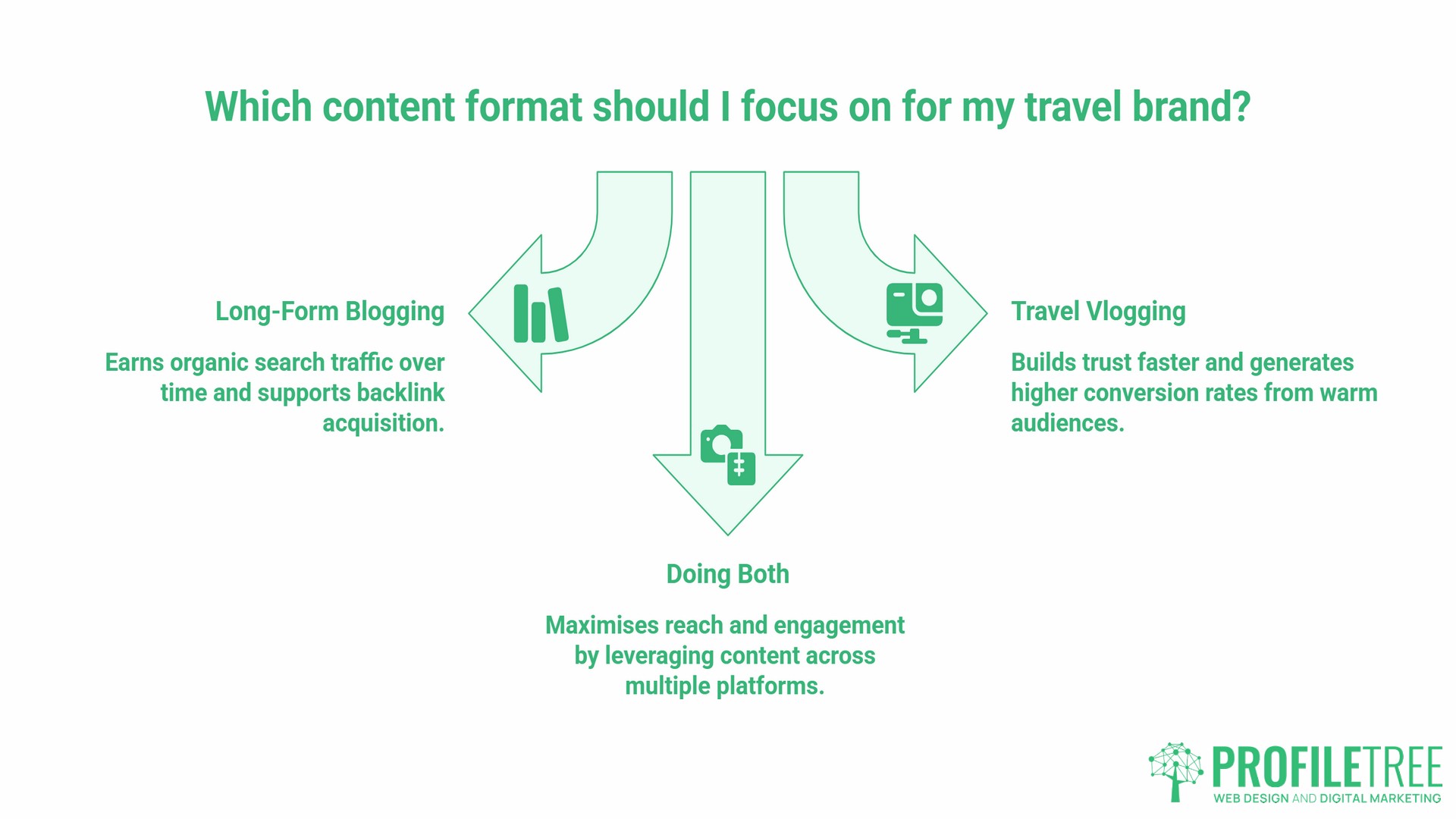
The first decision any travel blogging and vlogging operation needs to make is which format serves its goals, or whether it can realistically sustain both.
The business case for long-form blogging
A well-structured travel blog earns organic search traffic over time. Articles targeting specific queries (“things to do in the Causeway Coast“, “hidden beaches in Donegal”) can rank in Google and continue drawing visitors for months or years after publication. Long-form written content also supports backlink acquisition; journalists, tourism boards, and other publishers are more likely to link to thorough guides than to social posts.
The trade-off is time for results. A new travel blog can take anywhere from several months to over a year to build meaningful search traffic, and consistent publication is non-negotiable.
The commercial power of travel vlogging
Video content builds trust faster than written content. A travel vlog that shows real footage of a guesthouse, a tour experience, or a local food scene gives prospective customers something a description cannot: actual evidence. For this reason, travel vlogging tends to generate higher conversion rates from warm audiences, even when overall reach is smaller.
YouTube is also a search engine in its own right. Videos optimised for travel-related queries appear both in YouTube results and in Google’s video carousels, creating a second discovery channel that runs in parallel to blog SEO.
The case for doing both
Treating travel blogging and vlogging as a single content operation is almost always the stronger commercial decision. A filmed trip generates raw material for a YouTube video, a written destination guide, a series of social clips, and an email newsletter, all from the same source footage and experience. Businesses that publish across both formats consistently outperform those that commit to only one.
| Format | Production Time | SEO Value | Time to Monetise | Best For |
|---|---|---|---|---|
| Blog | Low–Medium | High (Google) | Often 12+ months | Long-term organic traffic |
| Vlog | Medium–High | Medium (YouTube + Google Video) | Variable; faster with existing audience | Trust-building and conversion |
| Hybrid | High initially | Very High | Variable | Sustainable audience growth |
Professional Video Production: Beyond the Smartphone
The proliferation of high-quality smartphone cameras has lowered the barrier to entry for travel blogging and vlogging. It has also raised audience expectations. In competitive niches, viewers have been conditioned by professionally produced content and will disengage from footage that feels amateurish, regardless of how interesting the subject matter is.
Essential equipment for high-quality travel vlogging
There are three realistic tiers for travel vlog production:
Mobile tier: A flagship smartphone with a gimbal stabiliser, a clip-on lapel microphone, and a basic lighting panel. Adequate for social clips and short-form content. Not sufficient for YouTube content competing in saturated categories.
Prosumer tier: A mirrorless camera such as the Sony ZV-E10 or similar, paired with a quality directional microphone, basic colour grading software, and a travel tripod. This is the entry point for content that can genuinely compete on YouTube.
Professional tier: A dedicated production setup including cinema-grade cameras, professional audio, and post-production editing by an experienced editor. This is where businesses producing destination marketing content or branded travel series should be operating.
Audio is consistently underestimated. Poor audio will lose a viewer faster than poor visuals. A directional microphone or a quality lapel is not optional equipment for any vlog intended to hold an audience.
Post-production: why editing determines retention
Filming is a fraction of the production process. The edit is where a travel vlog either works or does not. Retention rates on YouTube, which directly influence how widely a video is distributed, are largely determined by pacing. The first 30 seconds are the critical window; research consistently shows that a significant proportion of viewers leave within that opening stretch. Videos that maintain audience retention above 50% tend to perform better in YouTube’s recommendation system, though the algorithm weighs multiple engagement signals rather than any single threshold.
Professional editing, colour grading, and sound design are not luxuries for businesses using video content commercially. They are the difference between a video that the algorithm distributes and one that does not reach beyond existing subscribers. ProfileTree’s video production services are built specifically around this kind of results-focused content.
For a closer look at how professional video production works in practice, this overview from ProfileTree covers the production process from brief to delivery:
Content SEO: How to Rank for Travel Keywords
Search engine optimisation for travel blogging and vlogging follows the same principles as any content-driven site, but the competitive landscape is unusually dense. Major travel publishers, booking platforms, and national tourism boards dominate broad terms. The viable path for independent creators and SMEs is through specificity.
On-page SEO for travel blogs
Keyword targeting should work from the specific to the general. A guesthouse in County Antrim is not going to rank for “things to do in Northern Ireland” in the near term, but it can rank for “where to stay near the Dark Hedges” or “dog-friendly accommodation Causeway Coast.” These long-tail queries have lower competition and higher purchase intent.
Every page should have a single clear target keyword in the title tag, the H1, the meta description, and within the first 100 words of body copy. Internal linking between related articles and destination guides builds topical authority over time and helps Google understand the relationship between pages.
Page speed and mobile performance are also ranking factors that travel blogs frequently neglect. Large uncompressed images, poorly chosen hosting, and bloated themes are common on creator-built sites and represent easy wins for anyone willing to address the technical foundations.
YouTube SEO: optimising for video discovery
YouTube SEO begins with keyword research. The platform’s own search autocomplete is a reliable source of real query data, as are tools that surface search volume estimates for YouTube-specific terms. Target keywords should appear in the video title, the description (with the primary keyword in the first two sentences), and the tags.
Thumbnails drive click-through rate. Custom thumbnails with clear visual contrast, readable text, and a consistent style outperform auto-generated frames consistently. A thumbnail is effectively the ad for the video; it deserves as much attention as the content itself.
End screens, cards, and chapter markers improve both retention and discoverability. Videos that direct viewers to related content on the same channel increase session time, which YouTube’s algorithm rewards.
ProfileTree’s YouTube marketing services cover channel strategy, video SEO, and audience growth for businesses wanting to build an owned video presence rather than relying solely on paid reach. For businesses already active in the tourism sector, the page on digital marketing for travel agencies covers the broader strategic picture.
Monetisation Strategies for Travel Content Businesses
The monetisation picture for travel blogging and vlogging is broader than most creators initially realise, and the strategies that work best differ depending on whether the content operation is a standalone business or a marketing channel for an existing brand.
Affiliate marketing and lead generation
Affiliate partnerships with accommodation booking platforms, travel insurance providers, gear brands, and experience operators enable content creators to earn commissions on sales they refer. The key is relevance: affiliate products that align closely with the content and the audience convert meaningfully, while loosely related promotions do not.
Disclosure is a legal requirement in the UK, not a courtesy. The Advertising Standards Authority requires that all affiliate links and paid partnerships are clearly labelled. The FTC applies equivalent rules in the US. Non-compliance carries genuine regulatory risk and damages audience trust when discovered.
Direct brand partnerships and sponsored content
Sponsored content from tourism boards, hotel groups, experience operators, and travel brands represents the most significant revenue opportunity for established travel content businesses. Tourism boards, including Tourism Northern Ireland, Fáilte Ireland, and VisitBritain, actively commission content creators to produce destination material.
Pitching for these partnerships requires a media kit that clearly presents audience size, demographics, engagement rates, and previous work. Pricing should reflect production cost, distribution reach, and the commercial value of the coverage, not just follower count.
Creating digital products and training programmes
Travel expertise can be packaged and sold directly to an audience through digital products: destination guides, itinerary templates, photography presets, or video editing assets. Online courses covering travel vlogging, photography, or destination-specific knowledge represent a higher-ticket offering with strong margins once built.
This is also where the overlap with digital training becomes commercially interesting. ProfileTree delivers digital training for businesses wanting to build internal content capability, covering everything from video production basics to content strategy and distribution.
Navigating the UK: Legal and Practical Considerations
The regulatory environment for travel blogging and vlogging in the UK is more structured than many realise, and non-compliance is increasingly visible to both regulators and audiences.
ASA disclosure guidelines for UK content creators
The Advertising Standards Authority’s guidelines on content disclosure require that any paid partnership, sponsored post, affiliate relationship, or gifted experience is clearly identified as such before the reader or viewer engages with the content. “Ad”, “#ad”, or “Paid partnership with [brand]” are acceptable labels. Placing disclosure at the end of a caption or in small text partway through an article does not meet the standard.
This applies to all formats: blog posts, YouTube videos, Instagram Reels, TikTok videos, and podcast content. The CAP Code (Committee of Advertising Practice) governs this area and the ASA enforces it. Creators building audiences in the UK should read the ASA’s influencer guidance directly rather than rely on secondhand summaries.
Working with the UK and Ireland tourism boards
Tourism Northern Ireland, Tourism Ireland, Fáilte Ireland, and VisitBritain all maintain content and media relations programmes. Approaches should be professional, targeted, and specific: a pitch that demonstrates knowledge of the destination, a clear content concept, and a realistic audience profile will always outperform a generic enquiry.
Regional tourism partnerships are often more accessible for emerging creators than national-level commissions, and they carry genuine credibility for audiences interested in specific destinations.
Filming permissions and drone regulations
Commercial filming in public spaces in the UK and Northern Ireland may require permits depending on location, equipment, and intended use. Drone operation for commercial purposes requires a CAA Operational Authorisation (A2 CoC or higher, depending on the drone category and location). Filming in national parks, heritage sites, and city centres often has specific restrictions that must be checked in advance.
Managing a Hybrid Content Strategy Without Burning Out
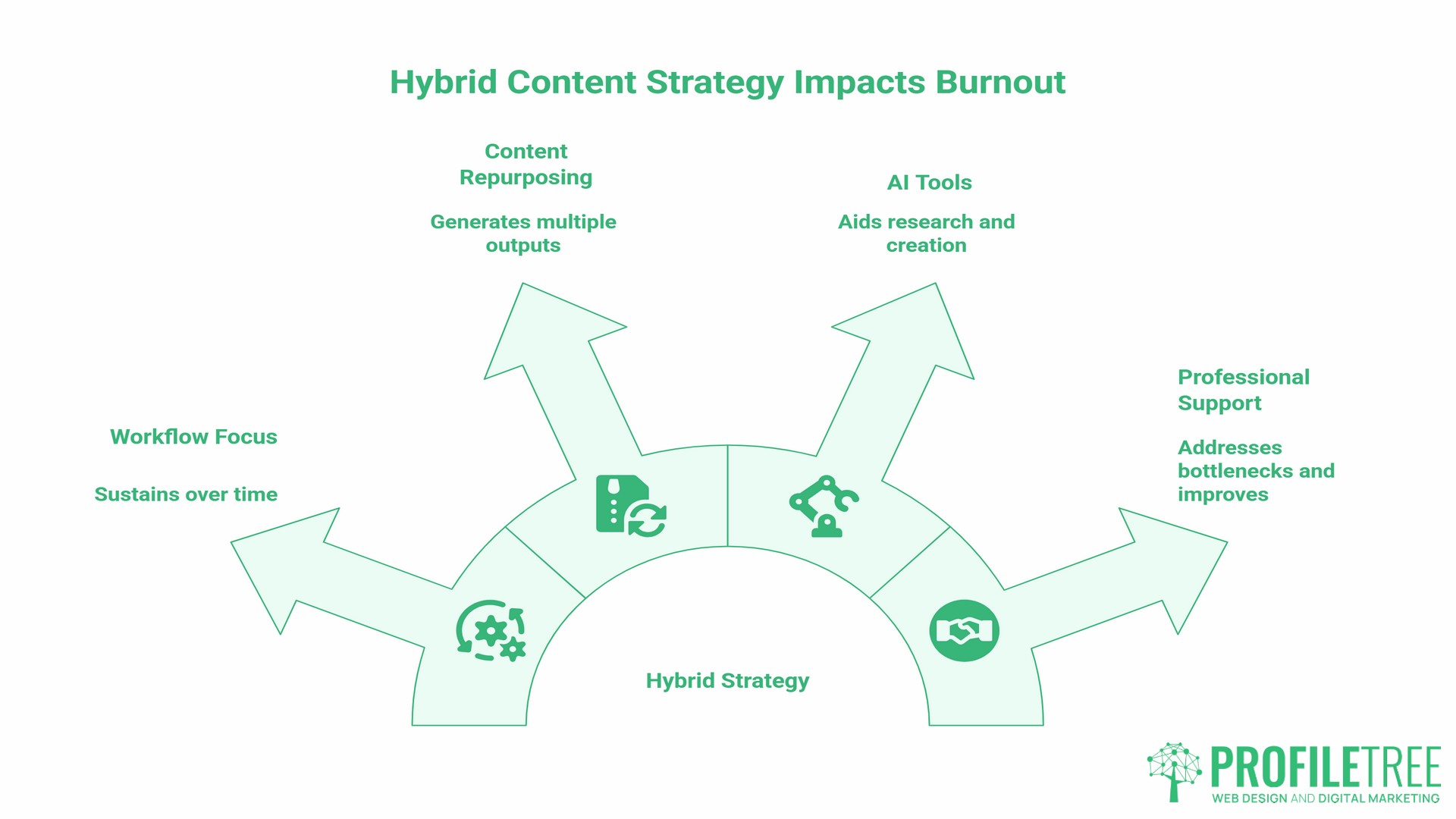
Running a travel blogging and vlogging operation simultaneously is genuinely demanding. The businesses and creators who sustain it over time do so through workflow, not willpower.
The content repurposing framework
A single travel experience can generate: one long-form YouTube video, one edited destination blog post, three to five short-form social clips (Reels, TikTok, YouTube Shorts), one email newsletter, and photography for ongoing social use. Planning each trip or filming day with all of these outputs in mind from the start, rather than adapting footage after the fact, dramatically reduces production time and increases consistency.
AI tools in content creation
AI tools are increasingly useful for travel blogging and vlogging research, first-draft itinerary structures, metadata generation, and social caption writing. The practical limit is authenticity: an AI can research and outline, but it cannot replace the genuine experience and specific detail that makes travel content worth reading or watching. Content that reads as generically produced tends to underperform on both search and social, regardless of how efficiently it was produced.
ProfileTree’s work on AI in the travel industry covers how businesses in the travel and hospitality sector are practically applying AI tools without compromising content quality.
When to bring in professional support
The ceiling for DIY travel blogging and vlogging production is real. A solo creator or small tourism business operating without a dedicated content resource will eventually reach a point where production quality, publishing frequency, or distribution strategy requires external support to improve. Content marketing agencies, video production houses, and SEO specialists all serve different parts of this gap.
The question is not whether professional support adds value (it does), but where the bottleneck is and which investment addresses it most directly.
Travel blogging and vlogging, done well, are among the most effective tools available to tourism businesses, hospitality operators, and destination brands for building long-term organic reach and audience trust. The principles are consistent whether the operation is one person with a camera or a business with a content team: specific keyword targeting, consistent publication, high production standards, and genuine expertise in the subject matter.
ProfileTree works with businesses across Northern Ireland, Ireland, and the UK on video production, content strategy, SEO, and YouTube marketing. If your travel content is not generating the results it should, get in touch to discuss what a more strategic approach would look like.
FAQs
How do travel vloggers make money in the UK?
Travel vloggers in the UK earn through YouTube ad revenue (requiring 1,000 subscribers and either 4,000 watch hours in 12 months or 10 million Shorts views in 90 days), affiliate commissions, brand partnerships, sponsored press trips, and digital product sales. Brand deals tend to be the highest-value stream for established creators. All paid arrangements must be disclosed under ASA guidelines, and income varies considerably by niche, audience size, and the level of commercialisation of the channel.
Is it better to start a blog or a vlog?
For most businesses and serious content creators, the answer is both. Travel blogging and vlogging work better together than either does independently: a blog builds long-term Google search traffic and creates a permanent searchable archive, while a vlog builds audience trust and generates YouTube traffic and social distribution. The two formats reinforce each other: a video embed improves blog dwell time, and a blog post provides the written context that YouTube alone cannot offer for SEO purposes. Starting with one format while planning for both from the outset is the practical approach.
What equipment do I need for professional travel vlogging?
Mobile level: current flagship smartphone, gimbal stabiliser, clip-on lapel microphone. Prosumer level: mirrorless camera (Sony ZV-series or equivalent), directional microphone, basic colour grading software. Professional level: cinema camera, professional audio, and dedicated editing by an experienced post-production editor. For businesses producing commercial travel content, the prosumer tier is the realistic minimum; professional production is warranted for destination marketing campaigns or branded content intended for wide distribution.
Do I need a licence to film for a travel vlog in the UK?
Recreational filming in public spaces generally does not require a permit in the UK. Commercial filming, including for monetised YouTube content, may require location-specific permissions. Drone operations for commercial purposes require CAA authorisation (A2 CoC or GVC, depending on the drone category and operating environment). National parks, heritage sites, airports, and city centre locations often have additional restrictions. Check requirements with the relevant land manager or local authority before filming.
Can a business use travel blogging and vlogging for SEO?
Yes, and it is underused by tourism and hospitality businesses relative to its potential. A destination guide targeting specific long-tail queries can rank for terms that drive genuine booking intent. A YouTube channel covering local experiences builds a brand association with a destination that competitors without video content cannot replicate. The SEO value increases significantly when written and video content are published in combination and internally linked.
How do I disclose sponsored travel content in the UK?
Any travel blogging or vlogging content that has been paid for, gifted, or commissioned must be clearly disclosed before the reader or viewer engages with it. The ASA requires that “#ad” or “Ad:” appear prominently at the start of a caption or post, not buried at the end. For YouTube videos, a verbal disclosure within the first 30 seconds and a written disclosure in the description are both expected. “Gifted” or “Press trip” labels are acceptable for non-paid trips where no editorial control was ceded, though the ASA’s guidance should be read directly for current specifics, as enforcement has tightened.