
SEO for Hotels and B&Bs: Building Direct Bookings in an OTA-Dominated World
Table of Contents
The accommodation industry has a visibility problem that most other businesses would envy, and simultaneously dread. When someone searches for hotels in almost any destination, they find no shortage of options. The problem is who controls that visibility: online travel agencies like Booking.com and Expedia dominate search results, spending billions annually to ensure they appear before individual properties.
This creates a painful dynamic for accommodation providers. OTAs deliver bookings, but those bookings come with commissions typically ranging from 15-25%. On a £150 room night, that’s £22-£37 going to an intermediary rather than your business. Multiply that across hundreds of annual bookings, and the numbers become significant.
The alternative, direct bookings through your own website, represents substantially higher revenue per booking. A guest who finds and books directly costs you card processing fees and perhaps some marketing investment, but nothing approaching OTA commission levels. Building search visibility that captures direct bookings isn’t easy when competing against platforms with near-unlimited marketing budgets, but it’s achievable. And the financial impact makes the effort worthwhile.
This guide explores SEO for hotels and how hotels and B&Bs can build search visibility that attracts direct bookings, reducing OTA dependency while building guest relationships from first contact.
The Economics That Make Direct Bookings Matter
Before diving into tactics, it’s worth understanding why direct bookings deserve such focus. The maths is straightforward but compelling.
Consider a property with 20 rooms averaging 70% occupancy at £120 per night. That’s roughly £613,000 in annual room revenue. If 60% of bookings come through OTAs at 20% commission, you’re paying approximately £73,500 annually in commission fees. Shift just 20% of those OTA bookings to direct, and you’ve recovered nearly £15,000, without increasing occupancy or rates.
But the benefits extend beyond commission savings. Direct bookings mean you own the guest relationship from the start. You capture their email address for future marketing. You can communicate directly about their stay, upsell services, and build loyalty. You have their data for understanding your guests and improving your service. OTA bookings often arrive as bare reservations with minimal guest information and no ongoing relationship.
This isn’t an argument for abandoning OTAs entirely, they provide genuine value in visibility and bookings you’d never otherwise receive. But every direct booking represents significantly higher value, making the investment in direct booking visibility highly worthwhile.
SEO for Hotels: How Travellers Search for Accommodation
Travellers search for places to stay in several distinct patterns, and understanding these patterns reveals where opportunities exist.
The most common search pattern is destination-based. Someone planning a trip searches “hotels in Belfast” or “accommodation Lake District” or “where to stay in Dublin.” These broad destination searches are where OTAs dominate most completely. They’ve invested billions in ranking for these terms, and competing directly is difficult for individual properties.
But travellers also search with qualifiers that create opportunity. “Pet-friendly hotels Belfast,” “boutique hotel with parking Dublin,” “B&B near Giant’s Causeway”, these more specific searches are harder for OTAs to dominate comprehensively. A property that genuinely matches these qualifiers can compete effectively.
Some searches are experience-driven rather than purely accommodation-focused. “Romantic weekend Northern Ireland,” “spa break near me,” “walking holiday Lake District”, these searches indicate travellers whose priorities extend beyond just a bed. Properties that offer relevant experiences can capture these searches.
Then there’s the branded search, when someone searches for your property by name. “Merchant Hotel Belfast” or “Ballyvolane House booking.” These searches represent your best opportunity for direct bookings. The person already knows about you; they’re looking to book or learn more. If they find an OTA listing before your website, you’ve potentially lost a direct booking to commission.
The local search matters too. “Hotels near me” from someone already in your area, or “accommodation near [specific venue]” from someone attending an event. These proximity-based searches have clear local intent that favours genuine local businesses over aggregator platforms.
Protecting Your Branded Searches
When someone searches for your hotel by name, your website should appear first, not an OTA listing showing your rooms. This seems obvious, but many properties lose direct bookings daily because OTAs outrank them for their own brand name.
OTAs bid aggressively on hotel brand names in paid search, and their domain authority often helps them rank organically for property names too. Fighting this requires deliberate effort.
Your website must clearly feature your property name throughout, in title tags, headings, content, and meta descriptions. Your Google Business Profile should be complete and optimised, creating a prominent branded presence in search results. Building citations and mentions of your property name across the web reinforces your brand ownership.
Some properties run defensive paid search campaigns on their own brand name to ensure they appear above OTAs in paid results. The economics can work, paying a small amount per click to capture a direct booking beats paying 20% commission on the same booking through an OTA.
Monitor your branded search results regularly. Search for your property name in an incognito browser and see what appears. If OTAs consistently outrank you, that’s lost revenue worth addressing.
Google Business Profile: Your Local Visibility Foundation
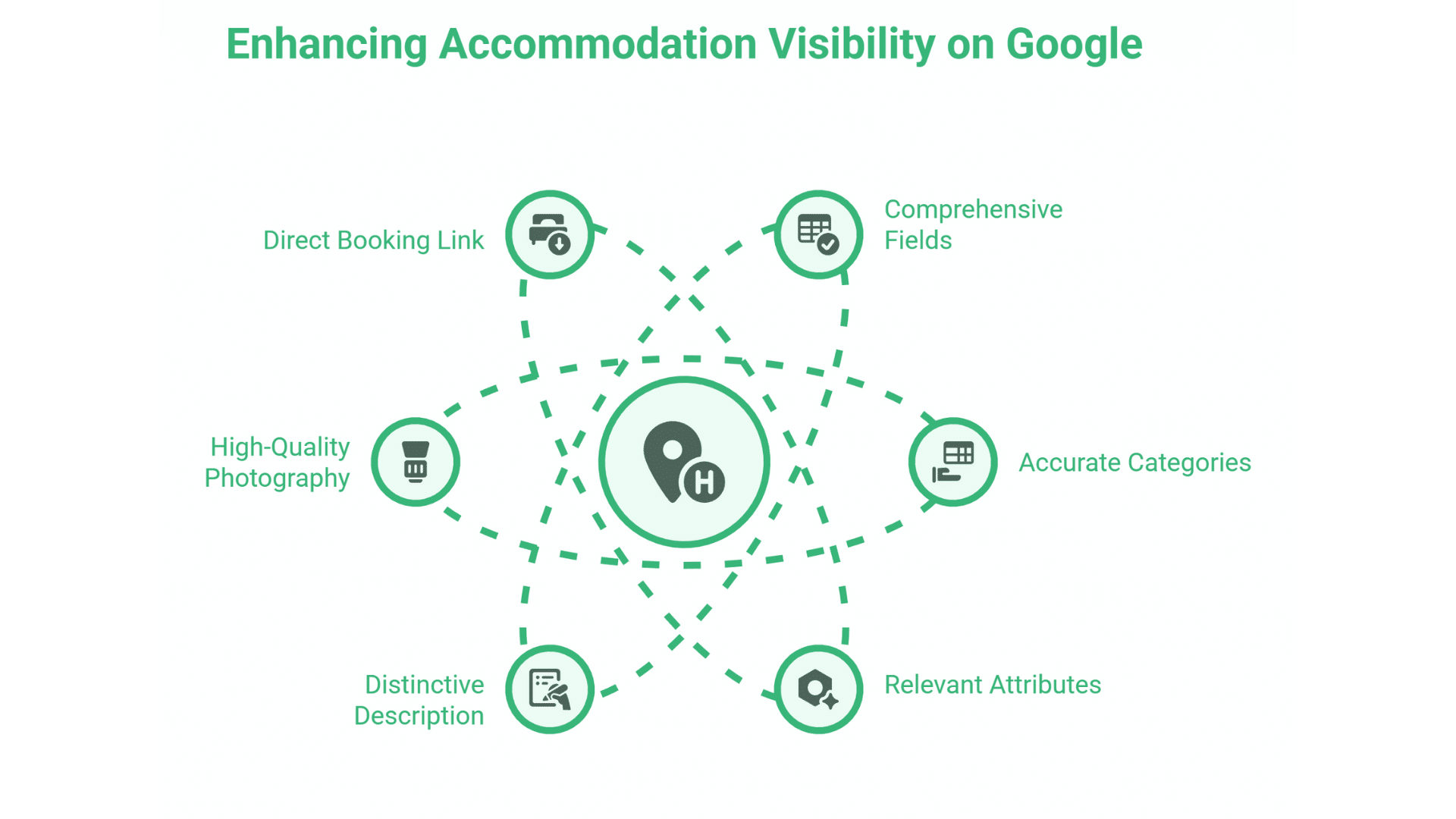
For accommodation providers, Google Business Profile is exceptionally important. When someone searches for hotels in your area, the map pack often appears prominently, and your Google Business Profile determines whether you’re included and how appealing you look.
Complete every available field thoroughly. Categories should accurately reflect your property, Hotel, Bed and Breakfast, Guest House, Inn, Boutique Hotel. Attributes matter significantly for accommodation; guests filter by amenities like parking, WiFi, breakfast included, pet-friendly, and accessibility features. Every attribute you can legitimately claim increases the searches where you might appear.
Your business description should communicate what makes your property distinctive. Not generic claims that could apply to any hotel, but specific information about your character, location advantages, and what guests particularly appreciate. If you’re a family-run B&B with exceptional breakfasts, say so. If your boutique hotel occupies a historic building with original features, make that clear.
Photography in your Google Business Profile deserves significant attention. This is often a traveller’s first visual impression of your property. Show your best rooms in flattering light. Feature communal spaces that demonstrate atmosphere, lounges, restaurants, gardens. Include exterior shots so guests can recognise you on arrival. Update images seasonally; Christmas decorations in January or summer gardens year-round feel dated.
The booking link in your Google Business Profile should point to your direct booking page, not an OTA. Google increasingly shows booking options directly in search results; ensure guests can book direct without leaving Google if they choose.
Reviews: The Social Proof That Drives Decisions
Reviews influence accommodation choices profoundly. Travellers making decisions about where to sleep, a fundamentally vulnerable activity, want reassurance from others who’ve stayed before them.
Google reviews are increasingly prominent in accommodation search results, appearing directly in your Google Business Profile and influencing local rankings. But they’re not the only platform that matters. TripAdvisor remains influential specifically for accommodation and dining. Booking.com reviews, visible to anyone comparing options on that platform, affect OTA conversions.
Building reviews requires systematic effort rather than hoping guests will leave them spontaneously. The best time to request reviews is when guests are most positive, often at checkout after a good stay, or shortly after departure while the experience is fresh. Making the request easy matters; sending a direct link to your Google review page removes friction.
What guests mention in reviews matters for future bookers. Specific details about rooms, breakfast, staff helpfulness, and local tips are more persuasive than generic praise. You can’t script reviews, but you can create experiences worth mentioning, and you can ask questions that prompt useful detail when requesting reviews.
Responding to reviews, all of them, demonstrates engagement and care. Thank positive reviewers specifically, referencing details from their stay that show you’re paying attention. Address concerns in negative reviews constructively, showing how you’ve responded or offering to make things right. Your responses aren’t just for the reviewer; they’re for everyone reading reviews while deciding whether to book.
Your Website: The Direct Booking Destination
Everything else leads here. Your website must convert visitors who’ve found you into guests who book directly. This requires more than a beautiful design, though design certainly matters for accommodation.
The booking path must be frictionless and prominent. A “Book Now” or “Check Availability” button should be visible without scrolling on every page. Guests who’ve decided to book shouldn’t have to search for how to do so. The booking process itself must be fast, mobile-friendly, and trustworthy, showing security indicators, total costs clearly, and confirmation immediately.
Your booking engine significantly affects conversion. Slow booking engines lose bookings; guests won’t wait while pages load. Complicated booking processes with too many steps lose guests who give up partway through. Mobile booking must work flawlessly; a significant portion of accommodation searches happen on phones. If your booking engine frustrates guests, they’ll return to OTAs where the process is familiar and smooth.
Rate messaging matters enormously. If guests believe they might find a better rate elsewhere, they’ll check elsewhere, and once they’re on an OTA, the OTA has every incentive to keep them there. “Best Rate Guaranteed” messaging, prominently displayed, reassures guests they’re getting the best deal by booking direct. Some properties sweeten direct bookings with extras, free breakfast, room upgrades, late checkout, creating tangible reasons to book direct beyond price alone.
Room information should be comprehensive and honest. Multiple photos showing rooms accurately, detailed descriptions of what’s included, clear information about sizes and views. Guests booking direct don’t have OTA reviews of specific room types to guide them; your website must provide the information they need to choose confidently.
Beyond rooms, your website should help guests plan their stay. Information about your location, what’s nearby, how to reach you, parking options. Details about your facilities and services, restaurant, spa, activities, whatever you offer. Local recommendations that demonstrate genuine knowledge, not generic tourist information but the insider tips a knowledgeable host would share.
For website development guidance, our website development services cover creating sites that convert.
Content That Attracts Potential Guests
Beyond your core booking and room pages, content marketing helps you rank for searches that OTAs don’t serve well.
Destination content positions you as a local authority while capturing travellers researching your area. “Things to do in [your location] is a search that happens constantly, and while OTAs and travel guides compete for it, a local property with genuine knowledge can rank, particularly for more specific variations. Your advantage is authentic local expertise; use it.
Create comprehensive guides to your area. Not generic tourist information copied from elsewhere, but genuinely useful content reflecting real local knowledge. The best restaurants, including ones tourists might not find. The walks worth taking, with practical details about distance and difficulty. The local events worth planning around. The insider tips that make a visit special.
Seasonal content captures travellers planning around specific times. “Christmas in [destination],” “[location] in autumn,” “summer activities near [your area].” Travellers searching these terms are actively planning trips timed around seasons or events, they’re warm leads.
Event-driven content captures guests visiting for specific purposes. If major events, festivals, or conferences happen in your area, content about accommodation for those events captures directly relevant searches. “[Festival name] accommodation” or “hotels near [venue] for [event]” reach people with specific reasons to visit.
Experience content aligns with how some travellers search. “Romantic weekend [region],” “family holiday [area],” “golf trip [destination]”, these experience-focused searches indicate travellers whose priorities you might match. If you’re particularly suited to certain experiences, content establishing that connection captures relevant searches.
All this content does more than attract search traffic, it demonstrates that you’re a genuine local presence with real knowledge, not just a bed-broker. That authenticity builds trust that encourages direct booking.
The OTA Relationship: Strategic Coexistence
OTAs aren’t going away, and for most properties, completely abandoning them would be foolish. They provide exposure to travellers who’d never find you otherwise. They handle marketing you couldn’t afford. They offer booking infrastructure that works.
The goal isn’t eliminating OTAs, it’s optimising the relationship. Use OTAs strategically for visibility and bookings, particularly during slower periods when any booking is welcome. But work systematically to shift the balance toward direct bookings over time.
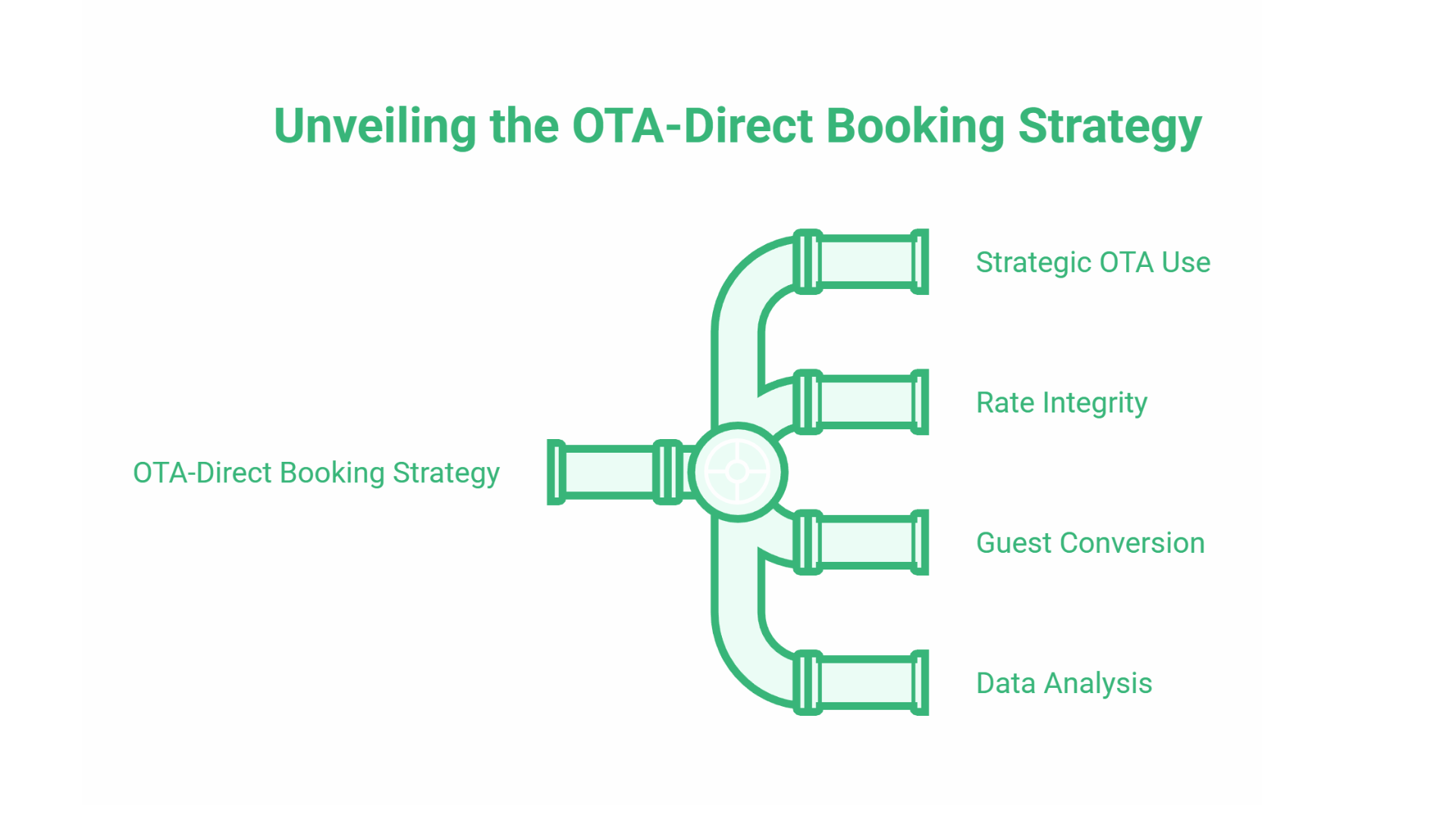
Rate integrity matters for this strategy. If OTAs consistently offer better rates than your website, direct booking efforts are undermined from the start. Maintain rate parity at minimum; ideally, make direct rates slightly better or add value that makes direct booking clearly preferable.
When guests do book through OTAs, treat the stay as an opportunity to convert them to direct bookers for future visits. Capture email addresses during the stay (for legitimate communication purposes). Provide direct booking information at checkout. Explain the benefits of booking direct, better rates, direct communication, loyalty benefits if you offer them. A guest who books once through an OTA but returns direct represents a lifetime value transformation.
Analyse your booking sources to understand patterns. Which guest segments book direct versus through OTAs? Which booking windows favour direct? What’s the lifetime value difference between direct guests and OTA guests? This data informs strategy refinement.
Measuring What Matters
Track metrics that connect to business outcomes, not just visibility.
Branded search performance is crucial. Are you ranking first for your own property name? What percentage of branded searches result in visits to your website versus OTA sites? This is your most recoverable opportunity.
Direct booking share, the percentage of total bookings that come direct, your key strategic metric. Track this over time. Set targets for improvement. Celebrate gains.
Revenue per booking by channel tells you the real financial impact. Direct bookings yield more per room night; quantify that difference for your property.
Google Business Profile insights show how potential guests interact with your profile, views, clicks to website, direction requests, phone calls. These leading indicators suggest future booking potential.
Website conversion rate, what percentage of website visitors start and complete bookings, identifies whether your booking process is helping or hindering. Low conversion suggests friction worth addressing.
The ultimate measure is profit contribution by channel. A direct booking at £120 contributes more profit than an OTA booking at £120. Your goal is maximising profit, not just bookings.
Getting Started
If you’re beginning to address search visibility for direct bookings, or if you’ve neglected this while focusing on OTA relationships, here’s where to focus initial effort.
Claim and optimise your Google Business Profile completely. This single action improves local visibility immediately. Complete every field, add compelling photos, ensure your direct booking link is prominent.
Audit your branded search presence. Search your property name in incognito mode. Are you ranking first? If not, prioritise fixing this, branded search is your highest-value opportunity.
Ensure your website makes direct booking easy and attractive. Clear booking path, functioning booking engine, best rate messaging. If your booking process frustrates guests, fix this before investing in driving more traffic.
Begin creating content about your location. Start with a comprehensive area guide demonstrating genuine local knowledge. This asset will continue attracting potential guests for years.
Implement systematic review collection. Ask every departing guest. Make it easy. Build review momentum that compounds over time.
These foundations, maintained consistently, shift the balance toward direct bookings and reduce OTA dependency.
The Long Game of Direct Booking Growth
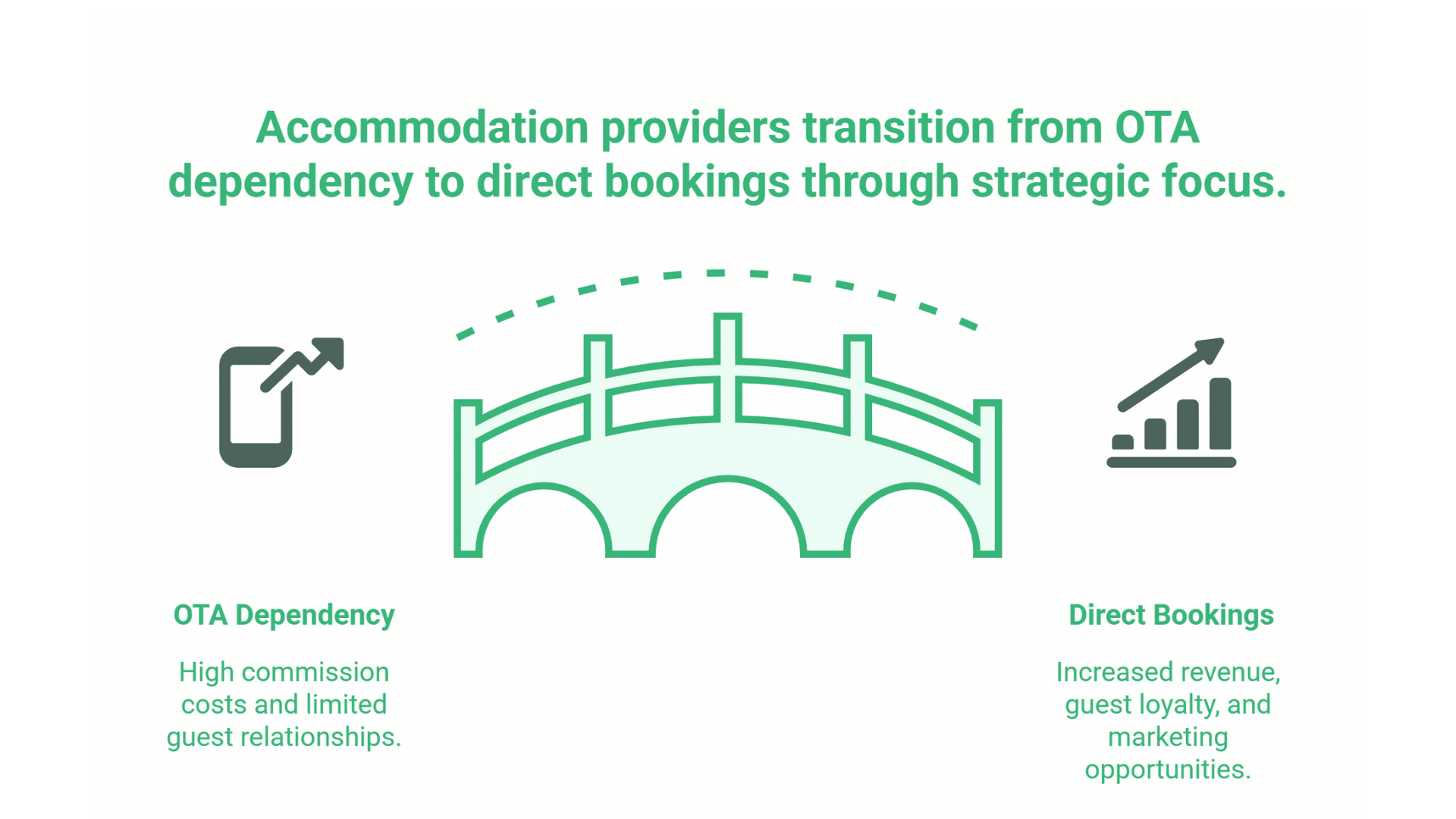
Reducing OTA dependency isn’t a quick fix, it’s a strategic shift that builds over time. OTAs have spent years and billions building their search dominance; you won’t overturn that overnight. But you don’t need to beat OTAs at their own game. You need to capture the guests you can reach directly, those searching for your property name, those whose specific needs match your offerings, those who value direct relationships with the places they stay.
Every direct booking represents meaningful additional revenue. Every email address captured represents future marketing opportunity. Every guest relationship you own from the start represents lifetime value that OTA guests may never deliver.
The accommodation providers succeeding at direct bookings are those who recognise this as a strategic priority deserving sustained attention, not a project to complete but an ongoing discipline that compounds over time.
If you’re ready to improve your property’s search visibility and attract more direct bookings, ProfileTree’s team has extensive experience with tourism and hospitality businesses across Northern Ireland, Ireland, and the UK. Get in touch to discuss how we can help reduce your OTA dependency and grow direct bookings.